


The ISKCON Bengaluru temple case has entered another stage after the Supreme Court of India agreed to consider review petitions challenging aspects of its earlier judgment concerning the ownership of the Bengaluru Hare Krishna temple. The development has drawn attention because the dispute concerns the legal identity and ownership of an important ISKCON institution in India.
The Supreme Court’s May 16, 2025 judgment dealt with appeals involving the Bengaluru society and related parties. A review petition was subsequently filed, and the Court’s December 3, 2025 order records the review proceedings and applications connected with them.
The matter remains judicially pending. The review process should therefore be understood as an opportunity for the Court to consider the grounds raised in the review petitions, rather than as a reversal of the earlier judgment.
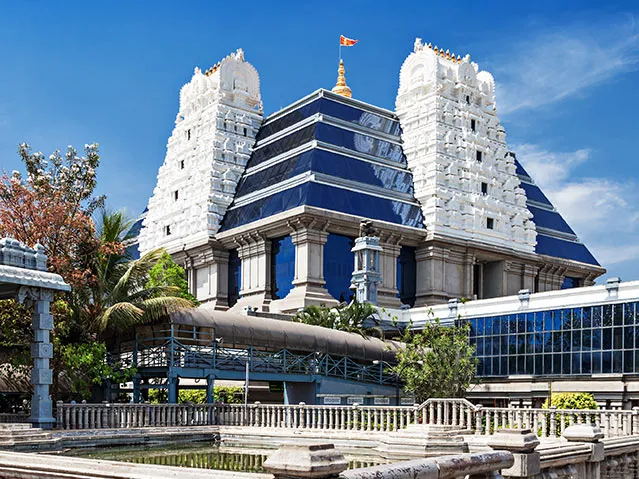
ISKCON Bengaluru Temple Case and the Supreme Court
The legal dispute surrounding the Bengaluru temple has continued for many years and involves questions concerning the relationship between different ISKCON societies and the legal ownership of the temple and associated properties.
In its judgment dated May 16, 2025, the Supreme Court considered evidence and submissions relating to the parties before it. The judgment also discusses the history of the relevant societies and various issues concerning their legal status and representation.
The Court’s decision was subsequently followed by review petitions.
A review petition is a legal mechanism through which a party asks the same court to reconsider a judgment on limited grounds recognized under law. The filing or consideration of a review petition does not by itself mean that the original judgment has been set aside.
What the Review Means
The Supreme Court’s December 3, 2025 record identifies R.P.(C) No. 2578/2025 involving International Society for Krishna Consciousness, Mumbai, versus International Society for Krishna Consciousness, Bangalore and others, along with several related review petitions and applications.
The order records applications concerning listing of the review petition in open court, permission to file additional documents and facts, and other applications.
Thus, the present stage is part of an ongoing judicial process.
Why the Bengaluru Temple Is Significant
ISKCON temples are not merely places of worship. They function as centres of sādhanā, spiritual education, prasāda-sevā, congregational chanting and devotional association.
The Bengaluru Hare Krishna temple has served devotees and visitors through worship, festivals, preaching and various forms of devotional activity.
In the Vedic conception, a temple is a place where the conditioned living entity is reminded of his eternal relationship with the Supreme Personality of Godhead.
The word mandira refers to a sacred place where the Deity is worshiped and devotees gather for spiritual activities.
Therefore, questions concerning the legal administration of a temple naturally attract the attention of the devotees connected with it.
Legal Ownership and Spiritual Service
It is important to distinguish between two different dimensions.
The first is the legal dimension, which concerns registered societies, property rights, documents, evidence and judicial findings.
The second is the spiritual dimension, which concerns Deity worship, devotional service and the spiritual purpose of a temple.
The two dimensions operate according to different principles.
A court determines legal rights according to applicable law and evidence. Devotees, meanwhile, understand the temple primarily as a place of service to Śrī Kṛṣṇa and His devotees.
For this reason, devotees naturally hope that legal administration will facilitate peaceful and uninterrupted devotional service.
Allegations Raised in the Review Proceedings
According to reports concerning the review petition, ISKCON India has placed substantial documentary material before the Court and has raised allegations relating to fraud, forgery and manipulation of public records.
These are allegations made in the proceedings and remain contested. They should not be presented as established facts unless and until a competent court makes findings to that effect.
This distinction is especially important when discussing an ongoing judicial matter.
The rule of dharma includes truthfulness—satya. In discussing legal disputes, therefore, facts established by judicial records should be distinguished carefully from claims, allegations and arguments advanced by either side.
The Importance of Documentary Evidence
Legal disputes involving institutions can involve historical registrations, governing documents, correspondence, property records and other evidence.
The Supreme Court’s May 2025 judgment itself contains extensive discussion of witness testimony, society records and the history of the parties.
The review proceedings provide the legal forum in which the petitioners may place their grounds before the Court according to the applicable review procedure.
What the Supreme Court Has Decided So Far
The May 16, 2025 judgment remains an important part of the legal history of the dispute.
The subsequent review proceedings do not automatically erase or suspend the earlier judgment.
The December 3, 2025 order demonstrates that the review petitions and related applications were before the Supreme Court.
As of the present reporting period, the matter should therefore be described as under review, rather than as finally resolved in favour of either side through the review process.
The Supreme Court’s official website continues to publish cause lists and listing notices for review matters, providing the appropriate source for subsequent procedural developments.
A Devotional Perspective on Institutional Challenges
The history of the Gauḍīya Vaiṣṇava tradition demonstrates that devotional institutions require both spiritual dedication and responsible administration.
Śrīla Prabhupāda repeatedly emphasized organized preaching, responsible management and the proper use of resources in Kṛṣṇa’s service.
The principle of seva means service. Institutional responsibilities are therefore ultimately meant to support the service of the Supreme Lord, the Vaiṣṇavas and the wider community.
When legal or administrative challenges arise, devotees are naturally encouraged to remain peaceful, truthful and committed to their spiritual practices.
The Bhagavad-gītā describes sthita-prajña as one whose consciousness remains steady amid changing circumstances. Such spiritual steadiness is valuable when institutions face difficult periods.
Truth, Patience and Due Process
A legal dispute can generate strong emotions, particularly when a place of worship is involved.
Yet the Vedic tradition places great importance on satya, truthfulness, and dharma, righteous conduct.
This means that devotees and observers should distinguish carefully between:
- Judicial findings
- Procedural developments
- Submissions made by the parties
- Allegations that remain disputed
- Future outcomes that cannot yet be known
Such distinction is not merely a legal formality. It reflects the broader principle of speaking responsibly.
Waiting for the Judicial Process
The Supreme Court’s consideration of a review petition does not itself establish that the earlier judgment was erroneous. Likewise, the existence of an earlier judgment does not prevent a party from seeking review through the legal process.
The appropriate course is to allow the judicial proceedings to continue and to rely upon authenticated court records for developments.
This is particularly important for a matter involving a long-running institutional dispute.
What Devotees Can Learn
Regardless of the eventual legal outcome, the situation offers several broader reflections for those engaged in devotional service.
1. Institutions Require Responsible Stewardship
Temples, societies and spiritual organizations require transparent administration and careful stewardship.
2. Spiritual Service Continues Through Challenges
Devotional service is not dependent upon the absence of difficulties. Bhakti means rendering service to Kṛṣṇa with sincerity, and challenges can become opportunities for deeper dependence upon the Lord.
3. Truthful Communication Matters
Devotees discussing public matters should distinguish verified information from allegations and personal interpretations.
4. Legal Processes Should Be Respected
Courts provide established procedures through which competing claims can be examined.
5. The Spiritual Purpose Remains Central
The ultimate purpose of a Vaiṣṇava temple is to facilitate remembrance of Kṛṣṇa, chanting of His holy name, hearing śāstra, association with devotees and devotional service.
Looking Ahead in the ISKCON Bengaluru Temple Case
The ISKCON Bengaluru temple case remains an important legal matter for the institutions and devotees connected with the Bengaluru temple.
The Supreme Court’s review process provides a further judicial stage in which the petitioners’ grounds may be considered according to law. At the same time, the earlier May 2025 judgment should not be described as having already been overturned merely because review proceedings are pending.
Future developments should be followed through the Supreme Court’s official records and authenticated court documents.
For devotees, however, the deeper principle remains unchanged. Whatever circumstances may arise externally, the essential work of a Vaiṣṇava institution is to facilitate śravaṇam (hearing), kīrtanam (chanting), smaraṇam (remembering), and seva (devotional service).
Conclusion
The ISKCON Bengaluru temple case illustrates how spiritual institutions can encounter complex legal and administrative questions while continuing their religious mission.
The Supreme Court’s review proceedings represent a further stage in the legal process, while the earlier judgment remains part of the record unless and until it is modified through appropriate judicial proceedings.
For devotees, the appropriate spirit is one of truthfulness, patience and faith in the proper process. Legal questions must be addressed through law, while spiritual responsibilities must continue through sincere service to Śrī Kṛṣṇa.
A temple ultimately exists to remind the living entity of his eternal constitutional position as the servant of the Supreme Lord. In that spirit, devotees can continue to cultivate bhakti, support Vaiṣṇava association and pray for clarity, justice and the proper preservation of devotional service.
Deepen your Bhakti-yoga practice, harmonize relationships, and receive guided coaching — all at Vedavarsity.com