



ISKCON and pilgrimage tourism represent a meaningful meeting point between India’s ancient spiritual heritage and the possibilities offered by modern technology. As millions of people travel to sacred places every year, the purpose of pilgrimage is not merely to see a temple or visit a historical monument. In the Vedic understanding, tīrtha-yātrā means approaching a sacred place in the association of devotees, hearing transcendental knowledge, and gradually developing one’s relationship with the Supreme Lord.
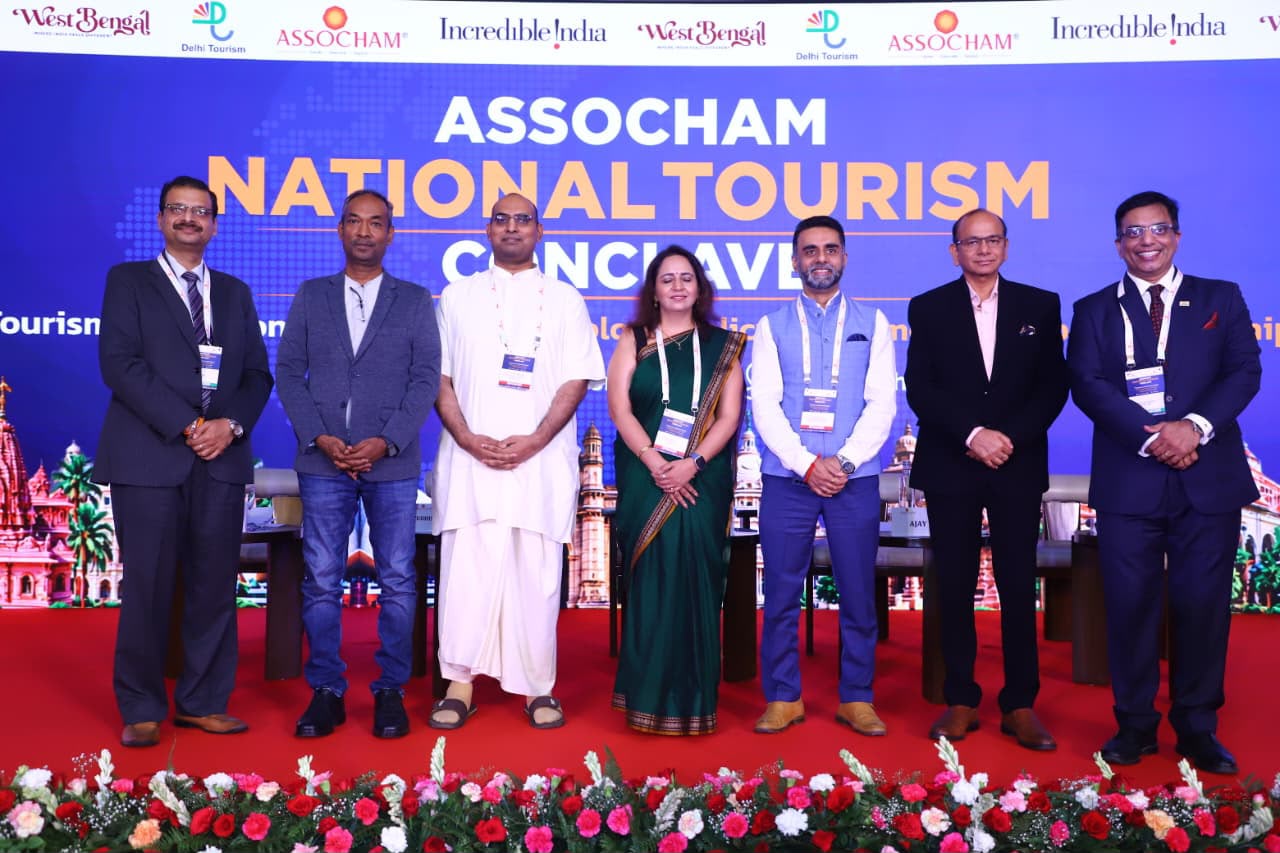
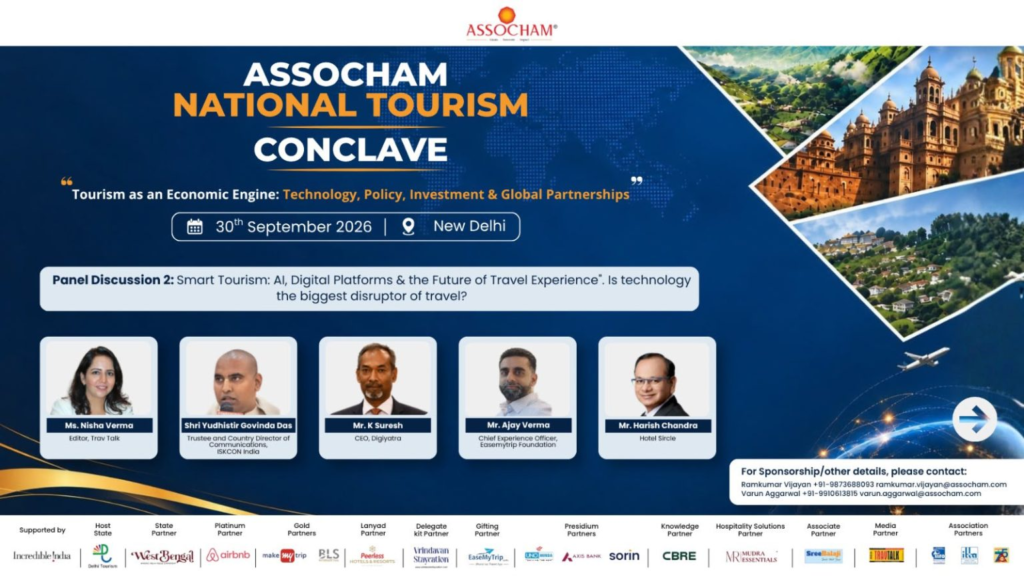
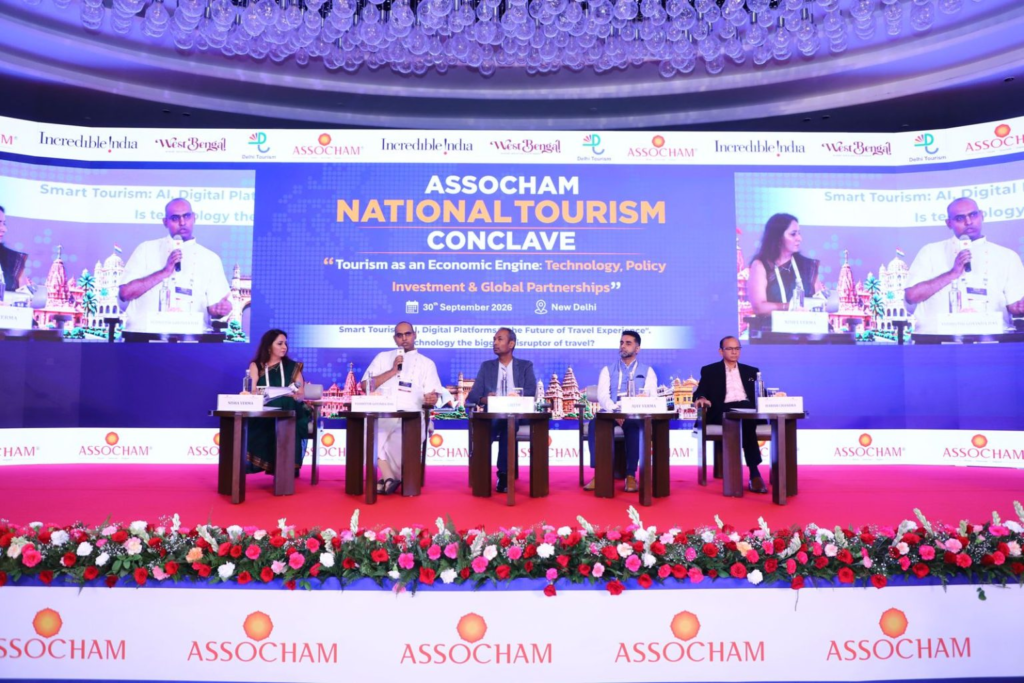
This perspective was brought into discussion at the ASSOCHAM National Tourism Conclave held in New Delhi on September 30, 2026. Yudhistir Govinda Das, Trustee and Country Director of Communications for ISKCON India, participated in a panel discussing the relationship between tradition, tourism and technology.
The discussion highlighted an important question: how can modern technology make pilgrimage more accessible without taking away its sacred character?
ISKCON and Pilgrimage Tourism in Modern India
India is known throughout the world as a land of sacred rivers, temples, holy places and spiritual traditions. Places such as Vṛndāvana, Māyāpur, Jagannātha Purī, Kurukṣetra and Ayodhyā attract pilgrims seeking more than ordinary sightseeing.
According to Vedic culture, a holy place is not significant merely because of its architecture or antiquity. Its spiritual importance comes from its connection with the Supreme Personality of Godhead, His devotees, and the transcendental activities described in śāstra.
The Sanskrit word tīrtha refers to a place through which one can cross over the ocean of material existence. Thus, pilgrimage is traditionally meant to transform the consciousness of the pilgrim.
A visitor may arrive with the intention of seeing a beautiful temple. Through śravaṇam—hearing—and satsaṅga—association with devotees—the same visitor may gradually develop an interest in spiritual life.
This is one of the deeper dimensions of ISKCON and pilgrimage tourism.
From Tourism to Tīrtha-Yātrā
Modern tourism often emphasizes destinations, photographs, convenience and entertainment. Vedic pilgrimage has a different centre.
The centre is seva, or service to the Supreme Lord.
When a person visits a sacred place, he may offer prayers, hear the glories of the Lord, serve devotees, take prasāda, and learn the history and teachings associated with that holy place.
Therefore, the external journey can become an internal journey.
The Bhagavad-gītā teaches that genuine knowledge develops through approaching a spiritual master and submissively hearing transcendental knowledge. Pilgrimage can provide such opportunities when facilities for hearing and association are properly arranged.
A temple, therefore, is not simply a tourist attraction. It can function as a centre of spiritual education.
The Sacred Purpose of a Temple
A temple provides darśana, the opportunity to see the Deity of the Lord and receive His merciful audience.
It also provides opportunities for:
- Hearing śāstra
- Chanting the holy name
- Taking prasāda
- Associating with devotees
- Learning Vedic culture
- Participating in devotional service
- Understanding the history of the sacred place
When these elements are preserved, technology can serve pilgrimage rather than replace it.
Technology as a Servant of Pilgrimage
At the National Tourism Conclave, Yudhistir Govinda Das emphasized that technology should help visitors experience the richness of India’s traditions without making the experience impersonal.
This principle is especially relevant in an age of artificial intelligence, mobile applications and immersive digital experiences.
Technology can help a pilgrim understand what he is seeing.
A mobile application can explain the history of a temple. Digital guides can make information available in different languages. Audio systems can help visitors hear explanations while moving through a sacred complex. Museums and immersive exhibitions can introduce philosophical concepts through visual storytelling.
Such facilities can be particularly valuable for younger generations who are accustomed to digital learning.
Technology Without Losing the Sacred Mood
The purpose, however, should not be to make a temple resemble an ordinary entertainment destination.
The Vedic principle is that technology should remain subordinate to tattva, or spiritual truth.
Artificial intelligence may explain the history of a sacred place, but it cannot replace the living experience of hearing from a devotee.
A virtual representation may introduce a person to Vṛndāvana, but it cannot replace the spiritual atmosphere of actually visiting the holy dhāma.
A mobile application may provide information about prasāda, temple timings or festivals, but the deeper purpose remains remembrance of Kṛṣṇa.
Thus, technology can be understood as a servant.
ISKCON Temples as Centres of Cultural Education
ISKCON temples around the world increasingly serve not only resident devotees but also pilgrims, families, students and visitors interested in India’s spiritual heritage.
One example mentioned in connection with the discussion is the Sri Sri Radha Parthasarathi Mandir in New Delhi, which includes the Glory of India Vedic Cultural Center.
Its Vedic Expo uses visual effects, sound and lighting to introduce visitors to Vedic teachings and philosophical concepts.
Such initiatives demonstrate how traditional knowledge can be presented in a manner accessible to contemporary audiences.
The objective is not simply to entertain the visitor but to awaken curiosity about deeper questions:
Who am I? What is the purpose of life? What is the relationship between the living entity and the Supreme Lord? How can human life be used for spiritual advancement?
These are the questions that transform tourism into pilgrimage.
Pilgrimage Requires Care and Responsibility
Large numbers of visitors also create practical challenges.
Sacred destinations must provide appropriate accommodation, food, sanitation, transportation, security and crowd management. During major festivals, these requirements become even more significant.
A successful pilgrimage experience therefore requires both spiritual vision and practical organization.
The Vedic tradition does not reject material facilities when they are used properly. Rather, resources can be engaged in the service of the Lord.
This is the principle of yukta-vairāgya—properly utilizing material resources in the service of Kṛṣṇa.
Modern infrastructure, when responsibly developed, can therefore help more people approach sacred places comfortably while preserving their essential spiritual identity.
The Role of AI in Spiritual Tourism
Artificial intelligence is increasingly becoming part of the travel industry.
For sacred destinations, AI may assist with multilingual information, personalized travel guidance, visitor management and access to educational resources.
But spiritual knowledge requires more than information.
A person may know the architectural history of a temple and still not understand its spiritual significance. He may know the date of a festival but not understand why devotees observe it.
Therefore, digital systems should ideally connect visitors with authentic sources of knowledge—guru, sādhu and śāstra.
Technology can make information easier to access. Authentic spiritual education gives that information its proper meaning.
Making Pilgrimage Meaningful for the Next Generation
Young people today interact naturally with digital media. This presents both a challenge and an opportunity.
If sacred traditions are presented only through outdated methods, younger generations may find them difficult to approach. But if modern tools are used thoughtfully, ancient wisdom can become accessible without compromising its essence.
Interactive exhibitions, mobile applications, digital libraries, online courses, virtual tours and multilingual resources can encourage young people to explore India’s spiritual heritage.
Once curiosity is awakened, deeper study can follow.
A person who first discovers the Bhagavad-gītā through a digital platform may eventually develop the desire to read the complete text, attend a class, associate with devotees and visit a holy place.
In this way, technology can become a bridge between the modern world and timeless Vedic knowledge.
The Deeper Meaning of Pilgrimage
The ultimate success of pilgrimage cannot be measured only by the number of visitors.
A more meaningful question is: What does the visitor carry back from the holy place?
If a person returns with only photographs and memories, the journey has remained largely external.
But if he returns with greater appreciation for devotional service, compassion toward others, eagerness to hear śāstra and remembrance of Kṛṣṇa, then the journey has begun to fulfil the deeper purpose of tīrtha-yātrā.
The Bhāgavata tradition repeatedly emphasizes the importance of hearing from spiritually advanced persons. Sacred places become especially powerful when they are filled with such hearing, chanting and service.
Preserving Tradition While Embracing the Future
The discussion at the National Tourism Conclave points toward an important responsibility for India’s spiritual institutions.
The future of pilgrimage need not be a choice between tradition and technology.
Rather, technology can be engaged in the service of tradition.
Digital tools can help visitors understand sacred history. Artificial intelligence can assist with accessibility. Immersive experiences can introduce philosophical concepts. Mobile platforms can connect pilgrims with educational resources.
Yet the heart of pilgrimage remains unchanged:
hearing, chanting, remembrance, service and association with devotees.
This is the principle that can ensure that sacred tourism does not become merely another form of commercial travel.
Conclusion: From Travel to Transformation
ISKCON and pilgrimage tourism offer an opportunity to present India’s spiritual heritage to a rapidly changing world while preserving the sacred purpose of pilgrimage.
As millions of people visit temples and holy places, modern technology can make their journeys safer, more accessible and more educational. But the real purpose of tīrtha-yātrā remains the purification of consciousness and remembrance of the Supreme Lord.
The ideal pilgrimage is therefore not simply a journey from one geographical location to another. It is a journey from external curiosity toward spiritual understanding.
When technology is engaged as a servant of dharma, and when sacred places remain centres of śravaṇam, kīrtanam and seva, pilgrimage can continue to offer what India has offered humanity for millennia: an opportunity to look beyond temporary material concerns and rediscover the eternal purpose of human life.
Deepen your Bhakti-yoga practice, harmonize relationships, and receive guided coaching — all at Vedavarsity.com