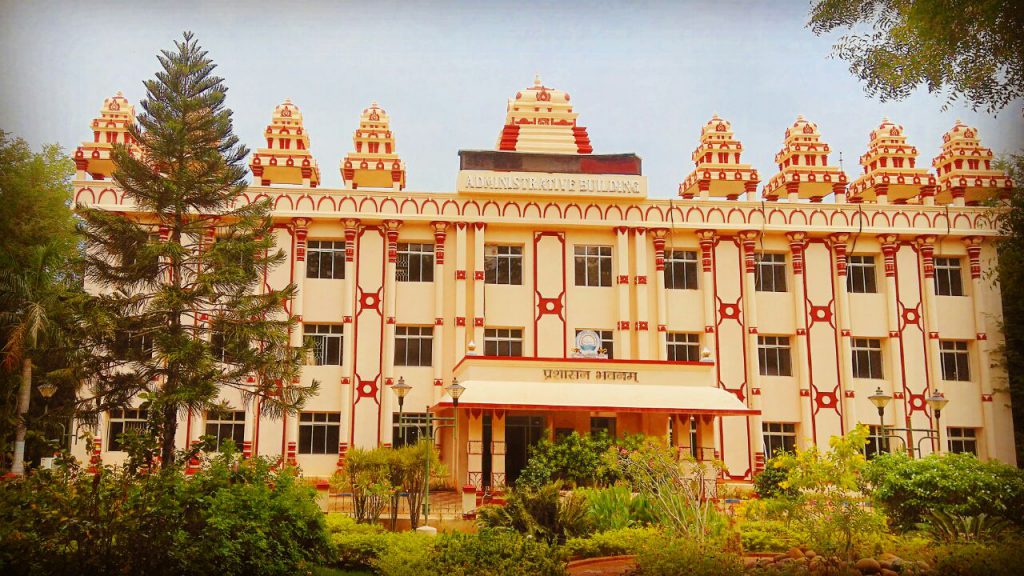
Blending traditional śāstric wisdom with modern academic structure :Gauḍīya Darśana degree
Gauḍīya Vedānta, Sanskrit education, Śāstrī degree, Indian philosophy, Bhakti tradition This undergraduate program, titled Śāstrī in Gauḍīya Darśana, offers students a structured pathway to study Gauḍīya Vedānta within a formal academic environment. It reflects an effort to harmonize timeless spiritual knowledge with contemporary educational frameworks.
In a time when education often focuses primarily on material advancement, such initiatives remind us that true knowledge also includes understanding the self (ātma) beyond the temporary body and its designations.
Program Structure of the Gauḍīya Darśana Degree
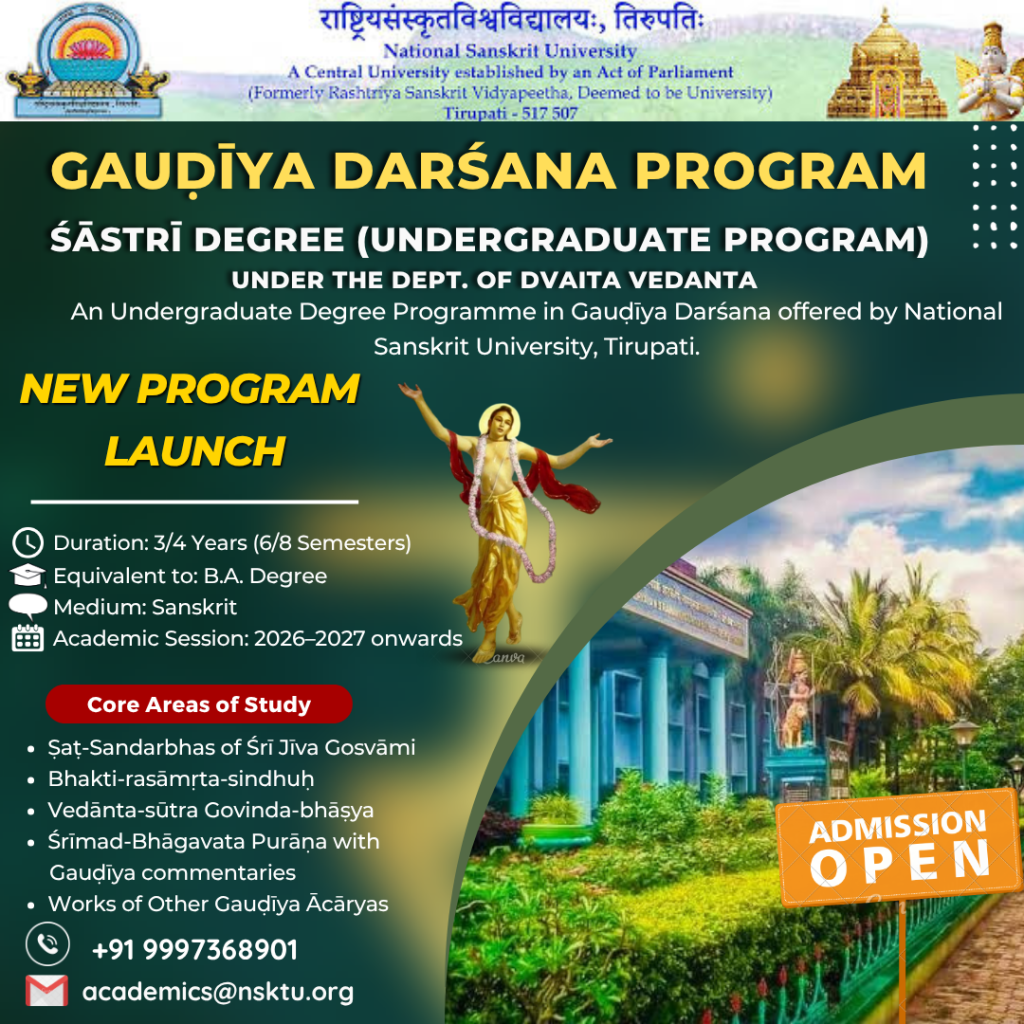
The Gauḍīya Darśana degree follows a semester-based system designed for completion in either three or four years.
Students who complete six semesters over three years are awarded the Śāstrī degree, which is considered equivalent to a Bachelor of Arts. Those who pursue an additional year and complete eight semesters receive the Śāstrī Sammanita, equivalent to a Bachelor of Arts Honours degree.
The program operates under the Choice Based Credit System (CBCS). This system allows flexibility in subject selection while maintaining a systematic progression of philosophical studies. Such a structure ensures that students gain both depth and breadth in their understanding.
From a broader perspective, structured learning reflects the principle of dharma—order and discipline in action—which supports steady intellectual and spiritual growth.
Eligibility and Medium of Instruction
Admission to the Gauḍīya Darśana degree requires completion of 12th standard from a recognized government board. While prior knowledge of Sanskrit is beneficial, it is not mandatory. Students from general academic backgrounds are also eligible.
Additionally, candidates who have completed traditional studies such as Prāk-Śāstrī or equivalent qualifications may apply.
A notable feature of the program is its medium of instruction—Sanskrit. All teaching and examinations are conducted in Sanskrit, allowing students to engage directly with original texts. This removes dependence on translations, which may sometimes limit the depth of understanding.
Such direct engagement aligns with the Vedic approach, where knowledge is received through authentic sources (pramāṇa) without distortion.
Curriculum: Study of Gauḍīya Vedānta
The curriculum of the Gauḍīya Darśana degree is centered on the systematic study of Gauḍīya Vedānta through classical Sanskrit literature.
Core Texts
Students will study foundational works, including:
- Ṣaṭ Sandarbhas
- Śrīmad Bhāgavatam along with its commentaries
- Bhakti-rasāmṛta-sindhu
- Govinda Bhāṣya
- Prameya Ratnāvalī
These texts present a comprehensive view of bhakti (devotional service) as the ultimate goal of life, emphasizing the relationship between the individual soul and the Supreme.
Philosophical Concepts
The program also covers essential philosophical principles such as:
- Pramāṇa (valid means of knowledge)
- Prameya (objects of knowledge)
Through these studies, students develop the ability to analyze philosophical arguments, understand metaphysical concepts, and articulate conclusions with clarity.
In Vedic understanding, knowledge is not merely intellectual—it is meant to transform consciousness and guide action (karma) toward higher purpose.
Financial Structure and Accessibility
The total estimated cost of completing the Gauḍīya Darśana degree over four years is approximately ₹80,000. This amount includes tuition fees, hostel accommodation, and examination charges.
Compared to many modern degree programs, this cost structure makes the program relatively accessible. It allows students from diverse economic backgrounds to pursue higher education in traditional knowledge systems.
Such accessibility reflects a broader principle: knowledge meant for the upliftment of humanity should remain within reach of sincere seekers.
Future Opportunities for Graduates
Graduates of the Gauḍīya Darśana degree have several academic and professional pathways available.
They may pursue:
- Ācārya studies (equivalent to a master’s degree)
- Research in Sanskrit and Indian philosophy
- Teaching roles in academic or traditional institutions
- Contribution to the dissemination of Gauḍīya philosophy globally
Beyond formal careers, such education equips individuals with a refined understanding of life’s purpose. It encourages a shift from temporary pursuits to enduring values rooted in truth and self-realization.
A Balanced Integration of Tradition and Modernity
The Gauḍīya Darśana degree represents a thoughtful integration of traditional śāstric learning with modern academic systems. While the structure follows contemporary educational standards, the content remains deeply rooted in classical wisdom.
This balance is essential. Without structure, knowledge may lack accessibility; without authenticity, it may lose depth. By combining both, the program creates a meaningful educational experience.
In a world often guided by external achievements, such initiatives remind us that true education also involves understanding one’s inner nature and relationship with the Supreme.
Conclusion
The launch of the Gauḍīya Darśana degree at National Sanskrit University is more than an academic development—it is a reaffirmation of India’s enduring intellectual and spiritual heritage. By offering systematic study of Gauḍīya Vedānta in Sanskrit, the program preserves authenticity while making it accessible to modern students.
As education continues to evolve, integrating timeless wisdom with contemporary frameworks may help guide individuals not only toward professional success but also toward deeper clarity about life’s ultimate purpose.
library.vedavarsity.com | www.vedavarsity.com
Deepen your Bhakti-yoga practice, harmonize relationships, and receive guided coaching — all at Vedavarsity.com