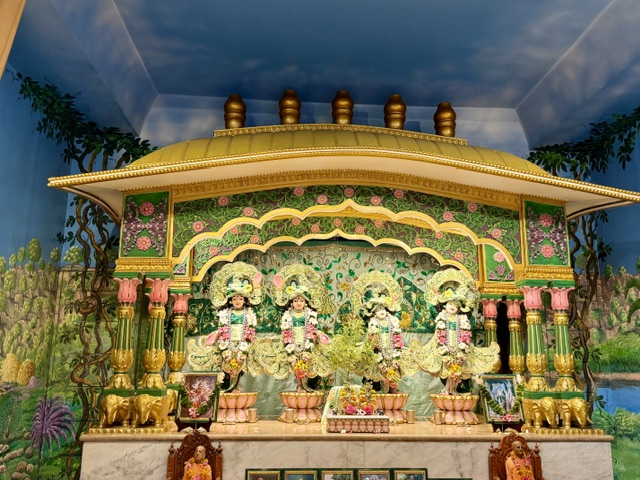
The recent visit to Vraja Eco Village Manila offered a meaningful opportunity to observe how traditional Vedic principles can be applied in a modern setting. Located just outside Manila, this project stands as a thoughtful integration of spiritual life, ecological responsibility, and community development. The visit coincided with the auspicious occasion of Akshaya Tritiya, further enhancing the spiritual significance of the experience.
The presence of the temple, the Deities, and the well-maintained surroundings reflects not only aesthetic beauty but also a deeper commitment to dharma—right living in harmony with divine order.
A Sacred Environment Rooted in Dharma
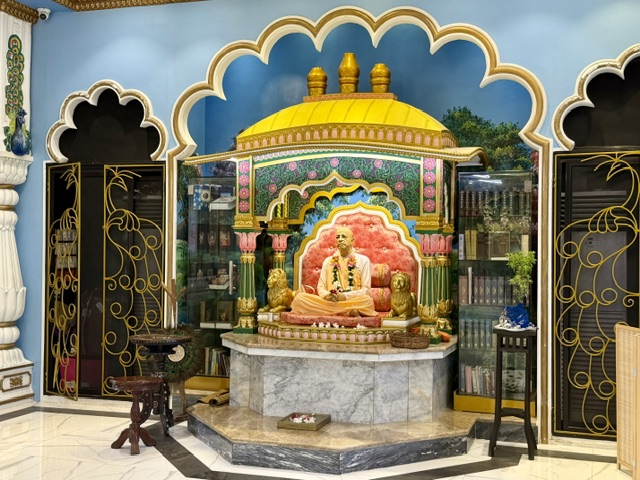
At the heart of Vraja Eco Village Manila lies its temple, which serves as the spiritual center of the community. The Deities are worshipped with care and devotion, reminding visitors of the eternal relationship between the individual self (ātma) and the Supreme.
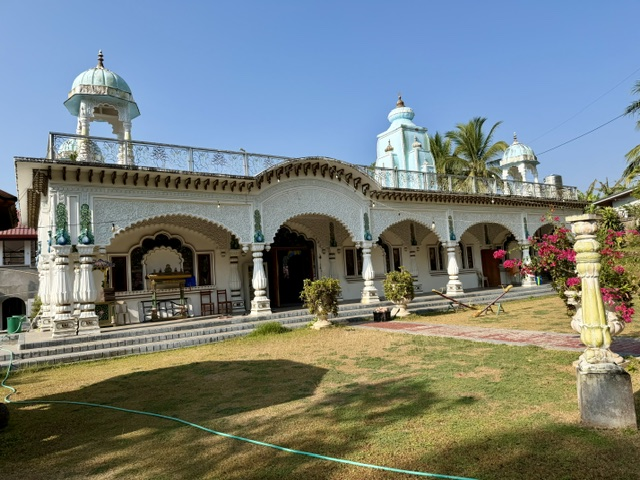
The landscaped grounds surrounding the temple are serene and thoughtfully designed. Such environments are not merely decorative; they support a mode of life aligned with sattva (clarity and harmony), which is essential for spiritual growth. Cleanliness, order, and natural beauty reflect inner discipline and reverence.
From a Vedic perspective, external surroundings influence consciousness. Therefore, maintaining a sacred atmosphere is considered part of one’s duty (dharma).
Participation in Yajna: A Timeless Practice
During the visit, participation in a yajna marked the final stages of a new reception and conference building. A yajna, or Vedic fire sacrifice, is performed to invoke auspiciousness and align human efforts with higher will.
This act is not symbolic alone. According to Vedic understanding, all actions (karma) yield results, and when actions are performed in a spirit of offering, they become purified. The yajna represents cooperation between human endeavor and divine sanction.
In modern development projects, such practices are rare. However, Vraja Eco Village Manila demonstrates that progress can be guided by sacred intention rather than mere material ambition.
Facilities Designed for Holistic Living
Beyond the temple area, the eco village offers a wide range of facilities that support both physical well-being and spiritual practice.
Kirtan and Yoga Hall
A large kirtan and yoga hall serves as a gathering place for spiritual practices such as chanting, meditation, and physical discipline. These activities help regulate the mind and senses, which is essential for self-realization.
Kirtan, the congregational chanting of sacred names, is especially emphasized in the current age as a practical and accessible means of spiritual elevation.
Accommodation and Community Spaces
The presence of private and group guest houses allows visitors to experience community life directly. The ashrama system within the village encourages a structured and purposeful lifestyle centered on learning, service, and self-discipline.
Such arrangements reflect the Vedic principle that human life is meant for higher inquiry, not merely consumption.
Restaurant and Nourishment
The restaurant provides food that is likely prepared with attention to purity and balance. In Vedic culture, food is not just sustenance; it influences consciousness. When prepared and offered properly, it becomes prasāda—sanctified nourishment.
Agriculture and Cow Protection: Foundations of Sustainability
A significant feature of Vraja Eco Village Manila is its agricultural and ecological initiatives.
Fields and Natural Produce
The village includes fields of banana, coconut, and various fruit trees and vegetables. This approach aligns with the Vedic model of simple living and high thinking. By depending on the land, communities reduce unnecessary complexity and reconnect with natural cycles.
Goshala (Cow Protection)
The presence of a goshala highlights the importance of cow protection in Vedic culture. Cows are valued not only for their utility but also for their gentle nature and contribution to sustainable agriculture.
Protecting cows is seen as an act of compassion and responsibility, reinforcing the principle of ahimsa (non-violence).
Education and Future Generations
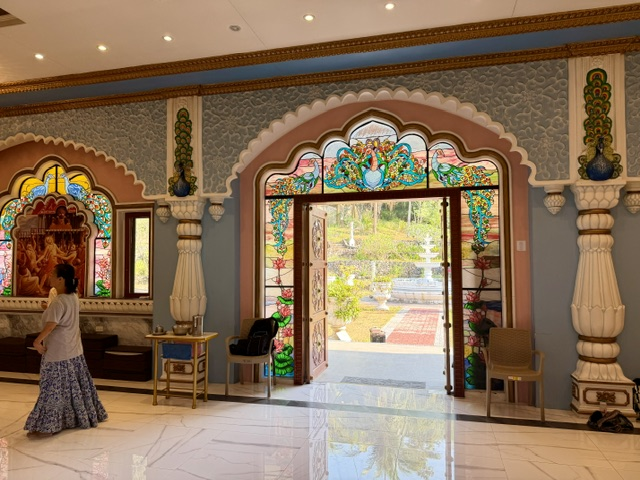
The inclusion of a school within the eco village indicates a long-term vision. Education here is likely designed to combine academic knowledge with character development and spiritual understanding.
In Vedic thought, true education helps one understand the difference between the body and the self (ātma). Without this knowledge, even advanced learning remains incomplete.
By training younger generations in both practical skills and higher values, Vraja Eco Village Manila contributes to a balanced and sustainable future.
A Model for Conscious Living
What distinguishes Vraja Eco Village Manila is not merely its infrastructure but its underlying purpose. Each element—from the temple to the farmland—serves a unified goal: to create a life aligned with natural law and spiritual truth.
In a world often driven by rapid consumption and disconnection, such communities offer an alternative vision. They demonstrate that progress does not require abandoning tradition but can be enhanced by it.
This approach reflects the principle that real prosperity includes inner contentment, ethical conduct, and awareness of a higher order.
Conclusion: Harmony Between Progress and Purpose
The visit to Vraja Eco Village Manila reveals a practical example of how ancient wisdom can guide modern development. The integration of spiritual practice, ecological awareness, and community living offers a balanced path forward.
While facilities and infrastructure are important, their true value lies in how they are used. When guided by dharma and performed as an offering, even ordinary activities gain deeper significance.
Ultimately, such efforts remind us that human life is not meant solely for material advancement, but for understanding our place within a greater, divinely guided system.
library.vedavarsity.com | www.vedavarsity.com
Deepen your Bhakti-yoga practice, harmonize relationships, and receive guided coaching — all at Vedavarsity.com