Mail ID: contact@vedavarsity.com

Contact: +91 9634998911

Google search engineGoogle search engine
Home Blog Page 89

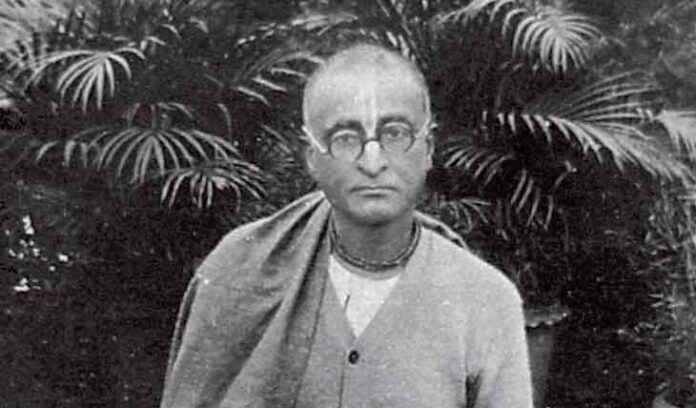
Sri Gaurakisora Siromani (Katao, Vrndavana)

0

Śrī Gaurasiromaṇi Ṭhākura appeared between 1813 and 1818 CE in the village of Gudāpāḍā, also known as Citāhaṭi, under the Kutugrāma police station near Kāṭoā in Bengal. He took birth in an orthodox brāhmaṇa family upholding high standards of learning and ritual purity and was the grandson of the illustrious scholar Śrī Guruprasāda Mukhopādhyāya Vidyānidhi. Guruprasāda’s son Dhanakṛṣṇa had six sons—Gauracandra (Siromaṇi), Īśvara, Navadvīpa, Hariścandra (Cūḍāmaṇi), Giriśa, and Umeśa—and one daughter named Parijāta-devī.​

Early life and education

Up to about the age of twenty, Gauracandra did not receive formal education and passed his days in simple village amusements, being detached from the scholarly pursuits of his respectable lineage. Chastised by the villagers for neglecting the family’s learned tradition, he immediately reformed himself and dedicated his life to study. He first studied under a village paṇḍita in Tāipura, then entered the Sanskrit school of Pañcanana Tarkaratna of Eyopura, Kāṭoā, and later took up systematic study of bhakti-śāstra under Śrī Sakhicaraṇa dāsa Paṇḍita Bābājī of Gaurāṅgapāḍā.​

Family life and transformation to Vaiṣṇavism

Gauracandra married Śrīmatī Rāmadāsī, a chaste and devoted lady from an orthodox brāhmaṇa family of Oragrāma near the Guskara railway station in the Burdwan district. Orphaned in infancy when her father died and her mother entered the funeral pyre as a satī, Rāmadāsī grew up with a vow that she would be given in marriage to Gauracandra, as expressed by her mother before embracing death. From their marriage were born several sons, among whom Rasavallabha Bhaktibhūṣaṇa and Vaiṣṇavacaraṇa Bhagavat-bhūṣaṇa became well known for their devotional learning.​

Although born in a Śākta family, Gaurasiromaṇi came to recognize the supreme excellence of Kṛṣṇa-mantra and received kṛṣṇa-dīkṣā from Śrī Vinodilāla Ṭhākura of Faridpura in the Nadia district. From that time his home became a place of intense Vaiṣṇava-sevā; he would eagerly honor the remnants of food and even water touched by Vaiṣṇavas, regardless of caste considerations. The local brāhmaṇa community criticized him for accepting the ucciṣṭa of devotees from all backgrounds, but he remained completely indifferent to social reproach and continued fearlessly in his devotional practices.​

Rāmadāsī-devī herself was an elevated devotee, eager for Vaiṣṇava-sevā and for honoring the remnants of devotees. Following her husband’s mood, she did not accept jeweler’s ornaments, wearing only simple shell bangles, and personally washed the feet of visiting Vaiṣṇavas, often being mistaken by younger guests for a maidservant.​

Awakening of exclusive bhakti

On one occasion Gauracandra visited Kāṭoā with many students, took bath in the Gaṅgā, and stayed at the nāṭya-maṇḍira of Lord Gaurāṅga’s temple. There he observed the late-afternoon kīrtana and iṣṭa-goṣṭhī of exalted devotees such as Gopīvallabha Ṭhākura, Venīmādhava Ṭhākura, and Sundarananda Ṭhākura, whose lives centered around nāma-kīrtana, Tulasi-parikramā, and constant service to Lord Gaurāṅga. Simply by their association his conception of bhakti changed overnight, and he resolved to immerse himself exclusively in Gauḍīya Vaiṣṇava literature.​

Returning home, he ordered his students to procure various Gauḍīya Vaiṣṇava śāstras and became absorbed in their study, deeply appreciating their language, poetry, and devotional conclusions. He soon returned to Kāṭoā with his students and books to again seek the association of the foremost Vaiṣṇavas there and gave up the study and teaching of other śāstras, dedicating himself solely to Śrīmad-Bhāgavatam and related works.​

Daily life at Kāṭoā

In Kāṭoā his daily schedule was fully absorbed in sādhana and service. He would attend maṅgala-ārati, engage in smaraṇa-kīrtana, bathe in the Gaṅgā, chant japa, and meditate on the Lord’s divine līlā until midday. Thereafter he personally cleaned the toilets used by Vaiṣṇavas and swept the path leading to the Gaṅgā, again bathed, visited Lord Gaurāṅga’s temple, offered respects to Vaiṣṇavas and Gosvāmīs, and took a few grains of Vaiṣṇava ucciṣṭa kept in a special place. His own meal consisted of a small quantity of rice and simple boiled vegetables, offered to his worshipable Deity Giridhārī, and he stated that his stomach would tolerate nothing more elaborate.​

He was attached to a simple-hearted devotee named Khepa Ṭhākura, who acted as a messenger and sometimes jokingly claimed to be Gaurasiromaṇi’s own teacher. Gaurasiromaṇi was a master of the “Aṣṭādaśa-sāhasrī” (the eighteen-thousand-verse commentary) and its ṭīkā, and would teach without consulting texts, invariably concluding his lessons by glorifying Lord Gaurāṅga.​

Emphasis on Vaiṣṇava-sevā

A decisive moment in his life occurred when Venīmādhava Ṭhākura, while serving many Vrajavāsī Vaiṣṇavas at Kāṭoā, found himself without provisions and, in complete detachment, pulled down the wooden doors and windows of his house to sell them for the sake of feeding the devotees. Witnessing such renunciation and eagerness to serve Vaiṣṇavas, Gaurasiromaṇi fainted in ecstasy, and upon regaining consciousness took a firm vow to consider Vaiṣṇava-sevā as his life’s primary duty.​

He maintained an intimate circle (goṣṭhī) of Vaiṣṇavas at Kāṭoā, including Vrndāvanacandra Gosvāmī and Jagadbandhu Prabhu, descendants of Advaita Ācārya who had renounced worldly life and taken veśā-āśraya from Kisoradāsa Bābājī. At Venīmādhava’s request, Gaurasiromaṇi once delivered a three-hour daily exposition for thirty-five consecutive days on the single verse “janmādy asya yataḥ” from the first canto of Śrīmad-Bhāgavatam, causing Venīmādhava to remark that he was surely favored by the mercy of the Six Gosvāmīs.​

Strictness in worship and purity

On another occasion he visited the village of Badogrāma near Burdwan to recite Śrīmad-Bhāgavatam in the house of the Banerjee family. Discovering that the village had neither a Viṣṇu temple nor worship of Śālagrāma-śilā, he declared that he would not even drink water in such a place. In great anxiety, the villagers arranged for a Śālagrāma to be brought from a distant village, offered bhoga, and only then did Gaurasiromaṇi agree to honor the prasāda of Lord Viṣṇu.​

He also displayed firm opposition to animal slaughter and tantric practices contrary to Vaiṣṇava principles. When invited by certain tantric brāhmaṇas of Kagrāma to recite Śrīmad-Bhāgavatam, he became distressed upon learning that they intended to hold animal sacrifice for Kālī on the same site and fervently prayed to Gaura-Govinda. The sacrifice was mysteriously obstructed—each animal required two strikes instead of one—and the frightened sacrificers later received a warning in a dream from the goddess herself and came repenting to Gaurasiromaṇi, who directed them to bathe in the Gaṅgā and subsequently initiated them into genuine Vaiṣṇava-dharma.​

Humility and resolution of disputes

During his time, a prolonged controversy arose in the community over the relative status of Gosvāmīs and other Vaiṣṇavas. Both parties finally requested Gaurasiromaṇi to mediate, promising to accept his verdict, but he replied with deep humility: “Take me as your son. When parents quarrel, the grown son should not be present. Sometimes marital love deepens when a couple differs with one another.” His gentle words melted the hearts of both sides, who abandoned their quarrel and jointly chanted the holy name.​

Vision of Gaurāṅga in the Bhāgavatam

An important account preserved in Śrī Śrī Sadguru-saṅga describes how Gaurasiromaṇi, though greatly learned in scripture, once objected to a Bhāgavatam reciter’s practice of beginning the narration with Gauravandana, the glorification of Lord Gaurāṅga. When the reciter asserted that his glorification of Gaurāṅga was actually present in the Śrīmad-Bhāgavatam, specifically in the blank spaces between the printed lines, Gaurasiromaṇi angrily challenged him. The reciter then instructed that if Gaurasiromaṇi would accept dīkṣā from a qualified Vaiṣṇava and follow prescribed practices for seven days, he would perceive the truth for himself.​

Being internally sincere, Gaurasiromaṇi at once took dīkṣā from Siddha Caitanyadāsa Bābājī and carefully followed the instructions. On the eighth day, when the Bhāgavatam was opened before him, he saw the Gauravandana written in brilliant golden letters in the intervening spaces, and overwhelmed with repentance and divine emotion, he rolled on the ground, weeping. Immediately he renounced his previous way of life and set out on foot for Vṛndāvana, where he remained absorbed in bhajana.​

Residence and bhajana in Vṛndāvana

In Vṛndāvana, Gaurasiromaṇi reduced his public recitation and focused on intimate teaching of Śrīmad-Bhāgavatam to Vrajavāsī devotees, often explaining the deepest topics of the Fourth Canto, such as the pastime of Dakṣa-yajña. On one occasion, when a question arose about how Lord Śiva could dance carrying the burnt body of Satī, a Vaiṣṇava sitting beside him demonstrated the reality of yogic mysticism by entering meditation, invoking fire from his own toe, and leaving his body in flames before the astonished assembly, after which Gaurasiromaṇi gave up public teachings and chose an even more secluded life of bhajana.​

Many exalted Vaiṣṇavas were present in Vṛndāvana during his stay, including Śrī Brahmānanda Gosvāmī of Śṛṅgāra-vaṭa, Śrī Nṛsiṁhānanda Prabhu, Śrī Nīlamani Gosvāmī (a descendant of Advaita Prabhu), Śrī Haracandra Gosvāmī, and the renowned kīrtana singers such as Hajra Mahāśaya and Vaiṣṇavacaraṇa dāsa. They all held Gaurasiromaṇi in deep respect as a genuine Vaiṣṇava of great realization.​

On one occasion, when invited by Śrī Brahmānanda Prabhu to honor prasāda at Govinda-ghāṭa, Gaurasiromaṇi was offered a special elevated seat and silver plates, but he refused, requesting instead a simple leaf plate and suggesting that Brahmānanda himself, as his revered “Prabhupāda,” should take the honored seat. In this way he consistently minimized his own status and emphasized the Vaiṣṇava relationship of “prabhu” and “dāsa.”​

Veśāśraya, austerities, and guru-sevā

After a period of illness in Vṛndāvana, understanding that his remaining days were few, Gaurasiromaṇi accepted veśāśraya (babājī-veśa) from Siddha Nityānanda dāsa Bābājī of Śrī Madanamohana-ṭhākur’s temple. Even while housebound by physical weakness, he wore the kāṇṭhī of Sanātana Gosvāmī’s followers and endeavored to live like a bhajananandī Vaiṣṇava, but when he went to receive the blessings of Siddha Balarāma dāsa Bābājī at Jhadumaṇḍala, he was sharply chastised for still being attached to cooked rice and thus unfit to wear such external signs. In tears of humility, he begged for mercy and thereafter increased his austerities, subsisting on the simplest prasāda of Girirāja—broken pulses and a little rice with salt and black pepper.​

He arranged for daily recitations of scripture for the benefit of resident and visiting Vaiṣṇavas and showed equal respect to all—from infants in the laps of acārya-descendants to the poorest devotees unable to go out for madhukārī. No one could easily touch his feet or offer obeisances before him; he would immediately offer daṇḍavat to others first, even repeatedly bowing to animals, men, women, and the Deities on the roadside.​

Humility in practice

Gaurasiromaṇi’s conduct practically illustrated the verse “tṛṇād api sunīcena,” often referred to by later Vaiṣṇavas as embodied in his character. When questioned by his disciples why he addressed the female sweeper as “mother,” he replied that from childhood till that day she had been cleaning his bodily filth and thus was truly his maintainer and benefactress, worthy of his deepest respect.​

He showed extreme deference to descendants of great acāryas. When Harimohana Gosvāmī, an eighth-generation descendant of Jagannātha Vaiṣṇava Ācārya Gosvāmī, came seeking instruction on Gauratattva, Gaurasiromaṇi for fifteen days only offered him repeated daṇḍavats, refusing to speak, considering him worshipable as the son of an acārya. Only when Harimohana, then a mere boy, insisted with grave words—declaring himself ready to fall into hell if that would please the Vaiṣṇavas—did Gaurasiromaṇi embrace him and reveal to him the truths of Gauratattva, which Harimohana later realized fully.​

Association with disciples and householders

Many householder devotees, including Advaita dāsa (Annada Prasād Rāya) and his brother Banamāli Rāya, were rescued from skepticism and non-Vaiṣṇava influences by Gaurasiromaṇi’s association and guidance. When Annada contemplated converting to Christianity, his mother brought him to Gaurasiromaṇi, whose saintly behavior changed his heart and led him to accept initiation as Advaita dāsa and dedicate his life to bhakti.​

Gaurasiromaṇi also advised Banamāli Rāya, a powerful zamindar, that Kṛṣṇa-prema cannot be attained without Vaiṣṇava-sevā and that such service primarily means arranging for regular Hari-kathā and practical care for aged, blind, or infirm Vaiṣṇavas unable to collect their own bhikṣā. Banamāli took this as a life-command and attempted, within his means, to establish schools for the study of Gosvāmī-granthas and facilities for serving devotees, sowing the seeds of later institutions of bhakti education.​

Gaurasiromaṇi remained indifferent to caste criticism, keeping the association of sincere devotees regardless of social background. For example, he accepted the service of Rājanīdāsa, a Kaivarta by caste from Pabna, who carried his prasāda and faithfully served him, despite objections from conservative Vaiṣṇavas.​

Spirit of atonement and reform

When some devotees once refused to take prasāda in the same row as a Vaiṣṇava who had committed a serious misdeed, Gaurasiromaṇi pacified them by openly confessing all the faults he could find in his own life, thereby softening everyone’s hearts and inspiring the erring Vaiṣṇava to genuine repentance.​

On another occasion, after he had accepted gifts from the Queen of Hetampur—cloth, coconuts, fruits, and money—the Vṛndāvana Vaiṣṇavas excommunicated him according to their standard of renunciation. He accepted their judgment without protest and begged for punishment, upon which they ordered him to recite Śrīmad-Bhāgavatam in every temple in Vṛndāvana for one full year, a task requiring him to give several recitations each day since Vṛndāvana then had thousands of temples. Gaurasiromaṇi carried out this order as the greatest blessing, further purifying his own heart and sanctifying the dhāma with continuous Bhāgavatam-kathā.​

Departure from this world

In 1890 CE, when Śrī Rādhikānātha Gosvāmī left Vraja-maṇḍala for a tour of Gauḍa-maṇḍala, Gaurasiromaṇi went with Annada, Banamāli, and others to the Mathurā railway station to see him off. As the train departed, he wept so profusely out of separation from the Vaiṣṇavas that he lost consciousness. Shortly thereafter he fell ill with a high fever and, after four or five days, gave up his body in Vṛndāvana, deeply lamented by all who knew him.​

In earlier years he had seen Siddha Caitanyadāsa Bābājī in a dream at the very time of the latter’s departure and had arranged an āsana for him, later placing the samādhi of the “Bāḍa Prabhu” of Kāṭoā beside that of Siddha Bābā. After Gaurasiromaṇi’s own disappearance, his relatives placed his samādhi beside that of Bāḍa Prabhu, and to this day bhoga and worship are regularly offered there, the place being revered as the resting place of a genuine Gauḍīya Vaiṣṇava saint.​

What Is The Role Of Diet And Daily Conduct In Human Advancement?

0

Transforming Human Life Through the Timeless Wisdom of Ayurveda

Do you aspire to uplift the lives of others through the perennial wisdom of Ayurveda?
Do you affirm the well-known truths that “food itself is medicine” and that one’s character and condition are shaped by what one consumes?
Do you possess a sincere concern for the welfare of others and desire that all may live with vitality, inspiration, and wholeness of body and mind?

If so, you have arrived at a meaningful path of service.

In the present age, Ayurvedic Lifestyle Coaches are not only in increasing demand, but are urgently needed. Human society has grown estranged from wholesome food, from the rhythms of the natural world, and from the innate intelligence and intuition of the body. We have forgotten how to discern the signals of our own constitution and how to listen attentively to our inner condition. It is precisely here that the role of the Ayurvedic Health Counselor becomes indispensable.

The Meaning of an Ayurvedic Lifestyle

An Ayurvedic lifestyle is one lived in harmony with nature and the cyclical changes of the seasons, while simultaneously honoring one’s unique constitution and the present state of body, mind, and spirit. Such a life does not require rigid or elaborate routines performed mechanically each day. Rather, it consists of making conscious, thoughtful choices that support one’s highest well-being and respect the body’s inherent wisdom.

A common foundational practice includes rising before sunrise, gently cleansing the tongue, drinking warm water, and allowing the body to evacuate naturally. This may be accompanied by various forms of oleation, such as self-massage with oil (abhyanga), oil pulling, or the application of oil drops to the nostrils (nasya). One then engages in appropriate breathing practices, physical movement, and meditation.

An Ayurvedic lifestyle also means eating only when genuine hunger is present and choosing foods suitable to one’s constitution and current imbalance. In essence, it is the art of listening attentively to the body. For example, when one is afflicted with cold, cough, and congestion, the body naturally seeks warm, well-spiced soups and teas. If, however, one continues to consume cold, heavy, and mucus-producing foods such as ice cream, yogurt, and cheese, the imbalance is only aggravated.

The Role of an Ayurvedic Lifestyle Teacher or Health Counselor

Ayurvedic Health Coaches or Counselors are trained in preventive healthcare and the cultivation of health and well-being through the practical application of traditional Ayurvedic principles. Their primary focus is the regulation of diet and daily routine in order to restore and maintain balance.

Through consultation, an Ayurvedic Lifestyle Counselor carefully ascertains an individual’s inherent constitution (prakṛti) as well as the present state of imbalance (vikṛti). Based on this understanding, the counselor provides clear and practical guidance regarding diet and daily habits, thereby assisting the individual in returning to a state of equilibrium.

Training and Qualification of an Ayurvedic Health Counselor

According to the standards established by the National Ayurvedic Medical Association (NAMA), an Ayurvedic Health Counselor must complete no fewer than six hundred hours of formal training. This includes a minimum of seventy-five supervised clinical hours and at least fifty documented client encounters.

While most full-time programs are completed within one year, a variety of reputable online training options are also available.

The Work of an Ayurvedic Lifestyle Teacher

The daily choices made by human beings—concerning the timing, quality, and quantity of food; the regulation of hydration, movement, sleep, human connection, sense of purpose, and time spent in nature—collectively determine one’s physical, mental, and emotional condition.

Ayurvedic Lifestyle Consultants attentively examine these aspects of daily life and gradually guide individuals toward beneficial adjustments that enhance the body’s natural functioning. This may include advising that the principal meal be taken at midday, when digestion is strongest, or encouraging rest before 10:00 p.m. in order to promote deeper, more restorative sleep.

Our habits shape our lived experience, and Ayurvedic Health Coaches are specialists in cultivating health through the refinement of daily conduct.

Scope of Practice

Ayurvedic Health Counselors are trained to serve clients primarily through preventive care and the promotion of health by means of diet and lifestyle guidance. While they possess familiarity with common kitchen herbs and certain classical Ayurvedic herbal formulations, they do not otherwise engage in the formal prescription or teaching of herbal medicine.

The Benefits of Becoming an Ayurvedic Health Counselor

The field of natural and holistic health—particularly Ayurveda—is rapidly expanding and will continue to grow. To become an Ayurvedic Health Counselor is to assume a respected role within one’s community as a trusted guide in matters of diet and lifestyle.

Such training equips one to support the health and healing of family members, friends, clients, and oneself. Ayurvedic Health Counseling also integrates seamlessly with other healing and healthcare disciplines, allowing practitioners to offer a more comprehensive approach to well-being.

This vocation further affords the freedom to shape one’s work according to one’s own circumstances and to design a professional life that aligns with one’s values and aspirations.

Opportunities Following Qualification

As Ayurveda gains wider recognition, numerous professional avenues are opening to qualified Lifestyle Counselors. Indeed, Ayurveda-related positions are now commonly found through standard employment searches.

Education

Many Health Counselors supplement private consultations by offering educational programs through social media, online courses, webinars, or in-person community events. Such initiatives not only serve the public but also allow prospective clients to become acquainted with the counselor’s approach and expertise.

Ayurveda and Yoga: Sister Sciences

Ayurveda is traditionally understood as the sister science of yoga. Within the yoga community, there is a substantial demand for guidance on how to integrate one’s experience on the mat or meditation cushion into daily life.

Ayurvedic Health Counselors may therefore collaborate with local yoga studios by offering workshops, weekend seminars, or informational materials, thereby reaching individuals already inclined toward holistic living.

Integrative Healthcare

As increasing numbers of people seek comprehensive approaches rather than superficial remedies, integrative healthcare continues to flourish. Ayurvedic lifestyle principles complement a wide range of modalities, including allopathic medicine, physical therapy, acupuncture, herbalism, yoga therapy, chiropractic care, and massage therapy, to the great benefit of the client.

Product and Service Industries

The marketplace for Ayurvedic products is expanding rapidly, encompassing skincare, spice blends, herbal preparations, personal care items, and more. The creation and development of products grounded in Ayurvedic wisdom present significant opportunities.

Food and Beverage

For those inclined toward culinary arts, Ayurveda offers rich possibilities. One may write cookbooks, operate a food truck or restaurant, teach cooking classes, or share knowledge through digital media platforms, responding to the growing demand for wholesome, consciously prepared food.

Writing and Copywriting

Those gifted in writing and editing may serve Ayurvedic organizations by articulating traditional principles in a clear and compelling manner for contemporary audiences, assisting in the responsible presentation of Ayurvedic products and services.

Panchakarma Clinics

Those seeking employment within an established setting may consider working in panchakarma clinics, assisting in therapeutic treatments for individuals undergoing Ayurvedic cleansing programs. Additional training may be required, and prospective practitioners should consult directly with clinics regarding their qualifications.

Conclusion

Ultimately, training as an Ayurvedic Lifestyle Teacher or Health Counselor can be shaped in harmony with one’s individual inclinations and talents. A sound understanding of Ayurvedic principles as they apply to daily life and diet equips one with enduring skills of service. Such knowledge, when applied with sincerity and integrity, illuminates a future that is both purposeful and auspicious.

How Does Service To Śrī Jagannātha Manifest Through The Distribution Of Mahāprasāda?

0

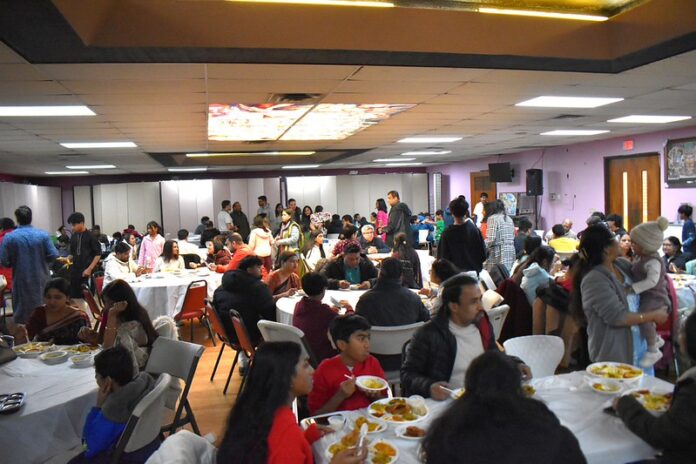
On New Year’s Day 2026, approximately four hundred devotees assembled at ISKCON Plainfield, New Jersey, to honor a traditional Śrī Jagannātha Purī–style Mahāprasāda buffet consisting of fifteen courses.

This annual New Year Śrī Jagannātha Purī–style feast, organized by ISKCON of Central New Jersey (ICNJ), has been conducted for nearly a decade. Even during the year of the COVID pandemic, the devoted volunteers of ICNJ faithfully maintained this sacred tradition. In 2021, they prepared and distributed takeaway Mahāprasāda meals of more than ten courses for hundreds of devotees who had pre-ordered, thus enabling them to begin the new year by honoring the mercy of Śrī Jagannātha Mahāprasāda.

This year’s fifteen-course offering featured a variety of traditional delicacies, including dahibara, ghanta, kāṇikā, khajā, malpua, ariśā, and khāṭā. As the time for honoring prasāda arrived, long lines formed, with devotees patiently waiting for the opportunity to partake of the sanctified food lovingly offered to Śrī Kṛṣṇa.

The continued enthusiasm for the distribution of Lord Jagannātha’s Mahāprasāda was clearly reflected in the dedicated service of the ISKCON Plainfield devotees. Many arrived as early as 5:00 a.m. to clean the facilities, prepare the offerings, arrange the space, and serve the feast attentively and with devotion, striving to offer their very best for the pleasure of the Lord of the Universe, Śrī Kṛṣṇa.

The New Year Śrī Jagannātha Purī–style lunch buffet was organized by the Govinda’s team of ISKCON of Central New Jersey. Those wishing to remain informed about their ongoing service activities may visit their website and follow them on Facebook. Additional photographs from the event  here.

How Is “Bhakti In Action” Manifested During Makara Saṅkrānti In The Lord’s Own Abode?

0

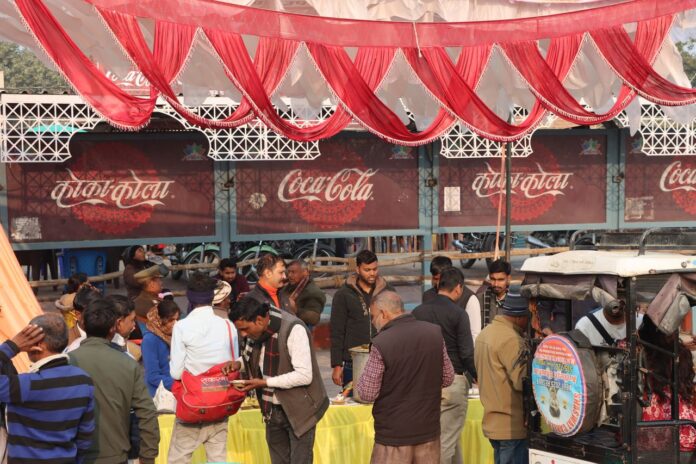
As the sun entered the sign of Capricorn on the auspicious occasion of Makara Saṅkrānti, January 14, 2026, the sacred land of Ayodhyā Dhāma was immersed in an ocean of devotion. Hundreds of thousands of pilgrims, having completed their holy bath at the Māgha Melā in Prayāgraj, arrived at the lotus feet of Lord Śrī Rāma. To honor the arrival of these devotees, ISKCON Ayodhyā substantially expanded its Food for Life initiative, distributing more than 100,000 free prasādam meals.

This vast act of service is firmly grounded in the eternal teachings of the Bhagavad-gītā, wherein Lord Kṛṣṇa declares: “The devotees of the Lord are freed from all kinds of sins because they partake of food offered first in sacrifice. Others, who prepare food for their own sense enjoyment, verily eat only sin” (Gītā 3.13).

Gītā Māniśī Devshekhar Viṣṇu Dās, Project Director of ISKCON Ayodhyā, explained that this endeavor transcends ordinary charity and serves as a means of cultivating genuine social harmony. “The Māgha Melā reminds us that all living beings are bound together on the path of spiritual progress,” he said. “Our humble ‘squirrel service’ this year in Ayodhyā Dhāma, the eternal abode of Lord Śrī Rāmacandrajī, is not merely meant to satisfy hunger. It is meant to dissolve social divisions. When thousands of souls honor prasādam together, distinctions of high and low, rich and poor, cease to exist. We wish to convey that true spiritual advancement can never be separated from social responsibility. By serving the pilgrims and safeguarding the environment through eco-friendly practices, we are demonstrating ‘Bhakti in Action’—bringing healing to both the heart and the Earth. This entire service is offered in dedication to our Founder-Ācārya, Śrīla Prabhupāda, and the disciplic succession.”

To accommodate the unprecedented influx of devotees journeying from the Triveṇī Saṅgama, ISKCON Ayodhyā extended its prasādam distribution to eleven service pavilions throughout the city.

Khichdi distribution by mobile van near Hanuman Garhi.

Crowd in front of the mandir.

Devotees distributing khichdi at one of the pavilions.

Vinay Bhūṣaṇ Chaitanya Dās, Director of Food for Life at ISKCON Ayodhyā, described the meticulous organization behind the effort. A team of more than one hundred volunteers commenced cooking at midnight, ensuring that fresh, hot meals were ready by the early hours of the morning. A coordinated fleet of mini-trucks functioned as the supply network, delivering steaming khichḍī to major locations including Tulasī Udyān, Vīṇā Chowk, and the Ayodhyā Dhāma Railway Junction. In keeping with the vision of “Green Ayodhyā,” all meals were served on biodegradable leaf plates, so that the immense flow of pilgrims would leave no harmful impact on the environment.

Under the guidance of General Manager Sadbhuj Gaur Dās, the atmosphere resounded with the transcendental vibrations of grand harināma saṅkīrtana. Alongside the distribution of prasādam, the books of Śrīla Prabhupāda were also distributed, thus nourishing both the body and the soul with spiritual knowledge.

Local authorities commended the devotees for their exemplary discipline and organization, observing that the well-planned distribution pavilions contributed significantly to maintaining peace and order amid the dense crowds. As the Māgha Melā continues, ISKCON Ayodhyā shines as a living example of the Vedic principle of annadāna, demonstrating that timeless spiritual values hold the true solutions to the social challenges of the modern age.

Can Śrī Caitanya-Caritāmṛta Be Distributed Widely In This Age?

0

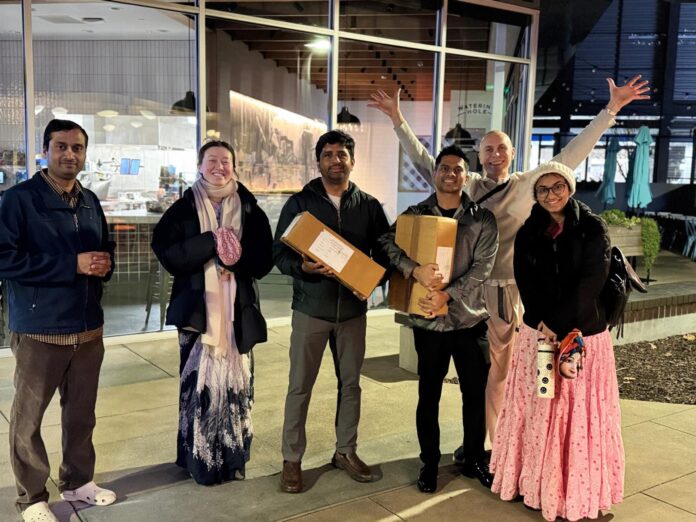
Two evenings ago, by the causeless mercy of Śrī Caitanya Mahāprabhu, I was blessed to witness something truly remarkable during the course of the Be A Gardener campaign. In the association of a small band of devotees, we ventured out with full sets of Śrī Caitanya-caritāmṛta, placing our complete faith in the Lord’s guidance at every step. What unfolded felt too precious not to share, in the hope that others may feel inspired to attempt this service as well.

We selected a South Indian restaurant, knowing well that many from South India possess a deep, natural reverence for sacred literature and spiritual culture. From 6:00 to 10:00 p.m., we stood directly outside, meeting the steady Saturday evening dinner crowd. There was no table, no banner, no signboard—nothing external to attract attention.

Our sole paraphernalia consisted of a dolly stacked with Caitanya-caritāmṛta sets, one set kept open to display the individual volumes, and a nearby car filled to capacity with additional sets. A few copies of Bhagavad-gītā and Śrīmad-Bhāgavatam were kept aside, but the purpose was firmly established: to distribute Śrī Caitanya-caritāmṛta. That singular clarity of mission proved to be decisive.

During the first hour, I primarily observed. To watch Acyuta Kumar Dāsa, Dhīra Praśānt Dāsa, and Mālinī Devī Dāsī was to receive a living education in book distribution—serene, assured, and warm-hearted. By the end of the evening, hesitation had dissolved, fear had vanished, and my own effectiveness increased dramatically.

Words That Open the Heart

Nearly everyone who passed by was respectfully greeted. Simple smiles created immediate connection. Often we would begin by asking, “Where are you from?” Upon acknowledging their place of origin, we would gently place the Caitanya-caritāmṛta in their hands, open it, and share a few essential points. Several presentations were especially fruitful:

“In the Bhagavad-gītā, Kṛṣṇa instructs us to surrender unto Him, but He does not fully elaborate on how that surrender is to be lived. Therefore, in this age He appeared again as Śrī Caitanya Mahāprabhu—Kṛṣṇa Himself in the role of His own devotee—to demonstrate the life of perfect devotion.

“This work is a garland of the most beautiful and essential verses from the Gītā and the Bhāgavatam. Śrīla Kṛṣṇadāsa Kavirāja Gosvāmī has distilled the very essence of all Vedic wisdom here.”

“We are from the local ISKCON temple, and today we are engaged in freely distributing this most confidential knowledge concerning love of God, just as Lord Caitanya did five hundred years ago, traveling from village to village throughout India. This is meant for you—please accept it.”

When the time came to speak about donation, we would explain, “We are not selling this literature; wisdom cannot be priced. We only request a donation from the heart—there is neither a minimum nor a maximum. The cost of printing and shipping this set is one hundred dollars.”

For those not yet prepared to accept the full physical set, we also offered electronic copies, and several of our twenty-five distributions came through this arrangement.

Prasādam, Laughter, and Pure Joy

At one point, a devotee unexpectedly arrived with exceptional prasādam. What followed was a spontaneous gathering filled with devotional warmth—honoring delicious preparations, sharing pieces of cake with passersby, exchanging laughter, and experiencing the deep sweetness inherent in this service.

Even a full day later, the joy of the experience had not subsided. There is something profoundly enlivening about offering others the rarest and most valuable gift—pure transcendental knowledge—and witnessing it be received with gratitude, reverence, and genuine happiness.

If anyone has ever questioned whether distributing Śrī Caitanya-caritāmṛta is possible, or hesitated under the impression that it is “too large” or “too advanced,” I can confidently say: it works. Keep the approach simple. Remain confident. Bring the books. And allow Śrī Caitanya Mahāprabhu Himself to perform the gardening.

What Is A Life Well Lived In Kali-Yuga?

0

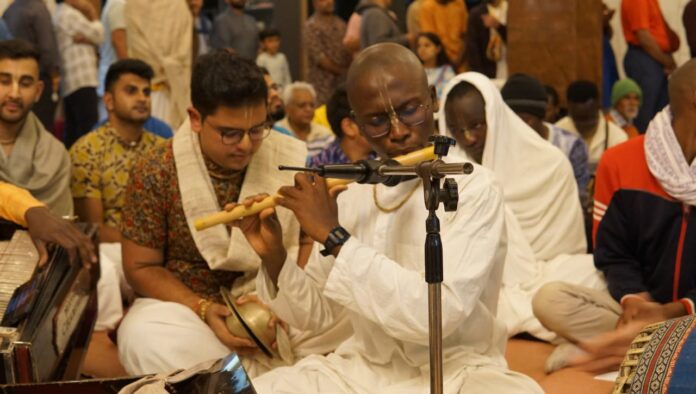
Bhakta Kamita Playing the Flute at a Festival in ISKCON Nairobi

Kamita Kamau, known online as Kamita_Kirtan, is a Nairobi-based, Kṛṣṇa-conscious content creator, musician, gṛhastha, and entrepreneur. Through his work, he documents both his inner spiritual cultivation and the outward manifestation of Kṛṣṇa consciousness within contemporary African society. His journey into bhakti commenced in the year 2020, during a period marked by introspection, inquiry, and a sincere search for meaning. Like many young people of his generation, Bhakta Kamita found himself dissatisfied with pursuits limited to professional ambition or social designation. “I was searching,” he reflected, “but I did not yet know what I was searching for.”

What most deeply impressed him was not philosophy in abstraction, but philosophy in practice. The daily chanting of the holy names, attentive hearing of Śrīmad-Bhāgavatam, and steady engagement in devotional service became the firm anchors of his life. “All I have to do is keep the holy name on my tongue, dance whenever the opportunity arises,” he reflected, “and share moments like these that speak solely of life’s ultimate purpose.” These practices, he explained, gradually bestowed clarity and steadiness at a time when many of his contemporaries experienced confusion and disorientation.

Choosing the Āśrama Path

This growing clarity impelled Kamita to make a decisive commitment: he entered the brahmacārī āśrama at ISKCON Nairobi. Temple life, as he recalled, was at once challenging and deeply transformative. Each day began before sunrise, illuminated by the gentle glow of temple lamps, accompanied by the sound of karatālas and the congregational chanting of the mahā-mantra resonating throughout the temple hall. “One learns very quickly the condition of one’s own mind,” he remarked. “In the āśrama, one cannot hide from oneself.”

The discipline was exacting. There were moments of uncertainty, exhaustion, and inner resistance. Yet these very trials became instruments of purification and growth. “There is still hope for a wretch like me,” Kamita admitted with candor, describing how humility and perseverance gradually supplanted youthful idealism. Over time, the āśrama bestowed upon him what he had not previously encountered elsewhere: a life of structure, accountability, and purposeful belonging.

A Broader World, a Clearer Sense of Duty

After some months in Nairobi, Kamita spent time at Bhaktivedanta Manor in London, England. This experience introduced him to a wider international community of devotees and to varied modes of devotional service. “I wanted to observe how Kṛṣṇa consciousness was practiced in other parts of the world,” he explained. The scale, diversity, and organizational maturity of the UK yātrā broadened his vision considerably.

At the same time, this exposure deepened his sense of responsibility toward his homeland. “Being there made me realize how important it was for me to return,” he reflected. Kenya was not merely his place of origin; it was the field where he felt his contribution would be most significant. Upon returning to Nairobi, Kamita carried with him both a global outlook and a renewed local commitment, seeking to harmonize the discipline of temple training with meaningful engagement in wider society.

Graduating from music school.

LtoR: Securing UK passport to serve at the Bhaktivedanta Manor in 2022; Kamita at the Manor.

Kaminta (center) sharing spiritual literature in the UK.

Emmersed in japa in the early days of Krishna Consciousness

Family, Marriage, and Transition

Naturally, his spiritual decisions had an impact upon his family relationships. His entrance into temple life raised concerns and questions, yet through patience, consistency, and open communication, many of these tensions gradually eased. A particularly formative moment occurred during a conversation with a family member who questioned his prospects beyond the āśrama. Rather than responding defensively, Kamita listened attentively. “That discussion compelled me to seriously consider the question of responsibility,” he recalled.

As with any sincere spiritual journey, a time came when a clear choice had to be made. After careful reflection and consultation with senior devotees, Kamita understood that the path most suitable to his circumstances was the gṛhastha āśrama. This realization ultimately led him to accept married life.

Far from constituting a departure from bhakti, his marriage represented its natural extension. “Temple life prepared me far more than I had realized,” he observed. The discipline, introspection, and service attitude cultivated during his brahmacārī training became essential foundations for household life. While acknowledging that transitions from celibate life can sometimes be accompanied by misunderstanding or stigma, Kamita spoke with sobriety and confidence about accepting responsibility with maturity and steadiness.

Creativity and Conscious Content Creation

Parallel to his spiritual maturation, Kamita’s creative expression steadily blossomed. Music, visual media, and storytelling emerged as his principal instruments of outreach and preaching. His content is youthful, vivid, and immersive, portraying kīrtanas, harināmas, festivals, and the daily devotional life within ISKCON Nairobi. “My heart is a temple,” he remarked poetically, “or at least it is meant to be.”

Kamita is acutely aware that much devotional media tends to circulate primarily within established devotee communities. “As devotees,” he observed, “we can see that much of what we produce is directed mainly toward ourselves.” Yet he has also received encouraging messages from individuals unfamiliar with Kṛṣṇa consciousness, who were drawn not by technique, but by sincerity and authenticity. His long-term aspiration is to gently transcend this enclosed sphere, employing creativity as a bridge rather than a barrier.

Entrepreneurship and Applied Bhakti

In recent times, Kamita has also entered the realm of entrepreneurship, initiating a wellness-centered venture grounded in principles of conscious living. This decision arose from a frank appraisal of practical responsibility. “I need to properly organize my finances,” he stated openly, mindful of his duties as a husband and future family man. Nevertheless, he remains clear that financial gain is not his ultimate aim. “Higher than this,” he explained, “is service to humanity at large. When a divine purpose is served, material provision follows naturally as its effect.”

The endeavor to balance commercial responsibility with spiritual integrity remains an ongoing discipline. Kamita depends upon regulated sādhana, thoughtful reflection, and devotional association to remain steady. “Business is a science,” he admitted, acknowledging both the steep learning curve and the moments of hesitation and self-doubt that accompany it. Support from both within the Vaiṣṇava community and beyond it has strengthened his conviction that bhakti can be meaningfully applied within the modern world.

Kamita with his newly-wedded wife Sharon.

Kamita playing at Harinam Utsava in Mumbai, Oct 2025. Photo by @kadam_dinesh_photography

Spending time in nature seeking inspiration to share with the world.

Looking Ahead: Youth, Africa, and Responsibility

Kamita situates his personal journey within the broader African context, particularly among young people confronted by unemployment, social unrest, and widespread disillusionment. “Peace of mind has become the rarest commodity,” he observed, noting how many seek temporary escape rather than genuine transformation. In contrast, he points to Kṛṣṇa consciousness as offering something far deeper: access to what he described as “an unlimited reservoir of happiness,” available to those who sincerely engage in devotional service.

Looking forward, Kamita envisions a future marked by creative collaboration, responsible leadership, and grounded preaching throughout the African continent. He believes that young African devotees must assume ownership of Śrīla Prabhupāda’s mission, expressing it authentically within their own cultural and social realities. His own life, still in the process of unfolding, stands as a living illustration of how devotion, creativity, and responsibility may be harmoniously integrated in service to a higher purpose.

Readers who wish to follow Kamita Kamau’s ongoing journey or explore opportunities for creative collaboration may visit his Instagram profile, where he regularly shares insights into his music, devotional activities, and community initiatives.

Why Did Mahārāja Parīkṣit Question The Lord’s Rāsa-Līlā?

0

Overview

This article ‘Vikrīḍitaṁ vraja-vadhūbhir’ was originally written by an unknown author under the editorship of Śrīla Bhaktisiddhānta Sarasvatī Ṭhākura Prabhupāda and first published in the 8th volume of Dainika Nadīyā Prakāśa on 29th October 1933 under the title, ‘Rasa Yātrā.’ The article explains the dangers of hearing higher topics for the conditioned jīvas and how Śukadeva Gosvāmī has himself warned about this.
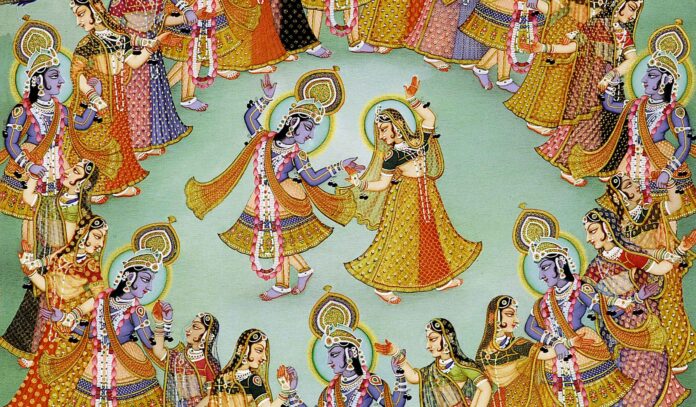
Today is Rasa Pūrṇimā. Many people have gathered in Navadvīpa, Śāntipura, Vṛndāvana, Purī and other holy places. The purpose of these pilgrims is to take darśana of Śrī Kṛṣṇa’s rāsa-līlā. It is the opinion of those who are knowledgeable of their spiritual identity that there is no other greater sevā than this, and in this respect there is no doubt that it is everyone’s duty to endeavour to gain qualification for this sevā. Without first climbing the branch of a tree, trying to reach the fruits is a disturbance.

What tattva is Śrī Kṛṣṇa? What is our svarūpa? What is the tattva of Śrī Kṛṣṇa’s gopīs? What is our relationship with Them? Without knowing what is actually rāsa-līlā, then in our attempt to attain darśana of that rasa, we shall simply try to pursue our desire to enjoy. We will not pursue the real thing. Śrī Kṛṣṇa is aprākṛta-vastu (fully spiritual). We cannot comprehend Him through material knowledge. Neither the physical senses nor the knowledge acquiring senses are sufficient to attain knowledge of Kṛṣṇa. Those vraja-gopīs with whom Kṛṣṇa performs His rāsa-līlā, are just like Śrī Kṛṣṇa in that they are inaccessible to material intelligence. So long as there remains a fraction of lust in our consciousness, then we have no qualification to take darśana of that rasa. Lust can never find a place in the heart of a devotee of Śrī Kṛṣṇa who has eka-niṣṭhā-bhakti (one-pointed exclusive devotion). If at any time a devotee of Kṛṣṇa happens to think about lusty affairs and starts to look at those, then by his good fortune a desire will arise in him to spit. Therefore one mahājana has sung thus:

yad-avadhi mama cetaḥ kṛṣṇa-pādāravinde
nava-nava-rasa-dhāmany udyataṁ rantum āsīt
tad-avadhi bata nārī-saṅgame smaryamāne
bhavati mukha-vikāraḥ suṣṭhu niṣṭhīvanaṁ ca

“Ever since my mind became immersed in the light of ever-new rasas at Kṛṣṇa’s lotus feet, whenever I recall my previous association with women, my mouth turns in disgust and I spit at the thought.” (Bhakti-rasāmṛta-sindhu 2.5.72)

It is especially observed that only the baddha-jīvas are inclined towards following the path of sensual enjoyment. Śrī Śukadeva has told Maharaja Parikṣit:

naitat samācarej jātu manasāpi hy anīśvaraḥ
vinaśyaty ācaran mauḍhyād yathā rudro ’bdhijaṁ viṣam

“One should not engage in these activities if he is not as powerful as the Lord, not even in the mind. If one does so out of foolishness, then he will be destroyed, just as drinking an ocean of poison would destroy someone without Śiva’s powers”. (Bhāg. 10.33.30)

Except for the Lord, these things (the rāsa-līlā etc.) should not be practiced by anyone, even in the mind. Apart from Rudra, anyone else who drinks an ocean of poison will only invite destruction. If by foolishness someone tries to imitate the Lord’s līlā, then he will be destroyed. We can observe in Śrī Kṛṣṇa Caitanya Mahāprabhu’s pastimes in Nīlācala – He performed nāma-saṅkīrtana only amongst His general associates and with His intimate associates He tasted rasa. The aforementioned divine mellows are complete and flourishing in rāsa-līlā and are meant to be relished internally by confidential liberated devotees. Now, if we conditioned souls, under the laws of material nature, run after the darśana of rāsa-līlā then whatever proper or improper sādhana we perform will be reviewed by the highly advanced and learned devotees.

All the materially conditioned people that run after rāsa-līlā darśana can be divided into two classes – one class is the atheistic moralists, and the other class are the immoral sense enjoyers. In order to show how the aforementioned classes become entangled in difficulties after hearing about the rāsa-līlā, Maharaja Parikṣit, after hearing the rāsa-līlā from the divine mouth of Śrī Śukadeva, masquerading as such a person of that class, asked a question. The inquiry was this:

saṁsthāpanāya dharmasya praśamāyetarasya ca
avatīrṇo hi bhagavān aṁśena jagad-īśvaraḥ
sa kathaṁ dharma-setūnāṁ vaktā kartābhirakṣitā
pratīpam ācarad brahman para-dārābhimarśanam

“O brāhmaṇa, the Lord of the entire universe, has descended to earth in order to destroy adharma and reestablish dharma. Indeed, He is the original creator, follower and guardian of dharma. So how could He have violated them by touching other men’s wives?” (Bhāg.10.33.26-27)

Śrī Kṛṣṇa is the highest enjoyer, and the gopīs, His eternal maidservants, cannot be enjoyed by anyone else but Him. They are only the medium of that rasa, which is created by parakīya-bhāva. As long as a desire to enjoy lusty affairs remains in our heart and as long as we perform activities that are unfavourable for kṛṣṇa–bhajana, then even after having ceased relations with our family or pretending that we have ceased, whatever the case may be – until we understand that kṛṣṇa-bhajana is our only duty in life then we cannot realize such high realities about the gopīs and Kṛṣṇa. Those spiritual teachings that exist in the manifested pastimes of the gopīs cannot even slightly enter the heads of atheistic moralists because in atheistic morality there is nothing that passes beyond the knowledge of mundane chemistry that is based upon the exploitation of material elements.

Maharaja Parikṣit, though he was a bhāgavata, asked the aforementioned question because, due to their offensive tendency, atheistic moralists accuse Śrī Kṛṣṇa of debauchery. The crest jewel of eternally liberated mahā-bhāgavatas, Śrīla Śukadeva Gosvāmī, answered his query. We have already mentioned the answer of Śrī Śukadeva.

Immoral, licentious people go to hear the rāsa-līlā simply to satisfy their personal dispositions. And the disciples of Kali, for a wage of two-paisa, having obtained some material scholarship and a little knowledge of anusvara and visarga, with lustful consciousness, pose as reciters of rāsa-līlā. In a ‘fit of bhāva’ they drench their breasts with a flood of tears. Moreover it has been said, “When the recitation is over and the time comes to accept donations of money, clothes etc, they suddenly regain their consciousness!” All glories to Kali-yuga for such a performance!

During a stay in Nīlācala at Puruṣottama Maṭha, the famous zamindar, the pride of the kāyasthas, Rājaṛṣi Śrīyukta Śaradindu Nārāyaṇa Rāya (MA), Prajṣa-vedānta-bhūṣaṇa Mahāśaya of Dinajpur, once informed me about a recital of the rasa-paṣcādhyāya by a particular famous reciter of the class mentioned above, who had a beautiful voice. Explaining the gist of the śloka, naitat samacarejjatu, I told him that a baddha-jīva such as myself had no qualification to hear and speak about the rāsa-līlā. He informed the main reciter of my words, and the reciter replied by quoting the following śloka in order to establish that he indeed had the adhikāra to speak and that his audience was also qualified to hear him speak about the rāsa-līlā:

vikrīḍitaṁ vraja-vadhūbhir idaṁ ca viṣṇoḥ
śraddhānvito ’nuśṛṇuyād atha varṇayed yaḥ
bhaktiṁ parāṁ bhagavati pratilabhya kāmaṁ
hṛd-rogam āśv apahinoty acireṇa dhīraḥ

“If a self-controlled person listens with faith to the confidential pastimes of Śrī Kṛṣṇa with the damsels of Vraja, from the mouth of Śrī Guru and glorifies it at every second, then he immediately obtains transcendental devotion towards the Supreme Lord and becomes capable of distancing himself from the heart disease of lust without delay.” (Bhāg. 10.33.40)

Without meditating upon the actual meaning of this verse, if we are only eager to hear about the rāsa-līlā for the sake of listening without discretion, and if we attempt to enjoy the rāsa-līlā when we are afflicted by a licentious consciousness, then we will fall into a state of severe illusion.

It was my misfortune to be introduced to this aforementioned reciter. He was in bābājī-veśa. One day I saw him at the Purī station with a nice pair of fashionable shoes adorning his feet. Thereafter, I undertook a special enquiry and discovered that he had two or three mātājīs. Naturally, while visiting a disciple’s house, the mātājīs don’t accompany the bābājī but stay nearby at an akhāḍā. The bābājī is almost elderly. For many years he has been reciting the Bhāgavata – even so, why has the heart disease of lust not subsided? Why has his state gradually come to resemble that of Yayāti?

Reciters should take note of the word ‘dhīra’ in the aforementioned verse. The rāsa-līlā should only be heard and continuously sung by a self-controlled person. It is not a subject matter for discussion by one who is afflicted with lust. Except for the pure Vaiṣṇava, others cannot be considered to be dhīra. Because their minds are running here and there for the sake of worldly sense objects, they are adhīra. Therefore, they have no qualification to hear and preach about the rāsa-līlā.

From whom does a completely self-controlled person hear about the rāsa-līlā? Not from a person afflicted with lust, but from the lotus feet of Śrī Guru who is free from lust. And in front of whom does he perform kīrtana? Not in front of an unqualified person, but confidentially and individually to a qualified person. For what purpose does he continuously glorify the topic of rasa? Not for the sake of earning money, but out of love for Kṛṣṇa. What is the result? As regards the result, the self-controlled never pray for any other result other than the pleasure of Kṛṣṇa – and in his heart, even if somewhere there is a small amount of lust hidden, then by the auspicious desire of Śrī Kṛṣṇa it is removed and that excellent self-controlled devotee stays absorbed in the pleasure of service.

Therefore, to gain qualification to see or hear the rāsa-līlā, one should become dhīra. Being self-controlled one should serve the lotus feet of the sad-guru (bona-fide spiritual master) and should be patient to gain that qualification. Without first climbing the branch of a tree, the fruits can never be reached.

What Qualification Is Required To Enter Unnata-Ujjvala-Rasa?

0

Overview

The following discourse was spoken by Śrīla Sarasvatī Ṭhākura Prabhupāda in the Sārasvata Nāṭya-mandira, Śrī Gauḍīya Maṭha, at 6:00 pm in the evening of Śrī Rādhāṣṭamī, September 19th, 1931. This was first printed in The Gauḍīya, Vol. 10, No. 11 in October 1931, and reprinted in Śrī Caitanya Sārasvata Maṭha’s periodical, Śrī Gauḍīya Darśana, Vol. 4, October 1958. This article was translated into English by Swami B.V. Giri)
There is one personality whose name is not referred to in the Śrīmad Bhāgavatam, yet the readers of Śrīmad Bhāgavatam nurture the hope of becoming that person’s devoted servant. May that personality, who is everything to Bhagavān, completely destroy our false-ego and grant us shelter at Her feet.

Today is Her appearance day. Having accrued all varieties of compassion from Bhagavān, she distributes that as gifts to all. May that personification of great mercy manifest within our hearts and make Her appearance there. May Her appearance day be the concern of our adoration.

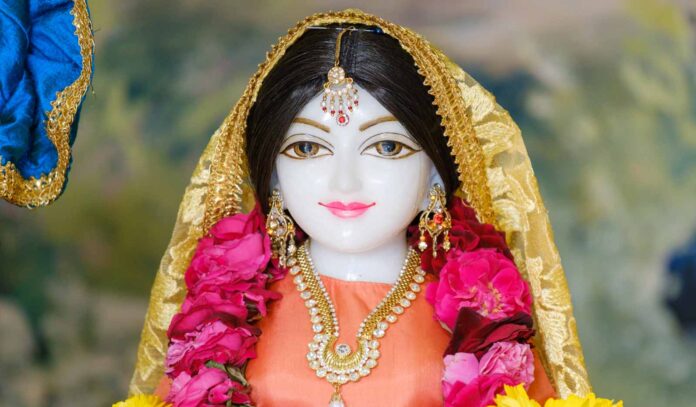
Generally we hear that the whole world is maintained by Govinda. Many people discuss about Govinda in this way. Yet there is one whom Govinda Himself considers as His sarvasva – His all in all. Without taking shelter of that personality, we will not be able to comprehend what sarvasva actually means. The word sva means ‘one’s own’, and sva also means ‘treasure.’ Sva means Govinda’s own and also one who is Govinda’s treasure. She is the complete wealth of Govinda – the wealth of the wealth of Govinda. She is Govinda’s sarvasva-vastu. When we make Her our worshippable object, then we will understand the actual meaning of worship.

All the śāstras loudly proclaim that those things in relation to Bhagavān are the objects of worship. Apart from Him, no one else can be worthy of the word ārādhya (worship). At present we are bound by ignorance and we have forsaken our search, cheating ourselves out of attaining prema. At the time when anarthas arise, we mistake Him for something else. Our ultimate goal is artha (that which is necessary), the opposite of which is anartha. If we do not serve those innermost necessary ideals, or perfections that are available to us, and if we do not gain instructions on the matter of service, then we will be ruled by our own false-ego, rendering service unto something else other than that which is actually worthy of service.

Only divine love for God is worthy of worship. Understanding this point clearly, we live with the fervent hope that we will eventually be counted amongst Her retinue. Otherwise, it is better for us to die thousands of times.

āśā bharair amṛta-sindhu-mayaiḥ kathaṣcit
kālo mayātigamitaḥ kila sāmprataṁ hi
tvaṁ cet kṛpāṁ mayi vidhāsyasi naiva kiṁ me
prāṇair vrajena ca varoru bakāriṇāpi

“O Varoru, my beautiful, most magnanimous Goddess, my heart is flooded with an ocean of nectarean hopes. I have somehow been passing my time until now eagerly longing for Your grace, which is an ocean of ever cherished nectar. If still you do not bestow Your mercy on me then of what use to me are my life, the land of Vraja or even Śrī Kṛṣṇa who without You, is simply a mighty hero the destroyer of demoniac forces like Baka.” (Vilapa-kusumanjali 102)

ha natha gokula-sudhakara su-prasanna
vaktraravinda madhura-smita he krpardra
yatra tvaya viharate pranayaih priyarat
tatraiva mam api naya priya-sevanaya

“O Lord, O ambrosial moon of Gokula, O Lord whose beautiful face is like a lotus flower, O sweetly smiling one, O You who are soft and compassionate, so I may render service unto You, please take me to where Your beloved sports in loving pastimes with You.” (Vilāpa-kusumāṣjali 100)

This is the devotee’s only desirable hope – when will that ocean of nectarean hope bear fruit? I believe it is imperative that I maintain my life because of that hope. But because our eagerness does not increase, that hope is not completely attained – that hope is not fruitful. If that hope is not fulfilled today, if today Govinda’s sarvasva does not manifest in our hearts, then we have been deceived. You will not be able to find anyone more unfortunate than us in the history of the world. If we are cheated out of serving that personality whose mercy awards us everything we need, including residence in the Lord’s holy dhāma, and all things connected to Him, and if we cannot understand Her identity or discover Her within the 18,000 verses of the Śrīmad Bhāgavatam, then our study of the Śrīmad Bhāgavatam has been pointless.

Being intimately acquainted with Her identity, Śrī Gaurasundara has spoken to us on the topic of unnata-ujjvala-rasa (the highest mellows of conjugal love) , explaining the various ways of serving the Lord and the process of pure service. It is only because He spoke to us about ujjvala-rasa that we may understand the topic, as well as the opposite – the meagre splendour of material rasa.

In order to incite us to render service unto Him, Bhagavān has personally given us knowledge of Himself in so many ways. However it is necessary that we fully understand that personality who has rendered such perfect service to Bhagavān that He has made Her the object of His own service. Those who praise Her can award us the qualification to serve Her and they can manifest anurāga (attachment) for Her lotus feet within our innermost heart. The intelligence and strength to serve Her is attained by accepting the association of Her beloved friends who are under Her shelter – in this way we may realize that service to Her is our highest objective.

When we can understand, through the instructions of the mahājanas, that She is Bhagavān’s sarvasva, we must proceed to serve Her, knowing that the prosperity of worship only exists in Her. From this day forward, Her appearance day, if we engage in Her service then we shall become qualified to reach the pinnacle of the highest type of auspiciousness.

All of us do not pray for that highest auspiciousness. But if by some ajṣāta–sukṛti we obtain the association of one of the associates of Vṛṣabhānu-nandinī, who is the personification and source of supreme auspiciousness, and if we are granted the actual good fortune of hearing genuine discussions about Her, then we can attain the inspiration to journey along the path of highest auspiciousness.

If we deprive ourselves of rendering service to and taking shelter of She who means everything to Nanda-nandana, the emporium of rasa (akhila-rasāmṛta-mūrti) as well as Her associates, then we will never attain the qualification to serve Govinda. Firstly, to understand Her identity, we believe that it is necessary to know Her name. But while studying the Bhāgavata we cannot find any occurrence of Her name, we only find descriptions of Her form, qualities, the distinctive characteristics of Her companions and Her pastimes. In Bhāgavatam, we find everything about Govinda’s all in all, with the exception of Her name. But we discover this in the verses of Śrīmad Bhāgavatam:

jṣānaṁ parama-guhyaṁ me yad vijṣāna-samanvitam
sa-rahasyaṁ tad-aṅgaṁ ca gṛhāṇa gaditaṁ mayā

“To be merciful upon you I will teach you the most esoteric knowledge of Me, including the realisation of My nature and entourage, the inconceivable mystery of loving devotion or prema-bhakti, and its constituent part in the form of devotional practice or sadhana-bhakti. Now hear My message attentively, and accept what I impart to you.” (Bhāg.2.9.30)

kālena naṣṭā pralaye vāṇīyaṁ veda-saṁjṣitā
mayādau brahmaṇe proktā dharmo yasyāṁ mad-ātmakaḥ
tena proktā sva-putrāya manave pūrva-jāya sā
tato bhṛgv-ādayo ’gṛhṇan sapta brahma-maharṣayaḥ

“The message of the Vedas is eternal religion, non-different from Me. When in the course of time those eternal teachings disappeared from view with the universal cataclysm, I imparted them to Lord Brahmā at the dawning of a new creation.” (Bhāg. 11.14.3-4)

The Lord explained all these topics to Brahma, the original person, but after some time the people of this world forgot the Lord’s words because the stream of their thoughts were subjected to the effects of old age and destruction.

jṣānaṁ parama-guhyaṁ me yad vijṣāna-samanvitam
sa-rahasyaṁ tad-aṅgaṁ ca gṛhāṇa gaditaṁ mayā

“As I speak, listen to Me and try to understand. Knowledge about Me is extremely confidential.” That knowledge is endowed with realization, it is knowledge possessed with confidentiality – it is the supreme secret. Rahasya means rahasi sthitaḥ – this means that those secrets cannot be assimilated by any external force, nor can any branch of those secrets be grasped. Due to the currents of thought that exist in the external world, we have forgotten the essential objective of taking shelter at the feet of those who have true knowledge of the ātmā. Bhagavān is ever ready to bestow this knowledge.

Bhagavān told Brahmā: “As I speak, listen to Me and try to understand. Without My mercy no one is eligible to hear or assimilate this message. Only through My mercy can anyone obtain this confidential knowledge. What am I? What is My form? What is My svarūpa? What are My qualities? What are the distinctive characteristics of My confidantes? What is My līlā? My supramundane pastimes that are surcharged with rasa far exceed the path of mundane sentiments. There is no way to attain this without the potency of My mercy. I am the storehouse of all transcendental qualities – I am not speaking about those qualities that are contaminated with the modes of passion and ignorance, but of those that are the foundation for creating, maintaining and destroying the universe. I am distinguished by these attributes and I am the active cause of all effects, thus I am the essential original principle. This can only be realised by attaining My mercy.” In this way the words mad-anugraha (My mercy) have been used. Information concerning Bhagavān’s parts and parcels, information on confidential topics related to Him, information concerning realized knowledge – specifically that which is endowed with spiritual consciousness, and information concerning His opulence – these are all supremely confidential and non-dualistic. It can never be initiated at any period or for any reason without the express mercy of the Lord. This secret knowledge is thoroughly expressed in the beginning of the catuḥ-śloki verses of the Śrīmad Bhāgavatam. We are most fortunate that Śrī Gaurasundara has revealed this to the world. A secret topic has been mentioned, but the name of that personality about whom this secret is concerned has not been uttered. Because it is a secret, it should not be revealed to those advocating foolish ideologies and thus it has not been openly disclosed. After hearing the pastimes of Nanda-nandana as narrated in the Bhāgavata, such people do not gain strong faith, and rejecting all these topics they simply deliberate upon the impersonal non-dual nature of the Lord, which is favourable to their mundane realisations. Some of them consider it reasonable to merge into that. Without hearing from a proper source, their perceptions will be perverted. Due to their vehement hatred of service to the Lord, such persons can never understand topics concerning the intrinsic nature of bhakti. Due to the trajectory of the sun, the appearance day of the Supreme Goddess who is fully imbued with rasa, has arisen in our own radiantly pure hearts. The roaming sun is revealing that Supreme Goddess. Therefore, today the demigods are also showing us great favour by revealing this secret.

It is our duty to surrender unto one who is acquainted with that secret. A poet by the name of Manohara Dāsa has said:

rādhā-pāda-paṅkaja bhakata ki āśa
dāsa manohara kara ta ’piyāsa

“The hope of the devotees is that they may serve the lotus feet of Śrīmatī Rādhārāṇī. This is also Manohara Dāsa’s desire.”

The exclusive aspiration of the greatest devotees of the Lord is service to the lotus feet of Radha:

śrī-rādhā-pada-dāsyam eva paramābhīṣṭaṃ hṛdā dhārayan
karhi syāṃ tad-anugraheṇa paramābhutānurāgotsavaḥ

“When will I relish that most wonderful festival of attachment to the lotus feet of Śrī Radha by holding that most supreme desire of serving the Divine Couple, within my heart?” (Rādhā-rasa-sudhā-nidhi 259)

In his aṣṭāpadīs, Śrī Jayadeva has said:

kaṁsārir api saṁsāra-vāsanā-baddha-śṛṅkhalām
rādhām ādhāya hṛdaye tatyāja vraja-sundarīḥ

“The enemy of Kaṁsa (Śrī Kṛṣṇa) abandoned the other beautiful damsels of Vraja and took Radha within His heart, for she was like a chain that tied him tightly to his supreme and essential desire to enjoy the rasa dance.” (Gītā Govinda 3.1)

At the rasa-sthālī all the gopīs are present with Gopīnātha, absorbed in playful pastimes of rasa. When Vārṣabhānavī (Śrīmatī Rādhārāṇī) arrived at the rasa-sthālī, She saw that unlimited gopīs were dancing in a circle, all of them fully occupied in serving the Lord. Feeling sorrow within Her mind, the daughter of Vṛṣabhānu Mahārāja thought, “Today My Kṛṣṇa is in the hands of others! Today My own associates are busy enjoying pastimes with Him!” Thus, to nurture vipralambha-bhāva – which actually nourishes sambhoga-rasa – rather than taking part, Vārṣabhānavī ran away from the rasa-sthālī. At this point Jayadeva Prabhu has written, “Kṛṣṇa, the enemy of Kaṁsa, suddenly broke away from the rasa-sthālī.” Saṁsāra-vāsanā-baddha-śṛṅkhalām – with thoughts of Rādhā in His heart, Kṛṣṇa abandoned all the other beautiful damsels of Vraja. When someone rejects the shelter of Rādhikā, any expertise they may have in pleasing the senses of Kṛṣṇa can never conform with exclusive heartfelt service to Him. All the gopīs are direct expansions of Rādhikā, and while they remain proudly under the shelter of Kṛṣṇa’s sarvasva, Śrīmatī Rādhikā, they can supply Kṛṣṇa the topmost pleasure:

rīmān rāsa-rasārambhī vaṁśī-vaṭa-taṭa-sthitaḥ
karṣan veṇu-svanair gopīr gopī-nāthaḥ śriye ’stu naḥ
(Cc. Ādi-līlā 1.17)

“Śrīmad Gopīnātha nurtures the mellows that manifests during the rāsa-līlā. Standing at the shore near Vaṁśī-vaṭa, He attracts all the gopīs by the sound of His flute. May He grant us all auspiciousness.”

We will never assent to enjoying Śrī Kṛṣṇa (sambhoga) without taking shelter of She who is His all in all. To shed light on this, the author of the aṣṭāpadī reveals something that supplements the description in the Bhāgavata when he says, tatyaja-vraja-sundarih – as all the gopīs danced in the rāsa-līlā, Kṛṣṇa abandoned them in order to find Śrī Rādhikā who resided in His heart. The fetters of the love of all the other gopīs are powerless, weak and susceptible in comparison to the bonds of Vārṣabhānavī which are extremely strong and powerful. All the gopīs took shelter of Vṛṣabhānu-nandinī’s adhirūḍha-mahābhāva – overwhelmed by mohana, madana and other intense feelings of separation, they went to find Kṛṣṇa. They all understood that without taking shelter at the lotus feet of Vārṣabhānavī, Govinda’s sarvasva, madhura-rasa is never completely nourished. All the loving sentiments with which the various gopīs perform their services, simultaneously exist in Vārṣabhānavī exclusively in their entirety. Deserting all the other gopīs, who were immersed in feelings of proṣita-bharttṛkā etc. Kṛṣṇa was attracted by Vārṣabhānavī’s captivating charms, since She possesses all these loving sentiments in full. Thus He set out to find that personality who even attracts the all-attractive One. The gopīs are expansions of Rādhikā and are eternally a portion of She who is the original source – they could not bind Kṛṣṇa, for He completely belonged to Rādhikā. Thus She enticed Kṛṣṇa, who attracts everyone, from the rasa–sthālī. One can only understand such topics if the functions of the soul have awakened to the taste of madhura-rati (divine love). But those whose hearts contain an intense mood of vātsalya–rasa can also completely appreciate the sweetness and beauty of such pastimes.

All the gopīs came to participate at the rasa-sthālī, attracted by Kṛṣṇa and charmed by the sweet sound of His flute. Again, when Vārṣabhānavī, the complete embodiment of madhura-rati, desired to offer service, then the object of our service Nanda-nandana Gopīnātha Rādhā-ramaṇa discarded the general attraction of all the other gopīs and was captivated by Śrī Vārṣabhānavī’s charm. He who is most attractive became attracted. Therefore, when liberated jīvas attain the eligibility to fathom Rādhikā’s identity, they consider the following:

karmibhyaḥ parito hareḥ priyatayā vyaktiṁ yayur jṣāninas
tebhyo jṣāna-vimukta-bhakti-paramāḥ premaika-niṣṭhās tataḥ
tebhyas tāḥ paśu-pāla-paṅkaja-dṛśas tābhyo ’pi sā rādhikā
preṣṭhā tadvad iyaṁ tadīya-sarasī tāṁ nāśrayet kaḥ kṛtī

“The jṣānīs have attained the distinction of being dearer to Lord Hari than those who follow the path of karma. Even dearer to the Lord are those who have abandoned knowledge, understanding that the path of bhakti is higher. Even more superior are those who have attained love for Kṛṣṇa. The gopīs are most exalted of all, and amongst them Śrī Rādhikā is certainly the dearmost of Śrī Kṛṣṇa. And Rādhā-kuṇḍa is as dear to Kṛṣṇa as She is. Therefore, which fortunate soul will not take shelter of Rādhā-kuṇḍa?” (Śrī Upadeśāmṛta 10)

kṛṣṇasyoccaiḥ praṇaya-vasatiḥ preyasībhyo ’pi rādhā
kuṇḍaṁ cāsyā munibhir abhitas tādṛg eva vyadhāyi
yat preṣṭhair apy alam asulabhaṁ kiṁ punar bhakti-bhājāṁ
tat premedaṁ sakṛd api saraḥ snātur āviṣkaroti

“It has been established by great sages that amongst all the beloved vraja-gopīs, Śrī Radha is Kṛṣṇa’s most treasured object of love. Similarly, Her kuṇḍa is just as dear to Him. One who bathes even once in the waters of Rādhā-kuṇḍa attains love for Kṛṣṇa which is extremely difficult to achieve even for great devotees, what to speak of ordinary devotees.” (Śrī Upadeśāmṛta 11)

Śrī Rādhikā is the abode of Śrī Kṛṣṇa’s intense love, and amongst all other dear associates, She is the most illustrious and the most beloved in all respects. Uddhava and other great devotees pray for the dust of the feet of the gopīs, and all the gopīs consider themselves most fortunate if they obtain Her shelter. The topmost devotees, who are drawn towards madhura-rasa and who have reached the topmost levels of devotion to Bhagavān, take refuge in the land of Vārṣabhānavī’s pleasure pastimes and bathe in Her lake, Rādhā-kuṇḍa. With a sentient attitude they constantly bathe and reside there. Those who have loyalty towards Śaibyā and Candrā do not even have the qualification to drink there. To constantly reside on the banks of that lake and to bathe there with a mindful attitude is not achieved by any common, fortunate person. So long as the divinity of Vārṣabhānavī’s youth and nature does not become the subject of our reflection, we will never fully comprehend the glories of achieving Her shelter.

In order to perform bhajana, it is essential for the students of the Bhāgavata to know Her Name. Bhajana begins with nāma. One cannot begin bhajana starting with līlā.

prathamaṁ nāmnaḥ śravaṇam-antaḥkaraṇa-śuddhy-artham apekṣyam. śuddhe cāntaḥ-karaṇe rūpa-śravaṇena tad-udaya-yogyatā bhavati. samyag udite ca rūpe guṇānāṁ sphuraṇaṁ sampadyeta, sampanne ca guṇānāṁ sphuraṇe parikara-vaiśiṣthyena tad-vaiśiṣthyaṁ sampadyate tatas teṣu nāma-rūpa-guṇa-parikareṣu samyak sphuriteṣu līlānāṁ sphuraṇaṁ suṣṭhu bhavatity-abhipretya sādhana-kramo likhitaḥ

“For the purification of the heart it is necessary first of all to listen to the chanting of the Holy Name. After the heart has been purified by listening to the Holy Name the fitness for the manifestation of the holy Form is attained on hearing the recital of scriptural accounts of the divine form. After the full appearance of the divine form, the divine qualities manifest themselves. After the appearance of the divine qualities, due to the characteristic traits of servitors, the knowledge of the distinctive and perfect identification of the devotee arises. Subsequent to this, after the full manifestation of the Name, form, quality and servitor has taken place, the transcendental activity of God manifests itself. For this reason this account of the successive stages of sadhana is written.” (Krama-sandarbha commentary on Śrīmad Bhāgavatam 7.5.18)

Therefore, if our contemplation on rasa is not born from an attraction to the Holy Name, then we are not qualified to study Bhagavān’s form, qualities and pastimes. Some may have attained external, mundane perfection in grammar, however, as long as their conduct conflicts with that of realized souls, the topic of the Lord’s rāsa-līlā will never be grasped by them. For this reason, Śrī Gaurasundara has explained nāma–bhajana. Along with the taraka-brahma-nāma (the Divine Name that grants deliverance) we find the word ‘hare’ and if one does not understand the primary meaning (vidvad-rūḍhi) of this word, there will be difficulty. Even when we consider the word ‘rāma,’ many times we are compelled by historical concerns. Repeatedly, allegorical and metaphysical theories, as well as the fictitious notion of imposing human nature upon the Supreme Lord ruin our pure intelligence. Those who lack rahasya-jṣāna (knowledge of confidential truths) and try to be an intermediary for darṣana of Rādhā-Govinda, will finds that knowledge concealed from them. In the mahā-mantra, the word ‘Harā’ which denotes Vārṣabhānavī, becomes the word ‘Hare’ in sambodhanātmakā-pada (the vocative case). In the mahā-mantra, the word ‘Rāma’ refers to Rādhikā-ramaṇa Rāma in the vocative case. Those who have not achieved the qualification to enter into madhura-rati and have not obtained rahasya-jṣāna consider that ‘Hare’ is simply the vocative form of Hari. Some even say that the word ‘rāma’ means ātma-rāma (one who is self-satisfied) and go no further than that.

To declare that Puruṣottama alone exists is to present only half of His true identity. Those words that do not express the other half only mislead us. When we are cheated of the conception of a Supreme Divine Couple, we will also reject the idea of the non-difference between śaktiman and śakti (the Potent and the Potency) – then, whatever small understanding we may already have of Puruṣottama also degrades, and results in the theory of an impotent God.

The conception of Rādhā-Govinda is the most complete. Discussions on anugatya-dharma towards Puruṣottama who exists alone can only terminate in vātsalya, sakhya and dāsya–rasa – the topic of unnata-ujjvala-rasa is not discussed. Direct words such as Rādhānātha, Rādhā-ramaṇa etc. describe His totality and completeness; words such as Brahman or Paramātmā can never establish this. All those who traverse through the kingdom of sādhana-bhakti, and then the realm of bhāva-bhakti in search of prema-bhakti must realise that the topmost pinnacle of prema-bhakti is only found in the divine love of Vārṣabhānavī and nowhere else. Without Her shelter, the jīva achieves very little eligibility.

When we pass over Devi Dhāma, Virajā, Brahmaloka, and we cross beyond all the conceptions of opulence found in Paravyoma, as well as the informal moods of friendship and parental affection found in Goloka, situated in our eternally perfect spiritual identity and familiar with the topics of Rādhā-ramaṇa, then our qualifications will be so great that we will consider ourselves extremely fortunate and our service shall rise to the zenith of perfection. This cannot simply be called ‘realisation,’ or aparokṣa-anubhūti. It is not the aparokṣa-anubhūti described by the jṣānīs. This thing is an extraordinary affair called mohana and madana. These things are known as udghūrṇā, citra-jalpa and mahā-bhāva. Presently we reside within our gross bodies, which present many obstacles for us – even the sensitivity of our subtle bodies causes us problems. If the pursuit of our soul is without the unhindered and incessant shelter of Vārṣabhānavī, then we will never find it. Thus, taking the dust from the feet of the best of rūpānugas, Śrīla Dāsa Gosvāmī Prabhu, upon our heads, we earnestly pray:

hā devi! kāku-bhara-gadgadayādya vācā
yāce nipatya bhuvi daṇḍavad udbhaṭārtiḥ
asya prasādam abudhasya janasya kṛtvā
gāndharvike! nija-gaṇe gaṇanāṁ vidhehi

“O Goddess Gāndharvikā! Feeling intense distress I fall on the ground like a stick and implore You with many words and in a faltering voice to be merciful to this fool and accept me as one of Your own associates.” (Gāndharvā Samprārthanāṣṭakam 2)

Can One Surpass A Vaiṣṇava And Still Be A Devotee? The Ekalavya Deliberation

0

Overview

In this article, Śrīla Sarasvatī Ṭhākura tells the story of Ekalavya and explains how his so-called guru-bhakti to Droṇācārya was nothing but pride. This article was translated from Upakhyāne Upadeśa, Vol. 2 by Swami B.V. Giri.
Many people consider Ekalavya’s ‘guru-bhakti’ to be ideal, but there is a unique deliberation concerning this topic.

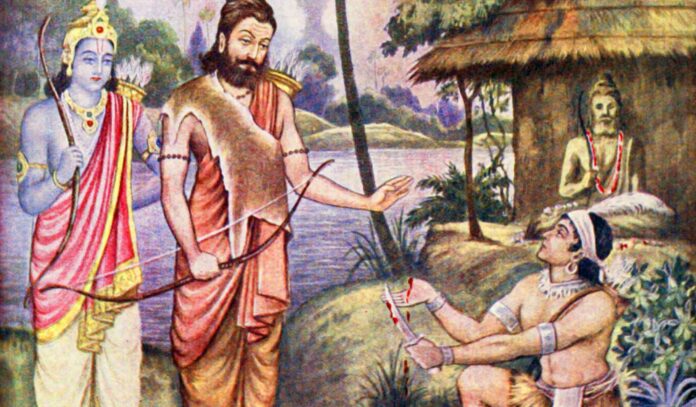
King Hiraṇyadhanu’s son was named Ekalavya. Ekalavya was, by caste, a niṣadha (caṇḍāla). In order to learn astra-vidyā, Prince Ekalavya approached Droṇācārya. Because Ekalavya possessed a low class mentality, the ācārya refused to initiate him in the teachings of the Dhanur-Veda. However, Ekalavya was determined to learn the martial arts from Droṇācārya and went off into the forest. There he constructed an idol of Droṇācārya made of clay and by continuously practicing in front of that artificial guru he became very expert in astra-vidyā.

Arjuna was Droṇācārya’s most beloved disciple. The ācārya had told Arjuna that none of Droṇācārya’s disciples would ever be able to excel Arjuna in skill.

One day Droṇācārya instructed the Kauravas and the Pāṇḍavas to leave the royal capital and go to the forest for hunting. As they made their way through the forest, they saw a dog whose mouth had been blocked with seven arrows. Seeing this, they were most astonished. Whoever had shot these arrows was far more expert than the Pāṇḍavas. Realising this, they went in search of that person. Gradually they understood that it was Ekalavya, the son of Hiraṇyadhanu, who had tested his archery skills on the dog’s mouth.

The Pāṇḍavas returned to the capital and, approaching Droṇācārya, submitted this unusual story to him. With a mood of humility, Arjuna told Droṇācārya that it seemed that he had another disciple who was more expert in archery than Arjuna. Droṇācārya listened to these words and was surprised. He went with Arjuna into the forest and there they saw Ekalavya continuously shooting arrows like rain, fully absorbed in the science of archery.

Taking the opportunity Droṇācārya came forward and approached Ekalavya, and seeing the ācārya, Ekalavya immediately offered his prayers at his feet, and with folded hands he introduced himself as his disciple and remained standing. Droṇācārya told Ekalavya, “You must give guru-dakṣiṇā.”

Ekalavya replied, “Please tell me – whatever it is, I am ready to give it!”

Then Droṇācārya told Ekalavya to cut off his thumb and give him that as his guru-dakṣiṇā. Ekalavya executed the order of his Gurudeva. Ekalavya did not protest in any way and unhesitatingly executed his guru’s instruction.

Initially Ekalavya’s guru rejected him because he considered him to be born of a low caste, yet due to his faith in Droṇācārya, he established a clay deity of him and became invincible – thus his guru-bhakti was established as ideal. On the other hand, Arjuna was envious towards Ekalavya, because by his perseverance, Ekalavya had become expert; therefore Ekalavya was ruined by Droṇācārya – this is the common opinion.

But this is not the opinion of the devotees, nor is it a true conception. Everything about Bhagavān is supremely true, everything about the principles of devotion are supremely true and everything in relation to the devotee is supremely true. These are the three truths – Bhagavān, bhakti and bhakta. Everything a devotee does is good; everything a non-devotee does is not very good. The non-devotee has many bad qualities because he is not engaged in satisfying the senses of Bhagavān. Those that think that mundane laws are greater than Bhagavān cannot accommodate those words regarding the supreme truth. Such persons are nirviśeṣavādīs (impersonalists) which is to say that they cannot accept the non-differentiated specialty of Bhagavān, bhakti and bhakta.

What was Ekalavya’s fault? This analysis is essential. He wore the mask of guru-bhakti, yet he was actually inimical towards his guru. Whether his guru actually considered Ekalavya to be disqualified by his low-birth, or was simply testing him — whatever the reason may be, when his Gurudeva did not wish to teach him the science of warfare, it was Ekalavya’s duty to accept his guru’s instruction upon his head; but Ekalavya did not accept that. He had the aspiration to become great.

Externally, without a guru, his practices would not have been considered lawful, or he would not be in a favourable position to become great without accepting a guru. To this end, Ekalavya concocted a clay form of his ‘guru’. He only did this to attain greatness by learning the Dhanur Veda. In this way, his main intention was to satisfy his own senses. He did not offer himself as a sacrifice to his guru’s desire and his own intentions were not sincere. Some may say that ultimately Ekalavya happily accepted the heartless order of his guru without protest, but if we consider this topic deeply and with keen discernment, we can observe that Ekalavya considered mundane morality to be superior to transcendental devotion. When the guru requests something to be given as dakṣiṇā, then one must offer it to him – it was that sense of morality that inspired him to cut off his thumb. Ekalavya did not offer it with spontaneous devotion. The very nature of bhakti is that it is spontaneous and simple.

If Ekalavya had unmotivated and natural devotion within his heart towards Hari, Guru and Vaiṣṇava, then the guru, Droṇācārya, the best of Vaiṣṇavas, Arjuna, and Bhagavān Sri Kṛṣṇa, would not have been displeased with his behaviour. Ekalavya’s attempt to learn the Dhanur-veda and his hankering to become great were not accepted by his Gurudeva. Deep within Ekalavya’s heart, he desired to try and become greater than Arjuna, the best of Vaiṣṇavas. The aspiration to become greater than the Vaiṣṇavas is not devotion – it is anti-devotional and it is the dharma of the ativāḍīs (1). According to worldly considerations, the desire to become great is regarded as good. But the effort to take a subordinate position behind a Vaiṣṇava and the attempt to take shelter of a Vaiṣṇava – that is bhakti.

Ekalavya wanted his expertise to be greater than that which could be acquired by learning Vedic sciences directly from a mahant-guru – Arjuna notified Droṇācārya of this. If Arjuna had not mercifully pointed this out, then the victory of impersonalism would have been proclaimed extensively. People would not have approached a mahant-guru to accept any type of knowledge; they would have desired to create their own contradictory, concocted, clay, lifeless gurus in order to learn various sciences or devotional teachings. In this way, atheistic theories would have been established. Therefore, Arjuna had no envy towards Ekalavya; it was actually his causeless compassion towards Ekalavya and the world.

If Ekalavya had been an honest devotee of his guru, then Kṛṣṇa would not have killed such a guru-bhakta – He always protects His devotees. But finally Ekalavya was killed by the hand of Kṛṣṇa. This is how Ekalavya finally met his end (2).

Sri Caitanyadeva has said that we cannot judge devotion simply on the basis of external austerities. The asuras perform penances that even the demigods cannot perform (3). Against the wishes of his guru, Ekalavya wanted to become greater than the Vaiṣṇava. Therefore he was killed by Kṛṣṇa and attained impersonal liberation. Asuras are always killed by Kṛṣṇa and the devotees of the Lord are protected by Kṛṣṇa (4). The proof of this is Hiraṇyakaśipu and Prahlāda. Thus we should never attempt to become greater than the Vaiṣṇavas. If we do not wear a mask of guru-bhakti, we will never become impersonalists. This is what the pure devotees have taught in relation to the narrative of Ekalavya. Expertise in performing mundane activities is not guru-bhakti. Taking shelter of the Vaiṣṇavas is actually true devotion.

FOOTNOTES:

(1) The ativāḍīs are an apa-sampradāya that originated in Orissa under one Jagannātha Dāsa during the time of Mahaprabhu. The word ‘ativāḍī‘ means ‘one who thinks he is very intelligent’ (ati – very, vāḍī – intelligent).

(2) Ekalavya’s demise is found in Chapter 48 of the Udyoga-parva of Mahābhārata wherein Kṛṣṇa kills him as He battles with Jarāsandha’s army.

(3) asure o tapa kare, ki haya tāhāra
vine mora śaraṇa laile nāhi pāra (Cb. Madhya 23.46)

(4) Madhvācārya, in his Mahābhārata Tataparya Nirṇaya has commented that Ekalavya was the aṁśa of the demon Maṇimanta.

yuddhvā ciraṁ raṇa mukhe bhagavat sutaḥ asau
cakre nirāyudham amuṁ sthiram ekalavyam
aṁśena yo bhuvam agāt maṇimān iti sma
sa krodha tantraka gaṇeṣu adhipo niṣādaḥ

“Fighting for a long time with Ekalavya, who was steadfast in battlefield, Pradyumna rendered him weaponless. Previously there was a group of demons known as the Krodha-tantra-gaṇas, amongst whom there was a prominent demon named Maṇimanta. Ekalavya is the aṁśa of that Maṇimanta.” (MTN 14.40)

Can One Worship Mahāprabhu And Still Be A Materialist?

0

Overview

In ‘Śrī Sarasvatī Saṅlāpa’ (A Discourse by Śrī Sarasvatī Thākura’) which was originally printed in the monthly Gauḍīya magazine, Bhaktisiddhānta Sarasvatī Ṭhākura describes real and apparent gaura-bhajana, and states that by performing pseudo gaura-bhajana we actually install Satan rather than Mahāprabhu in our hearts. This article was translated by Swami B.V. Giri
(While Oṁ Viṣṇupāda Śrīla Bhaktisiddhānta Sarasvatī Gosvāmī Prabhupāda was residing in Lucknow at 19, Station Road on 7th November 1929, the retired District Sessions Judge of Una, Rāya Bahadur Basu directly came to meet Śrīla Prabhupāda. Seeing how Śrīla Prabhupāda was exclusively devoted to Śrī Gaurasundara, Rāya Bahadur Mahodaya told that his friend Mr. R. (the superintendent engineer) was a fully dedicated devotee of Mahāprabhu. When Mr. R’s only daughter became extremely ill, R. began to chant incessantly day and night, “Gaura! Gaura!” As his daughter’s condition further deteriorated, his chanting also increased. R. Bābu started to develop more affinity towards making more elaborate offerings and the frequency of his visits to his Gurudeva’s house increased – so much so that everyone was astounded at his amazing guru-bhakti.

Yet, in spite of performing such devotion his only daughter died. On the day that she died, from early in the morning till about nine o’clock at night, his daughter suffered acute breathing problems until she finally gave up her life. Some days later, Raya Bahadur Basu went to meet his friend R. Bābu. Rāya Bahadur Basu Mahāśaya saw that R.’s love and steadfast devotion for Mahāprabhu and his faithful devotion had completely gone. Mr. R. told Raya Bahadur, “There is no ‘Mahāprabhu’! If Bhagavān truly exists, he would never cause His devotee to suffer so much! If He was really antaryāmī and actually resided in the heart of His devotee, then He would surely know of their anguish and He would have saved my daughter! His greatness as Bhagavān would have been preached much more in this world!

The faith and devotion of Bhagavān’s devotees would have soared millions of times! The devotees of Bhagavān would have preached about His glories and brought others to worship Him! Faith and devotion to Mahāprabhu in all members of the family would have increased! And, regaining her life once more, the girl would have more love and attraction towards Bhagavān. Therefore due to their superstitious nature, people believe in the existence of God and recite the Name of Mahāprabhu. Thus it is much more practical and profitable to do any work pertaining to this world than simply chanting, “Gaura, Gaura!”)

In answer to these words, Śrīla Prabhupāda spoke thus –

“That Mahāprabhu that we have taken shelter of is not the Mahāprabhu of R. Bābu, whom he considers to be like his hired gardener. We have taken shelter of the Mahāprabhu of Śrīvāsa Paṇḍita. That Mahāprabhu, who was so impressed with the love of Śrīvāsa, said–

putra-śoka nā jānila ye mohāra preme
hena saba saṅga muṣi chāḍiba kemane

“How could I ever give up the association of one who did not lament for his son due to his love for Me?” (Caitanya-bhāgavata, Madhya-khaṇḍa 25.52)

We worship the Mahāprabhu of that Śrīvāsa Paṇḍita who said –

kalarava śuni yadi prabhu bāhya pāya
tabe āji gaṅgā praveśimu sarvathāya

“If the Lord regains his external consciousness by hearing your commotion, I will drown myself in the Gaṅgā.” (Caitanya-bhāgavata, Madhya-khanda 25.36)

We worship Śrī Rūpa’s Mahāprabhu. It is Śrī Rūpa who says –

viracaya mayi daṇḍaṁ dīna-bandho dayāmī vā
gatir iha na bhavattaḥ kācid anyā mamāsti
nipatatu śata-koṭi-nirbharaṁ vā navāmbhaḥ
tad api kila-payodaḥ stūyate cātakena

“O friend of the poor, do what You like with me, give me either mercy or punishment, but in this world I have none to look to except for You, just as the cātaka bird always prays for the cloud, regardless of whether it brings rains or hurls a thunderbolt.” (Stava-mālā)

We worship that Mahāprabhu who manifested the lila of being the jagad-guru in order to instruct us –

āśliṣya vā pāda-ratāṁ pinaṣṭu mām
adarśanān marma-hatāṁ karotu vā
yathā tathā vā vidadhātu lampaṭo
mat-prāṇa-nāthas tu sa eva nāparaḥ

“Kṛṣṇa may embrace me in love or trample me under His feet. He may break my heart by hiding Himself from me. Let that debauchee do whatever He likes, but He will always be the only Lord of my life.” (Śikṣāṣṭakam 8)

nā gaṇi āpana-duḥkha, sabe vāṣchi tāṅra sukha
tāṅra sukha āmāra tātparya more
yadi diyā duḥkha, tāṅra haila mahā-sukha
sei duḥkha — mora sukha-varya

“I do not mind My personal distress. I only wish for the happiness of Kṛṣṇa, for His happiness is the goal of My life. However, if He feels great happiness in giving Me distress, that distress is the best of My happiness.” (Caitanya-caritāmṛta, Antya-līlā 20.52)

In order to perform bhajana of this Mahāprabhu, if I need to reject the detrimental things of this world millions of times, I am ready to do that wholeheartedly with all my senses, I am prepared for that. Taking shelter of His feet I accept those misfortunes with the understanding that He is protecting me and dragging me towards His feet – He is supremely merciful to expose my duplicity. He is not allowing me to add more fuel to my material senses. He is making me understand this – that there is no eternal object in this world to take shelter of other than His feet. We are bearing the heavy burden of our karmic reactions upon our shoulders due to our own previous activities. If I am able to tolerate these with a little endeavour, taking shelter at the lotus feet of the eternal Lord, then only will I attain some real auspiciousness.

If we belong to the school of material enjoyment, then when some obstacle hinders our enjoyment, we become angry. The school of renunciation says we should give up material enjoyment. Śrī Gaurāṅga’s devotees do not prescribe to any sort of enjoyment, nor do they prescribe to any sort of renunciation. They say, “It should be towards real objects – let the natural propensity of the jīvātmā be focused upon true transcendental knowledge of the non-dual Absolute.” Even if one accepts the three types of sufferings that continuously immerse us, it is of no advantage, and if one desires to artificially renounce, he cannot. Only one who offers his namaskāra to Bhagavān’s feet with his mind, body and words is the rightful heir to liberation. Whatever be the inconveniences one may have to face, he accepts them wholeheartedly as the Bhagavān’s kṛpā-avatāra (the descent of His mercy). It is not possible to estimate all the auspiciousness that Śrī Caitanyadeva has bestowed upon all of us. We are on the path of pleasure (preya), and in order to open our eyes He has meticulously arranged various problems amongst the objects of our material pleasure. He gave us poor health and, step-by-step, He also sent various dangers and gave a specific temporary nature to everything of this world in order that we would eventually tread the path of the highest benefit.

I remember one incident that happened many days before. Mr. Datta, a high court advocate, seeing his son lying on his deathbed, one day told to me, “You are a sadhu. Kindly restore my son’s life!” I told him, “I am not the master of bestowing life. But I can try to change the way that you think.” This person was a staunch follower of Comte. He said, “If your God really exists, then you should make Him cure my son.” I told him frankly, “I will not make a campaign against the desire of Bhagavān. I cannot support the philosophy of the Śaktas. Śrī Gaurasundara is most merciful, and this is shown by His decorating this world with hundred and hundreds of problems – that is His mercy!”

śrī-kṛṣṇa-caitanya-dayā karaha vicāra
vicāra karite citte pābe camatkāra

“If you consider the mercy of Śrī Caitanya-candra, by meditating on such deliberations you will find it most amazing.” (Caitanya-caritāmṛta, Ādi-līlā, 8.15)

It is not the duty of the jīva to live in this world in forgetfulness of Bhagavān. This place is not our eternal residence. In order to remind us of this, at every moment, He creates problems in our pursuit of material happiness. Śrī Kulaśekhara says –

nāsthā dharme na vasu-nicaye naiva kāmopabhoge
yad bhāvyaṁ tad bhavatu bhagavan pūrva-karmānurūpam
etat prārthyaṁ mama bahu-mataṁ janma-janmāntare ’pi
tvat-pādāmbho-ruha-yuga-gatā niścalā bhaktir astu

“O my Lord! I have no attachment for religiosity, or for accumulating wealth, or for enjoying sense gratification. Let these come as they inevitably must, in accordance with my past deeds. But I do pray for this most cherished boon: birth after birth, let me render unflinching devotional service unto your two lotus feet.” (Mukunda-Mālā Stotram 5)

nāhaṁ vande pada-kamalayor dvandvam advandva-hetoḥ
kumbhī-pākaṁ gurum api hare nārakaṁ nāpanetum
ramyā-rāmā-mṛdu-tanu-latā-nandane nābhirantuṁ
bhāve bhāve hṛdaya-bhavane bhāvayeyaṁ bhavantam

“O Lord Hari, it is not to be saved from the dualities of material existence or the grim tribulations of the Kumbhīpāka hell that I pray to your lotus feet. Nor is my purpose to enjoy the soft-skinned beautiful women who reside in the gardens of heaven. I pray to Your lotus feet only so that I may remember You alone in the core of my heart, birth after birth.” (Mukunda-Mālā Stotram 4)

A similar śloka has been recited by Śrī Gaurasundara –

na dhanaṁ na janaṁ na sundarīṁ kavitāṁ vā jagadīśa kāmaye
mama janmani janmanīśvare bhavatād bhaktir ahaitukī tvayi

“O Lord, I have no desires to accumulate wealth, followers, beautiful women, or salvation. My only prayer is for Your causeless devotional service, birth after birth.” (Śikṣāṣṭakam 4)

I will not fall into deception. Birth after birth I have sank into duplicity, I will not do so again. I will not involve you in the karmic reactions of my previous birth; that is because I have heard the instructions of the Śrīmad Bhāgavata at the lotus feet of Śrī Guru –

dharmaḥ projjhita-kaitavo ’tra paramo nirmatsarāṇāṁ satāṁ
vedyaṁ vāstavam atra vastu śivadaṁ tāpa-trayonmūlanam
śrīmad-bhāgavate mahā-muni-kṛte kiṁ vā parair īśvaraḥ
sadyo hṛdy avarudhyate ’tra kṛtibhiḥ śuśrūṣubhis tat-kṣaṇāt

“In this Bhāgavata Purana, where fraudulent religiosity and all other mundane goals of humankind have been utterly forsaken, the supreme spiritual duty (parama-dharma) has been expounded. That parama-dharma is pure bhakti-yoga, exemplified by those saints who are absolutely free from envy and full of compassion for all living beings. The Supreme Truth within uproots the three forms of misery and grants the highest form of bliss. When those with ample spiritual merit desire to listen to the message of this beautiful Bhāgavatam, which was authored by Maha-muni Śrī Narayana Himself, then the Supreme Lord Śrī Hari is immediately and permanently captured within their hearts. What is the need of any other message?” (Bhāg. 1.1.2)

My Śrī Gurudeva never accepted service from other people. When someone came to serve him he would curse that fourteen generations of that person’s family would be destroyed. He would tell them, “You want me to become your servant in your next life. You will make me your servant to repay your debt. But I will only become the servant of those who are devotees of Kṛṣṇa and no one else. Birth after birth I do not wish to be the servant of anyone apart from Śrī Rādhā Ṭhākurāṇī, because She does the maximum service to Kṛṣṇa.” He used to tell us, “Aspire only for things that are spiritual. You do not need to do anything else.” He could not write anything and was not a scholar of anusvara or visarga. Tears would pour from both his eyes and he would cry out loudly, ”By taking the Names of Gaura-Nityānanda I pray that we should not bring disgrace to their Names. Let us not desire such useless trash as dharma, artha, kāma and mokṣa from Gaura-Nitāi. Many times he would ask us, “Please tell me what is written in Śrī Caitanya-caritāmṛta and Śrīmad Bhāgavata. I do not understand Sanskrit. I do not even know how to write.” We would reply, “What can we say? In your very character we are directly able to see whatever is written in Śrī Caitanya-caritāmṛta and Śrīmad Bhāgavata?”

R. Bābu took ‘shelter’ of Mahāprabhu as if to enrich Mahāprabhu. It is as if Mahāprabhu would be delivered by his mercy. He had complete attachment to matter, but not to Śrī Caitanya. Mahāprabhu revealed his duplicity. He did not examine the matter from the very beginning and could not come to the right conclusion anywhere. Not even for a moment did he deliberate upon the true form of Mahāprabhu. He considered the lotus feet of Śrī Gaurāṅga as nature’s product, or as some type of special medicine. To him, the material object which is medicine that will cure his daughter’s disease, is ‘Mahāprabhu’. The divine lotus feet of Gaura-Nitāi remove all anarthas and award kṛṣṇa-prema. They can give us Śrī Rādhā-Kṛṣṇa and They are non-different from Their Names. That Gaura-Nitāi are not like some pir-fakir (magicians) or some good luck charm of this world. If he had actually received instructions from the lotus feet of a guru who was a genuine devotee of Gaura, then the Holy Name Himself would have shown mercy to him and his heart would have been elevated.

vaikuṇṭha-nāma-grahaṇam aśeṣāgha-haraṁ viduḥ

“One who chants the Name of the Lord is liberated from unlimited sins.” (Bhāg. 6.2.14)

However, taking the Name with a mood of materialism produces unlimited sins. He was committing nāmaparādha, and due to this he faced misfortune. The result of committing nāmaparādha is attaining dharma, artha and kāma or it may also be adharma, anartha and the non-attainment of kāma. He faced the result of non-attainment of his desire. When he genuinely and sincerely accepts shelter at the lotus feet of Śrī Gaurāṅga, then only will his nāmaparādha be nullified. Then gaura-nāma will melt his heart and tears will pour from his eyes, then he will understand the words of jagad-guru Śrīdhara Svāmīpāda –

pra-śabdena mokṣābhisandhirapi nirantaraḥ

“The word pra refers to the immediate rejection of the desire for liberation.”

Jṣānī means a salvationist, or cinmātravādī, and karmī means elevationist, or jaḍavādī. Both are misguided. The Śrīmad Bhāgavata has uprooted all types of deception. If one takes shelter of that Mahāprabhu, who continuously stated that the Śrīmad Bhāgavata was the crest-jewel of pramāṇas, then no kind of cheating or detrimental desire can remain.

Śreyah (the highest benefit) tastes bitter like harītakī, and preya (temporary pleasure) tastes sweet. If a patient requests the doctor to make arrangements for him to consume lots of jaggery instead of harītakī, then the patient’s taking shelter of the doctor is simply a show. Similarly, it is the road to inauspiciousness if, in the name of taking shelter of Bhagavān, we endeavour to increase our disease by using Bhagavān.

If we remain apathetic to the teachings of Śrī Caitanya, then we will enthrone a Satan as a devotee of Caitanya or even as Caitanya Himself. When we do endeavour for material benefits, then our false gaura-bhajana will also retire! We worship that Mahāprabhu who was propitiated by Śrī Rūpa in the following mood –

namo mahā-vadānyāya kṛṣṇa-prema-pradāya te
kṛṣṇāya kṛṣṇa-caitanya-nāmne gaura-tviṣe namaḥ

“O most munificent incarnation! You are Kṛṣṇa Himself appearing as Śrī Kṛṣṇa Caitanya Mahāprabhu. You have assumed the golden colour of Śrīmatī Rādhārāṇī, and You are widely distributing pure love of Kṛṣṇa. We offer our respectful obeisances unto You.” (Caitanya-caritāmṛta Madhya-līlā 19.53)

We worship that Mahāprabhu who was prayed to by Śrīla Svarūpa Dāmodara Gosvāmī –

heloddhūnita-khedayā viśadayā pronmīlad-āmodayā
śāmyac-chāstra-vivādayā rasa-dayā cittārpitonmādayā
śaśvad-bhakti-vinodayā sa-madayā mādhurya-maryādayā
śrī-caitanya dayā-nidhe tava dayā bhūyād amandodayā

“O ocean of mercy, Śrī Caitanya Mahāprabhu! Let there be an awakening of Your auspicious mercy, which easily drives away all kinds of material lamentation. By Your mercy, everything is made pure and blissful. It awakens transcendental bliss and covers all gross material pleasures. By Your auspicious mercy, quarrels and disagreements arising among different scriptures are vanquished. Your auspicious mercy causes the heart to jubilate by pouring forth transcendental mellows. Your mercy always stimulates devotional service, which is full of joy. You are always glorifying the conjugal love of God. May transcendental bliss be awakened within my heart by Your causeless mercy.” (Caitanya-candrodaya-nāṭaka 8.10)

That Mahāprabhu that was prayed to by Śrīla Prabodhānanda Sarasvatī Prabhu –

kaivalyaṁ narakāyate tridaśa-pūr ākāśa-puṣpāyate
durdāntendriya-kāla-sarpa-paṭalī protkhāta-daṁṣṭrāyate
viśvaṁ pūrṇa-sukhāyate vidhi-mahendrādiś ca kīṭāyate
yat kāruṇya-kaṭākṣa-vaibhavavatāṁ taṁ gauram eva stumaḥ

“For those who have attained the merciful sidelong glance of Lord Caitanya, impersonal liberation becomes as palatable as going to hell, the heavenly cities of the demigods become as enticing as flowers imagined to be floating in the sky, the poisonous fangs of the untameable black snakes of the senses are broken, the whole world becomes full of joy, and Brahmā, Indra, and all the other great demigods become as insignificant as tiny insects. Let us glorify that golden-complexioned Lord Caitanya.” (Caitanya-candrāmṛta 5)

strī-putrādi-kathāṁ jahur vivaṣayiṇaḥ śāstra-pravādaṁ budhā
yogīndrā vijahur –marun-niyama-ja-kleśaṁ tapas tāpasāḥ
jṣānābhyāsa-vidhiṁ jahuś ca yatayaś caitanya-candre parām
āviṣkurvati bhakti-yoga-padavīṁ naivānya āsīd rasaḥ

“Now that the moon of Śrī Caitanya-candra has revealed the path of pure devotional service, the materialists have given up talking about their wives, children, and material affairs, the scholars have given up debating the scriptures, the yogis have given up the trouble to control the breath, the ascetics have given up their austerity, and the impersonalists have given up impersonalism. Now there is only the sweetness of pure devotional service. Now nothing else is sweet. (Caitanya-candrāmṛta 113)

Even after the teachings of Śrī Caitanya are preached, those that still do not delineate on those teachings are most unfortunate. Śrī Gaurasundara is not the object of our enjoyment. In spite of remaining amongst millions and millions of dangers and disasters, one must hear the words pertaining to Śrī Gaurasundara, perform kīrtana about Him, and preach about Him. All thoughts existing in this world, which existed in the past and will exist in the future, are all blind and bankrupt. We will be able to realise it only when we take shelter of the lotus feet of Śrī Gaurasundara without any deceit.

R. could not understand that Gaurasundara is fundamentally spiritual in nature, and only exhibited false bhakti through lip-service – he took shelter of Satan.

anarpita-carīṁ cirāt karuṇayāvatīrṇaḥ kalau
samarpayitum unnatojjvala-rasāṁ sva-bhakti-śriyam
hariḥ puraṭa-sundara-dyuti-kadamba-sandīpitaḥ
sadā hṛdaya-kandare sphuratu vaḥ śacī-nandanaḥ

“May that Lord who is known as the son of Śrīmatī Śacī Devī be transcendentally situated in the innermost chambers of your heart. Resplendent with the radiance of molten gold, He has appeared in the Age of Kali by His causeless mercy to bestow what no incarnation ever offered before: the most sublime and radiant spiritual knowledge of the mellow taste of His service.” (Caitanya-caritāmṛta, Ādi-līlā 1.4)

Gaurasundara came to the world to propagate unnata-ujjvala-rasa, the highest thing that has never been given before – and I will pray for stool, urine, bones, flesh, blood and pus! Those that consider Mahāprabhu to be Satan will pray to him for all these things.

rādhā kṛṣṇa-praṇaya-vikṛtir hlādinī śaktir asmād
ekātmānāv api bhuvi purā deha-bhedaṁ gatau tau
caitanyākhyaṁ prakaṭam adhunā tad-dvayaṁ caikyam āptaṁ
rādhā-bhāva-dyuti-suvalitaṁ naumi kṛṣṇa-svarūpam

“The loving affairs of Śrī Rādhā and Kṛṣṇa are transcendental manifestations of the Lord’s internal pleasure-giving potency. Although Rādhā and Kṛṣṇa are one in Their identity, They separated Themselves eternally. Now these two transcendental identities have again united, in the form of Śrī Kṛṣṇa Caitanya. I bow down to Him, who has manifested Himself with the sentiment and complexion of Śrīmatī Rādhārāṇī although He is Kṛṣṇa Himself.”(Caitanya-caritāmṛta, Ādi-līlā 1.5)

Śrīmatī Vṛṣabhānu-nandinī is Kṛṣṇa’s counter-whole, not His counter-part. Śrīmatī Rādhikā’s external bodily effulgence has completely surrounded the beauty of Śyāma; it has also covered His mind. Such is the intensity of Their embrace. They Both become inseparable. Śrī Gaurasundara is not simply Rādhikā, nor is He simply Kṛṣṇa – He is the intense embrace of Śrī Rādhā and Śrī Kṛṣṇa,

prasārita-mahā-prema-pīyūṣa-rasa-sāgare
caitanya-candre prakaṭe yo dīno dīna eva saḥ

“Now that Śrī Caitanya-candra – the unlimitedly expansive ocean of the joy of divine love supreme – has made His gracious advent, anyone who remains destitute is surely a genuine pauper.” (Caitanya-candrāmṛta 36)

Rāya Bahadur Basu: Please give me one or two practical suggestions. There are many theoretical statements. How can one be protected from nāmaparādha?

Prabhupāda: Kindly study Hari-nāma Cintāmaṇi.

Rāya Bahadur: But Mahāprabhu said that one should give the Holy Name even to a caṇḍāla.

Prabhupāda: Only one who is a nāmācārya can give the Name. Only a person who is free from nāmaparādha and nāmābhāsa, by the mercy of Mahāprabhu, can give the Holy Name to others.

Rāya Bahadur: Then what is the significance of the words, helāya śraddhāya vā (the Holy Name may be chanted with faith or inattention)?

Prabhupāda: It does not say that nāmaparādha should be chanted. Will nāmaparādha bestow auspiciousness on us?

Rāya Bahadur: Mahāprabhu does not say that there is something called ‘nāmaparādha’.

Prabhupāda: You should study the Śrī Caitanya-caritāmṛta and the Sandarbhas – the topic of nāmaparādha is mentioned throughout. Niraparādhe nāma laile pāya prema-dhana (‘by chanting the Holy Name without any offence, one attains the treasure of prema’). One cannot receive the Holy Name from a pseudo-guru who is a nāmāparādhī. He must accept the shelter of a pure nāmācārya. Such a guru will bestow auspiciousness on the disciple. He will not think that he has achieved success by lording over his disciple. He will not be able to actually chant the Names of Gaura-Nityānanda while simultaneously taking shelter of the path of material sense pleasure. Those sections that are enjoyers of Gaura or inimical towards Gaura, are offenders to the Holy Name, thus we should be cautious in dealing with them.

Rāya Bahadur: If we just follow all these strict rules, will that be enough to properly chant the Holy Name?

Prabhupāda: Imitation chanting will not produce the Holy Name. The true Name will manifest Himself. He Himself will grant His mercy. Those that do not consider such things will commit aparādha. Chanting the Holy Name even once can produce auspiciousness.

Rāya Bahadur: How can I purely chant that Name at least once?

Prabhupāda: Adau guru-pādāśraya (‘first take shelter at the feet of a genuine guru)’.

Rāya Bahadur: The guru in human shape is very much limited. Even if I am able to accept someone as guru, what about those who are residing in Africa, America or from New Zealand or adhivāsīs (aborigines) – how will they be able to get such a nāmācārya?

Prabhupāda: They will also receive a guru according to their adhikāra, just as they received Christ. When their good fortune arises, and they sincerely search for a genuine guru (sad-guru), then after some births they will eventually receive one.

For the time being, stop and lend your submissive and regardful ear. I say to everyone in this world – leaving aside all your talks, kindly listen a little to the words descending from above. I always favour transcendental sound, I am not in favour of aparādha. I am not prepared to commit aparādha, neither am I prepared to make others commit aparādha. If I continue to carry in my head all the rubbish things that I have collected from here, then I cannot progress even an inch on the path towards Vraja. Those who are famous as the ‘giant-intellects ‘of this world should refrain from speaking anything for some time and submit to the aural reception of transcendental sound. Empiricism must never be the medium. Bhakti is not a suggestive thing. It is not guesswork. It is a positive and clear understanding of reality. Bhakti is understood as submission to the Personal Godhead.

avismṛtiḥ kṛṣṇa-padāravindayoḥ
kṣiṇoty abhadrāṇi ca śaṁ tanoti
sattvasya śuddhiṁ paramātma-bhaktiṁ
jṣānaṁ ca vijṣāna-virāga-yuktam

“For one who remembers the lotus feet of Kṛṣṇa, all inauspiciousness soon disappears, and one’s good fortune expands. In other words, one becomes free from all material contamination, one attains liberation from repeated birth and death, and one’s real spiritual life begins. As one’s heart becomes gradually purified, one’s devotion for the Lord within the heart awakens, and one realises the Paramātmā. Thus one gradually develops knowledge, realisation and renunciation.” (Bhāg. 12.12.55)

Ṭhākura Bilvamaṅgala has said –

bhaktis tvayi sthiratarā bhagavan yadi syād
daivena naḥ phalati divya-kiśora-mūrtiḥ
muktiḥ svayaṁ mukulitāṣjali sevate ’smān
dharmārtha-kāma-gatayaḥ samaya-pratīkṣāḥ

“O my Lord, if one engages in Your pure devotional service with determination, You become visible in Your original transcendental youthful form as the Supreme Lord. As far as liberation is concerned, she stands before the devotee with folded hands waiting to render service. Religion, economic development and sense gratification are all automatically attained without separate endeavour.” (Kṛṣṇa-karṇāmṛta 107)

At the beginning there was no need for us to form our mission. Only because people have gone the wrong way are we using the mission to render service to Bhagavān – to deliver human society from the wrong direction. In this manner even if we attain supremacy over this world crores of times, still we would discard it like stool and urine. May the human race be delivered from their wrong direction and be established at the lotus feet of Gaurasundara, who is the root of all auspiciousness. Our little endeavour is only for this purpose. If anyone deviates even minutely from the teachings of Śrī Caitanya-deva, whether he be Brahmā, Śiva, Vāyu, Varuṇa, a great religious preacher or a religious leader, he will encounter great difficulties.

First there is śraddhā (faith), then rati (attachment) Then after that comes bhakti. When sādhana has not begun, then śraddhā is required. When sādhana ends, then comes the stage of rati. When one is established in sādhya (the goal of one’s practice) then comes bhakti, or prema. Ṭhākura Bhaktivinoda has said:

kṛpā kara vaiṣṇava ṭhākura
sambandha jāniyā bhajite bhajite
abhimāna hau dura

“Oh Vaiṣṇava Ṭhākura, kindly bestow your mercy. Then only my false ego will be eradicated and I will be able to constantly worship the Lord, being aware of my relationship with Him.” (Kalyāṇa-kalpataru 3.2.1)

There is no way to gain auspiciousness other than serving one who performs real service to Viṣṇu. At this present time, we are engaged in a tie of love between finite things. We feel a necessity for things that actually have no real necessity for us.

yasyātma-buddhiḥ kuṇape tri-dhātuke
sva-dhīḥ kalatrādiṣu bhauma ijya-dhīḥ
yat tīrtha-buddhiḥ salile na karhicij
janeṣv abhijṣeṣu sa eva go-kharaḥ

“One who identifies his self as the inert body composed of mucus, bile and air, who assumes his wife and family are permanently his own, who thinks an earthen image or the land of his birth is worshipable, or who sees a place of pilgrimage as merely the water there, but who never identifies himself with, feels kinship with, worships or even visits those who are wise in spiritual truth — such a person is no better than a cow or an ass.” (Bhāg. 10.84.13)

Those that pull on their beads in the same way that one pulls on the reigns of an animal, who make a noise, yet do not see Kṛṣṇa and Gaurasundara directly in every utterance they make, are not fit to be associated by us. The acme of all scholarship is kṛṣṇa-sambandha (establishing a relationship with Śrī Kṛṣṇa).

varaṁ huta-vaha-jvālā-paṣjarāntar-vyavasthitiḥ
na śauri-cintā-vimukha-jana-saṁvāsa-vaiśasam

“It is preferable to live in an iron cage in the midst of a blazing fire, than to associate with those who are averse to meditating upon Śauri (Kṛṣṇa), for such association is a great calamity.” (Kātyāyana-saṁhitā)

If my real intention is to serve Bhagavān, then I will look at the entire world as ingredients for His service. Then a painting by Raphael will not be able to captivate me. I will understand that the songs of Caṇḍī Dāsa and Vidyapāti should not be heard when one still has anarthas. If you go to Navadvīpa, you will see that – just like the tales of the heroes and heroines of Vidyā-sundara (a romantic poet of medieval Bengal), there are those who endeavour to enjoy the songs and poetry of Caṇḍī Dāsa and Vidyāpati. Although Śrīnivāsa Ācārya Prabhu started a musical tradition, it was not meant for nourishing and filling the burning hunger of people’s bellies, nor was it meant for the sense-enjoyment of people inflicted with anarthas. Those who do not understand this are struck down by the arrows of lust, like a deer who becomes charmed by the song of a hunter. As a result of this, such people become degraded to the level of animals and ghouls and sink into hell. They will be residents in the garden of hell – with such intelligence they are madly engrossed in sense-enjoyment and do not listen to sādhus. Śrīnivāsa Ācārya Prabhu and Śrī Vakreśvara Paṇḍita have created this method in order to deceive all those animals in human form.

I cannot understand how learned people have so much belief in such bogus things nowadays. Once, Ram Chandra Datta’s father, Nrsingha Prasad Datta, took Śrīmad Bhaktivinoda Ṭhākura to Madhu Ray Lane. Nrsingha Prasada Datta came to Śrīmad Bhaktivinoda Ṭhākura and said, “Please understand, we only know Mahāprabhu. But my son, Ram Chandra, has changed after associating with a māyāvādī! They are declaring Ramakrishna, an ordinary human being, as a new avatāra, a new Mahāprabhu! Kindly come to my house once and examine my son’s guru? Is he a sādhu or a sham? Whatever you say I will believe.”

Śrī Bhaktivinoda Ṭhākura was a very intimate friend of Nrsingha Prasad Datta. The day when Ramakrishna was supposed to come to his house, Nrsingha Prasad Datta brought Śrīmad Bhaktivinoda Ṭhākura to his house with great care and hospitality. Nrsingha Prasad Datta said to Ramakrishna, “One of my friends, who is a great Vaiṣṇava has come. Mahāprabhu is his very life.” At that time the Viśva-Vaiṣṇava Sabhā had been established. In that assembly, Śrīmad Bhaktivinoda Ṭhākura had been very elaborately reading and explaining the Bhakti-rasāmṛta-sindhu. Seeing Bhaktivinoda Ṭhākura, Ramakrishna started singing, Yā’re dekhile nayana jhure, tā’rā du bhāi eseche re (‘The two brothers have come, seeing whom the eyes become fully satisfied’) and fell unconscious. Śrīmad Bhaktivinoda Ṭhākura was in another room. Ramakrishna was in that condition, lying on the verandah in front of that very room. After a while, some rasagullas were brought in front of Ramakrishna who ate them and other people ate his remnants. No one had the courage to offer any to Śrīmad Bhaktivinoda Ṭhākura. A little later, some impure foodstuffs were brought. At first Ramakrishna protested, but after a while he accepted it. All these activities were observed by Śrīmad Bhaktivinoda Ṭhākura. After returning from there, he scrupulously compared all these symptoms with the proper standards authorised in Śrīmad Bhakti-rasāmṛta-sindhu. Referring to the words of Śrī Bhakti-rasāmṛta-sindhu he pointed out the deception and cheating of the impersonalist section, and the section that advocates non-discrimination and equality between spirit and matter.

The reflection (pratibimba) and the shadow of real rati (chaya-ratyābhāsa) are not the symptoms of prema. For those who have taken impersonalism as their highest ideal, their imitation of devotional practices is a mere deception. Those schools of thought that encourage material desires promote the position of such insignificant men in the minds of the general populace. This is known as ‘apotheosis’ (ascribing divinity to a mortal). The devotees of Gaura are not inclined to apotheosis. They do not worship human beings nor are they Kartābhajās (one of the 13 apa-sampradāyas that worship their guru as Kṛṣṇa). They are the eternal servitors of the viṣaya-vigraha (Kṛṣṇa) who is embraced by the āśraya-vigraha (Rādhārāṇī). This is the specialty of the teachings of gaura-bhajana


Stay Connected

16,985FansLike
12,500FollowersFollow
61,453SubscribersSubscribe
Have a question?Send us an enquiry. We usually reply within a day.