Mail ID: contact@vedavarsity.com

Contact: +91 9634998911

Google search engineGoogle search engine
Home Blog

Become A Certified Ayurvedic Practitioner: Step-By-Step

0

Becoming a Certified Ayurvedic Practitioner is a meaningful journey into one of the world’s most ancient and holistic healing traditions. Ayurveda, the sacred science of life (āyurveda), has been practiced for thousands of years in India and continues to guide individuals toward balanced health, natural living, and spiritual awareness.

Many people feel inspired by Ayurveda’s philosophy and wish to share its wisdom with others. However, questions naturally arise:

  • How long does it take to become a Certified Ayurvedic Practitioner?
  • What training is required?
  • What certification standards exist in the United States?
  • What career opportunities are available after graduation?

This guide explains the step-by-step process of becoming a Certified Ayurvedic Practitioner, from choosing a school to building a professional practice.

Step 1: Choose the Right Ayurvedic Program

The first and most important step toward becoming a Certified Ayurvedic Practitioner is selecting the right educational program.

This decision will influence the depth of your knowledge, the teachers who guide you, and your overall experience studying Ayurveda.

Several factors should be considered when choosing a school.

Lineage and Teachers

In Vedic culture, the relationship between teacher and student is sacred. The Sanskrit word guru means “one who dispels darkness or ignorance.”

A genuine teacher not only explains the technical aspects of Ayurveda but also helps illuminate deeper wisdom about life and health.

When selecting a school, consider:

  • The teacher’s lineage and training
  • Their philosophical approach to Ayurveda
  • Their style of teaching and communication

Watching lectures, attending informational sessions, or speaking with alumni can provide valuable insight into the school’s teaching style.

Length of the Program

The length of study required to become a Certified Ayurvedic Practitioner depends on the program format.

Full-Time Programs

Full-time programs typically take two years to complete.

The first year generally covers the Ayurvedic Health Counselor level, which focuses on foundational principles and lifestyle guidance.
The second year expands into clinical practitioner training.

Part-Time Programs

Part-time or hybrid programs may take longer but allow students to study while continuing their professional responsibilities.

Both options can lead to certification depending on the program structure.

Step 2: Meet Certification Standards

In the United States, Ayurvedic certification standards are guided by the National Ayurvedic Medical Association Certification Board.

Most reputable schools structure their curriculum according to NAMA’s requirements.

To become a Certified Ayurvedic Practitioner, students typically complete:

  • Around 1500 hours of Ayurvedic education
  • Clinical training with supervised consultations
  • Courses in anatomy and physiology

After completing the required coursework, graduates may apply for certification through NAMA and sit for the practitioner examination.

This certification demonstrates that the practitioner has met recognized professional standards within the Ayurvedic community.

Step 3: Complete Your Ayurvedic Practitioner Training

Once admitted to an Ayurvedic school, students begin an immersive process of studying classical principles and practical applications.

Training to become a Certified Ayurvedic Practitioner often includes the following subjects:

  • Ayurvedic philosophy and history
  • Dosha theory (vāta, pitta, kapha)
  • Digestive health (agni)
  • Herbal medicine
  • Ayurvedic nutrition and dietetics
  • Yoga and meditation practices
  • Clinical consultation techniques

Students also gain hands-on experience by conducting supervised consultations with real clients.

Through these consultations, practitioners learn how to evaluate lifestyle patterns, diet, and doshic imbalances while guiding clients toward healthier routines.

Step 4: Prepare for the Certification Exam

Graduates of qualifying programs may choose to take the certification exam administered by the National Ayurvedic Medical Association Certification Board.

Passing this exam grants the professional designation of Certified Ayurvedic Practitioner.

Although certification is not legally required to practice Ayurveda in all contexts, it provides credibility and demonstrates commitment to professional standards.

Clients and wellness centers often value practitioners who have completed recognized certification programs.

Step 5: Start or Join an Ayurvedic Practice

After becoming a Certified Ayurvedic Practitioner, the next step is to begin professional practice.

As Ayurveda continues to gain recognition in holistic wellness communities, practitioners have several career options.

Many graduates choose to start their own private consultation practice, where they guide clients in diet, lifestyle, and herbal therapies.

Others join existing wellness clinics or holistic health centers.

Practitioners often collaborate with professionals in fields such as:

  • Yoga therapy
  • Massage therapy
  • Chiropractic care
  • Western herbalism
  • Integrative medicine

This collaborative approach reflects Ayurveda’s holistic philosophy, where health is understood as a balance between body, mind, and environment.

Step 6: Teaching, Writing, and Expanding Ayurveda

The journey of a Certified Ayurvedic Practitioner does not end with clinical practice.

Many practitioners expand their work into education and outreach.

Opportunities include:

  • Teaching Ayurveda workshops or courses
  • Writing articles or books on Ayurvedic health
  • Developing herbal products
  • Leading detoxification or cleansing programs
  • Supervising students in Ayurvedic clinics

As interest in natural medicine continues to grow, the demand for knowledgeable Ayurvedic educators and practitioners is steadily increasing.

The Spiritual Foundation of Ayurvedic Practice

Ayurveda is more than a healthcare system—it is a sacred science that aligns human life with the rhythms of nature.

The Vedic tradition teaches that true health arises when the body, mind, and spirit exist in harmony.

Practitioners therefore cultivate not only knowledge but also personal discipline through practices such as:

  • meditation
  • yogic breathing (prāṇāyāma)
  • balanced diet
  • mindful daily routines (dinācārya)

These practices help practitioners embody the principles they share with their clients.

Main Takeaways for Becoming a Certified Ayurvedic Practitioner

The journey to becoming a Certified Ayurvedic Practitioner is both educational and transformational.

Key points to remember:

  • You can complete practitioner training in approximately two years of full-time study.
  • Choose a school that meets the standards of the National Ayurvedic Medical Association.
  • Certification requires completing coursework, clinical training, and passing the NAMA examination.
  • Career opportunities include private practice, teaching, wellness consulting, and integrative medicine.

Conclusion: Walking the Path of the Certified Ayurvedic Practitioner

The path to becoming a Certified Ayurvedic Practitioner is not merely a professional training—it is a journey into the wisdom of the Vedic healing tradition.

By studying Ayurveda with sincerity and dedication, practitioners gain tools to guide others toward balance, vitality, and spiritual wellbeing.

As the wisdom of Ayurveda spreads across the world, those who commit themselves to this path become instruments of healing, helping individuals reconnect with nature, restore harmony within the body, and cultivate a deeper awareness of life’s sacred purpose.

Study Ayurveda In The U.S.: Certification & Career Guide

0

To study Ayurveda in the U.S. is to step into one of the world’s oldest healing traditions. Ayurveda, meaning “the science of life” (āyus – life, veda – knowledge), originates from the sacred Vedic culture of India and has guided human wellbeing for thousands of years.

Many people today are discovering this ancient wisdom and asking important questions:

  • How can I study Ayurveda in the United States?
  • Can Ayurveda be studied online?
  • What certifications exist for Ayurvedic professionals?
  • How do these programs compare with the traditional BAMS degree in India?

These questions are natural for anyone drawn to this timeless science. Ayurveda does not simply treat disease—it teaches how to live in harmony with nature, balance the body’s energies, and cultivate spiritual awareness.

In the United States, structured programs now allow students to study Ayurveda in the U.S. through recognized certification pathways. These programs provide education in Ayurvedic philosophy, lifestyle guidance, herbal science, and holistic wellness.

The Ancient Origins of Ayurveda

Ayurveda is deeply rooted in the Vedic tradition, where knowledge was revealed to ancient sages known as ṛṣis through meditation and spiritual realization.

The classical Ayurvedic texts such as the Charaka Saṁhitā and Suśruta Saṁhitā describe the principles of health, disease prevention, and holistic treatment. Central to Ayurveda is the understanding of the three doṣas:

  • Vāta – the energy of movement
  • Pitta – the energy of transformation
  • Kapha – the energy of structure and stability

When these energies remain balanced, the body and mind function harmoniously. When they become disturbed, disease may arise.

Thus Ayurveda teaches that health is not merely the absence of illness but a state of balance between body, mind, and spirit.

Study Ayurveda in the U.S.: Certification Levels

For those wishing to study Ayurveda in the U.S., the professional pathway generally follows three certification levels established by the National Ayurvedic Medical Association.

These levels represent increasing depth of knowledge and clinical experience.

Ayurvedic Health Counselor (AHC)

This is the entry-level certification for Ayurvedic professionals.

Training

Students complete approximately:

  • 600 hours of Ayurvedic education
  • 50 supervised client consultations
  • College-level anatomy and physiology coursework

The curriculum focuses on preventive health, lifestyle practices, and foundational Ayurvedic principles.

Scope of Practice

Health counselors primarily guide clients in:

  • Diet and nutrition
  • Lifestyle routines (dinācārya)
  • Breathwork (prāṇāyāma)
  • Meditation and stress management

They may also recommend simple herbal preparations such as triphala.

Career Opportunities

Graduates may work in areas such as:

  • Wellness coaching
  • Yoga and holistic lifestyle consulting
  • Ayurvedic education
  • Content writing and wellness media

Many practitioners also establish private consultation practices.

Ayurvedic Practitioner (AP)

The second stage for those who wish to deepen their clinical knowledge when they study Ayurveda in the U.S. is the Ayurvedic Practitioner certification.

Training

Programs generally require:

  • At least 1500 hours of education
  • 150 supervised clinical consultations
  • Expanded anatomy and physiology studies

These programs typically take around two years of full-time study.

Scope of Practice

Practitioners develop deeper understanding of:

  • Ayurvedic pathology
  • Disease prevention and management
  • Herbal formulations
  • Yoga therapy and lifestyle interventions

They work with clients to restore balance in the doṣas, often using herbal protocols, dietary guidance, and detoxification techniques.

Career Opportunities

Graduates may pursue careers in:

  • Private clinical practice
  • Panchakarma therapy centers
  • Integrative wellness clinics
  • Research and education

Ayurvedic Doctor (AD)

The highest professional level for those who study Ayurveda in the U.S. is the Ayurvedic Doctor designation.

Training

This advanced program includes:

  • Approximately 4000 hours of training
  • 300 clinical consultations
  • Advanced studies integrating Western medicine and Ayurveda

Doctorate programs often include research projects or theses.

Scope of Practice

Ayurvedic Doctors receive comprehensive training in:

  • Ayurvedic pharmacology
  • advanced clinical assessment
  • integrative medicine approaches

Although they cannot diagnose diseases in the same way as licensed medical doctors in many states, they are highly skilled in holistic health guidance and Ayurvedic therapies.

Career Opportunities

Graduates may work in:

  • Panchakarma centers
  • Ayurvedic education institutions
  • Research organizations
  • Herbal product development
  • Integrative health clinics

How U.S. Ayurveda Programs Compare to BAMS in India

To fully understand how to study Ayurveda in the U.S., it is helpful to compare these programs with the traditional BAMS (Bachelor of Ayurvedic Medicine and Surgery) degree offered in India.

BAMS is a professional undergraduate degree that takes approximately five and a half years to complete.

Students study:

  • classical Ayurvedic texts
  • clinical medicine
  • pharmacology
  • surgery
  • extensive internships in Ayurvedic hospitals

Admission typically requires passing the national medical entrance examination known as NEET.

Graduates of BAMS may practice medicine in India with a much broader scope of practice, including clinical treatment and certain surgical procedures.

However, the BAMS degree is not currently recognized as a medical license in the United States, which is why specialized certification programs have been developed for students who wish to study Ayurveda in the U.S.

Online Opportunities to Study Ayurveda in the U.S.

Modern educational institutions now offer flexible ways to study Ayurveda in the U.S., including online and hybrid programs.

One well-known center for Ayurvedic education is the Ayurvedic Institute founded by Vasant Lad.

These programs combine:

  • live online lectures
  • Sanskrit chanting of Ayurvedic sūtras
  • clinical case studies
  • meditation and yogic practices

Students often experience not only intellectual learning but also personal transformation, as Ayurveda encourages harmony between body, mind, and spirit.

Career Paths After Studying Ayurveda

Choosing to study Ayurveda in the U.S. opens doors to a variety of professional opportunities within the wellness and integrative health sectors.

Some common career paths include:

Private Consultation Practice
Working directly with clients to guide lifestyle and dietary changes.

Yoga and Wellness Centers
Collaborating with yoga teachers and holistic therapists.

Herbal Product Development
Formulating herbal supplements and wellness products.

Education and Teaching
Teaching Ayurvedic principles in schools and training institutes.

Integrative Medicine Clinics
Working alongside healthcare professionals to support holistic treatment approaches.

These opportunities allow practitioners to share the wisdom of Ayurveda with communities seeking natural and balanced approaches to health.

The Spiritual Foundation of Ayurvedic Study

Ayurveda is not merely a medical system; it is a sacred science that recognizes the divine intelligence within nature.

The ultimate purpose of health in Vedic culture is to support dharma (righteous living), artha (prosperity), kāma (balanced desires), and ultimately mokṣa (spiritual liberation).

Therefore, those who study Ayurveda in the U.S. often discover that the journey becomes not only a professional path but also a spiritual one.

By learning to live according to natural rhythms, practicing meditation, and cultivating compassion, practitioners embody the deeper spirit of Ayurveda.

Conclusion: The Path to Study Ayurveda in the U.S.

For those inspired by ancient healing traditions, the opportunity to study Ayurveda in the U.S. offers a meaningful path of service and knowledge.

Through certification programs such as Ayurvedic Health Counselor, Ayurvedic Practitioner, and Ayurvedic Doctor, students can gradually deepen their understanding of this profound science.

While the educational system differs from the traditional BAMS program in India, the essence of Ayurveda remains the same: to restore harmony within the body and awaken awareness of the soul’s connection with nature and the Supreme.

Those who follow this path with sincerity and dedication often find that Ayurveda not only transforms the lives of their clients but also brings profound balance and clarity to their own lives.

Vaishnavi Ministry At UN CSW70: Devotional Voice for Women

0

The participation of the Vaishnavi Ministry at UN CSW70 represents a meaningful moment where spiritual wisdom from the Bhakti-yoga tradition enters global discussions on women’s wellbeing and empowerment. The North America Vaishnavi Ministry joined the United Nations Commission on the Status of Women (CSW70) held from March 9–20 at the United Nations Headquarters in New York City.

This international gathering brings together government representatives, policymakers, researchers, and civil society leaders to evaluate progress toward gender equality and to discuss initiatives that can uplift women and girls worldwide. By attending this global forum, the Vaishnavi Ministry contributes a spiritual perspective rooted in the teachings of Bhakti-yoga, where devotion to the Supreme Lord is considered the highest purpose of life.

Representatives such as Govind Priya Devi Dasi, Syama Mohini Devi Dasi, and Ila Hatwal attended the conference in person, sharing devotional insights and participating in discussions that explore dignity, leadership, and protection for women in society.

Understanding the Significance of Vaishnavi Ministry at UN CSW70

The Vaishnavi Ministry at UN CSW70 demonstrates how spiritual traditions can play an important role in shaping social conversations about justice, compassion, and equality.

The Commission on the Status of Women is the principal international body dedicated to advancing women’s rights and empowerment. Each year, delegates from across the world gather to evaluate progress, share experiences, and design policies that improve the lives of women.

From a Bhakti perspective, the dignity of women is not merely a social matter but a spiritual principle. The Vedic scriptures repeatedly emphasize that societies prosper when women are respected and protected.

In the Bhagavad-gītā, the Supreme Lord explains that spiritual realization is available to all souls regardless of gender, birth, or social position. This understanding establishes a philosophical foundation for spiritual equality.

Therefore, the presence of the Vaishnavi Ministry at the United Nations offers an opportunity to present ancient wisdom in modern discussions on leadership, safety, and social harmony.

A Faith-Based Contribution to Global Women’s Leadership

During the NGO/CSW Forum parallel event, representatives of the ministry presented the Bhakti tradition’s perspective on women’s leadership and wellbeing.

In Vedic culture, leadership is not defined merely by power or authority but by qualities such as dayā (compassion), kṣamā (forgiveness), and sevā (selfless service). These spiritual virtues form the foundation of true leadership.

Women have historically played a central role in maintaining spiritual culture. From mothers guiding children in devotional life to saintly personalities who inspired entire communities, their influence has shaped the moral and spiritual strength of society.

By participating in this global forum, the Vaishnavi Ministry seeks to highlight how these timeless principles can support modern initiatives for education, protection, and leadership development among women.

Rukmini Devi Dasi’s Message to the UN Forum

A powerful moment during the forum was the video message delivered by Rukmini Devi Dasi. Her presentation opened the Ministry’s participation and set the tone for its spiritual contribution.

Speaking from the Bhakti-yoga tradition, she reflected on how spiritual culture reveres the divine feminine, particularly through the worship of Śrīmatī Rādhārāṇī, the eternal consort of Lord Krishna.

In the devotional tradition, Śrī Rādhā represents the highest expression of divine love and devotion. Her worship signifies that the feminine principle is not merely respected but celebrated as the embodiment of pure devotion.

Yet Rukmini Devi Dasi pointed out a paradox in modern society: although spiritual traditions glorify the divine feminine, women’s voices and leadership are sometimes overlooked or marginalized.

Her message emphasized that genuine spiritual culture must honor both the philosophical teachings and the practical dignity of women.

Compassion as the True Power of Women

During her address, Rukmini Devi Dasi highlighted that the true strength of women lies in compassion and spiritual integrity.

Drawing inspiration from global leaders and saints, she explained that transformative leadership arises not from domination but from love guided by wisdom.

This principle resonates with Bhakti philosophy, which teaches that prema, or divine love, is the highest spiritual achievement.

Women have historically served as the “holders of community,” nurturing families and sustaining cultural values. When women are respected and empowered, the entire social structure becomes stable and harmonious.

However, when women are dishonored or neglected, the consequences extend beyond individuals, affecting families, communities, and even the natural environment.

Spiritual Lessons from Vedic Tradition

The teachings of the Vedic scriptures provide many examples of spiritually empowered women.

One such example is Queen Kuntī, whose prayers in the Śrīmad-Bhāgavatam reveal deep philosophical insight and unwavering devotion to Lord Krishna.

Despite facing extraordinary hardships, Queen Kunti remained steadfast in her faith and gratitude to the Supreme Lord. Her prayers demonstrate humility, wisdom, and surrender—qualities that define true spiritual leadership.

Rukmini Devi Dasi concluded her message by encouraging leaders to follow this example of humility and devotion. She reminded listeners that righteous causes must be guided by compassion rather than anger.

Just as the sacred river Ganges flows steadily to purify the world, devotional service should move forward with patience, humility, and determination.

Strengthening Global Partnerships

Participation in the Vaishnavi Ministry at UN CSW70 also provides opportunities to collaborate with international organizations and leaders working toward similar goals.

These partnerships help develop programs that support:

  • Education for women and girls
  • Protection and wellbeing initiatives
  • Leadership training in spiritual communities
  • Research and policy collaboration

Through dialogue with policymakers, NGOs, and global scholars, the ministry gains valuable insights into research and frameworks that can strengthen its services.

Such collaboration allows spiritual communities to integrate practical strategies while maintaining their philosophical foundations.

Continuing the Legacy of Devotional Service

The activities of the Vaishnavi Ministry reflect the broader vision of the Bhakti tradition—to bring spiritual wisdom into all aspects of life.

Śrīla Prabhupāda, the founder of the worldwide Hare Krishna movement, emphasized that spiritual knowledge should benefit the entire human society.

He encouraged women to actively participate in devotional service, education, and leadership within the spiritual community.

Today, initiatives such as the Bond of Love interview series continue to document the experiences of Vaishnavis who interacted personally with Śrīla Prabhupāda. These narratives reveal how his guidance empowered many women to contribute meaningfully to the mission of spreading Krishna consciousness.

Such historical reflections inspire new generations of devotees to continue serving with dedication and humility.

Conclusion: The Global Impact of Vaishnavi Ministry at UN CSW70

The participation of the Vaishnavi Ministry at UN CSW70 represents a meaningful bridge between spiritual tradition and global dialogue.

By bringing the wisdom of Bhakti-yoga to an international forum, the ministry highlights the timeless principle that genuine empowerment arises from spiritual understanding, compassion, and service.

In a world searching for solutions to social challenges, the teachings of devotion remind humanity that true transformation begins within the heart.

When leadership is guided by humility, love, and spiritual wisdom, societies can move toward harmony, justice, and wellbeing for all.

The Vaishnavi Ministry at UN CSW70 therefore stands not only as a participation in a global conference but also as a reminder that spiritual values have an essential role in shaping a more compassionate and balanced world.

Bhakti Sarvabhauma Degree: How Jayapataka Swami Achieved It

0

The Bhakti Sarvabhauma Degree represents the highest academic qualification within the educational framework established by His Divine Grace A. C. Bhaktivedanta Swami Prabhupada, the Founder-Acarya of the International Society for Krishna Consciousness (ISKCON).

In a historic moment for the movement, His Holiness Jayapataka Swami became the first devotee in ISKCON history to receive the Bhakti Sarvabhauma Degree. This prestigious qualification was awarded through the ISKCON Board of Examinations after he successfully completed the rigorous examinations administered by the Mayapur Institute.

Achieving the Bhakti Sarvabhauma Degree is not merely an academic accomplishment. It reflects deep scriptural knowledge, disciplined study, and lifelong dedication to the teachings of the Vedic scriptures, particularly the works translated and commented upon by Srila Prabhupada.

In the Vaishnava tradition, the systematic study of sacred texts (śāstra) is considered an essential component of spiritual advancement. Thus, this achievement stands as an inspiring example for devotees worldwide.

Srila Prabhupada’s Vision Behind the Bhakti Sarvabhauma Degree

The system culminating in the Bhakti Sarvabhauma Degree was directly envisioned by A. C. Bhaktivedanta Swami Prabhupada in 1976.

In a letter dated January 10, 1976, to Svarupa Damodara Dasa Goswami, Srila Prabhupada outlined a structured system of examinations intended to encourage systematic study of his books.

The four levels of qualification were defined as follows:

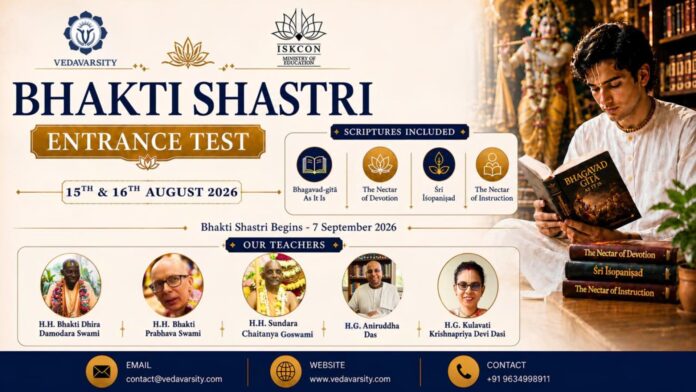
1. Bhakti-sastri

This foundational degree is based on the study of:

  • Bhagavad-gita As It Is
  • Sri Isopanisad
  • The Nectar of Devotion
  • The Nectar of Instruction
  • Other introductory books of Srila Prabhupada.

2. Bhakti-vaibhava

The next level includes all Bhakti-sastri texts along with the first six cantos of the Srimad-Bhagavatam.

3. Bhakti-vedanta

This degree requires mastery of the entire Srimad-Bhagavatam, including Cantos 7–12.

4. Bhakti Sarvabhauma

The highest qualification—the Bhakti Sarvabhauma Degree—includes all previous studies plus the complete study of the Caitanya-caritamrta.

This structured approach ensures that devotees gradually become deeply rooted in the philosophy of Krishna consciousness.

Responsibilities Attached to the Degree System

Srila Prabhupada did not introduce the Bhakti Sarvabhauma Degree merely as an academic distinction.

He clearly linked these qualifications to leadership and spiritual responsibility within ISKCON.

In a letter dated January 6, 1976, addressed to the members of the ISKCON Governing Body Commission, he explained that:

  • Devotees aspiring for brahminical initiation should pass the Bhakti-sastri examination.
  • Those wishing to accept sannyasa should pass the Bhakti-vaibhava examination.

Such requirements emphasized that spiritual leadership must be supported by deep scriptural understanding.

The Aspiration for Bhaktivedanta Scholars

As early as 1969, A. C. Bhaktivedanta Swami Prabhupada expressed his desire that all of his disciples would become deeply learned in spiritual knowledge.

He stated:

“I want that all of my spiritual sons and daughters will inherit this title of Bhaktivedanta.”

This aspiration ultimately culminates in the Bhakti Sarvabhauma Degree, representing the highest level of scriptural scholarship within ISKCON.

Jayapataka Swami’s Journey Toward the Bhakti Sarvabhauma Degree

The path of Jayapataka Swami toward the Bhakti Sarvabhauma Degree began several years ago.

Although he had already received the Bhakti-sastri degree personally from Srila Prabhupada in the 1970s in Mayapur, he decided to pursue the higher qualifications through formal examination.

In 2020, he approached the Mayapur Institute with the intention of completing the Bhakti-vaibhava degree.

Refusing an Honorary Degree

Recognizing his lifetime of spiritual service, the institute initially offered him an honorary degree.

However, Jayapataka Swami humbly declined.

He expressed his desire to personally take the examinations, demonstrating that genuine learning requires sincere effort and discipline.

This decision exemplified the Vaishnava principle of humility (tṛṇād api sunīcena), which teaches that true spiritual advancement is accompanied by modesty and dedication.

Completing the Bhakti-vaibhava Degree

To complete the Bhakti Sarvabhauma Degree, Jayapataka Swami first had to pass the Bhakti-vaibhava examinations.

These exams covered the first six cantos of the Srimad-Bhagavatam.

Due to his health and demanding schedule, he adopted a unique study method.

Each evening, his assistants would read Srila Prabhupada’s books aloud to him, allowing him to absorb the teachings despite physical challenges.

By 2022, he successfully completed the Bhakti-vaibhava level.

Advancing to the Bhaktivedanta Level

The next stage required mastery of the remaining cantos of the Srimad-Bhagavatam.

This included examinations covering:

  • Cantos 7–9
  • Canto 10
  • Cantos 11–12
  • A comprehensive final examination covering the entire text and Bhakti-sastri books.

Such rigorous examinations demanded profound understanding of theology, philosophy, and devotional practice.

Final Stage: Caitanya-caritamrta Examinations

The final step toward the Bhakti Sarvabhauma Degree required completing six examinations based on the Caitanya-caritamrta.

These exams covered:

  • Adi-lila
  • Madhya-lila
  • Antya-lila

Each section of this sacred biography of Chaitanya Mahaprabhu explores the deepest aspects of devotional philosophy and the theology of divine love (prema-bhakti).

According to evaluators from the ISKCON Board of Examinations, Jayapataka Swami’s answers were deeply insightful and spiritually inspiring.

He ultimately received A+ grades, completing the Bhakti Sarvabhauma Degree with distinction.

Inspiring the Entire ISKCON Movement

The accomplishment of the Bhakti Sarvabhauma Degree by Jayapataka Swami carries profound significance.

Despite health challenges and an extremely demanding preaching schedule, he personally underwent the rigorous examination process.

His example demonstrates the importance of:

  • Studying Srila Prabhupada’s books deeply
  • Understanding the philosophy of Krishna consciousness
  • Inspiring future generations of devotees.

He also encouraged members of the ISKCON Governing Body Commission and other leaders to pursue the Bhaktivedanta degree.

A Growing Educational Legacy

The impact of this historic achievement is already visible.

Many disciples of Jayapataka Swami have followed his example and completed their own degrees through the Mayapur Institute.

Several of these graduates now serve in leadership positions within the International Society for Krishna Consciousness.

Additionally, the ISKCON Ministry of Education is actively encouraging devotees to participate in the summative examination system, which allows preachers and leaders with busy schedules to pursue these qualifications.

This initiative continues to expand the legacy of scriptural education envisioned by Srila Prabhupada.

Conclusion: The True Meaning of the Bhakti Sarvabhauma Degree

The Bhakti Sarvabhauma Degree represents the culmination of systematic study of the Vedic scriptures within ISKCON’s educational system.

By becoming the first devotee to receive this qualification, Jayapataka Swami has set a powerful example of dedication to scriptural study and devotion to the mission of A. C. Bhaktivedanta Swami Prabhupada.

More than an academic milestone, the Bhakti Sarvabhauma Degree symbolizes the ideal that spiritual leaders should be deeply grounded in sacred knowledge.

Through such scholarship and devotion, the teachings of Krishna consciousness can continue to illuminate the world for generations to come.

Birla Mandir Hyderabad: Why This Hilltop Venkateswara Temple?

0

The Birla Mandir Hyderabad is one of the most prominent spiritual landmarks in the city of Hyderabad. Situated atop a hill and constructed entirely of white marble, this temple stands as a shining symbol of devotion to Lord Venkateswara, a revered incarnation of Lord Vishnu.

Consecrated in 1976, the Birla Mandir Hyderabad was built by the Birla family, well-known industrialists who have constructed several temples across India as acts of religious service. The temple rises majestically above the city skyline, offering devotees not only a place of worship but also a serene environment for contemplation and prayer.

In the Vedic tradition, temples serve as sacred centers where devotees can engage in bhakti—loving devotional service to the Supreme Personality of Godhead. The Birla Mandir Hyderabad continues this timeless tradition by offering daily worship and spiritual inspiration to thousands of visitors.

Historical Background of Birla Mandir Hyderabad

The Birla Mandir Hyderabad represents a modern chapter in India’s long tradition of temple construction.

The temple was built by the Birla family, a prominent industrial dynasty known for supporting religious and cultural projects throughout India. Their efforts have resulted in several magnificent temples dedicated to various forms of Lord Vishnu and Lord Shiva.

The construction of the Birla Mandir Hyderabad was completed in 1976, marking the establishment of a major devotional center in the city.

Although relatively modern compared to ancient temples, the spiritual purpose of the temple remains the same as described in Vedic scriptures: to provide a sacred place where devotees can remember and glorify the Supreme Lord.

The Presiding Deity of Birla Mandir Hyderabad

The principal deity worshiped in the Birla Mandir Hyderabad is Lord Venkateswara, a celebrated form of Lord Vishnu.

In Vaishnava theology, Lord Venkateswara is worshiped as the merciful protector of devotees in the age of Kali. He is widely associated with the famous temple of Tirumala in Andhra Pradesh.

The granite deity installed in the Birla Mandir Hyderabad is approximately 11 feet tall, standing in a majestic posture that reflects divine authority and compassion.

Above the deity is a beautifully carved lotus canopy, symbolizing purity and transcendence. In Vedic symbolism, the lotus represents spiritual awakening because it rises above muddy waters yet remains untouched by impurity.

Thus, the deity inspires devotees to cultivate spiritual consciousness while living within the material world.

Architectural Features of Birla Mandir Hyderabad

The Birla Mandir Hyderabad is admired not only for its spiritual atmosphere but also for its remarkable architecture.

Unlike many temples that follow a single architectural style, this temple incorporates elements from different regional traditions of Indian temple design.

A Blend of Architectural Traditions

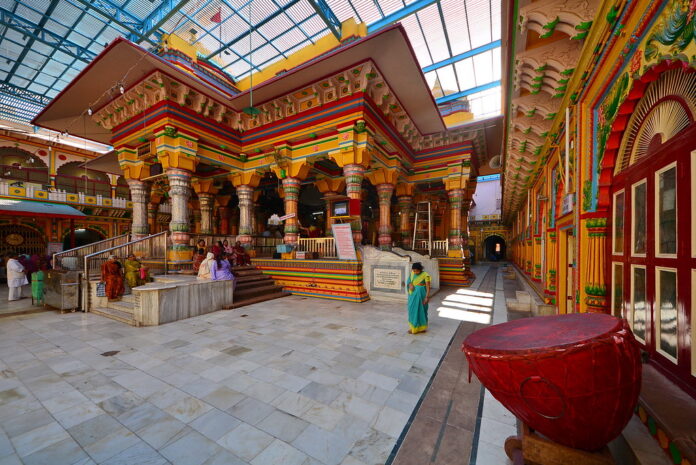
The temple presents a harmonious mixture of South Indian and Orissan architectural styles.

Visitors entering the temple first encounter a Rajagopuram, a monumental gateway tower built in the South Indian style. Such towers traditionally mark the entrance to sacred temple complexes and symbolize the transition from the material world to a sacred spiritual space.

The main shrine of Lord Venkateswara is crowned by the Jagadananda Vimanam, which reflects architectural influences from Odisha.

Meanwhile, the towers over the shrines of the divine consorts follow the Dravidian style typical of South Indian temple architecture.

The Brass Flagstaff

Another notable feature of the Birla Mandir Hyderabad is the 42-foot brass flagstaff (dhvaja-stambha).

In traditional temple architecture, the flagstaff represents the presence of the Supreme Lord and serves as a symbolic announcement of the temple’s sacred purpose.

Devotees often offer prayers near the flagstaff before entering the main sanctum.

Marble Sculptures and Artistic Carvings

One of the most impressive aspects of the Birla Mandir Hyderabad is its extensive marble craftsmanship.

The temple walls and halls contain numerous carved panels depicting scenes from Indian mythology and sacred literature.

The Mukha Mandapam

The mukha mandapam (entrance hall) contains detailed marble carvings illustrating stories from the Vedas and Purāṇas.

These carvings serve both decorative and educational purposes. In ancient times, temple art was used to communicate spiritual teachings to devotees through visual narratives.

Thus, the sculptures in the Birla Mandir Hyderabad reflect the timeless tradition of conveying philosophical truths through sacred art.

Other Shrines Within Birla Mandir Hyderabad

While Lord Venkateswara is the principal deity of the Birla Mandir Hyderabad, the temple complex also includes shrines dedicated to His divine consorts.

Shrine of Padmavathi

Goddess Padmavathi is worshiped as the consort of Lord Venkateswara and represents the divine energy (Lakshmi-tattva) of the Lord.

Devotees approach her seeking blessings of prosperity, compassion, and spiritual well-being.

Shrine of Andal

Another shrine within the Birla Mandir Hyderabad is dedicated to Andal, the great Vaishnava saint and poetess.

Andal is revered for her intense devotion to Lord Vishnu and her poetic compositions praising the Supreme Lord. Her presence within the temple emphasizes the importance of devotional love in the Vaishnava tradition.

Worship Practices in Birla Mandir Hyderabad

Although the Birla Mandir Hyderabad is a modern temple, the worship conducted here strictly follows ancient scriptural guidelines.

Pancharatra Agama Tradition

The temple rituals are performed according to the Pancharatra Agama, one of the principal Vaishnava systems of temple worship.

The Agamas are sacred texts that describe detailed procedures for deity worship, temple construction, and devotional practices.

According to the Pancharatra tradition, the Supreme Lord manifests in the deity form (arca-avatāra) to accept the loving service of devotees.

Daily worship in the Birla Mandir Hyderabad includes offerings of flowers, incense, lamps, food preparations, and sacred chanting.

Such practices help devotees develop remembrance of the Lord and cultivate humility and devotion.

Spiritual Atmosphere and Night Illumination

One of the unique visual features of the Birla Mandir Hyderabad is its beautiful night illumination.

The temple is floodlit after sunset, causing the white marble structure to glow magnificently against the night sky. This illumination enhances the temple’s beauty and allows visitors to appreciate its architectural elegance even after dark.

The hilltop location of the Birla Mandir Hyderabad also provides panoramic views of the city, creating an atmosphere conducive to peaceful reflection and prayer.

For many visitors, the experience of standing atop the hill and gazing upon the illuminated temple evokes a deep sense of spiritual serenity.

Cultural and Spiritual Importance

The Birla Mandir Hyderabad plays an important role in the spiritual life of the city.

Thousands of devotees visit the temple every year to seek blessings, participate in festivals, and engage in devotional activities.

Although modern in origin, the temple faithfully preserves the ancient principles of bhakti-yoga, the path of loving service to the Supreme Lord.

Such temples help maintain the continuity of Vedic culture by providing spaces where spiritual teachings can be practiced and experienced.

Conclusion: The Spiritual Glory of Birla Mandir Hyderabad

The Birla Mandir Hyderabad stands as a beautiful synthesis of devotion, architecture, and spiritual tradition.

From its majestic marble construction to its sacred worship of Lord Venkateswara, the temple continues to inspire devotees and visitors alike.

More importantly, the Birla Mandir Hyderabad reminds us of the eternal message of the Vedic scriptures: that the Supreme Lord is accessible to all who approach Him with sincere devotion.

By offering prayers, chanting the holy names, and remembering the Lord’s divine qualities, devotees can gradually awaken their spiritual consciousness.

Thus, the Birla Mandir Hyderabad remains not merely a landmark of the city but a sacred place where the eternal practice of devotion continues to flourish.

Simhachalam Temple: Why Is Lord Narasimha Covered In Sandal?

0

The Simhachalam Temple is one of the most revered shrines dedicated to Lord Narasimha, the fierce yet compassionate incarnation of Lord Vishnu. Situated on a picturesque hill near Visakhapatnam in Andhra Pradesh, this ancient temple has attracted pilgrims and devotees for many centuries.

The Simhachalam Temple stands about 18 kilometers from Visakhapatnam and can be seen as one approaches the city from Vizianagaram by train. Nestled upon the hill known as Simhachalam, meaning “the hill of the lion,” the temple embodies a profound spiritual heritage connected with the worship of Lord Narasimha.

In the Vedic tradition, temples are not merely architectural structures but sacred centers of bhakti (devotional service). The Simhachalam Temple beautifully exemplifies this principle, where spiritual philosophy, sacred rituals, and magnificent architecture come together to glorify the Supreme Personality of Godhead.

The Sacred Deity of Simhachalam Temple

The presiding deity of the Simhachalam Temple is known as Varaha Lakshmi Narasimha, a unique form that combines the characteristics of two incarnations of Lord Vishnu—Varaha (the divine boar) and Narasimha (the man-lion).

In the Vedic scriptures, the Lord manifests in various avatāras (incarnations) to protect the righteous and annihilate the wicked. The Varaha incarnation appeared to rescue the Earth from the depths of the cosmic ocean, while Narasimha manifested to protect His pure devotee Prahlāda Mahārāja.

At the Simhachalam Temple, the deity represents a synthesis of these two divine forms, symbolizing the Lord’s boundless compassion and protective power.

Interestingly, the deity does not appear in the usual anthropomorphic form. Instead, it resembles a Śiva-liṅga-like shape and is completely covered with sandalwood paste throughout the year.

Why the Deity Is Covered with Sandal Paste

One of the most remarkable traditions of the Simhachalam Temple is that the deity remains covered with sandal paste (candana) almost the entire year.

According to temple tradition, the fierce form of Lord Narasimha after killing the demon Hiraṇyakaśipu was so intense that it required cooling. Therefore, sandalwood paste—known for its soothing properties—is applied to calm the Lord’s fiery mood.

This covering gives the deity a smooth, rounded appearance resembling a sacred emblem rather than a visible form.

The Chandana Visarjana Festival

The only time the original form of the deity is revealed is during the annual festival known as Chandana Visarjana.

On this auspicious day, the sandal paste is ceremonially removed, allowing pilgrims to behold the true form of the Lord. Thousands of devotees gather at the Simhachalam Temple during this festival to receive the rare darśana (sacred viewing) of Varaha Lakshmi Narasimha.

Such occasions hold great spiritual significance because darśana is considered a form of divine blessing in Vedic culture.

Historical Background of Simhachalam Temple

The Simhachalam Temple possesses a rich historical legacy supported by numerous inscriptions and records.

Historical evidence indicates that the temple has been patronized by many powerful dynasties over the centuries. These rulers offered endowments, renovations, and architectural additions, demonstrating their deep devotion to Lord Narasimha.

Chola Contributions

Inscriptions reveal that Kulottunga Chola I, the great Chola king of Tamil Nadu, made significant endowments to the Simhachalam Temple around the year 1087 CE. Such patronage shows that the temple was already an important center of worship during that time.

Renovation by the Chalukyas

The Vengi Chalukyas of Andhra Pradesh renovated the original shrine in the eleventh century. Their contributions helped strengthen the temple’s architectural foundation and ritual traditions.

Eastern Ganga Dynasty

The present structure of the Simhachalam Temple owes much to the renovations carried out by Narasimha I of the Eastern Ganga dynasty in the early thirteenth century.

Their architectural vision introduced magnificent structural elements that still define the temple’s grandeur today.

Visit of Krishna Deva Raya

The renowned Vijayanagara emperor Krishna Deva Raya visited the Simhachalam Temple in the year 1516 CE. His pilgrimage is documented through inscriptions found within the temple complex.

Overall, historians have identified more than 525 inscriptions at the temple, providing valuable insight into its long and glorious history.

Architectural Beauty of Simhachalam Temple

The Simhachalam Temple is also celebrated for its extraordinary architectural design.

The temple represents a unique combination of Orissan and Chalukyan architectural styles, which can be seen in its pillars, sculptures, and decorative elements.

Stone Chariot

One of the most striking features of the temple is a stone chariot drawn by horses.

Such chariot sculptures are symbolic representations of divine movement and spiritual progress, reminding devotees that the Lord guides the soul toward liberation.

Kalyana Mandapa

Within the temple complex lies the Kalyana Mandapa, a beautiful hall supported by sixteen intricately carved pillars.

These pillars contain bas-reliefs depicting the various incarnations of Lord Vishnu, including Matsya, Kurma, Varaha, Vamana, Rama, Krishna, and Narasimha.

Such carvings serve as visual narrations of the Lord’s divine pastimes described in the Purāṇas.

Artistic Elements and Sculptures

The artistic elements of the Simhachalam Temple bear a remarkable resemblance to the sculptures of the famous Konark Sun Temple in Odisha.

The temple walls are richly decorated with carvings of elephants, flowers, plants, and celestial figures.

These motifs symbolize prosperity, harmony, and divine beauty.

Royal Figures on the Sanctum Walls

The outer walls of the sanctum feature sculptures believed to represent King Narasimha of the Eastern Ganga dynasty.

These depictions portray the king in various postures, illustrating the traditional relationship between rulers and temples in ancient India.

Kings were considered protectors of dharma (righteousness), and supporting temples was regarded as a sacred duty.

Spiritual Significance in Vaishnava Tradition

The Simhachalam Temple holds great significance for followers of the Vaishnava tradition.

Lord Narasimha represents the Lord’s unwavering commitment to protecting His devotees. In the Śrīmad-Bhāgavatam, the appearance of Narasimha demonstrates that the Supreme Lord is always present to defend those who sincerely surrender unto Him.

Prahlāda Mahārāja, the young devotee saved by Lord Narasimha, embodies the ideal qualities of faith, humility, and devotion.

The Simhachalam Temple reminds devotees of this eternal truth—that sincere devotion (bhakti) is stronger than any material power.

Pilgrimage and Devotional Experience

For pilgrims visiting Andhra Pradesh, the Simhachalam Temple offers a deeply spiritual experience.

The scenic hilltop location, sacred rituals, and historical atmosphere create an environment conducive to meditation and devotion.

Devotees climb the hill or travel by road to reach the temple, chanting prayers and remembering the Lord’s divine pastimes.

The temple festivals, daily worship, and sacred traditions make the pilgrimage both spiritually uplifting and culturally enriching.

Conclusion: The Eternal Glory of Simhachalam Temple

The Simhachalam Temple stands as a magnificent testimony to India’s rich spiritual heritage and devotion to Lord Vishnu.

From its unique Varaha Lakshmi Narasimha deity to its remarkable architectural beauty and ancient inscriptions, the temple continues to inspire countless devotees.

More importantly, the Simhachalam Temple reminds us of the timeless message of the Vedic scriptures: the Supreme Lord always protects His sincere devotees and establishes righteousness in the world.

For pilgrims, scholars, and seekers of spiritual knowledge, the Simhachalam Temple remains a sacred place where history, devotion, and divine grace beautifully converge.

Nrsimhadeva Paintings For TOVP: Sacred Art Coming Alive

0

The Nrsimhadeva Paintings for TOVP represent a remarkable devotional art project that seeks to visually narrate one of the most powerful pastimes described in the Śrīmad-Bhāgavatam. These paintings are being created for the interior of the Temple of the Vedic Planetarium (TOVP) in Śrīdhāma Māyāpur, the spiritual headquarters of the Kṛṣṇa consciousness movement.

Through sacred imagery, artistic devotion, and philosophical depth, the Nrsimhadeva Paintings for TOVP aim to present the timeless story of the Lord’s appearance to protect His devotee Prahlāda Mahārāja. This artistic offering follows the tradition established by His Divine Grace A. C. Bhaktivedanta Swami Prabhupāda, who emphasized the importance of devotional art in communicating transcendental knowledge.

In the Vedic tradition, art is not merely decoration; it is seva—loving service to the Supreme Lord. Thus these paintings are intended not only to beautify the temple but also to educate and spiritually uplift visitors.

The Vision Behind the Nrsimhadeva Paintings for TOVP

The Nrsimhadeva Paintings for TOVP are part of a grand initiative to enrich the spiritual atmosphere of the Temple of the Vedic Planetarium. The TOVP itself is envisioned as a cultural and spiritual landmark that presents Vedic cosmology and devotional philosophy to the entire world.

Śrīla Prabhupāda desired that the temple in Māyāpur would become a place where people from every nation could understand the philosophy of bhakti-yoga—the path of loving devotional service to the Supreme Personality of Godhead, Śrī Kṛṣṇa.

To fulfill this vision, devotional artists are creating a series of sixteen monumental paintings illustrating the dramatic events of Lord Nṛsiṁhadeva’s appearance. These artworks will guide visitors through the entire narrative, making the teachings of the Bhāgavatam accessible through visual storytelling.

Such sacred paintings serve as a bridge between philosophy and experience, allowing viewers to contemplate transcendental truths through form, color, and emotion.

The Story Depicted in the Paintings

The Curse of Jaya and Vijaya

The narrative presented in the Nrsimhadeva Paintings for TOVP begins with the well-known incident of the four Kumāras—Sanaka, Sanātana, Sanandana, and Sanat-kumāra.

These eternally liberated sages once attempted to enter the spiritual world of Vaikuṇṭha but were stopped by the gatekeepers Jaya and Vijaya. Feeling obstructed, the sages cursed them to take birth in the material world.

This curse eventually resulted in their appearance as the powerful demons Hiraṇyākṣa and Hiraṇyakaśipu. Such events illustrate the mysterious workings of the Lord’s divine plan, where even apparent misfortune becomes an instrument for revealing the Lord’s glory.

The Rise of Hiraṇyakaśipu

Another dramatic theme illustrated in the Nrsimhadeva Paintings for TOVP is the tyranny of the demon king Hiraṇyakaśipu.

Through severe austerities (tapasya), he obtained extraordinary boons from Lord Brahmā and became nearly invincible. Empowered by his arrogance, he attempted to establish himself as the supreme controller of the universe.

The Śrīmad-Bhāgavatam explains that such pride arises from ahaṅkāra, false ego, which makes the conditioned soul forget the Supreme Lord.

The paintings capture the grandeur of Hiraṇyakaśipu’s palace and his oppressive rule, visually conveying the atmosphere of fear that prevailed during his reign.

The Devotion of Prahlāda Mahārāja

At the heart of the Nrsimhadeva Paintings for TOVP lies the sublime character of Prahlāda Mahārāja, the saintly son of Hiraṇyakaśipu.

Despite being born in a demonic family, Prahlāda possessed pure devotion (śuddha-bhakti) to Lord Viṣṇu. From his earliest childhood he constantly remembered the Lord and instructed others in devotional service.

The Bhāgavatam glorifies Prahlāda as an example of unwavering faith. Even when subjected to severe persecution by his father—poison, fire, and attempts to kill him—Prahlāda remained fearless, always chanting the holy names of the Lord.

The artists carefully depict these scenes of persecution and divine protection, emphasizing the triumph of devotion over tyranny.

The Appearance of Lord Nrsimhadeva

The most dramatic moment portrayed in the Nrsimhadeva Paintings for TOVP is the extraordinary appearance of Lord Nṛsiṁhadeva.

When Hiraṇyakaśipu angrily demanded to know where Prahlāda’s God was, the child replied that the Lord is present everywhere—even within a pillar.

Enraged, the demon struck the pillar, and from it emerged the half-man, half-lion incarnation of the Supreme Lord. This form is described as ugra—terrifying to the demons yet protective to the devotees.

The paintings capture the intensity of this moment: the pillar bursting open, the divine form of Nṛsiṁhadeva emerging, and the cosmic justice that follows.

This event illustrates the Vedic principle that the Lord always protects His devotees (rakṣaṇa).

The Deliverance of Hiraṇyakaśipu

Another powerful scene within the Nrsimhadeva Paintings for TOVP shows the Lord defeating Hiraṇyakaśipu.

Because of the demon’s clever boon, he could not be killed by man or beast, indoors or outdoors, during day or night, or by any weapon. Yet the Lord effortlessly transcended these conditions.

At twilight (sandhyā), on the threshold of the palace, Lord Nṛsiṁhadeva placed the demon on His lap and destroyed him with His nails.

This moment demonstrates the ultimate supremacy of the Lord, who cannot be limited by material conditions.

The Coronation of Prahlāda Mahārāja

The final sequence in the Nrsimhadeva Paintings for TOVP concludes with the coronation of Prahlāda Mahārāja.

After pacifying Lord Nṛsiṁhadeva with heartfelt prayers, Prahlāda was installed as the righteous king. His reign symbolizes the restoration of dharma, the eternal principles of righteousness and devotion.

These concluding paintings depict divine peace and spiritual harmony, contrasting with the earlier scenes of conflict and oppression.

Thus the entire series presents a complete spiritual narrative—from arrogance and tyranny to devotion and divine protection.

The Devotional Effort of the Artists

Creating the Nrsimhadeva Paintings for TOVP requires immense dedication and spiritual focus.

One of the artists involved, Rasikananda Dāsa, has explained that each painting may take three to six months to complete. The level of detail is extraordinary: intricate architecture, elaborate ornaments, expressive figures, and accurate scriptural references.

Such artwork is sometimes called “Kṛṣṇa art,” a term encouraged by Śrīla Prabhupāda to describe devotional paintings that communicate transcendental knowledge.

For the artists, the work is not merely technical craftsmanship—it is devotional meditation. By contemplating the pastimes of the Lord while painting them, the artists engage in a form of bhakti-yoga.

Sacred Art as Spiritual Education

The Nrsimhadeva Paintings for TOVP also serve an educational purpose.

In the Vedic tradition, sacred art has always been used to convey philosophical teachings. Temples were historically decorated with sculptures and paintings that illustrated the scriptures.

Such visual storytelling helps visitors understand complex spiritual narratives even without reading lengthy texts.

When pilgrims walk through the TOVP and observe these paintings, they will experience the Bhāgavatam not only through philosophy but through living imagery.

In this way, the temple becomes a place where art, devotion, and knowledge harmoniously unite.

Conclusion: The Spiritual Impact of Nrsimhadeva Paintings for TOVP

The Nrsimhadeva Paintings for TOVP represent a profound offering of devotion, creativity, and philosophical expression. Through these monumental artworks, the dramatic story of Lord Nṛsiṁhadeva and His devotee Prahlāda Mahārāja will inspire generations of visitors.

Such sacred paintings fulfill the vision of presenting Vedic wisdom in a powerful and accessible form. They remind us that the Supreme Lord always protects His sincere devotees and ultimately establishes righteousness.

As these artworks gradually appear within the Temple of the Vedic Planetarium, they will stand as timeless reminders of the eternal teachings of the Śrīmad-Bhāgavatam.

Indeed, the Nrsimhadeva Paintings for TOVP are not simply works of art—they are expressions of devotion meant to awaken spiritual consciousness in the hearts of all who behold them.

How Vedavarsity Serves 760+ Devotees – Monthly Report

0

Hare Krishna Respected Students and Well-wishers,

Please accept our humble obeisances.

All glories to Śrīla Prabhupāda.

📚 Devotional Service Update (Last 30 Days)

In the past month, by your blessings, we have served 760+ devotees through:

  • Live Courses
  • Self-Paced Courses
  • Personal Coaching
  • Yajñas & Spiritual Programs
  • No Upfront Fees

With gratitude and transparency, we are sharing this monthly report so everyone can see how contributions are engaged in devotional service.

💰 Financial Summary

  • Total Monthly Expenditure: ₹ 1,01,333
  • Total Donations Received: ₹ 17,054
  • Shortfall Balance: ₹ 84,279

Vedavarsity continues solely by voluntary support.

🙏 With Heartfelt Gratitude to Our Donors

The following devotees lovingly supported this month’s Seva

(names displayed unless anonymity is requested ):

  • Vikas Bangar  Prabhuji
  • Aashish K. Gupta  Prabhuji
  • Poonam Kale Mataji
  • Praleen Gupta  Prabhuji
  • Kalyan Srinivas  Prabhuji
  • Raveen Sachdev  Prabhuji
  • Omprakash  Prabhuji
  • Aishwarya Mataji
  • Shyam Preyasi Devi Dasi Mataji
  • Jatin Uppal  Prabhuji
  • Komal Batra Mataji
  • Sahil Prabhuji
  • Aditya Sahu Prabhuji
  • Madhuri Mataji 
  • Yogesh Prabhuji
  • Sulakshana Devi Dasi Mataji
  • Pradyumna Prabhuji
  • RasaSthali Mataji

🌿 About Vedavarsity

Vedavarsity is a non-commercial educational initiative, sustained entirely through voluntary contributions from devotees who value authentic śāstric education.

Your support helps:

  • Maintain our courses and faculty services
  • Run the library and learning systems smoothly
  • Reach sincere students worldwide

If Vedavarsity has strengthened your connection with Śrīmad-Bhāgavatam and other śāstras, we humbly invite you to participate in this seva according to your inspiration.

Even a small offering, given with sincerity, becomes meaningful service.

🏦 Donation Details

Account Name: Vedavarsity

Account Number: 924010070644272

IFSC: UTIB0000794

SWIFT Code: AXISINBB310

MICR: 281211102

UPI ID: MAB.037214007940201@AXISBANK

PayPal: https://www.paypal.com/paypalme/aakashpahuja

Online Donation: https://library.vedavarsity.com/donate/

🌺 With Gratitude

Thank you for your trust, encouragement, and continued association.

By your blessings, may this service always remain aligned with guru, sādhu, and śāstra, and continue to benefit many sincere souls.

Hare Kṛṣṇa

Team Vedavarsity

What Is Bhakti-Siddhānta, And Why Must A Devotee Not Neglect It?

0

In this article ‘Bhakti Siddhānta (Devotional Conclusions)’ Śrīla Bhaktisiddhānta Sarasvatī Ṭhākura delineates the foundational elements of bhakti (sambandha, abhidheya and prayojana) drawn from the vedic conclusions and establishes the Śrīmad Bhāgavatam as the ripened fruit of these literatures. This article was originally published in Bengali in Vol. 21, Issue 10 of Śrī Sajjana Toṣaṇī, January 1919 and translated by Sanātana Dāsa.

In the Vedic Literature three divisions are delineated. On the basis of qualification or eligibility, Vedic literature is divided into three sections. From the propensity of enjoying fruitive activities, the process of karma-kāṇḍa manifests. From the propensity of renouncing the fruits of action, the inclination for jṣāna-kāṇḍa arises. Feelings arising out of worldly entanglements have given rise to these two different paths. The perception of liberation pertaining to the world beyond found in these two paths cannot be held in high regard. The inclination identified with the conception of liberation is in fact the path of bhakti (devotion) or the upāsanā-kāṇḍa of the Vedas. Strong faith in worldly affairs leads to the misconception of thinking that the spiritual upāsanā-kāṇḍa is a branch of karma-kāṇḍa. All the realizations of people in this world are fruitively oriented or based upon temporary dharma.

By accepting the path leading to knowledge of Brahman (brahma-vidyā), knowledge of the self (ātma-vidyā) or knowledge of devotion to the Bhāgavata (bhagavata-bhakti-vidyā), the charm of temporary dharma is completely overshadowed. The fruitive activities of this world leading to enjoyment, and knowledge leading to worldly renunciation found amongst common men do not assist the devotional branch of the Vedic literatures. The devotional sections mentioned in the Vedic literatures do not show reverence to karma and jṣāna arising from mundane social knowledge. The twofold Vedic paths of karma and jṣāna are incapable of serving the Eternal Reality (akṣara-vastu). To be situated in these two aforementioned branches and to simultaneously believe that one is situated in the branch of devotion is simply a symptom of self-deception. By taking shelter of aparā-vidyā (the mundane knowledge of this world) one will never gain realization of parā-vidyā (the transcendental knowledge of devotion). Devotion is beyond the realm of material nature. Those who are inclined to serve the mundane elements of this world, live their lives endeavoring in activities of the mundane plane.

Siddhānta, or devotional conclusions, means to be established on the stage of perfection after eliminating our previous phase of conditioning. Great personalities, who worship the path of devotion, say that the Vedic literatures have assisted in revealing the three devotional conclusions of sambandha, abhidheya and prayajona.

Vedic brāhmaṇas, who are expert in the branch of fruitive activities, are aware of their connection with their individual karma, and thus they attempt to execute auspicious activities and attain perfection in obtaining the fruits of their sense-gratification. By the potency obtained from pleasing the Supreme Lord Hari, those Vedic brāhmaṇas who are expert in the branch of empirical knowledge, develop oneness in relation to the non-differentiated Brahman by perfecting the six-fold path – they practice and follow the mundane path of jṣāna and attain the perfection of eliminating their self after annihilating the ignorance of duality.

Vedic brāhmaṇas who are followers of the branch of bhakti establish their individual transcendental relationship by engaging in eternal process of devotional service to Kṛṣṇa (nitya-abhidheya) and as a result achieve love for Kṛṣṇa. The Vedic literatures have described the science of sambandha, abhidheya and prayojana. Vedic brāhmaṇas worship the Vedic literatures by either engaging in karma with the desire to enjoy the fruits of their action, or by cultivating jṣāna and renouncing the result of their actions or, by renouncing both by cultivating devotional service. The prime reason for the difference in understanding and conceptions amongst the brāhmaṇas on the path of karma and jṣāna is that they do not agree on the essential devotional conclusion of the Vedas. Due to lack of pure knowledge before one renounces the knowledge of non-duality while accepting the ignorance of the concept of duality, one develops faith in the existence of the other two branches of the Vedas, namely the realm of materialistic knowledge and the realm of renunciation. But when one becomes experienced in proper conclusions one comes to realize the futility of the two branches of karma and jṣāna in the realm of transcendence.

Śrīmad Bhāgavata is the ripened fruit from the desire-tree of Vedic literature. In order to specifically make the upāsanā-kāṇḍa of the Vedas beneficial for the qualified followers of the Bhāgavata, the book form of the nāmātmika-mūrti of Bhagavān (the form that is composed of the Lord’s Holy Names) has manifested. In this book, which is the ripened fruit of Vedic literature, the dry, bitter taste of jṣāna and the stale taste of karma have been deprived of all respect. When the Vedic brāhmaṇas following karma and jṣāna understand the true purport of the Vedic literature, then the beauty of the Śrīmad Bhāgavata will be revealed to them and they will abandon their own merchandise. The confidential explanation of the Śrīmad Bhāgavata has been revealed in the conduct of Śrīman Mahāprabhu.

The crest-jewel of sāragrāhi Vaiṣṇavas (those devotees seeking the essence of devotion), the emperor amongst the community of great brāhmaṇa paramahaṁsas who are expert in the devotional branch of the Vedas, who is considered to be one of the foremost associates in the eternal pastimes of the Lord, Śrī Śrīmad Kṛṣṇa Dāsa Kavirāja Gosvāmī Mahodaya, propagated the foundational secrets of the Śrīmad Bhāgavata introduced by Śrī Gaura in his Śrī Caitanya-caritāmṛta and described the characteristics of Śrī Caitanyadeva who revels in divine pastimes. In that Veda he has written:

siddhānta baliya citte nā kara alasa
ihā haite kṛṣṇe lāge sudṛdha mānasa

One should not become lazy by avoiding discussions on siddhānta, for such discussions strengthen the mind. Thus one’s mind becomes attached to Śrī Kṛṣṇa. (Cc. Ādi 2.117)

If out of laziness one does not enter into the fundamental Vedic principles of sambandha, abhidheya and prayojana, then it will be impossible to attain the proper qualification to enter the realm of devotion to the Lord and become established there. Without properly understanding bhakti-siddhānta, one will become bewildered and claim that the paths of karma and jṣāna found in the Vedas are actually bhakti. Thus, after rejecting the path of devotion, thinking it to be strewn with thorns, one will conclude that the other two paths are actually paths leading to bhakti. The rituals conducted by a person inexperienced in devotional conclusions fall into the domain of karma and jṣāna and are thus completely rejected by Vedic brāhmaṇas who have taken shelter under the branch of bhakti.

That most intimate associate of Śrī Mahāprabhu, Śrī Śrīmad Sanātana Gosvāmī is the bhakti-siddhānta-ācārya (the ācārya of devotional conclusions) for the Lord’s servants. This topic has been clearly explained in the book Śrī Caitanya-caritāmṛta. After becoming most expert in bhakti-siddhānta, Śrīmad Rūpa Gosvāmī Prabhu wrote an unparalleled book entitled Hari-bhakti-rasāmṛta-sindhu. This book is the very life of the devotees. Due to the gradual neglect of the transcendental message of the Vedas, the present day Vedic brāhmaṇas that have taken shelter of the branch of bhakti have allowed mundane contaminations to enter them.

For the benefit of the society of pure devotees, Śrī Jīva Gosvāmī Prabhupāda, under the guidance of Śrī Rūpa Gosvāmī Prabhu, has clearly explained the fundamental principles of sambandha-jṣāna in the first four Sandarbhas of his Ṣaṭ Sandharbha. He is the sambandha-tattvācārya of devotional conclusions.

Under the guidance of Śrī Rūpa and being the recipient of the mercy of Śrī Dāmodara-svarūpa, Śrī Śrīmad Raghunātha Dāsa Gosvāmī Prabhupāda, whose writings like Stavāvalī and other transcendental literatures have presented the proper conception of the knowledge of abhidheya, is eternally established as the abhidheya-tattvācārya under the essential conclusions of devotion.

The section of the Vedas representing pure devotion has been presented under the guidance of Śrī Rūpa. It is not necessary that the karmīs, who are overwhelmed by various desires, or the jṣānīs attain benefit from such preaching. If the rays of light emanating from the proper siddhānta enlighten those who are qualified, then the Vedic brāhmaṇas who have taken shelter of the division of bhakti will be able to firmly establish themselves again under the branch of the Vedas and will become capable of making true followers of Śrī Rūpa. At present, the Gauḍīya Vaiṣṇava society, which should ideally be under the bhakti-siddhānta, is madly dancing the tāṇḍava-nṛtya (the dance of death) due to the influence of śūdras who have deviated from the Vedic path. It is our earnest prayer that the pure devotees who follow the precepts of Śrī Rūpa Gosvāmī (Rūpānugas) preach the bona-fide conclusions of devotion to the people of this world and help them become qualified to worship on the path of Vedic Vaiṣṇava dharma.

A Devotee Is Merciful (Sajjana – Kṛpālu)

0

Overview

‘Sajjana-Kṛpālu’ (A devotee is Merciful) was the first in a series of articles by Śrīla Bhaktisiddhānta Sarasvatī Ṭhākura Prabhupāda on the twenty-six qualities of a Vaiṣṇava in 1917 and published in Sajjana-Toṣaṇī magazine, Vol. 20, Issue 2. This article explores mercy, the primary quality of a devotee, and illustrates its significance for the followers of Śrī Caitanya.

Articles in This Series:
(Translated from the original Bengali by Swami B.V. Giri and edited by Parameśvarī Dāsī)

Those jīvas who are averse to Hari often cannot comprehend the characteristics of a sajjana (devotee). In their own philosophies which are full of anarthas, they indicate a different meaning to the word ‘sajjana.’ However, Śrīman Mahāprabhu explained the symptoms of a sajjana to Sanātana Gosvāmī in this way:

kṛpālu, akṛta-droha, satya-sāra sama
nirdoṣa, vadānya, mṛdu, śuci, akiṣcana
sarvopakāraka, śānta, kṛṣṇaika-śaraṇa
akāma, nirīha, sthira, vijita-ṣaḍ-guṇa
mita-bhuk, apramatta, mānada, amānī
gambhīra, karuṇa, maitra, kavi, dakṣa, maunī

(“A Vaiṣṇava is merciful, non-violent, the essence of truth, equipoised, faultless, munificent, gentle, pure, without material possessions, always engaged in beneficial work for all, calm, surrendered solely to Kṛṣṇa, without desire, indifferent, steady, in control of the six lower qualities, eats only as required, attentive, respectful, never expecting honour, sober, compassionate, friendly, poetic, expert and quiet.” – Caitanya-caritāmṛta, Madhya-līlā 22.78-80)

The first symptom of a Vaiṣṇava is that he is merciful (kṛpālu). Śrī Gaurahari is the worshippable object of the sajjanas, the principle shelter and primary personality of those who are merciful. A person who is averse to Gaura is not capable of actually being merciful, nor qualified to attain the other twenty-five qualities. Śrīmad Bhāgavata says:

yasyāsti bhaktir bhagavaty akiṣcanā
sarvair guṇais tatra samāsate surāḥ
harāv abhaktasya kuto mahad-guṇā
manorathenāsati dhāvato bahiḥ

(“The Devas reside with all good qualities in one who has unmotivated bhakti for Bhagavān. But where are the good qualities in the non-devotee whose mind runs after temporary material objects?” – Śrīmad Bhāgavatam 5.18.12)

Those who have transcendental devotion towards Bhagavān or a service-tendency, possess all good qualities. What are the great qualities of one who rejects hari-sevā? The chariot of their mind is constantly running on the path of serving the objects of the senses with the tendency to enjoy, and to attain transient things that are disconnected with Hari. Thus, even if there is a glimmer of some good quality in one who is averse to Hari, such qualities do not remain with him and, in time they all become faults.

Dayānidhi Gaurahari (Gaurahari, the ocean of mercy) is a veritable sea of compassion. Only His pure servants have the characteristics of mercy, and even if a shadow of mercy is seen in others, in reality such ‘mercy’ is simply cruelty. Gaurasundara, the ocean of mercy, has shown mercy to the jīvas in nine ways. Receiving mercy from that Ocean of mercy, Śrī Dāmodara Svarūpa Gosvāmī has composed this in the form of a śloka.* This mercy of Gaurahari is aprākṛta (transcendental), pūrṇa (complete), nitya (eternal), śuddha (pure), mukta (liberating) and caitanya-rasa-mayī (replete with divine conscious mellows), thus no type of adversity can arise in the jīva whatsoever.

Covered by the three kinds of miserable dust of anyābhilāṣa (desires for other mundane things), karma and jṣāna, the bound jīva forgot his own welfare, rejecting the shelter of Gaura’s feet and becoming averse to Him. Dayānidhi Gaurahari took pity on them and easily blew away the dust of the three types of misery, ādhibhautika (miseries caused by other entities), ādhidaivika (miseries caused by natural calamities) and ādhyātmika (miseries caused by oneself) and bestowed upon them the service of His feet, which destroys the threefold miseries.
The bound jīva has the threefold contaminations of anyābhilāṣa and the coverings of karma and jṣāna. In the material world, the carriers of these threefold contaminations, namely the so-called ‘mahājanas’ or role models, have only been cruel to the jīvas, placing them in a perilous situation under the weight of their own contaminations.

Under their possessive rule, such śāstra or teachers, place the jīvas within their controlling grasp, and by their expertise they are put under the spell of such narrow-minded mundane limitations, and in this way their hearts become very quarrelsome. Dayānidhi Gaurahari has declared that all such dissension regarding teachers and śāstrika sampradāyas is simply trivial and useless in the spiritual domain. Being engrossed in disputes on śāstra, a jīva will never attain mercy for himself. It is only when one comes to know that Gaurhari is an ocean of mercy that dissension amongst all the śāstra is resolved.

When the bound jīva takes shelter of pure bhakti, then the ātmā becomes completely satisfied. Service to Kṛṣṇa is the unalloyed bliss of the jīva. When the proclivity for service is directed towards mundane objects, it becomes jṣāna, karma or anyābhilāṣa. The advice of rejecting or renouncing them is the mercy of Gaurahari. The endeavour of obtaining the proper conception that in spiritual life there is no path other than bhakti which awakens one’s good fortune is His mercy.
Only by serving Kṛṣṇa does the jīvātmā become purified of material impurities.
Recognising bad association as service to māyā, if one rejects that and engages in service to Kṛṣṇa with a sajjana, one becomes free from material rasa and attains aprākṛta-rasa (transcendental mellows).
If the tendency towards material sense-enjoyment and mundane rasa is abandoned, then the mellows of kṛṣṇa-bhakti-rasa arises and a devotee becomes equipoised.

When the dust-like misery originating from an absence of Kṛṣṇa is blown away, the uncontaminated pure servitor rejoices, by the mercy of the hlādinī-śakti (Rādhārāṇī, the pleasure-giving potency).
When bickering over the śāstra subsides and kṛṣṇa-tattva-rasa emerges, then by the mercy of the hlādinī-śakti one becomes intoxicated with divine bliss.
Engaging in service to Kṛṣna, becoming free from violence and perceiving the ecstasy of Kṛṣṇa everywhere, one becomes situated at the zenith of kṛṣṇa-mādhurya (Kṛṣṇa’s sweetness).
The servants of Śrī Gaurāṅga have received these nine types of mercy from Mahāprabhu, who Himself is an ocean of mercy and thus, in this way they are full of compassion. Therefore, the inherent nature of a devotee is kṛpālu. If he is devoid of mercy, then Dayānidhi Gaura does not accept him as one of His own.

One may become bitter and think, “Why did Śrī Gaurahari not accept the best of the anyābhilāṣīs, karmīs or jṣānīs, and only show mercy to the pure servants of Hari? Why did He not approve of the misconduct of those persons devoid of bhakti? By doing this, hasn’t the name ‘Dayānidhi’ become besmirched by some fault?

The prākṛta-sahajiyās who openly pretend to be followers of Dayānidhi Gaura, followers of the compassionate Nityānanda, followers of the merciful Thākura Narottama or followers of the Vaiṣṇava Ṭhākura who is benevolence personified, are expert in self-promotion through hypocrisy – did they not receive any share of the aforementioned nine kinds of mercy?

In answer to this it can be said that such wranglers are not prepared to believe in the mercy of Bhagavān and His devotees. They only consider their own apparently ‘sweet’ selfish sense-enjoyment to be ‘mercy.’ Anyone who disturbs their senses even a little is not a merciful devotee, nor is he Bhagavān. His imaginary ‘Gaurahari’ is not Bhagavān, but merely a puppet whose purpose is to help him pursue his own lusty desires. But the sajjana is merciful. Since the sajjana has rejected the association of the dishonest, he has become very merciful to his own self.

Those whose material intelligence is fully absorbed in being ‘merciful’ to their senses which are averse to Hari, and desiring prestige, hypocritically preach to the foolish that enjoyment of this material world is hari-sevā, are not merciful. The sajjanas are merciful. He who covers true dharma in order to strengthen the sensually weak jīva’s mundane attachments, who does not wish to be antisocial by speaking displeasing words to anyone, who tries hard to be a leader surrounded by worthless people – he can never be a sajjana, and he can never be merciful. In order to be merciful, the Absolute Truth should never be eclipsed in any way. Calling oneself a ‘pure servitor’ while disrespecting the merciful Vaiṣṇava Ṭhākura, and following and preaching misconceptions is simply a scarcity of mercy. A sajjana is always merciful.

(Translated from Bengal by Swami B.V. Giri)

  • Translator’s Note:

The śloka composed by Śrī Svarūpa Dāmodara Gosvāmī is as follows:

heloddhūnita-khedayā viśadayā pronmīlad-āmodayā
śāmyac-chāstra-vivādayā rasa-dayā cittārpitonmādayā
śāśvad-bhakti-vinodayā sa-madayā mādhurya-maryādayā
śrī-caitanya dayā-nidhe tava dayā bhūyād amandodayā
(Caitanya-caritāmṛta, Madhya-līlā 10.119)

Hela-uddhūnita khedayā – it easily eliminates mundane lamentation.
Viśadaya – it purifies everything.
Pronmilat amodaya – it awakens divine bliss.
Śāmyac-chāstra-vivādayā – it removes disputes concerning śāstra.
Rasa-udaya – it awakens rasa.
Citta-arpita-unmadaya – it creates bliss within the heart.
Śāśvat-bhakti-vinodaya – it stimulates bhakti.
Sa-madaya mādhurya-maryādayā – along with full ecstasy, it is the limit of sweetness.
Amanda-udaya – it awakens good fortune.

Stay Connected

16,985FansLike
12,500FollowersFollow
61,453SubscribersSubscribe