Mail ID: contact@vedavarsity.com

Contact: +91 9634998911

Google search engineGoogle search engine
Home Blog Page 50

The History Of Mathura At The Time Of Lord Krishna

0

Mathura became the capital of the Shurasena Province, which comprised of the modern-day districts of Mathura, Agra, and Firozabad and was ruled by the kings belonging to the Yadava Dynasty. The Yadavas of the Shurasena Province were a confederacy of many clans which included the Vrishnis, Madhavas, Andhakas, and Bhojas, who belonged to the Chandra vamsha ksatriya lineage and ruled from different principalities in and around the province of Shurasena. The Yadavas were all descendents of King Yadu, the illustrious son of Maharaja Yayati, who had ruled from his capital city at Pratisthanpur (Prayag). The Chandra-vamsha Empire under Yayati stretched from the Narmada River in the south to Hastinapura in the north and all the central regions of Aryavarta lying west of the Ganges were under his control.

At the end of Dwapara-yuga, the most prominent King amongst the Yadava clan was Ugrasena Maharaja, who was the king of Mathura at the time of Lord Krishna’s appearance. His eldest son Kamsa, later imprisoned Ugrasena Maharaja and forcibly usurped his father’s throne. The other prominent king at the time was the virtuous Shurasena Maharaja, after whom the Yadava kingdom of Shurasena was named. Shurasena Maharaja ruled from the city of Yadupura, also called Vateshwara (Batasar), located about one hundred kilometers to the south of Mathura and some forty-five kilometers southeast of Agra. The Shurasena kingdom formally covered parts of the modern-day districts of Mathura and Agra in the Indian state of Uttar Pradesh.

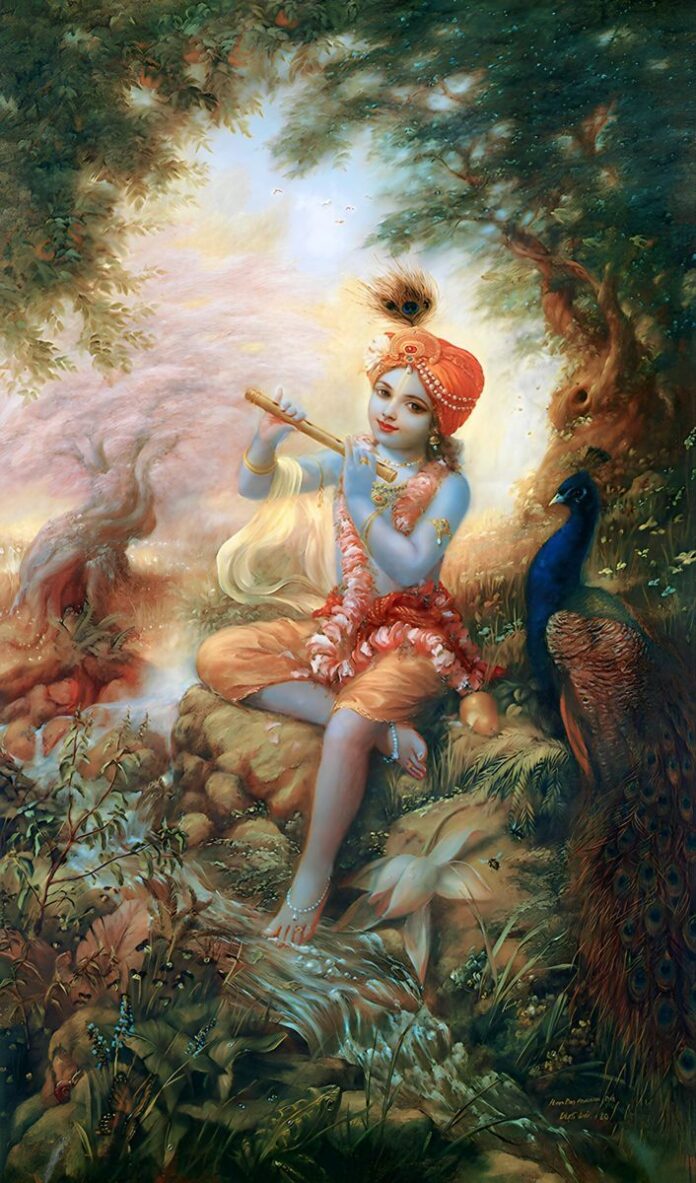
Maharaja Shurasena’s son was the celebrated Vasudeva, who married Princess Devaki but just after their wedding they were imprisoned by Kamsa, who according to an omen, feared that a son born to them would kill him in the future. While in Kamsa’s prison cell, Devaki gave birth to a number of children who were all immediately slaughtered by the evil Kamsa. Devaki’s eighth child was Lord Krishna, the Supreme Personality of Godhead and immediately after His birth, He was taken by Vasudeva to the safety of Nanda Maharaja’s home in Gokula where Kamsa could not harm Him. The Shrimad Bhagavatam reveals that Lord Shri Krishna spent the first eleven years of His life living in the rural environs of Gokula Vrindavana, under the care of His foster parents Nanda and Yashoda, before eventually returning to Mathura in order to kill Kamsa, deliver Vasudeva and Devaki from persecution, and restore Ugrasena Maharaja on the throne of Mathura.

Subsequently, after numerous attacks on the city of Mathura by inimical kings and their legions, Krishna established the new city of Dwaraka in the midst of the ocean and relocated the entire Yadava Dynasty to the new city. In the course of His life, Krishna vanquished all the evil demons on earth and during the ensuing fratricidal conflict between the royal cousins, the Pandavas and the Kauravas, known as the Mahabharata war, by His divine will, Krishna removed the great burden on earth created by so many kings and their military forces who were all vanquished during the battle, which left no survivors except the five pious Pandava brothers and a few of their loyal followers.

Then some thirty-six years after the Mahabharata war, in the year 3102 BCE, Lord Krishna disappeared from the vision of the world. According to the Surya siddhanta, Kali-yuga began at midnight on the 18 February 3102 BCE, on the very day that Krishna left the world. Sometime after the departure of Lord Krishna, the Pandavas decided to retire from worldly affairs and leave for the Himalayas to pursue spiritual emancipation. In order to continue the rule of the Chandra-vamsha Dynasty, Yudisthira enthroned Parikshit Maharaja at Hastinapur while Arjuna enthroned Lord Krishna’s great grandson Vajranabha Maharaja as the ruler of both Indraprashta and Mathura.

Preparing & Serving A Vedic Meal

0

Preparing food for the pleasure of the Supreme Personality of Godhead is a wonderful way to express creativity. Combining colors, flavors, and textures in various dishes (and not going over your budget) develops the skill of a true artist. Cooking for Kṛṣṇa calls for a personal touch, and the cook should desire not only to feed but also to delight.

Vedic cooking is practical because it means making the best dishes in the shortest time. One who cooks to please the Supreme Lord cooks efficiently, without haste or waste. Śrīla Prabhupāda showed us how to make a complete meal in less than an hour.
Use time to your best advantage by being organized. For example, plan the sequence in which you’ll cook the dishes. Start the meal the night before. It takes only a few minutes to start a yogurt culture, make paneer and hang it to drain, or put beans to soak. Almost all Indian sweets can be made a day in advance and kept in the refrigerator until needed. Also, on the day the meal is served, you can make and chill the beverage several hours ahead.

If you’re new at Indian cooking, it may be useful to arrange all the ingredients before you start, since the cooking will call for your uninterrupted attention. Start with the dishes that need to cook the longest, such as dal and cooked chutney. Make the bread dough next so you’ll have enough time for it to stand. If you haven’t made fresh cheese the night before, you can make it now and press it under a weight. If you’re making rice or halavā, put a pot of water over heat. Now start on the vegetables, savories, and side dishes. If one dish in the menu requires a great deal of preparation, see that others are quick and easy. Cook the breads and savories at the end, so you can serve them hot.

You’ll keep your mind clear and reduce the cleaning at the end if you clean as you cook. “Cooking means cleaning,” Śrīla Prabhupāda said. Take the time to sponge off working surfaces, and wash pots as you go along. Once you realize that half the pleasure of the cooking is in the cleaning, you’ll always leave the kitchen cleaner than it was when you began.
The same care that goes into preparing the meal should go into presenting it. In India, where there is no table setting as in the West, food is generally served in katoris, little bowls of silver, brass, or stainless steel, placed on a thali, a round, rimmed tray of the same metal. Rice, breads, and other dry foods are served directly on the thali. Cooked vegetables, chutneys, dal, yogurt, and other liquid or semiliquid foods go in the katoris. In the absence of thalis and katoris, ordinary plates and bowls will do. All the courses are served together, to be eaten in whatever order one likes.

An Indian meal should seduce first the eyes, then the nose, and finally the tongue. The home-cooked bread, the sweets of various shapes and colors, and the soup and vegetables garnished with lemon slices and fresh coriander leaves delight the eyes. The aromas of the seasonings and fresh ingredients please the nose, and the balance of spicy and bland foods pleases the tongue.
If you would like to try eating Indian-style, make a seat on the floor with a carpet, mat, or cushion, and put the thali on a low table before you. Indian music (or, better yet, Vaiṣṇava chanting) will create a pleasant atmosphere.

Alcoholic beverages have no place in Vedic dining. The taste of prasāda enlivens the soul and purifies the senses; intoxicants have the opposite effect. If intoxicants were at all conducive to elevating our consciousness, true yogis would drink and smoke, but they don’t. Alcohol dulls the consciousness and obscures the delicate taste of vegetarian food, so it’s better to drink water or one of the beverages from this book. Normally, no tea or coffee is served after an Indian meal. Instead one chews a little anise seed and crushed cardamom to refresh the mouth and please the stomach.

Silverware is optional. Indians eat with the fingers of the right hand (the left hand cleans the body; the right one feeds it). Fingers and Indian food, it seems, were meant for each other. How else could you tear off a piece of chapati, wrap it around a bit of saucecovered vegetable, and convey it to your mouth without losing any on the way? You can, of course, use silverware if you prefer.
A well-prepared meal served hot, on time, and in abundance is an even greater pleasure when the person serving it is eager to please his guest. The person eating the meal may choose to eat moderately, but the person serving the meal should simply be concerned with feeding his guests to their hearts’ content. A Vaiṣṇava song glorifying the spiritual master says, “When the spiritual master sees that the devotees are satisfied by eating Kṛṣṇa-prasāda, then he is satisfied.”

We can get a glimpse of this spirit from Planting the Seed, Volume Two of the biography of Śrīla Prabhupāda by His Holiness Satsvarūpa dāsa Gosvami. Here, a devotee recalls the early days of the Hare Kṛṣṇa movement: “Prabhupāda’s open decree that everyone should eat as much prasāda as possible created a humorous mood and a family feeling. No one was allowed to sit, picking at his food, nibbling politely. They ate with a gusto Swamiji [Śrīla Prabhupāda] almost insisted upon. If he saw someone not eating heartily, he would call the person’s name and smilingly protest, ‘Why are you not eating? Take prasāda.’ And he would laugh. ‘When I was coming to your country on the boat,’ he said, ‘I thought, ‘How will the Americans ever eat this food?’ And as the boys pushed their plates forward for more, Keith would serve seconds-more rice, dal, chapatis, and sabji.”

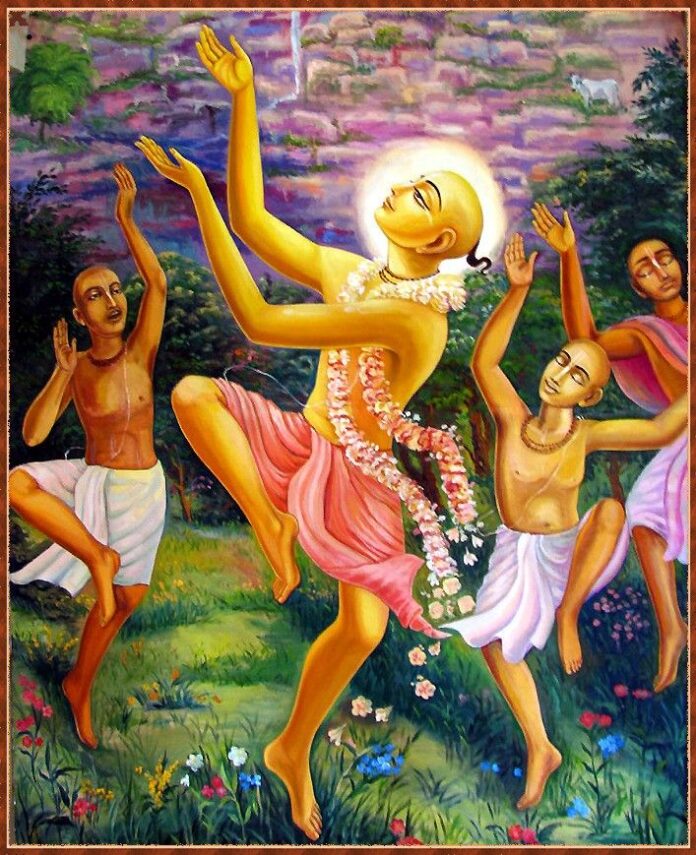
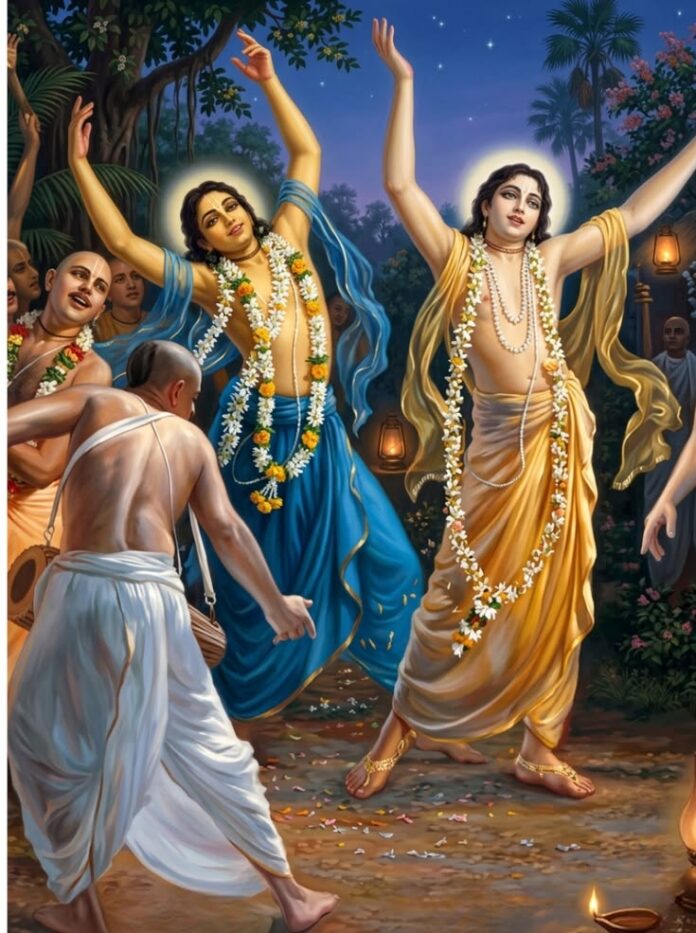
Even Lord Kṛṣṇa Himself, in His incarnation 500 years ago as Śrī Caitanya Mahāprabhu, derived great pleasure from serving prasāda to His devotees. The Śrī Caitanya-caritāmṛta, the Bengali devotional classic about the pastimes of this most magnaminous incarnation of Godhead says: “Śrī Caitanya Mahāprabhu was not accustomed to taking prasāda in small quantities. He therefore put on each plate what at least five men could eat. Everyone was filled up to the neck because Śrī Caitanya Mahāprabhu kept telling the distributors, ‘Give them more! Give them more!”‘ And since Lord Caitanya was the omniscient Lord Himself, He astonished everyone by knowing exactly what each person wanted. In this way He fed all the devotees until they were fully satisfied.

You and your guests will also be fully satisfied. Whether you sit on the floor or at a table, whether you eat with your fingers or with silverware, whether you serve or are served, whether you have a meal of one dish or 130, you’ll find your home-cooked Indian meal a true feast for the senses, the mind, and the soul.

Govinda Kaviraja

0

Śrī Govinda Kavirāja, also known as Govinda dāsa or Dāsa Govinda, was born in a respectable Vaidya family and was a devoted disciple of Śrīnivāsa Ācārya Prabhu. His father was Ciranjīva Sena and his mother was Sunandā-devī. He was the younger brother of the celebrated poet Rāmacandra Kavirāja, and his maternal grandfather was the renowned scholar Dāmodara Kavi. Govinda Kavirāja’s ancestral residence (śrīpāṭa) was situated at Tiliya-Budhuri in the Murshidabad district of Bengal. He was married to Mahāmāyā-devī, and they had one son named Divya Siṁha, from whom the family line continued through Ghanasyāma, Svarūpanātha, and Haridāsa.

During her pregnancy, Govinda’s mother fell gravely ill. By providence, after taking sanctified water associated with the Śākta tradition, she was able to give birth safely. Govinda was subsequently raised by his maternal grandfather, who was a follower of Śakti worship, and thus Govinda himself was brought up in that tradition. Although from his mother he had heard about the superiority of Kṛṣṇa-bhajana, he was unable to give up Śakti worship. As a result of this inner conflict, he later became severely ill.

While anticipating imminent death, Govinda informed his elder brother Rāmacandra Kavirāja of his condition and expressed a heartfelt desire to place his head at the lotus feet of Śrīnivāsa Ācārya Prabhu. Rāmacandra immediately brought Śrīnivāsa Ācārya to Budhuri. Entering Govinda’s room, Śrīnivāsa Ācārya compassionately raised his lotus feet to touch Govinda’s forehead. At that moment Govinda was overwhelmed with transcendental joy. On the following day, Govinda received dīkṣā from Śrīnivāsa Ācārya and fully entered the path of pure devotional service.

At that time, Govinda composed his first pada, which was natural, spontaneous, and filled with devotional emotion, clearly revealing that he was a poet by divine arrangement. By the mercy of his spiritual master, Govinda immediately recovered from his illness and dedicated his life to composing devotional songs glorifying the pastimes of Śrī Gaurāṅga and Śrī Śrī Rādhā-Kṛṣṇa.

Gradually, Govinda Kavirāja became widely known throughout Bengal for his extraordinary poetic talent. According to Bhakti-ratnākara, he composed Śrī Rāmacaritra-gīta on the order of King Harinārāyaṇa. At the request of King Santosa Datta of Khetari, he composed Saṅgīta-mādhava Nāṭaka, which further established his unparalleled mastery of devotional poetry. He also composed fifty-one padas describing the aṣṭa-kālīya-līlā of Śrī Śrī Rādhā-Kṛṣṇa.

Govinda’s fame eventually reached Vṛndāvana. The Vaiṣṇavas there, headed by Śrī Jīva Gosvāmī, were deeply impressed by his poetic genius and sent him a letter of appreciation. The Six Gosvāmīs and the Vaiṣṇavas of Vṛndāvana honored him with the exalted title “Kavirāja” or “Kavindra” and sent him a celebratory śloka praising his devotional poetry and its power to enchant the hearts of all devotees.

Govinda Kavirāja resided on the bank of the river Rādma in the Paścimapāḍā area of Tiliyā-Budhuri, presently known as Bubod village. On his return journey from Vṛndāvana, he visited Bisāphī village near Simlā, the birthplace of the celebrated poet Vidyāpati. There, Govinda Kavirāja recovered several lost padas of Vidyāpati, thus rendering invaluable service to Vaiṣṇava literature.

During his stay at Budhuri, Govinda also visited the royal courts of King Narasiṁha of Pakkapallī and King Pratāpaditya of Jessore. He shared a particularly close relationship with Vasanta Rāya, the paternal uncle of King Pratāpaditya.

Govinda Kavirāja departed from this world in 1534 Śaka (1612 AD). The Deity of Gopāla installed by him, along with his descendants, still exists to this day. He is remembered as one of the eight Kavirājas who are daily honored by Gauḍīya Vaiṣṇavas.

Approximately 430 of his padas in Vrajavulī, bearing the bhāṇitā of Govindadāsa, have been compiled in Padakalpataru. Others appear in Padāmṛta-samudra and Gaurapada-taraṅgiṇī. Several padas feature combined bhāṇitās with poets such as Vidyāpati, Vasantarāya, Santosa, and others. Kṣaṇadā-gīta-cintāmaṇi contains seventy-nine gītas composed by Govinda Kavirāja, and references indicate that he also authored a work entitled Gītāvalī.

Among all poets of Vrajavulī literature, Govinda Kavirāja is unanimously regarded as the foremost. His masterful use of alaṅkāra (rhetoric), precise prosody, rhythmic flow, and melodic sound demonstrate his deep command of Sanskrit aesthetics and devotional rasa. He also completed several unfinished padas of Vidyāpati, who greatly inspired him. Even today, in the performance of rāsa-kīrtana, the compositions of Govinda Kavirāja are especially cherished.

Learned scholars conclude that Govinda Kavirāja’s extraordinary popularity arises from his profound study of śṛṅgāra-rasa as presented in Ujjvala-nīlamaṇi, the essence of which is beautifully reflected in his devotional compositions, particularly Gītāmṛta.

Govinda Ghosh (Ghoṣa Ṭhākura)

0

Govinda Ghoṣa, also known as Ghoṣa Ṭhākura, was a devotee in the disciplic succession of Śrī Caitanya Mahāprabhu. He was born in the Kayastha caste of the North Rāḍhī clan. His śrīpāṭa (residence and place of worship) was at Agradvīpa. He was the brother of the renowned Vaiṣṇava poet Vāsudeva Ghoṣa, and the third of the three Ghoṣa brothers, the others being Mādhava Ghoṣa and Vāsudeva Ghoṣa. Vāsudeva resided at Tāmluk, Mādhava at Dainhāṭa, and Govinda at Agradvīpa. According to Viśvakośa, Govinda Ghoṣa lived at Kāśīpura Viṣṇutalā near Agradvīpa. Some hold that he was born at Vāsināvatala, where Kayastha families bearing the surname Ghoṣa still reside.

Govinda Ghoṣa is mentioned in Caitanya-caritāmṛta (Ādi-līlā 10.115, 118) as being instrumental in the installation of the Deity Śrī Gopīnātha. The name Govindānanda mentioned in Caitanya-bhāgavata (Madhya-khaṇḍa 3.8.16) is possibly a reference to Govinda Ghoṣa. Information concerning him is also found in the Vaiṣṇavācāra-darpaṇa.

Govinda accompanied Śrī Caitanya Mahāprabhu and His associates when they departed from Nīlācala for Vṛndāvana. A historical account recorded by Acyutacaraṇa Caudhuri in Śrīhaṭṭera Itivṛtta narrates that one day, after completing His midday meal, Lord Caitanya desired harītakī as a mouth freshener. Govinda promptly brought the fruit and offered it to the Lord. Observing Govinda’s readiness, the Lord understood that he had a habit of storing items and gently admonished him, instructing him to remain behind at Agradvīpa and take responsibility for installing the Deity of Śrī Gopīnātha. Although assured by the Lord, Govinda felt deep separation at being left behind.

Some days later, while bathing in the Gaṅgā, Govinda felt a heavy floating object touch his back. That night, he received divine instruction in a dream to preserve the object carefully and present it to Śrī Caitanya Mahāprabhu upon His arrival. Upon retrieving it, Govinda realized it was a kṛṣṇa-śilā. The following morning, Lord Caitanya appeared at Govinda’s house and instructed him that a sculptor would come to carve a Deity from the śilā and that Govinda should arrange for its installation. In this way, the Deity of Śrī Gopīnātha was manifested and installed at Agradvīpa.

By the Lord’s order, Govinda later married and served the Deity together with his wife. He was blessed with a son, but in due course both his wife and son passed away. Overcome with grief, Govinda ceased his Deity service. Lord Kṛṣṇa then appeared to him in a dream and questioned whether it was proper to neglect one son after losing another. Govinda expressed his concern that without a surviving son, no one would perform his śrāddha rites. The Lord assured him that He Himself would eternally observe Govinda’s death anniversary and requested food. Reassured, Govinda joyfully resumed his service to Śrī Gopīnātha.

When Govinda Ghoṣa eventually departed this world, it is said that Śrī Gopīnāthajī personally held kuśa grass to perform his śrāddha ceremony, a custom that continues to this day. Govinda instructed before his passing that his body should not be cremated but buried near the Dolāprāṅgaṇa.

Govindadasa Babaji Maharaja (Mahanta, Sri Haridasa Thakurera Matha, Puri)

0

Gauracaraṇa Cakravartī was born near Dulālbājār in the district of Noākhālī (present-day Bangladesh). He was the only child of his parents. Having lost his mother in early childhood, he was raised by his father, who took the boy with him wherever he traveled. Soon thereafter, his father also passed away, leaving Gauracaraṇa completely orphaned and without material shelter. Although he wandered without fixed residence, he naturally developed qualities such as truthfulness, simplicity, and compassion.

At that time, Dulālbājār was inhabited by many Vaiṣṇavas. Observing the gentle nature and good character of the boy, the local adhikārī gave him shelter and, out of affection, trained him in the principles, customs, and practices of Vaiṣṇavism.

Once, Gauracaraṇa went on pilgrimage to Śrīkunda to visit Śrī Viśvanātha. There he observed innumerable streams of water descending from a higher elevation. He noticed that when the chanting of the holy name filled the air, the flow of water appeared to increase. Desiring to see the source of this thousand-streamed spring, he traveled through mountainous regions accompanied by several wandering mendicants. Eventually, they reached a remote and dangerous area where shelter was unavailable. Stricken with hunger and cold, Gauracaraṇa fearlessly chanted the holy name and, after undergoing severe hardship, returned safely from the forest. From that time onward, he became increasingly detached from worldly life.

Soon afterward, Gauracaraṇa set out on foot, penniless, for Jagannātha Purī. After taking darśana of Lord Jagannātha, he continued to visit other holy places. He lived beneath trees, accepted food only when it was offered unasked, and otherwise fasted. After several months of wandering in this manner, he experienced a change of heart and felt drawn to a deeper spiritual purpose. He returned to Purī, where he maintained himself by accepting food from the chātrās, taking darśana of Lord Jagannātha, and resting beneath trees or along the roadside.

At that time, Śrī Rādhāramaṇa dāsa regularly performed saṅkīrtana through the streets of Purī. One day, while chanting at the main gate of the Jagannātha temple, he attracted the attention of Gauracaraṇa and initiated him. Gauracaraṇa felt that after a long search he had attained the cherished goal of his life. A deep bond of affection developed between guru and disciple, and Gauracaraṇa dedicated himself completely to the service of Rādhāramaṇa dāsa. Upon the instruction of his guru, he later approached Kartā Bābājī of Nārāyaṇa Chātrā and accepted veśāśraya, receiving the name Śrī Govinda dāsa.

By the desire of Kartā Bābājī, Govinda dāsa devoted himself fully to the loving service of Rādhāramaṇa dāsa. He was entrusted with serving the Vaiṣṇavas by collecting alms, while he himself accepted only the remnants left by the devotees. He maintained his body by begging prasāda from various chātrās and engaged constantly in service, passing his days in spiritual happiness.

Sometimes large quantities of mahāprasāda, along with various preparations from the maṭha, would arrive, and many invited and uninvited guests would partake. Afterward, the devotees would playfully pour the remnants upon Govinda dāsa, loudly chanting “Haribol.” Seeing his humble reactions and gentle protests, the devotees would forget their own hunger and feel fully satisfied. Such incidents occurred repeatedly.

Govinda dāsa was a close associate of Navadvīpa dāsa and Govinda dāsa (Govindadāda), and together they were always alert in the service of Rādhāramaṇa. Govinda dāsa underwent many tests of obedience. On one occasion, he was ordered to offer daṇḍavat praṇāma at places used as latrines by the residents of Nīlācala along the road to the Jagannātha temple. Despite ridicule from passersby, he followed the instruction without hesitation. On another occasion, while suffering from severe fever, he was instructed to bathe 108 times at Narendra-sarovara, which he did joyfully and without question.

Govinda dāsa could intuitively understand the desires of Rādhāramaṇa and would often prepare offerings even before they were requested. All were astonished by his extraordinary cooking ability, meticulous attention to service, deep attachment to guru and Vaiṣṇava-sevā, and compassion for the poor, afflicted, and neglected. Those who witnessed his participation in saṅkīrtana with devotees such as Navadvīpa, Gokula, Rāmadāsa, and Jayagopāla experienced an atmosphere of profound spiritual joy.

One morning, Rādhāramaṇa dāsa wrote a letter instructing Govinda dāsa to proceed immediately to Vṛndāvana and reside at Rādhā-kuṇḍa, maintaining himself by mādhukarī and performing jhāḍu-sevā. Govinda dāsa accepted the order without hesitation. Accompanied by Nityasvarūpa brahmacārī, Śyāmānanda dāsa, and Nitāidāsa, he traveled to Vṛndāvana.

There he circumambulated Girirāja Govardhana and resided at Rādhā-kuṇḍa, performing jhāḍu-sevā continuously for six years without interruption. During this period, he rarely left Rādhā-kuṇḍa and lived with intense concentration and austerity. Through such service, he attained deep spiritual realization.

Later, when Rādhāramaṇa dāsa arrived in Vṛndāvana, Govinda dāsa met him and, by his instruction, returned to Jagannātha Purī. Afterward, while staying at Navadvīpa, Rādhāramaṇa dāsa suddenly passed away. Govinda dāsa was overwhelmed by separation. After some time, he received a divine instruction in a dream to go to Jagannātha Purī and dedicate himself to the service of Śrī Haridāsa Ṭhākura.

At that time, the samādhi temple of Haridāsa Ṭhākura in Purī had fallen into neglect and was threatened with auction due to debt. Govinda dāsa single-handedly revived the service, personally carrying out all aspects of worship, offering bhoga with devotion, and distributing prasāda to the poor, as well as to birds and animals, before taking anything himself. For twenty-two years he continued this service without criticizing others, giving shelter to the shelterless and sustenance to the destitute.

Before the end of his life, he trained a disciple thoroughly in all details of the service, revealing both siddhānta and līlā so that the worship would continue without deviation. Govinda dāsa showed special mercy to those rejected by society, drawing them close with affection and instructing them in devotion to Śrī Rādhāramaṇa.

In his final years, he resided near Śrī Rādhāramaṇa Bāga at Navadvīpa, where Vaiṣṇava-sevā and sat-saṅga continued regularly. He was especially fond of Śrī Caitanya-caritāmṛta and Bṛhad-bhāgavatāmṛta. In the year 1930, Śrī Govinda dāsa departed this world at Navadvīpa.

Gopinatha Pattanayaka

0

Gopīnātha Paṭṭanāyaka was a devotee in the disciplic succession of Śrī Caitanya Mahāprabhu. He was the second of the five sons of Bhavānanda Rāya (also known as Paṭṭanāyaka), a highly respected associate of the Lord. His elder brother was the celebrated devotee and confidential associate of Lord Caitanya, Śrī Rāmānanda Rāya, who served under King Pratāparudra as the governor of Rājamahendri on the banks of the Godāvarī River in South India.

Gopīnātha Paṭṭanāyaka served the government as a revenue officer at a place known as Malajāthiyā Daṇḍapāṭa, where he was responsible for collecting and depositing royal taxes. On one occasion, he was found to have under-deposited the royal revenue by two hundred thousand kāhaṇas of conchshells. When questioned by King Pratāparudra, Gopīnātha explained that he was unable to pay the entire sum immediately in cash and requested time to recover the amount through the sale of his commercial goods. He also offered to sell several valuable horses in partial settlement of the debt and brought them to the royal palace.

Prince Puruṣottama Jana, the eldest son of the king, was expert in judging horses and was deputed, along with ministers and attendants, to assess their value. However, the prince deliberately offered a price far below their actual worth. This unjust assessment angered Gopīnātha Paṭṭanāyaka, who made a sarcastic remark regarding the prince’s mannerisms. Feeling insulted, the prince returned to the king and accused Gopīnātha of insolence and mismanagement, recommending severe punishment to recover the debt. The king authorized him to take whatever measures he deemed necessary to secure the revenue.

As a result, Gopīnātha Paṭṭanāyaka was placed upon the cāṅgā, a raised platform used for capital punishment, with swords positioned below, indicating imminent execution.

When the devotees informed Śrī Caitanya Mahāprabhu that Gopīnātha Paṭṭanāyaka had been condemned to death, the Lord inquired into the cause. After hearing the full account, the Lord stated that the king could not be blamed, since he was merely demanding the lawful revenue that had not been delivered. Nevertheless, by the causeless mercy of Śrī Caitanya Mahāprabhu, the situation was resolved.

Ultimately, Gopīnātha Paṭṭanāyaka was excused by King Pratāparudra and reinstated in his government post. His deliverance and reinstatement are described in Śrī Caitanya-caritāmṛta (Ādi-līlā 10.133; Antya-līlā 3.9.13–152), which demonstrate both the Lord’s strict impartiality in worldly matters and His boundless mercy toward His devotees.

Gopala Guru

0

Gopāla Guru Gosvāmī was a disciple of Śrī Vakreśvara Paṇḍita, one of the prominent associates of Śrī Caitanya Mahāprabhu. His former name was Makaradhvaja Paṇḍita, and his father was Murāri Paṇḍita (see Vakreśvara-carita, Madhya, p. 116).

From early childhood, Gopāla served Śrī Caitanya Mahāprabhu personally. On one occasion, shortly before the Lord’s disappearance from Purī, Gopāla noticed that while resting the Lord held His tongue between His teeth. In a respectful and light-hearted manner, Gopāla remarked that although the Lord’s actions were manifestations of His own līlā, if an ordinary living entity were to imitate such behavior, it would hinder the chanting of the holy name. Hearing this, the Lord approved his statement and declared that from that time onward he would be known as “Guru.” Thus he became celebrated as Gopāla Guru.

After the disappearance of Śrī Caitanya Mahāprabhu, Vakreśvara Paṇḍita was entrusted with the service of the Gambhīrā in the house of Kāśī Miśra, where the Lord had resided during His stay in Purī. Following Vakreśvara Paṇḍita’s disappearance, Gopāla Guru succeeded him as the sevāita of the Śrī Rādhākānta Deity at the Gambhīrā. When Śrī Narottama dāsa Ṭhākura later met Gopāla Guru at Nīlācala, the two devotees embraced one another in deep spiritual emotion (see Bhakti-ratnākara 8.389).

When reports circulated regarding Gopāla Guru’s being addressed as “guru” by Lord Caitanya, Śrī Abhirāma Gosvāmī came to Purī to ascertain the truth. At that time, Gopāla Guru took full shelter of the Lord, who placed His lotus feet upon Gopāla’s head, marking him with the impression of His footprint and granting him protection. Thereafter, Gopāla Guru remained undisturbed and continued his service.

Between approximately 1538 and 1548 CE, Gopāla Guru was responsible for the worship of Śrī Rādhākānta. During this period, the temple was thoroughly renovated. On his advice, four additional Deities—Śrī Rādhā, Lalitā-sakhī, Śrī Nityānanda Prabhu, and Śrī Gaurāṅga—were installed. Śrī Rādhā and Lalitā were placed on either side of Rādhākānta, while Nityānanda Prabhu and Lord Gaurāṅga were installed in dancing postures. An existing painting of Advaita Ācārya was respectfully preserved.

Gopāla Guru formally undertook the service of Śrī Rādhākānta on the dvādaśī day of the bright fortnight of Māgha. This occasion is commemorated annually with a festival. It is traditionally believed that on this day Gopāla Guru manifests briefly near the Lord’s seat. Several personal items used by Śrī Caitanya Mahāprabhu—such as His wrapper, waterpot, and wooden sandals—are preserved at the Gambhīrā.

In his later years, Gopāla Guru entrusted the service of Rādhākānta to his disciple Dhyānacandra. Due to a procedural irregularity, royal officials temporarily seized the temple during Gopāla Guru’s funeral rites. Hearing of this, Dhyānacandra lamented greatly. According to traditional accounts, Gopāla Guru then revived long enough to return to the temple, after which the officials withdrew their action. He continued to oversee the service through the reigns of successive kings and finally disappeared on the navamī day of the bright fortnight of Kārtika.

It is said that Gopāla Guru later manifested in Vraja, where he was seen performing bhajana near Vaṁśīvaṭa. Upon being requested by Dhyānacandra to return to Nīlācala, Gopāla Guru instructed that an image of himself be carved from the wood of a nimba (margosa) tree standing before the Rādhākānta temple and installed in the jagamohana. This image remains there to this day.

Gopāla Guru Gosvāmī authored a work entitled Gaurā-govindārcana-paddhati, describing the worship of Śrī Gaurāṅga and Śrī Govinda.

Gopala Bhatta Gosvami

0

Śrī Gopāla Bhaṭṭa Gosvāmī was one of the principal associates of Śrī Caitanya Mahāprabhu and is counted among the revered Gosvāmīs of Vṛndāvana. He is also included among the Chāyā Gosvāmīs, those intimate followers who assisted the Six Gosvāmīs in establishing the theological, literary, and devotional foundations of the Gauḍīya Vaiṣṇava sampradāya.

Birth and Family

Gopāla Bhaṭṭa Gosvāmī was born on the tṛtīyā (third lunar day) of the dark fortnight of Pauṣa (December–January), traditionally in the year 1500 CE, although some authorities, including Gaura-paricāra-carita, state that he was born in 1503 CE. His birthplace was the village of Velaguṇḍi near Śrīraṅgam, situated on the banks of the sacred Kāverī River in the Trichinapalli district of South India.

His father, Śrī Veṅkaṭa Bhaṭṭa, was a highly respected Vaiṣṇava belonging to the Śrī (Rāmānuja) sampradāya. He was learned in Vaiṣṇava scriptures and renowned for his devotion to Lord Nārāyaṇa. The family resided in close proximity to the famous temple of Lord Raṅganātha at Śrīraṅgam.

Association with Śrī Caitanya Mahāprabhu

During His tour of South India, Śrī Caitanya Mahāprabhu came to Śrīraṅga-kṣetra and stayed at the house of Veṅkaṭa Bhaṭṭa while observing the Cāturmāsya vow in the year 1511 CE. During this four-month period, the Lord held extensive discussions on Vaiṣṇava philosophy with Veṅkaṭa Bhaṭṭa and other members of his family, establishing the supremacy of Śrī Kṛṣṇa as the original Personality of Godhead and the position of Śrīmatī Rādhārāṇī as the highest object of devotion.

At that time, Gopāla Bhaṭṭa was still a young boy. Nevertheless, he received the special mercy of Śrī Caitanya Mahāprabhu, who showed him affection and inspired in him a deep attachment to devotional service. According to traditional accounts, the Lord instructed Gopāla Bhaṭṭa that in the future he should go to Vṛndāvana and dedicate his life to serving the holy dhāma and assisting in the propagation of pure devotional service.

Journey to Vṛndāvana and Renunciation

After the disappearance of his parents, Gopāla Bhaṭṭa Gosvāmī left Śrīraṅgam and traveled north to Vṛndāvana, following the instruction and inner inspiration received from Śrī Caitanya Mahāprabhu. There he associated closely with Śrī Rūpa Gosvāmī, Śrī Sanātana Gosvāmī, and the other Gosvāmīs, living a life of strict renunciation, simplicity, and intense devotional practice.

He fully embraced the path of vairāgya (renunciation), maintaining himself with minimal necessities and dedicating his time to scriptural study, writing, Deity worship, and the establishment of Vaiṣṇava standards of conduct (ācāra).

Śrī Rādhā-Ramaṇa Deity

One of the most significant contributions of Gopāla Bhaṭṭa Gosvāmī was the manifestation and worship of the Deity Śrī Rādhā-Ramaṇa. According to tradition, Gopāla Bhaṭṭa possessed twelve sacred śālagrāma-śilās. From one of these śilās, the self-manifest Deity of Śrī Rādhā-Ramaṇa appeared, possessing full Deity features.

Because the Deity was self-manifest, no separate installation ceremony was required. Gopāla Bhaṭṭa Gosvāmī personally worshiped Śrī Rādhā-Ramaṇa with great devotion, establishing a standard of worship that continues unbroken to this day in Vṛndāvana. The worship of Śrī Rādhā-Ramaṇa is especially revered within the Gauḍīya Vaiṣṇava tradition.

Literary Contributions

Gopāla Bhaṭṭa Gosvāmī was a profound scholar and made lasting contributions to Gauḍīya Vaiṣṇava literature and practice. His most important work is Hari-bhakti-vilāsa, which he compiled primarily from notes left by Śrī Sanātana Gosvāmī. This authoritative text systematically presents Vaiṣṇava rituals, samskāras, Deity worship, Ekādaśī observance, vows, festivals, and daily devotional practices.

He also authored Sat-kriyā-sāra-dīpikā, further elaborating on Vaiṣṇava rites and conduct. These works played a crucial role in organizing and standardizing Gauḍīya Vaiṣṇava practice and are frequently cited by later ācāryas, including Śrīla Prabhupāda.

Identity in Kṛṣṇa-līlā

According to Gaura-gaṇoddeśa-dīpikā, Gopāla Bhaṭṭa Gosvāmī is identified as Ananga-mañjarī, the younger sister of Śrīmatī Rādhārāṇī, who assists in the intimate pastimes of the Divine Couple. Some authorities, however, identify him as Guṇa-mañjarī. Such identifications are traditionally accepted as revelations of eternal devotional service in Kṛṣṇa-līlā.

Disappearance

Śrī Gopāla Bhaṭṭa Gosvāmī spent his life in Vṛndāvana absorbed in devotional service, Deity worship, and scriptural contribution. His disappearance day is observed by Gauḍīya Vaiṣṇavas as an occasion for remembrance and gratitude for his service to Śrī Caitanya Mahāprabhu’s mission.

Giridhari Dasa Babaji (Navadipa, Haribol Kutir)

0

Giridhari dāsa, also known as Girindra, was a descendant of the family line of the famous Makaranda Ghoṣa. He was born in a prosperous high-class kulin kāyastha family in Mahiskhola village on the bank of the river Citra, situated in the Nadail sub-division of Jessore district, present-day Bangladesh. His father was Bārādākānta Ghoṣa, and the younger brother of his father, Rādhārāmana Caraṇa dāsa, had earned great fame for this Ghoṣa family. Giridhari’s mother, Śāśimukhī-devī, gave birth to four sons: Mahendra, Girindra (Giridhari), Nāgendra, and Hemendra.

Girindra was born on the ninth day of the lunar fortnight of Magha-māsa in 1301 B.S. (Jan-Feb 1894 A.D.). At birth, his body was entangled with chains of intestines, and he was sickly from childhood. Nevertheless, he had natural reverence for brāhmaṇas and Vaiṣṇavas. Once his life was in danger from fever and dysentery, but he was cured after eating the remnants of food offered to a brāhmaṇa. He had little interest in scholastic studies, but he loved hearing stories from the Rāmāyaṇa, Mahābhārata, and other histories. He also had a natural talent for dance and music and a deep fondness for tulasī-sevā, through which he obtained great divine treasures. His indifference to worldly affairs was evident throughout his life.

When Girindra was a student in class VI, Vipina Candra Cattopādhyāya was posted as the Munsiff of Nadail. Girindra was greatly attracted by the loud, melodious kīrtana performed by Vipina every morning at daybreak. He gave up his studies and became an ardent follower of Vipina. Despite admonition from his guardians, he attended Vipina’s kīrtana daily. After three years, when Vipina Bābū was transferred to Bankura, Girindra persuaded him to take him along. Leaving all his possessions behind, he carried only a drinking glass and happily enjoyed unrestricted association with his guru.

The great jubilation, roaring, and repeated leaping associated with the performance of nāma-kīrtana at that time intoxicated both participants and the audience with transcendental emotion. Vipina Bābū cared for Girindra as his own son. By example, he taught Girindra vairāgya-dharma and advised him to follow the path of bhajana as prescribed by Haribola Thākura. He trained Girindra in the minute details of devotional service. Under Vipina’s personal care and affection, Girindra quickly matured into a handsome and cheerful devotee, performing his daily tasks with enthusiasm. Some devotees remarked that Vipina Bābū and Girindra had become one and the same. Girindra had free access to all corners of his guru’s house and witnessed many divine manifestations of Vipina Candra. After four years of constant association, Vipina Bābū gave Girindra dīkṣā in the eighteen-lettered mantra.

Wherever Vipina Bābū was posted as Munsiff, Girindra followed him. For the welfare of conditioned souls, he went out every morning chanting “Haribol” with arms uplifted. Under the guru’s instruction, he collected alms, walking more than eight miles daily chanting the holy name, yet never asking any householder. Whatever he received voluntarily, he boiled and ate. Girindra was humorous, demanding, and beloved. His unalloyed devotion to his guru pervaded all his actions.

Due to his restless temperament, Girindra once committed a grave mistake. Vipina Bābū punished him by forcing him to stay away from the house for fifteen days. In self-reproach, Girindra wandered without eating or sleeping until near death. On the fifteenth day, Vipina Bābū brought him back, saving his life. Thereafter, Vipina treated him more sternly, purifying him internally, even striking him with whatever was handy (sticks, shoes, wooden sandals, etc.).

After Vipina Candra’s disappearance in Jan-Feb 1923 A.D., Girindra became viraha-stricken, like a woman separated from her beloved. He wandered aimlessly between Vṛndāvana, Jagannātha Purī, and Navadvīpa, living as an udāsīna. He found no pleasure in food, sports, or conversation. Shelterless and without his guru, he sometimes stayed near the Ganges or in corridors of a ghat, or on the veranda of some householder.

Girindra’s daily routine included walking the streets at 3:00 A.M. chanting “Haribol,” performing his daily kīrtana, bathing in the Ganges, attending the maṅgala-ārati of Lord Caitanya, viewing other deities, completing household deity service, collecting alms, cooking bhoga, offering it to the deity, and taking prasāda.

On one occasion, Girindra went to Jagannātha Purī and stayed at the samādhi of Haridāsa Thākura. There he met Govinda dāsa Bābājī, mahānta of the temple and veka-śiṣya of Raghunātha dāsājī. Attracted by his exalted qualities, Girindra accepted shelter (veśasraya) from him and took the name Giridhari dāsa. Gradually he regained composure, abandoned wandering, and settled in Navadvīpa, constructing a kutir named Śrī Śrī Haribol on land given by Nanilāl Bhakta of Budge Budge with funds raised by devotees.

Giridhari dāsa listened daily to the Caitanya-bhāgavata and used the opportunity to correct devotees, sometimes speaking harshly to admonish lapses.

When his health deteriorated, he followed the advice of well-wishing Vaiṣṇavas and returned to Nilacala on 10 Jaistha B.S. 1351 (May-June 1944 A.D.), living in the samādhi temple of Haridāsa Thākura. He passed away a few months later on 20 Aśvina of the same year (Sept-Oct 1944 A.D.), remembering the holy name of Haridāsa Thākura.

Gauridasa Pandita

0

Gauridāsa was a disciple of Nityānanda Prabhu and one of the twelve gopālas (Gauragānoddeśādīpikā 128). In his previous incarnation, he was known as Suvalasākha. His śrī-pāṭa is located at Amvikanāgara, near the district of Kalna. Before establishing his śrī-pāṭa, he resided at Saligrāma, near the Mudagachā railway station in the Nāḍiyā district (Bhaktiratnakara 7.330-331).

Family Lineage of Gauridāsa Pandita

  • Father: Kansarī Miśra, a Kulin brāhmaṇa
  • Mother: Kamalā-devī

Gauridāsa had four brothers: Damodara, Jagannātha, Sūryadāsa, and Kṛṣṇadāsa, as well as Nṛsiṁha-caitanya. Sūryadāsa’s two daughters, Vasudhā-devī and Jahnāva-devī, were both married to Nityānanda Prabhu. Gauridāsa had two sons, Balarāma and Raghunātha.

                                     Kansarī Miśra
 _________________________|___________________________________
 |                              |                 |                      |                 |                          |
Damodara      Jagannātha      Sūryadāsa    Gauridāsa     Kṛṣṇadāsa    Nṛsiṁha-caitanya
                          |          |                
                          |      Vimala-devī
                          |        (wife)
    ______________________|          |
    |                     |          |
Vasudhā-devī     Jahnāva-devī     |
                                     |
                         __________|___________
                          |                      |
                       Balarāma             Raghunātha

Pastimes of Gauridāsa with Lord Caitanya

Once, Lord Caitanya and Nityānanda Prabhu traveled by a country boat from Harinādi village to Gauridāsa’s house, rowing themselves. Sitting under a tamarind tree, Gauridāsa, having not seen Lord Caitanya for some time, tried to coax Him to stay permanently at his house. In response, Lord Caitanya made two beautiful wooden deities, one of Himself and one of Nityānanda Prabhu, from a nearby margosa tree, and presented them to Gauridāsa.

It is said that due to Gauridāsa’s unflinching devotion, when he offered bhoga to the deities, the offerings were actually seen to be personally eaten by them. Lord Caitanya also gave him His oar used for rowing the boat, saying: “I hand over this vaitha (oar) to you for ferrying jīvas across the worldly river of life (bhava-nadī).” The tamarind tree still exists at Amvikanāgara. The oar and the Bhagavad-gītā presented by Lord Caitanya to Gauridāsa are preserved at the temple there (Bhaktiratnakara 7.336.361).

Disciplic Successors

According to the Bhaktibhāgavata-mahākāvya, a manuscript titled Suvalamaṅgala, composed by Natavara Dāsa of Amvikanāgara, states that Gauridāsa’s disciple, Hridayācaitanya, was the guru of the famous preacher Syāmananda Prabhu of Orissa. Gauridāsa’s granddaughter was married to the son of Hridayācaitanya. Present-day disciples of the Gosvāmīs of Amvikanāgara, who descend from Hridayācaitanya’s family line, worship sakhyārasa.

Stay Connected

16,985FansLike
12,500FollowersFollow
61,453SubscribersSubscribe