Mail ID: contact@vedavarsity.com

Contact: +91 9634998911

Google search engineGoogle search engine
Home Blog Page 125

Chaitanya Charitamrta | Madhya Lila | Chapter 1 | Section 53

0

After seeing the bathing ceremony of Lord Jagannātha, Śrī Caitanya Mahāprabhu washed and cleaned Śrī Guṇḍicā temple with the assistance of many devotees. (133) After this, Lord Caitanya Mahāprabhu and all the devotees saw the Ratha- yātrā, the car festival ceremony. Caitanya Mahāprabhu Himself danced in front of the car, and after dancing He entered a garden. (134) In that garden, Lord Caitanya Mahāprabhu bestowed His mercy upon King Pratāparudra. Afterwards, when the Bengali devotees were about to return home, the Lord gave separate orders to almost every one of them. (135)

Śrī Caitanya Mahāprabhu desired to meet all the devotees of Bengal every year. Therefore He ordered them to come to see the Ratha- yātrā festival every year. (136) Śrī Caitanya Mahāprabhu was invited to dine at the house of Sārvabhauma Bhaṭṭācārya. While He was eating sumptuously, the son- in- law of Sārvabhauma Bhaṭṭācārya [the husband of his daughter Ṣāṭhī] criticized Him. Because of this, Ṣāṭhī’s mother cursed him by praying that Ṣāṭhī would become a widow. In other words, she cursed her son- in- law to die. (137) At the end of the year, all the devotees from Bengal, headed by Advaita Ācārya, again came to see the Lord. Indeed, there was a great rush of devotees to Jagannātha Purī. (138) When all the devotees from Bengal arrived, Śrī Caitanya Mahāprabhu allotted them residential quarters, and Śivānanda Sena was put in charge of their maintenance. (139)

A dog accompanied Śivānanda Sena and the devotees, and that dog was so fortunate that after seeing the lotus feet of Lord Caitanya Mahāprabhu, it was liberated and went back home, back to Godhead. (140) Everyone met Sārvabhauma Bhaṭṭācārya on his way to Vārāṇasī. (141) After arriving at Jagannātha Purī, all the Vaiṣṇavas met with Śrī Caitanya Mahāprabhu. Later, Śrī Caitanya Mahāprabhu sported in the water, taking all the devotees with Him. (142) First the Lord washed the temple of Guṇḍicā very thoroughly. Then everyone saw the Ratha- yātrā festival and the Lord’s dancing before the car. (143) In the garden along the road from the Jagannātha temple to Guṇḍicā, Lord Caitanya Mahāprabhu performed various pastimes. A brāhmaṇa named Kṛṣṇadāsa performed the bathing ceremony of Lord Śrī Caitanya Mahāprabhu. (144) After dancing in the Guṇḍicā temple, the Lord sported in the water with His devotees, and on Herā- pañcamī day they all saw the activities of the goddess of fortune, Lakṣmīdevī. (145)

On Janmāṣṭamī, Lord Kṛṣṇa’s birthday, Śrī Caitanya Mahāprabhu dressed Himself as a cowherd boy. At that time He carried a balance with pots of yogurt and wheeled a rod about. (146) After this, Śrī Caitanya Mahāprabhu bade farewell to all the devotees from Gauḍa- deśa [Bengal] and continued chanting with His intimate devotees who constantly remained with Him. (147) To visit Vṛndāvana, the Lord went to Gauḍa- deśa [Bengal]. On the way, King Pratāparudra performed a variety of services to please the Lord. (148) On the way to Vṛndāvana via Bengal, there was an incident wherein some cloth was exchanged with Purī Gosāñi. Śrī Rāmānanda Rāya accompanied the Lord as far as the city of Bhadraka. (149) When Śrī Caitanya Mahāprabhu reached Vidyānagara, Bengal, on the way to Vṛndāvana, He stopped at the house of Vidyā- vācaspati, who was the brother of Sārvabhauma Bhaṭṭācārya. When Lord Caitanya Mahāprabhu suddenly arrived at his house, great crowds of people gathered. (150)

For five consecutive days all the people gathered to see the Lord, and still there was no rest. Out of fear of the crowd, Lord Caitanya Mahāprabhu left at night and went to the town of Kuliyā [present- day Navadvīpa]. (151) Hearing of the Lord’s arrival in Kuliyā- grāma, many hundreds of thousands of people came to see Him. (152) The specific acts performed by Śrī Caitanya Mahāprabhu at this time were His showing favor to Devānanda Paṇḍita and excusing the brāhmaṇa known as Gopāla Cāpala from the offense he had committed at the lotus feet of Śrīvāsa Ṭhākura. (153) Many atheists and blasphemers came and fell at the lotus feet of the Lord, and the Lord in return excused them and gave them love of Kṛṣṇa. (154) When Śrī Nṛsiṁhānanda Brahmacārī heard that Lord Caitanya Mahāprabhu would go to Vṛndāvana, he became very pleased and mentally began decorating the way there. (155)

First Nṛsiṁhānanda Brahmacārī contemplated a broad road starting from the city of Kuliyā. He bedecked the road with jewels, upon which he then laid a bed of stemless flowers. (156) He mentally decorated both sides of the road with bakula flower trees, and at intervals on both sides he placed lakes of a transcendental nature. (157) These lakes had bathing places constructed with jewels, and they were filled with blossoming lotus flowers. There were various birds chirping, and the water was exactly like nectar. (158) The entire road was surcharged with many cool breezes, which carried the fragrances from various flowers. He carried the construction of this road as far as Kānāi Nāṭaśālā. (159) Within the mind of Nṛsiṁhānanda Brahmacārī, the road could not be constructed beyond Kānāi Nāṭaśālā. He could not understand why the road’s construction could not be completed, and thus he was astonished. (160)

With great assurance he then told the devotees that Lord Caitanya would not go to Vṛndāvana at that time. (161) Nṛsiṁhānanda Brahmacārī said, “The Lord will go to Kānāi Nāṭaśālā and then will return. All of you will come to know of this later, but I now say this with great assurance.” (162) When Lord Caitanya Mahāprabhu began to proceed from Kuliyā toward Vṛndāvana, thousands of men were with Him, and all of them were devotees. (163) Wherever the Lord visited, crowds of innumerable people came to see Him. When they saw Him, all their unhappiness and lamentation disappeared. (164) Wherever the Lord touched the ground with His lotus feet, people immediately came and gathered the dirt. Indeed, they gathered so much that many holes were created in the road. (165) Lord Caitanya Mahāprabhu eventually arrived at a village named Rāmakeli. This village is situated on the border of Bengal and is very exquisite. (166)

While performing saṅkīrtana in Rāmakeli- grāma, the Lord danced and sometimes lost consciousness due to love of God. While at Rāmakeli- grāma, an unlimited number of people came to see His lotus feet. (167) When the Muslim king of Bengal heard of Caitanya Mahāprabhu’s influence in attracting innumerable people, he became very much astonished and began to speak as follows. (168) Such a person, who is followed by so many people without giving them charity, must be a prophet. I can surely understand this fact.” (169) The Muslim King ordered the magistrate, “Do not disturb this Hindu prophet out of jealousy. Let Him do His own will wherever He likes.” (170) When the Muslim King asked his assistant, Keśava Chatrī, for news of the influence of Śrī Caitanya Mahāprabhu, Keśava Chatrī, although knowing everything about Caitanya Mahāprabhu, tried to avoid the conversation by not giving any importance to Caitanya Mahāprabhu’s activities. (171) Keśava Chatrī informed the Muslim King that Caitanya Mahāprabhu was a mendicant touring different places of pilgrimage and that, as such, only a few people came to see Him. (172)

Keśava Chatrī said, “Out of jealousy your Muslim servant plots against Him. I think that you should not be very interested in Him, for there is no profit in it. Rather, there is simply loss.” (173) After pacifying the King in this way, Keśava Chatrī sent a brāhmaṇa messenger to Lord Caitanya Mahāprabhu, requesting Him to leave without delay. (174) In private, the King inquired from Dabira Khāsa [Śrīla Rūpa Gosvāmī], who began to speak about the glories of the Lord. (175) Śrīla Rūpa Gosvāmī said, “The Supreme Personality of Godhead, who gave you this kingdom and whom you accept as a prophet, has taken birth in your country due to your good fortune. (176) “This prophet always desires your good fortune. By His grace, all your business is successful. By His blessings, you will attain victory everywhere. (177) “Why are you questioning me? Better that you question your own mind. Because you are the King of the people, you are the representative of the Supreme Personality of Godhead. Therefore you can understand this better than I.” (178)

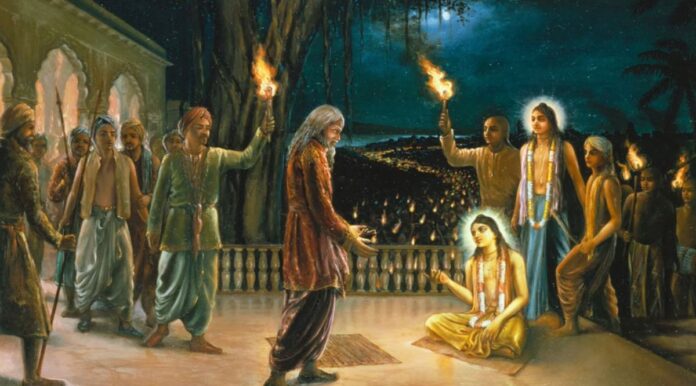
Thus Śrīla Rūpa Gosvāmī informed the King about his mind as a way of knowing Śrī Caitanya Mahāprabhu. He assured the King that whatever occurred in his mind could be considered evidence. (179) The King replied, “I consider Śrī Caitanya Mahāprabhu to be the Supreme Personality of Godhead. There is no doubt about it.” (180) After having this conversation with Rūpa Gosvāmī, the King entered his private house. Rūpa Gosvāmī, then known as Dabira Khāsa, also returned to his residence. (181) After returning to his residence, Dabira Khāsa and his brother decided after much consideration to go see the Lord incognito. (182) Thus in the dead of night the two brothers, Dabira Khāsa and Sākara Mallika, went to see Śrī Caitanya Mahāprabhu incognito. First they met Nityānanda Prabhu and Haridāsa Ṭhākura. (183) Śrī Nityānanda Prabhu and Haridāsa Ṭhākura told Lord Caitanya Mahāprabhu that two personalities—Śrī Rūpa and Sanātana—had come to see Him. (184) In great humility, both brothers took bunches of straw between their teeth and, each binding a cloth around his neck, fell down like rods before the Lord.(185)

Upon seeing Lord Caitanya Mahāprabhu, the two brothers were overwhelmed with joy, and out of humility they began to cry. Lord Caitanya Mahāprabhu asked them to get up and assured them of all good fortune. (186) The two brothers got up, and again taking straw between their teeth, they humbly offered their prayers with folded hands. (187) “All glories to Śrī Kṛṣṇa Caitanya Mahāprabhu, the most merciful savior of the fallen souls! All glories to the Supreme Personality! (188) “Sir, we belong to the lowest class of men, and our associates and employment are also of the lowest type. Therefore we cannot introduce ourselves to You. We feel very much ashamed, standing here before You. (189) “‘Dear Lord, let us inform you that no one is more sinful than us, nor is there any offender like us. Even if we wanted to mention our sinful activities, we would immediately become ashamed. And what to speak of giving them up!’” (190)

The two brothers submitted, “Dear Lord, You have incarnated to deliver the fallen souls. You should consider that in this world there is none so fallen as us. (191) “You have delivered the two brothers Jagāi and Mādhāi, but to deliver them You did not have to exert Yourself very much. (192) “The brothers Jagāi and Mādhāi belonged to the brāhmaṇa caste, and their residence was in the holy place of Navadvīpa. They never served low- class persons, nor were they instruments to abominable activities. (193) “Jagāi and Mādhāi had but one fault—they were addicted to sinful activity. However, volumes of sinful activity can be burned to ashes simply by a dim reflection of the chanting of Your holy name. (194) “Jagāi and Mādhāi uttered Your holy name by way of blaspheming You. Fortunately, that holy name became the cause of their deliverance. (195) “We two are millions and millions of times inferior to Jagāi and Mādhāi. We are more degraded, fallen and sinful than they. (196) “Actually we belong to the caste of meat- eaters because we are servants of meat- eaters. Indeed, our activities are exactly like those of the meat- eaters. Because we always associate with such people, we are inimical toward the cows and brāhmaṇas.” (197)

The two brothers, Sākara Mallika and Dabira Khāsa, very humbly submitted that due to their abominable activities they were now bound by the neck and hands and had been thrown into a ditch filled with abominable, stoollike objects of material sense enjoyment. (198) “No one within the three worlds is sufficiently powerful to deliver us. You are the only savior of the fallen souls; therefore there is no one but You. (199) “If You simply deliver us by Your transcendental strength, then certainly Your name will be known as Patita- pāvana, the savior of the fallen souls. (200) “Let us speak one word that is very true. Plainly hear us, O merciful one. There is no other object of mercy within the three worlds but us. (201) “We are the most fallen; therefore by showing us Your mercy, Your mercy is most successful. Let the power of Your mercy be exhibited throughout the entire universe! (202)

“‘Let us submit one piece of information before You, dear Lord. It is not at all false but is full of meaning. It is this: If You are not merciful upon us, then it will be very, very difficult to find more suitable candidates for Your mercy.’ (203) “We are very depressed at being unfit candidates for Your mercy. Yet since we have heard of Your transcendental qualities, we are very much attracted to You. (204) “Indeed, we are like a dwarf who wants to capture the moon. Although we are completely unfit, a desire to receive Your mercy is awakening within our minds. (205) “‘By serving You constantly, one is freed from all material desires and is completely pacified. When shall I engage as Your permanent eternal servant and always feel joyful to have such a fitting master?’” (206) After hearing the prayer of Dabira Khāsa and Sākara Mallika, Śrī Caitanya Mahāprabhu said, “My dear Dabira Khāsa, you two brothers are My old servants. (207)

“My dear Sākara Mallika, from this day your names will be changed to Śrīla Rūpa and Śrīla Sanātana. Now please abandon your humility, for My heart is breaking to see you so humble. (208) “You have written several letters showing your humility. I can understand your behavior from those letters. (209) “By your letters, I could understand your heart. Therefore, in order to teach you, I sent you one verse, which reads as follows. (210) “‘If a woman is attached to a man other than her husband, she will appear very busy in carrying out her household affairs, but within her heart she is always relishing feelings of association with her paramour.’ (211) “I really had no business in coming to Bengal, but I have come just to see you two brothers. (212) “Everyone is asking why I have come to this village of Rāmakeli. No one knows My intentions. (213) “It is very good that you two brothers have come to see Me. Now you can go home. Do not fear anything. (214) “Birth after birth you have been My eternal servants. I am sure that Kṛṣṇa will deliver you very soon.” (215)

The Lord then placed His two hands on the heads of both of them, and in return they immediately placed the lotus feet of the Lord on their heads. (216) After this, the Lord embraced both of them and requested all of the devotees present to be merciful upon them and deliver them. (217) When all of the devotees saw the mercy of the Lord upon the two brothers, they were very much gladdened, and they began to chant the holy name of the Lord, “Hari! Hari!” (218) All the Vaiṣṇava associates of the Lord were present, including Nityānanda Prabhu, Haridāsa Ṭhākura, Śrīvāsa Ṭhākura, Gadādhara Paṇḍita, Mukunda, Jagadānanda, Murāri and Vakreśvara. (219) In accordance with the instructions of Śrī Caitanya Mahāprabhu, the two brothers, Rūpa and Sanātana, immediately touched the lotus feet of these Vaiṣṇavas, who all became very happy and congratulated the two brothers for having received the mercy of the Lord. (220)

After begging the permission of all the Vaiṣṇavas present, the two brothers, at the time of their departure, humbly submitted something at the lotus feet of the Lord. (221) They said, “Dear Lord, although the King of Bengal, Nawab Hussain Shah, is very respectful toward You, You have no other business here. Kindly depart from this place. (222) “Although the King is respectful toward You, he still belongs to the yavana class and should not be believed. We think that there is no need for such a great crowd to accompany You on Your pilgrimage to Vṛndāvana. (223) “Dear Lord, You are going to Vṛndāvana with hundreds and thousands of people following You, and this is not a fitting way to go on a pilgrimage.” (224) Although Śrī Caitanya Mahāprabhu was Śrī Kṛṣṇa Himself, the Supreme Lord, and was therefore not at all fearful, He still acted like a human being to teach neophytes how to act. (225) Having spoken thus, the two brothers offered prayers to the lotus feet of the Lord and returned to their homes. Lord Caitanya Mahāprabhu then desired to leave that village. (226)
Chaitanya Charitamrta | Madhya Lila | Chapter 1 | Section 52

0

This is the first synopsis: After accepting the sannyāsa order, Caitanya Mahāprabhu proceeded toward Vṛndāvana. (91) When proceeding toward Vṛndāvana, Śrī Caitanya Mahāprabhu was overwhelmed with ecstatic love for Kṛṣṇa, and He lost all remembrance of the external world. In this way He traveled continuously for three days in Rāḍha- deśa, the country where the Ganges River does not flow. (92) First of all, Lord Nityānanda bewildered Śrī Caitanya Mahāprabhu by bringing Him along the banks of the Ganges, saying that it was the river Yamunā. (93) After three days, Lord Caitanya Mahāprabhu came to the house of Advaita Ācārya at Śāntipura and accepted alms there. This was His first acceptance of alms. At night He performed congregational chanting there. (94)

At the house of Advaita Prabhu, He met His mother as well as all the devotees from Māyāpura. He adjusted everything and then went to Jagannātha Purī. (95) On the way toward Jagannātha Purī, Caitanya Mahāprabhu performed many other pastimes. He visited various temples and heard the story about Mādhavendra Purī and the installation of Gopāla. (96) From Nityānanda Prabhu, Lord Caitanya Mahāprabhu heard the story of Kṣīra- curī Gopīnātha and of the witness Gopāla. Then Nityānanda Prabhu broke the sannyāsa rod belonging to Lord Caitanya Mahāprabhu. (97) After His sannyāsa rod was broken by Nityānanda Prabhu, Caitanya Mahāprabhu apparently became very angry and left His company to travel alone to the Jagannātha temple. When Caitanya Mahāprabhu entered the Jagannātha temple and saw Lord Jagannātha, He immediately lost His senses and fell down on the ground. (98)

After Lord Caitanya Mahāprabhu saw Lord Jagannātha in the temple and fell down unconscious, Sārvabhauma Bhaṭṭācārya took Him to his home. The Lord remained unconscious until the afternoon, when He finally regained His consciousness. (99) The Lord had left Nityānanda’s company and had gone alone to the Jagannātha temple, but later Nityānanda, Jagadānanda, Dāmodara and Mukunda came to see Him, and after seeing Him they were very pleased. (100) After this incident, Lord Caitanya Mahāprabhu bestowed His mercy upon Sārvabhauma Bhaṭṭācārya by showing him His original form as the Lord. (101) After bestowing mercy upon Sārvabhauma Bhaṭṭācārya, the Lord started for southern India. When He came to Kūrma- kṣetra, He delivered a person named Vāsudeva. (102) After visiting Kūrma- kṣetra, the Lord visited the South Indian temple of Jiyaḍa- nṛsiṁha and offered His prayers to Lord Nṛsiṁhadeva. On His way, He introduced the chanting of the Hare Kṛṣṇa mahā- mantra in every village. (103)

Once the Lord mistook the forest on the bank of the river Godāvarī to be Vṛndāvana. In that place He happened to meet Rāmānanda Rāya. (104) He visited the places known as Tirumala and Tirupati, where He extensively preached the chanting of the Lord’s holy name. (105) After visiting the temples of Tirumala and Tirupati, Śrī Caitanya Mahāprabhu had to subdue some atheists. He then visited the temple of Ahovala- nṛsiṁha. (106) When Śrī Caitanya Mahāprabhu came to the land of Śrī Raṅga- kṣetra, on the bank of the Kāverī, He visited the temple of Śrī Raṅganātha and was there overwhelmed in the ecstasy of love of Godhead. (107) Śrī Caitanya Mahāprabhu lived at the house of Trimalla Bhaṭṭa for the four months of the rainy season. (108)

Śrī Trimalla Bhaṭṭa was both a member of the Śrī Vaiṣṇava community and a learned scholar; therefore when he saw Caitanya Mahāprabhu, who was both a great scholar and a great devotee of the Lord, he was very much astonished. (109) Lord Śrī Caitanya Mahāprabhu passed the Cāturmāsya months with the Śrī Vaiṣṇavas, singing, chanting the holy name and dancing. (110) After the end of Cāturmāsya, Lord Caitanya Mahāprabhu continued traveling throughout South India. At that time He met Paramānanda Purī. (111) After this, Kṛṣṇadāsa, the servant of Lord Caitanya Mahāprabhu, was delivered from the clutches of a Bhaṭṭathāri. Caitanya Mahāprabhu then preached that Lord Kṛṣṇa’s name should also be chanted by brāhmaṇas who were accustomed to chanting Lord Rāma’s name. (112) Śrī Caitanya Mahāprabhu then met Śrī Raṅga Purī and mitigated all the sufferings of a brāhmaṇa named Rāmadāsa. (113)

Caitanya Mahāprabhu also had a discussion with the Tattvavādī community, and the Tattvavādīs felt themselves to be inferior Vaiṣṇavas. (114) Śrī Caitanya Mahāprabhu then visited the Viṣṇu temples of Anantadeva, Puruṣottama, Śrī Janārdana, Padmanābha and Vāsudeva. (115) After that, Lord Caitanya Mahāprabhu delivered the celebrated Sapta- tāla trees, took His bath at Setubandha Rāmeśvara and visited the temple of Lord Śiva known as Rāmeśvara. (116) At Rāmeśvara, Śrī Caitanya Mahāprabhu had a chance to read the Kūrma Purāṇa, in which He discovered that the form of Sītā kidnapped by Rāvaṇa was not that of the real Sītā but a mere shadow representation. (117) Śrī Caitanya Mahāprabhu was very glad to read about the false Sītā, and He remembered His meeting with Rāmadāsa Vipra, who was very sorry that mother Sītā had been kidnapped by Rāvaṇa. (118)

Indeed, Lord Caitanya Mahāprabhu eagerly tore this page from the Kūrma Purāṇa, although the book was very old, and He later showed it to Rāmadāsa Vipra, whose unhappiness was mitigated. (119) Śrī Caitanya Mahāprabhu also found two other books—namely, the Brahma- saṁhitā and Kṛṣṇa- karṇāmṛta. Knowing these books to be excellent, He took them to present to His devotees. After collecting these books, Śrī Caitanya Mahāprabhu returned to Jagannātha Purī. At that time, the bathing ceremony of Jagannātha was taking place, and He saw it. (121) Jagannātha was absent from the temple, Caitanya Mahāprabhu, who could not see Him, felt separation and left Jagannātha Purī to go to a place known as Ālālanātha. (122) Śrī Caitanya Mahāprabhu remained for some days at Ālālanātha. In the meantime, He received news that all the devotees from Bengal were coming to Jagannātha Purī. (123)

When the devotees from Bengal arrived at Jagannātha Purī, both Nityānanda Prabhu and Sārvabhauma Bhaṭṭācārya greatly endeavored to take Śrī Caitanya Mahāprabhu back to Jagannātha Purī. (124) When Lord Caitanya Mahāprabhu finally left Ālālanātha to return to Jagannātha Purī, He was overwhelmed both day and night due to separation from Jagannātha. His lamentation knew no bounds. During this time, all the devotees from different parts of Bengal, and especially from Navadvīpa, arrived in Jagannātha Purī. (125) After due consideration, all the devotees began chanting the holy name congregationally. Lord Caitanya’s mind was thus pacified by the ecstasy of the chanting. (126) Previously, when Śrī Caitanya Mahāprabhu had been touring South India, He had met Rāmānanda Rāya on the banks of the Godāvarī. At that time it had been decided that Rāmānanda Rāya would resign from his post as governor and return to Jagannātha Purī to live with Śrī Caitanya Mahāprabhu. (127)

Upon the order of Śrī Caitanya Mahāprabhu, Śrī Rāmānanda Rāya took leave of the King and returned to Jagannātha Purī. After he arrived, Śrī Caitanya Mahāprabhu very much enjoyed talking with him both day and night about Lord Kṛṣṇa and His pastimes. (128) After Rāmānanda Rāya’s arrival, Śrī Caitanya Mahāprabhu bestowed His mercy upon Kāśī Miśra and met Pradyumna Miśra and other devotees. At that time three personalities— Paramānanda Purī, Govinda and Kāśīśvara—came to see Lord Caitanya at Jagannātha Purī. (129) Eventually there was a meeting with Svarūpa Dāmodara Gosvāmī, and the Lord became very greatly pleased. Then there was a meeting with Śikhi Māhiti and with Bhavānanda Rāya, the father of Rāmānanda Rāya. (130) All the devotees from Bengal gradually began arriving at Jagannātha Purī. At this time, the residents of Kulīna- grāma also came to see Śrī Caitanya Mahāprabhu for the first time. (131) Eventually Narahari dāsa and other inhabitants of Khaṇḍa, along with Śivānanda Sena, all arrived, and Śrī Caitanya Mahāprabhu met them. (132)

Chaitanya Charitamrta | Madhya Lila | Chapter 1 | Section 51

0

The first year after Śrī Caitanya Mahāprabhu accepted the renounced order of life, all the devotees, headed by Śrī Advaita Prabhu, went to see the Lord at Jagannātha Purī. (46) After attending the Ratha- yātrā ceremony at Jagannātha Purī, all the devotees remained there for four months, greatly enjoying the company of Śrī Caitanya Mahāprabhu by performing kīrtana [chanting and dancing]. (47) At the time of departure, the Lord requested all the devotees, “Please come here every year to see the Ratha- yātrā festival of Lord Jagannātha’s journey to the Guṇḍicā temple.” (48) Following the order of Śrī Caitanya Mahāprabhu, all the devotees used to visit Lord Caitanya Mahāprabhu every year. They would see the Guṇḍicā festival at Jagannātha Purī and then return home after four months. (49)

For twenty consecutive years this meeting took place, and the situation became so intense that the Lord and the devotees could not be happy without meeting one another. (50) The last twelve years were simply devoted to relishing the pastimes of Kṛṣṇa in separation within the heart of the Lord. (51) In the attitude of separation, Lord Caitanya Mahāprabhu appeared mad both day and night. Sometimes He laughed, and sometimes He cried; sometimes He danced, and sometimes He chanted in great sorrow. (52) At those times, Śrī Caitanya Mahāprabhu would visit Lord Jagannātha. Then His feelings exactly corresponded to those of the gopīs when they saw Kṛṣṇa at Kurukṣetra after long separation. Kṛṣṇa had come to Kurukṣetra with His brother and sister to visit. (53) When Caitanya Mahāprabhu used to dance before the car during the festival, He always sang the following two lines. (54)

“I have gotten that Lord of My life, for whom I was burning in the fire of lusty desires.” (55) Lord Caitanya Mahāprabhu used to sing this song [seita parāṇa- nātha] especially during the latter part of the day, and He would think, “Let Me take Kṛṣṇa and go back to Vṛndāvana.” This ecstasy was always filling His heart. (56) In that ecstasy, Śrī Caitanya Mahāprabhu recited a verse when dancing in front of Lord Jagannātha. Almost no one could understand the meaning of that verse. (57) “That very personality who stole away my heart during my youth is now again my master. These are the same moonlit nights of the month of Caitra. The same fragrance of mālatī flowers is there, and the same sweet breezes are blowing from the kadamba forest. In our intimate relationship, I am also the same lover, yet still my mind is not happy here. I am eager to go back to that place on the bank of the Revā under the Vetasī tree. That is my desire.” (58)

This verse appears to be the hankering between some ordinary boy and girl, but its actual deep meaning was known only to Svarūpa Dāmodara. By chance, one year Rūpa Gosvāmī was also present there. (59) Although the meaning of the verse was known only to Svarūpa Dāmodara, Rūpa Gosvāmī, after hearing it from Śrī Caitanya Mahāprabhu, immediately composed another verse that described the meaning of the original verse. (60) After composing this verse, Rūpa Gosvāmī wrote it on a palm leaf and put it on the roof of the thatched house in which he was living. (61) After composing this verse and putting it on the roof of his house, Śrīla Rūpa Gosvāmī went to bathe in the sea. In the meantime, Lord Caitanya Mahāprabhu went to his hut to meet him. (62) To avoid turmoil, three great personalities—Haridāsa Ṭhākura, Śrīla Rūpa Gosvāmī and Śrīla Sanātana Gosvāmī—did not enter the temple of Jagannātha. (63)

Every day Śrī Caitanya Mahāprabhu used to see the upala- bhoga ceremony at the temple of Jagannātha, and after seeing this He used to go visit these three great personalities on His way to His own residence. (64) If one of these three was not present, He would meet the others. That was His regular practice. (65) When Śrī Caitanya Mahāprabhu went to the residence of Śrīla Rūpa Gosvāmī, He accidentally saw the palm leaf on the roof, and thus He read the verse composed by him. (66) After reading the verse, Śrī Caitanya Mahāprabhu went into an ecstatic mood. While He was in that state, Śrīla Rūpa Gosvāmī came and immediately fell down on the floor like a rod. (67) When Rūpa Gosvāmī fell down like a rod, Śrī Caitanya Mahāprabhu got up and gave him a slap. Then, taking him on His lap, He began to speak to him. (68) “No one knows the purport of My verse,” Caitanya Mahāprabhu said. “How could you understand My intention?” (69)

Saying this, Lord Caitanya Mahāprabhu bestowed various benedictions upon Rūpa Gosvāmī, and taking the verse, He later showed it to Svarūpa Gosvāmī. (70) Having shown the verse to Svarūpa Dāmodara with great wonder, Caitanya Mahāprabhu asked him how Rūpa Gosvāmī could understand the intentions of His mind. (71) Śrīla Svarūpa Dāmodara Gosvāmī replied to Lord Caitanya Mahāprabhu, “If Rūpa Gosvāmī can understand Your mind and intentions, he must have Your Lordship’s special benediction.” (72) The Lord said, “I was so pleased with Rūpa Gosvāmī that I embraced him and bestowed upon him all necessary potencies for preaching the bhakti cult. (73) “I accept Śrīla Rūpa Gosvāmī as quite fit to understand the confidential mellows of devotional service, and I recommend that you explain devotional service to him further.” (74) I shall describe all these incidents elaborately later on. Now I have given only a brief reference. (75)

[This is a verse spoken by Śrīmatī Rādhārāṇī.] “My dear friend, now I have met My very old and dear friend Kṛṣṇa on this field of Kurukṣetra. I am the same Rādhārāṇī, and now We are meeting together. It is very pleasant, but still I would like to go to the bank of the Yamunā beneath the trees of the forest there. I wish to hear the vibration of His sweet flute playing the fifth note within that forest of Vṛndāvana.” (76) Now, O devotees, please hear a brief explanation of this verse. Lord Caitanya Mahāprabhu was thinking in this way after having seen the Jagannātha Deity. (77) The subject of His thoughts was Śrīmatī Rādhārāṇī, who met Kṛṣṇa on the field of Kurukṣetra. Although She met Kṛṣṇa there, She was nonetheless thinking of Him in the following way. (78) She thought of Him in the calm and quiet atmosphere of Vṛndāvana, dressed as a cowherd boy. But at Kurukṣetra He was in a royal dress and was accompanied by elephants, horses and crowds of men. Thus the atmosphere was not congenial for Their meeting. (79)

Thus meeting with Kṛṣṇa and thinking of the Vṛndāvana atmosphere, Rādhārāṇī longed for Kṛṣṇa to take Her to Vṛndāvana again to fulfill Her desire in that calm atmosphere. (80) The gopīs spoke thus: “Dear Lord, whose navel is just like a lotus flower, Your lotus feet are the only shelter for those who have fallen into the deep well of material existence. Your feet are worshiped and meditated upon by great mystic yogīs and highly learned philosophers. We wish that these lotus feet may also be awakened within our hearts, although we are only ordinary persons engaged in household affairs.” (81) The gopīs thought, “Dear Lord, if Your lotus feet again come to our home in Vṛndāvana, our desires will be fulfilled.” (82) In one verse, Śrīla Rūpa Gosvāmī has explained the confidential meaning of the verse of Śrīmad- Bhāgavatam for the understanding of the general populace. (83) The gopīs continued, “Dear Kṛṣṇa, the fragrance of the mellows of Your pastimes is spread throughout the forests of the glorious land of Vṛndāvana, which is surrounded by the sweetness of the district of Mathurā. In the congenial atmosphere of that wonderful land, You may enjoy Your pastimes, with Your flute dancing on Your lips, and surrounded by us, the gopīs, whose hearts are always enchanted by unpredictable ecstatic emotions.” (84)

In this way, when Śrī Caitanya Mahāprabhu saw Jagannātha, He saw that the Lord was with His sister Subhadrā and was not holding a flute in His hand. (85) Absorbed in the ecstasy of the gopīs, Lord Caitanya Mahāprabhu wished to see Lord Jagannātha in His original form as Kṛṣṇa, the son of Nanda Mahārāja, standing in Vṛndāvana and appearing very beautiful, His body curved in three places. His desire to see that form was always increasing. (86) Just as Śrīmatī Rādhārāṇī talked inconsistently with a bumblebee in the presence of Uddhava, Śrī Caitanya Mahāprabhu in His ecstasy talked crazily and inconsistently day and night. (87) The last twelve years of Śrī Caitanya Mahāprabhu were passed in this transcendental craziness. Thus He executed His last pastimes in three ways. (88) For the twenty- four years after Śrī Caitanya Mahāprabhu accepted the renounced order, whatever pastimes He executed were unlimited and unfathomable. Who can understand the purport of such pastimes? (89) Just to indicate those pastimes, I am presenting a general survey of the chief pastimes in the form of a synopsis. (90)

Chaitanya Charitamrta | Madhya Lila | Chapter 1 | Section 50

0

Even a person with no knowledge can immediately acquire all knowledge simply by the benediction of Śrī Caitanya Mahāprabhu. Therefore I am praying to the Lord for His causeless mercy upon me. (1) I offer my respectful obeisances unto Śrī Kṛṣṇa Caitanya and Lord Nityānanda, who are like the sun and moon. They have arisen simultaneously on the horizon of Gauḍa to dissipate the darkness of ignorance and thus wonderfully bestow benediction upon all. (2) Glory to the all- merciful Rādhā and Madana- mohana! I am lame and ill advised, yet They are my directors, and Their lotus feet are everything to me. (3)

In a temple of jewels in Vṛndāvana, underneath a desire tree, Śrī Śrī Rādhā- Govinda, served by Their most confidential associates, sit upon an effulgent throne. I offer my humble obeisances unto Them. (4) May Gopīnāthajī, who attracts all the gopīs with the song of His flute and who has begun the most melodious rāsa dace on the bank of the Yamunā in Vaṁśīvaṭa, be merciful upon us. (5) All glories unto Śrī Gaurahari, who is an ocean of mercy! All glories unto You, the son of Śacīdevī, for You are the only friend of all fallen souls! (6) All glories unto Lord Nityānanda and Advaita Prabhu, and all glories unto all the devotees of Lord Caitanya, headed by Śrīvāsa Ṭhākura! (7) I have previously described in synopsis the ādi-līlā [initial pastimes], which have already been fully described by Vṛndāvana dāsa Ṭhākura. (8)

I have therefore given only a synopsis of those incidents, and whatever specifics were to be related have already been given in that synopsis. (9) To describe the unlimited pastimes of Śrī Caitanya Mahāprabhu is not possible, but I now wish to relate the chief incidents and give a synopsis of those pastimes occurring at the end. (10) I shall describe only in synopsis that portion which Vṛndāvana dāsa Ṭhākura has described very elaborately in his book Caitanya- maṅgala. Whatever incidents are outstanding, however, I shall later elaborate. (11-12) Actually the authorized compiler of the pastimes of Śrī Caitanya Mahāprabhu is Śrīla Vṛndāvana dāsa, the incarnation of Vyāsadeva. Only upon his orders am I trying to chew the remnants of food that he has left. (13) Placing his lotus feet upon my head in great devotion, I shall now describe in summary the Lord’s final pastimes. (14) For twenty- four years, Lord Śrī Caitanya Mahāprabhu remained at home, and whatever pastimes He performed during that time are called the ādi-līlā. (15)

At the end of His twenty- fourth year, in the month of Māgha, during the fortnight of the waxing moon, the Lord accepted the renounced order of life, sannyāsa. (16) After accepting sannyāsa, Lord Caitanya remained within this material world for another twenty- four years. Within this period, whatever pastimes He enacted are called the śeṣa- līlā, or pastimes occurring at the end. (17) The final pastimes of the Lord, occurring in His last twenty- four refer years, are called Madhya-līlā [middle] and Antya-līlā [final]. All the devotees of the Lord refer to His pastimes according to these divisions. (18) For six years of the last twenty- four, Śrī Caitanya Mahāprabhu traveled all over India, from Jagannātha Purī to Bengal and from Cape Comorin to Vṛndāvana. (19) All the pastimes performed by the Lord in those places are known as the Madhya līlā- līlā, and whatever pastimes were performed after that are called the Antya līlā- līlā. (20)

The pastimes of the Lord are therefore divided into three periods— the ādi-līlā, Madhya-līlā and Antya-līlā. Now I shall very elaborately describe the Madhya-līlā. (21) For eighteen continuous years, Lord Śrī Caitanya Mahāprabhu remained at Jagannātha Purī and, through His personal behavior, instructed all living entities in the mode of devotional service. (22) Of these eighteen years at Jagannātha Purī, Śrī Caitanya Mahāprabhu spent six years with His many devotees. By chanting and dancing, He introduced the loving service of the Lord.(23) Lord Śrī Caitanya Mahāprabhu sent Nityānanda Prabhu from Jagannātha Purī to Bengal, which is known as Gauḍa- deśa, and Lord Nityānanda Prabhu overflooded that country with the transcendental loving service of the Lord. (24)

Śrī Nityānanda Prabhu is by nature very much inspired in rendering transcendental loving service to Lord Kṛṣṇa. Now, being ordered by Śrī Caitanya Mahāprabhu, He distributed this loving service anywhere and everywhere. (25) I offer innumerable obeisances unto the lotus feet of Śrī Nityānanda Prabhu, who is so kind that He spread the service of Śrī Caitanya Mahāprabhu all over the world. (26) Caitanya Mahāprabhu used to address Nityānanda Prabhu as His elder brother, whereas Nityānanda Prabhu addressed Śrī Caitanya Mahāprabhu as His Lord. (27) Although Nityānanda Prabhu is none other than Balarāma Himself, He nonetheless always thinks of Himself as the eternal servant of Lord Śrī Caitanya Mahāprabhu. (28) Nityānanda Prabhu requested everyone to serve Śrī Caitanya Mahāprabhu, chant His glories and utter His name. Nityānanda Prabhu claimed that person to be His life and soul who rendered devotional service unto Śrī Caitanya Mahāprabhu.(29) In this way, Śrīla Nityānanda Prabhu introduced the cult of Śrī Caitanya Mahāprabhu to everyone without discrimination. Even though the people were fallen souls and blasphemers, they were delivered by this process. (30)

Lord Śrī Caitanya Mahāprabhu then sent the two brothers Śrīla Rūpa Gosvāmī and Śrīla Sanātana Gosvāmī to Vraja. By His order, they went to Śrī Vṛndāvana- dhāma.(31) After going to Vṛndāvana, the brothers preached devotional service and discovered many places of pilgrimage. They specifically initiated the service of Madana- mohana and Govindajī. (32) Both Rūpa Gosvāmī and Sanātana Gosvāmī brought various scriptures to Vṛndāvana and collected the essence of these by compiling many scriptures on devotional service. In this way they delivered all rascals and fallen souls. (33) The Gosvāmīs carried out the preaching work of devotional service on the basis of an analytical study of all confidential Vedic literatures. This was in compliance with the order of Śrī Caitanya Mahāprabhu. Thus one can understand the most confidential devotional service of Vṛndāvana. (34) Some of the books compiled by Śrīla Sanātana Gosvāmī were the Hari- bhakti- vilāsa, Bṛhad- bhāgavatāmṛta, Daśama- ṭippanī and Daśama- carita. (35)

We have already given the names of four books compiled by Sanātana Gosvāmī. Similarly, Śrīla Rūpa Gosvāmī has also compiled many books, which no one can even count. (36) I shall therefore enumerate the chief books compiled by Śrīla Rūpa Gosvāmī. He has described the pastimes of Vṛndāvana in 100,000 verses. (37) The books compiled by Śrī Rūpa Gosvāmī include the Bhakti- rasāmṛta- sindhu, Vidagdha- mādhava, Ujjvala- nīlamaṇi and Lalita- mādhava. (38) Śrīla Rūpa Gosvāmī also compiled the Dāna- keli- kaumudī, Stavāvalī, Līlā- cchanda, Padyāvalī, Govinda- virudāvalī, Mathurā- māhātmya and Nāṭaka- varṇana. (39-40)

Who can count the rest of the books (headed by the Laghu- bhāgavatāmṛta) written by Śrīla Rūpa Gosvāmī? He has described the pastimes of Vṛndāvana in all of them. (41) Śrī Rūpa Gosvāmī’s nephew, Śrīla Jīva Gosvāmī, has compiled so many books on devotional service that there is no counting them. (42) In Śrī Bhāgavata- sandarbha, Śrīla Jīva Gosvāmī has written conclusively about the ultimate end of devotional service. (43) The most famous and formidable transcendental literature is the book named Gopāla- campū. In this book the eternal pastimes of the Lord are established, and the transcendental mellows enjoyed in Vṛndāvana are completely described. (44) Thus Śrīla Rūpa Gosvāmī, Sanātana Gosvāmī and their nephew Śrīla Jīva Gosvāmī, as well as practically all of their family members, lived in Vṛndāvana and published important books on devotional service. (45)

Mayapur Hospital Receives ₹12 Crore Contribution From Bandhan Group Founder Mr. Chandrashekar Ghosh

0

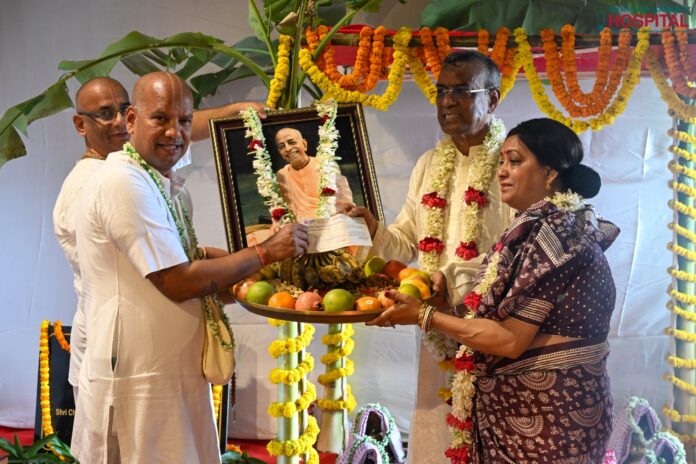
Mr. Chandra Shekar Gosh offering the actual cheque to Vrajavilas Das, Mayapur Co-director, in the presence of Śrila Prabhupāda and Harilila Das, Hospital Director.

In a significant milestone for the Sri Mayapur Community Hospital project, Mr. Chandrashekar Ghosh, Founder of Bandhan Group, Kolkata, recently made a generous contribution of ₹12 crores (approximately USD 1.35 million) towards completing the hospital building. The ceremonial presentation of the donation took place on October 19, coinciding with the auspicious month of Kartik. The event was organized under the meticulous supervision of Krishna Vijay Das, General Manager, and Prema Avatar Das, Hospital Project Manager, ably guided by Vrajavilas Das, Mayapur Co-director. Mr. Ghosh was accompanied by his wife, Mrs. Nilima Ghosh, his family members, Mr. Swapan and Mrs. Geetha Ghosh, and his nephew, Rudraman Ghosh. Mr. Pritish Shah of Bandhan Group also graced the occasion. The donation was the culmination of a relationship carefully nurtured by Krishna Vijay Das, who had been in dialogue with the Ghosh family and facilitated their engagement with the project.

A Spiritually Uplifting Visit

The Ghosh family arrived in Mayapur the previous day and were warmly received by Vrajavilas Das, who guided them through the Temple of the Vedic Planetarium (TOVP) project. The visitors were deeply moved by the grandeur and spiritual atmosphere of the site. Later that evening, they participated in the Sandhya Arati and Damodar Lamp Offering ceremony. Mr. Gosh remarked that he was amazed by the continuous stream of people coming and happily offering lamps to their Lordship, as well as the enthusiastic kirtan and the energetic dancing of devotees.

“The whole experience is so divine; everyone feels so happy, forgetting the stress of daily life,” remarked Mr. Ghosh, appreciating the devotional spirit and energy of the devotees. The evening concluded with a sumptuous prasadam meal served with love by the devotees.

Ceremonial Offering and Blessings

The following morning began early with Mangala Arati and Go Puja, after which the guests visited the hospital site. They were welcomed by Krishna Caitanya Das and a team of brahmanas with traditional Purna Kumbha rituals, followed by a Yajna performed to invoke auspiciousness. Devotees led a melodious Harinam Sankirtan throughout the ceremony.

At the appointed auspicious time, Mr. and Mrs. Ghosh ceremonially presented the Mahadanam cheque to Srila Prabhupada’s murti, seeking his blessings. The offering was accepted on behalf of Srila Prabhupada by Vrajavilas Das, co-director of the Mayapur project.

Acknowledgements and Felicitations

Following the donation, Harilila Das, Hospital Director, welcomed the guests and expressed gratitude for their contribution. Jayapataka Swami joined virtually from Chennai to offer blessings in Bengali, appreciating the family’s devotion and service.

Vrajavilas Das honored the donors with a special, mega-edition of the Bhagavad-gita As It Is and a chadar from Tirupati Balaji Temple. Hrdaya Caitanya Das, GBC and Co-Director of Mayapur, highlighted the hospital project’s importance as an act of Vaishnava seva, serving the health needs of devotees and residents of the dham. He presented the guests with a scale model of the TOVP as a token of appreciation.

Words of Inspiration

In his address during the ceremony, Mr. Chandrashekar Ghosh said, “The whole of ISKCON Mayapur is like a big spiritual hospital where people can come and cure themselves of all the sufferings to experience divine happiness.” He further remarked, “Our contribution is an extension of our services to the poor and underprivileged population of this region, reflecting our commitment to improve lives. His words deeply resonated with the assembled devotees and guests, underscoring the harmony between material welfare and spiritual upliftment.

The ceremony also recognized the contributions of Krishna Vijay Das for his key role in facilitating the donation and of Prema Avatar Gauranga Das, the hospital project manager.

In his closing remarks, Harilila Das thanked the Ghosh family for their heartfelt generosity and acknowledged the efforts of the hospital’s doctors, nurses, and staff in advancing the project. The event concluded with a graceful Odissi dance performance by one of the hospital’s nurses, adding a touch of cultural elegance to the ceremony.

Contributions to the Sri Mayapur Community Hospital project are open to well-wishers worldwide. Donations from India, the USA, Canada, and the UK qualify for tax exemptions in their respective countries. 

Sardanga Village Embraces Mayapur Clean And Green Vision Through Community Action

0

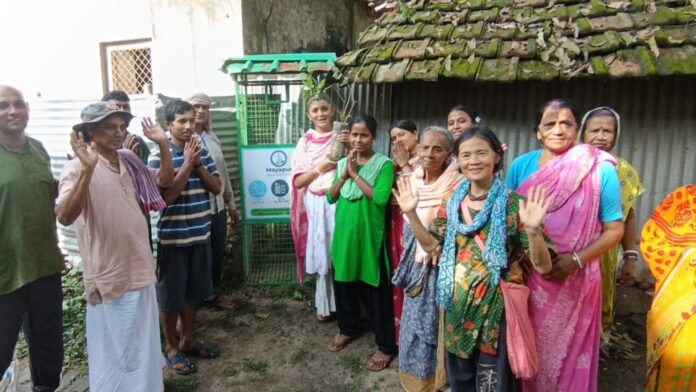
Murari Mohini Devi Dasi and Chintamani Devi Dasi with the residents of Sardanga village.

Mayapur Clean and Green, the environmental initiative led by Murari Mohini Devi Dasi, is inspiring grassroots transformation beyond the borders of the dham. In the small village of Sardanga, located one kilometer from the Jagannath temple in Rajapur, residents are rallying together to turn their neighborhood into a model of cleanliness and beauty, demonstrating how the organization’s vision can spread through community participation.

Cintamani Devi Dasi, who is coordinating a small eco-project in Sardanga where devotees and visitors from Mayapur come to relax in nature, recognized that her neighborhood needed the same care and attention that Mayapur Clean and Green brings to the wider region. The village had become typical of rural Bengal, with weeds and random trees growing unchecked along pathways and residents throwing garbage onto unused land. For months, she looked at the neglected streets and imagined their potential, how simple efforts could create beauty and raise residents’ consciousness. She felt Lord Jagannath sent her the inspiration to begin transforming the area into a place that reflects genuine care.

Drawing directly from Mayapur Clean and Green’s approach, Cintamani Devi Dasi gathered neighbors to propose beautifying their community by cleaning up garbage, removing weeds, and planting flowering trees, bushes, and vines. The response was enthusiastic. Residents immediately embraced the idea and committed to helping. Now, a dedicated group gathers weekly to work together, not only improving their environment but also building relationships through shared effort.

Mayapur Clean and Green has provided crucial support for the initiative, including supplying garbage bins for proper waste disposal. The Sardanga project aims to become a model village that demonstrates how other communities in the surrounding area can adopt similar practices. “We thank Mayapur Clean and Green for their support, and I feel we are doing our part to help and spread awareness of their vision. If we succeed, Sardanga can become a model village that inspires other communities in the surrounding area to follow,” Cintamani Devi Dasi said, expressing how the project carries forward the organization’s mission of spreading environmental awareness and action.

However, there are many challenges. While some neighbors regularly participate in the weekly cleanup days, others contribute independently, and maintaining motivation requires ongoing effort and outreach. Changing old habits, particularly getting residents accustomed to using the garbage bins provided by Mayapur Clean and Green rather than scattering trash on empty plots, takes patience and persistence. The project’s momentum depends on consistent leadership and community engagement.

The Sardanga initiative welcomes support from the wider devotee community. The most meaningful contribution anyone can make is attending the community work days to show solidarity and participate in the hands-on work. Artists and those who enjoy painting are particularly needed to help decorate and paint walls, though funds for paint and brushes are still being collected. The Urugayas Food for Life team has pledged to sponsor a korai, or cooking pot, and to occasionally cook meals, recognizing that prasadam strengthens community bonds.

Donations of rice, dhal, spices, vegetables, and halva ingredients are welcome for these community meals. The project is also collecting funds for a water tank to store water from government pipes that run twice daily. Garden plants and contributions of any kind are appreciated as the village continues its transformation.

Ultimately, what is unfolding in Sardanga reveals how Mayapur Clean and Green’s mission naturally expands through devotees who take initiative in their own communities. Inspired by the service of the Mayapur Clean & Green team, the project shows that environmental care and community building go hand in hand. By providing resources, encouragement, and a living example, the organization is empowering residents to take ownership of their environment. Those wishing to support or learn more can visit Sardanga near Rajapur’s Jagannath temple and join the weekly efforts.

Srimad Bhagavatam | Canto 4 Chapter 6 | Brahmā Satisfies Lord Śiva

0

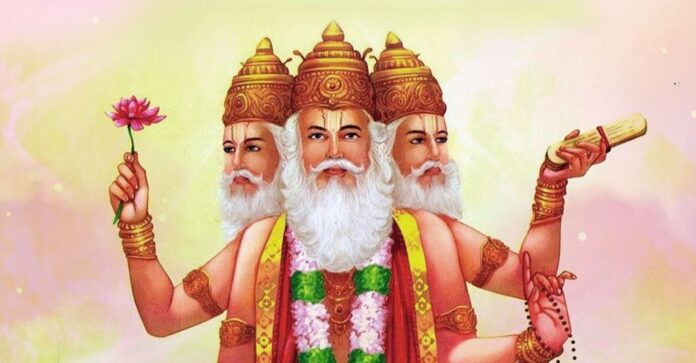
All the priests and other members of the sac rificial assembly and all the demigods, having been defeated by the soldiers of Lord Śiva and injured by weapons like tridents and swords, approached Lord Brahmā with great fear. After offering him obeisances, they began to speak in detail of all the events which had taken place (1-2).Both Lord Brahmā and Viṣṇu had already known that such events would occur in the sac rificial arena of Dakṣa, and knowing before hand, they did not go to the sacrifice (3).When Lord Brahmā heard everything from the demi gods and the members who had attended the sacrifice, he replied: You cannot be happy in executing a sacrifice if you blaspheme a great personality and thereby offend his lotus feet. You cannot have happiness in that way (4).

You have excluded Lord Śiva from taking part in the sacrificial results, and therefore you are all of fenders at his lotus feet. Still, if you go without mental reservations and surrender unto him and fall down at his lotus feet, he will be very pleased (5).Lord Brahmā also advised them that Lord Śiva is so powerful that by his anger all the planets and their chief controllers can be destroyed immediately. Also, he said that Lord Śiva was especially sorry because he had re cently lost his dear wife and was also very much afflicted by the unkind words of Dakṣa. Under the circumstances, Lord Brahmā sug gested, it would behoove them to go at once and beg his pardon (6).Lord Brahmā said that no one not even himself, Indra, all the members assembled in the sacrificial arena or all the sages could know how powerful Lord Śiva is. Under the circumstances, who would dare to commit an offense at his lotus feet? (7)

After thus instructing all the demigods, the Pitās and the lords of the living entities, Lord Brahmā took them with him and left for the abode of Lord Śiva, known as the Kailāsa Hill (8). The abode known as Kailāsa is full of dif ferent herbs and vegetables, and it is sanctified by Vedic hymns and mystic yoga practice. Thus the residents of that abode are demigods by birth and have all mystic powers. Besides them there are other human beings, who are known as Kinnaras and Gandharvas and are ac companied by their beautiful wives, who are known as Apsarās, or angels (9).Kailāsa is full of mountains filled with all kinds of valuable jewels and minerals and surrounded by all va rieties of valuable trees and plants. The top of the hill is nicely decorated by various types of deer (10).There are many waterfalls, and in the mountains there are many beautiful caves in which the very beautiful wives of the mystics are found (11).

On Kailāsa Hill there is always the rhythmical sound of the peacocks’ sweet vi brations and the bees’ humming. Cuckoos are always singing, and other birds whisper amongst themselves (12). There are tall trees with straight branches that appear to call the sweet birds, and when herds of elephants pass through the hills, it appears that the Kailāsa Hill moves with them. When the waterfalls resound, it appears that Kailāsa Hill does also (13). The whole of Kailāsa Hill is decorated with various kinds of trees, of which the following names may be mentioned: mandāra, pārijāta, sarala, tamāla, tāla, kovidāra, āsana, arjuna, āmra-jāti [mango], kadamba, dhūli-kadamba, nāga, punnāga, campaka, pāṭala, aśoka, bakula, kunda and kurabaka. The entire hill is deco rated with such trees, which produce flowers with fragrant aromas (14-15).There are other trees also which decorate the hill, such as the golden lotus flower, the cinnamon tree, mālatī, kubja, and mādhavī (16).Kailāsa Hill is also decorated with such trees as kata, jackfruit, ju lara, banyan trees, plakṣas, nyagrodhas and trees producing asafetida. Also there are trees of betel nuts and bhūrja-patra, as well as rājapūga, blackberries and similar other trees (17).

There are mango trees, priyāla, madhuka and iṅguda. Besides these there are other trees, like thin bamboos, kīcaka and varieties of other bamboo trees, all decorating the tract of Kailāsa Hill (18).There are different kinds of lotus flowers, such as kumuda, utpala and śatapatra. The forest appears to be a decorated garden, and the small lakes are full of various kinds of birds who whisper very sweetly. There are many kinds of other animals also, like deer, monkeys, boars, lions, ṛkṣas, śalyakas, forest cows, forest asses, tigers, small deer, buffalo and many other animals, who are fully enjoying their lives (19-20). There are varieties of deer, such as karṇāntra, ekapada, aśvāsya, vṛka and kastūrī, the deer which bears musk. Besides the deer there are many banana trees which deco rate the small hillside lakes very nicely (21).There is a small lake named Alakanandā in which Satī used to take her bath, and that lake is especially auspicious. All the demigods, after seeing the specific beauty of Kailāsa Hill, were struck with wonder at the great opulence to be found there (22).

Thus the demigods saw the wonderfully beautiful region known as Alakā in the forest known as Saugandhika, which means “full of fragrance.” The forest is known as Sau gandhika because of its abundance of lotus flowers (23). They also saw the two rivers named Nandā and Alakanandā. These two riv ers are sanctified by the dust of the lotus feet of the Supreme Personality of Godhead, Govinda (24).My dear Kṣattā, Vidura, the celestial dam sels come down to those rivers in their airplanes with their husbands, and after sexual enjoy ment, they enter the water and enjoy sprinkling their husbands with water (25).After the dam sels of the heavenly planets bathe in the water, it becomes yellowish and fragrant due to the kuṅkuma from their bodies. Thus the elephants come to bathe there with their wives, the she elephants, and they also drink the water, alt hough they are not thirsty (26).

The airplanes of the heavenly denizens are bedecked with pearls, gold and many valuable jewels. The heavenly denizens are compared to clouds in the sky decorated with occasional flashes of electric lightning (27).While travel ing, the demigods passed over the forest known as Saugandhika, which is full of varieties of flowers, fruits and desire trees. While passing over the forest, they also saw the regions of Yakṣeśvara (28).In that celestial forest there were many birds whose necks were colored reddish and whose sweet sounds mixed with the humming of the bees. The lakes were abun dantly decorated with crying swans as well as strong-stemmed lotus flowers (29).All these at mospheric influences unsettled the forest ele phants who flocked together in the sandalwood forest, and the blowing wind agitated the minds of the damsels there for further sexual enjoy ment (30).They also saw that the bathing ghāṭas and their staircases were made of vaidūrya maṇi. The water was full of lotus flowers. Pass ing by such lakes, the demigods reached a place where there was a great banyan tree (31). That banyan tree was eight hundred miles high, and its branches spread over six hundred miles around. The tree cast a fine shade which permanently cooled the temperature, yet there was no noise of birds (32).

The demigods saw Lord Śiva sitting under that tree, which was competent to give perfection to mystic yogīs and deliver all people. As grave as time eternal, he appeared to have given up all anger (33).Lord Śiva sat there, surrounded by saintly persons like Kuvera, the master of the Guhyakas, and the four Kumāras, who were al ready liberated souls. Lord Śiva was grave and saintly (34).The demigods saw Lord Śiva situ ated in his perfection as the master of the senses, knowledge, fruitive activities and the path of achieving perfection. He was the friend of the entire world, and by virtue of his full af fection for everyone, he was very auspicious (35).He was seated on a deerskin and was prac ticing all forms of austerity. Because his body was smeared with ashes, he looked like an evening cloud. On his hair was the sign of a half-moon, a symbolic representation (36).He was seated on a straw mattress and speaking to all present, including the great sage Nārada, to whom he specifically spoke about the Absolute Truth (37).

His left leg was placed on his right thigh, and his left hand was placed on his left thigh. [This sitting posture is called vīrāsana.] In his right hand he held rudrākṣa beads, and his finger was in the mode of argument (38).All the sages and demigods, headed by Indra, of fered their respectful obeisances unto Lord Śiva with folded hands. Lord Śiva was dressed in saffron garments and absorbed in trance, thus appearing to be the foremost of all sages (39).Lord Śiva’s lotus feet were worshiped by both the demigods and demons, but still, in spite of his exalted position, as soon as he saw that Lord Brahmā was there among all the other demigods, he immediately stood up and offered him respect by bowing down and touching his lotus feet, just as Vāmanadeva offered His re spectful obeisances to Kaśyapa Muni (40).All the sages who were sitting with Lord Śiva, such as Nārada and others, also offered their respect ful obeisances to Lord Brahmā. After being so worshiped, Lord Brahmā, smiling, began to speak to Lord Śiva (41). Lord Brahmā said: My dear Lord Śiva, I know that you are the controller of the entire material manifestation, the combination father and mother of the cosmic manifestation, and the Supreme Brahman beyond the cosmic man ifestation as well. I know you in that way (42).

My dear lord, you create this cosmic manifes tation, maintain it, and annihilate it by expan sion of your personality, exactly as a spider cre ates, maintains and winds up its web (43). My dear lord, Your Lordship has introduced the system of sacrifices through the agency of Dakṣa, and thus one may derive the benefits of religious activities and economic development. Under your regulative principles, the institution of the four varṇās and āśramas is respected. The brāhmaṇas therefore vow to follow this system strictly (44).O most auspicious lord, you have ordained the heavenly planets, the spiritual Vaikuṇṭha planets and the impersonal Brahman sphere as the respective destinations of the per formers of auspicious activities. Similarly, for others, who are miscreants, you have destined different kinds of hells which are horrible and ghastly. Yet sometimes it is found that their destinations are just the opposite. It is very dif ficult to ascertain the cause of this (45). My dear Lord, devotees who have fully ded icated their lives unto your lotus feet certainly observe your presence as Paramātmā in each and every being, and as such they do not differ entiate between one living being and another. Such persons treat all living entities equally. They never become overwhelmed by anger like animals, who can see nothing without differen tiation (46).

Persons who observe everything with differentiation, who are simply attached to fruitive activities, who are mean-minded, who are always pained to see the flourishing condi tion of others and who thus give distress to them by uttering harsh and piercing words have already been killed by providence. Thus there is no need for them to be killed again by an ex alted personality like you (47).My dear lord, if in some places materialists, who are already be wildered by the insurmountable illusory energy of the Supreme Godhead, sometimes commit offenses, a saintly person, with compassion, does not take this seriously. Knowing that they commit offenses because they are overpowered by the illusory energy, he does not show his prowess to counteract them (48).

My dear lord, you are never bewildered by the formidable influence of the illusory energy of the Supreme Personality of Godhead. There fore you are omniscient and should be merciful and compassionate toward those who are be wildered by the same illusory energy and are very much attached to fruitive activities (49).My dear Lord Śiva, you are a shareholder of a portion of the sacrifice, and you are the giver of the result. The bad priests did not de liver your share, and therefore you destroyed everything, and the sacrifice remains unfin ished. Now you can do the needful and take your rightful share (50).My dear lord, by your mercy the performer of the sacrifice [King Dakṣa] may get back his life, Bhaga may get back his eyes, Bhṛgu his mustache, and Pūṣā his teeth (51).O Lord Śiva, may the demigods and the priests whose limbs have been broken by your soldiers recover from the injuries by your grace (52).O destroyer of the sacrifice, please take your portion of the sacrifice and let the sacrifice be completed by your grace (53).

Srimad Bhagavatam | Canto 4 Chapter 5 | Frustration Of The Sacrifice Of Daksa

0

Maitreya said: When Lord Śiva heard from Nārada that Satī, his wife, was now dead be cause of Prajāpati Dakṣa’s insult to her and that his soldiers had been driven away by the Ṛbhu demigods, he became greatly angry (1). Thus Lord Śiva, being extremely angry, pressed his lips with his teeth and immediately snatched from his head a strand of hair which blazed like electricity or fire. He stood up at once, laughing like a madman, and dashed the hair to the ground (2).A fearful black demon as high as the sky and as bright as three suns combined was thereby created, his teeth very fearful and the hairs on his head like burning fire. He had thou sands of arms, equipped with various weapons, and he was garlanded with the heads of men (3).

When that gigantic demon asked with folded hands, “What shall I do, my lord?” Lord Śiva, who is known as Bhūtanātha, directly or dered, “Because you are born from my body, you are the chief of all my associates. There fore, kill Dakṣa and his soldiers at the sacri fice.” (4) Maitreya continued: My dear Vidura, that black person was the personified anger of the Supreme Personality of Godhead, and he was prepared to execute the orders of Lord Śiva. Thus, considering himself capable of coping with any power offered against him, he circum ambulated Lord Śiva (5).Many other soldiers of Lord Śiva followed the fierce personality in a tumultuous uproar. He carried a great trident, fearful enough to kill even death, and on his legs he wore bangles which seemed to roar (6). At that time, all the persons assembled in the sacrificial arena the priests, the chief of the sac rificial performance, and the brāhmaṇas and their wives wondered where the darkness was coming from. Later they could understand that it was a dust storm, and all of them were full of anxiety (7).

Conjecturing on the origin of the storm, they said: There is no wind blowing, and no cows are passing, nor is it possible that this dust storm could be raised by plunderers, for there is still the strong King Barhi, who would punish them. Where is this dust storm blowing from? Is the dissolution of the planet now to oc cur? (8)Prasūti, the wife of Dakṣa, along with the other women assembled, became very anx ious and said: This danger has been created by Dakṣa because of the death of Satī, who, even though completely innocent, quit her body as her sisters looked on (9). At the time of disso lution, Lord Śiva’s hair is scattered, and he pierces the rulers of the different directions with his trident. He laughs and dances proudly, scattering their hands like flags, as thunder scatters the clouds all over the world (10).

The gigantic black man bared his fearful teeth. By the movements of his brows he scattered the lu minaries all over the sky, and he covered them with his strong, piercing effulgence. Because of the miSBehavior of Dakṣa, even Lord Brahmā, Dakṣa’s father, could not have been saved from the great exhibition of anger (11). While all the people talked amongst them selves, Dakṣa saw dangerous omens from all sides, from the earth and from the sky (12).My dear Vidura, all the followers of Lord Śiva sur rounded the arena of sacrifice. They were of short stature and were equipped with various kinds of weapons; their bodies appeared to be like those of sharks, blackish and yellowish. They ran all around the sacrificial arena and thus began to create disturbances (13).Some of the soldiers pulled down the pillars which were supporting the pandal of sacrifice, some of them entered the female quarters, some began destroying the sacrificial arena, and some en tered the kitchen and the residential quarters (14).

They broke all the pots made for use in the sacrifice, and some of them began to extinguish the sacrificial fire. Some tore down the bound ary line of the sacrificial arena, and some passed urine on the arena (15).Some blocked the way of the fleeing sages, some threatened the women assembled there, and some arrested the demigods who were fleeing the pandal (16).Maṇimān, one of the followers of Lord Śiva, arrested Bhṛgu Muni, and Vīrabhadra, the black demon, arrested Prajāpati Dakṣa. An other follower, who was named Caṇḍeśa, ar rested Pūṣā. Nandīśvara arrested the demigod Bhaga (17). There was a continuous shower of stones, and all the priests and other members assem bled at the sacrifice were put into immense mis ery. For fear of their lives, they dispersed in dif ferent directions (18).Vīrabhadra tore off the mustache of Bhṛgu, who was offering the sac rificial oblations with his hands in the fire (19).

Vīrabhadra immediately caught Bhaga, who had been moving his eyebrows during Bhṛgu’s cursing of Lord Śiva, and out of great anger thrust him to the ground and forcibly put out his eyes (20). Just as Baladeva knocked out the teeth of Dantavakra, the King of Kaliṅga, during the gambling match at the marriage cer emony of Aniruddha, Vīrabhadra knocked out the teeth of both Dakṣa, who had shown them while cursing Lord Śiva, and Pūṣā, who by smiling sympathetically had also shown his teeth (21).Then Vīrabhadra, the giantlike per sonality, sat on the chest of Dakṣa and tried to separate his head from his body with sharp weapons, but was unsuccessful (22). He tried to cut the head of Dakṣa with hymns as well as weapons, but still it was hard to cut even the surface of the skin of Dakṣa’s head. Thus Vīrabhadra was exceedingly bewildered (23).Then Vīrabhadra saw the wooden device in the sacrificial arena by which the animals were to have been killed. He took the oppor tunity of this facility to behead Dakṣa (24).

Upon seeing the action of Vīrabhadra, the party of Lord Śiva was pleased and cried out joyfully, and all the bhūtas, ghosts and demons that had come made a tumultuous sound. On the other hand, the brāhmaṇas in charge of the sacrifice cried out in grief at the death of Dakṣa (25).Vīrabhadra then took the head and with great anger threw it into the southern side of the sacrificial fire, offering it as an oblation. In this way the followers of Lord Śiva devastated all the arrangements for sacrifice. After setting fire to the whole arena, they departed for their mas ter’s abode, Kailāsa (26).

Srimad Bhagavatam | Canto 4 Chapter 4 | Satī Quits Her Body 

0

cSatī felt very sorry at being forbidden to go see her relatives at her father’s house, and due to affection for them, tears fell from her eyes. Shaking and very much afflicted, she looked at her uncommon husband, Lord Śiva, as if she were going to blast him with her vision (2).Thereafter Satī left her husband, Lord Śiva, who had given her half his body due to affec tion. Breathing very heavily because of anger and bereavement, she went to the house of her father. This less intelligent act was due to her being a weak woman (3).When they saw Satī leaving alone very rapidly, thousands of Lord Śiva’s disciples, headed by Maṇimān and Mada, quickly followed her with his bull Nandi in front and accompanied by the Yakṣas (4).

The disciples of Lord Śiva arranged for Satī to be seated on the back of a bull and gave her the bird which was her pet. They bore a lotus flower, a mirror and all such paraphernalia for her enjoyment and covered her with a great canopy. Followed by a singing party with drums, conchshells and bugles, the entire pro cession was as pompous as a royal parade (5). She then reached her father’s house, where the sacrifice was being performed, and entered the arena where everyone was chanting the Ve dic hymns. The great sages, brāhmaṇas and demigods were all assembled there, and there were many sacrificial animals, as well as pots made of clay, stone, gold, grass and skin, which were all requisite for the sacrifice (6).When Satī, with her followers, reached the arena, be cause all the people assembled were afraid of Dakṣa, none of them received her well. No one welcomed her but her mother and sisters, who, with tears in their eyes and with glad faces, wel comed her and talked with her very pleasingly (7).

Although she was received by her sisters and mother, she did not reply to their words of reception, and although she was offered a seat and presents, she did not accept anything, for her father neither talked with her nor welcomed her by asking about her welfare (8). Present in the arena of sacrifice, Satī saw that there were no oblations for her husband, Lord Śiva. Next she realized that not only had her father failed to invite Lord Śiva, but when he saw Lord Śiva’s exalted wife, Dakṣa did not receive her either. Thus she became greatly an gry, so much so that she looked at her father as if she were going to burn him with her eyes (9).The followers of Lord Śiva, the ghosts, were ready to injure or kill Dakṣa, but Satī stopped them by her order. She was very angry and sorrowful, and in that mood she began to condemn the process of sacrificial fruitive ac tivities and persons who are very proud of such unnecessary and troublesome sacrifices. She especially condemned her father, speaking against him in the presence of all (10).

The blessed Goddess said: Lord Śiva is the most beloved of all living entities. He has no rival. No one is very dear to him, and no one is his enemy. No one but you could be envious of such a universal being, who is free from all en mity (11). Twice-born Dakṣa, a man like you can simply find fault in the qualities of others. Lord Śiva, however, not only finds no faults with others’ qualities, but if someone has a little good quality, he magnifies it greatly. Unfortu nately, you have found fault with such a great soul (12). It is not wonderful for persons who have accepted the transient material body as the self to engage always in deriding great souls. Such envy on the part of materialistic persons is very good because that is the way they fall down. They are diminished by the dust of the feet of great personalities (13). Satī continued: My dear father, you are committing the greatest offense by envying Lord Śiva, whose very name, consisting of two syllables, śi and va, pu rifies one of all sinful activities. His order is never neglected. Lord Śiva is always pure, and no one but you envies him (14).

You are envi ous of Lord Śiva, who is the friend of all living entities within the three worlds. For the com mon man he fulfills all desires, and because of their engagement in thinking of his lotus feet, he also blesses higher personalities who are seeking after brahmānanda [transcendental bliss] (15). Do you think that greater, more respectable personalities than you, such as Lord Brahmā, do not know this inauspicious person who goes under the name Lord Śiva? He associates with the demons in the crematorium, his locks of hair are scattered all over his body, and he is garlanded with human skulls and smeared with ashes from the crematorium, but in spite of all these inauspicious qualities, great personalities like Brahmā honor him by accepting the flow ers offered to his lotus feet and placing them with great respect on their heads (16).Satī con tinued: If one hears an irresponsible person blaspheme the master and controller of reli gion, one should block his ears and go away if unable to punish him. But if one is able to kill, then one should by force cut out the blas phemer’s tongue and kill the offender, and after that one should give up his own life (17).

There fore I shall no longer bear this unworthy body, which has been received from you, who have blasphemed Lord Śiva. If someone has taken food which is poisonous, the best treatment is to vomit (18).It is better to execute one’s own occupational duty than to criticize others’. Ele vated transcendentalists may sometimes forgo the rules and regulations of the Vedas, since they do not need to follow them, just as the demigods travel in space whereas ordinary men travel on the surface of the earth (19).

In the Ve das there are directions for two kinds of activi ties activities for those who are attached to ma terial enjoyment and activities for those who are materially detached. In consideration of these two kinds of activities, there are two kinds of people, who have different symptoms. If one wants to see two kinds of activities in one person, that is contradictory. But both kinds of activities may be neglected by a person who is transcendentally situated (20). My dear father, the opulence we possess is impossible for either you or your flatterers to imagine, for persons who engage in fruitive ac tivities by performing great sacrifices are con cerned with satisfying their bodily necessities by eating foodstuff offered as a sacrifice. We can exhibit our opulences simply by desiring to do so. This can be achieved only by great per sonalities who are renounced, self-realized souls (21).You are an offender at the lotus feet of Lord Śiva, and unfortunately I have a body produced from yours. I am very much ashamed of our bodily relationship, and I condemn my self because my body is contaminated by a re lationship with a person who is an offender at the lotus feet of the greatest personality (22).

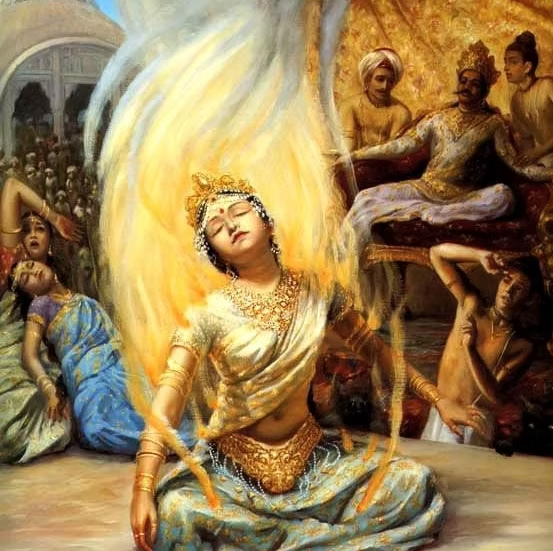
Because of our family relationship, when Lord Śiva addresses me as Dākṣāyaṇī I at once be come morose, and my jolliness and my smile at once disappear. I feel very much sorry that my body, which is just like a bag, has been pro duced by you. I shall therefore give it up (23). Maitreya the sage told Vidura: O annihi lator of enemies, while thus speaking to her fa ther in the arena of sacrifice, Satī sat down on the ground and faced north. Dressed in saffron garments, she sanctified herself with water and closed her eyes to absorb herself in the process of mystic yoga (24).First of all she sat in the required sitting posture, and then she carried the life air upwards and placed it in the position of equilibrium near the navel. Then she raised her life air, mixed with intelligence, to the heart and then gradually towards the pulmonary pas sage, and from there to between her eyebrows (25).

Thus, in order to give up her body, which had been so respectfully and affectionately seated on the lap of Lord Śiva, who is wor shiped by great sages and saints, Satī, due to anger towards her father, began to meditate on the fiery air within the body (26).Satī concen trated all her meditation on the holy lotus feet of her husband, Lord Śiva, who is the supreme spiritual master of all the world. Thus she be came completely cleansed of all taints of sin and quit her body in a blazing fire by medita tion on the fiery elements (27). When Satī annihilated her body in anger, there was a tumultuous roar all over the uni verse. Why had Satī, the wife of the most re spectable demigod, Lord Śiva, quit her body in such a manner? (28) It was astonishing that Dakṣa, who was Prajāpati, the maintainer of all living entities, was so disrespectful to his own daughter Satī, who was not only chaste but was also a great soul, that she gave up her body be cause of his neglect (29).Dakṣa, who is so hard hearted that he is unworthy to be a brāhmaṇa, will gain extensive ill fame because of his of fenses to his daughter, because of not having prevented her death, and because of his great envy of the Supreme Personality of Godhead (30).

While people were talking among them selves about the wonderful voluntary death of Satī, the attendants who had come with her readied themselves to kill Dakṣa with their weapons (31).They came forward forcibly, but Bhṛgu Muni saw the danger and, offering obla tions into the southern side of the sacrificial fire, immediately uttered mantric hymns from the Yajur Veda by which the destroyers of yaj ñic performances could be killed immediately (32). When Bhṛgu Muni offered oblations in the fire, immediately many thousands of demi gods named Ṛbhus became manifested. All of them were powerful, having achieved strength from Soma, the moon (33).When the Ṛbhu demigods attacked the ghosts and Guhyakas with half-burned fuel from the yajña fire, all these attendants of Satī fled in different direc tions and disappeared. This was possible simply because of brahma-tejas, brahminical power (34)

Famous Mountains, Kundas, Sarovaras, Vatas, Shilas, Kupas

0

Famous Mountains Of Vraja Mandala

There are twenty five sacred mountains that are said to be located in Vraja Mandala of which nineteen are well known including: Govardhana Hill (Govardhana), Nila Parvata, Anandadri Parvata and Dhavala Parvata (Sanara Sikhar), Gandhamadana Parvata (Adi-Badri), Setu Kandara (Budhe-Badri), Kedar Parvata (Kedaranatha), Charana Pahadi and Lukluki Kandara (Kamyavana), Indrasena Parvata and Chaursyakhela Parvata (Bhojana Thali), Suvarnachala (Sunahara), Atora Parvata and Sakhi Parvata (Unchagrama), Brahma Parvata and Vishnu Parvata (Varsana), Nandishvara Parvata and Charana Pahari (Nandagrama) and Charana Pahadi (Bathain). (NOTE: In Vedic terminology even small hills are classified as parvatas, or mountains).

Famous Kundas Of Vraja Mandala

There are eighty-four sacred kundas within Vraja Mandala and the most prominent ones are: Brahma-kunda, Davanala-kunda and Govinda-kunda (Vrindavana), Narada-kunda, Radha-kunda, Shyama-kunda, Dan-nirvartana-kunda, Sankarshana-kunda, Govinda-kunda, Apsara-kunda (all located around Govardhana Hill), Saraswati-kunda, Potra-kunda, Shiva-tala and Balabhadra-kund (Mathura), Krishna-kunda (Madhuvana), Kamuda-kunda (Kamudavana), Bahula-kunda (Bahulavana), Vimala-kunda, Yashoda-kunda and Luk-luki-kunda (Kamyavana), Vrinda-kunda (Nandagrama), and Surya-kunda (Bathain Khurd), Manasi-ganga at Govardhana.

Famous Sarovaras Of Vraja Mandala

Kusuma-sarovara at Govardhana, Chandra-sarovara at Parasauli, Piyal-sarovara and Prema-sarovara at Varsana, Pavana-sarovara at Nandagrama, Mana-sarovara at Bilvavana.

Famous Vatas Of Vraja Mandala

There are said to be sixteen sacred banyana trees (vatas) with the most prominent being: Vamsi Vata, Shringara Vata and Advaita Vata (Vrindavana), Kama Vata (Kamyavana), Java Vata (Yavata), Bhandira Vata and Vamsi Vata (Bhandiravana), Sanket Vata (Sanket), Keli Vata (Kelanvana), Aksaya Vata (Bhandira Vata) (Kajrot). The other famous vatas whose locations are uncertain are: Manorama Vata, Jatajuta Vata, Shrivata, Asa Vata, Ashoka Vata, Brahma Vata, Rudra Vata, Shridhara Vata, Savitri Vata.

Famous Shilas Of Vraja Mandala

There are said to be eleven sacred rocks (shilas), with the most prominent being: Bhojana Thali, Phisalni-shila and Bhajana-shila (Kamyavana), Bhajana-shila (Mukharai), Phisalni shila (Unchagram), Jhulan-shila (Govinda-kunda) Balarama Mukut-shila (Doka Dauj), Dandavata shila (Jetipur), Mukharavinda-shila (Manasi-ganga), Jihva-shila (Radha-kunda) Radharani Mukut shila (Surya-kunda).

Famous Kupas Of Vraja Mandala

There are said to be twelve sacred kupas (wells), with the most prominent being: Radha-Kupa, Krishna-kupa and Venu-kupa (Vrindavana), Gopi-kupa (Radha-Kunda), Kubja kupa(Mathura), Venu-kupa (Bhandiravana), and Sapta-samudra-kupa (Mahavana).

Stay Connected

16,985FansLike
12,500FollowersFollow
61,453SubscribersSubscribe