



Mail ID: contact@vedavarsity.com

Contact: +91 9634998911

Google search engineGoogle search engine
Home Blog Page 167

The Superiority of Vedic Āryan Dharma

0

Amongst all the religions established in the world or all existing religions, the Vedic Āryan dharma is superior and most liberal. The particular excellence of Vedic Āryan dharma is that this dharma ensures the auspiciousness of the jīvas in all kinds of situations. All other religions are suitable for only certain specific conditions of the jīvas. They cannot function in all situations. All the religions that are prevalent in the world can be divided into five categories, namely:

Religion which aims at the eternal happiness of the jīvas.
Religion which destroys the happiness and distress of the jīvas.
Religion that promotes temporary happiness for the jīvas.
Moral religion which increases the collective happiness of the jīvas.
Religion which enhances the material capacity of the jīvas.


Another name for that religion which aims at the eternal happiness of jīvas is bhagavad-bhakti. The religion wherein a jīvā is recognised as eternal and it is understood that eternal bliss is the supreme necessity of the jīva is called bhakti. In that religion, the principal subjects – the nature of Godhead (bhagavad-tattva), the eternality of the jīva, the jīva’s servitude to Bhagavān, the impermanence of that which is in connection with matter, the eternality of the principle of divine love (prīti), etc – are universally accepted. All those religions in which the aforementioned principal subjects are recognised must necessarily be called religions aimed at the eternal welfare of the jīva. Whoever examines all religions, from a scientific perspective, will acknowledge that Christianity, Islam, Brahminical dharma, etc are all focused on the eternal happiness of the jīva. No matter what kinds of false distinctions exist within those religions, at their core, they are fundamentally of the same class.

The religion which destroys the happiness and distress of the jīvas is observed in many forms in the world. Amongst them, Buddhism, Pessimism, and Kevalādvaita Vedānta are foremost. This philosophy has arisen from time to time and has spread to many places in the world. In various countries, its form is different. However, the ultimate conclusion is the same everywhere. All these philosophies can be called religions that destroy the happiness and distress of the jīvas, because according to all these perspectives, the very existence of the jīva is inauspicious. The extinction of the jīva’s existence is considered to be the highest benefit. The elimination of existence is established in two ways. One kind is that the singular entity alone is eternal, possessing no qualities, and devoid of any transformation. The existence of the jīva, being full of faults and distinctions, is thus false and full of suffering. The state in which all these relative distinctions merge into the ultimate principle of non-differentiation is known as mukti, or nirvāṇa. Nirvāṇa alone is the eliminator of happiness and distress arising from duality. The religion through the practice of which that nirvāṇa is attained is called the religion that destroys the happiness and distress of the jīvas.

Scholars advocating nirvāṇa, such as Xenophanes and Parmenides, propagated this viewpoint in Greece. With the European region, this view was propagated in various forms by scholars such as Spinoza, Fichte, Schelling, and Hegel. Scholars such as Schopenhauer and Hartmann promoted this philosophy in the world in a different form, calling it Pessimism. In our country, Jainism, Buddhism, and Kevalādvaita Vedānta are followers of this doctrine. Modern figures such as Nanak, Śiva-Nārāyaṇa, Gorākṣanātha, Āule Cāṅda, and Jagannātha Dāsa* have introduced this philosophy into the community of those who worship God. Whatever form it may take, the doctrine that seeks ultimate dissolution in the form of mukti can boldly be said to be a religion which destroys the happiness and distress of the jīvas.

*Translator’s Note: One can read more about Jagannātha Dāsa here: Ativāḍī Apa-Sampradāya by Swami B.G. Narasiṅgha Mahārāja

Religion promoting the temporary happiness of the jīvas is observed in many forms in the world. This is known as the path of karma. According to this perspective, in some places Īśvara is acknowledged, while in others He is not. Bodily pleasure, pertaining to a divine body and other sensory enjoyments after the material body’s demise – is the tenor of this ideology. Through the gathering of ingredients and specific activities, that goal is achieved. In many ways, this doctrine has also secretly crept into various religions aimed at eternal happiness. In principle, the Muslim religion is indeed a religion aiming at the eternal goal; yet upon examining the sensual nature of the pleasures of its heaven, it becomes clearly evident that a religion focused on temporary happiness has surreptitiously entered into it. Religion striving towards temporary results is not so predominant in the Christian faith, but to say that it is entirely absent there would be incorrect. When the topic of resurrection is carefully examined, our doubt becomes stronger. Similarly, all the ideas concerning the Garden of Eden nourish that doubt.

Moral religion which increases the collective happiness of the jīvas which relies upon material science, has become favoured by many scholars. Materialism, positivism, socialism, and all such atheistic religions are included within the moral religions that promotes communal pleasure. It is not that moral religion for increasing collective happiness cannot exist within the three aforementioned religions. When the doctrine of collective happiness becomes independent of the above religions and beckons mankind, then it becomes materialism, positivism, or socialism. Religion aimed at the temporary happiness of the jīva always acknowledges religion which improves general pleasure. The reason for distinguishing them is this – in some cases, religion aimed at the temporary happiness of the jīva is not always a religion which seeks collective happiness; but the doctrine of collective happiness will, in all circumstances, be aimed at temporary happiness. In many ways, karma-kāṇḍa is considered as a religion of collective happiness. According to the doctrine of collective happiness, the ātmā has no eternality; the results of whatever actions a jīva performs are received by the aggregate jīvas. Some say that it is energy alone which is the driver of all these results. Some say that it is only fate which grants those results. Some say that the principle known as apūrva causes the jīva to enjoy those results.*

*Translator’s Note: According to karma-kāṇḍa, karma gives rise to a principle known as apūrva (that which is exceptional), which calculates and distributes the result of one’s karma.

Various kinds of religion that enhance the material capacity of the jīvas is observed in different countries. In some countries, one finds advice solely for increasing the scientific potential of the material body. In some countries, or according to some philosophies, one finds specific instructions for manifesting the hidden capacity of one’s previous physical body, or of the subtle or astral body. All kinds of tantrika, mechanical, mūdra-based, yogika religious practices prevalent in various countries are included within this philosophy. Ṣaḍaṅga Yoga, Aṣṭaṅga Yoga, Buddhist yoga, and Theosophy – all these are included within this doctrine. Although Theosophy has some connection with religion which destroys the happiness and distress of the jīva, its own foundation belongs to religion which propagates material potential.

If it is examined more deeply, it must be admitted that all types of religion that have been prevalent and can be prevalent are included within these five kinds of dharma. It must also be acknowledged that all types of religion that have been prevalent up to the present either belong to one of the aforementioned five, or exist based upon one of them. Apart from Vedic Āryan dharma, no other dharma shows the presence and harmony of the above five kinds of religion. Rather, within it, only one is acknowledged as dharma, and all other religions are rejected. In such a situation, no religion ensures the welfare of the jīvas in all circumstances. Therefore, except for the Vedic Āryan dharma, no other dharma is complete.

In Vedic Āryan dharma, proper guidance and harmony of the aforementioned five kinds of religion are present. Whatever state a living being may be in, in the Vedic Āryan dharma, when a particular state requires committed practice, proper guidelines are provided for temporarily suspending or adjusting that practice according to one’s eligibility. Is there any doubt that in Vedic Āryan dharma, the jīva achieved true auspiciousness? Many stages are observed from the jīva’s entirely material state up to the attainment of the pure spiritual state. If one does not follow the steps to reach the highest point, one will certainly never achieve perfection in one’s activities. In other religions, only a single step is shown, but they do not indicate how the lower steps are to be crossed. The result is that a religion becomes a single, isolated object of practice. By no means is the true natural propensity of life achieved. As long as religion does not become the very life of a religious person, it remains like a transient guest in one’s home. In that case, what benefit will the jīva attain? Materialists remain materialists, karmīs remain karmīs, and jṣānīs remain jṣānīs. They do not achieve a higher positions. In Vedic Āryan dharma, all those philosophies have been taught in various places, however, to perform practices according to one’s eligibility, guidance has been repeatedly given. That person who does not quickly achieve the highest progress of supreme prema by following Vedic Āryan dharma is most unfortunate. The greatness of Vedic dharma is that through it, the welfare of many is possible, whereas in other religions, welfare rarely occurs. This is because in those religions, in particular circumstances, the religion itself becomes an obstacle to the jīva’s advancement.

In order to clearly demonstrate that in the Vedic Āryan dharma, proper guidance exists for the aforementioned five kinds of religion in their respective places, the following Vedic statements are quoted. No particular consideration can be made here. There are statements from the śruti regarding religion aimed at the eternal happiness of jīvas, such as:

tad vijṣānena paripaśyanti dhīrā
ānanda-rupam-amṛtaṁ yad vibhāti
(Muṇḍaka Upaniṣad 2.28)

The meaning of this is – “The Supreme Truth, which is in the form of bliss, immortal by nature and eternally manifest, is perceived by the wise through their knowledge.”

There are statements from the śruti regarding religion that eliminates the pleasure and pain of the jīvas, such as:

na bhayaṁ sukha-duḥkhaṁ ca tathā mānā-pamānayoḥ
etad-bhāva-vinirmitam tad grāhyaṃ brahma-tatparam

There is no fear, pleasure and pain, and honour and dishonour – that which is devoid of these states should be firmly understood as the Supreme Brahman. (Teja-Bindopaniṣad 14)

And in the Bhāgavata, Third Canto, Chapter 25 it is stated:

yoga ādhyātmikaḥ puṁsāṁ mato niḥśreyasāya me
atyantoparatir yatra duḥkhasya ca sukhasya ca

The system of yoga concerning the ātmā which benefits the living beings is approved by Me. Through that, there is detachment from material happiness and distress. (Śrīmad Bhāgavatam 3.25.15)

In regards to religion aimed at the temporary happiness of jīvas, the śruti states:

svarga-kāmaḥ aśvamedhaṁ yajeta

One who desires Svarga should perform the aśvamedha-yajṣā.

yāvajjīvam agni-hotraṁ juhūyāt

One who desires offspring should perform the agni-hotra sacrifice.

Men desiring the temporary pleasures of Svarga should perform yajṣas such as the āśvamedha. Regarding religion which promotes the collective welfare of the jīva, it has been stated as follows:

tad etat satyaṁ mantreṣu karmāṇi kavaye
yātanyapaśyaṁstāni tretāyāṁ bahudhā saṁjṣāni
tānyācaratha niyataṁ satyakāmā eṣa baḥ panthāḥ svakṛtasya loke
(Muṇḍaka Upaniṣad 1.2.1)

“In Treta-yuga, the ṛṣis saw that when actions prescribed by the Vedas were performed properly, they inevitably yielded results. If all those actions are performed, the collective welfare of you all will be attained. This alone constitute your sole path.”

Regarding religion which enhances the material capacity of the jīvas, it has been stated in the Amṛtabindu Upaniṣad of the Kṛṣṇa Yajur Veda as follows:

anena vidhinā samyan-nityam abhyasataḥ kramāt
svayam utpadyate jṣānaṁ tribhir māsair na saṁśayaḥ

“If one practices according to the proper rules of yoga for three months, all material knowledge becomes manifest.” *

  • Translator’s Note: This śloka is actually 29 of the Amṛtanāda Upaniṣad.

Upon considering all of this, it appears that all kinds of atheistic or theistic religions, which have been propagated in the world under various names, have been scientifically examined and discussed within Vedic Āryan dharma. The arrangement for religion can be seen as necessary for all people, according to their different qualifications. Therefore, the Vedic Āryan dharma is the only religion that is beneficial to the jīva.

The Vedic Aryan dharma is called Hindu dharma. Nowadays, people ignorantly condemn such a liberal religion. Our prayer is that, without taking any specific person into account, no one should criticise any religion.
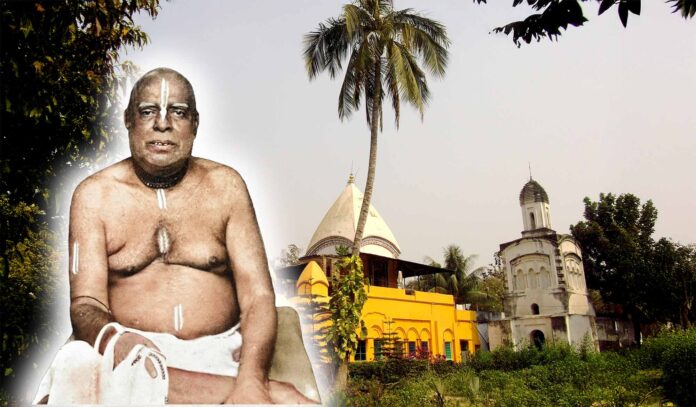
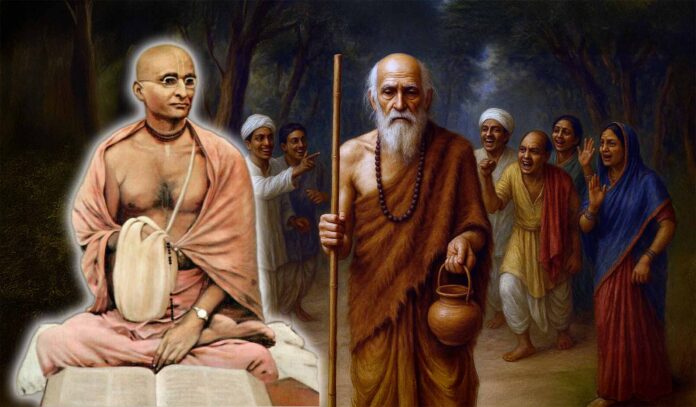
Śrīla Bhaktivinoda in Gauḍacala

0

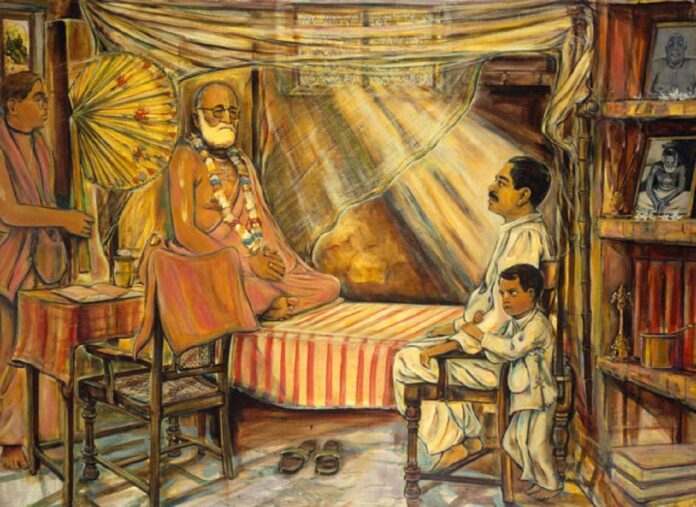
In the sub-division of Ukhḍa , within 20 miles of Śrīdhāma Māyāpura, the appearance place of Śrī Nadīyā-canda, near to where the founder of the Kartābhajā movement, Aula-canda, was found as a child by Mahadeva Barui, one very dynamic personality on the path of bhakti appeared at that place to dispel all sorts of delusional misconceptions, in order to drive the human intellect engrossed in worldly knowledge towards the path of the highest spiritual truth, and again propagate the flow of pure bhakti initiated by Śrī Māyāpura-candra all over the world.

A few years after his appearance, Ulanagar became depopulated due to an epidemic. Based on the severe effect of that epidemic, that nitya-siddha litterateur, who appeared in Ulagram, composed an epic poem named Vijana-grāma (‘The Empty Village’) in the amitrākṣara metre* for the very first time in the Bengali language. The period in which he composed it was 1863 of the Christian era.

*This is known as blank verse in English.

This Ulagram is in the sub-division of Ukhḍa, within the district of Nadīyā. From Calcutta, it’s distance is 51 miles. Immediately after the Ranaghat station on the Murshidabad line of East Bengal Railway is Birnagar Station, which is merely the new name of the well-known and ancient Ulagram. The specific site within this city where Bhaktivinoda Thakura appeared, the house in which he was born, still stands and sings songs of its past glories.

A little more than three hundred and fifty years has passed from the time when the revealers of Śrī Nadīyā – Śrī Māyāpura-candra and His associates – manifested Their own audārya-līlā (pastimes of magnanimity) in order to demonstrate progressive service which is contrary to the enjoying mentality of the jīvas contaminated by the filth of Kali. In 352 Gaurābda, 1760 Śakābda, 1895 Samvat, 1245 Baṅgābda, * on 2nd September, 1838 of the Christian era, and on the thirteenth lunar day on the 18th of the month of Bhādra of the Bengali calendar, one great personality who was three and a half hands length in height (approx. 5 foot, 3 inches), who was a supremely dear personal associate of Śrī Śrī Māyāpura-candra, appeared.

* There are various calendars used in India. Gaurābda is counted from the time of Mahāprabhu’s appearance. Śakābda is a luni-solar calendar introduced by Mahārāja Śalivāhana who defeated the Śaka tribe. Samvat is the ancient calendar introduced by Mahārāja Vikramāditya. Baṅgābda is the traditional Bengali calendar, aligned with Emperor Akbar’s revenue reforms in the 16th century.

In order to expand His own mahā-vadānya-līlā (pastimes of supreme magnanimity), Puruṣottama – the bestower of auspiciousness to the world and possessor of infinite potencies – revealed the example of attaining bliss through eternal, transcendental knowledge while traversing the path of pure bhakti. Yet, as His mutually contending potencies gradually unfolded, the jīvas of this world became fearful that the cooling rays of the spotless religion of prema might grow faint and become eclipsed by the ocean of impurity. To once again uncover those pure, soothing, and beautiful sun-rays of prema, His intimate associate – that exalted soul devoted to the service of Puruṣottama – appeared in this world as the āśraya-vigraha of the viṣaya, Śrī Caitanya-candra.*

*Here, viṣaya refers to the Supreme Lord, and the āśraya refers to His devotee.

When he came, people perceived by their external vision that he had appeared in a family  of pañcopāsakas.  In actuality, a worshipper had appeared in the house of pañcopāsakas who was far beyond the material world. A weak-hearted man, overwhelmed by material enjoyment, depending on his own strength, roams the land of karma and assumes the responsibility of various kinds of virtuous and non-virtuous deeds. Yet if some potency of Bhagavān or bhagavat-prakāśa-tattva (that principle which reveals Bhagavān) appears in the world as the ideal of the pure jīvātmā’s nature and function, then alone can the welfare of the world be accomplished.

* Pañcopāsakas refers to the Smārtas who worship the impersonal Brahman in the form of five deities – Viṣṇu, Śiva, Durgā, Sūrya and Gaṇeśa.

The unsteady mind repeatedly engages the bound jīva in topics other than Kṛṣṇa, giving indulgence to reckless behaviour. It could never be that in the land of pious activities, beyond the sphere of Brahma-vārta, upon the eastern hills of Āryāvarta, within the sky of Gauḍa, some ideal star, free from selfish karma and jñāna, should arise – such was the delusion to be dispelled. For the purpose of making an unblessed land blessed, of sanctifying an unsanctified soil, of transforming the age of Kali into a pure Satya-yuga, for removing all inauspiciousness from the world and inviting auspiciousness – for this cause, the appearance of the Moon of Gauḍa and His constellation of attendant-stars was, in fact, the rightful claim of those very inhabitants of that unfortunate land, who were unworthy, impious people.

In Gauḍa-deśa, flooded by Tantras in the mode of ignorance, where the darkness resounded with the shrill ballads of Yogī Pāla and Bhogī-Pālas, and with the folk-songs of Maṅgala-Caṇḍī and Viṣahari’s cricket-like commotion* – there, the effulgent light of the divine proclamation from Śrī Hari’s own holy lips, ‘kīrtanīyaḥ sadā Hariḥ’ (‘the Name of Hari is to be constantly chanted’), completely dispelled that mass of gloom.

* Yogī Pāla (also known as Chowranginath) was a prince of the Pāla Dynasty of Bengal, who gave up his royal lifestyle and became a tantrika yogī. Less is known about Bhogī Pāla. Maṅgala-Caṇḍī is a goddess worshipped in rural Bengal; Viṣahari is another name for Manasā Devī, the snake goddess, who removes the effects of snake bites.

In that land at that time, among those very assemblies of the heroes of karma where practices such as bhūta-siddhi (control over spirits), vaśīkaraṇa (enchantments), pañca-pakṣi-sādhana (omens based upon five specific birds), and pañca-deva-vāhana (invoking the five deities) etc, were powerful – to those very people there, the appearance of one supremely transcendental embodiment of all-auspiciousness was nothing other than a sign of Bhagavān’s amandodaya-dayā (strong and progressive mercy).

After the concealment of Śrī Gaurasundara’s prema-līlā, Ācārya Śrīnivasa, Ṭhākura Narottama, and Prabhu Śyāmānanda became the divine triad for showering that prema upon the world. They infused the waters of śravaṇa and kīrtana drawn from the ambrosial ocean of bhakti-rasa into the heart-fields of those driven by selfish desires, karma, and dry jñāna. Due to many years of draught and scanty rainfall, the desert-like heart of the jīva had become incapable for the sprout of prema to emerge.

Hence, no one can deny the necessity of proper arrangements for delivering the cultivators of ulterior desires from the overwhelming power of time. The expectation of the rise of prema can be considered as timely, as the accompanying medicine for all sorts of diseases such as indulgence in intoxicants, the restless efforts of morally bewildered hearts, intense thirst for argument, and the craving for unlawful material advancement. At that time, the Supreme Person, who is the Reality of truth, knowledge, and unlimited bliss, sanctioned the service regulations in this world established by Saccidānanda, the servant of Puruṣottama. Instead of flowing in hundreds of streams, the threefold flow of Srinivāsa etc., being felicitated by the favourable service-flow to the Six Gosvāmīs while travelling to the confluence of the sea which is the abode of all nectarean rasas, instead faced obstacles such as dryness scarcity etc along the way.

At this time, from the devotional ocean of nectarean rasa, the kṛpā-śakti (mercy-potency) of Śrī Navadvīpa-candra, who is a rising ocean of strong and progressive mercy, once again caused the current of the Bhāgīrathī of pure bhakti to flow, thereby rejuvenating the wish-fulfilling tree of auspiciousness. In the midst of dense darkness, even two bright stars are incapable of fully expanding their powerful influence. After the light of the sun disappears in the western sky, the constellation of stars help the viewers by dispelling the darkness of night. Even at twilight, for some time, light and shadow continue to give the traveller a little assistance to a certain extent. Once again, with the arrival of the lord of night (the moon), the mind of the jīva becomes joyful with hope.

Far be it from seeking eternal life, the jīvas, intoxicated by the commotion arising out of karma, in their thirst for peace, desire to enter into the dense darkness of Kevalādvaitavāda (absolute monism) – that is itself a deviation. When there is a scarcity of persons to give caution against such deviation, then the majority of society becomes afflicted by various conflicting opinions.

When all the jīvas, who are scorched by distress, hear the loud declaration of those philosophers who claim that there is no distinction in the self, one’s race, or that of others, they then pursue the search for kaivalya (oneness) in order to find the akāśa-puṣpa of imaginary peace.* At that time, the humble, quiet voice of the guileless devotee engaged in bhajana announces the futility of the shrill tones of the followers of Kevalādvaitavāda – that voice becomes favourable to the attainment of the most auspicious fruits of the wish-fulfilling tree of auspiciousness.

* The phrase akāśa-puṣpa (sky-flower) is a common analogy used in Indian philosophy to denote something which is illusory. The sky does not produce flowers, therefore, anything that is referred to as an akāśa-puṣpa suggests that it is a misconception not based in reality.

The jīva has the aptitude to receive suffering in the thorny field of bhoga (enjoyment) and tyāga (renunciation) at every moment. Reasoning possessed of carelessness and short-sighted vision is incapable of bestowing ultimate auspiciousness. For this reason, we must take constant support by considering bhakti which is under the guidance of the aśraya (Śrī Guru). As the medicine suited to the disease, the bhakti-latā (creeper of devotion) that originated in Vṛndāvana was revealed in the Eastern region. However, the worshippable forms of the Lord that signify the principles of sambandha, abhidheya and prayojana, attract the sincere souls. They alone can progress in accepting that truth which is nirasta-kuhaka (without deceit). This itself is called sukṛti. Those travellers who regard karma, yoga, jñāna, tapasya, etc. as the true path, become anxious upon losing their way and go astray – for them alone there is the necessity of an honest guide. Śrī Caitanya-candra, encouraging those who had taken shelter of Him, and constructed the road of bhakti, leading from the entanglement of worldly existence toward the transcendental path. Yet, since that path was also inaccessible and filled with thorns, fear arose, and the travellers on the path of life encountered dangers and obstacles in many places. Through the simple and direct path of bhakti, the supreme joy attainable establishes the prayojana-tattva. Yet, there was an absence of an exemplary life to make this known. To what extent Ṭhākura Bhaktivinoda has fulfilled all those deficiencies is to be observed with the awakening of pure knowledge.

Ṭhākura Bhaktivinoda has shown the purpose of the conscious and unconscious worlds in relation to Kṛṣṇa. Service to Bhagavān is the only abhidheya, and that the desire for material enjoyment is an obstacle to it – he preserved these teachings through the propagation of proper conduct. Peace, enjoyment, and bliss – all culminate in supreme peace and true kṛṣṇa-bhakti. By revealing this, he has pointed out prayojana-tattva. When one considers the greatness of those who glorify or discuss other subject matters, it becomes clear that relying upon the greatness of those who cannot direct us to that strong and progressive mercy of the Lord, is not at all necessary for those who seek auspiciousness.

Ṭhākura Bhaktivinoda’s compassion, through his conduct and propagation, serves to demonstrate the unparalleled nature of the manner in which Śrī Gaurasundara and His own pure devotees distributed mercy;  it is the subject of hearing, chanting, and remembering during the time of His annual appearance.

The śāstra says that by rejecting bad association and establishing oneself in good association, one can become free from the influence of inauspiciousness through hearing, chanting, and remembering. If we advance by taking shelter of Bhagavān and His own associates by cultivating the threefold process of hearing, chanting, and remembering, then only we will surely become an object worthy of the eternal mercy of Jagannātha, the Supreme Protector. May He, who bestows boundless mercy to protect us from sinking in this ocean of material existence, and who is the knower of the principles of sambandha, abhidheya, and prayojana – in other words, that wise one possessing knowledge of subjugation and liberation – may he guide us like the Pole Star on the path of life.

A Devotee is Peaceful (Sajjana Śānta)

0

Only a pure Vaiṣṇava, or a sajjana, is truly peaceful. It is true that no one desires to become asajjana (impious); yet, due to a lack of eligibility, when one commits offences at the lotus feet of a Vaiṣṇava, one begins to identify such a mundane nature to be one’s own inherent self. Thus, such a jīva who is bound by māyā and filled with false ego becomes known as aśānta (one who is devoid of peace).

From prakṛti (material nature) intelligence arises, and from ahaṅkāra–tattva (the principle of false egotism), the false ego itself manifests. Due to offences to the Vaiṣṇavas, the asajjana falls from the plane of the mahat-tattva (principle of material existence). Having turned away from transcendental vision, he becomes agitated in the enjoyment of material form, taste, smell, sound, and touch. Thus, the workings of his false ego become manifest. Being so afflicted by that poison, he becomes restless and, overcome by egotism, even projects the same egoistic faults upon the pure devotee, the sajjana – considering him to be of a nature similar to his own.

If, by giving up his material ego, he can one day achieve the vision to behold the ideal of the peaceful sajjanas, then he will understand that only the sajjanas are truly peaceful – whereas those of narrow, mundane intellect, who crave the designation of ‘Vaiṣṇava’ while being prākṛta-sahajiyās, are the only ones who are not peaceful. Śrīman Mahāprabhu has said (Caitanya-caritāmṛta, Madhya-līlā 139-149):

keśāgra-śateka-bhāga punaḥ śatāṁśa kari
tāra sama sūkṣma jīvera ‘svarūpa’ vicāri

If one were to divide the tip of a hair into one hundred parts, and again divide one of those parts into another hundred, the jīva’s real nature is still more subtle than that.

keśāgra-śata-bhāgasya śatāṁśa-sadṛśātmakaḥ
jivaḥ sūkṣma-svarūpo ’yaṁ saṅkhyātīto hi cit-kaṇaḥ

The jīva, whose form is subtler than one ten-thousandth part of the tip of a hair, is an atom of pure consciousness, innumerable and beyond all material calculation.

bālāgra-śata-bhāgasya śatadhā kalpitasya ca
bhāgo jīvaḥ sa vijñeya iti cāha parā śrutiḥ

The śruti declares that the jīva is to be known as one ten-thousandth part of the tip of a hair, divided again a hundred times – exceedingly minute.

sūkṣmāṇām apy ahaṁ jīvaḥ

Of all things that are minute, I am the jīva.

aparimitā dhruvās tanu-bhṛto yadi sarva-gatās
tarhi na śāsyateti niyamo dhruva netarathā
ajani ca yan-mayaṁ tad avimucya niyantṛ bhavet
samam anujānatāṁ yad amataṁ mata-duṣṭatayā

If the embodied beings were infinite and omnipresent like You, then naturally there could be no Supreme Ruler over them – that would logically follow. But, because they are born of You, and exist only within Your energy, they can never be independent of You; You alone remain their eternal Master. Those who think that the individual jīva is equal to You are misguided by defective intelligence.

tāra madhye sthāvara jaṅgama dui bheda
jaṅgame tiryak-jala-sthalacara-vibheda

Among them (the jīvas), there are two divisions – the sthāvara (inanimate) and the jaṅgama (animate). The animate beings are further divided into those that fly, those that dwell in water, and those that live on land.

tāra madhye manuṣya-jāti ati alpatara
tāra madhye mleccha, pulinda, bauddha, śabara

Among all of them, the human species are very few. And among humans, there are the mlecchas, pulindas, Buddhists, and śabaras.

veda-niṣṭha-madhye ardheka veda mukhe māne
veda-niṣiddha pāpa kare, dharma nāhi gaṇe

Among those who claim to follow the Vedas, half of them accept the Vedas by lip-service only. They still engage in sinful acts forbidden by the Vedas and do not truly care for dharma.

dharmācāri-madhye bahuta karma-niṣṭha
koṭi-karma-niṣṭha-madhye eka jñānī śreṣṭha

Among those who follow dharma, many are devoted to karma. Among millions of those who are engaged in karma, a jñānī is supreme.

koṭi-jñāni-madhye haya eka-jana mukta
koṭi-mukta-madhye durlabha eka kṛṣṇa-bhakta

Among millions of jñānīs, only one attains liberation. Among millions of liberated souls, a devotee of Kṛṣṇa is most rare.

kṛṣṇa-bhakta niṣkāma, ataeva śānta
bhukti-mukti-siddhi-kāmī sakali aśānta

The devotee of Kṛṣṇa, being desireless, is peaceful (śānta). Those who are attached to enjoyment, liberation, or mystic perfections are all restless (aśānta).

Relying upon mundane analysis, those who consider themselves knowledgeable of the principles of sambandha, abhidheya, and prayojana, yet by their natural disposition remain distant from engaging in the service of Hari, never escape committing offences even after countless millions of lifetimes. Such persons remain eternally offensive and restless, and driven by their desire to oppose Viṣṇu and the Vaiṣṇavas, they repeatedly take birth again and again.

Some of them accept the Vedas only through lip-service, while others, even though they know that the Vedic injunctions forbid sensual enjoyment, live a life of illicit sexual indulgence and, and with prideful arrogance, establish themselves as preachers or mendicants in an inferior śūdra-like manner. By the desire of Kṛṣṇa, all people generally disregard them. Therefore, being neglected, they become disturbed due to committing offences against the Vaiṣṇavas and gradually sink deeper and deeper into degradation.

They cannot comprehend the sambandha, abhidheya, and prayojana of the Vedas, and they propagate their tendencies based on asat-śāstras (non-bona fide scriptures) under various pretentious names, thereby accumulating offences at the feet of the Vaiṣṇavas. Accepting the Vedas in word only, such arrogant and inimical jīvas remain averse to hari-bhajana and continue to commit sins forbidden by the Vedas, and in vehement opposition, they criticise the society of devotees. After experiencing no peace for countless lifetimes, such jīvas eventually, upon the exhaustion of their sins, attain pious births in successive lives and become elevated to the position of karmīs (followers of karma-kāṇḍa). Later, transcending such poisonous paths of karma-kāṇḍa, jñāna-kāṇḍa, as well as false bhakti-kāṇḍa, they achieve peace at the pure lotus feet of the sajjanas.

As long as he does not realise the turbulent disposition found within the venomous consequences of those who are opposed to Kṛṣṇa, and while he does not obtain the glories of the pure lotus feet of the sajjanas by gathering sukṛti, the egotistical jīva continues to loudly declare the Vaiṣṇavas to be like himself – restless, proud, and deceitful. The sole dharma of a pure Vaiṣṇava is to ignore all such ignorant, immature, and disturbed jīvas.

 In the same way, in the Śrīmad-Bhāgavatam, the virtuous tridaṇḍī devotee, while being oppressed by the restless and egotistical jīvas, disregarded them. That particular section is a subject to be constantly discussed by every Vaiṣṇava tridaṇḍī. The Vaiṣṇava tridaṇḍīs, or the paramahaṁsas who have given up the daṇḍa, will not deliver these agitated jīvas from their unrest, but will merely disregard them – this indeed is the dharma of the tridaṇḍī, or of those who have given up the daṇḍa.* Śrīman Mahāprabhu has established such tridaṇḍi-dharma alone as the highest discernment of the conditioned jīvas who are attached householders who claim to be servants of gṛhī-gaurāṅga (‘householder Gaurāṅga’).**

Śrī Kṛṣṇa Himself is the expounder of this tridaṇḍī dharma, and Śrī Gaurasundara Himself accepted sannyāsa, personally establishing it as the very standard for the tridaṇḍī Vaiṣṇavas. If one can grasp the essential meaning of this, the jīva’s restless nature will be eradicated. A bound jīva, abandoning artificial sāttvika–vikāra (so-called ecstatic symptoms) or false identifications such as being ‘the son of Bābā Ṭhākura,’can become a sajjana.*

Wicked persons showed various forms of hostility toward the Vaiṣṇava tridaṇḍī, including contempt, insult, ridicule, physical assault, harassment, and restraint. Sometimes, they showed hatred towards the tridaṇḍī, by spitting on his body, urinating upon him, and causing various disturbances during his worship of Bhagavān. Despite the words of the wicked, the tridaṇḍī personally endured everything without abandoning his firm bhajana. Śrī Bhagavān told Uddhava that such a sādhu who is not angry at the words of a wicked person is rare in this world. The harsh words of the asajjana are unbearable; one can only tolerate them if he has hari-bhakti.

In the province of Avantī, a wealthy brāhmaṇa accumulated money in various ways and gained fame in society. Due to his miserly nature and greed, the villagers, the Devas, and many others became opposed to him. As a result of this unfavourable treatment, he withdrew from all material pursuits and achieved true renunciation. As soon as renunciation arose in him, he realised that the unalloyed mercy of Bhagavān had manifested towards him. He recognised himself as an eternal servant of Kṛṣṇa and directly took up the tridaṇḍa, kamaṇḍalu, and other practices of the renunciate āśrama himself, because artificially, such practices cannot be imparted by one person to another, and no one can accept counterfeit renunciation from another. At the time of taking sannyāsa, Śrīman Mahāprabhu and a few others showed respect towards the formal priesthood. However, such sajjanas do not say that it is appropriate to adopt artificial renunciation from a guru in imitation of such an ideal. In vivitsā or vaidha sannyāsa,* formal ritualistic priestly officiation is accepted.

When the noble renunciate of Avantī, having abandoned all worldly possessions, household duties, and all hopes and reliance on domestic yajñas, went out for the purpose of hari-bhajana in order to exhibit proper conduct by accepting the tridaṇḍa, the agitated yajñika priests who were attached to their households, mocked and obstructed him, and grabbed his tridaṇḍa. The old men, the youth, and the children tried to snatch away his water-pot, blanket, sacred thread, and beads; the asajjanas spat and urinated on the alms he had received. They slapped him on the head to insult him, and they began to say: “This tridaṇḍī is a thief, unable to protect his possessions, incapable of enjoying – that is why he has become a tridaṇḍī!”

In order to gain recognition among the people, by using various tricks, they tied up the tridaṇḍī, plotted together to kill him, seized the insignia of his sannyāsa, and, being deceitful religious pretenders, maintained silence or spoke many malicious words like cunning cranes.* Such ill-treatment constantly befell the Vaiṣṇava tridaṇḍī.

The tridaṇḍī did not feel aggrieved by these unbearable words, or by the cruel behaviour of the wicked, but maintained steadfast, sattvika tolerance. He thought, “All these ignorant, foolish materialists, who have become intoxicated with sense-pleasure and who regard Bhagavān as a mere illusory avatāra are not Vaiṣṇava tridaṇḍīs. I do not seek any worldly peace by changing their nature, temperament, and conduct. The day they obtain the good fortune to become Vaiṣṇava tridaṇḍīs, those kinds of bad habits will cease by themselves. Why should I become an obstacle to their intense attachment to sense pleasure? Since a jīva is naturally kṛṣṇa-dāsa by constitution, their intense hostile mischief will cease sooner or later.

 At present, why should I abandon my bhajana and go about instructing the wicked – either in response to their provocations, or to satisfy their inquisitive curiosity? They are devoid of faith; in their present intoxicated state, they cannot accept any words of mine. I am a tridaṇḍī servant of Bhagavān, therefore, I do not wish to cause them any anxiety by word, mind, or body. Following the path of the pure mahājanas, I will not wander on the path of the fourfold desires, or the threefold path of karma, and jñāna of these wicked people.* Just as the peaceful sajjanas, taking shelter solely at the feet of Kṛṣṇa, have abandoned all worldly misdeeds and engage in hari-bhajana, I will do likewise. I will not cause an increase in the unrest of wicked people by becoming fuel for the fire of their hostility.”

By singing these verses and personally demonstrating to the Vaiṣṇava tridaṇḍīs the path of śrī-hari-bhajana, Śrī Gaurasundara established that the ancient veśa-paddhatis (manuals for accepting sannyāsa) have recorded the procedure for accepting the tridaṇḍa. All the words of an attached yajñika brāhmaṇa householder who claims to be a servant of gṛhī-gaurāṅga will never penetrate hearts absorbed in sense-enjoyment. Taking shelter of contaminated māyāvāda, they become both lawful and unlawful prākṛta-sahajiyās,* and declare material enjoyment itself to be prema. But the peaceful devotees, rejecting with heart and soul, the doctrine of both the lawful and unlawful prākṛta-sahajiyās, will advance along the specific path of śrī-rūpānuga-bhajana- established by the Gosvāmīs residing in Vraja. In every way, they completely disregard the loud and intense protests of the sahajiyās, which are full of violent sense-indulgence.

* Lawful (vaidha) means those sahajiyās who give lip-service to the śāstras, and unlawful (avaidha) refers to sahajiyās who do not follow any śāstrika injunctions whatsoever.

The True Nature of Bhakti and the Supreme Service to Śrī Kṛṣṇa in Kali-yuga

0

By Śrīla Bhaktisiddhānta Sarasvatī Goswāmī
22nd Kartik, 1928, Friday Afternoon


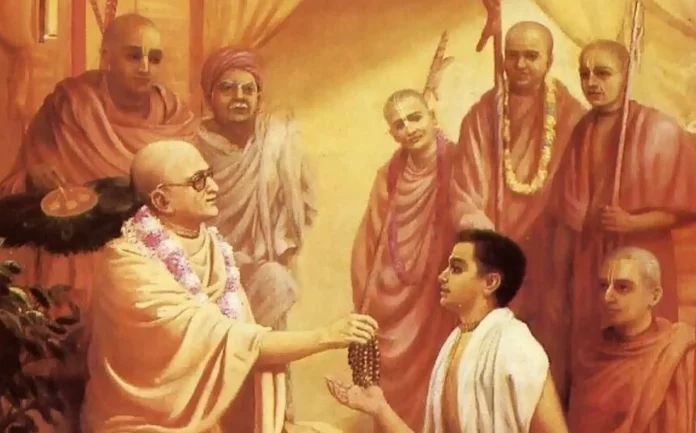
I have no capacity to tend to the feet of the denizens of this holy place. Yet by the grace of Śrī Gaurasundara and urged by your good wishes, I stand here to speak only if I may thereby serve the servants of Śrī Gaurāṅga. Indeed if we can truly serve the feet of the devotees of Śrī Gaurāṅga, by whose graceful glance alone all desires, hopes, and aims in life are easily fulfilled, then that will be a crowning achievement.


We are proud of our ego. We are either given to judge sinful and pious acts or think how we can lord it over others by acquiring power. These are all base self-glorifications. But one devoted to Gaurāṅga says that all desires actuating every object from the pillar to the highest being (Brahmā), all labour for worldly possessions, all longing for enjoyment and every kind of renunciation after satiety, are all pseudo-existent and evanescent, i.e., subject to change and time. When we lose anything so acquired, life seems vacant and useless. But it is quite futile to try to straighten the tail of a dog-such being the end of all enjoyments in the fourteen spheres. All pleasures acquired as the fruits of worldly work are transitory.


Carried away by sense-perceptions of eye, ear, touch, taste and sound we turn into ego-worshippers. In this state the pure activity of the soul lies dormant. Then we also desire the pleasure in heaven. And when such ideas are strong in us we err by identifying ourselves with this mind, which thus seems to be the enjoyer of the things of this world. This propensity for selfish enjoyment deadens the pure function of the Soul.


But the Soul knows that Śrī Kṛṣṇa is the One Absolute Truth.
Śrī Nārāyaṇa is the embodiment of His Majesty. Nārāyaṇa though is the ultimate source of the Absolute Truth, Kṛṣṇa’s transcendent designation, form, qualities, and sportive activities (lila) excel Nārāyaṇa’s Majesty by His display of sweetening Beauty. In Kṛṣṇa the fullest majesty is mellowed by the most delicious sweetness (madhurya) which predominates. When we do not know all these and forget our true selves, we cannot understand the activities of a Vaiṣṇava and the transcendental truth underlying such activities, and so give ourselves up to worldly enmity and friendship, taking things transitory and illusory as eternal and real.


Secondly, Kṛṣṇa is completely all-cognisant. Material objects are not self-conscious. God is ever existent. It is, indeed, through mistake that we consider ourselves as Brahman. It is only then that such useless arguments for the effacement of all super-sensual diversity or variety in Absolute Truth take hold of us. The function of the spirit is clogged and our minds run after worldly enjoyment. The materialised mind thinks that sensual enjoyment is obtained at Kṛṣṇa’s feet. But at the feet of Kṛṣṇa everything is spiritual and so not an object for the gratification of our senses. When truth is obscured in us carried away by egotistic tendencies, we take things material as of the spirit.
Kṛṣṇa is bliss. In Him dwells perfect joy-He is the embodiment of it. Sensual knowledge or joy is not perfect;-therein all our longings are not realised. Under the spell of sense perceptions we imagine that there might be unalloyed happiness in ego-worship or in the kaivalya state of Pataṅjali.


All seeking after joy is the function of the soul. When the desire for joy wakes up in our minds we commit a blunder in running after worldly objects and enjoyment. It is only when we receive a spiritual sight of Kṛṣṇa that we understand that His service must, of necessity, be the sole aim in life. As long as we thus hanker after our own pleasures we try to enjoy the world through the senses and are given to hollow argumentation. But this world is not made for our enjoyment. When spiritual bliss will appear in us like the incessant flow of oil then shall we be truly tied to the feet of Kṛṣṇa.


Such numerical variety as that of one, two and three exists only in worldly diversity. This diversity acquires a certain inexpressible sameness in the world of spirit. Then we can appreciate that Kṛṣṇa alone is the eternal Truth Absolute. When the very existence of Truth and sensiency in our own selves becomes solely relative to Him only then we are established in our real normal state.
At present many false meanings have been imported into the word “devotion.” Regard for one’s parents, loyalty to man, obedience to the teacher, etc., pass as bhakti. But the root “bhaj” means “to serve.” If we do not clearly judge as to what must be the medium of that service then it is sure to be misapplied. As Caitanya-candrāmṛta sings:


kalah kalir balina indriya-vairi-vargah
sri-bhakti-marga iha kantaka koti-ruddhah
ha ha kva yami vikalah kim aham karomi
caitanya-candra! yadi nadya krpam karosi
“This is the quarrelling age. The senses, which are our enemies, are now very powerful; and crores of thorns choke the path of pure bhakti. I am quite at a loss to know what I shall do or where I shall go unless Caitanya Candra shows mercy unto me.”


We live in the Kali-yuga-this is an age of strife. So it happens that the self-luminous path of pure devotion is completely covered up with millions of thorns in the shape of foolish argumentations and wordy wranglings. In these circumstances it is absolutely impossible to have the knowledge of pure devotion without the mercy of Caitanya Candra. Śrī Caitanya Candra is Kṛṣṇa Himself. He is the Godhead. We cannot know God by the exertions of our senses. As the Kaṭha Upaniṣad says:


nayamatma pravacanena labhyo
na medhaya na bahuna srutena
yam evaisa vrnute tena labhyas
tasyaisa atma vrnute tanum svam
“The knowledge about the all-embracing Oversoul cannot be attained either through reasoning, argumentations or hearing the Vedas; only to him does He manifest His person whom He accepts.”


Godhead is eternal. We cannot attain to Him unless we realise He is bliss Himself. One confined within his psychic range in a hundred ways cannot know what God is and so accepts things other than God as objects of his worship. Unable to understand the true subject and object of enjoyment, as well as the nature of enjoyment itself, he imagines the world as created to afford him every kind of pleasure. This materialised mind strives only after selfish enjoyment. By this fleshly form we cannot serve Kṛṣṇa. It is possible only in spirit. The atomic theory of the world knows nothing of that service.


In the variety of His manifestations, Absolute Truth Himself is to be determined from Nārāyaṇa. In Kṛṣṇa exists Nārāyaṇa, Who is His Majestic form. Baladeva is the manifestation of His Self. He is the all-pervading Oversoul. With the revelation of the function of supreme knowledge in our soul, we come to know that Kṛṣṇa is the Absolute Truth. He is also perfect bliss, reverence does not stand in His way. Intimate service cannot be rendered if one is actuated by reverence. Yet Kṛṣṇa is the eternal object of the devotees’ whole-hearted service. But He is to be served with the ever-existent senses of the soul. We cannot serve Him through imagination or sentiment. Super-sensuous knowledge of our relation with Him is essential. There is nobody whom I can call my own except one who is solely devoted to Kṛṣṇa. Kṛṣṇa alone is the one object of my service. This faith is the one glory of the Vaiṣṇava. This is the supreme necessity of life. Material fame full of the idea of selfish enjoyment is never desirable.


Time is running short. The time for the evening wave-offering ceremony is drawing nigh. I must no longer encroach upon your time of service. If it be Kṛṣṇa’s wish I shall again try to serve you. A thousand obeisances at the feet of the devotees of Kṛṣṇa.
A Lecture in Calcutta

Assuming Responsibility of Being Guru

0

We have taken upon ourselves the responsibility of welcoming this grave charge. All the audience have accepted ordinary seats, I alone have been provided with a lofty seat. All are being told in effect-“Do have a look at a big animal from the Zoo-gardens. What arrogance! So foolish! So wicked! Have you ever seen such a big brute? Garlands of flowers have been put round his neck! What laudations! What bombastic long-drawn, and hyperbolic adjectives! And how complacently too he is listening to the praise of his own achievements, how intently, and with his own ears! He also evidently feels delighted in mind! Is he not acting in plain violation of the teaching of Mahāprabhu? Can such a big brute, so selfish and insolent, be ever reclaimed from brutishness?”


I happen to be one of the greatest of fools. No one offers me good advice on account of my arrogance. Inasmuch as nobody condescends to instruct me I placed my case before Mahāprabhu Himself. The thought occurred to me that I would make over the charge of myself to Him and see what He would advise me to do. Then Śrī Caitanyadeva said to me:


“Whom-so-ever thou meet’st,
instruct him regarding Kṛṣṇa,
By My command being Guru deliver this land;
In this thou wilt not be obstructed
by the current of the world;
Thou wilt have My company once again
at this place.”


In these verses is to be found the proper explanation of the apparent inconsistency noticed above.
He whose only teaching is humility greater than that of a blade of grass, said—”By My command being guru save this land!” In this instance Mahāprabhu Himself has given the command. His command being “Perform the duty of the guru, even as I do it Myself. Also convey this command to whom-so-ever you chance to meet.” Caitanyadeva says, “Tell them these very words, viz. By My command being Guru save this land. Deliver the people from their foolishness.” Now who-so-ever happens to hear these words would naturally protest with palms joined—”But I am really a great sinner; how can I be Guru? You are Godhead Himself, the Teacher of the world. You can be Guru.” To this

Mahāprabhu replies:
“In this thou will not be obstructed
by the current of the world;
Thou wilt have My company once again
at this place.”
“Do not practice the craft of a guru for the purpose of injuring others through malice. Do not adopt the trade of a guru in order to get immersed in the slough of this world. But if you can, indeed, be My guileless servant you will be endowed with My power-then you need not fear.”


I have no fear. My gurudeva has heard this from his gurudeva. And it is for this reason that my gurudeva has accepted even such a great sinner as myself and has told me: “By My command being guru save this land.” It is only those who have never heard these words of Gaursundara who say “How odd! To listen to one’s own praise!” While the guru is instructing his disciple in the eleventh Skandha of the Bhāgavatam what a great sin, in their opinion, is he not perpetuating! What is the ācārya to do when he has to explain the śloka, ācārya māṁ vijaniyat: Never disregard the ācārya; never entertain the idea that the ācārya is your equal in any sense.” These are the words of Śrī Kṛṣṇa Himself by which the jiva is to be benefitted. Is the guru to take himself off, to desert his seat-the seat of the ācārya-from which these words are to be explained? That office his gurudeva has conferred on him. If he does not act up to its requirements he is doomed to perdition by reason of his offense against the holy Name in the shape of disrespect towards the guru. He has to do it in spite of the fact that such procedure is apparently open to the charge of egoism.


When the guru imparts the mantram to the disciple should he not tell him by this mantram to worship the guru? Should he say instead, “Give the guru a few strokes of the shoe or the horse-whip?” The guru is never to be decried. The guru is the abode of all the gods. Should the gurudeva abstain from communicating these words to his disciple while reading the Bhāgavatam to him? “To him alone who possesses guileless spiritual devotion, similar to the transcendental devotion that is due to Kṛṣṇa Himself, to the gurudeva, the holy mysteries are manifested.” Is the gurudeva not to tell these things to his disciples? Athau gurupuja: the worship of the guru has precedence over all others.” The guru is to be served just as Kṛṣṇa is served. The guru is to be worshiped in a particular way. Is the guru to desert his seat without telling all these things to the disciple? In the angle there is always the defect in the shape of absence of the fullness, the evenness of level, of 180 degrees or of 360 degrees. But in the plain surface, in 360 degrees, there is no such defect. That in the emancipated state no defect is possible, this simple truth ordinary foolish people entirely fail to grasp.


As the saying goes, “Having started on the dance it is no use to draw close the veil.” I am doing the duty of the guru, but if I preach that no one should shout “Jai” to me, that is to say, if I say in a round about way, “Sing Jai to me,” it would be nothing short of duplicity. Our Gurudeva has not taught us such insincerity. Mahāprabhu has not taught such insincerity. I have to serve God in the straightforward way. The word of God has come down to the gurudeva; I have to obey it in all sincerity. I will not disrespect the guru at the instance of any foolish or malicious sectarians. Especially as Śrī Gurudeva has directed me saying, “By My command being guru save this land.” This command has my gurudeva preached. My gurudeva in his turn has conveyed the command to me. I will not be guilty of any insincerity in carrying out that command. In this matter I will not accept the ideal of ignorant, insincere, pseudo-ascetic sectarianism. I will not learn insincerity. The worldly-minded, the malicious, the pseudo-renunciationists, the selfish cannot understand how the devotees of God, spurning at everything of this world by command of God, never, not even for a second, deviate from the service of God through all the twenty-four hours.


Hypocritical sectarians, pseudo-Vaiṣṇava sects, those sects that cherish internally the longing for earthly fame, naturally enough think “What a shame it is for one to listen to the eulogies of disciples occupying the seat of the guru.” But every Vaiṣṇava regards everyone of the Vaiṣṇavas as the object of his veneration. When Ṭhākura Haridāsa exhibits the attitude of humility Mahāprabhu says-“You are the greatest of the world, the crest-jewel of the world. Be agreeable, let us have our meal together.” He carried in His arms the body of Ṭhākura Haridāsa which is eternally existent, self-conscious and full of spiritual bliss. In the community that follows Śrī Rūpa, the qualities of desiring no honor for oneself and of readiness to duly honor others are fully present. Those who detect any disparity are, like the owl, blind while the sun shines. They commit an offense by such conduct.


If I disobey the law which has come down to me through the chain of preceptorial succession, the offense due to omission to carry out the command of the guru will sever me from the lotus-feet of Śrī Gurudeva. If in order to carry out the command of the Vaiṣṇava guru I have to be arrogant, to be brutish, to suffer eternal perdition, I am prepared to welcome such eternal damnation and even sign a pact to that effect. I will not listen to the words of other malicious persons in lieu of the command of the gurudeva. I will dissipate with indomitable courage and conviction the currents of thought of all the rest of the world, relying on the strength derived from the lotus feet of Śrī Gurudeva. I confess to this arrogance. By sprinkling a particle of the pollen of the lotus-feet of my Preceptor crores of people like you will be saved. There is no such learning in this world, no such sound reasoning in all the fourteen worlds, in no man-gods, that can weigh more than a solitary particle of the dust of the lotus-feet of my gurudeva. Gurudeva in whom I have implicit trust can never spite me. I am by no means prepared to listen to the words of any one who wants to hurt me or to accept such a malicious person as my perceptor.

Srimad Bhagavatam | Canto 3 Chapter 33 | The Activities of Lord Kapila

Śrī Maitreya said: Thus Devahūti, the mother of Lord Kapila and wife of Kardama Muni, became freed from all ignorance con cerning devotional service and transcendental knowledge. She offered her obeisances unto the Lord, the author of the basic principles of the Sāṅkhya system of philosophy, which is the background of liberation, and she satisfied Him with the following verses of prayer (1). Devahūti said: Brahmā is said to be unborn because he takes birth from the lotus flower which grows from Your abdomen while You lie in the ocean at the bottom of the universe. But even Brahmā simply meditated upon You, whose body is the source of unlimited uni verses (2).

My dear Lord, although personally You have nothing to do, You have distributed Your energies in the interactions of the material modes of nature, and for that reason the crea tion, maintenance and dissolution of the cosmic manifestation take place. My dear Lord, You are self-determined and are the Supreme Per sonality of Godhead for all living entities. For them You created this material manifestation, and although You are one, Your diverse ener gies can act multifariously. This is inconceiva ble to us (3).As the Supreme Personality of Godhead, You have taken birth from my abdo men. O my Lord, how is that possible for the supreme one, who has in His belly all the cos mic manifestation? The answer is that it is pos sible, for at the end of the millennium You lie down on a leaf of a banyan tree, and just like a small baby, You lick the toe of Your lotus foot (4).

My dear Lord, You have assumed this body in order to diminish the sinful activities of the fallen and to enrich their knowledge in devo tion and liberation. Since these sinful people are dependent on Your direction, by Your own will You assume incarnations as a boar and as other forms. Similarly, You have appeared in order to distribute transcendental knowledge to Your dependents (5).To say nothing of the spir itual advancement of persons who see the Su preme Person face to face, even a person born in a family of dog-eaters immediately becomes eligible to perform Vedic sacrifices if he once  utters the holy name of the Supreme Personal ity of Godhead or chants about Him, hears about His pastimes, offers Him obeisances or even remembers Him (6).

Oh, how glorious are they whose tongues are chanting Your holy name! Even if born in the families of dog-eat ers, such persons are worshipable. Persons who chant the holy name of Your Lordship must have executed all kinds of austerities and fire sacrifices and achieved all the good manners of the Āryans. To be chanting the holy name of Your Lordship, they must have bathed at holy places of pilgrimage, studied the Vedas and ful filled everything required (7).I believe, my Lord, that You are Lord Viṣṇu Himself under the name of Kapila, and You are the Supreme Personality of Godhead, the Supreme Brah man! The saints and sages, being freed from all the disturbances of the senses and mind, medi tate upon You, for by Your mercy only can one become free from the clutches of the three modes of material nature. At the time of disso lution, all the Vedas are sustained in You only (8).

 Thus the Supreme Personality of Godhead Kapila, satisfied by the words of His mother, towards whom He was very affectionate, re plied with gravity (9). The Personality of Godhead said: My dear mother, the path of self-realization which I have already instructed to you is very easy. You can execute this system without difficulty, and by following it you shall very soon be liberated, even within your present body (10).My dear mother, those who are actually transcendental ists certainly follow My instructions as I have given them to you. You may rest assured that if you traverse this path of self-realization per fectly, surely you shall be freed from fearful material contamination and shall ultimately reach Me. Mother, persons who are not conver sant with this method of devotional service cer tainly cannot get out of the cycle of birth and death (11).

 Śrī Maitreya said: The Supreme Personal ity of Godhead Kapila, after instructing His be loved mother, took permission from her and left His home, His mission having been fulfilled (12).As instructed by her son, Devahūti also be gan to practice bhakti-yoga in that very āśrama. She practiced samādhi in the house of Kardama Muni, which was so beautifully decorated with flowers that it was considered the flower crown of the river Sarasvatī (13).She began to bathe three times daily, and thus her curling black hair gradually became gray. Due to austerity, her body gradually became thin, and she wore old garments (14).The home and household paraphernalia of Kardama, who was one of the Prajāpatis, was developed in such a way, by dint of his mystic powers of austerity and yoga, that his opulence was sometimes envied by those who travel in outer space in airplanes (15).

The opulence of the household of Kar dama Muni is described herein. The bedsheets and mattresses were all as white as the foam of milk, the chairs and benches were made of ivory and were covered by cloths of lace with golden filigree, and the couches were made of gold and had very soft pillows.The walls of the house were made of first-class marble, deco rated with valuable jewels. There was no need of light, for the household was illuminated by the rays of these jewels. The female members of the household were all amply decorated with jewelry.The compound of the main household was surrounded by beautiful gardens with sweet, fragrant flowers and many trees which produced fresh fruit and were tall and beautiful. The attraction of such gardens was that singing birds would sit on the trees, and their chanting voices, as well as the humming sound of the bees, made the whole atmosphere as pleasing as possible.When Devahūti would enter that lovely garden to take her bath in the pond filled with lotus flowers, the associates of the deni zens of heaven, the Gandharvas, would sing about Kardama’s glorious household life. Her great husband, Kardama, gave her all protec tion at all times.Although her position was unique from all points of view, saintly Devahūti, in spite of all her possessions, which were envied even by the ladies of the heavenly planets, gave up all such comforts. She was only sorry that her great son was separated from her (16-20).

 Devahūti’s husband had already left home and accepted the renounced order of life, and then her only son, Kapila, left home. Although she knew all the truths of life and death, and although her heart was cleansed of all dirt, she was very aggrieved at the loss of her son, just as a cow is affected when her calf dies (21).O Vidura, thus always meditating upon her son, the Supreme Personality of Godhead Ka piladeva, she very soon became unattached to her nicely decorated home (22).Thereafter, having heard with great eagerness and in all de tail from her son, Kapiladeva, the eternally smiling Personality of Godhead, Devahūti be gan to meditate constantly upon the Viṣṇu form of the Supreme Lord (23).

She did so with seri ous engagement in devotional service. Because she was strong in renunciation, she accepted only the necessities of the body. She became situated in knowledge due to realization of the Absolute Truth, her heart became purified, she became fully absorbed in meditation upon the Supreme Personality of Godhead, and all mis givings due to the modes of material nature dis appeared (24-25).Her mind became completely engaged in the Supreme Lord, and she automat ically realized the knowledge of the impersonal Brahman. As a Brahman-realized soul, she was freed from the designations of the materialistic concept of life. Thus all material pangs disap peared, and she attained transcendental bliss (26).

Situated in eternal trance and freed from illusion impelled by the modes of material na ture, she forgot her material body, just as one forgets his different bodies in a dream (27). Her body was being taken care of by the spiritual damsels created by her husband, Kardama, and since she had no mental anxiety at that time, her body did not become thin. She appeared just like a fire surrounded by smoke. Because she was always absorbed in the thought of the Su preme Personality of Godhead, she was not aware that sometimes her hair was loosened or her garments were disarrayed (28-29). My dear Vidura, by following the principles instructed by Kapila, Devahūti soon became liberated from material bondage and achieved the Supreme Personality of Godhead, as Super soul, without difficulty (30).

The place where Devahūti achieved her perfection, my dear Vidura, is understood to be a most sacred spot. It is known all over the three worlds as Sid dhapada (31).Dear Vidura, the material ele ments of her body have melted into water and are now a flowing river, which is the most sa cred of all rivers. Anyone who bathes in that river also attains perfection, and therefore all persons who desire perfection go bathe there (32). My dear Vidura, the great sage Kapila, the Personality of Godhead, left His father’s her mitage with the permission of His mother and went towards the northeast (33).While He was passing in the northern direction, all the celes tial denizens known as Cāraṇas and Gandhar vas, as well as the munis and the damsels of the heavenly planets, prayed and offered Him all respects. The ocean offered Him oblations and a place of residence.Even now Kapila Muni is staying there in trance for the deliverance of the conditioned souls in the three worlds, and all the ācāryas, or great teachers, of the system of Sāṅkhya philosophy are worshiping Him (34 35).

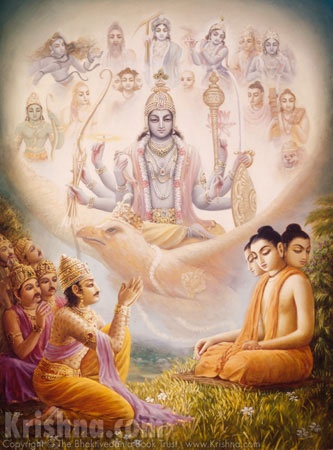
My dear son, since you have inquired from me, I have answered. O sinless one, the descrip tions of Kapiladeva and His mother and their activities are the purest of all pure discourses (36).The description of the dealings of Ka piladeva and His mother is very confidential, and anyone who hears or reads this narration becomes a devotee of the Supreme Personality of Godhead, who is carried by Garuḍa, and he thereafter enters into the abode of the Supreme Lord to engage in the transcendental loving ser vice of the Lord (37).  

Srimad Bhagavatam | Canto 3 Chapter 32 | Entanglement in Fruitive Work

The Personality of Godhead said: The per son who lives in the center of household life de rives material benefits by performing religious rituals, and thereby he fulfills his desire for eco nomic development and sense gratification. Again and again he acts the same way (1).Such persons are ever bereft of devotional service due to being too attached to sense gratification, and therefore, although they perform various kinds of sacrifices and take great vows to sat isfy the demigods and forefathers, they are not interested in Kṛṣṇa consciousness, devotional service (2).

Such materialistic persons, attracted by sense gratification and devoted to the fore fathers and demigods, can be elevated to the moon, where they drink an extract of the soma plant. They again return to this planet (3).All the planets of the materialistic persons, includ ing all the heavenly planets, such as the moon, are vanquished when the Supreme Personality of Godhead, Hari, goes to His bed of serpents, which is known as Ananta Śeṣa (4). Those who are intelligent and are of purified consciousness are completely satisfied in Kṛṣṇa consciousness. Freed from the modes of mate rial nature, they do not act for sense gratifica tion; rather, since they are situated in their own occupational duties, they act as one is expected to act.By executing one’s occupational duties, acting with detachment and without a sense of proprietorship or false egoism, one is posted in one’s constitutional position by dint of com plete purification of consciousness, and by thus executing so-called material duties he can eas ily enter into the kingdom of God (5-6).

 Through the path of illumination, such liber ated persons approach the complete Personality of Godhead, who is the proprietor of the mate rial and spiritual worlds and is the supreme cause of their manifestation and dissolution (7). Worshipers of the Hiraṇyagarbha expansion of the Personality of Godhead remain within this material world until the end of two parārdhas, when Lord Brahmā also dies (8).After experi encing the inhabitable time of the three modes of material nature, known as two parārdhas, Lord Brahmā closes the material universe, which is covered by layers of earth, water, air, fire, ether, mind, ego, etc., and goes back to Godhead (9-10).

The yogīs who become de tached from the material world by practice of breathing exercises and control of the mind reach the planet of Brahmā, which is far, far away. After giving up their bodies, they enter into the body of Lord Brahmā, and therefore when Brahmā is liberated and goes to the Su preme Personality of Godhead, who is the Su preme Brahman, such yogīs can also enter into the kingdom of God (11).

Therefore, My dear mother, by devotional service take direct shel ter of the Supreme Personality of Godhead, who is seated in everyone’s heart. My dear mother, someone may worship the Supreme Personality of Godhead with a special self-in terest, but even demigods such as Lord Brahmā, great sages such as Sanat-kumāra and great munis such as Marīci have to come back to the material world again at the time of crea tion. When the interaction of the three modes of material nature begins, Brahmā, who is the creator of this cosmic manifestation and who is full of Vedic knowledge, and the great sages, who are the authors of the spiritual path and the yoga system, come back under the influence of the time factor. They are liberated by their non fruitive activities and attain the first incarnation of the puruṣa, but at the time of creation they come back in exactly the same forms and posi tions they previously had (12-15).

Persons who are too addicted to this material world execute their prescribed duties very nicely and with great faith. They daily perform all such prescribed duties with attachment to the fruitive result (16).Such persons, impelled by the mode of passion, are full of anxieties and always aspire for sense gratification due to un controlled senses. They worship the forefathers and are busy day and night improving the eco nomic condition of their family, social or na tional life (17).Such persons are called trai vargika because they are interested in the three elevating processes. They are averse to the Su preme Personality of Godhead, who can give relief to the conditioned soul. They are not in terested in the Supreme Personality’s pastimes, which are worth hearing because of His tran scendental prowess (18).

Such persons are con demned by the supreme order of the Lord. Be cause they are averse to the nectar of the activ ities of the Supreme Personality of Godhead, they are compared to stool-eating hogs. They give up hearing the transcendental activities of the Lord and indulge in hearing of the abomi nable activities of materialistic persons (19).Such materialistic persons are allowed to go to the planet called Pitṛloka by the southern course of the sun, but they again come back to this planet and take birth in their own families, beginning again the same fruitive activities from birth to the end of life (20).

 When the re sults of their pious activities are exhausted, they fall down by higher arrangement and again come back to this planet, just as any person raised to a high position sometimes all of a sud den falls (21).My dear mother, I therefore ad vise that you take shelter of the Supreme Per sonality of Godhead, for His lotus feet are worth worshiping. Accept this with all devotion and love, for thus you can be situated in tran scendental devotional service (22). Engage ment in Kṛṣṇa consciousness and application of devotional service unto Kṛṣṇa make it possible to advance in knowledge and detachment, as well as in self-realization (23).

The exalted dev otee’s mind becomes equipoised in sensory ac tivities, and he is transcendental to that which is agreeable and not agreeable.Because of his transcendental intelligence, the pure devotee is equipoised in his vision and sees himself to be uncontaminated by matter. He does not see an ything as superior or inferior, and he feels him self elevated to the transcendental platform of being equal in qualities with the Supreme Per son (24-25).The Supreme Personality of God head alone is complete transcendental knowledge, but according to the different pro cesses of understanding He appears differently, either as impersonal Brahman, as Paramātmā, as the Supreme Personality of Godhead or as the puruṣa-avatāra (26).

The greatest common understanding for all yogīs is complete detach ment from matter, which can be achieved by different kinds of yoga (27).Those who are averse to the Transcendence realize the Su preme Absolute Truth differently through spec ulative sense perception, and therefore, because of mistaken speculation, everything appears to them to be relative (28).From the total energy, the mahat-tattva, I have manifested the false ego, the three modes of material nature, the five material elements, the individual conscious ness, the eleven senses and the material body. Similarly, the entire universe has come from the Supreme Personality of Godhead (29).

This perfect knowledge can be achieved by a person who is already engaged in devotional service with faith, steadiness and full detachment, and who is always absorbed in thought of the Su preme. He is aloof from material association (30). My dear respectful mother, I have already described the path of understanding the Abso lute Truth, by which one can come to under stand the real truth of matter and spirit and their relationship (31).Philosophical research culmi nates in understanding the Supreme Personality of Godhead. After achieving this understand ing, when one becomes free from the material modes of nature, he attains the stage of devo tional service. Either by devotional service di rectly or by philosophical research, one has to find the same destination, which is the Supreme Personality of Godhead (32).

A single object is appreciated differently by different senses due to its having different qualities. Similarly, the Supreme Personality of Godhead is one, but ac cording to different scriptural injunctions He appears to be different (33).By performing fru itive activities and sacrifices, by distributing charity, by performing austerities, by studying various literatures, by conducting philosophical research, by controlling the mind, by subduing the senses, by accepting the renounced order of life, by performing the prescribed duties of one’s social order, by performing the different divisions of yoga practice, by performing devo tional service, by exhibiting the process of de votional service containing the symptoms of both attachment and detachment, by under standing the science of self-realization, and by developing a strong sense of detachment, one who is expert in understanding the different processes of self-realization realizes the Su preme Personality of Godhead as He is repre sented in the material world as well as in tran scendence (34-36).

My dear mother, I have explained to you the process of devotional service and its identity in four different social divisions. I have explained to you as well how eternal time is chasing the living entities, although it is imperceptible to them (37).There are varieties of material exist ence for the living entity according to the work he performs in ignorance or forgetfulness of his real identity. My dear mother, if anyone enters into that forgetfulness, he is unable to under stand where his movements will end (38).Lord Kapila continued: This instruction is not meant for the envious, for the agnostics or for persons who are unclean in their behavior. Nor is it for hypocrites or for persons who are proud of ma terial possessions (39).

It is not to be instructed to persons who are too greedy and too attached to family life, nor to persons who are nondevo tees and who are envious of the devotees and of the Personality of Godhead (40).Instruction should be given to the faithful devotee who is respectful to the spiritual master, nonenvious, friendly to all kinds of living entities and eager to render service with faith and sincerity (41).This instruction should be imparted by the spiritual master to persons who have taken the Supreme Personality of Godhead to be more dear than anything, who are not envious of an yone, who are perfectly cleansed and who have developed detachment for that which is outside the purview of Kṛṣṇa consciousness (42). Any one who once meditates upon Me with faith and affection, who hears and chants about Me, surely goes back home, back to Godhead (43).

Srimad Bhagavatam | Canto 3 Chapter 31 | The Journey of the Living Entities

The Personality of Godhead said: Under the supervision of the Supreme Lord and ac cording to the result of his work, the living en tity, the soul, is made to enter into the womb of a woman through the particle of male semen to assume a particular type of body (1).On the first night, the sperm and ovum mix, and on the fifth night the mixture ferments into a bubble. On the tenth night it develops into a form like a plum, and after that, it gradually turns into a lump of flesh or an egg, as the case may be (2).

In the course of a month, a head is formed, and at the end of two months the hands, feet and other limbs take shape. By the end of three months, the nails, fingers, toes, body hair, bones and skin appear, as do the organ of gen eration and the other apertures in the body, namely the eyes, nostrils, ears, mouth and anus (3).Within four months from the date of con ception, the seven essential ingredients of the body, namely chyle, blood, flesh, fat, bone, marrow and semen, come into existence. At the end of five months, hunger and thirst make themselves felt, and at the end of six months, the fetus, enclosed by the amnion, begins to move on the right side of the abdomen (4).

De riving its nutrition from the food and drink taken by the mother, the fetus grows and re mains in that abominable residence of stools and urine, which is the breeding place of all kinds of worms (5). Bitten again and again all over the body by the hungry worms in the ab domen itself, the child suffers terrible agony because of his tenderness. He thus becomes un conscious moment after moment because of the terrible condition (6).Owing to the mother’s eating bitter, pungent foodstuffs, or food which is too salty or too sour, the body of the child incessantly suffers pains which are almost in tolerable (7).Placed within the amnion and cov ered outside by the intestines, the child remains lying on one side of the abdomen, his head turned towards his belly and his back and neck arched like a bow(8).

 The child thus remains just like a bird in a cage, without freedom of movement. At that time, if the child is fortunate, he can remember all the troubles of his past one hundred births, and he grieves wretchedly. What is the possi bility of peace of mind in that condition? (9) Thus endowed with the development of con sciousness from the seventh month after his conception, the child is tossed downward by the airs that press the embryo during the weeks pre ceding delivery. Like the worms born of the same filthy abdominal cavity, he cannot remain in one place (10). The living entity in this frightful condition of life, bound by seven lay ers of material ingredients, prays with folded hands, appealing to the Lord, who has put him in that condition (11).

 The human soul says: I take shelter of the lotus feet of the Supreme Personality of God head, who appears in His various eternal forms and walks on the surface of the world. I take shelter of Him only, because He can give me relief from all fear and from Him I have re ceived this condition of life, which is just befit ting my impious activities (12).I, the pure soul, appearing now bound by my activities, am ly ing in the womb of my mother by the arrange ment of māyā. I offer my respectful obeisances  unto Him who is also here with me but who is unaffected and changeless. He is unlimited, but He is perceived in the repentant heart. To Him I offer my respectful obeisances (13).

I am sep arated from the Supreme Lord because of my being in this material body, which is made of five elements, and therefore my qualities and senses are being misused, although I am essen tially spiritual. Because the Supreme Personal ity of Godhead is transcendental to material na ture and the living entities, because He is de void of such a material body, and because He is always glorious in His spiritual qualities, I offer my obeisances unto Him (14).The human soul further prays: The living entity is put under the influence of material nature and continues a hard struggle for existence on the path of re peated birth and death. This conditional life is due to his forgetfulness of his relationship with the Supreme Personality of Godhead. There fore, without the Lord’s mercy, how can he again engage in the transcendental loving ser vice of the Lord? (15)

 No one other than the Supreme Personality of Godhead, as the local ized Paramātmā, the partial representation of the Lord, is directing all inanimate and animate objects. He is present in the three phases of time past, present and future. Therefore, the condi tioned soul is engaged in different activities by His direction, and in order to get free from the threefold miseries of this conditional life, we have to surrender unto Him only (16). Fallen into a pool of blood, stool and urine within the abdomen of his mother, his own body scorched by the mother’s gastric fire, the embodied soul, anxious to get out, counts his months and prays, “O my Lord, when shall I, a wretched soul, be released from this confine ment?” (17)

 My dear Lord, by Your causeless mercy I am awakened to consciousness, alt hough I am only ten months old. For this cause less mercy of the Supreme Personality of God head, the friend of all fallen souls, there is no way to express my gratitude but to pray with folded hands (18). The living entity in another type of body sees only by instinct; he knows only the agree able and disagreeable sense perceptions of that particular body. But I have a body in which I can control my senses and can understand my destination; therefore, I offer my respectful obeisances to the Supreme Personality of God head, by whom I have been blessed with this body and by whose grace I can see Him within and without (19).

Therefore, my Lord, although I am living in a terrible condition, I do not wish to depart from my mother’s abdomen to fall again into the blind well of materialistic life. Your external energy, called deva-māyā, at once captures the newly born child, and imme diately false identification, which is the begin ning of the cycle of continual birth and death, begins (20).Therefore, without being agitated any more, I shall deliver myself from the dark ness of nescience with the help of my friend, clear consciousness. Simply by keeping the lo tus feet of Lord Viṣṇu in my mind, I shall be saved from entering into the wombs of many mothers for repeated birth and death (21).

 Lord Kapila continued: The ten-month old living entity has these desires even while in the womb. But while he thus extols the Lord, the wind that helps parturition propels him forth with his face turned downward so that he may be born (22).Pushed downward all of a sudden by the wind, the child comes out with great trouble, head downward, breathless and deprived of memory due to severe agony (23).The child thus falls on the ground, smeared with stool and blood, and plays just like a worm germinated from the stool. He loses his superior knowledge and cries under the spell of māyā (24). After coming out of the abdomen, the child is given to the care of persons who are unable to understand what he wants, and thus he is nursed by such persons. Unable to refuse what ever is given to him, he falls into undesirable circumstances (25).

Laid down on a foul bed in fested with sweat and germs, the poor child is incapable of scratching his body to get relief from his itching sensation, to say nothing of sit ting up, standing or even moving (26). In his helpless condition, gnats, mosquitoes, bugs and other germs bite the baby, whose skin is tender, just as smaller worms bite a big worm. The child, deprived of his wisdom, cries bitterly (27). In this way, the child passes through his childhood, suffering different kinds of distress, and attains boyhood. In boyhood also he suffers pain over desires to get things he can never achieve. And thus, due to ignorance, he be comes angry and sorry (28).

With the growth of the body, the living entity, in order to vanquish his soul, increases his false prestige and anger and thereby creates enmity towards similarly lusty people (29).By such ignorance the living entity accepts the material body, which is made of five elements, as himself. With this misun derstanding, he accepts nonpermanent things as his own and increases his ignorance in the dark est region (30).For the sake of the body, which is a source of constant trouble to him and which follows him because he is bound by ties of ig norance and fruitive activities, he performs var ious actions which cause him to be subjected to repeated birth and death (31).

If, therefore, the living entity again associates with the path of unrighteousness, influenced by sensually minded people engaged in the pursuit of sexual enjoyment and the gratification of the palate, he again goes to hell as before (32).He becomes devoid of truthfulness, cleanliness, mercy, gravity, spiritual intelligence, shyness, auster ity, fame, forgiveness, control of the mind, con trol of the senses, fortune and all such opportu nities (33).One should not associate with a coarse fool who is bereft of the knowledge of self-realization and who is no more than a danc ing dog in the hands of a woman (34).The in fatuation and bondage which accrue to a man from attachment to any other object is not as complete as that resulting from attachment to a woman or to the fellowship of men who are fond of women (35).At the sight of his own daughter, Brahmā was bewildered by her charms and shamelessly ran up to her in the form of a stag when she took the form of a hind (36).

 Amongst all kinds of living entities be gotten by Brahmā, namely men, demigods and animals, none but the sage Nārāyaṇa is immune to the attraction of māyā in the form of woman (37).Just try to understand the mighty strength of My māyā in the shape of woman, who by the mere movement of her eyebrows can keep even the greatest conquerors of the world under her grip (38). One who aspires to reach the culmination of yoga and has realized his self by rendering ser vice unto Me should never associate with an at tractive woman, for such a woman is declared in the scripture to be the gateway to hell for the advancing devotee(39).The woman, created by the Lord, is the representation of māyā, and one who associates with such māyā by accepting services must certainly know that this is the way of death, just like a blind well covered with grass (40).

 A living entity who, as a result of attachment to a woman in his previous life, has been en dowed with the form of a woman, foolishly looks upon māyā in the form of a man, herhus band, as the bestower of wealth, progeny, house and other material assets.A woman, therefore, should consider her husband, her house and her children to be the arrangement of the external energy of the Lord for her death, just as the sweet singing of the hunter is death for the deer (41-42).

Due to his particular type of body, the materialistic living entity wanders from one planet to another, following fruitive activities. In this way, he involves himself in fruitive ac tivities and enjoys the result incessantly (43).In this way the living entity gets a suitable body with a material mind and senses, according to his fruitive activities. When the reaction of his particular activity comes to an end, that end is called death, and when a particular type of re action begins, that beginning is called birth (44).

 When the eyes lose their power to see color or form due to morbid affliction of the op tic nerve, the sense of sight becomes deadened. The living entity, who is the seer of both the eyes and the sight, loses his power of vision. In the same way, when the physical body, the place where perception of objects occurs, is rendered incapable of perceiving, that is known as death. When one begins to view the physical body as one’s very self, that is called birth (45 46).

Therefore, one should not view death with horror, nor have recourse to defining the body  as soul, nor give way to exaggeration in enjoy ing the bodily necessities of life. Realizing the true nature of the living entity, one should move about in the world free from attachment and steadfast in purpose. Endowed with right vision and strengthened by devotional service and a pessimistic attitude towards material identity, one should relegate his body to this il lusory world through his reason. Thus one can be unconcerned with this material world (47 48).  

Srimad Bhagavatam | Canto 3 Chapter 30 | Lord Kapila Describes Adverse Fruitive Actions

The Personality of Godhead said: As a mass of clouds does not know the powerful in fluence of the wind, a person engaged in mate rial consciousness does not know the powerful strength of the time factor, by which he is being carried (1).Whatever is produced by the mate rialist with great pain and labor for so-called happiness, the Supreme Personality, as the time factor, destroys, and for this reason the condi tioned soul laments (2). The misguided materi alist does not know that his very body is imper manent and that the attractions of home, land and wealth, which are in relationship to that body, are also temporary. Out of ignorance only, he thinks that everything is permanent (3).

 The living entity, in whatever species of life he appears, finds a particular type of satis faction in that species, and he is never averse to being situated in such a condition (4). The con ditioned living entity is satisfied in his own par ticular species of life; while deluded by the cov ering influence of the illusory energy, he feels little inclined to cast off his body, even when in hell, for he takes delight in hellish enjoyment (5).Such satisfaction with one’s standard of liv ing is due to deep-rooted attraction for body, wife, home, children, animals, wealth and friends. In such association, the conditioned soul thinks himself quite perfect (6). Although he is always burning with anxiety, such a fool always performs all kinds of mischievous ac tivities, with a hope which is never to be ful filled, in order to maintain his so-called family and society (7).

He gives heart and senses to a woman, who falsely charms him with māyā. He enjoys solitary embraces and talking with her, and he is enchanted by the sweet words of the small children (8).The attached householder re mains in his family life, which is full of diplo macy and politics. Always spreading miseries and controlled by acts of sense gratification, he  acts just to counteract the reactions of all his miseries, and if he can successfully counteract such miseries, he thinks that he is happy (9).He secures money by committing violence here and there, and although he employs it in the ser vice of his family, he himself eats only a little portion of the food thus purchased, and he goes to hell for those for whom he earned the money in such an irregular way (10).

When he suffers reverses in his occupation, he tries again and again to improve himself, but when he is baf fled in all attempts and is ruined, he accepts money from others because of excessive greed (11).Thus the unfortunate man, unsuccessful in maintaining his family members, is bereft of all beauty. He always thinks of his failure, griev ing very deeply (12). Seeing him unable to support them, his wife and others do not treat him with the same re spect as before, even as miserly farmers do not accord the same treatment to their old and worn-out oxen (13).The foolish family man does not become averse to family life although he is maintained by those whom he once main tained. Deformed by the influence of old age, he prepares himself to meet ultimate death (14).

Thus he remains at home just like a pet dog and eats whatever is so negligently given to him. Afflicted with many illnesses, such as dys pepsia and loss of appetite, he eats only very small morsels of food, and he becomes an inva lid who cannot work any more (15).In that dis eased condition, one’s eyes bulge due to the pressure of air from within, and his glands be come congested with mucus. He has difficulty breathing, and upon exhaling and inhaling he produces a sound like ghura-ghura, a rattling within the throat (16).

In this way he comes un der the clutches of death and lies down, sur rounded by lamenting friends and relatives, and although he wants to speak with them, he no longer can because he is under the control of time (17). Thus the man, who engaged with uncon trolled senses in maintaining a family, dies in great grief, seeing his relatives crying. He dies most pathetically, in great pain and without consciousness (18).At death, he sees the mes sengers of the lord of death come before him, their eyes full of wrath, and in great fear he passes stool and urine (19).

As a criminal is ar rested for punishment by the constables of the state, a person engaged in criminal sense grati fication is similarly arrested by the Yamadūtas, who bind him by the neck with strong rope and cover his subtle body so that he may undergo severe punishment (20).While carried by the constables of Yamarāja, he is overwhelmed and trembles in their hands. While passing on the road he is bitten by dogs, and he can remember the sinful activities of his life. He is thus terri bly distressed (21).

Under the scorching sun, the criminal has to pass through roads of hot sand with forest fires on both sides. He is whipped on the back by the constables because of his in ability to walk, and he is afflicted by hunger and thirst, but unfortunately there is no drink ing water, no shelter and no place for rest on the road (22).While passing on that road to the abode of Yamarāja, he falls down in fatigue, and sometimes he becomes unconscious, but he is forced to rise again. In this way he is very quickly brought to the presence of Yamarāja (23).Thus he has to pass ninety-nine thousand yojanas within two or three moments, and then he is at once engaged in the torturous punish ment which he is destined to suffer (24)

He is placed in the midst of burning pieces of wood, and his limbs are set on fire. In some cases he is made to eat his own flesh or have it eaten by others (25). His entrails are pulled out by the hounds and vultures of hell, even though he is still alive to see it, and he is subjected to tor ment by serpents, scorpions, gnats and other creatures that bite him (26).Next his limbs are lopped off and torn asunder by elephants. He is hurled down from hilltops, and he is also held captive either in water or in a cave (27). Men and women whose lives were built upon indul gence in illicit sex life are put into many kinds of miserable conditions in the hells known as Tāmisra, Andha-tāmisra and Raurava (28).Lord Kapila continued: My dear mother, it is sometimes said that we experience hell or heaven on this planet, for hellish punishments are sometimes visible on this planet also (29).

  After leaving this body, the man who main tained himself and his family members by sin ful activities suffers a hellish life, and his rela tives suffer also (30).He goes alone to the dark est regions of hell after quitting the present body, and the money he acquired by envying other living entities is the passage money with which he leaves this world (31). Thus, by the arrangement of the Supreme Personality of Godhead, the maintainer of kinsmen is put into a hellish condition to suffer for his sinful activ ities, like a man who has lost his wealth (32).

Therefore a person who is very eager to maintain his family and kinsmen simply by black methods certainly goes to the darkest re gion of hell, which is known as Andha-tāmisra (33).Having gone through all the miserable, hellish conditions and having passed in a regu lar order through the lowest forms of animal life prior to human birth, and having thus been purged of his sins, one is reborn again as a hu man being on this earth (34).  

Srimad Bhagavatam | Canto 3 Chapter 29 | Lord Kapila Explains Devotional Service

Devahūti inquired: My dear Lord, You have already very scientifically described the symptoms of the total material nature and the characteristics of the spirit according to the Sāṅkhya system of philosophy. Now I shall re quest You to explain the path of devotional ser vice, which is the ultimate end of all philosoph ical systems (1-2).Devahūti continued: My dear Lord, please also describe in detail, both for me and for people in general, the continual process of birth and death, for by hearing of such calamities we may become detached from the activities of this material world (3).

Please also describe eternal time, which is a represen tation of Your form and by whose influence people in general engage in the performance of pious activities (4). My dear Lord, You are just like the sun, for You illuminate the darkness of the conditional life of the living entities. Be cause their eyes of knowledge are not open, they are sleeping eternally in that darkness without Your shelter, and therefore they are falsely engaged by the actions and reactions of their material activities, and they appear to be very fatigued (5). Śrī Maitreya said: O best amongst the Ku rus, the great sage Kapila, moved by great com passion and pleased by the words of His glori ous mother, spoke as follows (6). Lord Kapila, the Personality of Godhead, replied: O noble lady, there are multifarious paths of devotional service in terms of the dif ferent qualities of the executor (7).

 Devotional service executed by a person who is envious, proud, violent and angry, and who is a sepa ratist, is considered to be in the mode of dark ness (8).The worship of Deities in the temple by a separatist, with a motive for material en joyment, fame and opulence, is devotion in the mode of passion (9).When a devotee worships the Supreme Personality of Godhead and offers the results of his activities in order to free him self from the inebrieties of fruitive activities, his devotion is in the mode of goodness (10). The manifestation of unadulterated devotional service is exhibited when one’s mind is at once attracted to hearing the transcendental name and qualities of the Supreme Personality of Godhead, who is residing in everyone’s heart. Just as the water of the Ganges flows naturally down towards the ocean, such devotional ec stasy, uninterrupted by any material condition, flows towards the Supreme Lord (11-12).

A pure devotee does not accept any kind of liber ation sālokya, sārṣṭi, sāmīpya, sārūpya or ekatva even though they are offered by the Su preme Personality of Godhead (13).By attain ing the highest platform of devotional service, as I have explained, one can overcome the in fluence of the three modes of material nature and be situated in the transcendental stage, as is the Lord (14).

 A devotee must execute his prescribed du ties, which are glorious, without material profit. Without excessive violence, one should regu larly perform one’s devotional activities.The devotee should regularly see My statues in the temple, touch My lotus feet and offer worship able paraphernalia and prayer. He should see in the spirit of renunciation, from the mode of goodness, and see every living entity as spir itual.The pure devotee should execute devo tional service by giving the greatest respect to the spiritual master and the ācāryas. He should be compassionate to the poor and make friend ship with persons who are his equals, but all his activities should be executed under regulation and with control of the senses. A devotee should always try to hear about spiritual mat ters and should always utilize his time in chant ing the holy name of the Lord. His behavior should always be straightforward and simple, and although he is not envious but friendly to everyone, he should avoid the company of per sons who are not spiritually advanced.When one is fully qualified with all these transcen dental attributes and his consciousness is thus completely purified, he is immediately at tracted simply by hearing My name or hearing of My transcendental quality (15-19).

 As the chariot of air carries an aroma from its source and immediately catches the sense of smell, similarly, one who constantly engages in devotional service, in Kṛṣṇa consciousness, can catch the Supreme Soul, who is equally present everywhere (20). I am present in every living entity as the Supersoul. If someone neglects or disregards that Supersoul everywhere and en gages himself in the worship of the Deity in the temple, that is simply imitation (21).One who worships the Deity of Godhead in the temples but does not know that the Supreme Lord, as Paramātmā, is situated in every living entity’s heart, must be in ignorance and is compared to one who offers oblations into ashes (22). One who offers Me respect but is envious of the bodies of others and is therefore a separatist never attains peace of mind, because of his in imical behavior towards other living entities (23).

My dear mother, even if he worships with proper rituals and paraphernalia, a person who is ignorant of My presence in all living entities never pleases Me by the worship of My Deities in the temple (24).Performing his prescribed duties, one should worship the Deity of the Su preme Personality of Godhead until one real izes My presence in his own heart and in the hearts of other living entities as well (25).As the blazing fire of death, I cause great fear to whoever makes the least discrimination be tween himself and other living entities because of a differential outlook (26).Therefore, through charitable gifts and attention, as well as through friendly behavior and by viewing all to be alike, one should propitiate Me, who abide in all creatures as their very Self (27).

Living entities are superior to inanimate ob jects, O blessed mother, and among them, liv ing entities who display life symptoms are bet ter. Animals with developed consciousness are better than them, and better still are those who have developed sense perception (28).Among the living entities who have developed sense perception, those who have developed the sense of taste are better than those who have developed only the sense of touch. Better than them are those who have developed the sense of smell, and better still are those who have de veloped the sense of hearing (29).Better than those living entities who can perceive sound are those who can distinguish between one form and another. Better than them are those who have developed upper and lower sets of teeth, and better still are those who have many legs. Better than them are the quadrupeds, and better still are the human beings (30).

 Among human beings, the society which is divided according to quality and work is best, and in that society, the intelligent men, who are designated as brāhmaṇas, are best. Among the brāhmaṇas, one who has studied the Vedas is the best, and among the brāhmaṇas who have studied the Vedas, one who knows the actual purport of Veda is the best (31).Better than the brāhmaṇa who knows the purpose of the Vedas is he who can dissipate all doubts, and better than him is one who strictly follows the brahminical prin ciples. Better than him is one who is liberated from all material contamination, and better than him is a pure devotee, who executes devotional service without expectation of reward (32).

Therefore I do not find a greater person than he who has no interest outside of Mine and who therefore engages and dedicates all his ac tivities and all his life everything unto Me without cessation (33).Such a perfect devotee offers respects to every living entity because he is under the firm conviction that the Supreme Personality of Godhead has entered the body of every living entity as the Supersoul, or control ler (34). My dear mother, O daughter of Manu, a dev otee who applies the science of devotional ser vice and mystic yoga in this way can achieve the abode of the Supreme Person simply by that devotional service (35).

This puruṣa whom the individual soul must approach is the eternal form of the Supreme Personality of Godhead, who is known as Brahman and Paramātmā. He is the transcendental chief personality, and His activities are all spiritual (36).The time factor, who causes the transformation of the various material manifestations, is another feature of the Supreme Personality of Godhead. Anyone who does not know that time is the same Su preme Personality is afraid of the time factor (37).Lord Viṣṇu, the Supreme Personality of Godhead, who is the enjoyer of all sacrifices, is the time factor and the master of all masters. He enters everyone’s heart, He is the support of everyone, and He causes every being to be an nihilated by another (38).

No one is dear to the Supreme Personality of Godhead, nor is anyone His enemy or friend. But He gives inspiration to those who have not forgotten Him and de stroys those who have (39).Out of fear of the Supreme Personality of Godhead the wind blows, out of fear of Him the sun shines, out of fear of Him the rain pours forth showers, and out of fear of Him the host of heavenly bodies shed their luster (40).Out of fear of the Su preme Personality of Godhead the trees, creepers, herbs and seasonal plants and flowers blossom and fructify, each in its own season (41).Out of fear of the Supreme Personality of Godhead the rivers flow, and the ocean never overflows. Out of fear of Him only does fire burn and does the earth, with its mountains, not sink in the water of the universe (42).

Subject to the control of the Supreme Personality of God head, the sky allows outer space to accommo date all the various planets, which hold innu merable living entities. The total universal body expands with its seven coverings under His supreme control (43). Out of fear of the Su preme Personality of Godhead, the directing demigods in charge of the modes of material nature carry out the functions of creation, maintenance and destruction; everything ani mate and inanimate within this material world is under their control (44).The eternal time fac tor has no beginning and no end. It is the repre sentative of the Supreme Personality of God head, the maker of the criminal world. It brings about the end of the phenomenal world, it car ries on the work of creation by bringing one in dividual into existence from another, and like wise it dissolves the universe by destroying even the lord of death, Yamarāja (45).  

Stay Connected

16,985FansLike
12,500FollowersFollow
61,453SubscribersSubscribe
Have a question?Send us an enquiry. We usually reply within a day.