



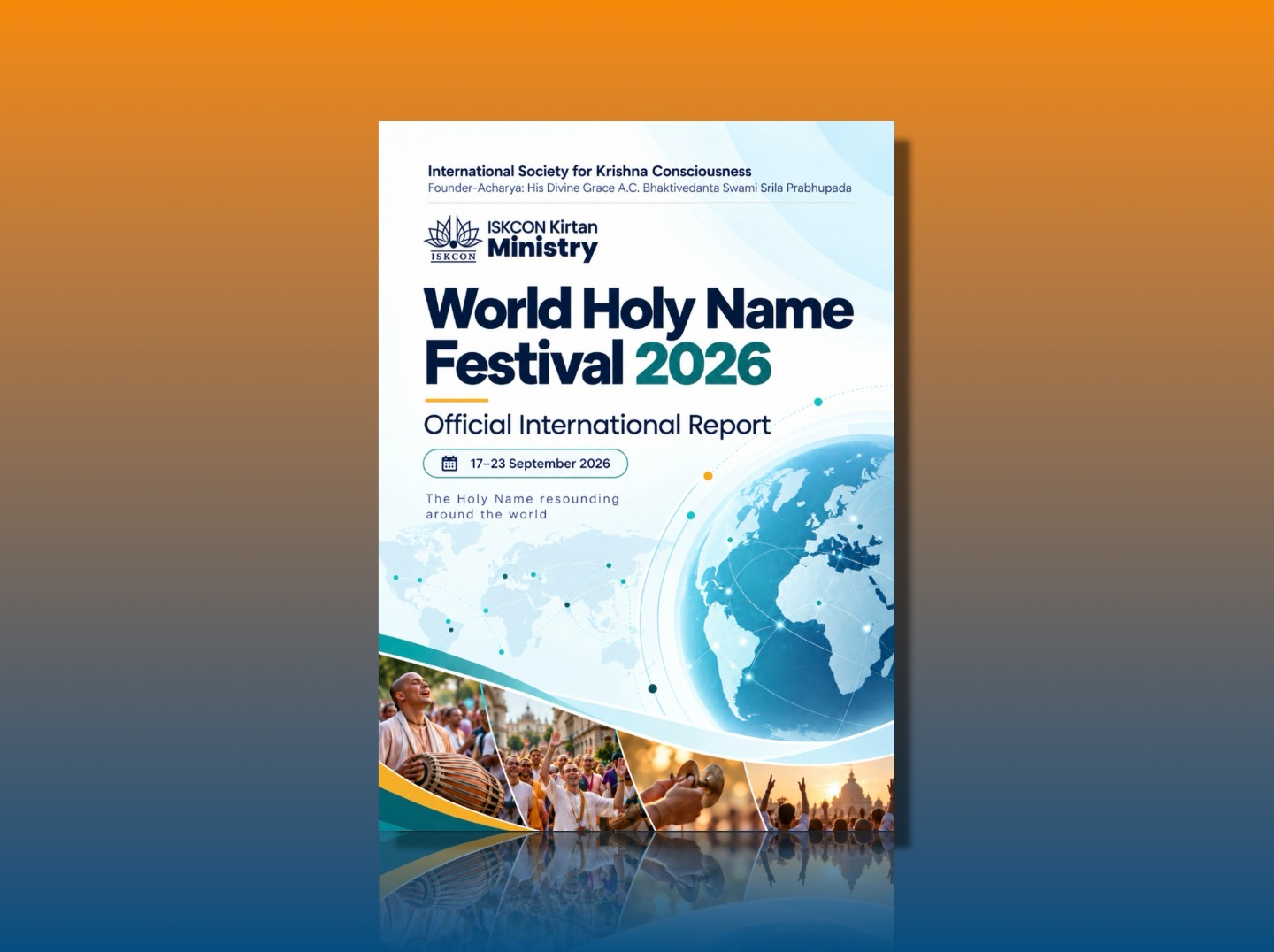
The World Holy Name Festival 2026 brought devotees from different countries and communities together in the shared service of chanting the holy names of the Supreme Lord. Organized from September 17 to 23, 2026, the festival carried the inspiring theme, “One World • One Holy Name • One Family,” during ISKCON’s 60th anniversary year.
According to the global report released by ISKCON’s Kirtan Ministry, 458 submissions documented 629 programs, 25,172 participants, and 986 hours of chanting. These activities reflected the dedication of devotees who gathered to glorify the Lord through Harinama Sankirtana, congregational kirtan, japa, and other devotional programs.
But what makes the chanting of the holy names so meaningful? Why has the practice of chanting Hare Krishna become a central feature of the modern Vaishnava movement? The festival offers an opportunity to reflect on the spiritual significance of the holy name and the importance of spreading Krishna consciousness throughout the world.
What Is the World Holy Name Festival 2026?
The World Holy Name Festival is an international devotional initiative that encourages devotees, temples, and congregations to glorify the Supreme Lord through the chanting of His holy names.
The 2026 celebration took place from September 17 to 23, bringing together devotional communities through public Harinama, temple programs, home gatherings, online chanting, and individual japa.
The festival’s theme, “One World • One Holy Name • One Family,” emphasized the unifying potential of spiritual practice. Although devotees may come from different cultures, speak different languages, and live in different countries, the chanting of Krishna’s holy names provides a shared devotional focus.
For followers of the Vaishnava tradition, this unity is rooted in the understanding that all living beings are eternal spiritual souls and that the Supreme Lord is the ultimate object of love and service.
The Spiritual Significance of the Holy Name
In the Vaishnava tradition, the holy name of Krishna is not considered an ordinary sound. Chanting is understood as a direct devotional connection with the Supreme Personality of Godhead.
Śrīmad-Bhāgavatam 12.3.51 describes the special opportunity available in the age of Kali through the congregational chanting of the holy names of Hari.
The Hare Krishna maha-mantra is:
Hare Krishna Hare Krishna, Krishna Krishna Hare Hare
Hare Rama Hare Rama, Rama Rama Hare Hare
Through attentive chanting, devotees seek to remember Krishna, purify their consciousness, and develop genuine love for the Supreme Lord.
World Holy Name Festival 2026: Key Global Highlights
The report released by ISKCON’s Kirtan Ministry documents the participation recorded by devotees and communities during the festival.
The reported figures are:
- 458 submissions documenting festival activities.
- 629 devotional programs reported worldwide.
- 25,172 participants recorded in the submissions.
- 986 hours of chanting documented.
- 36 temples and centers represented.
- Six countries and four continents represented in the reports.
India accounted for the largest share of the documented participation.
These figures demonstrate the breadth of the reported celebrations. However, the ministry clarified that the statistics represent submitted reports rather than the total number of devotees who participated worldwide.
This distinction is important because many devotional activities may take place without being formally submitted to a centralized reporting system.
Public Harinama as a Central Feature
Public sankirtan was a major component of the festival. According to the report, Nagar Sankirtan and Harinama Sankirtana accounted for 65.3% of the reports and 64.6% of the reported participation.
Harinama Sankirtana refers to the congregational chanting of the holy names of the Lord. Nagar Sankirtana generally describes devotees going through public streets while singing and chanting the Lord’s names.
These activities bring devotional culture into public spaces and provide opportunities for people to hear the holy name.
Devotees may accompany the chanting with traditional instruments such as the mṛdaṅga and karatālas. The resulting atmosphere of collective singing encourages participation and creates opportunities for people to encounter Krishna consciousness.
Why Is Harinama Sankirtana Important in Kali-yuga?
According to Gaudiya Vaishnava teachings, congregational chanting is a particularly important spiritual practice in the present age, known as Kali-yuga.
The Śrīmad-Bhāgavatam and other Vaishnava scriptures emphasize the importance of glorifying the Supreme Lord. In the tradition of Śrī Chaitanya Mahāprabhu, the chanting of the Hare Krishna maha-mantra is presented as a central means of spiritual advancement.
Śrī Chaitanya Mahāprabhu encouraged people to chant the holy names and share this practice with others. His teachings continue to inspire devotees to engage in sankirtan as an expression of devotion and compassion.
Chanting Beyond Social and Cultural Boundaries
The World Holy Name Festival 2026 illustrates how a common devotional practice can connect communities across geographical boundaries.
A person does not need to understand every language spoken by the participants to appreciate the devotional intention behind the chanting. The holy names become a shared focus for people who wish to glorify Krishna.
However, the deeper purpose of sankirtan extends beyond organizing large gatherings. It also encourages individuals to cultivate humility, attentiveness, and a sincere desire to serve the Lord.
The practice invites devotees to transform daily life through remembrance of Krishna, whether they are chanting in a temple, participating in a street procession, or repeating the maha-mantra at home.
Diverse Activities During the Festival
Although public Harinama was prominent, the festival included several other forms of devotional service.
1. Book and Prasadam Distribution
Devotees participated in distributing spiritual literature and prasadam, food offered to the Supreme Lord.
Bhakti literature introduces readers to the philosophy and practices of Krishna consciousness. Prasadam provides an opportunity to receive food sanctified through devotional offering.
Together, these activities help devotees share spiritual knowledge and devotional culture with others.
2. Padayatras and University Outreach
Padayatras, or devotional journeys on foot, formed part of the reported activities. Such programs allow devotees to share the holy name and spiritual messages with communities along their routes.
University outreach also created opportunities to introduce students to devotional philosophy, chanting, and discussions about spiritual life.
3. Family and Home Programs
Home gatherings and family programs extended the festival beyond temples and public streets.
Families and congregations can practice bhakti through kirtan, scriptural reading, and collective remembrance of Krishna. These activities can help establish a regular devotional atmosphere in the home.
4. Online Japa and Lecture Programs
The festival also included World Peace Online Japa and an online lecture series.
Digital platforms enabled participants to connect with devotional programs even when physical attendance was difficult. Such initiatives demonstrate how online communication can support spiritual association and collective chanting.
How ISKCON’s Kirtan Ministry Is Strengthening Global Coordination
One important development highlighted by the World Holy Name Festival 2026 report was the establishment of a centralized reporting system.
The system connects local submissions with ministry review and supports the publication of festival stories, participation certificates, and a global dashboard.
This approach helps participating communities document their activities and share their experiences with a wider audience.
The ministry also identified several areas for future development, including stronger country and zonal coordination, broader international reporting, and encouragement for regular Harinama throughout the year.
Sri Krishna Chaitanya Swami, ISKCON’s Kirtan Minister, expressed the hope that the stories of devotional service would inspire more devotees, temples, and congregations to participate in future festivals and maintain regular Harinama throughout the year.
The ministry has encouraged devotees to share the report through digital copies, printed editions, and temple notice boards.
Read the official report: World Holy Name Festival 2026 Global Report
How Can Devotees Participate Throughout the Year?
The spirit of the festival need not end with its official dates. Devotees can continue cultivating and sharing the holy name through regular devotional activities.
Here are a few practical ways to participate:
- Practice daily japa: Set aside time to chant the Hare Krishna maha-mantra attentively.
- Join temple kirtan: Participate in congregational chanting and devotional association.
- Organize local Harinama: Coordinate public chanting in accordance with local rules and temple guidance.
- Share spiritual literature: Introduce others to authentic Vaishnava teachings through books and educational resources.
- Encourage family participation: Establish regular times for chanting and reading spiritual literature at home.
- Support online programs: Join virtual japa sessions, lectures, and devotional gatherings when available.
- Document devotional activities: Where appropriate, submit reports to the relevant organizers so that local service can contribute to future global initiatives.
These activities allow devotees to contribute according to their circumstances while keeping the central purpose of bhakti in view: loving service to Krishna.
Conclusion: World Holy Name Festival 2026 and the Power of the Holy
Deepen your Bhakti-yoga practice, harmonize relationships, and receive guided coaching — all at Vedavarsity.com