


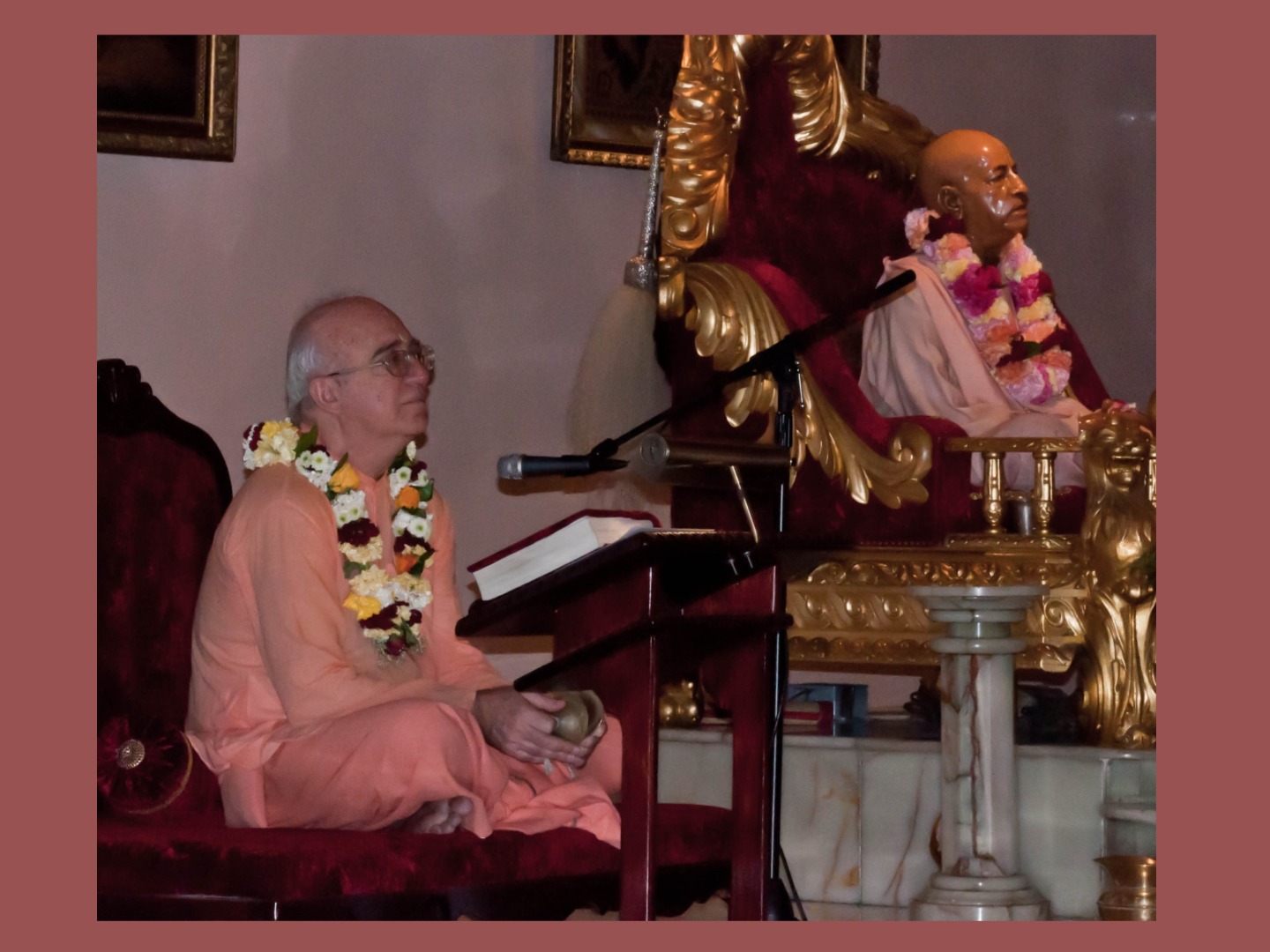
His Grace Drutakarma Dasa, also widely known as Michael A. Cremo, dedicated more than five decades of his life to exploring the relationship between Vedic philosophy, human origins, consciousness, and modern science. As a disciple of His Divine Grace A. C. Bhaktivedanta Swami Prabhupāda, the Founder-Ācārya of the International Society for Krishna Consciousness (ISKCON), he sought to present the Vedic understanding of life before academic audiences around the world.
Drutakarma Dasa departed from this world on October 14, 2026, at the VA Hospital in Los Angeles, California. His life of scholarship, writing, preaching, and devotional service remains an inspiration to devotees interested in the intellectual foundations of Krishna consciousness.
Who Was Drutakarma Dasa?
Born Michael A. Cremo in 1948 in Schenectady, New York, Drutakarma Dasa developed an early interest in spirituality and questions concerning the origin of humanity. His search eventually brought him to Krishna consciousness during the early 1970s.
In 1974, he joined ISKCON in Washington, D.C., and became an initiated disciple of Śrīla Prabhupāda. His subsequent life brought together two areas that are not always considered together in contemporary academic discussions: rigorous intellectual inquiry and dedicated devotional service.
Within ISKCON, he became known for his efforts to examine prevailing scientific interpretations of human origins through the perspective of Vedic literature. Outside the devotee community, he gained international recognition as Michael A. Cremo, an author and researcher whose publications generated discussion about archaeology, evolutionary theory, and the history of humanity.
His work was not merely an academic pursuit. It was closely connected with his desire to serve Śrīla Prabhupāda’s mission by presenting Vedic perspectives to audiences who might otherwise have little exposure to them.
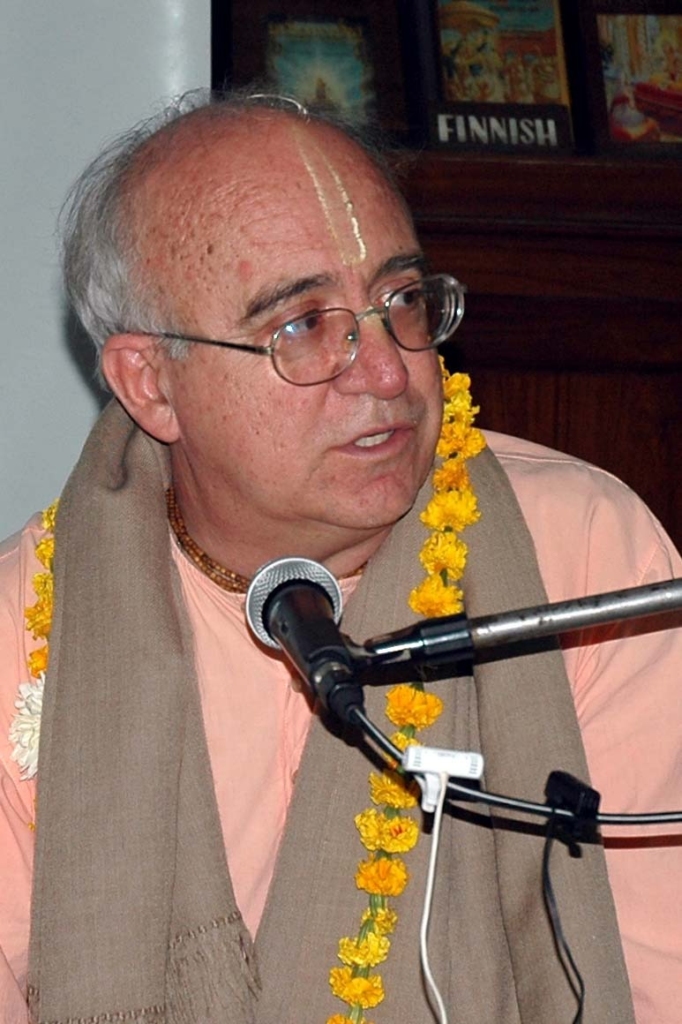
Drutakarma Dasa and the Relationship Between Vedic Knowledge and Science
One of the defining features of Drutakarma Dasa’s service was his willingness to engage with difficult questions about human origins and consciousness.
Modern scientific explanations frequently examine life through material processes and observable evidence. The Vedic tradition, while also discussing the material world, presents a broader understanding of existence that includes the eternal spiritual identity of the living being.
According to the Bhagavad-gītā, the living entity is not simply the temporary physical body. The soul, or ātman, is the conscious spiritual self. The body undergoes transformation, while the soul is described as eternal.
This distinction provides an important foundation for understanding the Vedic perspective on consciousness and human identity.
Drutakarma Dasa sought to bring such philosophical questions into academic conversations. Through his research and publications, he questioned conventional interpretations of archaeological evidence and argued that the history of humanity deserved further examination in light of alternative perspectives.
His conclusions have been subjects of debate. Nevertheless, his work brought attention to questions concerning the assumptions underlying scientific interpretations, the limits of material explanations, and the place of philosophical inquiry in understanding life.
For students of Vedic knowledge, his career illustrates one way in which scriptural perspectives can be introduced into discussions of contemporary intellectual concerns.
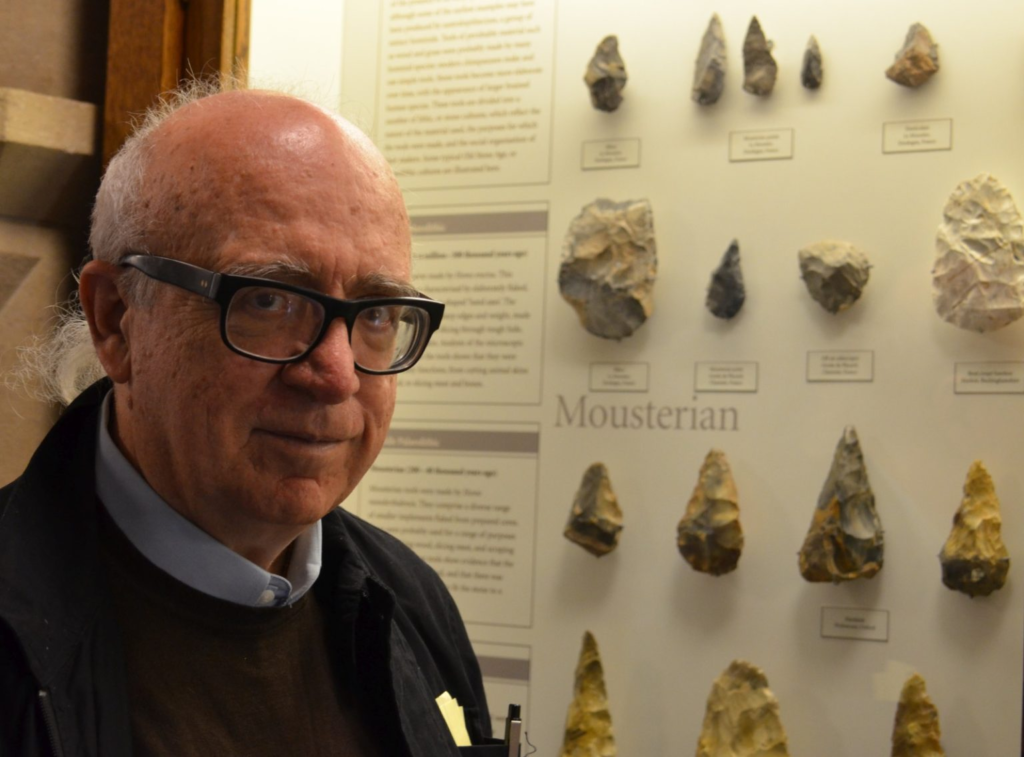
Forbidden Archeology: The Book That Brought International Attention
A major milestone in Drutakarma Dasa’s career was the publication of Forbidden Archeology: The Hidden History of the Human Race in 1993, co-authored with Richard L. Thompson, also known as Sadaputa Dasa.
The extensive volume examined archaeological reports that the authors believed challenged conventional timelines for human origins. They argued that certain findings had received insufficient attention because they did not fit accepted interpretations of human history.
The book attracted international attention and became a central part of Drutakarma Dasa’s public work. Its abridged edition, The Hidden History of the Human Race, introduced the research to a wider readership.
Over the following decades, he presented his ideas at universities, conferences, and scientific institutions in various countries. His appearances included meetings associated with the World Archaeological Congress and the European Association of Archaeologists.
He also contributed research on Puranic concepts of time and the archaeological record to the academic volume Time and Archaeology, published by Routledge.
His work invited readers to examine how evidence is interpreted and how established theories influence the acceptance or rejection of alternative explanations.
Human Devolution: A Vedic Perspective on Consciousness
In 2003, Drutakarma Dasa published Human Devolution: A Vedic Alternative to Darwin’s Theory. This book extended his inquiry beyond archaeological evidence to consider consciousness, human identity, and the spiritual understanding of existence.
The central concern of this work was whether consciousness could be adequately understood as a product of matter alone. Drawing upon Vedic ideas, the book presented an alternative perspective in which spiritual identity occupies a fundamental place in understanding life.
In the Vedic worldview, the living being is a conscious spiritual entity inhabiting a material body. Consequently, understanding the body alone does not necessarily answer every question about the conscious self.
This distinction is particularly relevant to students of the Bhagavad-gītā, which begins by directing attention beyond bodily identification toward the eternal nature of the soul.
Drutakarma Dasa’s writings encouraged readers to consider these philosophical questions in conversation with contemporary scientific theories. His approach sought to establish a place for Vedic perspectives in discussions often dominated by material explanations.
His later publication, Extreme Human Antiquity: Further Investigations into Forbidden Archeology, released in 2025, continued his investigation into questions surrounding the antiquity of humanity.
His Contributions to Śrīla Prabhupāda’s Mission
The scholarly activities of Drutakarma Dasa formed only one part of his devotional service. He also contributed to ISKCON’s publishing, educational, and philosophical initiatives.
Working with the Bhaktivedanta Book Trust (BBT), he contributed to books that introduced Krishna consciousness to a broad readership, including Chant and Be Happy, The Higher Taste, Coming Back, and Divine Nature.
He also served on ISKCON’s Śāstric Advisory Council (SAC), where his contributions involved careful study of scripture, philosophical discussion, and questions concerning the interpretation of śāstra.
His colleagues remembered him for his ability to explain difficult philosophical passages in an accessible manner. They also appreciated his willingness to engage in thoughtful discussion while remaining committed to the teachings of Śrīla Prabhupāda.
Drutakarma Dasa served as an initiating spiritual master from 2002. He also contributed to the development of exhibits for the Temple of the Vedic Planetarium (TOVP), an important project intended to present Vedic cosmology and knowledge.
These activities reflected a consistent theme throughout his life: using scholarship, communication, and personal service to support the mission of Krishna consciousness.
A Devotional Life Marked by Humility and Determination
Appreciations shared by fellow devotees following his departure highlighted not only his intellectual abilities but also his humility and dedication.
Devotees recalled his patience in answering questions, his willingness to help others understand Śrīla Prabhupāda’s books, and his commitment to presenting Vedic ideas before academic audiences.
His association with other scholars and devotees demonstrated that serious philosophical discussion need not be separated from spiritual practice. Learning, when offered in service to Krishna, can become an expression of bhakti, or devotional service.
One appreciation described how he remained humble despite his extensive research and international recognition. Another recalled his concern for presenting his ideas clearly and his openness to thoughtful disagreement.
Such recollections offer a valuable reminder that intellectual accomplishment is not the only measure of a devotee’s contribution. The spirit in which knowledge is acquired, shared, and applied is equally significant.
In the Vaiṣṇa
Deepen your Bhakti-yoga practice, harmonize relationships, and receive guided coaching — all at Vedavarsity.com