


The Tiruchirappalli Rock Fort Temple stands as one of the most remarkable spiritual and architectural landmarks in South India. Located in Tiruchirappalli, this ancient hill complex is not a single shrine but a sacred assembly of three temples—each representing a distinct aspect of divine worship.
At its heart lies the shrine of Lord Shiva as Taayumaanavar (Matrubhuteswarar), complemented by the revered Uchhi Pillayar Temple at the summit and the Manikka Vinayakar Temple at the base. Together, they form a continuous spiritual ascent, guiding the devotee from the material plane toward higher realization.
Tiruchirappalli Rock Fort Temple in the Tevara Tradition
The Tiruchirappalli Rock Fort Temple holds a respected place among the Tevara Stalams, the sacred Shiva temples praised by the Tamil Saivite saints such as Tirugnana Sambandar and Appar.
It is considered the sixth Tevara Stalam in the Chola region south of the river Kaveri. These temples are not merely historical monuments; they are living centers of devotional practice where sacred hymns continue to resonate.
The association with Tevaram literature underscores the temple’s role in preserving dharma—guiding individuals toward righteous living and spiritual awareness.
The Sacred Layout of the Rock Fort Complex
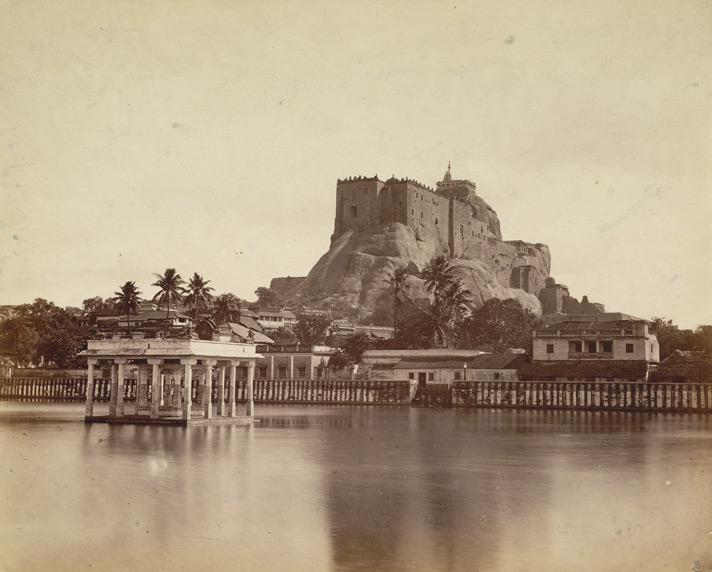
The Tiruchirappalli Rock Fort Temple is uniquely situated atop a massive rock formation that rises prominently above the surrounding plains. The temple complex consists of three main shrines:
1. Manikka Vinayakar Temple (Base)
Located at the foot of the hill, this temple dedicated to Lord Ganesha represents the beginning of spiritual effort. In Vedic culture, all auspicious undertakings begin with the remembrance of Ganesha, remover of obstacles.
2. Taayumaanavar Temple (Mid-Hill)
This rock-cut Shiva temple is the central shrine of the complex. It is here that Lord Shiva is worshipped as Matrubhuteswarar, embodying the compassionate aspect of the Divine.
3. Uchhi Pillayar Temple (Summit)
At the top of the hill lies the shrine of Lord Ganesha, offering a panoramic view of the region and symbolizing the culmination of spiritual ascent.
This vertical arrangement itself serves as a metaphor: from foundation to peak, the journey reflects the gradual elevation of consciousness.
The Legend of Taayumaanavar: The Divine as Mother
One of the most touching legends associated with the Tiruchirappalli Rock Fort Temple explains the name Matrubhuteswarar, meaning “the Lord who became a mother.”
It is said that a devotee, unable to receive assistance during childbirth, prayed sincerely to Lord Shiva. In response, Shiva appeared in the form of her mother and attended to her needs. This act of divine compassion illustrates a central Vedic truth—that the Supreme is not distant but responds to sincere devotion.
Such narratives remind us that beyond ritual, bhakti (devotion) is the true connection between the individual soul (ātma) and the Supreme.
Mythological Origins and Sacred Geography
The name Tiruchirappalli is believed to be derived from the demon king Tirisiran, who worshipped Shiva here. Another interpretation refers to the three peaks of the hill, associated with Shiva, Parvati, and Ganesha—hence the term Tri-Shikharam.
The hill itself is considered sacred, often referred to as Dakshina Kailasam, symbolizing a southern counterpart to the Himalayan abode of Shiva.
According to tradition, this rock is one of three fragments that separated from the Himalayas during a cosmic struggle between Vayu (wind god) and Adi Sesha (divine serpent). The other two locations are Srikalahasti and Trincomalee.
Such narratives convey the Vedic perspective that nature itself is interwoven with divine purpose.
Architectural and Historical Significance
The Tiruchirappalli Rock Fort Temple is a remarkable example of rock-cut architecture, reflecting contributions from multiple dynasties:
- Pallavas: Early rock-cut structures and inscriptions attributed to Mahendravarman I
- Cholas: Expansion and patronage of the temple
- Vijayanagara rulers and Nayaks of Madurai: Structural additions and mandapams
Notable Features:
- Lalitankura Pallaveswaram: A Pallava-era rock-cut shrine within the complex
- Chittira Mandapam: Houses a unique granite chain with nine loops carved from a single stone
- Two-storeyed Taayumaanavar Temple: An architectural achievement built directly into the rock
The temple also houses Kangaala Moorthy, one of the 64 forms of Shiva, emphasizing the theological richness of the site.
Festivals and Ritual Practices
The Tiruchirappalli Rock Fort Temple follows a disciplined schedule of six daily worship services, maintaining continuity with ancient Agamic traditions.
Major Festivals:
- Brahmotsavam (Chittirai): Annual grand celebration
- Aadi Pooram: Dedicated to the Divine Mother
- Float Festival (Panguni): Celebrated with ceremonial processions
These festivals are not merely cultural events; they reinforce the principles of karma and dharma by engaging the community in collective devotion and service.
Spiritual Reflection: The Ascent of Consciousness
Climbing the steps of the Tiruchirappalli Rock Fort Temple is more than a physical act—it is symbolic of the soul’s journey. Each step represents effort, discipline, and gradual purification.
In Vedic thought, human life is meant for self-realization. The body is temporary, but the soul (ātma) is eternal. Temples such as this serve as reminders of that higher purpose.
The presence of Shiva as both protector and nurturer teaches that divine guidance is always available to one who sincerely seeks it.
Conclusion: Tiruchirappalli Rock Fort Temple as a Living Tradition
The Tiruchirappalli Rock Fort Temple stands as a unique confluence of history, architecture, and spiritual insight. Its legends, sacred geography, and continuous worship make it not merely a monument of the past, but a living center of devotion.
For the thoughtful visitor, the temple offers more than visual grandeur—it provides an opportunity to reflect on life’s deeper purpose. In the orderly functioning of the cosmos and the compassionate presence of the Divine, one may perceive a higher intelligence guiding all existence.
Such understanding transforms pilgrimage into realization, and observation into wisdom.
library.vedavarsity.com | www.vedavarsity.com
Deepen your Bhakti-yoga practice, harmonize relationships, and receive guided coaching — all at Vedavarsity.com