



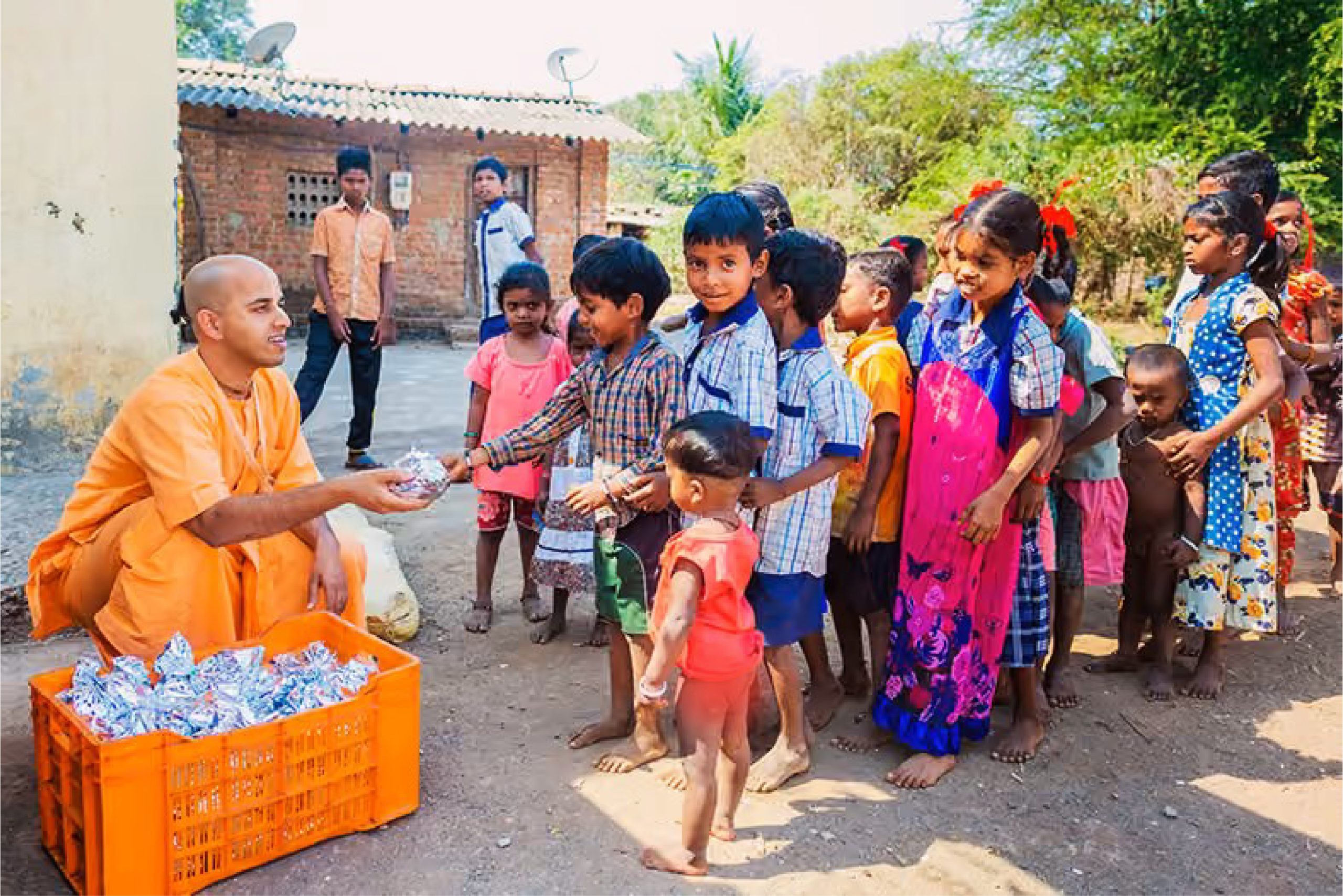
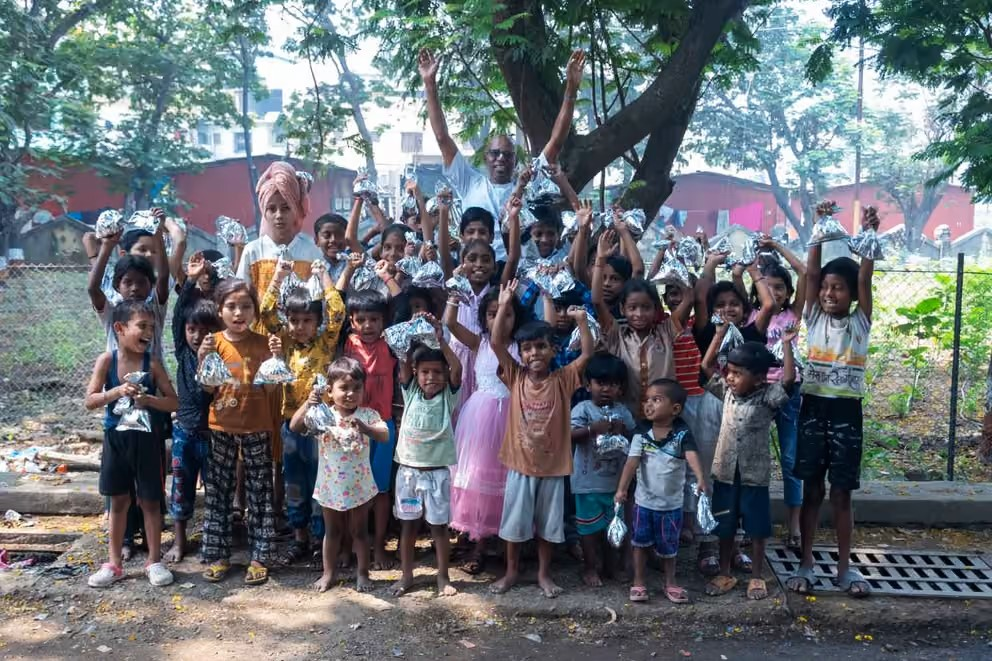
The ISKCON Bhiwandi prasadam distribution initiative offers a meaningful example of how devotional service can address the practical needs of society. In October 2026, ISKCON Bhiwandi continued its Food for Life–Annadaan Seva by distributing freshly prepared Krishna prasadam across Kalyan, Temghar, and Kharbav in Maharashtra.
The initiative received particular attention during the observance of World Food Day on October 16, which highlights the importance of addressing hunger and ensuring access to nutritious food.
Through the dedicated efforts of temple volunteers and community supporters, the programme demonstrates an important principle of Vedic culture: serving humanity is most meaningful when performed in a spirit of devotion to the Supreme Lord.
In the Vaishnava tradition, food offered to Krishna and subsequently distributed to others is known as prasadam, the mercy of the Lord. Thus, food distribution becomes more than a humanitarian activity; it becomes an opportunity to share spiritual blessings.
ISKCON Bhiwandi Prasadam Distribution: Continuing the Mission of Annadaan Seva
The Food for Life–Annadaan initiative at ISKCON Bhiwandi was launched in 2020, during the COVID-19 pandemic, when migrant workers and economically vulnerable families faced considerable hardships.
Recognizing the urgent need for food assistance, the temple established a programme to provide freshly prepared vegetarian meals to people experiencing food insecurity.
Based at Sri Sri Radha Madhava Mandir, the initiative has continued to serve neighboring communities through organized food preparation and distribution.
According to the temple’s official website, its kitchen prepares approximately 1,500 meals every day. This sustained effort reflects the commitment of devotees and volunteers who participate in the service.
The programme is not limited to occasional charitable activities. Rather, it represents an ongoing effort to provide nourishment to those who need it.
October 2026 Food Distribution Activities
During October 2026, volunteers continued the distribution of Krishna prasadam in several communities across Maharashtra.
The documented activities included:
- October 5: Prasadam distribution in Kalyan.
- October 6: Food distribution in Temghar.
- October 7: Annadaan Seva in Kharbav.
Volunteers prepared vegetarian meals at the temple and transported packaged food to designated distribution locations.
These activities brought devotees and local residents together in a common spirit of service.
Although the exact number of meals distributed during these October activities has not been independently confirmed, the programme’s regular kitchen operations demonstrate its continuing commitment to community nourishment.
The Spiritual Significance of Prasadam in Vedic Culture
In Vedic civilization, food is not considered merely a means of satisfying the body’s hunger. It is also understood as a gift of the Supreme Personality of Godhead.
Everything ultimately belongs to Krishna, and human beings are meant to acknowledge this relationship through gratitude, sacrifice, and devotional service.
In Bhagavad-gītā (3.13), Lord Krishna explains:
* yajña-śiṣṭāśinaḥ santo mucyante sarva-kilbiṣaiḥ *
The devotees who accept food offered in sacrifice are released from sinful reactions, whereas those who prepare food for personal enjoyment alone partake of trouble.
This verse establishes the spiritual importance of accepting food that has first been offered to the Supreme Lord.
What Is Krishna Prasadam?
The Sanskrit word prasadam means mercy, favour, or grace.
When devotees prepare vegetarian food with devotion, offer it to Lord Krishna, and subsequently honour it, that food becomes prasadam.
This understanding is central to the practice of Krishna consciousness.
The process involves three important principles:
- Bhoga: Preparing suitable foodstuffs for the pleasure of the Supreme Lord.
- Offering: Presenting the preparations to Krishna with devotion.
- Prasadam distribution: Sharing the sanctified food with others.
The distribution of prasadam provides an opportunity for people to receive not only physical nourishment but also spiritual benefit.
Therefore, ISKCON’s Food for Life programmes place special emphasis on distributing food that has been prepared and offered according to devotional standards.
World Food Day and the Importance of Feeding the Hungry
World Food Day is observed annually on October 16 under the initiative of the Food and Agriculture Organization (FAO) of the United Nations.
The occasion draws attention to hunger, malnutrition, food security, and the need for sustainable food systems.
It also encourages governments, institutions, organizations, and communities to work towards ensuring that everyone has access to adequate nourishment.
The activities of ISKCON Bhiwandi during October reflect the importance of local community participation in addressing these concerns.
In a growing industrial and warehouse region such as Bhiwandi, many individuals depend upon daily wages and irregular employment. For economically vulnerable families and workers, access to regular meals can become a significant challenge.
Community-based food distribution programmes can provide meaningful assistance in such circumstances.
The temple’s Annadaan initiative demonstrates how religious organizations can contribute to social welfare through organized volunteer service and established food preparation facilities.
Compassion Beyond Social and Religious Differences
The Vaishnava understanding of compassion extends to every living entity.
A devotee does not discriminate while offering assistance based on someone’s economic position, social background, or religious identity.
The objective is to serve the living entity with humility, recognizing that every soul is part and parcel of Krishna.
In this way, prasadam distribution becomes an expression of universal goodwill.
Annadaan Seva: A Practical Expression of Selfless Service
The Sanskrit word annadaan refers to the charitable distribution of food.
In Vedic culture, providing food to those in need has traditionally been regarded as an important form of charity.
However, Krishna consciousness gives this activity a deeper spiritual dimension.
Rather than considering oneself the independent provider, a devotee understands that everything comes from the Supreme Lord. The devotee simply becomes an instrument in distributing His mercy.
This attitude transforms ordinary charity into devotional service, or seva.
The Principle of Seva in Bhagavad-gītā
Lord Krishna explains in Bhagavad-gītā (9.27):
* yat karoṣi yad aśnāsi yaj juhoṣi dadāsi yat *
Whatever one does, whatever one eats, whatever one offers or gives away should be offered to Him.
This instruction teaches devotees to connect every aspect of life with the service of Krishna.
Preparing food, organizing its distribution, arranging transportation, and serving recipients can all become devotional activities when performed for the pleasure of the Lord.
The volunteers participating in ISKCON Bhiwandi’s Annadaan programme demonstrate this practical application of devotional service.
Their efforts involve more than distributing meals. They contribute their time, energy, and resources towards a common spiritual purpose.
The Role of Volunteers in ISKCON Bhiwandi’s Food for Life Initiative
A sustained food distribution programme requires careful organization and continuous participation.
The preparation and distribution of approximately 1,500 meals daily require coordinated efforts across several activities.
These include:
- Procuring fresh ingredients and essential supplies.
- Preparing sattvic vegetarian meals.
- Maintaining cleanliness and food preparation standards.
- Organizing packaging and transportation.
- Coordinating volunteers and distribution locations.
- Identifying communities requiring food assistance.
The contribution of volunteers is particularly important because such programmes depend upon consistent service.
Every individual participating in these activities has an opportunity to practise humility, cooperation, and compassion.
In devotional life, even a seemingly small contribution can become significant when offered with sincerity.
A person who helps prepare food, another who arranges supplies, and someone who distributes prasadam are all participating in the same devotional mission.
How Prasadam Distribution Strengthens Community Welfare
The benefits of prasadam distribution extend beyond immediate hunger relief.
When a temple regularly serves neighboring communities, it creates opportunities for cooperation, trust, and meaningful social relationships.
Such initiatives also demonstrate that spiritual institutions can contribute constructively to the welfare of society.
The ISKCON Bhiwandi initiative reflects several important dimensions of community service:
1. Food security: Providing prepared meals to individuals and families experiencing food insecurity.
2. Community participation: Bringing devotees, volunteers, and local residents together through service.
3. Spiritual nourishment: Making Krishna prasadam accessible to people from different backgrounds.
4. Sustainable service: Maintaining established facilities and regular distribution activities rather than limiting assistance to occasional events.
5. Human dignity: Offering food respectfully, without discrimination or expectation of personal benefit.
These principles reflect the broader vision of Krishna consciousness, in which individual spiritual advancement and concern for the welfare of others go together.
Conclusion: ISKCON Bhiwandi Prasadam Distribution Reflects the Spirit of Devotional Service
The ISKCON Bhiwandi prasadam distribution initiative demonstrates how the timeless Vedic principle of serving others can be applied to contemporary social needs.
Through its Food for Life–Annadaan Seva, the temple continues to provide freshly prepared vegetarian meals to communities across Maharashtra, including Kalyan, Temghar, and Kharbav.
The observance of World Food Day offers an appropriate opportunity to recognize these efforts and the dedication of the devotees and volunteers who sustain them.
From the perspective of Krishna consciousness, feeding the hungry becomes especially meaningful when food is first offered to the Supreme Lord and then distributed as His mercy.
As taught in Bhagavad-gītā, all activities can become devotional when performed as an offering to Krishna.
May such initiatives inspire individuals and institutions to cultivate compassion, participate in selfless service, and recognize the spiritual value of sharing the Lord’s mercy with everyone.
Deepen your Bhakti-yoga practice, harmonize relationships, and receive guided coaching — all at Vedavarsity.com