



The month of Kartik holds a special place in the hearts of devotees of Lord Krishna. Known as the month of Damodara, this sacred period offers a wonderful opportunity to cultivate devotion and share the glories of the Supreme Lord with others. Through Damodar Puja outreach, devotees are inviting families, neighbours, friends, and entire communities to participate in the simple yet spiritually powerful practice of offering a lamp to Lord Damodara.
What begins as a small offering of light can become the beginning of a lifelong relationship with Krishna. By bringing devotional activities into homes, schools, workplaces, and community gatherings, devotees are making the timeless science of bhakti accessible to people who may never have visited a temple.
The Spiritual Significance of Kartik and Lord Damodara
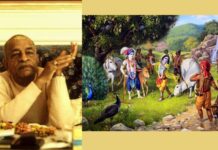
Kartik, traditionally observed during the auspicious month of Damodara, is especially dear to Lord Krishna. Devotees remember His enchanting childhood pastimes in Vrindavana, particularly the pastime in which Mother Yashoda binds Him with ropes.
The name Damodara describes the Lord whose abdomen (udara) was bound by a rope (dama). Although Krishna is the Supreme Personality of Godhead, unlimited and independent, He allows Himself to be controlled by the pure love of His devotee.
This pastime reveals a profound spiritual truth: Krishna is conquered not by material strength, wealth, scholarship, or influence, but by sincere and selfless love.
During Kartik, devotees especially remember this divine pastime by singing the Damodarashtakam, offering lamps, chanting the holy names, and hearing Krishna’s transcendental activities.
The traditional offering of a ghee lamp is therefore not merely a religious ceremony. It is an expression of the soul’s loving relationship with the Supreme Lord.
Damodar Puja Outreach: Bringing Krishna into Every Home
One of the most encouraging developments in contemporary devotional communities is the expansion of Damodar Puja outreach beyond temple premises.
The Congregational Development Ministry (CDM) of ISKCON has been encouraging devotees worldwide to use Kartik as an opportunity to introduce Krishna consciousness to new audiences.
The principle is simple: instead of waiting for people to visit a temple, devotees take devotional activities directly into their homes and communities.
A family that has never participated in a formal temple programme can easily understand the significance of offering a lamp when guided by a devotee. Children can participate, elders can hear the glories of Krishna, and family members can experience the atmosphere of kirtan and prasadam.
Such programmes demonstrate that bhakti is not restricted by age, educational background, social position, or previous religious experience.
The offering itself is simple, but the devotional principle behind it is profound. As taught in the Bhagavad-gita (9.26), Krishna accepts even a leaf, a flower, a fruit, or water when offered with devotion.
Thus, the essence of Damodar Puja outreach is not elaborate arrangements but the awakening of sincere devotional service.

East London Bhakti Vriksha: Inspiring Families Through Home Programmes
A notable example of this outreach spirit can be seen in East London, where East London Bhakti Vriksha (ELBV), a community of ISKCON London, is inviting households across East London and Essex to participate in Damodar Puja programmes during Kartik 2026.
The initiative encourages families to host devotional gatherings in their own homes. Devotees are arranged to visit participating households and guide family members in offering lamps to Sri Damodara.
Households can register their interest online, indicating their preferred times and whether they would like an in-person or online programme.
This approach makes devotional participation convenient and welcoming, particularly for people who may feel unfamiliar with temple customs.
The initiative also provides an opportunity for interested families to learn about future Bhagavad-gita classes and other spiritual gatherings.
The congregation has a history of conducting home-based devotional programmes. According to CDM’s 2018 annual report, East London Bhakti Vriksha recorded approximately 1,000 home programmes and 5,000 lamp offerings.
These efforts demonstrate how consistent personal relationships and household gatherings can help establish a strong devotional community.
Millions of Lamps Offered Across the World
The growing popularity of Damodar Puja outreach reflects the universal appeal of Krishna’s childhood pastimes and the simplicity of devotional service.
According to ISKCON’s Congregational Development Ministry, approximately 8.2 million lamp offerings were recorded worldwide during Kartik 2025.
For its 2026 campaign, the ministry has established an ambitious target of 10 million offerings.
The Damodara Outreach Programme traces its beginnings to Kuala Lumpur, Malaysia, in 2004. Since then, the initiative has inspired devotees in different countries to organize lamp offerings and devotional gatherings in diverse social settings.
The expansion of this programme illustrates an important principle of Krishna consciousness: spiritual knowledge should be shared for the welfare of all living beings.
A single household programme may appear small, but thousands of such gatherings can create a worldwide movement of devotional awareness.
Taking Damodar Puja to Schools and Community Institutions
Damodar Puja outreach is not limited to individual homes. Devotees are also finding meaningful ways to introduce Krishna consciousness in educational institutions and other community settings.
One inspiring example comes from Malaysia. During Kartik 2023, ISKCON Malaysia facilitated 104,747 lamp offerings across 25 primary schools, accompanied by the distribution of prasadam.
This initiative demonstrated how devotional activities could be introduced in an organized and accessible manner within educational environments.
Children were given an opportunity to participate in a simple offering, experience devotional culture, and learn about the significance of kindness, gratitude, and spiritual values.
Similarly, ISKCON Cyberabad in India has invited families, apartment communities, and offices to arrange Damodar programmes during Kartik 2026.
ISKCON Cambridge also encouraged household participation through home visits during its 2025 Kartik initiative, incorporating lamp offerings, bhajan, and kirtan.
These examples reveal that devotional outreach can adapt to different environments while preserving its spiritual essence.
The Deeper Purpose of Sharing the Light of Bhakti
Although millions of lamps may be offered during Kartik, the ultimate purpose of these activities is not simply to achieve numerical targets.
The real objective is to awaken dormant Krishna consciousness within the hearts of living beings.
According to the teachings of Lord Chaitanya Mahaprabhu, the chanting of Krishna’s holy names is the most effective spiritual process for the present age of Kali.
The practice of bhakti begins when a person develops a genuine interest in hearing about Krishna, chanting His names, remembering His activities, and rendering service to Him.
A Damodar Puja programme can provide the first opportunity for such an awakening.
Someone may initially participate out of curiosity or because a friend has extended an invitation. Another person may appreciate the devotional atmosphere, while a child may become attracted to Krishna’s beautiful childhood pastimes.
Through association with devotees (sadhu-sanga), hearing spiritual knowledge (sravana), and participating in devotional practices, this initial interest can gradually develop into sincere faith.
Therefore, devotees conducting Damodar Puja outreach should remember that every participant deserves patience, kindness, and personal attention.
The purpose is not merely to organize an event but to establish a meaningful spiritual connection.
How Devotees Can Organize a Damodar Puja Programme
ISKCON’s Congregational Development Ministry has made resources available to help congregations organize Kartik outreach programmes.
These include prayers, presentations, handouts, and educational materials for children.
A simple household programme may include:
- Introduction to Kartik: Explain the spiritual significance of the month and why it is especially dear to Lord Krishna.
- Kirtan: Encourage participants to chant the Hare Krishna maha-mantra together.
- Hearing the Damodara pastime: Narrate the beautiful account of Mother Yashoda binding Krishna with ropes of love.
- Damodarashtakam: Introduce the prayers glorifying Lord Damodara.
- Lamp offering: Guide participants in offering a lamp to the Lord with devotion.
- Spiritual discussion: Allow participants to ask questions and understand the principles of bhakti.
- Prasadam distribution: Conclude by distributing sanctified food prepared and offered to Krishna.
After the programme, organizers can maintain contact with participants, with their permission, and invite them to future spiritual gatherings, Bhagavad-gita classes, and congregational activities.
In this way, a single Kartik programme can become the beginning of a sustained devotional relationship.
Conclusion: Damodar Puja Outreach and the Universal Message of Bhakti
The month of Kartik reminds everyone that Krishna is easily approached through sincere devotion. The Damodara pastime reveals that the Supreme Lord willingly becomes subordinate to the pure love of His devotees.
Through Damodar Puja outreach, ISKCON communities are making this timeless message accessible to families, children, educational institutions, and people from diverse backgrounds.
Whether a lamp is offered in a grand temple, a small family home, a school, or an apartment community, its spiritual significance rests upon the devotion with which it is presented.
The real success of such initiatives is measured not merely by the number of lamps offered, but by the number of hearts inspired to develop a loving relationship with Krishna.
As devotees continue to share the glories of Lord Damodara, may this sacred month encourage everyone to hear His pastimes, chant His holy names, offer their hearts in devotion, and experience the eternal happiness of Krishna consciousness.
Deepen your Bhakti-yoga practice, harmonize relationships, and receive guided coaching — all at Vedavarsity.com