The Chidambaram Nataraja Temple stands as one of the most significant temples in the southern state of Tamil Nadu. Renowned for its antiquity, richness in worship traditions, architectural brilliance, and deep association with music and dance, it represents the cultural and spiritual heritage of India in a complete form. Located in Chidambaram, this temple has evolved over centuries, as evidenced by ancient literature and inscriptions found throughout its vast परिसर.
More than a historical monument, the Chidambaram Nataraja Temple is a living institution where devotion, discipline, and knowledge continue to guide spiritual life.
Chidambaram Nataraja Temple: Religious and Socio-Cultural Significance
The Chidambaram Nataraja Temple reflects a rare integration of religion and culture. It is not only a center of worship but also a place where artistic traditions such as music and classical dance have flourished.
In Vedic understanding, such integration is natural. Art, when aligned with higher purpose, becomes a medium for spiritual expression rather than mere entertainment. The temple exemplifies this principle through its long-standing association with sacred performance traditions.
Ancient Tamil texts and temple inscriptions confirm that this site has been continuously revered, showing how dharma is preserved through both practice and collective memory.
Nataraja: The Cosmic Dancer and His Symbolism
At the heart of the Chidambaram Nataraja Temple is Lord Nataraja, a unique form of Lord Shiva depicted as the Cosmic Dancer. This form represents one of the most refined philosophical ideas in Vedic thought.
The Meaning of Ananda Tandava
The dance of Nataraja, known as Ananda Tandava (the dance of bliss), symbolizes the cycles of creation, preservation, and dissolution. It conveys that all existence is governed by a higher order, even when it appears dynamic or uncertain.
The raised foot signifies liberation, while the rhythmic movement represents the continuous flow of time and energy. From a deeper perspective, this dance reminds the observer that while the body and material conditions change, the self (ātma) remains constant.
Thus, the Chidambaram Nataraja Temple presents philosophy not through abstract theory, but through visual and experiential symbolism.
Temple Architecture and Layout
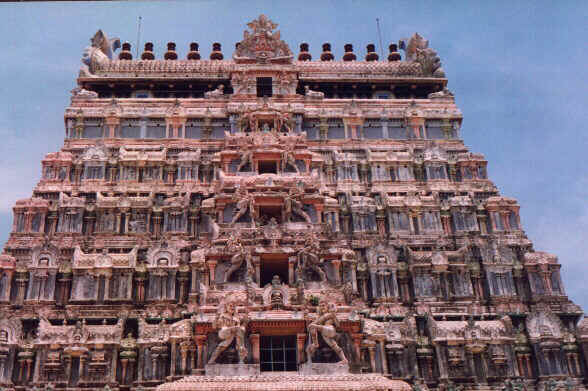
The Chidambaram Nataraja Temple is a vast and well-organized complex consisting of shrines, halls, towers, and courtyards.
Structural Features
The temple includes:
- Multiple gopurams (towering gateways) adorned with detailed sculptures
- Spacious mandapams used for rituals and gatherings
- Sacred courtyards designed for processions and festivals
Each architectural element is purposeful, guiding the devotee from the external world toward the inner sanctum.
Symbolism in Design
Temple architecture in the Vedic tradition is not merely functional. It reflects cosmic principles and serves as a map for spiritual progression. Moving inward through the temple mirrors the inward journey of consciousness.
Worship Protocol and Daily Traditions
The Chidambaram Nataraja Temple follows a disciplined schedule of worship throughout the day. Multiple rituals are conducted, ensuring that the deity is served with regularity and reverence.
These practices are based on Agamic principles, which prescribe precise methods for temple worship. Such discipline ensures continuity and maintains the sanctity of the temple environment.
In Vedic culture, regulated worship is not ritualistic formalism; it is a method for refining awareness and aligning one’s actions with divine order.
Festivals at Chidambaram Nataraja Temple
Festivals play a central role in the life of the Chidambaram Nataraja Temple, bringing together devotion, community, and sacred celebration.
Margazhi Tiruvaadirai (Arudra Darisanam)
This is the most important festival, dedicated to the cosmic dance of Nataraja. Devotees gather in large numbers to witness special rituals and processions.
Aani Tirumanjanam
Another major festival, Aani Tirumanjanam, involves ceremonial worship and purification rituals. These observances reinforce the importance of maintaining both external and internal purity.
Festivals in such temples are not merely social events; they are structured opportunities to reconnect with spiritual principles.
Integration of Saivite and Vaishnavite Traditions
A notable feature of the Chidambaram Nataraja Temple is the presence of the Govindaraja Perumal shrine within the temple complex. This reflects the coexistence of different devotional traditions.
Such harmony illustrates that various paths within Vedic culture ultimately lead toward understanding the same Supreme reality. This inclusive approach strengthens the cultural fabric and promotes mutual respect.
Literary and Historical Contributions
The Chidambaram Nataraja Temple has also been a center of literary activity. The Tamil work Tirukkovaiyar was composed here by Manikkavachakar, one of the foremost saints of the Saivite tradition.
Inscriptions found within the temple provide valuable insights into its historical development, patronage, and ritual practices. These records serve as a bridge between past and present, ensuring that knowledge is preserved accurately.
Nearby Attractions and Pilgrimage Context
The temple is part of a broader network of sacred sites in Tamil Nadu. Pilgrims often visit nearby temples, enhancing their spiritual journey through reflection and continuity.
Travel to the Chidambaram Nataraja Temple is facilitated by its location within a well-connected region, making it accessible to devotees from various parts of the country.
Conclusion: A Living Symbol of Divine Order
The Chidambaram Nataraja Temple stands as a profound representation of spiritual knowledge expressed through art, architecture, and disciplined worship. Its central theme—the cosmic dance—reminds us that all aspects of existence are governed by a higher intelligence.
For the thoughtful visitor, the temple offers more than visual grandeur. It provides an opportunity to reflect on the nature of life, the role of action (karma), and the eternal identity of the self beyond temporary conditions.
In this way, the Chidambaram Nataraja Temple continues to guide individuals toward a deeper understanding of reality, where harmony is found not in control, but in alignment with the divine order.
library.vedavarsity.com | www.vedavarsity.com
Deepen your Bhakti-yoga practice, harmonize relationships, and receive guided coaching — all at Vedavarsity.com