


Mail ID: contact@vedavarsity.com

Contact: +91 9634998911

Google search engineGoogle search engine
Home Blog Page 86

“Śravaṇa, Kīrtana, Smaraṇa—Which Comes First?”

0

Overview

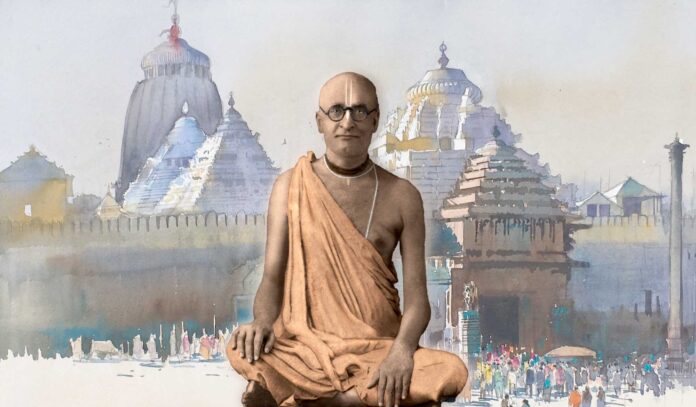
In ‘Hari-kathā in Puruṣottama-kṣetra’ Śrīla Bhaktisiddhānta Sarasvatī Ṭhākura speaks in Jagannātha Purī about the necessity for hari-kātha (topics of Kṛṣṇa) and the constant chanting of the Lord’s Name. He also explains what is actual kīrtana and what is not. This article was first published in The Gauḍīya, Volume 14, issue 37, and translated from Bengali by Swami B.V. Giri and Sanātana Dāsa.
(In the afternoon of the 11th April (1936), Deputy Collector Śrīyukta Amarendranātha Pāla Chaudhurī of Rāṇāghāṭa came to Caṭaka-parvata and heard hari-kathā in the presence of Śrīla Prabhupāda. Śrīla Prabhupāda’s wonderful instructions are presented below)

Above all else, remembrance of Hari is the most necessary thing. This depends upon Śravaṇa, and kīrtana. Only after Śravaṇa and kīrtana can one perform smaraṇa.

‘‘We are in the midst of calamities!” Many times, this type of consideration forces us to cultivate a taste for hari-kathā. Only through the continual hearing of hari-kathā does kīrtana and smaraṇa occur. Whenever we perform kīrtana of Hari, then immediately remembrance of Hari comes to us. When the innate taste to hear and chant awakens within us, then this leads to ātma-samarpaṇa (self-surrender).

āradhānānāṁ sarveṣāṁ viṣṇor-ārādhanaṁ param
tasmāt parataraṁ devi tadīyānāṁ samarcanam
(Padma Purāṇa 6.253.176)

This means that of all engagements, the service of Viṣṇu is the best engagement, and taking the association of those who serve Him and serving them is an even greater engagement – then our life will be a ‘life of dedication.’

In this world we accept the unholy association of various kinds of people. We have rejected the service of Kṛṣṇa, who is adhokṣaja (who transcends mundane perception), and we take up public service etc. which only gives fleeting results. Only if Bhagavān gives us His mercy will we attain the association of a sādhu who performs kīrtana and speaks pure hari-kathā.

We must consider the life that will result from our present transgressions. There is a huge chasm between ourselves and the Supreme Controller, and it is necessary to bridge that gulf. Then we must cross the bridge without plunging into that abyss, in order that we may come before Him.

Form, taste, smell, sound and touch – these things are constantly charming us. We should hear how we may become associated with Bhagavān. Some of us have clerical employment, some have a business and others are doing something else. Yet even after accepting retirement, we still continue to ruminate over the memories of such activities.

Birth after birth we have performed public service. Even animals behave in various ways for the benefit of their own kind. But as humans, should we not attain a higher promotion? Everything here is of a temporary and mortal nature; but have we discussed the connection to that which is always eternal? The significance of this human life is that it enables us to deliberate upon the next life and eternal life. In this life we are able to hear hari-kathā and speak hari-kathā, and this is the only method by which remembrance of Hari is awakened. We have no other activity to do here except hari-kathā. King Parīkṣit only had seven days, but there is no certainty that we even have seven days. Our necessity is to perform kīrtana of the Śrīmad Bhāgavata – such discussions on the Śrīmad Bhāgavata are not meant for earning money and food.

(That evening, sitting at the Bodhāyana-kuṭīra, Śrīla Prabhupāda spoke the following glorious instructions that are written below)

Kṛṣṇa is full of mercy, He is the Complete Reality. Similarly his mercy also bestows complete mercy. The Complete Reality gives Himself to the incomplete. In this way the incomplete can easily attain the Complete Reality. Without approaching the Complete, it is impossible to achieve complete auspiciousness. If we attain finite happiness or limited happiness, then our hopes can never be complete.

śrī-kṛṣṇa-caitanya-dayā karaha vicāra
vicāra karile citte pābe camatkāra

(If one deliberates upon the mercy of Śrī Kṛṣṇa Caitanya, one’s heart will be struck with wonder. – Cc. Ādi 8.15)

Due to His compassion for everyone, Śrī Caitanyadeva instructed us to perform constant hari-nāma-kīrtana. Anyone who has heard this statement, “Constantly chant hari-nāma,” has been given this instruction. There is no time when one should not chant hari-nāma –hariḥ sadā kīrtanīyaḥ (Hari should always be glorified). Śrīman Mahāprabhu said, “May śrī-kṛṣṇa-saṅkīrtana be forever victorious.” By hearing kīrtana one will begin to perform it, and by performing kīrtana, smaraṇa arises. When the person performing kīrtana glorifies Hari, then hari-kathā enters the memory.

Bhagavān is full of great compassion and He has given us the opportunity to perform śravaṇa and kīrtana of bhagavata-kathā. The Śrīmad Bhāgavata declares:

kaler doṣa-nidhe rājannasti hy eko mahān guṇaḥ
kīrtanād eva kṛṣṇasya mukta-bandhaḥ paraṁ vrajet

(O King, Kali-yuga is an ocean of faults, yet it has one great quality – one that performs kṛṣṇa-kīrtana can certainly attain liberation from material bondage and receive entrance to the highest destination. –Bhāg.12.3.51)

In life and in death, we have no other refuge or activity than performing kīrtana of kṛṣṇa-kathā. For one who properly performs kīrtana of Kṛṣṇa, his whole ātma is completely bathed in sevā-rasa. Just as when a mirror is covered with dust and we cannot see our own reflection within it, similarly, while we perform activities other than the kīrtana of kṛṣṇa-kathā, then different types of coverings surround the mirror of our consciousness and we cannot see our own svarūpa. If we perform kīrtana of He who is all-attractive, then, by His mercy, we can easily become attracted to Him.

kṛṣṇa-varṇaṁ tviṣākṛṣṇaṁ saṅgopāṅgāstra-pārṣadam|
yajṣaiḥ saṅkīrtana-prāyair yajanti hi su-medhasaḥ

(In the age of Kali, Kṛṣṇa appears in a golden form, chanting the two syllables kṛṣ-ṇa. He descends along with His weapons, potencies and eternal confidential associates. Those with intelligence worship Him by the performance of saṅkīrtana-yajṣa. – Bhāg.11.5.32)

Those persons who are most intelligent (su-medhasa) are the ones who perform kīrtana of kṛṣṇa-kathā, and those persons with poor intelligence (ku-medhasa) are those that perform other activities (anyābhilāṣa), jṣāna, karma and ritualistic sacrifices. Vārṣabhānavī (Śrīmatī Rādhārāṇī) constantly chants kṛṣṇa-nāma. She is not simply the effulgence of Kṛṣṇa, in actuality She is none other than Kṛṣṇa Himself. We can hear the words of Śrī Rādhā in the pāda of Caṇḍīdāsa:

kevā sunāila Śyāma nāma
kāṇera bhitara diyā, marame paśila go
ākula karila mana prāṇa

(Who made Me hear the name of Śyāma? When it entered My ears and into My heart, it agitated my mind and my life-airs.)

Vārṣabhānavī (Śrī Rādhā) is the greatest of all intelligent persons, and Gaurasundara is the original personality amongst those who are most intelligent:

nāmnām akāri bahudhā nija sarva-śaktis
tatrārpitā niyamitaḥ smaraṇe na kālaḥ
etādṛśī tava kṛpā bhagavān mamāpi
durdaivam idṛśam ihājani nānurāgaḥ

(O my Lord, Your Holy Name bestows auspiciousness upon all and You have unlimited Names such as Kṛṣṇa and Govinda by which You reveal Yourself. In such Holy Names You have kindly invested all Your transcendental potency. And in chanting these Names, there are no strict rules concerning time or place. Out of Your causeless mercy, You have descended in the form of divine sound, but my great misfortune is that I have no love for Your Holy Name. – Śikṣāṣṭakam 2)

We do not know that thing which is Kṛṣṇa, thus Kṛṣṇa has placed all His potencies within kṛṣṇa-nāma, and has descended in this world in the form of His Holy Name. Amongst His secondary Names (gauṇa-nāma) there are some differences between the Śabda and Śabdī (the Name and the Named) – He who is indicated by the name) but in regards to His primary Names there is no difference. There is no consideration of eligibility when one takes up the chanting of the Holy Name; however, in worship of the Deity, eligibility is a consideration. For example, one should have accepted dīkṣā, taken bath etc. There is no consideration of time, place or circumstance in connection to hari-kīrtana. It is necessary to perform kīrtana loudly. If one does not perform loud kīrtana of hari-kathā, but simply engages in gossip as if he had five mouths, then he will be seized and swallowed by the serpent of time. Such hari-kīrtana is a sign of the greatest type of compassion, yet some people cannot understand this and say –

mālā jape śālā, kara jape bhāi
yo āpnā man man jape usko balihāri jāi

(“Hey śālā! You chant on beads? O brother, you are chanting on your hand? But whoever chants within his mind, I say to him, ‘Well done!’”)

“Do not speak hari-kathā loudly! Just chant within your mind.” This is the instruction they give, but such people themselves simply talk drivel, because most people always look up from what they are doing when useless talks are going on. This has been forbidden by Mahāprabhu. His declaration is kīrtanīyaḥ sadā hariḥ (always perform kīrtana of Hari) and nāma-līlā-guṇādīnām-uccair-bhāṣā tu kīrtanam (kīrtana means to loudly call out the Lord’s name, pastimes, qualities etc.). One who performs loud kīrtana is most munificent; he never commits violence towards others. But for those who take up silence – who do not perform kṛṣṇa-kīrtana – their suppression of the urge to speak becomes an inauspicious practice, both for themselves and for others. In their minds they constantly think about the objects of the senses; they commit violence unto themselves and also to others. Thus, Mahāprabhu’s instruction is to always perform kīrtana. While listening to this kīrtana, if your friends are there, then they will rectify any mistakes within it.

Also, if you perform kīrtana without any type of duplicity, caitya-guru (the Lord within the heart) will correct any mistakes found there. Due to duplicity, some people harbour a desire within their hearts for name and fame and thus accept the path of silence (mauna-dharma). Bakaḥ parama-dhārmikaḥ (the silent meditation of the crane is the most virtuous of all). But driven by their deceit, those that follow the path of silence will suddenly perform sinful activities. In order to cultivate their own selfish interests, the maunī (those that take a vow of silence) and the dhyānī (those that sit and meditate) behave in a disruptive way with others. If there is no kīrtana of kṛṣṇa-kathā in the world, the path of distress will gain greater strength. That person who is merciless and does not distribute Kṛṣṇa’s mercy according to time, place and circumstance eventually kills himself.

There are two types of people that never perform kṛṣṇa-kīrtana – firstly there are those that are extremely foolish – this means Māyāvādīs (impersonalists), aparādhīs (offenders), dhyānīs (those performing so-called meditation), maunīs (those that take a so-called vow of silence) etc. Then there are others who do not actually perform kṛṣṇa-kīrtana, but nevertheless continue to think, “We are performing kṛṣṇa-kīrtana.”

Apart from hari-kīrtana everything else that remains is babble – it is simply the shrieking of a she-jackal. Apart from kṛṣṇa-kathā, nothing else should be allowed to enter our ears. Therefore, one must hear gaura-vihita-Śravaṇa (topics about Mahāprabhu and His teachings) and only then, gaura-vihita-kīrtana (one can glorify Mahāprabhu and His teachings). The gates of Śravaṇa and smaraṇa are closed for those who are maunīs. Due to their endeavours for seclusion and their vows of silence, those who remain contemptuous of hari-smaraṇa block the road to Śravaṇa and kīrtana. The Śrīmad Bhāgavata says:

śṛṇvataḥ śraddhayā nityaṁ gṛṇataś ca sva-ceṣṭitam
nātidīrgheṇa kālena bhagavān viśate hṛdi

(For those who always hear with faith about the Lord, and sincerely make endeavours to do so, within no time the Lord Himself manifests in the heart. – Bhāg.2.8.4)

Bahubhir-militvā yat kīrtanam tadeva saṅkīrtanam – kīrtana which is performed by many people is known as saṅkīrtana. What is Śrī Gauḍīya Maṭha doing at present? Many preachers perform kīrtana of hari-kathā in many different ways. Some perform hari-kīrtana with the help of tunes and rhythm, some by dancing, some by giving classes at diorama exhibitions and some by writing books.

Saṅkīrtana is not for satisfying peoples material senses through the medium of sura (tunes), tāla (rhythm), laya (tempo) and māna (metre) or making loud noise for some other similar purpose. Actually, such is not genuine kīrtana of Kṛṣṇa. When we say ‘kṛṣṇa-saṅkīrtana,’ it should be understood to be the transcendental kīrtana of the transcendental name, the transcendental form, the transcendental qualities, the transcendental pastimes and the special characteristics of the transcendental associates of the transcendental Kṛṣṇa. However, kṛṣṇa-kīrtana is also not performed by neglecting sura, tāla, māna and laya. Sura, tāla and māna should all be used for kṛṣṇa-kīrtana. The six rāgas and the thirty-six rāginīs are the servants of kṛṣṇa-kīrtana. The proper way of performing hari-kīrtana is by engaging kāya-mana-vākya (body, mind and words). Kīrtana with our mind, kīrtana with our words and kīrtana with our body must be performed simultaneously. If the mind is not engaged in kṛṣṇa-kīrtana, if it is always preoccupied with other thoughts, then it is not actual kīrtana of Kṛṣṇa.

What does Nārada do? At every moment, he performs kṛṣṇa-kīrtana with all his senses. What does five-headed Śiva do? He performs kṛṣṇa-kīrtana. What does four-headed Brahmā do? Kṛṣṇa-kīrtana. Vyāsa, Śuka, the four Kumāras and Śeṣa all perform kṛṣṇa-kīrtana. All the personalities in our guru-varga perform kṛṣṇa-kīrtana and none of them observes so-called vows of silence. Bhāgavata-dharma is not a dharma that observes so-called silence – it is kīrtana-dharma, it is saṅkīrtana-dharma.In Śrī Gauḍīya Maṭha, whoever is preaching by compiling books or writing articles for periodicals are performing kṛṣṇa-kīrtana. They are performing kṛṣṇa-kīrtana through the medium of the ‘Big Mṛdaṅga’ which also includes opening a post-office and establishing a printing press. Organising exhibitions is also kṛṣṇa-kīrtana. Some perform kṛṣṇa-kīrtana through their own good conduct. In order that this kṛṣṇa-kīrtana does not fade into thin air, it is being recorded in books, so that people in the future will also be able to hear this kṛṣṇa-kīrtana. However, those who only perform solitary meditation, who remain in silence, can hardly even benefit themselves and indeed they cannot give any benefit to others at present, what to say of people in the future!

Can One Serve Hari While Seeking Honor, Comfort, And Prestige?

0

Overview

In the following lecture which was first published in The Gauḍīya, Volume 11, No.22, January 1933, Śrīla Bhaktisiddhānta Sarasvati Ṭhākura describes the duties and position of a real tridaṇḍi-sannyāsī and delivers a scathing attack upon so-called sādhus and tridaṇḍis. This article was translated into English by Swami B.V. Giri.
The Highest Ideal is to Become a Tridaṇḍi
The Worship of Demigods
Using the Tridaṇḍa to Make a Living
Are We Tridaṇḍis?
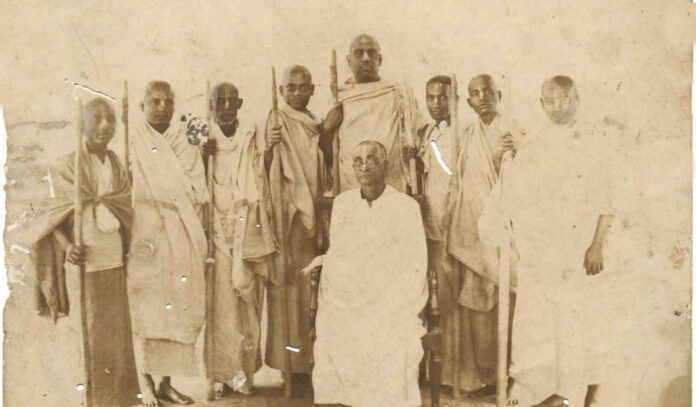
At the end of December 1933, the Gauḍīya Maṭha in Dacca launched the transcendental diorama exhibition. Ācāryadeva Śrīla Sarasvatī Ṭhākura arrived in Dacca to participate in its opening. In the afternoon on December 24th, Śrīla Prabhupāda, surrounded by his close associates, began to speak about the position and duty of a tridaṇḍi-sannyāsī:

Atyāhāra (the urge to devour more or collect more than necessary) causes death to the living entity. Jihvopastha-jayo dhṛtiḥ (steadiness in conquering the urges of the tongue and genitals) — those who aspire for auspiciousness should abide by this śloka, but it should not be artificial as we see with the māyāvādīs and the false renunciants. The senses can only be conquered by cultivating a spirit of service. In a verse from his swan-like poetry, Śrīla Rūpa Gosvāmī Prabhu has told:

vāco vegaṁ manasaḥ krodha-vegaṁ
jihvā-vegam udaropastha-vegam
etān vegān yo viṣaheta dhīraḥ
sarvām apīmāṁ pṛthivīṁ sa śiṣyāt

“A self-controlled person who can overcome the impulses of speech, the mind, anger, the tongue, belly and genitals is qualified to instruct the whole world.” (Upadeśāmrta 1)

Śrīman Mahāprabhu has said:

grāmya-kathā nā śunibe, grāmya-vārtā nā kahibe
bhāla nā khāibe āra bhāla nā paribe

“Do not hear mundane talks and do not speak about mundane topics. Do not eat very palatable food, nor dress very luxuriously.” (Cc. Antya 6.236)

Songs about Śrī Rādhā-Govinda and mundane talks (grāmya–varta) are not the same thing. Songs about Nagna-Śyāmā (naked Kālī), folksongs about Śani, Satya-Nārāyaṇa, Ghetu Devī, Makala Devī, Cāṇḍī, Manasā Devī, songs about village gods etc, topics about worldly auspiciousness and inauspiciousness, sense-enjoyment or the dry renunciation of enjoyment are all considered to be mundane talks. And who engages in useless talks the most? The archeologists, epigraphists etc.

To conquer the urge of the tongue and genitals is called dhṛti. Those who have become tridaṇḍis have conquered their body, mind and words. News found in periodicals is full of mundane talks. It is impossible for tridaṇḍis to read such newspapers that report topics of the illusory world (māyā-kathā). By reading them the consciousness no longer cooperates and becomes an enemy to us. “So-and-so did this, so-and-so did that” – by reading such things, adversity and material desires are created. In the world of our dreams we long to become extremely rich with the desire to become respected for our wealth – thus the teachings of Cārvāka (the scholar of Bṛhaspati-Nyāya), Akbar and Jahangir’s teachings on royal pleasures, Napoleon’s teachings on bravery, Methuselah’s teachings of benevolence for all men etc. are greatly relished. We think that their advice will fulfil our dreams of becoming powerful. In this way Ṭhākura Mahāśaya has said:

rājāra ye rājya-pāṭa, yena natūyāra nāṭa

“A monarch’s kingdom is just like the dramatic performance of an actor. “(Prema-bhakti-candrikā 6.14)

The Highest Ideal is to Become a Tridaṇḍi
Those who are averse to devotion think, “I shall go on doing everything, but I shall not serve the Supreme Lord. Let idle gossip, narrow-minded ideas, and worldly affairs fill every second of my life.” By some means to achieve auspiciousness, they will build so many moats and fortresses for their protection. They argue that watering tulasī is a waste of time – it is better to spend both time and money in watering eggplants, because then they can eat more eggplants. But who will eat those eggplants? If monkeys take those eggplants, then they won’t be able to eat them, and if the monkeys steal them they will simply be forced to compete with them!

In human life, the highest ideal is to become a tridaṇḍi. The meaning of tridaṇḍi is one who does not demand respect for one’s self. He is respectful to others, he is tolerant and he glorifies Hari. The Vaiṣṇava is a demigod, yet he does not consider himself as a demigod. A tridaṇḍi means nirāśir-nirnamas-kriyāḥ – a tridaṇḍi does not bless anybody, nor does he accept any respects from anyone. But if one does not offer his respects to a tridaṇḍi and does not accept his blessing of kṛṣṇe matirastu (‘May you always remember Kṛṣṇa’), one must fast as atonement. As many times that one does not offer obeisance, that many times he should fast. It is the foremost duty of a brāhmaṇa to accept the tridaṇḍa.

The Worship of Demigods
By worshipping the demigods material obstacles will be destroyed, and one’s path for sense gratification thus becomes unhindered. Gaṇeśa removes the obstacles of the sensual worshipper, Sūrya removes the obstacles that hinder dharma (or puṇya). He removes darkness and gives light. Śakti gives mystical perfection to fulfil one’s desires. Rāvaṇa worshipped Śakti in order to kidnap Śītā. A worshipper of the material energy becomes close to Śakti and attains power and tries to steal the śakti from Śakti! Those that worship Rudra are able to perform all types of destructive activities. The worshippers of Gaṇeśa, Sūrya, Śakti and Rudra are all self-worshippers and iconoclasts.

Those that worship Viṣṇu do not ask for anything. In fact, Viṣṇu takes everything from the living entity. The devotees of Viṣṇu do not simply worship Him with sandalwood paste and flowers. Offering sandalwood paste and flowers means that they do not enjoy the fragrance for themselves. Some consider Viṣṇu as a temporary deity and imagine that by attaining perfection one may be able to destroy Kṛṣṇa. Such people think that Viṣṇu is simply one of the paṣca-devatās and is a nonpermanent entity. This is against the conclusions of Vyāsa, and also against the conclusions of the Vedas. Vyāsa states:

viṣṇau sarveśvareśe tad-itara-sama-dhīr yasya vā nārakī saḥ

“Viṣṇu is the Supreme Controller of all. One who thinks otherwise is a resident of hell.” (Padma Purāṇa)

The Vedas say –

oṁ tad viṣṇo paramam padam

“The lotus feet of Viṣṇu are above all.” (Ṛg Veda 1.22.20)

Those that consider Viṣṇu and other demigods to be equal are impersonalists (nirviśeṣavādīs). The sūtra that these ‘killers of all gods’ continually chant is śivo’ham śivo’ham! (“I am Śiva, the destroyer of all”).

brahmacaryaṁ tapaḥ śaucaṁ santoṣo bhūta-sauhṛdam
gṛhasthasyāpy ṛtau gantuḥ sarveṣāṁ mad-upāsanam

“A householder should approach his wife at the proper time for begetting progeny. Otherwise he should practice celibacy, austerity and cleanliness. He should remain satisfied and cultivate friendship with all living beings. All living entities should worship Me.” (Bhāg. 11.18.43)

Only Viṣṇu should be worshipped without exception and all other fabricated deities that are worshipped and traded with are simply servants. One Kṛṣṇa is better than millions of others. By worshipping Him, all other worship is complete. O men! Gṛhasthas, brahmacārīs, vanaprasthas and sannyāsīs — you are all brāhmaṇas (descendants of Brahmā). Sarve brahmajā brāhmaṇas ca – Śrī Kṛṣṇa says, “Worship Me alone with everything you have; My service is your duty. You have no other duty than this. Your eyes, ears, mouth, nose – give everything in service to Me “.

Using the Tridaṇḍa to Make a Living
“O brother, If there is no mung-dahl then I will fast!” – these types are sādhus in name only. They cannot become real sādhus. Some people say: “In India there are 44 lakhs of sādhus who couldn’t collect the money to get married. Because they have no money to wash their clothes, they put on saffron cloth.”

Renunciation of the world, abstention, austerities and so forth are not the symptoms of a sādhu. The ant says, “Look, how much the elephant eats! I do not eat so much, I only eat a small amount.” Therefore, according to this logic, the ant is a great sādhu! But the elephant carries Kṛṣṇa on his back to Samanta-paṣcaka, whereas the ant simply bites Kṛṣṇa. The elephant eats a large amount and carries and serves Kṛṣṇa, and the ant eats very little and only sinks his teeth into Kṛṣṇa. Many times we see ‘sannyāsīs’ who have renounced the use of eating from metal utensils living under a tree. But while living under a tree, all they have learned is how to smoke gāṣja. If they had not become sannyāsīs for the sake of smoking gāṣja and remained at home, they may well have been considered to be better renunciants.

Tridaṇḍam-upajīvati (accepting the tridaṇḍa in order to make a living) — “I have accepted shelter in the maṭha because here I can eat well.” If we accept the bhikṣu-āśrama in order to collect money, then the tridaṇḍa simply becomes an instrument for financial gain.

The rule of our Gauḍīya Maṭha is that sannyāsīs, brahmacārīs and vanaprasthas should not wear fancy clothes, should not possess footwear, should not collect even one penny for their personal needs. But they can collect money for vaiṣṇava–sevā. The activities of the 44 lakhs of so-called sādhus in India has nothing in common with the activities of Śrī Gauḍīya Maṭha.

In Śrī Gauḍīya Maṭha, the brahmacārīs, sannyāsīs etc. are all bhikṣus. I ask them to go out and beg. I alone have accepted the responsibility for this activity and in this work I will not bypass any house. Therefore I constantly send our men from door to door everywhere for bhikṣā. For our preaching of the Holy Name of Kṛṣṇa, for the sake of benefiting this world, we will approach everyone and accept something from them to use in Kṛṣṇa’s service. Simply to collect money and convert it into stool and urine is the occupation of monkeys, not of the Gauḍīya Maṭha. It is necessary to engage billions of Vaiṣṇavas — such a service is assigned to me.

There is the community of tridaṇḍi-sannyāsīs, and most of them belong to one and the same category. However, the paramahaṁsa is not amongst them – he is special. He does not belong to any community or class. He is of a very special category.

Are We Tridaṇḍis?
Our Professor Sanyal receives his salary and gives all of it for kṛṣṇa-sevā, so that we are not without money. So, is he a tridaṇḍi or are we tridaṇḍis? Go and collect food and money for Kṛṣṇa – then bring everything to me.

For the sake of pure hari-sevā and in order that pure hari-kathā will be preached in a straightforward manner throughout the world, I am ready to give our preachers thousands and thousands of motor cars. There is no objection to this. But why should somebody with a sensual mentality ride in a motorcar? He has no qualification to ride in a motorcar. He will simply become a viṣayī. One who does not want to serve Hari, Guru and Vaiṣṇava strongly desires to ride in a motorcar in order to be seen as a great person. Such a gross piece of flesh should not be allowed to drive in a motorcar because such a materialistic sense-enjoyer will simply ride that vehicle down the road leading to hell. He will simply turn it into a machine to make a living. What is the necessity for somebody to drive a car when they are not sincerely engaging their mind body and words in the worship of Hari, and when they are not giving everything to Hari, Guru and Vaiṣṇava? Moreover, the sahajiyā sampradāya will increase because we will have created another type, then we will certainly be destroyed.

Therefore I have made this proposal – tridaṇḍi-sannyāsīs! All of you please come to Ekāyana Gauḍīya Maṭha. Please do not do any more bhikṣā. I shall go out on mādhukarī–bhikṣā and feed you. Why do you wish to imitate me? I am not a tridaṇḍi. I am most fallen. You are not fallen – you are pāvana (saviours of the fallen). I have accepted you as my gurus, so why do you represent yourselves as something different? May the tridaṇḍi-bhikṣus use their body, mind and words at every moment in the service of Hari. With what hopes and with what expectations did we come to do hari-bhajana – and where have those hopes and expectations gone now?

(Translated by Swami B.V. Giri and Sanātana Dāsa)

How Does The Zonal Support Office Model Advance The 3/35 Vision Of Krishna Consciousness?

0

Growth Acceleration Teams and Zonal Unity in Service of the 3/35 Vision

As part of the unfolding implementation of ISKCON North America’s 3/35 Vision, Zonal Supervisors and newly appointed members of the Growth Acceleration Teams (GATs) assembled on Saturday, January 17, 2026, for an online orientation conducted via Zoom. The purpose of this gathering was to deepen zonal cohesion, foster cooperative planning, and provide practical support for those entrusted with leadership responsibilities.

The orientation was conducted by Indresh Gaura Dāsa and Vṛndā Devī Dāsī, Zonal Supervisors for Zone 1. Their presentation drew upon the established Zonal Support Office model developed in Zone 1, which is now serving as a practical foundation for the formation of Growth Acceleration Teams in the remaining four zones. Drawing from many years of leadership service, they shared insights gained through sustained efforts to cultivate unity, trust, and cooperation across their zone. The session also respectfully acknowledged Bhaktimārga Swāmī, whose visionary guidance and inspiration played a significant role in nurturing the unity and growth experienced in Zone 1.

The Purpose of Growth Acceleration Teams: The 3/35 Vision in Context

The 3/35 Vision seeks to engage three percent of the population of North America in Kṛṣṇa consciousness by the year 2035. This aspiration is accompanied by clear measurements and carefully considered practical strategies.

The 3/35 framework rests upon three mutually reinforcing pillars: Empowered Devotees, Strong Communities, and Effective Outreach. Together, these pillars aim to reestablish the conditions necessary for a genuine resurgence of Kṛṣṇa consciousness—growth rooted in devotional relationships, cooperative spirit, and the original atmosphere of love, trust, and sacrifice that propelled the movement forward during the time of Śrīla Prabhupāda.

Within this broader vision, various initiative teams are being developed to focus on specific service streams. As outlined on the  3/35 webpage growth initiatives include Kīrtana, Outreach, Congregational Development, Youth Engagement, and Prasādam Distribution, alongside essential support initiatives such as Devotee Care, Education, Retreat Centers, and Administrative Support.

To facilitate coordinated growth and development across North America, Growth Acceleration Teams are now being established within each zone, following the Zonal Support Office model pioneered in Zone 1. These teams are intended to assist both new and existing temples and centers, thereby strengthening regional capacity. The GATs bring together devotees with expertise in administration, communications, technology, finance, and coordination, forming a practical support structure through which local initiatives and emerging projects can be nourished and sustained.

The intention behind these teams extends beyond organizational efficiency. The GATs are conceived as a service-oriented support system, meant to unify leaders, strengthen cooperative relationships—such as through the organization of regular zonal leadership gatherings—and provide tangible assistance to temples and projects, allowing front-line leaders to remain focused on their primary service of spreading Kṛṣṇa consciousness.


Zonal Strength Through Service-Oriented Support

A central emphasis of the orientation was that true zonal strength does not arise merely from formal titles or structural arrangements, but from genuine relationships, mutual trust, and steady communication. The Zone 1 experience highlighted the cultivation of a “one zone” culture through consistent connection, open communication, resource-sharing, and attentive care for relationships among leaders and communities.

The Zonal Support Office of Zone 1 was presented not as a rigid template, but as a transferable and adaptable framework—one that may be gradually and realistically developed according to the unique size, needs, and capacity of each zone. As expressed by Indresh Gaura Dāsa, such zonal teams “create alignment, connection, and momentum, so that growth becomes easier, healthier, and more sustainable.”

Key Principles and Practical Illustrations

Support Rather Than Control
A recurring theme was that Growth Acceleration Teams function as a service office, not as an additional layer of management. Their role is to strengthen connection, care, and cooperation throughout the zone.

Primacy of Relationships
Strategic planning bears fruit most fully when relationships are safeguarded. Trust, open communication, and a genuine sense of family create an atmosphere in which cooperation arises naturally rather than through compulsion.

Cooperation Expands Capacity
Zones are able to accomplish far more when temples and centers work together rather than in isolation—by coordinating calendars, sharing speakers and training resources, supporting emerging projects, and pooling volunteers for regional initiatives.

Organization as an Expression of Care
Simple, steady, and lightweight systems can greatly enhance unity and forward momentum. Examples discussed included shared online hubs for announcements and resources, regular monthly leadership calls, common calendars, WhatsApp communication channels, and focused working groups to advance priority projects.

Growth Nourished by Generosity, Not Fear
A healthy culture of growth arises from encouragement and confidence rather than scarcity or anxiety. By supporting new and developing centers, the strength of the entire zone is increased, and unity is deepened.


Looking Ahead: Zonal Leadership Gatherings

In addition to addressing present initiatives, the session also explored plans for forthcoming in-person zonal leadership gatherings. These conferences are envisioned as opportunities to strengthen relationships, alignment, and cooperation on a regional level.

Zone 1 shared a sample conference structure demonstrating how such gatherings may balance spiritual nourishment with practical leadership support. Elements include sādhanā and kīrtana, prasādam and fellowship, relationship-building activities, and time for collective reflection on governance, strategic planning, financial sustainability, devotee care, outreach, and growth.


Next Steps and Invitation to Serve

Following this orientation, Growth Acceleration Teams are continuing to take form throughout the zones, as devotees translate inspiration into tangible service. Zonal Supervisors, Temple Leaders, and GAT members are encouraged to collaborate in clarifying regional priorities, establishing healthy rhythms of communication, and implementing supportive strategies, including the organization of zonal leadership gatherings.

As coordination progresses, the prevailing mood remains one of humble service—strengthening unity and cooperation, and establishing a dependable support structure for the fulfillment of Śrīla Prabhupāda’s mission and the 3/35 Vision.

Devotees who feel inspired to contribute—whether through participation in a 3/35 initiative team or through their zone’s Growth Acceleration Team—are invited to visit the 3/35 webpage to learn more and become involved. One may also register interest by completing the intake form This is a valuable opportunity to render meaningful service toward the expansion of Śrīla Prabhupāda’s mission throughout North America.


What Is The ISKCON Constitution, And How Does It Preserve Śrīla Prabhupāda’s Will?

0

The Solemn Inauguration of the ISKCON Constitution

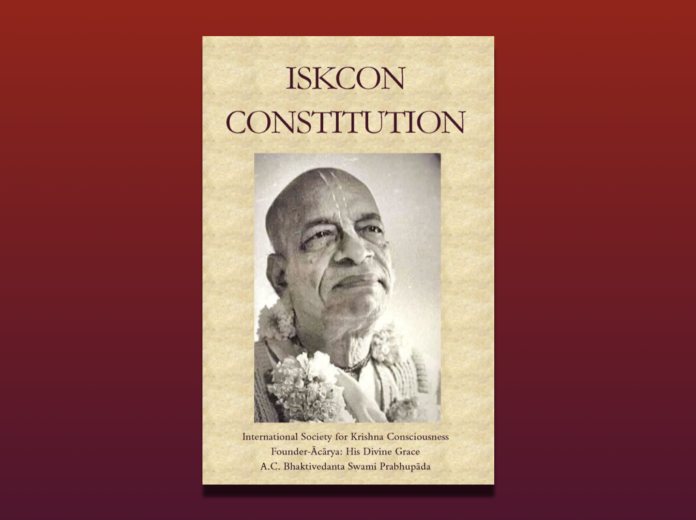
On 4 February 2026, during its Annual General Meeting convened in Śrīdhāma Māyāpur, the Governing Body Commission (GBC) formally inaugurated the ISKCON Constitution. This historic occasion marked a significant milestone in the institutional life of the International Society for Krishna Consciousness. On behalf of the GBC, its Chairman, Śrī Govardhana Dāsa, ceremonially offered a copy of the Constitution to His Divine Grace A. C. Bhaktivedanta Swami Prabhupāda, the Founder-Ācārya of ISKCON, thereby affirming that the Society’s governance rests eternally at the lotus feet of its founder.


Origins and Historical Development of the ISKCON Constitution

In October 2006, the Governing Body Commission convened a special strategic meeting in Prabhupādadeśa, Italy, to deliberate upon initiatives vital to the long-term spiritual health, unity, and vitality of ISKCON. At that time, the GBC confronted a sobering reality: the gradual physical departure of Śrīla Prabhupāda’s direct disciples and the understanding that, in the coming decades, none of them would remain personally present.

Among the foremost priorities identified at that meeting was the establishment of a formal ISKCON Constitution. Such a document was envisioned as an essential instrument for providing the Society with a unified and enduring framework of governance—one that would clearly delineate rights, responsibilities, authority, and foundational principles. The Constitution was intended to foster unity, preserve institutional integrity, align governance with śāstra and Śrīla Prabhupāda’s expressed intentions, address legal and structural gaps, guide the resolution of sensitive matters, and promote clarity, consistency, and legal effectiveness throughout the worldwide movement.

Importantly, the desire for ISKCON to be guided by a Constitution was not new. Śrīla Prabhupāda himself had expressed such an intention during his lifetime. In response, a committee was formed, and its members began meeting regularly to draft proposals and present them to the GBC for consideration.

Over the course of approximately ten years, five drafts were produced. Despite sincere effort, none of these early versions reached a stage at which the GBC felt confident that the document fully met the Society’s needs or was suitable for formal adoption.


Renewal of the Constitutional Project

In June 2017, the initiative was revitalized with the inclusion of new members in the Constitution Project team. The work was recommenced using a revised methodology that placed greater emphasis on systematic theological grounding and a broader, more integrated approach.

Later that same year, the newly constituted team submitted its first revised draft to the GBC during the October 2017 midterm meetings held in Ujjain, India. Although this draft was not discussed in plenary sessions, it clearly established a new direction: the development of a comprehensive constitutional document thoroughly supported by references from śāstra and the teachings and instructions of Śrīla Prabhupāda.

Draft Two and Draft Three followed in due course, each incorporating extensive feedback from GBC members, GBC Deputies, SABHA members, and other senior devotees. Input was gathered through written correspondence, surveys, and in-person consultations, including during GBC midterm meetings in Kanpur (October 2018) and Tirupati (October 2019), as well as at several Annual General Meetings in Māyāpur.


Perseverance Through Adversity and Finalization

Although the global COVID-19 pandemic significantly slowed progress, the work continued steadily. In early 2023, the team convened in person in Singapore, where Draft Four was prepared and subsequently submitted to the GBC at its 2023 Annual General Meeting.

Following that meeting, the draft was published online in multiple languages, and devotees throughout the world were invited to study the document carefully and submit their reflections and suggestions. The team attentively reviewed this feedback and then gathered for four days of in-person deliberation in Washington, DC, in May 2024, to further revise and refine the text.

The revised draft was thereafter submitted for professional English editing to Śrīmatī Kaiśorī Devī Dāsī of the Bhaktivedanta Book Trust. After studying her thorough and insightful recommendations, the team implemented the necessary refinements. Throughout this entire period, the members of the Constitution Project maintained weekly meetings via Zoom to ensure continuity and steady progress.

Draft Five was formally submitted to the GBC in January 2025. A few months later, during the GBC Annual General Meeting in Māyāpur in May 2025, the team presented the nearly completed Constitution and requested a vote on a remaining unresolved matter.

On 16 April 2025, during the first online GBC meetings following the Māyāpur AGM, the Governing Body Commission formally approved and ratified the text of the ISKCON Constitution, subject to an external legal review undertaken for additional security and due diligence.


Legal Review and Worldwide Release

After identifying a qualified and cost-effective legal firm, the Constitution underwent a comprehensive external legal review. The firm’s assessment was both detailed and affirming: while offering numerous observations and considerations, it confirmed the document’s overall legal soundness.

With this final step completed, the GBC authorized the worldwide release of the ISKCON Constitution for the guidance, orientation, and benefit of all ISKCON devotees and centers. The official release date was set for the auspicious festival of Vasant Pañcamī, which in 2026 fell on 23 January, traditionally marking the advent of spring within the six-season system.

The ISKCON Constitution is not merely an internal administrative document. It carries legal relevance and may be examined by courts throughout the world in the context of disputes or legal proceedings. It is also expected to be studied by journalists, scholars, interfaith practitioners, and all those seeking a serious and informed understanding of the movement founded by Śrīla Prabhupāda.

Significantly, more than fifty percent of the Constitution consists of direct quotations from śāstra and from Śrīla Prabhupāda’s own words. It is the earnest hope of the GBC and the Constitution Project team that devotees will feel profound appreciation and rightful pride in the spiritual tradition that ISKCON embodies and faithfully carries forward.


Ten Considerations Demonstrating the Necessity of an ISKCON Constitution

  1. Unified Governance: A Constitution provides a cohesive framework for regulating ISKCON’s diverse activities and membership, ensuring consistency in the application of laws.
  2. Clearly Defined Rights and Duties: It articulates the rights, responsibilities, and authority of ISKCON’s constituents, grounded in clearly stated principles.
  3. Transparency in Governance: It delineates ISKCON’s foundational tenets and governance structures, offering clarity to members and the public alike.
  4. Stability and Institutional Integrity: By establishing a durable governance foundation, the Constitution protects ISKCON from frequent or arbitrary changes.
  5. Preservation of Unity: Clearly defined roles, responsibilities, and boundaries enable decisions to be accepted in a spirit of good faith, thereby safeguarding unity.
  6. Fidelity to Tradition: Extensive quotations from śāstra and Śrīla Prabhupāda reinforce ISKCON’s theological roots and affirm his central role.
  7. Protection of the GBC’s Mandate: The Constitution ensures that the GBC functions strictly within the authority intended by Śrīla Prabhupāda.
  8. Addressing Structural Gaps: It fills lacunae within existing ISKCON laws, providing a solid foundation for future governance.
  9. Guidance on Essential Matters: Appendices may address sensitive and significant topics—such as ṛtvikism, varṇāśrama, and child protection—in alignment with Śrīla Prabhupāda’s instructions.
  10. Legal Clarity and Efficiency: A clearly documented governance system assists in legal proceedings by providing an authoritative and coherent framework.

The Drafting Committee

The Drafting Committee that brought the ISKCON Constitution to completion consisted of the following devotees (listed alphabetically):

Anuttama Dāsa (ACBSP), Devakinandana Dāsa (MVG), Devaśrī Rādhikā Devī Dāsī (BCS/KKS), Kaunteya Dāsa (JPS), Pañcaratna Dāsa (ACBSP), and Vṛndā Devī Dāsī (GKG).

At various stages and in different capacities, many other devotees also contributed to the Constitution Project (listed alphabetically):

Akrurānātha Dāsa (ACBSP), Bhakta-rūpa Dāsa (ACBSP), Bhakti Gauravāṇī Gosvāmī (ACBSP), Bhakti Mārga Swāmī (ACBSP), Dvārakādhīśa Dāsa, Gopikā Rādhikā Devī Dāsī (JPS), Hṛdaya Caitanya Dāsa (SDG), Kaiśorī Devī Dāsī (SDG), Nṛsiṁha Kavaca Dāsa (IDS), Praghosa Dāsa (SDG), Praharaṇa Devī Dāsī (AGBSP), Parivādī Dāsa, Prema Bhakti Dāsa (TKG), Śālagrāma Dāsa (TKG), and Śeṣa Dāsa (ACBSP). Many additional devotees offered valuable feedback and suggestions over the years.

To read and download the ISKCON Constitution, devotees and interested readers are invited to visit its official  website. Questions or comments may be submitted through the Contact form provided there. The ISKCON Constitution Drafting Committee has also prepared a document addressing frequently asked questions (FAQs), .here

Can Premature Renunciation Obstruct Bhakti? The Warning Of Markaṭa-Vairāgī

0

Overview

Markaṭa Vairāgī (‘Monkey Renunciates’) was first published in Sajjana Toṣaṇī, Vol.8, Issue 10 in 1897. In this article, Śrīla Bhaktivinoda Ṭhākura discusses Mahāprabhu’s instructions to Raghunātha Dāsa Gosvāmī as well as the two types of fake renunciates found in both the gṛhastha āśrama and the sannyāsa āśrama.

When Śrī Śrī Mahāprabhu accepted sannyāsa and came to Śāntipura, then Raghunātha Dāsa, the son of Govardhana Majumdar, came and fell at the Lord’s feet. After staying close to the Lord’s feet for five to seven days, he returned home as per the Lord’s instruction. Being most distressed, he desired to go to Nīlācala, but his mother and father did not let him go. Again, when the Lord came to Śāntipura, he took permission from his mother and father and came to the feet of the Lord, praying to be free from his household bonds. Then the Lord taught him this:

sthira haṣā ghare yāo, nā hao vātula
krame krame pāya loka bhava-sindhu-kūla

markaṭa-vairāgya nā kara loka dekhāṣā
yathā-yogya viṣaya bhuṣja anāsakta haṣā

antare niṣṭhā kara, bāhye loka-vyavahāra
acirāt kṛṣṇa tomāya karibe uddhāra

“Be patient and return home. Do not be a madman. Gradually you will be able to cross the ocean of material existence. Do not show off to the public by becoming a monkey-like renunciate. For now, enjoy things in a proper way, but do not become attached to them. Develop determination internally, but externally behave like an ordinary man. Very soon Kṛṣṇa will liberate you.” (Caitanya-caritāmṛta, Madhya–līlā 16.235-237)

Again, in the sixth chapter of the Caritāmṛta it is written:

prabhura śikṣāte teṅho nija-ghare yāya
markaṭa-vairāgya chāḍi hailā viṣayi-prāya
bhitare vairāgya bāhire kare sarva-karma
dekhiyā ta’ mātā-pitāra ānandita mana

“According to the Lord’s instruction, Raghunātha Dāsa returned home, and giving up his markaṭa-vairāgya, he became almost a materialist. Internally he was renounced and externally he performed all activities. Seeing this, the minds of his mother and father were happy.” (Caitanya-caritāmṛta, Antya-līlā 6.15)

In relation to Choṭa Haridāsa, it is written in the Second Chapter of Śrī Caritāmṛta:

prabhu kahe vairāgī kare prakṛti sambhāṣaṇa
dekhite nā pāroṅ āmi tāhāra vadana
durvāra indriya kare viṣaya-grahaṇa
dāravī prakṛti hare munerapi mana

“The Lord said – I cannot look at the face of a renunciate who converses with women. The senses are so strong that they desire to accept the objects of the senses. Even the mind of a muni is attracted to the wooden form of a woman.” (Caitanya-caritāmṛta, Antya-līlā 2.117-118)

kṣudra-jīva saba markaṭa-vairāgya kariyā
indriya carāṣā bule prakṛti sambhāṣiyā

“There are insignificant jīvas who engage in markaṭa-vairāgya. They wander around chatting with women.” (Caitanya-caritāmṛta, Antya-līlā 2.120)

prabhu kahe mora vaśa nahe mora mana
prakṛti-sambhāṣī vairāgī nā kare darśana

“The Lord said – My mind is not under My control! It refuses to see a renunciate who speaks with women.” (Caitanya-caritāmṛta, Antya-līlā 2.124)

In all these verses, the phrase ‘markaṭa-vairāgī’ is used. It is the duty of all to inquire what is the true meaning of the phrase markaṭa–vairāgī. Being a markaṭa–vairāgī is a particular offence, there is no doubt about this. It is easy to understand how offensive they are since the Lord refuses to see or touch them. The merciful Lord has descended in Kali-yuga to deliver the fallen, so all conscientious persons can understand how base and depraved such a person is if He is denying them. Thus, those who believe in Vaiṣṇava dharma should be very careful to avoid the company of markaṭa–vairāgīs and be cautious of becoming markaṭa–vairāgīs themselves.

It is not only those who leave their homes and take up sannyāsa that become markaṭa–vairāgīs. There are many amongst householders also. Therefore there are two types of markaṭa–vairāgīs i.e. the householder markaṭa–vairāgī and the non-householder markaṭa–vairāgī. When Dāsa Gosvāmī was a householder, then Mahāprabhu gave advice about the householder markaṭa–vairāgī. When giving instructions about Choṭa Haridāsa, He indicated the markaṭa–vairāgīs in the bhikṣu–āśrama (renounced order). We should now observe – what are the characteristics of the markaṭa–vairāgī amongst the householders and what are the characteristics of the markaṭa–vairāgī amongst those who have renounced their home?

First let us talk about the householder markaṭa-vairāgī. It is found within the words of Śrī Mahāprabhu that among the householders, those who are anxious to leave home unnecessarily are atyācārīs (negligent of their duties). Until the time and qualification are proper, no householder can go and join the bhikṣu-āśrama. All those householders who feign a display of possessing a mood of renunciation are wicked.

To enjoy household affairs without attachment is the dharma of a householder-Vaiṣṇava, Just as there is a decline in one’s Vaiṣṇava qualities when one is attached to sense-enjoyment, there is also a similar decline when one engages in bhoga-tyāga – abandoning one’s home or remaining at home for no reason. It is necessary for a householder to experience detachment to the objects of the senses in order to possess the qualification to leave home.

External renunciation is extremely contaminating for a householder. Externally enjoying material things accordingly and cultivating internal dispassion is the dharma of a householder. When firm renunciation is in full force, then that is the time and qualification to leave home. All those householders who carry the burden of wearing kaupīna and having dreadlocks are called markaṭa-vairāgīs. He who is married with a wife is a householder. Sannyāsa is the name given to renouncing one’s wife after vowing to observe dharma and virtue. When renunciation has not completely filled the heart, one has no eligibility to follow it. When there is such a strong attachment to kṛṣṇa-kathā that there is no taste or chance to enjoy other material objects, then the qualification for renunciation is born. It is from attachment to Kṛṣṇa that a natural distaste for other things arises. Inner renunciation cannot come from anything else. The distrust in material things that arises through the practice of viveka (discrimination) and other such causes is not permanent. But dispassion born from bhakti remains in the heart. According to the Dharma Śāstra, those who are legally married are without sin. Inter-caste marriages are not according to śāstra and one does not achieve the dharma of a householder from that. Fallen yogīs or those connected with them cannot be called householders. Gṛhastha–dharma is based upon varṇāśrama. Intercourse amongst antyajas (outcastes) is merely a careless use of the senses to a certain extent. If householders desire to become Vaiṣṇavas, they should be especially careful to give up markaṭa–vairāgya.

Therefore the instructions to Śrī Dāsa Gosvāmī by Śrī Mahāprabhu are of a character to give advice to people about the good character of a householder Vaiṣṇava. Due to the teachings of the Lord, he went home, gave up the previous characteristics of markaṭa-vairāgya and made efforts to enjoy material things. The meaning of this is that despite outwardly accepting all material activities, he began to nurture dispassion inwardly. The meaning of the phrase viṣayi-prāya (almost a sense-enjoyer) is that although he accepted material things such as clothes, activities, behaviour etc., within his heart, he did not enjoy them.

The Lord referred to Dāsa Gosvāmī’s father as vaiṣṇava-prāya (almost a Vaiṣṇava). This means that despite his accepting vaiṣṇava-dīkṣā, possessing the external characteristics of a Vaiṣṇava, worshipping the Devas, following vratas, going on pilgrimage, and showing hospitality to guests, in his heart he was a sense-enjoyer. It is preferable to be a sense-enjoyer than a vaiṣṇava–prāya. If a person who is a vaisnava–prāya does not try to elevate his wife in the association of sādhus, he can also be classified as a markaṭa-vairāgī. Wearing the garb of a sannyāsī, introducing oneself as a renunciate, endeavouring to perform excessive detachment, or identifying with the external signs of a Vaiṣṇava – all this is markaṭa–vairāgya for a householder. All these are against the instructions of Mahāprabhu and is opposed to proper conduct. Those who engage in arthavāda (speculative interpretations) to support all sorts of sense-gratification are also in that category.

Now let us deliberate upon how many forms of markaṭa–vairāgya there are amongst those persons who have renounced their homes. A householder who abandons his household dharma before natural renunciation has fully manifest due to the emergence of bhakti, is likely to develop markaṭa-vairāgya. The enjoying tendency has not left him. The influence of temporary renunciation will subside. The instinct to converse and associate with women gradually becomes stronger and great depravity ensues. No matter how much bhakti is there, there will be a delay in the removal of that desire.

Choṭa Haridāsa left his body and attained Gandharvaloka. That is the nature of bhakti. In whichever heart she arises, she destroys any anartha at the root which is residing there. After experiencing all the pleasures of puṇya, renunciation eventually manifests. In that position, devotees who maintain some material desires experience the pleasures of that world. All pāpa within their hearts is eventually burned. In this way, Choṭa Haridāsa who had a desire to associate with women, attained a planet where he could fulfill his desire and Bhakti Devī would gradually award him with renunciation.

Despite what the Lord said about Haridāsa, for the community of Vaiṣṇavas who have renounced their homes, he is a markaṭa-vairāgī. The Lord says that a person who has accepted sannyāsa which has been witnessed by the people and by dharma, can no longer associate with women. Even if he intends to perform some proper or righteous action, it is not appropriate for him to speak to a woman. If a renunciate keeps a maid in his ākhaḍā (monastery) or kuṣja on the pretext of her washing the plates of the Deity, according to the Lord, he is also a markaṭa–vairāgī.

The Lord said, “I cannot see the face of a renunciate who violates his own position and dharma by conversing with a woman. In other words, I cannot keep him in My pure Vaiṣṇava sampradāya. Although a renunciate may be strict, there is still a possibility that he will become degraded by conversing with women. All the senses are naturally weak and they are always greedy for their own objects. Therefore a renunciate will always take special care to stay away from gazing at women. Look, even the mind of a muni becomes restless if he sees the form of a woman made of wood.”

At this point, it can also be concluded that if a renunciate watches a woman in a theatre and observes her gestures, he undoubtedly behaves like a markaṭa-vairāgī. Any renunciate who indulges in listening to dramas or goes to the theatre is at fault. He is an insignificant jīva, i.e. one who has weakness of heart (hṛdaya-daurbalyā) yet he carries the marks of a renunciate. In other words, by conversing with women he is allowing his senses to wander. The markaṭa-vairāgīs who visit women in the name of begging or mādhukarī, all the renunciates who talk with women under the pretext of collecting alms can never remain or take a position in the sampradāya of Mahāprabhu. When the other Vaiṣṇavas petitioned on behalf of Haridāsa, the Lord said, “I cannot in any way keep a renunciate who associates with women near Me because I do not want to even touch him. So why are you requesting Me? My mind is not My own. I do not wish to see a markaṭa-vairāgī nor do I wish to touch his body!”

Alas! Where do these words of chastisement from the pure character of Lord Gauracandra now remain! Due to the influence of Kali, there is a prevalence of Vaiṣṇavas that are both markaṭa–gṛhasthas and vairāgīs who are a blight on this pure sampradāya. How many householder Vaiṣṇavas are attempting to save themselves from their own wrongdoings by assuming the false signs of renunciation. If true renunciation exists in them, then they may leave their home forever, wear a kaupīna and remain with their guru. Moreover, they should not converse with women. If the tendency to associate with women remains anywhere in the heart, then they should not accept the garb of a renunciate. Always elevate the ātmā through sādhana and always feel the bliss of kṛṣna-nāma, and markaṭa-vairāgya will be removed. There is no necessity to busy oneself in accepting renunciation prematurely.

Both householders and renunciates are eligible for kṛṣṇa-bhakti. What are the benefits derived from an āśrama? Let us consider. It cannot be said that all persons are qualified to be in an āśrama. Most people are eligible for the gṛhastha-āśrama. Less people are qualified for the vairāgya, vānaprastha and brahmacārī āśramas. What is at the basis to attain qualification for those āśramas? Is it age or nature? Age alone cannot be said to be the basis. Many old men are crawling within their minds. They are indeed old. There are no teeth, all their hairs have gone grey, but using hair dye and adding silver teeth, they remain busy in enjoyment just like a young boy. When all those old people do not have detachment, then age cannot be said to be the main cause of renunciation. As long as enjoyment or the desire for material things stays in the heart, then the natural disposition of a gṛhastha will remain strong. However, when bhāva for Bhagavān arises in the heart, there will be a natural feeling of disgust towards sense-objects – that nature is at the root of the vairāgya-āśrama.

Whether a man possesses the nature of a householder or he achieves the nature of renunciation, bhakti is his wealth. That wealth of bhakti is wisdom, or whatever activity or conduct is favourable to bhakti. Bhakti is the cultivation of serving Kṛṣṇa favourably. Therefore, for one whose household dharma is conducive for the cultivation of serving Kṛṣṇa, household dharma is better. And for one whom the vairāgya-āśrama is favourable for the cultivation of serving Kṛṣṇa, for him renunciation is better. Anarthas increase and bhakti decreases due to a neglect of proper qualification. Thus, if one is able to give up markaṭa-vairāgya, the excellence of bhakti arises for both the householder and the renunciate.

The anarthas of the jīva are of four kinds:

1) svarūpa-bhrama (misconceptions concerning one’s intrinsic nature)

2) asat-tṛṣṇa (the thirst for material things)

3) aparādha (offences)

4) hṛdaya-daurbalyā (weakness of heart)

By engaging in bhajana, if these four kinds of anarthas are removed, then one’s bhajana becomes stable. Markaṭa-vairāgya is primarily hṛdaya-daurbalyā. If this is removed then potency arises in one’s bhajana. The staunch enemies of the jīva such as hypocrisy, wickedness, the desire for prestige etc. are defeated and pure bhakti manifests and the jīva achieves success.

Strengthening Śrīla Prabhupāda’s Legacy: Insights From The GBC Annual Report 2025

0

GBC Chairman’s Annual Address on the Auspicious Occasion of Śrī Nityānanda Trayodaśī

On the sacred observance of Śrī Nityānanda Trayodaśī, the Chairman of the Governing Body Commission (GBC), Govardhan Dāsa, presented his Annual Report for 2025 in advance of the ISKCON Annual General Meeting (AGM) 2026. Delivered through a recorded video message, the address provided a considered overview of the Society’s principal priorities, notable accomplishments, and the challenges presently facing the worldwide Vaiṣṇava community.

At the outset, Govardhan Dāsa reaffirmed the GBC’s steadfast resolve to cultivate a caring, responsible, and spiritually grounded global ISKCON society—one in which all devotees, including youth, elders, and family members, are duly valued, respected, and protected. Among the significant announcements was the introduction of the first-ever worldwide online Mahā Iṣṭagoṣṭhī. This historic initiative is intended to facilitate live participation and questions from devotees across the globe as part of the AGM proceedings, reflecting an earnest commitment toward greater transparency, open communication, and collective engagement within the Society.

Further details regarding this Mahā Iṣṭagoṣṭhī will be shared in due course. Devotees are encouraged to note the date: 8 February 2026, at 4:00 PM IST.

The report further underscored ongoing efforts to deepen connection and cooperation throughout the international ISKCON community, while simultaneously strengthening the foundational principles of the movement, understood as the sacred spiritual legacy entrusted to ISKCON by His Divine Grace A.C. Bhaktivedanta Swami Śrīla Prabhupāda.

The complete video presentation may be accessed through the here.

This Annual Report is presented in conjunction with the GBC Annual General Meeting (AGM) 2026, scheduled to take place from 4–10 February 2026 in Śrīdhāma Māyāpur, and is intended to offer essential context for the AGM’s agenda, deliberations, and the shared responsibilities borne by ISKCON’s leadership.

Does The Medium Change The Message Of Bhakti-Yoga?

0

A Contemporary Voice in the Service of Śrī Kṛṣṇa

Haritā Mādhavī Devī Dāsī is a practitioner of Kṛṣṇa consciousness who employs rap music as a contemporary instrument for devotional outreach. Appearing publicly in traditional devotional attire, she presents mantra-infused compositions that communicate the essential teachings of bhakti-yoga through structured rhythm and measured poetry.
Residing in Śrīdhāma Māyāpur, her efforts reflect a developing initiative within ISKCON to connect with younger generations through culturally recognizable forms, while remaining firmly anchored in the principles of sādhana and śāstra.

When Rhythm Serves Remembrance

Clad in a simple sari, tilaka marking her forehead, she stands beneath the stage lights as the resonance of kartālas gradually subsides. A moment of stillness follows, the audience attentive. Then the beat begins. With restraint and clarity, her voice enters, carrying the holy name, philosophical reflection, and an earnest devotional appeal. For many observers, the contrast between form and sound is unexpected. For her, it is simply another means of calling out to Śrī Kṛṣṇa.

Formation Within a Devotional Household

Now based in Māyāpur, Haritā Mādhavī’s connection with Kṛṣṇa consciousness began in early life. Raised in a devotee family originally from Chennai in South India, she was introduced to bhakti in the late 1990s through her parents, both long-serving initiated disciples within ISKCON. Reflecting on her upbringing, she shared that by the mercy of her parents and her spiritual master, spirituality was never separate from daily life.

A significant influence came through her mother’s spiritual search while residing in the Middle East. Upon meeting His Holiness Jayapatākā Swāmī, her mother’s transformation was immediate. Within a short time, she adopted strict devotional practices and sought initiation. Witnessing this decisive faith left a deep impression, quietly shaping Haritā Mādhavī’s own inner trajectory.

Renewal Through Association in Youth

Like many raised within devotional environments, her adolescent years were marked by distraction and distance. Academic demands and social pressures gradually eclipsed the spiritual inheritance she had received. The change came during her university years in South India, through an encounter within an ISKCON youth association.

Hearing peers describe the concealment of their devotional practices deeply affected her. She recognized the fortune she possessed and the neglect with which she treated it. This realization marked a turning point. Within a year, she formally took shelter, receiving initiation in 2015 and later second initiation following the COVID period. Observing sincere spiritual happiness among contemporaries reaffirmed her commitment.

Encounter with Hip-Hop and Inner Deliberation

Alongside her devotional formation, another inclination developed. During her teenage years, Haritā Mādhavī became drawn to rap music, initially responding to its energy rather than its lyrical content. In college, she became known for hip-hop dance, an unexpected complement to her training in Bharatanāṭyam and Carnatic music.

Over time, the discord between musical form and lyrical message became apparent. Though attracted to the medium, she found its themes incompatible with her values. For years, this interest remained private. During the reflective period of the COVID pandemic, she recognized this creative impulse as an integral part of herself and began to consider its potential engagement in devotional service.

Harita Madhavi papping onstage at the 2026 Gita Mela in Mayapur.

From Experimentation to Public Offering

Encouraged by early examples of Kṛṣṇa-conscious rap during the pandemic and supported by friends in Melbourne while pursuing a Master’s degree in Biomedical Engineering at La Trobe University, she began tentative experimentation. The initial expressions were simple and unrefined, yet sincere.

A defining moment arrived when Australian artist  Adrian Eagle invited her to perform during Melbourne’s Ratha-yātrā festival. Appearing on stage in a sari, she presented her offering with humility and resolve. The response, particularly from younger devotees, was enthusiastic, affirming the possibility of devotional expression without compromise.

Rap as an Extension of Bhakti-Yoga

Her method is intentional and grounded in the principles of bhakti-yoga—hearing, chanting, and remembrance of Kṛṣṇa. Mantras form the foundation of her compositions, followed by English verses crafted for accessibility and reflection. Emphasizing sincerity, she maintains careful reverence for the holy name and scriptural authority, underscoring that intention determines spiritual potency.

Devotional Identity and Sacred Representation

Her presentation consciously affirms devotional identity. In contrast to prevalent imagery within popular music culture, she appears as a Vaiṣṇavī, unaltered in dress or conduct. She maintains that spiritual identity need not be relinquished for expression, likening devotional attire to a uniform that clearly signifies one’s allegiance and purpose.

Challenges, Perseverance, and Gradual Acceptance

Responses to her work have varied. While Australian audiences expressed curiosity and encouragement, early performances in India were met with hesitation and critique. Even familial reservations arose. Sustained by confidence in her intention, she continued. Over time, broader exposure—particularly through recordings shared from Gītā Melā—helped audiences recognize the sincerity underlying the presentation.

Influence Upon the Younger Generation

Messages now arrive regularly from listeners and parents, many noting tangible inspiration. Youth report repeated listening and renewed interest in temple life. For Haritā Mādhavī, such outcomes fulfill the purpose of her service: to encourage engagement with the Bhagavad-gītā, chanting of the holy name, and sincere inquiry, trusting that Kṛṣṇa will guide the heart.

Continuing the Service

Looking forward, she regards this work as an opening rather than a culmination. Her themes consistently return to remembrance of Kṛṣṇa, the insufficiency of material promises, and the search for genuine love and identity. Recordings, collaborations, and invitations continue to develop, yet her focus remains unchanged: to offer a reminder that spiritual identity is eternal and to be rediscovered.

Within a genre often marked by distraction, Haritā Mādhavī Devī Dāsī’s voice resonates with clarity—not by departing from tradition, but by carrying its message forward through a new cadence.

Those interested in her devotional outreach or potential collaboration may find her work shared regularly on Instagram , where she offers performances, reflections, and updates connected to her service.

How Does Discipline Material And Spiritual Nourish Community Harmony? Insights From ISKCON Karuna Bhavan

0

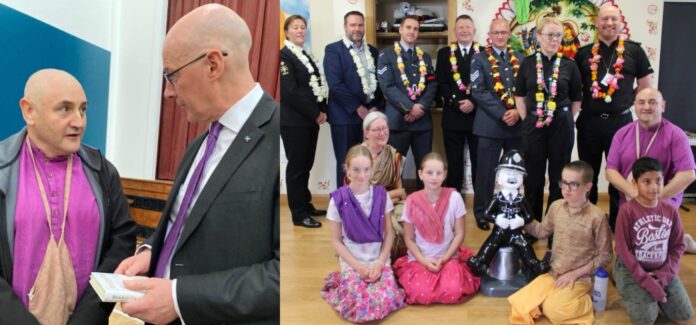
For almost forty years, ISKCON Karuna Bhavan Lesmahagow has cultivated a steady and unassuming presence—one founded not only upon formal preaching, but equally upon patient relationship-building within the local community. What began as pioneering book distribution throughout Scotland has, over time, naturally unfolded into a broader spectrum of outreach. This now includes food relief, wellness initiatives, youth engagement, and, most recently, a practical expression of care through support for a local boxing academy serving children from a socially deprived area.

The recent donation toward protective headgear for young participants at Bell’s Boxing Academy, may appear small in material terms. Yet for Prabhupada Prana Dāsa, Temple President of ISKCON Karuna Bhavan, it represents a meaningful continuation of a long journey—one directed toward sincere, trust-based engagement with those living around the temple.

The Growth of a Yātrā Through Constancy and Transformation

Prabhupada Prana Dāsa joined the International Society for Krishna Consciousness in 1983 and returned to Scotland in 1986, shortly before the formal establishment of what later became ISKCON Karuna Bhavan Lesmahagow. Over the ensuing decades, the yātrā passed through various phases, shaped by changes in leadership, physical location, and outreach emphasis. Each stage, he observed, contributed to the present stability of the temple and its ability to extend itself outward with confidence and maturity.

“This year marks forty years since I came to Scotland,” he reflected. “During that time, the yātrā has grown, relocated, consolidated, and matured.” Although administrative structures evolved, the essential purpose remained unchanged—to serve Śrīla Prabhupāda’s desire that Krishna consciousness be presented in a manner accessible and meaningful to local people.

In the early years, outreach was firmly centered upon book distribution. “We based our growth on Śrīla Prabhupāda’s instruction that if one simply distributes his books, there will be no financial difficulty,” Prabhupada Prana Dāsa explained. Devotees traveled widely across Scotland and northern England, supported by a robust network of nāma-haṭṭa programs. “At one time, we were conducting as many as twelve nāma-haṭṭas each week,” he recalled.

Expanding Outreach While Preserving the Essential Principle

While maintaining full faith in book distribution as the foundation of ISKCON’s mission, Prabhupada Prana Dāsa gradually perceived the importance of cultivating receptivity within the broader public. “Although we are presenting the highest knowledge, not everyone is prepared to appreciate it immediately,” he noted. Many people encountered the temple or its teachings unexpectedly, without prior context.

This understanding led to a gradual expansion of outreach activities—not as a replacement for traditional preaching, but as a supportive means of preparing hearts and minds. “One must create a favorable atmosphere,” he explained. “Often, people first connect through practical kindness, which later opens the door to deeper understanding.”

A prominent expression of this spirit has been the temple’s Food for Scotland initiative. During the COVID-19 pandemic, Karuna Bhavan distributed meals to shelters, hostels, and temporary housing. As restrictions eased, the focus shifted toward nearby villages.

“We began delivering prasādam meals door to door,” Prabhupada Prana Dāsa said. “We placed flyers through every letterbox, because many—especially elderly residents—are not digitally connected.” Since that time, he estimates that nearly one hundred thousand meals have been distributed. The program is now formally recognized by local authorities, who refer individuals and families in need directly to the temple.

Prasadam prepared by devotees and ready for distribution through the Food for Scotland initiative.

Holi Festival of draws 300–400 locals each year for kirtan, yoga, prasadam, Q&A sessions, and cultural activities.

Local residents, volunteers, and students take part in a wellbeing event featuring yoga and mantra meditation at Karuna Bhavan.

Support for Bell’s Boxing Academy: Outreach Expressed Through Practical Care

The connection with Bell’s Boxing Academy developed from relationships formed years earlier during the construction of the Gauranga Hall. A local father-and-son building team—both involved in boxing—had once utilized an unused barn on temple property to conduct classes for children. Although the space was later reclaimed by the temple, the personal relationship endured.

When the builders’ sons later established Bell’s Boxing Academy in Lesmahagow, they approached ISKCON Karuna Bhavan seeking assistance to purchase protective headgear for the children they serve. “Initially, I was uncertain,” Prabhupada Prana Dāsa admitted. “After all, it is Krishna’s Lakṣmī.” Seeking guidance from a senior godbrother clarified the matter. “He told me, ‘Your best public relations are with the local people.’”

The academy’s response was immediate and deeply appreciative. Andrew Bell publicly expressed gratitude to the temple, emphasizing how the donation contributed to the safety of the children. In time, he himself began volunteering with the temple’s food distribution program—demonstrating how the relationship naturally became reciprocal rather than merely transactional.

On one occasion, following incidents of vandalism on temple property, Bell addressed the children directly. “He gathered around thirty children and told them, ‘These are our people. They are helping us,’” Prabhupada Prana Dāsa recalled. “From that point onward, there were no further problems.” For him, this moment clearly illustrated how mutual respect arises organically when trust is sincerely established.

Shared Development and a Vision for the Future

Prabhupada Prana Dāsa perceives a natural connection between sporting discipline, community life, and spiritual culture. Having himself been a Scottish wrestling champion, he recognizes the parallels. “No one achieves anything—materially or spiritually—without discipline,” he observed. “Sports cultivate respect, self-control, and humility.”

Looking ahead, he foresees continued cooperation with local authorities and community organizations, undertaken with deliberation and care. Rather than viewing expanded outreach as a risk, he regards it as a conscious step toward collective growth. He likened this to a “goldfish leap”—the transition from a small bowl into a larger aquarium. “It is a movement into a broader space,” he reflected, “where there is greater opportunity to grow.”

In this way, such engagements are not merely acts of charity, but shared journeys of development, through which both the temple and the surrounding community gradually mature and benefit together.

Ultimately, Prabhupada Prana Dāsa emphasizes that authenticity lies at the heart of meaningful outreach. “Śrīla Prabhupāda wanted local people to become devotees,” he said. “And local people more readily relate to those they perceive as their own.”

The support extended to Bell’s Boxing Academy thus stands as a quiet yet powerful example of this principle in practice—demonstrating how steadiness, humility, and practical compassion naturally allow Krishna consciousness to extend beyond the temple walls.

Readers may follow ISKCON Karuna Bhavan Lesmahagow on Instagram and Facebook  for regular updates and community highlights, or visit the temple’s website to learn more about its outreach initiatives and devotional activities.

How Does Remembrance Of Kṛṣṇa Sustain The Soul In Suffering?

0

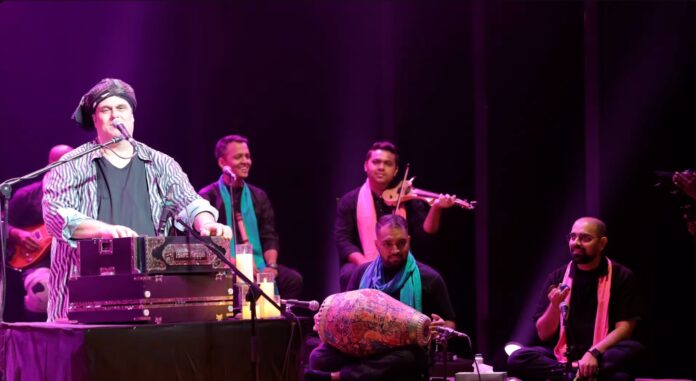
Gaura Vāṇī Music has released the first offering in a new series of music videos recorded during his successful concert held last year at the historic Royal Opera House. This inaugural presentation features “Wade in the Water,” a traditional African American spiritual that arose in the nineteenth century, deeply rooted in the lived experience, suffering, and profound spirituality of enslaved Africans in the United States.

In this distinctive rendering, the song is artfully interwoven with the timeless devotion of Draupadī, thus forming a bridge between cultures, histories, and sacred traditions. Reflecting upon this composition, Gaura Vāṇī Music explained, “It is a celebration of resilience, hope, and the transformative potency of prayer. At the moment when Draupadī was reduced to the condition of a servant, she called out by singing ‘Śrī Kṛṣṇa Govinda Hare Murāri,’ a sacred invocation that has nourished the hearts of devotees for more than five thousand years. United with the roots of American gospel, this music reveals how faith and devotion possess the power to transform suffering into liberation.”

Further videos from this concert will be released in the coming days. Those who wish to remain informed about Gaura Vāṇī’s continuing musical service may connect with him on Instagram, Facebook, and may also subscribe to his YouTube channel.

Click here to view the “Wade in the Water” video.

The Glories Of Vishranti-Tirtha

0
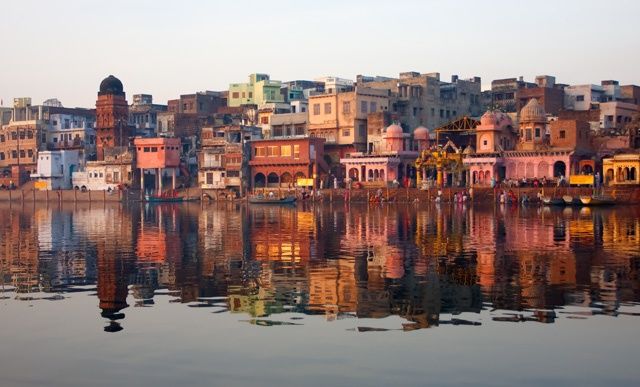
Vishrama Ghata
Vishrama Ghata, Mathura — the sacred starting point of Vraja Mandala Parikrama.

In glorification of Vishranti-tirtha, the Skanda Purana says, “One who bathes here will destroy all his sins and be freed from the agony and misery of the material world.”

In the Adi-Varaha Purana Lord Varaha says, “Hey Devi! Vishranti-tirtha is renowned throughout the three worlds. A person becomes worshipable in Vaikuntha Dhama if he takes bath here. Lord Gatashrama (Narayana) is situated here in this beautiful place. By His darshana one achieves the results from bathing in all other holy places.”

The Padma Purana says, “Bathing at Vishrama Ghata, is one hundred times more superior to bathing in the Ganges River at the triveni-sangamduring the Magh-mela.”

In the Mathura Mahatmya it says, “Bathing at Keshi Ghata is one hundred times more beneficial than bathing in the river Ganges, but to bathe at Vishrama Ghata, is one hundred times more beneficial than bathing at Keshi Ghata.”

In the Saura Purana it says, “Vishranti-tirtha destroys all sins and offers rest from the fatigue of wandering through the desert of material existence. Anyone who bathes here and worships Achyuta will be released from the fire of material existence and attain immortality.

Yamaraja-Yamuna Mandira (Yama-Yami Mandira)

This small temple is known locally as the Yama-Yami Mandira and it is dedicated to the brother and sister duo Lord Yamaraja and Yamuna Devi, whose father was the sun-god Lord Surya-narayana. There is a great religious festival held here during Kartika every year on the day after Govardhana Puja and known asBhaiya-duja or Yama-dwitiya. This is the occasion when brothers and sisters arrive from all over Vraja to bathe together in the River Yamuna at Vishrama Ghata and then perform puja at the Yama-Yami Temple.

This festival is held in celebration of the time when Lord Yamaraja, came to visit his sister Yamuna Devi on her birthday. Lord Yamaraja had been longing to meet his twin sister and finally got the opportunity during her birthday celebrations. Yamuna Devi received her brother in the most befitting manner and served him with a wonderfully prepared meal. Lord Yamaraja was so pleased with the reception and service of his sister; he asked her what benediction she wanted.

The ever-merciful Yamuna Devi asked for a special boon, that if any brother and sister bathed together in the River Yamuna on her birthday, they would be freed from all their sins and not be called to the court of Yamaraja at their time of death. Lord Yamaraja agreed to Yamuna Devi’s proposal saying, “So be it”. In another version of the legend Yamuna Devi asked a boon that on this day all those brothers who visit their sister’s house and take a meal cooked by her will never go to Naraka.

Lord Yamaraja agreed and also promised that any sister, who invites her brother and serves food to him on this day, will never become a widow. Consequently, many hundreds and thousands of brothers and sisters congregate at Vishram Ghata to bathe in the River Yamuna and offer prayers at the Yama-Yami shrine on this particular day.

Gatashrama Narayana Mandira

This is a popular temple with the local people of Mathura and was established in 1867 by the followers of the Ramanuja sampradaya. The Deity in the temple is a four-armed form of Lord Vishnu known as Gatashram Narayana. The temple is located near to Vishrama Ghata on a hillock known as Gatashrama-tila; one of the famous hillocks of Mathura. In the Adi Varaha Purana it says. “Hey Devi! Vishranti-tirtha is renowned throughout the three worlds. A person becomes worshipable in Vaikuntha Dhama if he takes bath here. Lord Gatashrama (Narayana) is situated here in this beautiful place. By His darshana one achieves the results from bathing in all other holy places.” From this verse it can be seen that Vishrama Ghata and Lord Gatashrama Narayana are synonymous with one-another.

Stay Connected

16,985FansLike
12,500FollowersFollow
61,453SubscribersSubscribe
Have a question?Send us an enquiry. We usually reply within a day.