Mail ID: contact@vedavarsity.com

Contact: +91 9634998911

Google search engineGoogle search engine
Home Blog Page 159

Book Review – Ashta-Sakhis: The Closest Friends of Srimati Radharani

0

Ashta-Sakhis: The Closest Friends of Srimati Radharani offers a rare and intimate glimpse into the lives and personalities of the eight principal gopi associates of Srimati Radharani. Published by ISKCON’s Congregation Development Ministry (CDM), the book is authored by Gourangi Gandharvika Devi Dasi and represents years of heartfelt service, in-depth research, and devotional celebration in Sridham Mayapur.

Raised in the spiritual atmosphere of Mayapur since the age of seven, Gourangi Gandharvika Devi Dasi has spent the last two decades taking daily darshan of Sri Sri Radha-Madhava. Her deep connection with the Deities and inspiration from Jananivas Das led her to explore the unique personalities of the Ashta-Sakhis—Lalita, Visakha, Chitra, Champakalata, Tungavidya, Indulekha, Rangadevi, and Sudevi.

“I used to stand in front of Radha-Madhava and think, ‘I don’t know enough about Their closest associates,’” she shared in a recent interview. That longing to understand and serve more personally eventually manifested into active participation in Mayapur’s annual celebration of the Sakhis’ appearance days. Each sakhi’s day was marked with themed altar decorations and community engagement—Indulekha’s day featured a sewing workshop scene, and Chitra’s celebration invited artists to offer their drawings directly to the Deities.

Her involvement in these celebrations inspired her to delve deeper into the lives of the Ashta-Sakhis. “Our movement is personal. Krishna is a person, Radharani is a person, and so are the Sakhis. They all have their unique personalities and talents. The more we know them, the more we can learn how to love and serve Radha-Madhava,” she said.

The book is designed to be accessible to all age groups, not just children. It is divided into two parts: a main volume for adults and a combined set for children and families that includes an activity book. The main volume describes each Sakhis’ qualities, talents, services, and pastimes. At the same time, the activity book offers over 125 crafts, puzzles, and games to help families and children engage with the Sakhis in a practical and personal way.

One of the book’s most striking features is its beautiful art and graphics, which are both attractive and appealing. The visual presentation makes the content engaging and accessible, offering a very effective way to remember the Ashta-Sakhis—something that can otherwise be quite difficult given their distinct personalities and roles. Each chapter is dedicated to an individual sakhi and includes additional pastimes that bring their character and service to life in vivid detail.

In preparing the content, Gourangi Gandharvika Devi Dasi drew from authoritative Gaudiya Vaishnava texts such as Govinda-līlāmṛta, Śrī Rādhā-Kṛṣṇa Gaṇoddeśa Dīpikā, and Gaur Govinda Archana Paddhati. The book aims to help devotees, young and old, deepen their relationship with the Divine Couple through the mercy and example of the Sakhis.

“This is not just a book project—it’s an invitation,” the author emphasized. “If we want to learn how to love and serve Krishna, there’s no better example than the Sakhis. Their love is unmatched, and their service is perfect.”

Ashta-Sakhis: The Closest Friends of Srimati Radharani provides a meaningful resource for families, educators, and devotees worldwide seeking to engage in deeper meditation and understanding of these exalted personalities. Through its combination of scholarly research, beautiful visual presentation, and practical devotional activities, the book serves as both an educational text and a spiritual guide for those wishing to enhance their connection with Radha-Madhava through the mercy of the Ashta-Sakhis.

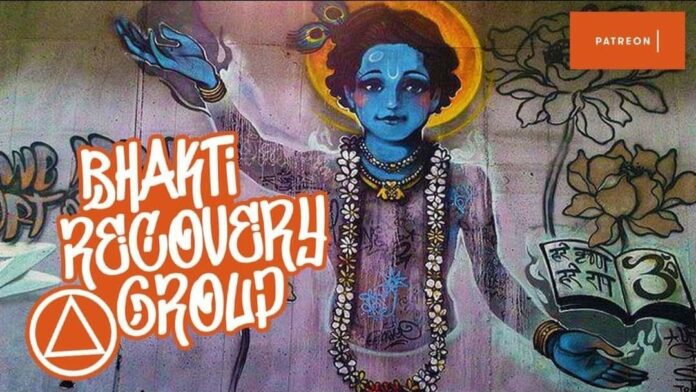
Bhakti Recovery Group Marks Five Years of Healing Service

0

Recently, the Bhakti Recovery Group (BRG) celebrated the five-year anniversary of its support network for devotees seeking healing through bhakti and the Twelve Steps. To commemorate the milestone, members from across the world gathered online for a heartfelt celebration. On a softly lit Zoom call, faces from Berlin to Bengaluru filled the screen. Some smiled, some cried, and others simply listened. Founder and guiding force Jiva G. watched from her home altar, overwhelmed with gratitude. “I started to cry,” she said. “To hear devotees say this helped them rebuild their relationship with Krishna, that was everything.”

Since its humble beginnings during the pandemic, BRG has grown into a worldwide fellowship where faith and recovery meet in shared vulnerability and service. Under Jiva’s leadership and with the guidance of Radhanath Swami, the group has built a spiritual bridge between the Twelve Step process and the path of bhakti. Five years on, Jiva reflected on what she’s learned, how far the movement has come, and what she envisions for the future. 

Early Days: From Personal Need to Service

Jiva remembers the moment her life turned toward healing. “After getting released from jail, dope-sick and desperate, I had lost everything,” she recalled. “Then one night in Germany, standing in the snow, I realized it didn’t have to be this way.”

Her first experiences with recovery came through Alcoholics Anonymous and Narcotics Anonymous, but lasting sobriety only took root when she began practicing bhakti-yoga. Through the guidance of her spiritual teachers and her own lived experience, she noticed how many devotees struggled silently with addiction, emotional pain, or unhealthy coping patterns. “We needed a place for radical honesty, a space where we could bring our struggles to Krishna,” she said.

Encouraged by Radhanath Swami to “use your creative intelligence,” she began facilitating small gatherings that blended the Twelve Steps with devotional practice. Those meetings soon attracted devotees seeking a similar path. “Our desire is that no devotee seeking recovery should ever have to be alone again,” she explained. Out of that intention, the Bhakti Recovery Group took shape.

Jiva G. smiles over her shoulder, embodying the joy and gratitude that have helped to carry the Bhakti Recovery Group through its first five years.

Building Credibility and Overcoming Resistance

Earning recognition from both the recovery world and ISKCON took persistence. Some in the secular Twelve Step community hesitated to embrace a spiritually specific approach, while a few devotees found it difficult to discuss addiction or powerlessness within a devotional framework. Jiva faced these doubts with patience. “Trying to fight this fight alone is pretty arrogant,” she said. “But only Krishna is more powerful than Maya.”

She developed a clear meeting structure that honored both traditions. Sessions opened with the Serenity Prayer, included readings from Twelve Step literature and Srila Prabhupada’s books, and closed with chanting or gratitude sharing. “We talk about what really gets in the way of our relationship with Krishna,” Jiva said. “The steps simply give us language for surrender.”

Over time, acceptance grew. One member described it this way: “The BRG has been my safe place for about a year now. I can talk about my struggles openly and honestly and be seen and heard lovingly.”

Growth and Milestones

From those early online gatherings, BRG has expanded into a global network with regular meetings across several continents. Its retreats in places like Alachua, Florida, and the United Kingdom have become milestones for many members’ recovery journeys. One attendee shared, “I attended the UK BRG retreat and found it to be one of the most transformative experiences of my life. Everything was just perfect, the location, the food, the people, the energy.”

The atmosphere at these retreats is one of deep honesty and support. Imagine a quiet hall at dawn, chairs set in a circle, soft kirtan echoing through the room, and mugs of tea warming devotees’ hands. Stories of struggle unfold with rawness and courage. There are tears, laughter, and moments of stillness that feel like prayer. “People shared how much the Bhakti Recovery Group saved their lives,” Jiva said. “I started to cry.”

This year’s fifth-anniversary celebration carried that same spirit. From dozens of screens, devotees offered gratitude and shared milestones, thirty days clean, six months sober, or renewed service in their temples. What connected them all was the same realization: recovery and bhakti could thrive together.

A collage capturing moments from Jiva G.’s journey over the last five years.

Current Landscape: What BRG Looks Like Today

Now functioning under the Jagai-Madhai Foundation, a registered nonprofit organization, the Bhakti Recovery Group has matured into an international network that supports regular meetings, training programs, and retreats. Participation is always free, reflecting the group’s core commitment to recovery through devotion and service.

“The BRG has given me a safe space to share my material struggles without fear of judgment or condemnation,” said one participant, describing the atmosphere of trust that defines the community. Today, BRG hosts online and in-person meetings across multiple time zones and organizes workshops to train facilitators and community leaders to guide others in recovery. The group also produces a podcast where Jiva and guest devotees discuss the Twelve Steps and bhakti, exploring how honesty and humility nurture spiritual growth.

Through these combined efforts, BRG has become a steady, inclusive space for healing within the broader ISKCON community. 

Looking Ahead

Jiva’s vision for the future is both practical and inspired. She hopes to establish four major retreats each year – one on every continent – and to train leaders who can sustain meetings in their own regions. One of her priorities is expanding male leadership within the program. “Addiction takes many forms, and some men need to speak to men about their struggles,” she said.

While women have carried much of the service in BRG’s early years, Jiva believes male facilitators are essential for addressing challenges such as pornography, sexual addiction, and the emotional burdens men often hide. “It’s about making sure everyone has someone they can relate to,” she said.

In the next phase, BRG aims to deepen its retreat structure, strengthen its mentorship programs, and bring recovery meetings into temple communities and university campuses. “When one person’s life changes, you’re doing the work,” Jiva said. “Everything else is Krishna’s magic.” 

Personal Stories of Change

During one meeting, a young devotee shared that she realized she had been “using chanting as a drug.” She was following all the external practices of bhakti but felt disconnected inside. Through BRG, she learned to chant with vulnerability and sincerity. “I’m not just sober,” she said. “I’m conscious again.”

Another participant spoke about emotional eating. “For years, I was talking to food instead of my sweet Lord Govinda.” Through the Twelve Steps and bhakti practice, she began transforming her cravings into prayer and learned to see her body as a tool for Krishna’s service.

These stories reveal the heart of BRG’s impact. Week after week, devotees gather to share their experiences and support one another’s progress. Every tale of recovery becomes a story of renewed faith. 

A Living Legacy

This fifth anniversary offered both reflection and hope. What began as one devotee’s effort to find spiritual recovery has become a global community of healing. “I started this out of desperation,” Jiva said. “Today we lead out of hope.”

BRG continues to remind devotees that openness and surrender are strengths, not weaknesses. As the movement enters its next five years, it stands as a living example of compassion in action, a reminder that with sincerity and guidance, healing and devotion can walk side by side.

Tradition Meets Compassion as ISKCON Kharghar Unveils Mechanical Elephant

0

Actress and advocate Hema Malini with Gajendra.

In a ceremony that blended tradition with compassion, ISKCON Kharghar inaugurated Gajendra, a life-sized mechanical elephant, on November 9, 2025. The occasion marked a milestone for Sri Sri Radha Madan Mohanji Mandir as it became the first ISKCON temple and the pioneering religious institution in Maharashtra to embrace this innovative approach to temple rituals.

The grand opening ceremony, held at Hare Krishna Land in Sector 23, Kharghar, featured several eminent dignitaries. Smt. Hema Malini, a renowned actor, Padma Shri awardee, and Member of Parliament from Mathura, joined PETA India in presenting this remarkable gift to the temple. The event was further graced by Smt. Manda Vijay Mhatre, MLA from Belapur, and Sri Prashant Thakur, MLA from Panvel, alongside ISKCON Kharghar Temple President Dr. Sura Das and hundreds of devotees.

The ceremony opened with kirtan and Maṅgalacarana, after which Smt. Hema Malini and Dr. Sura Das jointly unveiled Gajendra. The event culminated with the inaugural arati offered to Their Lordships Sri Sri Radha Madan Mohanji. Devotees then participated in Gajarohan Seva and parikrama, experiencing for the first time how the elephant integrates into traditional worship practices.

Standing three meters tall and weighing 800 kilograms, Gajendra represents a remarkable fusion of engineering and spirituality. Constructed using rubber, fiber, metal, mesh, foam, and steel, it operates on five motors and runs on electricity. The elephant can perform lifelike movements – shaking its head, flapping its ears, moving its eyes, swishing its tail, lifting its trunk, and even spraying water. Most importantly, devotees can climb upon it and it can be taken in processions, fulfilling all traditional ceremonial requirements.Devotees riding Gajendra, the mechanical elephant in the procession.Hema Malini speaking at the event.Dr. Sura Das addressing guests.Dr. Sura Das with Gajendra and honoring PETA’s efforts.

The distinguished guests shared their perspectives on this initiative. Smt. Hema Malini, a member of ISKCON and an animal lover, expressed her honor in partnering with PETA India for this gift. She exclaimed, “This modern approach allows us to continue age-old traditions while ensuring real elephants remain in jungles with their families as God intended.”

MLA Prashant Thakur highlighted Navi Mumbai’s pride in hosting Asia’s second-largest ISKCON temple, setting a global precedent. He noted how the initiative demonstrates Maharashtra’s forward-thinking approach and India’s foundational values of ahimsa (non-violence) and empathy, showing that faith and technology can harmoniously coexist for animal protection and cultural preservation.

Manda Vijay Mhatre, the MLA from Belapur, remarked that the initiative reflects how temples can preserve the sanctity of traditional rituals while fostering compassion toward all living beings, while PETA India’s Vice President of Celebrity and Public Relations, Sachin Bangera, added that the mechanical elephant Gajendra symbolizes the principles of ahimsa and reverence for all forms of life.

Dr. Sura Das, President of ISKCON Kharghar, said that in the Bhagavad-gita, Lord Krishna teaches us to see all living beings with equal vision. “Protecting animals—especially those dear to Lord Krishna and Lord Ganesha—is our dharma. A mechanical elephant allows us to honor our traditions while upholding the principle of ahimsa (non-violence),” he shared.

The increasing use of life-like elephants for religious ceremonies and cultural events follows growing awareness of the cruelty faced by elephants captured from forests, trained, and kept in captivity—often under harsh, unnatural conditions. According to PETA India, in 2024, there were at least fourteen incidents across the country where captive elephants harmed or killed their mahouts. In the first few months of 2025 alone, sixteen elephants used for festivals and processions in Kerala became unruly, resulting in six deaths and several injuries. “By adopting a mechanical elephant, we align with Krishna’s teachings of love, devotion, and care for all creatures,” Sura Das added.

ISKCON Kharghar’s adoption of Gajendra sends a powerful message to religious institutions worldwide. This pioneering step demonstrates that devotion and compassion are not only compatible but complementary, paving the way for other temples to follow suit and embrace practices that honor both ancient traditions and the welfare of all living beings.

ISKCON Finland Holds International Gita Mahotsav 2025 with Embassy of India

0

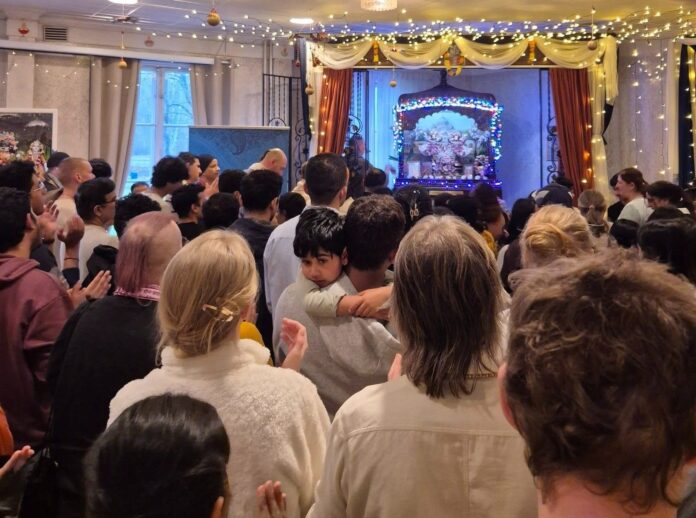
On Sunday, 9th November 2025, ISKCON Finland, in collaboration with the Embassy of India, celebrated the International Gita Mahotsav. The initiative by the Government of India and the Indian Embassy, in partnership with ISKCON Finland, created an inspiring event dedicated to sharing the timeless wisdom of the Śrīmad Bhagavad-gītā, spoken by Lord Śrī Kṛṣṇa.

The celebration featured inspiring speeches by Tapo Divyam Dasa, Leader of ISKCON Finland, and His Excellency Mr. Hemant Kotalwar, Ambassador of India to Finland.

Tapo Divyam Dasa remarked, “It was inspiring to hear the Ambassador share his personal appreciation for the Bhagavad-gītā and to recognize Śrīla Prabhupāda’s tireless efforts to bring its wisdom to the world.”

Ambassador Kotalwar praised ISKCON’s global contributions and highlighted the Gita’s profound influence on Mahatma Gandhi, who said: “When doubts haunt me, I turn to the Gita and find a verse that comforts me, and I begin to smile even amidst sorrow.”

A special highlight of the program was the beautiful recitation of favorite Bhagavad-gītā verses by our community’s children — Veer, Elle, Kabir, and Reyanshi.

Madhu Sevita Dasa delivered an engaging katha summarizing the essence of the Bhagavad-gītā, followed by an open discussion with the community members. After the talk, the program continued with a sacred arati ceremony and prasadam.

Tapo Divyam Dasa thanking Ambassador Kotalwar (upper left) & coordinator (upper right) of the project with the gift of the Bhagavad-gita. Welcome speeches by Guruttama Dasa (below left) and Tapo Divyam Dasa (below right).Ambassador Kotalwar speaking to those gathered at the event.Madhu Sevita Dasa giving a presentation at the event.A display of the Bhagavad Gita As It Is in different languages.Sri Sri Gaura Nitai at ISKCON Helsinki.Srila Prabhupada at ISKCON Helsinki.

Guruttama Dasa, Communications Manager for ISKCON Finland, added, “Having the Bhagavad-gītā translated into the local language is a priceless treasure. Who could have imagined that the divine and eternal message spoken on the battlefield of Kurukṣetra would be flourishing here in cold-climate Finland for over 40 years? Our heartfelt gratitude goes to Śrīla Prabhupāda and the dedicated local devotees.”

ISKCON Finland expresses sincere gratitude to the Embassy of India and Ambassador Kotalwar Ji for their support in organizing this event.

TOVP Shares Construction Update on its Main Wing

0

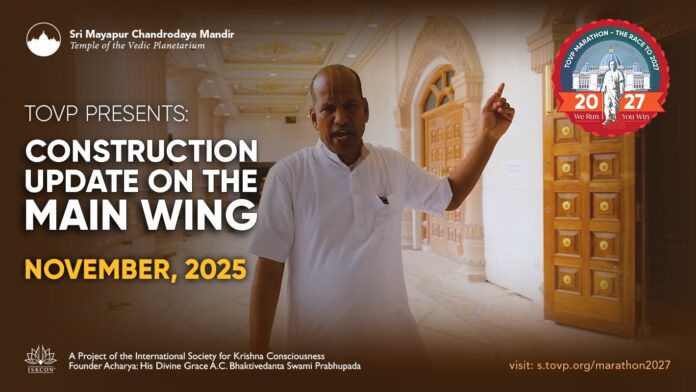
Braja Vilasa Dasa gives us a construction update on the Main Wing of the TOVP, while taking us on a tour of key areas where work is ongoing 24/7 for the next two years as we approach the Grand Opening.

From elaborately designed marble pillars and columns, to amazing jari work in-between the pillars, to acoustic-enabled ceilings with gold-leafed lattice work and lighting panels, to the immense marble Das Avatar Murtis situated throughout the temple room, to the huge, elaborately arrayed teak double-doors along the parikrama path around the temple room, to magnificent inlaid marble floors, the work continues unabated daily. As explained by Braja Vilasa, “Everything is being done to create an atmosphere of devotion to the Supreme Personality of Godhead. Every element, every design, every column, every beam, everything is perfectly designed to invoke emotions to the Lord.”

We hope that this video will inspire you, our readers, to continue your support of the TOVP either by fulfilling your pledge, making another donation, or giving for the first time. The TOVP is now scheduled to open during a three-month celebration starting on Srila Prabhupada’s 50th Disappearance Anniversary, November 1, 2027. We need your determined support.

Please visit the TOVP Marathon 2027 page to learn about sponsorship options and give your best for Srila Prabhupada’s most cherished project. Ambarisa prabhu is matching $10 million during the next two years

Rising Concerns: ISKCON Bangladesh Highlights Increasing Security, Social, and Administrative Challenges

0

The International Society for Krishna Consciousness (ISKCON) and the broader devotee community in Bangladesh have reported an increasing number of security risks, social pressures, administrative complications, and misinformation-related incidents across the country. A recent internal report from ISKCON Bangladesh highlights several challenges affecting temples, religious programs, and the personal safety and rights of devotees.

According to the report, IS KCON temples, Namhatta centers, and ashrams—especially those located in remote regions—are facing increased threats of vandalism, harassment, and sudden attacks. The organization says that many centers are unable to maintain night guards or CCTV systems, which keeps smaller communities particularly vulnerable.

Social and Administrative Harassment

The report states that devotees continue to face social mockery, pressure, and obstacles while practicing their religious activities. Wearing tilak, kanthi-mala or devotional attire reportedly results in negative comments and discriminatory treatment in some areas.

There are also allegations of bias during government job interviews and university admissions, where candidates are questioned about their affiliation with ISKCON. Some applicants have expressed concern that background checks may unfairly disadvantage them because of their religious identity.

Concerns Over Digital Propaganda and False Accusations

ISKCON leaders say that misinformation and propaganda on social media have become a serious threat. Fake pages, edited videos, and fabricated posts are being used to spread confusion and create hostility toward the community.

The report further notes instances where false allegations or cases have been filed against devotees, often after personal disputes are “given a religious angle.” These accusations, even when unproven, cause reputational damage and social fear.

Media Reporting and Administrative Misidentification

The organization has expressed concern over incidents where media outlets publish unverified reports, sometimes using inappropriate terms that portray the community in a negative light. ISKCON Bangladesh notes that in certain cases, individuals not affiliated with the organization are mistakenly introduced in the media as “ISKCON leaders,” resulting in public misunderstanding.

Challenges in Temple Property and Development Work

The report also highlights issues related to temple land disputes, attempts at property grabbing, banking complications, and administrative delays. These challenges have impacted temple development projects in several regions.

Women Devotees Face Additional Risks

The report notes that women devotees (Matajis) face heightened security concerns, particularly during travel, festivals, and religious events in rural areas. Verbal harassment and safety threats remain ongoing issues.

Impact on Religious Freedom and Social Harmony

According to ISKCON Bangladesh, these challenges are contributing to a decline in the sense of security among the Hindu minority community. The organization warns that if these issues remain unaddressed, they may affect social harmony and undermine religious freedom in the country.

Top Five Challenges Identified

The report identifies the following as the most critical problems:

1.⁠ ⁠Security threats to temples and devotees

2.⁠ ⁠Spread of misinformation and online propaganda

3.⁠ ⁠Risk of false cases and harassment

4.⁠ ⁠Social pressure and discrimination due to minority identity

5.⁠ ⁠Attempts to distort ISKCON’s public image

Call for Cooperation

ISKCON Bangladesh has called on the government, law enforcement agencies, civil society, human rights groups, and the media to work together to ensure safety, accuracy in reporting, and protection of religious rights.

The report concludes with a reminder that ISKCON has long contributed to promoting peace, cultural harmony, and moral values in Bangladesh, and urges all concerned stakeholders to support efforts to safeguard the community and its activities.

Enthusiasm Soars at New Vrindaban’s 10-Day Deity Worship Course

0

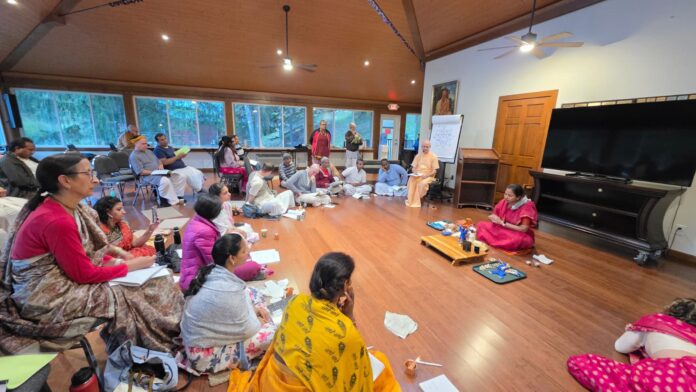
ISKCON New Vrindaban recently hosted a 10-day Deity Worship Course facilitated by Nṛsiṁha Kavaca Dāsa of the ISKCON Deity Worship Ministry (IDWM). He was joined by a skilled teaching team consisting of Murali Manohar from England, Vraj Mohan Das, Rasa Devī Dāsī, and Nāmaruci Das. This year’s participation exceeded expectations, with 37 students registering—nearly double the ministry’s preferred class size. The IDWM typically aims for 26–30 participants, with a minimum of 20, to allow for personal attention and to meet basic financial needs for teachers and administrative support. Students are charged a flat fee to help sustain the ministry, while all other costs are handled separately.

With a desire to support the ministry and enhance Deity worship across North America, ISKCON New Vrindaban offered free accommodation and prasadam to all attendees. Students only covered their transportation and the standard course fee designated for the IDWM. Due to an unusual and unexpected registration glitch, the class size swelled to 37 participants. Rather than causing difficulty, the larger group generated heightened enthusiasm and energy throughout the training.

A Beautiful Setting for Sacred Learning

The course took place in the Yogashala, overlooking Kusum Sarovara, the chattras, and the swans gliding peacefully across the water. Mild autumn weather enriched the experience, although Nṛsiṁha Kavaca, visiting from New Govardhan in Australia, joked that he would have preferred slightly warmer temperatures. Participants represented a wide range of backgrounds, including those not yet initiated, devotees preparing for initiation, newly first-initiated participants, and many second-initiated devotees who had never previously received formal Deity worship training. The teachers created an accessible and enlivening introduction to the sacred art and discipline of Deity worship.

“What Would You Do if Krishna Knocked at Your Door?”

A theme that deeply resonated with students centered on the question: “What would you do if Krishna Himself knocked at your door?” From this inquiry, the course opened into a profound exploration of Vaiṣṇava hospitality and the traditional culture of receiving sacred guests. Scriptures detail the etiquette involved in receiving the Lord, such as offering a seat, washing the feet, providing scented water, offering prayers, giving a refreshing bath, massaging with fragrant oils, and creating a peaceful, worshipful environment with incense, āratis, mantras, and yagyas. These time-honored principles shape the foundation of Deity worship in all ISKCON temples.

The Structure of Worship

Nṛsiṁha Kavaca explained that every act of worship—whether offered to Guru, Śrīla Prabhupāda, or the Deities—follows three essential components: meditation, pūjā, and prayers. The meditation aspect includes contemplating the sacred space and the personality being worshiped. Pūjā involves both mānasa-pūjā, performed within the mind, and bāhya-pūjā, the physical offering. The final section includes prayers, stutis, and pranāmas offered specifically to each deity. Together, these elements create a “sandwich” of worship that is personal, intimate, and spiritually transformative.

Intensity, Discipline, and a Culture of Study

For the full 10 days, students immersed themselves with remarkable intensity. There was no social downtime or distraction. Instead, participants spent every spare moment studying handouts, walking while reciting mantras, practicing Sanskrit terms such as āsanam, svāgatam, and pādyam, forming study circles, and repeatedly reviewing procedures and mantras. Family members remarked on the noticeable changes they saw in their spouses, observing increased discipline, early rising, and constant dedication to study.

Assessments: Thorough and Transformative

Students participated in several assessments throughout the course. Their ācāmana cups were inspected daily, and the challenge was heightened by the use of copper cups, which required extra effort to clean. They completed purification mantra tests and demonstrated their understanding of ingredients used in the Sixteen Upacāras. The final worship exam required each participant to perform a complete pūjā from memory, without using a book, a process that took some devotees up to 1.5 hours. Alongside these practical assessments, the course also prompted deeper reflection on values, ethics, lifestyle purity, and how Deity worship purifies the practitioner internally.

A Lasting Impact

Participants concluded the course with a heightened sense of responsibility, an increased appreciation for Deity worship, and renewed enthusiasm for maintaining devotional integrity. Many felt a stronger personal connection with the Lord. The IDWM team expressed great satisfaction with the experience and announced plans to return in two years for the next training, an opportunity ISKCON New Vrindaban looks forward to hosting again.

Encouragement for All Students

The broader community is encouraged to support and uplift the devotees who completed this rigorous and inspiring course as they deepen their practice of Deity worship and carry these teachings forward.

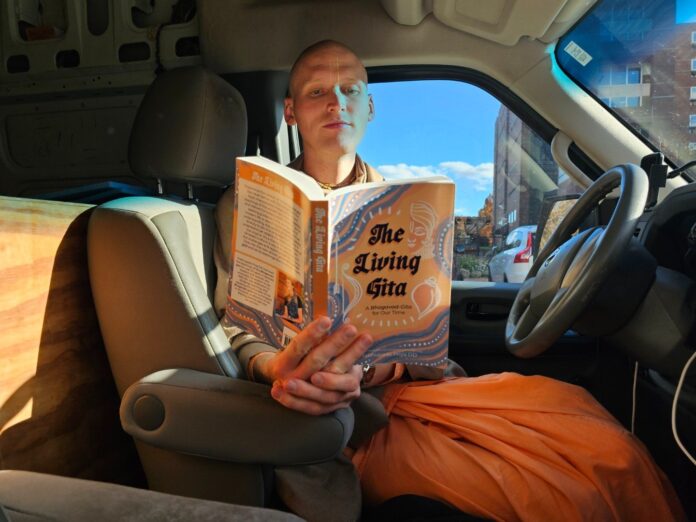
Book Review: The Living Gita – A Landmark in ISKCON History

0

If you thought you knew the Bhagavad-gita, think again.

Srila Prabhupada’s Bhagavad-gita As It Is is an endless mine of gems. Prabhupada Priya Devi Dasi, a veteran miner, offers priceless, jewel-like insights through her modern, accessible translations and commentaries, grounded in Prabhupada’s masterpiece. Whether someone is approaching the Gita for the first time, growing as a dedicated practitioner, or sharing its wisdom as a teacher, The Living Gita speaks to every reader.

Prabhupada Priya, a Bhaktivedanta scholar and graduate of the Vrindavan Institute of Higher Education (VIHE), grew up in a Christian home in the US and struggled to connect with the Bible despite her sincere efforts. When she discovered The Living Bible text (a simpler, more conversational paraphrase of the Christian scriptures), however, she could finally grasp its devotional wisdom. Based on her experience, she wanted to offer an easily digestible version of the Bhagavad-gita for those who struggled, as she did, as a child.

For those who already appreciate the Gita and want to hear its timeless wisdom from different angles of vision, The Living Gita will increase one’s appetite to apply and live the Gita. Prabhupada Priya often sheds new light on Srila Prabhupada’s metaphors and presents the same concepts with words and analogies to which readers in 2025 are sure to relate.

Anyone who teaches the Bhagavad-gita will find The Living Gita to be a powerful resource as well. Prabhupada Priya combines related, sequential verses and gives a captivating title to each section (e.g., “When Life Gets Complicated”), which are excellent topics for classes and discussions. What’s more, she clarifies the flow of Krishna and Arjuna’s conversation by adding a short “link” between each section.

Prabhupada Priya’s The Living Gita is not only perfect for public distribution, personal study, and group discussion, but also the first complete Bhagavad-gita commentary ever written by a Vaishnavi author, marking a historic milestone in ISKCON’s history.

While Srila Prabhupada’s Bhagavad Gita As It Is has transformed millions of souls around the world and will continue to do so, some people aren’t immediately able to relish and apply it. Personally, I wish I had received a copy of The Living Gita along with Prabhupada’s Gita when I first met a devotee after graduating from college in 2016. If I had, I might have been able to avoid the most painful and confusing period of my life before ending up in Krishna House in 2018, when I had the fortune to learn from Prabhupada Priya.

Published in February 2025, it is available in paperback (332 pgs.) or on Kindle. To purchase, click here

To follow Prabhupada Priya on Instagram, click here, and subscribe to her YouTube channel here.

Opinions expressed do not necessarily reflect the opinions and beliefs of ISKCON or ISKCON News.

Need is Urgent as Typhoons Devastate Cebu Following Earlier Earthquake

0

Isla Pula, one of the coastal and riverside communities completely devastated by flash floods and storm surge during Typhoon Tino.

Government Mobilizes Relief as Damage Spreads Across the Visayas

Local government reports estimate that over 180,000 families across the region have been displaced by the combined impacts of the earthquake and typhoons, with more than 200 fatalities and over 100 people still missing. Cebu’s provincial government declared a state of calamity, activating emergency funds and coordinating with national agencies to lead search-and-rescue operations, distribute relief goods, and assess damaged infrastructure.

A temporary price freeze on essential goods was imposed, and the Social Security System (SSS) opened a calamity loan program to help affected workers. Neighboring provinces dispatched additional supplies, but ongoing aftershocks, collapsed roadways, and the scale of destruction left coverage gaps, particularly in areas farthest from main towns.

“Relief efforts are slow as the local government units and personnel themselves are also victims,” explained Gopal Krishna Das of ISKCON Cebu, emphasizing the strain on already-limited local resources.

More than 200 confirmed dead and over 100 missing after the storms, as rescuers worked tirelessly through the aftermath.
Residents of Talisay City were trapped by sudden, 20-foot flash floods after flood-control levees failed.

ISKCON Cebu Responds with Compassion and Urgency

As official systems struggled to reach every affected community, ISKCON Cebu’s Food for Life team stepped in to support the worst-hit areas. Having already mobilized after the September earthquake, devotees expanded their service as the typhoons struck.

“In our immediate area, thousands of families lost their homes, property, and livelihoods,” Gopal Krishna said. Heavy rains gathered behind the mountain range and suddenly surged downstream, destroying dams, reservoirs, and flood-control structures. “We still have no water supply as the dam and pipes are being repaired,” he added.

A Focus on Water as Supply Systems Collapse

With reliable water almost entirely cut off, the Food for Life team shifted its relief strategy to prioritize safe drinking water. “We are working daily to purchase bottled water, offer it, and distribute it as prasad,” Gopal Krishna explained. For many families, bottled water is now used not only for drinking but also for cooking and basic sanitation, making it an urgent and costly necessity.

The GoFundMe campaign notes that water remains one of the most critical needs: “The dam and main water pipelines are still not repaired… water hasn’t been restored in the majority of towns.”

Monterey School Inc., led by director Raquel Del Monte, together with the admin team, teachers, staff, PTA officers, and student officers with prasadam packages for distribution.

The school’s student officers placing “offered” water into relief packs for families.

Residents of Isla Pula receiving the water before prasadam distribution.

Shelter, Food, and Support Through Local Partnerships

To assist broader community efforts, Gopal Krishna’s family opened their private school, Monterey School, Inc., as an evacuation center, sheltering displaced families during the storm and keeping the space open for days afterward. The school’s Parent-Teacher Association coordinated food and essential supplies, while ISKCON Cebu volunteers focused on daily water distribution. This cooperation has allowed the team to reach several barangays that remain difficult to access due to landslides and damaged roads.

Planning for Long-Term Relief and Rebuilding

As their service expands, ISKCON Cebu is preparing for long-term recovery. With homes destroyed, access roads unstable, monsoon rains ongoing, and water infrastructure heavily damaged, devotees anticipate months of continued relief. Their fundraising page highlights additional needs ahead: cooking supplies, hygiene kits, infant care items, medicines, sleeping mats, and basic tools for rebuilding.

The community is also seeking broader international assistance with water filtration systems, transport logistics, and support for disaster-resilient infrastructure to help stabilize their relief efforts beyond the emergency phase.Leaders Gopal Krishna Das and Jayasri Devi Dasi in Talisay City, one of the hardest-hit communities.Kula Pradipa Das and his wife, Jahnavi Jivana Dasi, in center, with some of the members of the ISKCON Cebu community before the disaster.The couple stands with the ISKCON Cebu devotees, supporting ongoing Food for Life relief outreach.

Global Devotees Rally Through a New Fundraising Initiative

To facilitate international support, Kenneth “Kula” Nacario Lee (Kula Pradipa Das) and his wife, Jahnavi Harrison Lee (Jahnavi Jivana Dasi), launched the GoFundMe campaign “Support ISKCON Cebu After Natural Disasters.” As the organizers, they explain that every contribution is transferred directly to ISKCON Cebu’s Food for Life program, helping bypass the limitations that Philippine NGOs face when receiving overseas donations.

They highlight the responders’ dedication on the ground, citing that “Over 2,200 hot, plant-based, nutrient-dense bowls of prasadam have already been distributed,” despite aftershocks, inaccessible areas, and damaged infrastructure.

Their appeal also places this crisis in a broader environmental context, sharing that “With global warming intensifying, these weather disturbances are becoming more frequent and more destructive.”

A Call for Support and Solidarity

Through earthquake destruction, typhoon flooding, and widespread displacement, the Cebu devotees have continued to serve with steady commitment and compassion. Their efforts stand as a refuge for families facing one of the most challenging disaster seasons in recent memory.

To support their effort, readers are encouraged to visit the ISKCON Cebu fundraising page.

For ongoing updates, photographs, and information on how to assist further, please visit the ISKCON Cebu Facebook page. Your support can help sustain prasadam distribution, restore access to water, and bring hope to communities still struggling to rebuild.

The Superiority of Vedic Āryan Dharma

0

Amongst all the religions established in the world or all existing religions, the Vedic Āryan dharma is superior and most liberal. The particular excellence of Vedic Āryan dharma is that this dharma ensures the auspiciousness of the jīvas in all kinds of situations. All other religions are suitable for only certain specific conditions of the jīvas. They cannot function in all situations. All the religions that are prevalent in the world can be divided into five categories, namely:

Religion which aims at the eternal happiness of the jīvas.
Religion which destroys the happiness and distress of the jīvas.
Religion that promotes temporary happiness for the jīvas.
Moral religion which increases the collective happiness of the jīvas.
Religion which enhances the material capacity of the jīvas.


Another name for that religion which aims at the eternal happiness of jīvas is bhagavad-bhakti. The religion wherein a jīvā is recognised as eternal and it is understood that eternal bliss is the supreme necessity of the jīva is called bhakti. In that religion, the principal subjects – the nature of Godhead (bhagavad-tattva), the eternality of the jīva, the jīva’s servitude to Bhagavān, the impermanence of that which is in connection with matter, the eternality of the principle of divine love (prīti), etc – are universally accepted. All those religions in which the aforementioned principal subjects are recognised must necessarily be called religions aimed at the eternal welfare of the jīva. Whoever examines all religions, from a scientific perspective, will acknowledge that Christianity, Islam, Brahminical dharma, etc are all focused on the eternal happiness of the jīva. No matter what kinds of false distinctions exist within those religions, at their core, they are fundamentally of the same class.

The religion which destroys the happiness and distress of the jīvas is observed in many forms in the world. Amongst them, Buddhism, Pessimism, and Kevalādvaita Vedānta are foremost. This philosophy has arisen from time to time and has spread to many places in the world. In various countries, its form is different. However, the ultimate conclusion is the same everywhere. All these philosophies can be called religions that destroy the happiness and distress of the jīvas, because according to all these perspectives, the very existence of the jīva is inauspicious. The extinction of the jīva’s existence is considered to be the highest benefit. The elimination of existence is established in two ways. One kind is that the singular entity alone is eternal, possessing no qualities, and devoid of any transformation. The existence of the jīva, being full of faults and distinctions, is thus false and full of suffering. The state in which all these relative distinctions merge into the ultimate principle of non-differentiation is known as mukti, or nirvāṇa. Nirvāṇa alone is the eliminator of happiness and distress arising from duality. The religion through the practice of which that nirvāṇa is attained is called the religion that destroys the happiness and distress of the jīvas.

Scholars advocating nirvāṇa, such as Xenophanes and Parmenides, propagated this viewpoint in Greece. With the European region, this view was propagated in various forms by scholars such as Spinoza, Fichte, Schelling, and Hegel. Scholars such as Schopenhauer and Hartmann promoted this philosophy in the world in a different form, calling it Pessimism. In our country, Jainism, Buddhism, and Kevalādvaita Vedānta are followers of this doctrine. Modern figures such as Nanak, Śiva-Nārāyaṇa, Gorākṣanātha, Āule Cāṅda, and Jagannātha Dāsa* have introduced this philosophy into the community of those who worship God. Whatever form it may take, the doctrine that seeks ultimate dissolution in the form of mukti can boldly be said to be a religion which destroys the happiness and distress of the jīvas.

*Translator’s Note: One can read more about Jagannātha Dāsa here: Ativāḍī Apa-Sampradāya by Swami B.G. Narasiṅgha Mahārāja

Religion promoting the temporary happiness of the jīvas is observed in many forms in the world. This is known as the path of karma. According to this perspective, in some places Īśvara is acknowledged, while in others He is not. Bodily pleasure, pertaining to a divine body and other sensory enjoyments after the material body’s demise – is the tenor of this ideology. Through the gathering of ingredients and specific activities, that goal is achieved. In many ways, this doctrine has also secretly crept into various religions aimed at eternal happiness. In principle, the Muslim religion is indeed a religion aiming at the eternal goal; yet upon examining the sensual nature of the pleasures of its heaven, it becomes clearly evident that a religion focused on temporary happiness has surreptitiously entered into it. Religion striving towards temporary results is not so predominant in the Christian faith, but to say that it is entirely absent there would be incorrect. When the topic of resurrection is carefully examined, our doubt becomes stronger. Similarly, all the ideas concerning the Garden of Eden nourish that doubt.

Moral religion which increases the collective happiness of the jīvas which relies upon material science, has become favoured by many scholars. Materialism, positivism, socialism, and all such atheistic religions are included within the moral religions that promotes communal pleasure. It is not that moral religion for increasing collective happiness cannot exist within the three aforementioned religions. When the doctrine of collective happiness becomes independent of the above religions and beckons mankind, then it becomes materialism, positivism, or socialism. Religion aimed at the temporary happiness of the jīva always acknowledges religion which improves general pleasure. The reason for distinguishing them is this – in some cases, religion aimed at the temporary happiness of the jīva is not always a religion which seeks collective happiness; but the doctrine of collective happiness will, in all circumstances, be aimed at temporary happiness. In many ways, karma-kāṇḍa is considered as a religion of collective happiness. According to the doctrine of collective happiness, the ātmā has no eternality; the results of whatever actions a jīva performs are received by the aggregate jīvas. Some say that it is energy alone which is the driver of all these results. Some say that it is only fate which grants those results. Some say that the principle known as apūrva causes the jīva to enjoy those results.*

*Translator’s Note: According to karma-kāṇḍa, karma gives rise to a principle known as apūrva (that which is exceptional), which calculates and distributes the result of one’s karma.

Various kinds of religion that enhance the material capacity of the jīvas is observed in different countries. In some countries, one finds advice solely for increasing the scientific potential of the material body. In some countries, or according to some philosophies, one finds specific instructions for manifesting the hidden capacity of one’s previous physical body, or of the subtle or astral body. All kinds of tantrika, mechanical, mūdra-based, yogika religious practices prevalent in various countries are included within this philosophy. Ṣaḍaṅga Yoga, Aṣṭaṅga Yoga, Buddhist yoga, and Theosophy – all these are included within this doctrine. Although Theosophy has some connection with religion which destroys the happiness and distress of the jīva, its own foundation belongs to religion which propagates material potential.

If it is examined more deeply, it must be admitted that all types of religion that have been prevalent and can be prevalent are included within these five kinds of dharma. It must also be acknowledged that all types of religion that have been prevalent up to the present either belong to one of the aforementioned five, or exist based upon one of them. Apart from Vedic Āryan dharma, no other dharma shows the presence and harmony of the above five kinds of religion. Rather, within it, only one is acknowledged as dharma, and all other religions are rejected. In such a situation, no religion ensures the welfare of the jīvas in all circumstances. Therefore, except for the Vedic Āryan dharma, no other dharma is complete.

In Vedic Āryan dharma, proper guidance and harmony of the aforementioned five kinds of religion are present. Whatever state a living being may be in, in the Vedic Āryan dharma, when a particular state requires committed practice, proper guidelines are provided for temporarily suspending or adjusting that practice according to one’s eligibility. Is there any doubt that in Vedic Āryan dharma, the jīva achieved true auspiciousness? Many stages are observed from the jīva’s entirely material state up to the attainment of the pure spiritual state. If one does not follow the steps to reach the highest point, one will certainly never achieve perfection in one’s activities. In other religions, only a single step is shown, but they do not indicate how the lower steps are to be crossed. The result is that a religion becomes a single, isolated object of practice. By no means is the true natural propensity of life achieved. As long as religion does not become the very life of a religious person, it remains like a transient guest in one’s home. In that case, what benefit will the jīva attain? Materialists remain materialists, karmīs remain karmīs, and jṣānīs remain jṣānīs. They do not achieve a higher positions. In Vedic Āryan dharma, all those philosophies have been taught in various places, however, to perform practices according to one’s eligibility, guidance has been repeatedly given. That person who does not quickly achieve the highest progress of supreme prema by following Vedic Āryan dharma is most unfortunate. The greatness of Vedic dharma is that through it, the welfare of many is possible, whereas in other religions, welfare rarely occurs. This is because in those religions, in particular circumstances, the religion itself becomes an obstacle to the jīva’s advancement.

In order to clearly demonstrate that in the Vedic Āryan dharma, proper guidance exists for the aforementioned five kinds of religion in their respective places, the following Vedic statements are quoted. No particular consideration can be made here. There are statements from the śruti regarding religion aimed at the eternal happiness of jīvas, such as:

tad vijṣānena paripaśyanti dhīrā
ānanda-rupam-amṛtaṁ yad vibhāti
(Muṇḍaka Upaniṣad 2.28)

The meaning of this is – “The Supreme Truth, which is in the form of bliss, immortal by nature and eternally manifest, is perceived by the wise through their knowledge.”

There are statements from the śruti regarding religion that eliminates the pleasure and pain of the jīvas, such as:

na bhayaṁ sukha-duḥkhaṁ ca tathā mānā-pamānayoḥ
etad-bhāva-vinirmitam tad grāhyaṃ brahma-tatparam

There is no fear, pleasure and pain, and honour and dishonour – that which is devoid of these states should be firmly understood as the Supreme Brahman. (Teja-Bindopaniṣad 14)

And in the Bhāgavata, Third Canto, Chapter 25 it is stated:

yoga ādhyātmikaḥ puṁsāṁ mato niḥśreyasāya me
atyantoparatir yatra duḥkhasya ca sukhasya ca

The system of yoga concerning the ātmā which benefits the living beings is approved by Me. Through that, there is detachment from material happiness and distress. (Śrīmad Bhāgavatam 3.25.15)

In regards to religion aimed at the temporary happiness of jīvas, the śruti states:

svarga-kāmaḥ aśvamedhaṁ yajeta

One who desires Svarga should perform the aśvamedha-yajṣā.

yāvajjīvam agni-hotraṁ juhūyāt

One who desires offspring should perform the agni-hotra sacrifice.

Men desiring the temporary pleasures of Svarga should perform yajṣas such as the āśvamedha. Regarding religion which promotes the collective welfare of the jīva, it has been stated as follows:

tad etat satyaṁ mantreṣu karmāṇi kavaye
yātanyapaśyaṁstāni tretāyāṁ bahudhā saṁjṣāni
tānyācaratha niyataṁ satyakāmā eṣa baḥ panthāḥ svakṛtasya loke
(Muṇḍaka Upaniṣad 1.2.1)

“In Treta-yuga, the ṛṣis saw that when actions prescribed by the Vedas were performed properly, they inevitably yielded results. If all those actions are performed, the collective welfare of you all will be attained. This alone constitute your sole path.”

Regarding religion which enhances the material capacity of the jīvas, it has been stated in the Amṛtabindu Upaniṣad of the Kṛṣṇa Yajur Veda as follows:

anena vidhinā samyan-nityam abhyasataḥ kramāt
svayam utpadyate jṣānaṁ tribhir māsair na saṁśayaḥ

“If one practices according to the proper rules of yoga for three months, all material knowledge becomes manifest.” *

  • Translator’s Note: This śloka is actually 29 of the Amṛtanāda Upaniṣad.

Upon considering all of this, it appears that all kinds of atheistic or theistic religions, which have been propagated in the world under various names, have been scientifically examined and discussed within Vedic Āryan dharma. The arrangement for religion can be seen as necessary for all people, according to their different qualifications. Therefore, the Vedic Āryan dharma is the only religion that is beneficial to the jīva.

The Vedic Aryan dharma is called Hindu dharma. Nowadays, people ignorantly condemn such a liberal religion. Our prayer is that, without taking any specific person into account, no one should criticise any religion.


Stay Connected

16,985FansLike
12,500FollowersFollow
61,453SubscribersSubscribe