


Mail ID: contact@vedavarsity.com

Contact: +91 9634998911

Google search engineGoogle search engine
Home Blog Page 137

Amarnath

0

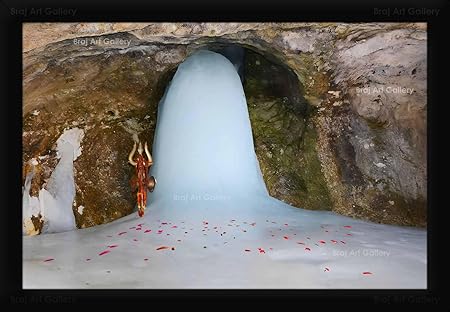
This is one of the revered pilgrimage sites of India tucked away in the mighty Himalayas. Open only for a few months during the year, Amarnath enshrines a natural Shivalingam of ice, and is reached after an arduous trek through the mountains of Kashmir.

Amarnath is an ancient pilgrimage center. The Amarnath cave is located at a distance of 86 miles north east of Srinagar, at a height of 13000 feet above sea level. Shiva is worshipped here in the form of a Shivalinga shaped ice block, made by drops of water oozing naturally in the cave.

To the left of the Shivalingam is another ice block representing Ganesha, and to the right of the Shivalingam are blocks representing Parvati and Bharirava. The cave faces south. Inside the Amarnath cave is another small cave on the left of the image, from which a chalk like substance is given out to pilgrims as Vibhuti. Amarnath is surrounded by snow clad mountains.

Legend has it that Shiva made the Gods immortal by providing them with the celestial nectar, and resided here upon their request. This boon of immortality lent the name Amarnath.

Kashmir was a great Saivite center in the 1st millennium CE. Kashmiri Saivism is referred to as Trika Mata and it dates back to the eighth century CE. The three components of Kashmiri Saiva literature are Agama Sastra, Spanda Shastra and the Pratyabhijna Shastra. Kalhana, a contemporary of King Jayasimha of Kashmir of the 12th century describes Kashmir as Parvati incarnate. Legend has it that there was once a lake by name Sati-Saras named after Shiva’s consort Sati. The demons residing here were destroyed by Sage Kashyapa, the grandson of Bhrama. It is believed that Kashyapa then converted this lake into Kashmira Mandala.

Tradition has it that in every lunar month, the icy Shivalingam begins to form, on the first day of the bright half of the month, and reachest its fullest size on the full moon day, and then begins to wane and disappear on the new moon day. This process repeats itself each month. Since it is believed that Shiva manifested himself first on the full moon day in the month of Sravana (Leo), the only summer month that permits travel in this mountainous area, it is considered to be special to go on a pilgrimage to Amarnath during this month.

The trek to Amarnath begins at Srinagar on the panchami day of the bright half of the month. The next halt enroute is Pampur,  9 miles south east of Srinagar. Subsequent halts are at Avantipur, Brijbihara and Martand. Martand is known for its ancient temple dedicated to the Sun God – now in ruins.  Enroute to Martand are Anant Nag and Gautam Nag. Martand is known as the architectural lion of Kashmir. It is a temple with a colonnade of 84 columns full of artistic work. This temple dates back to Lalitaditya of Kashmir of the 8th century. The next halt is at Aishmukam, and the next is Pahalgam, which is reached on the day of Dasami, the tenth day of the bright half of the month. At Pahalgam is the confluence of the rivers Seshnag and Liddar.

The next stop enroute is Chandanwadi, from where the confluence of the rivers Asthan Marg and Seshnag. Further up is the Pishu Ghati, believed to be the site where the demons were crushed by the Gods. Further up is the Seshnag lake at a height of about 12000 feet above sea level. The Seshnag river flows out of this lake. The next halt is at Wavjan before the steep climb to the Mahagunus Pass at a height of 14000 feet, after which there is a down slope leading to Panchatarni. From here, the Amarnath cave is reached on the full moon day, and the pilgrimage is complete.
Kailash

0

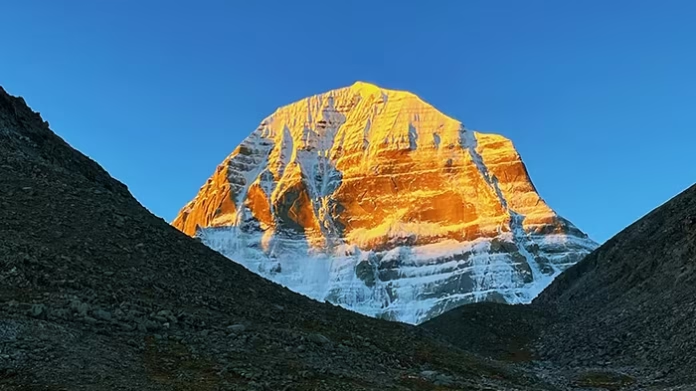
Description: The towering 22028  ft high peak Mt. Kailash in the Himalayas, 25 miles north of the Mansarovar lake is hailed as the abode of Shiva. It is an arduous trek to Kailash through the snow clad Himalayas and is attempted only by a few. The Tibetians refer to Kailash as Kangrimpoche (Jewel of Snow). Kailash is also referred to as Hemakootam. This is one of the 4 Tevarastalams in the Himalayas the other three being Gauri Kund,Kedarnath and Indraneela Parvatam. Major rivers have their source around the Manasarovar lake and Kailash.

Route to Kailash: Pilgrims go to Kailash via the Lipu Lekh pass. They first go to Tonakpur, then through Pithorgarh, Askot and Dharchula and Garbiang the last town in Indian territory. The Lipu Lekh pass is 16750 feet above sea level, and is at the Tibet frontier. Pilgrims then reach Taklakot, a Budhist center. Manasoravar is 34 miles away from here. 12 miles from Taklakot in Bhutan, is Kocharnath. An alternate route to Mansarovar is via Kathgodam, Karpot, Milon, Tirthapuri and Kailash. Yet another route is from Haridwar via the Niti pass.

The Mansarovar lake is known as Cho Mapan. There are two lakes here; one the rakshasa tal, where Ravana performed penances towards Shiva, and the other the Mansarovar, considered to be one of the 51 Sakth Peethams.

Mount Kailash is located 20 miles from Mansarovar; it appears like a giant Shivalingam placed in a 16 petaled lotus. Pilgrims first reach Darchin, and then start their 32 mile pradakshina or circumambulation around the sacred mountain. From Darchin, they proceed to Landifu, then Derfu, and then in a north east direction to Gowrikund 19000 feet above sea level. Gowri Kund in Tibet is known as Thuki Singbu.  Then they go to Jandalfu and come back to Darchin. There are several Buddhist temples in this area.

The Nayanmars: Tirunavukkarasar on his way to Kailasam is said to have been  transported by divine intervention to Tiruvaiyaru – Dakshina Kailasam. Karaikkal Ammaiyar is said to have trekked to Kailasam and returned to Tiruvalangadu. Sundaramoorthy Nayanar is said to have travelled to Kailasam on a white elephant, while his contemporary Cheraman Perumal Nayanar of Tiruvanjaikkalam composed Tirukkayilaya Gnana Ula at Mt. Kailash. Sambandar sang praises of Kailasam from Sree Kalahasti   Kailash is the fifth of the Tevara Stalams hailed by the Tamil hymns of the Nayanmars, located outside of Tamilnadu/Kerala/Karnataka i.e. in Vada Naadu (the northern lands).

Mt. Kailash is regarded by Hindus as an embodiment of Shiva and Parvati. The Buddhists refer to the sacred mountain as Kangri Karchchak; they regard the presiding deity of Mt. Kailash as Deity with three eyes, holding the damaru and the trishul; his consort is referred to as Dorje Fangmo. The Jains regard Mt. Kailash as the Ashtapada mountain where the first Tirtankara Adinath (Rishabhadeva) attained nirvana.

Dev-Prayag

0

Description Devaprayag in the Himalayas at a height of 1700 feet above sea (70 km from Rishikesh) level, where Alakananda and Bhagirathi merge to form the Ganges, is considered to be a pilgrimage center of great significance.. It is  held in reverence all over India, and is a resting point for pilgrims bound to (and from) Badrinath and is located at a distance of 70 km from Rishikesh enroute to Badrinath.

There is an ancient temple established by Adi Sankaracharya here, enshrining Rama (Raghunathji); there are also shrines to Hanuman, Badrinathji, Kaala Bhairavar, and Shiva here. Bhrama, Dasaratha and Rama are said to have prayed here.

Periyalwar of the 1st millennium CE, composed in Tamil, a decad of 10 verses praising the glory of Tirukkandam as a shrine on the banks of the Ganges. These verses state that Vishnu enshrined in Mathura, Salagramam, Dwarka, Ayodhya & Sri Vaikuntham is the same as the one (Purushottaman) enshrined in Tirukkandam or Kadinagar. Devaprayag is considered to be Tirukkandam or Kadinagar.

Veggie Meat Is Fast Becoming A New Food Trend

0

Try out these veggie recipes if you want to change your diet from meat to vegetables, with the same experience of eating meat.

There are several options available today for those seeking alternatives to meat – mutton, chicken, etc. From jack fruit cutlets to soya bean chops or a ‘vegetarian’ chicken and fish.

Popularly termed mock meats, such food items are the favored choices among people ranging from newly turned vegetarians to those who are forced to give up meat due to health reasons.

The trend of eating mock meat is fast catching up, as a healthy alternative to meat as these foods have nearly the same nutritional value in relation to protein content, etc.

Easily available plant-based products are used to substitute meat in popular dishes and make them fit for even the strictest vegetarians.

People who want to turn vegetarian after years of eating meat; others who don’t eat meat due to moral reasons but at the same time don’t want to miss the experience; for them mock meats are the ideal choice.

Products popularly used as mock meats include raw jackfruit, soya chunks, tofu (soya bean curd) etc. Coconut, eggplant or mushrooms are other widespread substitutes that can be swapped for meat.

To cater to vegetarians clamoring for mock meat, companies like Godrej, Nature’s Basket have an extensive range of Mock Meat. Chicken products are largely soya based and completely vegetarian.  They offer a wide selection of Veg Chicken Burgers, Veg Hot dogs, Veg Sausages, etc.

The preparation of these dishes in meat recipes is similar to that of typical meat dishes. The variance being that the meat is replaced with other ingredients like soya chunks, mushrooms, raw jackfruit bulbs, etc.

Mock meat is an emerging trend amongst consumers as many people have chosen to turn vegetarian due to health and ecological reasons, which therefore has resulted in this becoming a major trend in the food industry. Ahimsa Food of Delhi claims to be the leader that began manufacturing products that look and taste like meat but are purely vegetarian.

Srila Prabhupada, the Founder-Acharya of International Society for Krishna Consciousness (ISKCON) has said that, jackfruit is also called vegetable meat or vegetable mutton. He once narrated an incident, “During my daughter’s marriage, the hired cook made cutlets from this flour of banana. Nobody could understand that it is vegetable. I did not allow them to cook fish, so the guests were given that vegetable cutlet. Many of the guests remarked, ‘We could not understand that it is vegetable.’”

One can also satisfy one’s hankering for meat by cooking with ghee. Ghee is said to contain the essence of meat because ghee comes from milk, which is produced from the cow’s body. Soya beans are a very fine substitute for meat.  Today there are many meat substitutes on the market, which may help a person make the transition away from meat.

Jackfruit, when unripe, is remarkably similar in texture to meat, making it an excellent vegetarian substitute for meat. Jackfruit contains many vitamins and minerals, and offers numerous health benefits. The ripe jackfruit itself has an amazing taste, aroma and texture. The delicious jackfruit is an amazing bounty from nature when straight from the farm. You can make a variety of dishes with this fruit.

Given below is a recipe each on raw jackfruit and soya. Please do try them out.

Raw Jackfruit biriyani:

Jackfruit Biryani

Cut out some raw or young jackfruit bulbs, and make into cubes and keep aside. In a pressure cooker add the raw jackfruit cubes, add turmeric powder, salt, and little water and cook till it is 80% done. Soak basmati rice and cook till 70% done and keep aside.

Heat oil in a pan, add whole garam masala, bay leaf, cashew nut, raisins, chopped green chilies, ginger paste, salt and mix all and then add the cooked jackfruit cubes, sauté it and add chopped mint leaves, coriander leaves, curd, biryani masala and mix well. Spread the whole masala evenly all over the pan and then add chili powder and 70% cooked rice. Sprinkle mint leaves, coriander leaves, and a little color.

Cover it with a lid and cook over a very low flame for 10 minutes. After that remove and the biryani is ready. It is a very delicious dish, rich in energy, dietary fiber, mineral and vitamins.

Soya Sabzi

250 gm soya bean chunks
100 gm potato
50 gm green chilies
50 gm ginger
150 gm tomato
1 tsp chili powder
100 gms cooking oil
1 tsp jeera
1 pinch asafoetida
1 bunch curry leaves
Salt to taste

Soya Sabzi

Boil the soya chunks in hot water for ten minutes. When cold, squeeze dry. Heat oil in a kadai. Add jeera, asafoetida, curry leaves. When roasted, add cut tomatoes, ginger and potatoes. When cooked well add soya chunks. Add salt and hot water and boil well.  Add dhania powder, jeera powder and red chilli powder. Add some garam masala powder and garnish with coriander leaves.

Vrat Aloo Tamatar Sabzi

0

Ingredients: (for 2 people)

1) Medium-sized boiled potatoes (about 3-4)

2) Ripe Tomatoes(3 to 4 medium size)

3) cumin seeds, desi ghee(cow’s ghee), sedha namak, fresh coriander leaves, and green chilli.

How to make it? 

1) On a heated pan, put 2-3 tablespoons of ghee, add the cumin seeds and green chillies.

2) Add the tomatoes and cook until they change into a paste, on a slow flame.

3) Now, cut the potatoes and add them to the pan.

4) Finally, put the water and once the ingredients mix properly with the water, add the coriander leaves on top. 

Why prefer this: This dish is free of onion and garlic, which enhances the sattvic mood. It is cooked inside the ghee, and the use of spices is minimal. Eating such comforting food during fasting is better for overall mood and digestion.

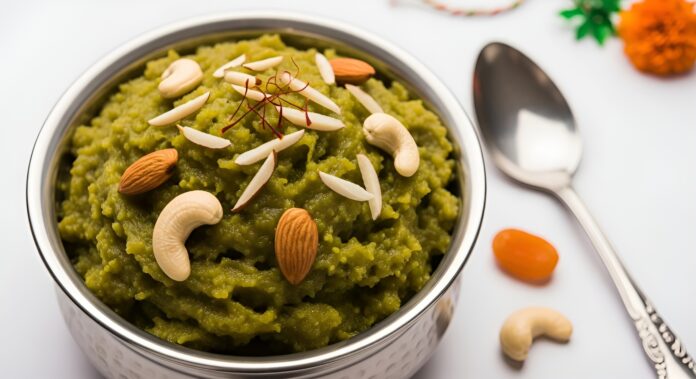
 Lauki Ka Halwa

0

Ingredients: (for 2 people)

1) Two regular cups of grated lauki.

2) 0.5 litres of milk.

3) 3 to 4 tablespoons of Desi Ghee(use cow’s ghee).

4) one-fourth cup of sugar powder or jaggery powder. 

5) Crushed almonds, raisins, and cashews. 

How to make it? 

1) On a heated pan, put the ghee and saute the grated lauki.

2) Add milk and cook it on a low flame until the lauki completely absorbs the milk.

3) Add sugar powder and cook until it thickens.

4) Now, top the dish with crushed dry fruits and nuts.  

Why prefer this dish: This halwa is nutritious, hydrating, and makes you feel full like a meal. 

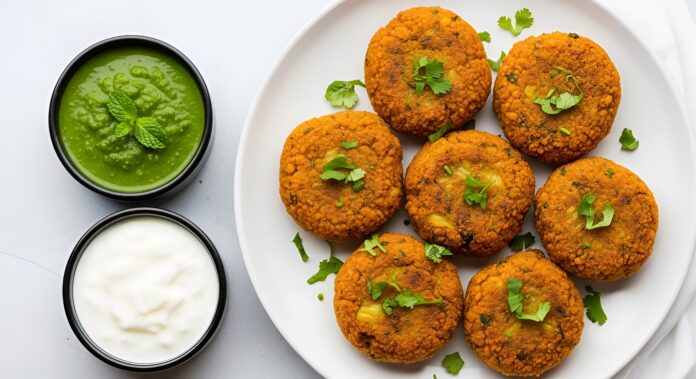
Vrat Aloo Tikki

0

Ingredients: (for 2 people)

1) Three big boiled and mashed potatoes.

2) One or two tablespoons of buckwheat flour. 

3) Roast cumin seed powder.

4) Sendha namak and Ghee (cow’s ghee).

How to make it? 

1) Mix all the ingredients and divide them into a few pieces.

2) On a heated pan, put some ghee and fry it until it gets a little golden-brown.

Why prefer this dish: This dish is fulfilling as a meal. It’s a good option to have in one-time meal fastings.

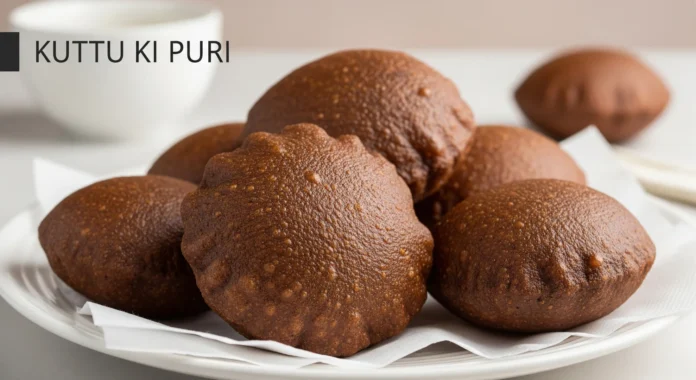
Kuttu Ki Puri

0

Kuttu(buckwheat) is a traditionally used ingredient in making fasting food. It is rich in fibres, carbohydrates, and minerals. Also, it is naturally gluten-free, which is ideal for health. 

Here are the ingredients and the step-by-step recipe of Sabudana Kheer: 

Ingredients: (for 2 people)

1) One cup of Kuttu flour.

2) Boiled and mashed potatoes (about 2 medium-sized potatoes).

3) Chopped green chilli.

4) Ghee(cow’s ghee), warm water and sendha namak.

How to make it? 

1) Mix the flour, mashed potatoes, chilli, and sedha namak(rock salt) in a bowl.

2) Now, use the warm water to knead this mixture into a dough.

Note: The boiled potatoes are required to provide gluten to the flour. Actually, buckwheat flour is free of gluten, and without gluten, you can’t make a dough for puris.

Why prefer this: These puris provide the same satisfaction as the regular grains. Also, the buckwheat is healthy and light to digest.

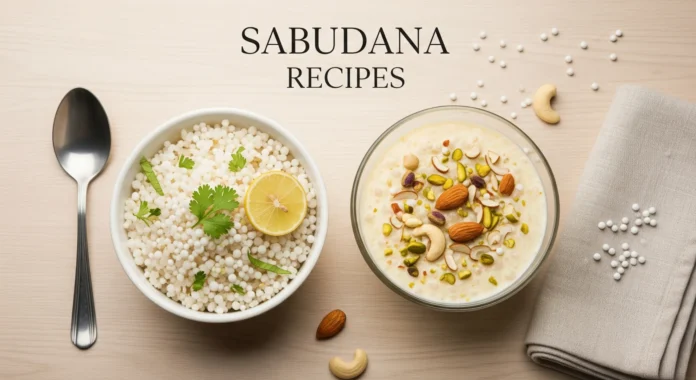
Sabudana Recipes

0

Sabudana is one of the ingredients that is used in all types of fasting foods, except the fast of Nirjala Ekadashi. It is also known for sago or tapioca pearls. It has nutrients like Carbohydrate, Protein, Fat, Fibre, and Minerals, which is why it fulfills the hunger of grains during fastings. It provides high energy and is easy to digest on an empty stomach. 

i) Sabudana Khichdi: 

Here are the ingredients and the step-by-step recipe of Sabudana Khichdi: 

Ingredients: (for 2 people)

1) One cup of soaked Sabudana(soak it overnight)

2) Two medium-sized boiled potatoes

3) Roasted peanuts, usually 2-3 tablespoons, are enough

4) green chilli, cumin seeds, senda namak(rock salt)

5) Ghee(use cow’s ghee), fresh coriander leaves

How to make it? 

1) On a heated pan, put ghee and then roast the cumin seeds.

2) Add the chopped green chilli and saute a little.

3) Cut the boiled potatoes into small pieces and add them to the pan. 

4) Now, add the soaked and washed sabudana, roasted peanuts, and the sedha namak. 

5) When the other ingredients mix perfectly with the sabudana, add the chopped coriander leaves on top.

Note: Soaked the sabudana overnight to prevent stomach bloating or any digestive discomfort.

Why prefer this dish:-

Sabudana Khichdi is a light dish to consume on an empty stomach. It provides complete energy for the day, as equal as a one-time meal provides. Also, the use of cow’s ghee will fuel you with energy, save you from fatigue or tiredness. 

ii) Sabudana Kheer: 

Here are the ingredients and the step-by-step recipe of Sabudana Kheer: 

Ingredients: (for 2 people)

1) one-fourth cup of soaked sabudana.

2) 0.5 litre of fresh milk(with full cream).

3) Sugar powder/Jaggery powder.

4) chopped dry fruits, almonds, cashews, and makhane.

How to make it? 

1) Boil the whole milk in a container over medium heat for 6 to 7 minutes. 

Note: Make sure to mix the cream within the milk and prevent it from sticking to the side and bottom of the container.

2) Turn the heat to low, add the washed sabudana, and continuously mix it with the milk with a big spoon. Stir the milk every 3 minutes and do it for 20 minutes.

3) Now, add the sugar powder and cook it for another 5 minutes.

4) Finally, add the crushed dry fruits to the kheer and stir it for 2-3 minutes.

Note: For jaggery powder, once the kheer is prepared, let it cool down. After 5 minutes of cooling down, add the jaggery powder. 

Make sure not to add the powder while making the kheer or when the kheer is still hot. 

It’s because the jaggery powder contains acid, which can react with the hot milk, making the milk curdly.

Why prefer this dish:-

Kheer is usually considered a heavy, sweet dish. Actually, sabudana kheer is a comforting sweet dish, especially on the days of fasting. It contains milk, sabudana, which are good for calcium nutrition and easy digestion. 

Also, the dry fruits provide warmth to the digestive tract. This warmth eases the digestive cycle. It is a good choice for one-time fastings.

Srimad Bhagavatam | Canto 4 Chapter 3 | Talks Between Lord Siva & Sati

0

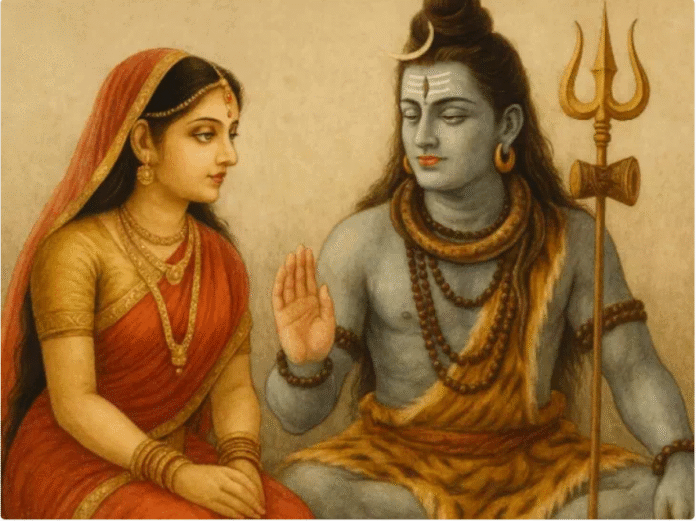
Maitreya continued: In this manner the tension between the father-in-law and son-in law, Dakṣa and Lord Śiva, continued for a con siderably long period (1).When Lord Brahmā appointed Dakṣa the chief of all the Prajāpatis, the progenitors of population, Dakṣa became very much puffed up (2).Dakṣa began a sacri fice named vājapeya, and he became exces sively confident of his support by Lord Brahmā. He then performed another great sac rifice, named bṛhaspati-sava (3).While the sac rifice was being performed, many brahmarṣis, great sages, ancestral demigods and other dem igods, their wives all very nicely decorated with ornaments, attended from different parts of the universe (4).

The chaste lady Satī, the daughter of Dakṣa, heard the heavenly denizens flying in the sky conversing about the great sacrifice being per formed by her father. When she saw that from all directions the beautiful wives of the heav enly denizens, their eyes very beautifully glit tering, were near her residence and were going to the sacrifice dressed in fine clothing and or namented with earrings and necklaces with lockets, she approached her husband, the mas ter of the bhūtas, in great anxiety, and spoke as follows (5-7). Satī said: My dear Lord Śiva, your father in-law is now executing great sacrifices, and all the demigods, having been invited by him, are going there. If you desire, we may also go (8).

I think that all my sisters must have gone to this great sacrificial ceremony with their husbands just to see their relatives. I also desire to deco rate myself with the ornaments given to me by my father and go there with you to participate in that assembly (9).My sisters, my mother’s sisters and their husbands, and other affection ate relatives must be assembled there, so if I go I shall be able to see them, and I shall be able to see the flapping flags and the performance of the sacrifice by the great sages. For these rea sons, my dear husband, I am very much anxious to go (10).This manifested cosmos is a wonder ful creation of the interaction of the three mate rial modes, or the external energy of the Su preme Lord. This truth is fully known to you. Yet I am but a poor woman, and, as you know, I am not conversant with the truth. Therefore I wish to see my birthplace once more (11).

O never-born, O blue-throated one, not only my relatives but also other women, dressed in nice clothes and decorated with ornaments, are go ing there with their husbands and friends. Just see how their flocks of white airplanes have made the entire sky very beautiful (12). O best of the demigods, how can the body of a daugh ter remain undisturbed when she hears that some festive event is taking place in her fa ther’s house? Even though you may be consid ering that I have not been invited, there is no harm if one goes to the house of one’s friend, husband, spiritual master or father without in vitation (13).O immortal Śiva, please be kind towards me and fulfill my desire. You have ac cepted me as half of your body; therefore please show kindness towards me and accept my re quest (14). The great sage Maitreya said: Lord Śiva, the deliverer of the hill Kailāsa, having thus been addressed by his dear wife, replied smil ingly, although at the same time he remem bered the malicious, heart-piercing speeches delivered by Dakṣa before the guardians of the universal affairs (15).

The great Lord replied: My dear beautiful wife, you have said that one may go to a friend’s house without being invited, and this is true, provided such a friend does not find fault with the guest because of bodily identification and thereby become angry towards him (16).Although the six qualities education, aus terity, wealth, beauty, youth and heritage are for the highly elevated, one who is proud of possessing them becomes blind, and thus he loses his good sense and cannot appreciate the glories of great personalities (17).One should not go to anyone’s house, even on the consid eration of his being a relative or a friend, when the man is disturbed in his mind and looks upon the guest with raised eyebrows and angry eyes (18).

Lord Śiva continued: If one is hurt by the arrows of an enemy, one is not as aggrieved as when cut by the unkind words of a relative, for such grief continues to rend one’s heart day and night (19). My dear white-complexioned wife, it is clear that of the many daughters of Dakṣa you are the pet, yet you will not be honored at his house because of your being my wife. Rather, you will be sorry that you are connected with me (20).One who is conducted by false ego and thus always distressed, both mentally and sen sually, cannot tolerate the opulence of self-re alized persons. Being unable to rise to the standard of self-realization, he envies such per sons as much as demons envy the Supreme Per sonality of Godhead (21). My dear young wife, certainly friends and relatives offer mutual greetings by standing up, welcoming one another and offering obei sances. But those who are elevated to the tran scendental platform, being intelligent, offer such respects to the Supersoul, who is sitting within the body, not to the person who identi fies with the body (22).

I am always engaged in offering obeisances to Lord Vāsudeva in pure Kṛṣṇa consciousness. Kṛṣṇa consciousness is always pure consciousness, in which the Su preme Personality of Godhead, known as Vāsudeva, is revealed without any covering (23).Therefore you should not see your father, although he is the giver of your body, because he and his followers are envious of me. Be cause of his envy, O most worshipful one, he has insulted me with cruel words although I am innocent (24).If in spite of this instruction you decide to go, neglecting my words, the future will not be good for you. You are most respect able, and when you are insulted by your rela tive, this insult will immediately be equal to death (25).

Stay Connected

16,985FansLike
12,500FollowersFollow
61,453SubscribersSubscribe
Have a question?Send us an enquiry. We usually reply within a day.