Mail ID: contact@vedavarsity.com

Contact: +91 9634998911

Google search engineGoogle search engine
Home Blog Page 118

ISKCON Leaders Join Uzbekistan’s International Tolerance Conference

0

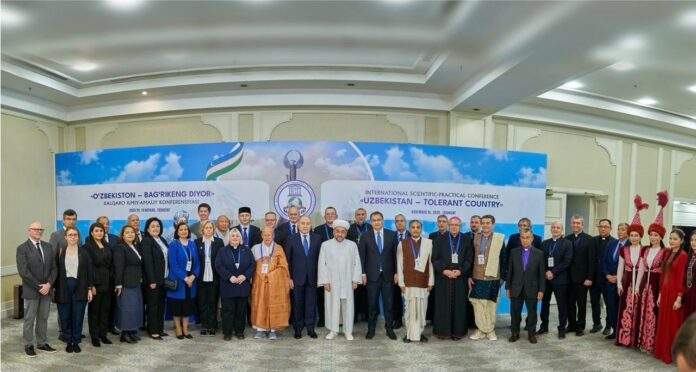
Leaders gather at the November 15th event in Tashkent.

On Saturday, November 15, an International Scientific and Practical Conference titled “Uzbekistan – Tolerant Country” was held in Tashkent, gathering foreign experts, diplomats, theologians, and leaders of various religious denominations. The event, organized within the framework of the nation’s annual “Tolerance Week,” was convened by the Committee on Religious Affairs and other key state bodies. Participants emphasized Uzbekistan’s consistent efforts to strengthen interethnic and interfaith harmony, highlighting the country’s historical role as a crossroads of civilizations and its modern constitutional guarantees of religious freedom, which are foundational to this policy.

Representatives and leaders from a wide spectrum of faith traditions—including Orthodox, Catholic, Armenian, Protestant, Muslim, Jewish, Buddhist, and others—gathered alongside political figures, scholars, journalists, and representatives from the UNESCO Office in Uzbekistan. Other participants were from Russia, Armenia, Kazakhstan, Turkey, South Korea, Malaysia, India, Scotland, and additional nations. Their presence created a diverse and dynamic forum for dialogue, reflecting a shared commitment to strengthening mutual understanding and cooperation across cultures and religions.

Among the distinguished international speakers was Sadhu-priya Das (Sanjeet Kumar Jha), President of the ISKCON temple in Moscow and Chairman of the Hindu Council of CIS Countries. Invited by the Government of Uzbekistan, he delivered an address centered on the principle of Vasudhaiva Kutumbakam—“the world is one family”—highlighting the universal ideal of spiritual kinship.

In his remarks, he praised Uzbekistan’s active role in promoting regional harmony and safeguarding a pluralistic social fabric. He noted that the architectural heritage of Samarkand and Bukhara stands as a living testament to centuries of interfaith exchange. Sadhu-priya Das also acknowledged the positive environment for all faith communities in the country, including the registered presence of the Krishna Consciousness movement in Tashkent.

ISKCON was additionally represented by Shri Madhava Das from the Tashkent temple, further underscoring the movement’s engagement in the region’s ongoing interreligious efforts.

The conference served as a significant platform for building interfaith relations. High-level representatives, including Presidential Advisor Ruslanbek Davletov and Uzbek Muslim Board Chairman Mufti Nuriddin Khaliknazar, spoke about how their country consistently supports the environment of interethnic and interfaith harmony. International guests, such as Efrem Tendero, Ambassador of the World Evangelical Alliance, and Phil Wagler of the Peace and Reconciliation Network, praised Uzbekistan’s year-round commitment to tolerance. They noted that the week-long Conference, initiated by President Shavkat Mirziyoyev, translates policy into practice, creating equal conditions for all religions and setting a notable example of peaceful coexistence for the global community.

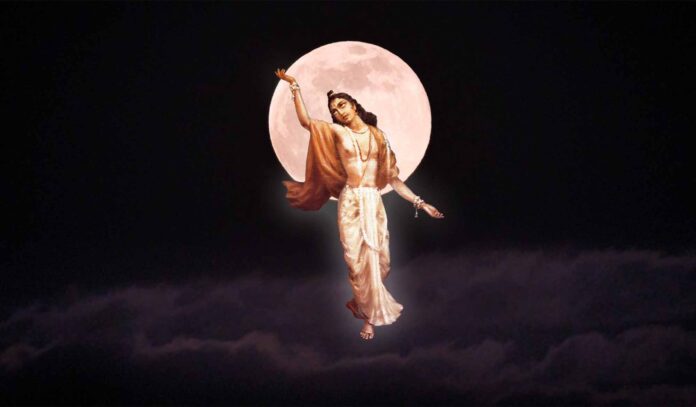
Prakaṭa Pūrṇimā (The Appearance Of The Full Moon)

0

Overview

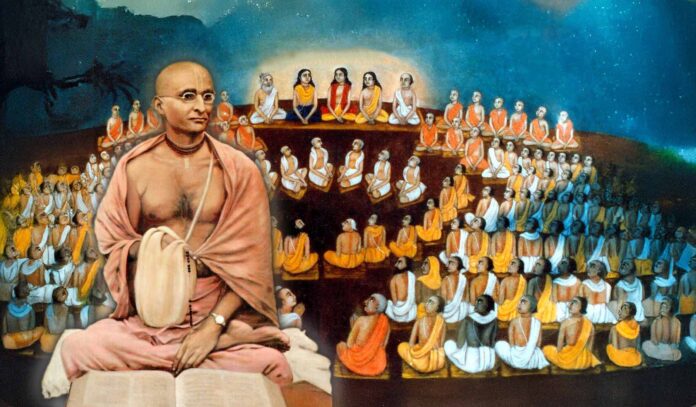
This short article ‘Prakaṭa Pūrṇimā (The Appearance of the Full Moon)’ by Śrīla Prabhupāda Bhaktisiddhānta Sarasvatī Ṭhākura was first published in Sajjana Toṣaṇī (Vol.18, Issue 11) in 1916. Sarasvatī Ṭhākura describes the importance of the Gaura Pūrṇimā festival and how it was propagated by Śrīla Bhaktivinoda Ṭhākura.

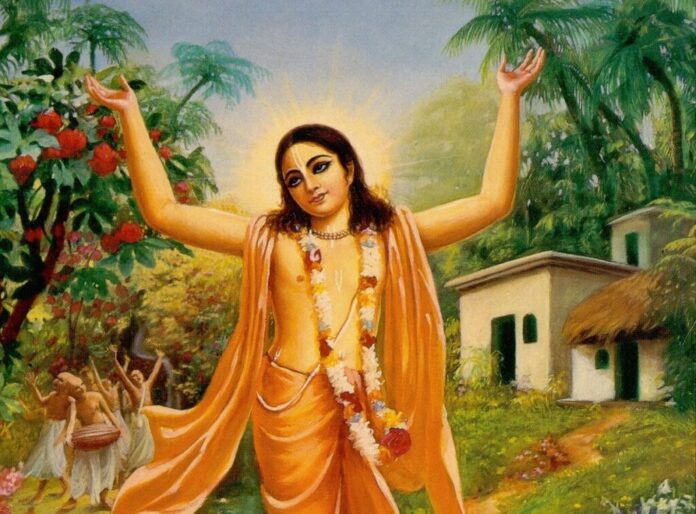
The appearance day of Śrī Gaurasundara, the embodiment of prema, is approaching. Like their beloved Gaura-Hari, the full moon on His appearance is the source of supreme bliss for His devotees. In this transitory world, the bound jīvas enthusiastically crane their necks to attain some so-called sweetness from the poisonous fruits of material desires. When Śrī Gaura Bhagavān manifested Himself among the mortal jīvas, who were thirsty for such temporary fruits, He showed them the unique path of divine eternal splendour, then the position of ātma-rāma (self-satisfied) became the good fortune of the jīvas afflicted by the age of Kali. There are many kinds of festivals in the world – however the festival of the appearance of the full moon stands above them all. Just as Śrī Gaurasundara is the most worshippable personality, the festival of His appearance day is also the most blissful.

Śrī Gaurahari appeared on the full moon of the blissful month of Phālguna during the spring season, dispelling the cold, winter-like misery of the material world, delivering the jīvas, and showing them the eternal path of Kṛṣṇa’s realm. Following His holy footsteps leads to the greatest benefit for the jīva, as revealed to the world by the great Gosvāmīs, such as Śrī Rūpa. At the beginning of five-hundred years, Śrī Gaurāṅga’s dear associate, Ṭhākura Bhaktivinoda delighted the hearts of the devotees with the miraculous glories of the Lord’s divine appearance on the full moon. Therefore, today, the glories of the full moon of His appearance is being observed in many homes throughout Bengal, amongst highborn and lowborn, more or less as a national event. Previously, Śrī Gaurāṅga and His glories were confined within the lineage of His associates and the families that followed them. However, now gaura-kathā is gradually becoming manifest among all the general classes in the land of Bengal. Today, many virtuous sons of Bengal, following the life-giving instructions of Gaurāṅga, have understood that hari-kīrtana is the means to attain the association of Bhagavān and the only way to serve Him. They have also gained the strength to place the abode of Śrī Gaurahari in the highest part of their hearts and safeguard it.

To reveal the heart of Śrī Gaurasundara, His birthplace, and His nectarean pastimes in the world, the mahātmā who was sent by Him, having fulfilled his Lord’s command, and re-entered the eternal pastimes, has established the Deity of Śrī Gaurahari at the place of Śrī Gaurasundara’s appearance and initiated a grand festival on the day of Śrī Gaura’s appearance. Always calling upon those pure devotees who are the followers of Śrī Rūpa, he urged them to participate in this celebration. Taking his words to heart, we now sincerely pray for all the devotees of Gaura and the general public to join in the blissful gathering at the Yogapīṭha in Śrī Māyāpura.

Throughout every day of the year, we are intoxicated with material mellows (jaḍa-rasa), engaged in gratifying the mundane senses, and we experience the fleeting nature of these mellows at every moment. Therefore, I say, “Let us take a day off from the material world, and let me dedicate that day for the purpose of the Divine.”

Any disturbance in the gratification of our senses in this regard will be considered as being given for the purpose of serving Śrī Gaurasundara, and through this, an abundance of ajñāta-sukṛti (transcendental merit which is accrued unknowingly) will arise, leading to the advent of prema-bhakti in due course. The reader must certainly know how insignificant the four goals of life — dharma, artha, kāma, and mokṣa are in comparison to the supreme goal of prema. It is never good to abandon such priceless gains and dive into the ocean of material existence.

We are especially pleased to know that a conference will be held in the city of Madras on the day of Śrī Gaurāṅga’s appearance. The residents of Madras will be able to join that assembly and celebrate the appearance festival of Śrī Gaurahari.

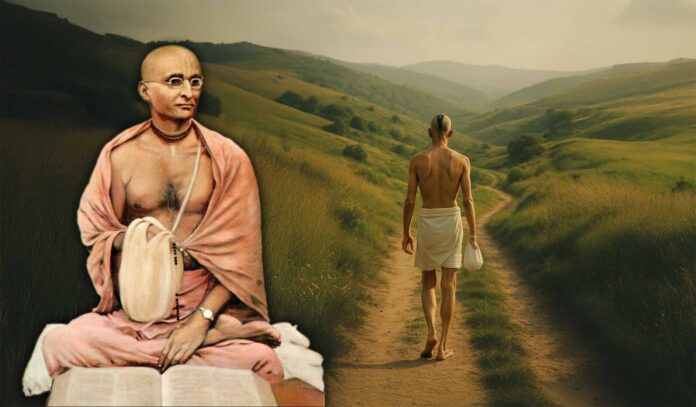
A Devotee Is Devoid Of Possessiveness (Sajjana – Akiñcana)

0

Overview

We continue with the explanation on the twenty-six qualities of a devotee by Prabhupāda Sarasvatī Ṭhākura. In this article ‘A Devotee is Devoid of Possessiveness (Sajjana – Akiñcana)’ from Sajjana Toṣaṇī (Vol.20, Issue 11) published in 1917, Sarasvatī Ṭhākura describes the mood of a humble Vaiṣṇava who is free from the mentality of ‘I, me and mine.’

Articles In This Series

One who is not intoxicated by the pride of self-worship, who is not eager to attain the results of his actions, and who is not busily engaged in pursuing objects unconnected with Bhagavān – such a person’s mind is not eager for the acquisition of jñāna, success in karma, or the attainment of worldly happiness. While he remains in this material world, the jīva often becomes self-forgetful and, with impersonal knowledge, considers himself to be a jñānī, an enjoyer seeking celestial pleasures, or a worldly person absorbed in sense gratification. He thinks himself to be wealthy and endeavours to bring some object of this world under his control. With the aim of achieving various results, he sometimes takes on the guise of a renunciate, sometimes indulges in the enjoyments of a hedonist, and, driven by the powerful urges of unrestrained conduct, searches for ‘something’ (kiñcana) declaring, “This was mine,” “It is mine,” or “I want it!” As long as the jīva lays claim to be the pursuer of ‘something’, that ‘something’ never leaves him. As soon as that ‘something’ is acquired, all the people of the world begin to follow close behind him. He who does not possess that ‘something’ is truly an akiñcana. He alone is a virtuous devotee. He does not have to search for anything. There is no need to run after anything, thinking that it was, is, or will be yours.

Simply put, that ‘something’ is of the nature of a thing that one takes shelter of. Although the jīva himself is sunirmala āśraya jātīya (naturally in the pure category of a devotee), forgetting that, he comes to identify his own concept of ‘I-ness’ as being non-different from worldly objects. Thus, in his quest for shelter or support, he

roams around about trying to attain the shelter of that which itself is an object of enjoyment. He has forgotten the point that he himself is the āśraya jātīya and Bhagavān alone is the eternal viṣaya. Until the time that he realises his own akiñcanatā (absence of possessiveness), he remains sakiñcana (full of possessiveness) — in other words, as a jñānī, a karmī, or an anyābhilāṣī (dominated by desires for things unrelated to Kṛṣṇa).

A pure devotee of Bhagavān is a complete akiñcana. An akiñcana is humbler than a blade of grass and does not consider anything to be his own property. This means that an akiñcana, endowed with the quality of tolerance greater than that of a tree, does not identify with any material designation. In other words, he does not consider himself as eligible to be attacked by any material object. An akiñcana considers everyone else as possessors of property and does not wish to establish himself with any possession. Only a devotee is an akiñcana. He is a completely pure, dedicated unit of service to Kṛṣṇa. A devotee is free from violent behaviour and envy, and is not dependent on others. According to the Śrīmad Bhāgavata:

yasyātma-buddhiḥ kuṇape tri-dhātuke
sva-dhīḥ kalatrādiṣu bhauma ijya-dhīḥ
yat-tīrtha-buddhiḥ salile na karhicij
janeṣv abhijñeṣu sa eva gokharaḥ

He who considers the true self to be this corpse-like body that is full of mucus, bile and air, who believes that his family belongs to him, who thinks his country of birth is worthy of worship, who thinks that a holy place is merely an ordinary body of water and who never seeks the association of the wise, is no different from an ass. (Śrīmad Bhāgavatam 10.84.13)

By accepting the essence of this śloka, he becomes an akiñcana or a sajjana (virtuous devotee). He has no investment in any perishable or inferior object. He is surrendered.

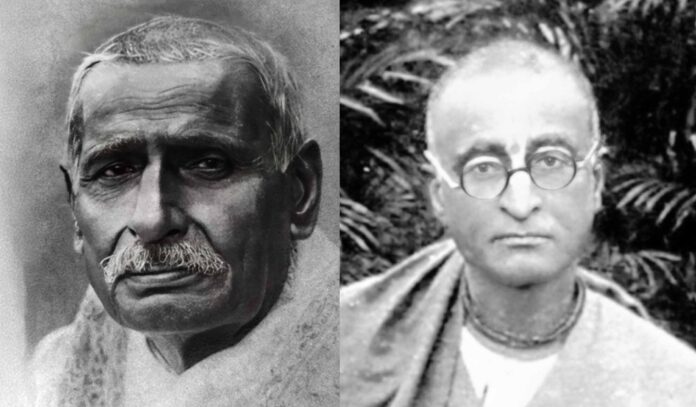
Śrīla Sarasvatī Ṭhākura In Conversation With Paṇḍita Hara Prasāda Śāstrī

0

Overview

The following conversation between Śrīla Bhaktisiddhānta Sarasvatī Ṭhākura Prabhupāda and Paṇḍita Hara Prasāda Śāstrī took place on Sunday 12th January 1930, between 1:30 and 3:30pm, at the home of Śāstrī Mahāśaya in Kolkata. Hara Prasāda Śāstrī was one of the most renowned academics in Bengal during the early 20th century. In this conversation with him, Sarasvatī Ṭhākura discusses a variety of topics in connection with Buddhism and the four Vaiṣṇava sampradāyas. This conversation was originally published in The Gauḍīya magazine (10th Year, Issues 39-41) and also in the book, ‘Sarasvatī Saṅlāpa’ published by Śrī Caitanya Maṭha, Māyāpura. It was translated into English by Śrīman Sanātana Dāsa Adhikārī and edited by Swami B.V. Giri.

Accompanying Śrīla Prabhupāda was the manager of Śrī Gauḍīya Maṭha, Ācāryatrika Śrīpāda Kuñja-vihārī Vidyābhūṣaṇa, Paṇḍita-pravara Śrīpāda Atūla-candra Bandhyopadhyāya Bhakti-sāraṅga Gosvāmī Bhakti-śāstrī, Paṇḍita Śrīyukta Jagad-uddhāraṇa Bhakti-bāndhava B.A., the editor of The Gauḍīya, Śrīyukta Sundarānanda Vidyāvinoda and others.

Mahā-mahopadhyāya Paṇḍita Hara Prasāda Śāstrī Mahāśaya was very sick at that time. Without the help of a cane, or without the help of others, he cannot move anywhere. He used to always stay in a three-storeyed house. The respected servitors of Śrī Gauḍīya Maṭha went to the house of Śāstrī Mahāśaya to invite him to Śrīdhāma Māyāpura-Navadvīpa Paramārtika Exhibition. The supremely independent and causelessly merciful, Oṁ Viṣṇupāda Śrīla Bhaktisiddhānta Sarasvatī Gosvāmī Prabhupāda, came to Paṇḍita Mahāśaya, and graciously revealed a flow of hari-kathā and kīrtana there, establishing an auspicious victory for the welfare of the world. Hearing of the most auspicious arrival of Śrīla Prabhupāda, Mahā-mahopadhyāya Paṇḍita Mahāśaya stood up from his reclining chair and welcomed Śrīla Prabhupāda with honour befitting an ācārya.

Śāstrī: Please come, please come! Why have you taken the trouble to come here? My leg is broken. Once my leg heals, I myself would have come, Whatever it may be – by taking your darśana, I am very happy.

Śrīla Prabhupāda: I did not see you for a long time, so I have come to see you.

Śāstrī: Yāṅhāra darśane mukhe āise kṛṣṇa-nāma, tāṅhāke jāniha tumi vaiṣṇava-pradhāna (‘A superior Vaiṣṇava is he whose very darśana makes others chant kṛṣṇa-nāma.’). This is written in your texts itself. Seeing you, I am reminded of all the memories that occurred many years ago.

Jhāmaṭpura, the appearance place of Śrīla Kṛṣṇa Dāsa Kavirāja Gosvāmī

Śāstrī: One saheb once asked me, “Is Kavirāja Gosvāmī’s house located near your residence?” I replied, “Yes. Once, almost sixty-years back, I went to Jhāmaṭpura.”

Śrīla Prabhupāda: The place now known as the ‘Salar’ railway station is very close to the village of Jhamatpur. As a symbol to the memory of Kavirāja Gosvāmī’s previous āśrama, there is service to Śrī Gaura-Nityānanda there. Currently, no descendant from Kavirāja Gosvāmī’s previous āśrama resides in Jhāmaṭpura, nor has anyone provided any connection to Kavirāja Gosvāmī Prabhu.

Why Kavirāja Gosvāmī’s brother from his previous āśrama was a follower of ardha-kukkuṭa–nyāya (half-chicken logic)

Although Kavirāja Gosvāmī’s brother, from his previous āśrama, maintained some verbal respect towards Mahāprabhu, he did not have such a transcendental consideration towards Śrī Nityānanda Prabhu. For this reason, Kavirāja Gosvāmī Prabhu called the brother from his previous āśrama an ardha-kukkuṭa-nyāyāvalambī (the follower of half-chicken logic), and leaving Jhāmaṭpura, he resided in Śrī Vṛndāvana till the last day of his life.

The time of Kavirāja Gosvāmī’s appearance

Śāstrī: Surely you must have discussed the period of Kavirāja Gosvāmī’s appearance. What is the exact time of his appearance?

Śrīla Prabhupāda: You know that I have analysed jyotiṣa-śāstra (astrological texts) to some extent. In regards to ascertaining the time period of Kavirāja Gosvāmī, we can take into account some incidents. In the last section of some manuscripts of the Caritāmṛta, one śloka is found determining the time period of the completion of the Caritāmṛta to be 1537 of the Śaka Era (1615 CE).

śāke sindhv-agni-vāṇendau jyaiṣṭhe vṛndāvanāntare
sūryāhe’sita-pañcamyāṁ grantho’yaṁ pūrṇatāṁ gataḥ

In Vṛndāvana, in the year 1537 of the Śaka Era, in the month of Jyaiṣṭha, on Sunday, the fifth day of the waning moon, this work has been completed. (Caitanya-caritāmṛta, Antya-līlā 20.157)

Some say that this śloka was put there by the person who copied the text, and not by the composer, Kavirāja Gosvāmī. Among the texts that have been mentioned by Kavirāja Gosvāmī in his work, we see the name of the book, Gopāla Campū.

The time of the composition of Gopāla Campū, Caitanya-candrodaya Nāṭaka, Śrī Caitanya-bhāgavata, and Śrī Caitanya-caritāmṛta

Śāstrī: Who has written the book, Gopāla Campū?

Śrīla Prabhupāda: Śrīla Jīva Gosvāmī Prabhu.

Śāstrī: So what were you saying?

Śrīla Prabhupāda: The book, Gopāla Campū was composed in 1512 of the Śaka Era (1590 CE). Hence, the period that Kavirāja Gosvāmī Prabhu wrote his work was after 1512 Śakābda.

Śāstrī: Was the book, Caitanya-candrodaya Nāṭaka written before Gopāla Campū?

Śrīla Prabhupāda: Yes. 1498 Śakabda (1576 CE) was when Śrī Caitanya-candrodaya Nāṭaka was composed.

Śāstrī: Caitanya-candrodaya is by Kavi Karṇapura?

Śrīla Prabhupāda: Yes. It is written by Śrī Paramānanda Kavi Karṇapura, who was the son of Śrīla Śivānanda Sena. Śrīla Śivānanda Sena was a resident of Hālisahar. Purī Dāsa was Kavi Karṇapura.

Śāstrī: Are Paramānanda Dāsa and Kavi Karṇapura the same person?

Śrīla Prabhupāda: Paramānanda Dāsa was given the titles ‘Purī Dāsa’ and ‘Kavi Karṇapūra’ by Śrī Caitanyadeva. Kavi Karṇapūra Gosvāmī wrote his works until 1498 Śakābda (1576 CE). Books of Rāḍhīya Śrīnivāsa and Raghavānanda’s Dina-candrikā which were written before 1521 Śakābda (1599 CE), as well as the Smārta scholar Raghunandana’s works such as Ekādaśī-tattva, Malamāsa-tattva etc. are quoted in Kavirāja Gosvāmī’s writings. This suggests that Caitanya-caritāmṛta was composed after these works. Śrī Raghunātha Dāsa Gosvāmī, a contemporary of Śrī Caitanya Mahāprabhu, mentions the name of Śrī Kṛṣṇa Dāsa Kavirāja Gosvāmī in his work, Dāna-carita. Furthermore, the concluding verses of Kavirāja Gosvāmī’s Govinda-līlāmṛta reveal his contemporaneity with other Vṛndāvana residents like Gosvāmī Śrīla Gopāla Bhaṭṭa. Based on these pieces of evidence and other contemporary matters, it can be estimated that the time of Śrīla Kavirāja Gosvāmī’s appearance was approximately between 1452 Śakābda (1530 CE) and 1538 Śakābda (1616 CE).

Śāstrī: Was Vṛndāvana Dāsa before Kavirāja Gosvāmī?

Śrīla Prabhupāda: The time of Śrīla Ṭhākura Vṛndāvana Dāsa’s appearance was after 1432 Śakābda (1510 CE). Kavirāja Gosvāmī’s work is a refined version of Ṭhākura Vṛndāvana Dāsa’s composition, Śrī Caitanya-bhāgavata. The time period of Śrīla Jīva Gosvāmī is before 1435 Śakābda (1513 CE). During the time of the composition of Kavirāja Gosvāmī’s book, the Six Gosvāmīs, Śrī Jīva, Śrī Gopāla Bhaṭṭa, Śrī Raghunātha Dāsa, Śrī Raghunātha Bhaṭṭa, Śrī Rūpa and Śrī Sanātana as well as Śrī Bhūgarbha Gosvāmī, were no longer present in this world. If anyone out of them was still present at that time, then Kavirāja Gosvāmī would have mentioned something about taking permission from them to write his book. He has given a list of the contemporary residents of Vṛndāvana that were there during the time of his writing his work.

Śāstrī: You have sufficient exposure to all these topics.

Śrīla Prabhupāda: You have discussed many literatures and traditions throughout your life – please concentrate a little on transcendental literatures and traditions.

The conception of the Buddhists is mundane

Śāstrī: I have spent my life studying history and researching Buddhist literature. Now it is the twilight phase of my life – but in leaving this, I do not find a taste for other things.

Śrīla Prabhupāda: According to the words of Śrī Caitanyadeva, anyone who is a human being will have a taste, provided they truly hear all these things. We only have to listen to His words – nothing else needs to be done. Through the path of rhetoric, the path of measuring things, or by the analytical path of the Buddhists, one cannot hear adhokṣaja-satya (truth beyond the material senses).

Śri Caitanyadeva’s injunctions concerning bhakti are transcendental and are established on the nirguṇa platform

Śāstrī: There are some very beautiful concepts amongst the Buddhists, that I have not found anywhere else.

Śrīla Prabhupāda: Amongst the concepts of the Buddhists, there may be discussions upon worldly morals. In this world, the majority of people are mentally corrupt, hence, mundane morality appears to be amazing in the presence of corruption. Within that, there is sense-gratification for humans, but there is no nirguṇa-vicāra (analysis of that which is beyond the modes of nature) present there. The bhakti-nīti (morality according to devotion) of Śrī Caitanyadeva is established in nirguṇa-vicāra. Some materialistic people show their audacity by claiming that the dharma propagated by Śrī Caitanyadeva is modern and a recent invention. However, all the śāstra, though loudly speaking more or less about Śrī Caitanyadeva, have not been able to express Him fully. All the truths that Śrī Caitanyadeva spoke concerning ultimate reality were revealed by Him in the heart of Brahmā at the beginning of creation. From time to time, Brahmā revealed all those statements, but with the influence of time, they became obscured. Although the ultimate reality spoken by Brahmā were transmitted through śruti-paramparā and was later revealed to the society of ṛṣis, under the assault of the three guṇas, that śrauta-vāṇī (instructions heard through disciplic succession) underwent various transformations. In seven separate births of Brahmā, that ultimate truth was revealed again and again. Phenapa, Vaikhānasa, Soma, Rudra, Bālkhilya, Suparṇa, Vāyu, Mahodadhi, Svārociṣa Manu, and other ācāryas of the previous yuga were followers of the Ekāyana branch (of the Vedas). Phenapa, Vaikhānasa, Bālkhilya, and later the Aurambaras, though arising from the four sampradāyas that appeared during the first four births of Brahmā, eventually became branches of vānaprasthas during the time when varṇāśrama-dharma was being established. During the firth birth of Brahmā, Sanat-kumāra was initiated into aikāntika-dharma (exclusive devotion) by Nārāyaṇa. In the sixth birth, Barhiṣat and others were similarly initiated. It was during the sixth birth of Brahmā, that the sound of the Sāma Veda hymns were first uttered. The seventh birth of Brahmā is from the lotus. At this time, Brahmā was born from Nārāyaṇa, and Dakṣa, Vivasvān, Manu, and others were initiated into bhāgavata-dharma through him. The Śrī sampradāya was manifest from Ratnākara (Lakṣmī Devī). Ratnākara again emanated from the ancient vighaśāsi sampradāya. The Brahma and Rudra sampradāyas attained the mercy of Śrī Nārāyaṇa during the visible birth of Brahmā. Their subordinates, the Bālkhilyas, were the ones who solely preserved the Brahma and Rudra sampradāyas. During the fifth birth of Brahmā, from the nostrils of the Supreme Lord, Sanat-kumāra received ekāntika-dharma from Śrī Nārāyaṇa at the beginning of the Tretā-yuga. In this way, the four divine sampradāyas manifested in this world. The ten forms of Bhagavān’s avatāras in the Padma-kalpa – Matsya, Kūrma, Varāha, Nṛsiṁha, Vāmana, Bhārgava Rāma, Daśarathi Rāma, Balarāma, Buddha, and Kalki – are all seen to be fully described in books such as the Purāṇas, Mahābhārata, etc. Although all those śāstrika texts are composed in Sanskrit, the language of the Devas, still, in ancient times, narrations concerning transcendental dharma are discerned through hints and limited descriptions. Although works written in Sanskrit are seen through the linguistic distinctions of the Saṁhitā Period, nevertheless, in terms of subject matter, the concepts described in the Purāṇas prove to be a simple invocation of the transcendental truth, made naturally before the age of rational inquiry. The tradition of that age, which is primarily embedded in the Śrīmad Bhāgavatam and the Purāṇas, is only seen as a brief indication within books such as the Vedic Saṁhitās etc. Many of the Vedic texts — in the language in which the original source texts of the Purāṇas were composed — have disappeared over time. Since they disappeared after the Purāṇas were composed, does not mean that the subject matters presented in the Purāṇas are modern. The subject matters presented in the Śrīman Mahābhārata and Purānika texts such as the Śrīmad Bhāgavatam are from a time long before the period of the appearance of the Ṛk Saṁhitā. That is why the Purāṇas etc., although written after the Saṁhitā Period, are filled with discussions pertaining to the past in relation to the Vedic age. We have many things to say concerning these topics. I have desired to compile a large book entitled Pāramārthika Bhārata (‘Spiritual India’). In it I will discuss all these things in detail.

*Note: The vighaśāsis seem to be the name of a community of renunciates.

Discussions about Śrī Rāmānuja, Śrī Madhva, Śrī Viṣṇu Svāmī and Śrī Nimbārka

Śāstrī: Such a conceptional flow needs to be written in the form of a book. I have heard many new things from you. The Śrī sampradāya that you said manifested from Ratnākara —Rāmānuja is the founder of that Śrī sampradāya.

Śrīla Prabhupāda: Śrī Rāmānuja is not exactly the founder. The original founder of the Śrī samprādaya is Śrī Lakṣmī. Śrī Rāmānujācārya accepted and protected the Śrī samprādaya. Śrī Yāmunācārya was before Śrī Rāmānujācārya, and before that, Bodhyāyana and others were ācāryas in the Śrī samprādaya.

Śāstrī: How much earlier was Rāmānuja than Madhva?

Śrīla Prabhupāda: Śrī Madhvācārya appeared in the year 1040 Śakābda (1118 CE), or according to another opinion, in 1160 Śakābda (1238 CE). Śrī Rāmānujācārya, on the other hand, rose to prominence in 939 Śakābda (1017 CE), or, according to another opinion, in the late 11th century (1077 CE), or the early 12th century.

Śāstrī: What is the actual difference between Rāmānuja and Madhva?

Śrīla Prabhupāda: In the Viśiṣṭādvaita philosophy of Śrī Rāmānujācārya, the Supreme Reality as īśvara (the Supreme Controller), cit (spirit), and acit (matter), is propagated as eternally manifest in three categories through His own potencies. Without disrupting the non-duality of the Absolute, Bhagavān is eternally endowed with pastimes in three forms through the diversity of His energies. Bhagavān, the Supreme Person, who is the abode of all transcendental qualities, is the īśvara of cit and acit. He is unlimited, eternal, the possessor of all potencies – that entity who is endowed with qualities (saviśeṣa-vastu). The qualities of svagata, sajātīya, and vijātīya are eternally present within Him.*

*Note: Svagata means that which manifests itself in one and the same thing, either between its essence and form, or between its component parts. Svajātīya refers to that which appears between things of the same category. Vijātīya indicates that which appears between things of different categories.

And in Śrī Madhvācārya’s philosophy of Pure Dvaita (Dualism), the all-powerful Bhagavān who is full of rasa, and the dependent devotee, are eternally related in a specific relationship of He who is served (sevya), and he who serves (sevaka). Inert matter (jaḍa-vastu) is a third category which is also dependent, and it is deprived of the sevya-sevaka relationship. Although the Supreme Object (Bhagavān) is one, the devotees who take shelter of Him are unlimited, and inert matter is also innumerable. In this way, five kinds of eternal distinctions eternally manifest variagatedness within Bhagavān.

Śāstrī: I think that the philosophical conclusions of Nimbāditya and Śrī Viṣṇu Svāmī support Advaitavāda.

Śrīla Prabhupāda: At present, the ideologies that have been propagated – and are still being propagated – in the name of Nimbāditya and Viṣṇu Svāmī as illegitimate, imitative versions of the Acintya-bhedābheda philosophy preached by Śrīman Mahāprabhu are, in fact, merely covert allies of Kevalādvaita-vāda (absolute non-dualism). But the philosophy of pure dvaitādvaita, or Śuddhādvaita, has always adopted the policy of non-cooperation with the followers of Kevalādvaita-vāda. In Śuddhādvaita-vāda, the very foundation of Kevalādvaita-vāda has, in fact, been uprooted.

Śāstrī: What are the fundamental assertions of the Dvaitādvaita and Śuddhādvaita philosophies?

Śrīla Prabhupāda: In the Dvaitādvaita philosophy, Bhagavān, whose form is comprised of transcendental rasa, is eternally established as the ingredients of both the viṣaya (object) and the āśraya (shelter). Wherever there is pure, shelter-based conscious existence, there, in that eternal existence, Bhagavān manifests as the omniscient embodiment of condensed bliss, replete with transcendental pastimes. Where the perishable, impure support is material existence, there the līlā of Bhagavān is curtailed by restricted vision – even if it is Vaikuṇṭha, to worldly intelligence, only māyika impermanence is perceived.

In the philosophy of Śuddhādvaita, the inferiority and difference of matter are not imposed upon the nature of Bhagavān. Once one turns toward Bhagavān, spiritual vision does not obstruct the true perception of matter’s distinct existence, nor does it act as a destroyer of the eternal existence of the variegated nature of consciousness. The pastime between supreme consciousness (vibhu-caitanya) and finite consciousness (aṇu-caitanya) in the relationship of served and servant is not an obstacle to advaya-jñāna (knowledge pertaining to the non-dual Absolute). The jīva is a part of bhagavad-vastu (the divine Substance) and māyā is the potency of that vastu. For this reason, the jīva, māyā, and the māyika world are all referred to as vastu (substance); they are not independent of the supreme vastu. This alone is the conclusion is Śuddhādvaita-vāda.

Śāstrī: It is a very complex theory. Those whom you call Kevalādvaita-vādīs also refer to themselves as Śuddhādvaita-vādīs.

Śrīla Prabhupāda: A contaminated sampradāya declaring itself to be pure will not make it pure. In their conception, there is nothing but contamination. For this reason, Śrī Viṣṇu Svāmī, Śrī Śrīdhara Svāmī etc. have established the Suddhādvaita-siddhānta to reveal the impurities in the conception of viddhādvaita-vādīs (the contaminated Advaita-vādīs). The corrupted conception of the Kevalādvaita-vādīs is different from the pure conception of the Śuddhādvaita-vādīs. Those who cannot grasp this in its most subtle form and enter into it, become covered Buddhists in the guise of Kevalādvaita-vādīs. The difference between Śuddhādvaita and Kevalādvaita is as subtle as the edge of a razor. Even a little attention leads one to spiritual suicide under the grip of Kevalādvaita-vāda. The Kevalādvaita-vādī considers māyā to be avastu (non-substantial), vastu (reality) to be nirviśeṣa (without qualities), the jīva and Brahman to be non-different and devoid of the three distinctions,* and the world to be unreal – the experiencer, the object of experience, and the absence of experience, are all perceived momentarily due to a modification of the jīva’s knowledge. These conceptions are opposed to Śuddhādvaita.

*Note: The three distinctions are svagata, sajātīya, and vijātīya, which were discussed previously.

The Kevalādvaita–vādī is devoid of the Viśiṣṭādvaita concept, he is devoid of the Śuddhādvaita concept, he is devoid of the concept of Śuddha-bheda (pure difference), and he is devoid of the Dvaitādvaita perspective. The Viśiṣṭādvaita-vādī accepts the philosophy of śakti-pariṇāma-vāda (transformation of energy) as the ultimate truth.

The Viśiṣṭādvaita-vādī is not a Vivarta-vādī.The difference between the Viśiṣṭādvaitī and the Śuddhādvaitī lies in the distinction between the transformation of the potency of the Supreme Substance, and the transformation of the Substance itself. The Śuddhādvaitī and the Viśiṣṭādvaitī describe the Kevalādvaitī’s absence of analysis regarding the relationship between the aṁśa and aṁśī (the Supreme Infinite and the finite jīva), the distinction between the Substance and māyā, the nature of pure consciousness, and the falsity of the world — to be deficient.

*Note: Vivartavāda is the monistic concept of Ādi Śaṅkara that the world is an apparent transformation of Brahman under the effect of māyā.

Śāstrī: What is the exact difference between Your Gauḍīya siddhānta, and the philosophy of Viśiṣṭādvaita?

Śrīla Prabhupāda: The Viśiṣṭādvaita-vādī, in interpreting the meaning of the Vedānta, states that just as the embodied jīva is seen in three states through the subtle and gross bodies, similarly, from the essential nature of Bhagavān, the spiritual and material worlds are manifested in two conditions, thereby establishing His non-dual characteristics. The spiritual world is filled with the associates of Bhagavān, while the material world is the field of enjoyment for the bound jīvas who are averse to Bhagavān. The antaraṅga-śakti (internal potency) of Bhagavān is the cause of His distinct associates (parikara-vaiśiṣṭa). The bahirāṅga-śakti (external potency) of Bhagavān has created the world composed of the material modes of nature. The material world is the gross external limb of Bhagavān, and the world of the jīvas is the subtle limb of Bhagavān. Bhagavān is the possessor (aṅgī) of both these kinds of limbs (aṅga). Gauḍīya philosophy, through the principle of the svarūpa-śakti, establishes a relationship of acintya-bhedābheda (inconceivable simultaneous difference and non-difference) in the causal function of both the worlds of spirit and matter.

Śrī Nimbārka and the Nīmāyets

Śāstrī: Is the Nimbāditya and Nīmāyet sampradāyas one and the same?

Śrīla Prabhupāda: From Nimbāditya, the Nīmāyeṭa sampradāyas was propagated. Whether the present-day Nīmānandīs have truly originated from that ancient Nimbāditya or not — many express doubts regarding this. Dr. Bhandarkar and others also consider the modern Nimbāditya sampradāya to have arisen in later times, since the name of Śrī Nimbāditya or any mention of his siddhānta is not found in the book, Sarva-darśana-saṅgraha of Sāyaṇa-Mādhava, where the names and philosophical conclusions of Śrī Viṣṇu Svāmī, Śrī Rāmānuja, and Śrī Madhva are indeed mentioned. In the works of Śrīla Jīva Gosvāmī, the names of other ācāryas are seen to be mentioned, but there is no mention of Nimbārka’s name. For this reason, many believe that the present-day Nimbārkī followers arose after Śrīman Mahāprabhu, as a distorted imitative rivalry to His Acintya-bhedābheda siddhānta and the worship of Rādhā-Govinda as practiced in Vṛndāvana.

Śāstrī: Then has the Nīmāyeṭ sampradāya or the Nīmānanda sampradāya arisen from imitating the name ‘Nimāi’?

Śrīla Prabhupāda: The Nīmānanda sampradāya and the Nīmāyeṭ sampradāya are not the same. Many, considering the Nīmānandī sampradāya to be simply another name for the Nīmāyeṭ sampradāya, create confusion. But this is not a fact. One of Śrīman Mahāprabhu’s names is Nimāi. Gopāla Guru Gosvāmī, the disciple of Vakreśvara Paṇḍita, propagated Mahāprabhu under the title ‘Nimānanda’. Again, those who, rejecting the line of succession from Śrī Madhvācārya to Śrī Īśvara Purī, have established a new sampradāya, identify themselves as the Nīmānanda sampradāya by adopting Mahāprabhu’s name ‘Nimānanda’

Śāstrī: So there was no one called Nimbāditya?

Śrīla Prabhupāda: Nimbārka was certainly one of the four ācāryas of the ancient sātvata sampradāyas. In the place once known as Vaiduryapattana near the region of Tailaṅga –presently called Muṅger-pattana or Muṅgipaṭana – Āruṇi Nimbāditya, or Niyānanda, made his appearance. Having received instruction from Nārada, the disciple of Sanat-kumāra, the philosophy he (Nimbāditya) propagated in the world – its corresponding sampradāya became extinct long ago. For this reason, although Sāyaṇa-Mādhva mentions the views of all the ācāryas such as Viṣṇu Svāmī etc. in the Sarva-darśana-saṅgraha, he does not mention the name of Nimbārka.

Pāṇḍavapura and Salimabād

Śāstrī: I have heard that they have a place in Pāṇḍharpur.

Śrīla Prabhupāda: I have also been to Pāṇḍharpur, and I have been to Salimabad as well.

Śāstrī: Where is Salimabad?

Śrīla Prabhupāda: One can go to Salimabad from Krishnagarh. We went to Salimabad by horse-cart, passing through Krishnagarh from Jaipur. The route is very inaccessible. I had to go through much difficulty to research Salimabad. For information about Salimabad, we had sent one of our men to Tara Kishore Babu (presently known as Santa Dāsa Bābājī), who belongs to the modern Nimbārka sampradāya, but he too was unable to provide any information on the matter. Even in the commentary of the Hindi Bhakta-māla published by the Navalkishore Press in Lucknow, there is no information about Salimabad. The king of Krishnagarh did not receive initiation from the mahānt of the gādi (centre) at Salimabad, but was instead initiated by the gosvāmīs of the Kankaroli branch of the Śrī Vallabhācārya sampradāya. At Krishnagarh, a large centre of worship has been established under the authority of the Kankaroli gosvāmī.

When the now-deceased Śaiva ruler, Mahārāja Rama Singh of Jaipur, acted in opposition to the Vaiṣṇavas, at that time Mahant Gopeśvara Śaraṇa left Jaipur. This incident occurred before 1922 in the Vikrama Era (1865 CE). After the Śaiva Mahārāja Rama Singh, his son Mahārāja Madhava Singh ascended the throne of Jaipur and received initiation from Gopāla Brahmacārī of the Nimbārka sampradāya in Vṛndāvana. The grandeur of Salimabad was especially accomplished by Madhava Singh. The temple at Salimabad is in no way inferior to a royal palace; rather, it is like a small fortress. The presiding paṇḍita of the maṭha at Salimabad earnestly requested us to stay there for at least a week. I saw the library there. In the library, there are many ancient texts of the Gauḍīya Vaiṣṇava sampradāya. We heard that the kings of several states such as Jodhpur are disciples of this sampradāya. We asked the mahānt of Salimabad about their history, but he too could not say much that was specific. The literature of theirs that we saw amounted, in truth, to only three or four works.

Keśava Kaśmirī

Śāstrī: The Vedānta commentary which they possess – was that truly composed by the ancient Nimbāditya? The language seems rather modern.

Śrīla Prabhupāda: Some believe that the commentary known as the Vedānta-Pārijāta-Saurabha, which is circulated under the name of Nimbārka was composed by Keśava Kāśmīrī, in a spirit of rivalry with the Acintya-bhedābheda philosophy, and that he also authored many of the texts attributed to the Nimbārka sampradāya.

Śāstrī: Is this Keśava Kāśmīrī the same digvijayī-paṇḍita who competed with Mahāprabhu?

Śrīla Prabhupāda: Some say that Keśava Bhaṭṭa, or Keśava Kāśmīrī – the disciple of Gaṅgalya Bhaṭṭa of the Nimbārka sampradāya – is that same digvijayī-paṇḍita. On this matter, differences of opinion are seen when judged according to chronology. In the book, Śrī Hari-bhakti-vilāsa, compiled by Śrīmad Gopāla Bhaṭṭa Prabhu, and in its Dig-darśinī commentary, many authoritative statements have been given from the work, Krama Dīpikā written by Keśava Bhaṭṭa. Later, this Keśava Bhaṭṭa was added as an ācārya within the guru lineage of the Nimbārka sampradāya. If Keśava Bhaṭṭa, the author of the Krama Dīpikā, had belonged to the Nimbārka sampradāya, then the author of Śrī Hari-bhakti-vilāsa would have mentioned it. There is a legend that Keśava Bhaṭṭa, the guru of Gaṅgalya Bhaṭṭa, was defeated by Śrīman Mahāprabhu, and by Mahāprabhu’s mercy came to know Him as the covered avatāra, but because he revealed the description of a dream which had been forbidden by Sarasvatī, he met with an untimely death. For this reason, Gaṅgalya Bhaṭṭa later referred to another brāhmaṇa from the land of Kashmir by the name ‘Keśava.’ From this legend, it is clearly understood that the digvijayī-paṇḍita was not Keśava Kāśmīrī, but rather a certain scholar named Keśava Bhaṭṭa.

The books of the Nimbārka sampradāya

Śāstrī: What other manuscripts are there in their sampradāya?

Śrīla Prabhupāda: Based on accounts of their sampradāya, works such as Parapakṣa-Girivajra by Śrī Mādhva-Mukunda, Vedānta-ratna-mañjūṣā by Ananta Rāma, and Śrutyanta-suradruma by Puruṣottama Prasāda, are among them. At Salimabad, there is a book by Gopeśvara Śaraṇadeva entitled Cauṣaṭṭi Praśna(‘Sixty-Four Questions’).In it are the answers to sixty-four questions which opponents had raised against Vaiṣṇava dharma in the year 1922 Saṁvat (1865 CE).

Śāstrī: Bhaktivinoda Ṭhākura spoke quite a lot about Nimbārka.

Śrīla Prabhupāda: He did not speak much about the history. He only published that Daśa-ślokī which he had received. In those ten verses, the topic of Rādhā-Govinda is merely supported. However, from that literature, nothing historical can be found.

[Paṇḍita Hara Prasāda Śāstrī took out a book from the cupboard of his library and began to examine it.]

Śrīla Prabhupāda: Is that Aufrecht Sahib’s catalogue?*

Śāstrī: I am consulting this book day and night!

*Note: The Catalogus Catalogorum is a list of all existing works written in the ancient Indian languages by the German Indologist, Theodor Aufrecht. It was begun in 1891by Aufrect and is presently being continued by the University of Madras.

[Saying this, he began to look through the book for the name of Nimbārka and the list of his works. From it, he also read aloud that brief account – “His successor was Śrīnivāsa Ācārya. The works of Nimbārka are Mādhva-mata-mardana, Vedānta-tattva-bodha, Nigama-siddhānta-pradīpa, and Vedānta-pārijāta.”]

Śāstrī: I have heard that Keśava Kāśmīrī wrote many books.

Śrīla Prabhupāda: Yes, many say that Keśava Kāśmīrī supposedly composed those books under the name of Nimbārka. We have found their guru-paramparā. A guru-paramparā is also given in the Bhakti Ratnākara.

Śāstrī: I read the Bhakti Ratnākara in the English year 1889 – forty years ago. In that, I did not find any mention of the name of Gaṅgalya Bhaṭṭa.

Śrīla Prabhupāda: At Salimabad, the guru-paramparā that we found includes the name of Gaṅgalya Bhaṭṭa. The name of Gaṅgalya Bhaṭṭa is quite common in the Nimbārka sampradāya. Keśava Bhaṭṭa’s disciple is Gaṅgalya Bhaṭṭa, Gaṅgalya Bhaṭṭa’s disciple is Keśava Kāśmīrī, and Keśava Kāśmīrī’s disciple is Śrī Bhaṭṭa.

Śāstrī: I first heard about Nimbāditya from Bhaktivinoda Ṭhākura. He took me along with him several times to Paṇḍita _____ Bhaṭṭācārya.

Śrīla Prabhupāda: Paṇḍito bandha-mokṣa-vit (‘a scholar is one who knows both material bondage and liberation’). One day, _____ Bhaṭṭācārya came and asked me:

aśnīmahi vayaṁ bhikṣāṁ āśāvāso vasīmahi
śayīmahi mahī-pṛṣṭhe kurvīmahi kim īśvaraiḥ

Let us eat by begging. Let us make hope our shelter. Let us dwell and sleep upon the earth — what need do we have for any master?

“What is the meaning of the word mahi here?”
I told him, “Why? Your son, ____ is a scholar.”
He said, “My son, ____ has now gone to some semi-urban area. In the introduction to the book, _____, he has written śṛnvatāṁ śṛnvatāṁ, instead of śuyatāṁ śuyatāṁ.”

Śāstrī: In our country, scholarship is somewhat like this – we become scholars according to word of mouth. I have heard that somewhere in Bardhaman there is a place of the Nimbārka group.

Śrīla Prabhupāda: Yes, they have a maṭha in Bardhaman. They say that the maṭha in Bardhaman is the first among all their maṭhas.They have a maṭha at Ukhra, the next station after Andal. In Aranghata, there is a maṭha named Yugala-Kiśora. In Cuttack, they have the famous Gopāla-jī Maṭha. In Purī, there was a renounced sādhū of the Nimbārka sampradāya named Duḥkhī Śyāma Bābā. A legend is prevalent that Āruṇi Nimbāditya appeared in the āśrama of the sage Aruṇa. Dr. Rama Gopala Bhandarkar has said that Nimbāditya appeared in the village of Nimbasāra in the Beleri District. But upon visiting there, I could not find any trace of him.

Śāstrī: You have travelled to many places to investigate facts pertaining to the sampradāyas, and you have also spent immensely for propaganda. I too have spent a lot of money – wandering to various places to study history; but Dr. Bhandarkar has not spend even a single penny of his personal money.

Śrīla Prabhupāda: We have been instructed by our guru-varga to keep all our endeavours, minds, and wealth always open for the purpose of propagating the truth. The people of Bengal are so averse to truth that, while many in foreign lands are accepting these teachings, Bengal remains preoccupied with other pursuits.

Śāstrī: Once, on the order of the Government of India, I went to Rajputana. I began reading the book, Viṁśa-bhāskara. I read it very thoroughly and it contains many errors. I told this to a particularly well-educated professor there. He said, “What is the mistake? You didn’t do any work, but at least the author performed a very demanding task. Those who do work make mistakes. The person who does no work – what mistake will he ever make?”
Gauḍīya Maṭha is doing such great work. And those who have never been able to do anything, nor will ever be able to, they will search for mistakes and deficiencies.

Śrīla Prabhupāda: Everything becomes topsy-turvy for the mental speculationists. After all, they are driven by the mind, are they not?

Śāstrī: Many say that Mahāprabhu did not engage in any debate or argument, but I feel that He did engage in debate with many people.

Śrīla Prabhupāda: Mahāprabhu did not engage in fruitless wrangling. However, He engaged in thorough deliberation. The list of that is found in the Caitanya-caritāmṛta.

Śāstrī: Yes.

Śrīla Prabhupāda: I met one of your students in Kashmir, Shrinagar.

Śāstrī: I think that must be Madhusudana Kaul.

Śrīla Prabhupāda: Yes. He had come to your house in Naihati. He spoke about you.

Śāstrī: He used to study Kalapa grammar. That Kalapa grammar is different from the Kalapa grammar of Bengal. There is a Kashmiri locality in Lucknow – from there, Kashmiris have spread here and there.

The history of the Viṣṇu Svāmī sampradāya

Well, there’s no trace of Viṣṇu Svāmī to be found. Which period did he belong to?

Śrīla Prabhupāda: Why, Sāyana-Mādhava has also referred to Viṣṇu Svāmī’s philosophy. In the Raseśvara school of thought, there is mention of Viṣṇu Svāmī’s doctrine. Ādi Viṣṇusvāmī Devatanu, appeared in the 3rd century BCE during the reign of King Pāṇḍya Vijaya in the Madura region, as the son of Deveśvara Bhaṭṭa Deśika. Amongst his descendents, seven hundred tridaṇḍī ācāryas propagated the worship of Viṣṇu based upon the Sarvajña-sūkta of Ādi Viṣṇu Svāmī. We have collected the names of these seven hundred tridaṇḍīs as well as the 108 names of the tridaṇḍī sannyāsīs. The name of the last ācārya among these seven hundred tridaṇḍis is Śrī Vyāseśvara. After Vyāseśvara Ācārya, the propagation of Ādi Viṣṇu Svāmī’s lineage more or less disappeared.

Śāstrī: I see that you have done a lot of research on this subject.

Śrīla Prabhupāda: Then, during the period of the second Viṣṇu Svāmī, we find the emergence of Śrī Rāja-Gopāla Viṣṇu Svāmī, approximately eleven hundred years before the present time. This Rāja Gopāla Viṣṇu Svāmī himself established the Deity of Śrī Varadarāja, or Rāja-Gopāla, in Kāñci and established his own seat there. It was he who installed the Raṇcora-lāla Deity in Dvārakā and Viṣṇu Deities in the seven cities that award mokṣa, thereby once again widely propagating the brilliance of the Śuddhādvaita philosophy. Bilvamaṅgala, or Śilhaṇa Miśra, is famous as the disciple of Rāja-Gopāla Viṣṇu Svāmī, or the second Viṣṇu Svāmī.

Śāstrī: Then, just like James I, II, and III, there are also a first, second, third, and so on among the Viṣṇu Svāmīs.

Śrīla Prabhupāda: Devatanu Viṣṇu Svāmī is the first, or Ādi Viṣṇu Svāmī; and Rāja-Gopāla Viṣṇu Svāmī is the second Viṣṇu Svāmī. During the time of the third successor of that Rāja-Gopāla Viṣṇu Svāmī, a major dispute arose – just as in earlier times – between the ancient Śiva Svāmī sect and the Viṣṇu Svāmī sampradāya. The Śiva Svāmīs, taking shelter of covered Buddhism, propagated Rudra as an independent Supreme Lord. However, the Viṣṇu Svāmīs, who followed Śuddhādvaita-vāda, regarded Viṣṇu, the Supreme Lord of all, as non-different from Śrī Rudra, or as His most beloved friend and guru.

Śrīdhara Svāmī

Śāstrī: If Śiva is considered as non-different from Viṣṇu, then how can there still be a perception of difference between them?

Śrīla Prabhupāda: The consideration of being tat-priyatama (most beloved to Him), or the consideration of being tat-sarvasva (wholly His own), are distinct from the covered Buddhism of the Kevalādvaita-vādīs. Unable to grasp the subtle distinctions of tadiya-sarvasva upheld by the followers of Śuddhādvaita–vāda, and the nirviśeṣa concept of the Kevalādvaita-vādīs, those who are atattvika (devoid of true metaphysical understanding) become attracted by the superficial enticement of māyāvāda and thus enter into the Śiva Svāmī sect. At that time, it is heard that the Śiva Svāmīs, who were opposed to Viṣṇu, made determined efforts to erase the Viṣṇu Svāmī sampradāya from the world. Indeed, at that time, the Śiva Svāmī liṅgāyats tried to distort the interpretation of the Sarvajña-sūkta and pass it off as a commentary belonging to the Śiva Svāmī sect. Just as in the present time, the Kevalādvaita-vādīs and the patron sects supporting them attempt to establish Śrīdhara Svāmīpāda – who was actually a follower of the Śuddhādvaita-vādī, Viṣṇu Svāmī – as a proponent of Kevalādvaita, similarly, such ignorance toward the Viṣṇu Svāmī tradition was also observed in general society during the period of conflict with the Śiva Svāmī sect.

Śrīdhara Svāmī’s inclusion in the Viṣṇu Svāmī sampradāya

Śāstrī: Then do you mean to say that Śrīdhara Svāmī was a disciple of the Viṣṇu Svāmī sampradāya? Was he not from the Śaṅkara sampradāya?

Śrīla Prabhupāda: Both Śrīdhara Svāmī and his godbrother Lakṣmīdhara, the author of the book Nāma Kaumudi, were tridaṇḍi-sannyāsīs and ācāryas of the Viṣṇu Svāmī sampradāya. Śrīdhara Svāmīpāda, at the request of the sampradāya, composed the Bhāvārtha Dīpikā commentary on the Śrīmad Bhāgavatam, which is itself a commentary on the Vedānta, based upon previous authorities. In the maṅgalācaraṇa (auspicious invocation), by using expressions such aspara-sparātmā (mutually one in essence) and paraspara-nati-priya (mutually delighted in offering obeisance), in the praise of Nṛsiṁhadeva, Mādhava and Umādhava (Śrī Rudra) have identified themselves as followers of Śrī Rudra that worship Nṛsiṁha. Also, in the commentary on the Śruti Stava, we can particularly notice the mention of the worship of Nṛsiṁha. In the very beginning of his Bhāgavata commentary, in explaining the phrase projhita-kaitava (‘cheating religion is fully rejected’), Śrīdhara Svāmīpāda cuts asunder the philosophy of crypto-Buddhism, or Kevalādvaita-vāda. Therefore, he cannot be designated as a Kevalādvaita-vādi, or a māyāvādi, in any respect. If one were to call him a Kevalādvaita-vādi, then one would have to remove his commentary on the phrase projhita-kaitava. Without mentioning the names of any of the other four transcendental ācāryas, Svāmipāda has cited only the Sarvajña-sūkta of the Ācārya Viṣṇu Svāmī as authoritative evidence. In his commentary on the Viṣṇu Purāṇa also, one finds a refutation of the Kevalādvaita–vāda and the concepts of Śuddhādvaita in accordance with the doctrine of Viṣṇu Svāmī. According to the Kevalādvaita-vādīs, there is no consideration of the efficacy of the śrī-nāma nor of its eternality, nor is there any consideration of the eternality of the form of the Deity. If such considerations were indeed accepted, then Kevalādvaita-vāda could not survive. But in Śrīdhara Svāmī, all those considerations are clearly seen. For this reason, Śrī Rūpa Gosvāmīpāda has quoted those very statements of Śrīdhara Svāmī in his anthology known as Padyāvalī.

Due to certain reasons, Śrī Vallabha Bhaṭṭa was unable to understand Śrīdhara Svāmī’s exclusive devotion to śrī nāma, and thus he formed a particular opinion about Śrīdhara Svāmī. However, Śrī Gaurasundara did not approve of that. For this reason, Śrī Gaurasundara referred to Śrīdhara Svāmī as jagad-guru (‘the preceptor of the entire world’).

Śāstrī: Svāmī ye nā māne, tare veśyā-madhye gaṇi (‘one who does not accept the svāmī is counted amongst prostitutes.’)

Śrīla Prabhupāda: If Śrīdhara Svāmī had been a Kevalādvaita-vādi, then instead of making statements such as śrī-jagad-guru śrīdhara-svāmī guru kari’ māni (‘I accept Śrīdhara Svāmī as jagad-guru’) and śrīdhara-anugata kara bhāgavata-vyākhyāna (‘Comment on the Bhāgavata by following Śrīdhara Svāmī’), Śrī Gaurasundara would have said things like māyāvādī-bhāṣya śunile haya sarva-nāśa (‘listening to the commentary of māyāvādīs ruins everything’).* Association with māyāvādīs, studying māyāvādī literature, and following the philosophy of the māyāvādīs – Śrī Gaurasundara has instructed us to reject all of these in every respect.

*Note: These quotes are from Caitanya-caritāmṛta, Antya-līlā 7.133 & 136, and Caitanya–caritāmṛta, Madhya-līlā 6.169.

Śāstrī: Were there more Viṣṇu Svāmīs after the second Viṣṇu Svāmī?

Śrīla Prabhupāda: Yes, after the time of the second Viṣṇu Svāmī, when there was a severe scarcity in the propagation of Vaiṣṇava dharma, the Āndhra Viṣṇu Svāmī, or the third Viṣṇu Svāmī, appeared. It was in the paramparā of householder disciples of this third Viṣṇu Svāmī that Bāla Bhāṭṭa, Premākara, and Lakṣmaṇa Bhaṭṭa took birth. Lakṣmaṇa Bhaṭṭa’s son was Śrī Vallabha Bhaṭṭa, who later became famous by the name Vallabhācārya.

Vallabha Bhaṭṭa

Śāstrī: The Vallabhācārya sampradāya claims to follow Viṣṇu Svāmī.

Śrīla Prabhupāda: The conception of their sampradāya has become quite different from the conception of Ādi Viṣṇu Svāmī.

Śāstrī: Was Vallabhācārya a sannyāsī?

Śrīla Prabhupāda: Previously he was a householder. In the final stage of his life, forty-one days before his passing, he accepted tridaṇḍa-sannyāsa from his godbrother, Mādhavācārya.

Śāstrī: Who is this Mādhavācārya?

Śrīla Prabhupāda: Among the renounced Gosvāmīs of Śrīman Mahāprabhu’s lineage, the founder of the Gadādhara branch was Gadādhara Paṇḍita Gosvāmī; he accepted kṣetra-sannyāsa, or tridaṇḍa–sannyāsa. One of Gadādhara Paṇḍita’s disciples was named Mādhava Upādhyāya, who resided in Trihūt. He later accepted tridaṇḍa–sannyāsa from Paṇḍita Gosvāmī and became known as Mādhavācārya. This same Mādhavācārya composed the Maṅgala Bhāṣya on the Puruṣa-sūkta of the Vedas. The book entitled Kṛṣṇa-Maṅgala, which Yadunandana refers to as authored by Mādhavācārya, pertains specifically to that Maṅgala Bhāṣya on the Puruṣa-sūkta. That Vallabhācārya became a follower of Gadādhara Paṇḍita Gosvāmī is something we find mentioned in the Śrī Caritāmṛta.

Śāstrī: Do the followers of the Vallabha sampradāya acknowledge that Vallabhācārya was a follower of Gadādhara Paṇḍita Gosvāmī and that he accepted sannyāsa from Mādhavācārya, a disciple of Gadādhara?

Śrīla Prabhupāda: In Yaducandra’s Vallabha Dig-vijaya, where it is written that Vallabhācārya accepted tridaṇḍa-sannyāsa in accordance with the Viṣṇu Svāmī conception from a tridaṇḍī of the Mādhva sampradāya named Mādhava Yati, it clearly refers to Mādhavācārya, the disciple of Gadādhara Paṇḍita Gosvāmī, the associate of the Lord – there is no doubt about this.

Śāstrī: What have you ascertained about the time of Vallabha Bhaṭṭa’s appearance? Was Vallabha Bhaṭṭa older or younger than Mahāprabhu in age?

Śrīla Prabhupāda: Vallabha Bhaṭṭa was born in the year 1400 Śakābda (1478 CE) i.e., seven years before the appearance of Mahāprabhu. He accepted tridaṇḍa-sannyāsa and departed from this world in the year 1452 Śakābda (1530 CE).

Śāstrī: According to the opinion of Wilson Sahib,* there were no Purāṇas existing before 800 A.D. – but we have traced them as far back as 1500 B.C. However, I feel that the theory I have just presented may all be overturned. When someone revisits this subject in the future, they will say, Jo kām kartā hai, unko galat bhī hotā hai (‘Those who do work can also be wrong’).

*Note: Professor Horace Hayman Wilson (1786-1860), a famous English Indologist.

Śrīla Prabhupāda: The conclusions and assumptions of mental speculationists are all subject to change. The Purāṇas are eternal and everlasting truths. The appearance and disappearance of the spotless Purāṇas have merely been recounted by the smṛti-śāstras. Those who abandon the śrauta-patha (the path of the revealed scriptures) and are impelled by non-śrauta conjecture and empirical viewpoints, mistake the eternal, ancient sun to be the sun of merely an hour or two ago, or a few minutes ago, and thus fall into delusion. Seeing a jockey ride past a very small window, they imagine that he has just taken birth and died all in that very same moment. But the śruti-śāstras have nullified all of these as false and deluded. Ānanda Tīrtha, Lakṣmaṇa Deśika (Rāmānuja), and the servants of the servants of Śrī Caitanya have refuted even the flawed logic behind the atheistic hero-worshippropagated by Vardhamāna Jñātiputra, and the godless asceticism which is devoid of service discovered by Siddhārtha.* The contaminated germs of covered Buddhism have entered the world in various ways and created great harm to people.

*Note: Ānanda Tīrtha is a name for Madhvācārya. Lakṣmaṇa Deśika is Rāmānuja. Vardhamāna Jñātīputra refers to Mahāvīra, the Jain philosopher. Siddhārtha is a name for Gautama Buddha.

Buddhism and the eternal bhāgavat-dharma

Śāstrī: All the religions of the world have, to a greater or lesser extent, originated from and been nourished by Buddhism.

Śrīla Prabhupāda: This is merely the opinion of the sahajiyās. But what we are demonstrating is that it is from the perverted version of the one eternal bhāgavata-dharma that doctrines such as Buddhism and others have arisen in the world. This we can prove in every way. Only those who deviated from Buddha-Viṣṇu themselves became non-Vedic Buddhists. Just like the sects that deviated from the teachings of Śrī Caitanya in later times took on names such as āula, bāula, and sahajiyā and used the name of Śrī Caitanya, similarly, the misguided disciples of Buddha, who is counted among the ten avatāras of Viṣṇu as described in the Śrīmad Bhāgavatam, became non-Vedic Buddhists, or prākṛta–sahajiyās. We too are Buddhists, by dint that we are connected to Buddha as an avatāra of Śrī Kṛṣṇa – by being servants of His servant. However, we are not viddha-baudha (corrupted Buddhists), aśrauta-baudha (non-Vedic Buddists), or prākṛta–sahajiyās. On the pretext of Ṛṣabhadeva from the Śrīmad Bhāgavatam, the followers of Vardhamāna Jñātiputra established Jainism in an attempt to compete with bhāgavata-dharma. All those philosophies that have been nourished by atheistic hero-worship, or apotheosis, which rely on an artificial, godless morality, have no connection whatsoever with eternal bhāgavata-dharma or Vaiṣṇava dharma.

Vadirāja Svāmī’s Yukti Mallikā

Śrīmad Madhva’s sixteenth successor, the second manifestation of Madhvācārya, Svāmī Vādirāja Tīrtha of Sodhe Maṭha, once demonstrated the ineffectiveness of Buddhism on the strength of ordinary logic. In his work Yukti Mallikā (‘The jasmine flower of logic’), through its five fragrances (chapters), he has refuted all these doctrines and spread the beautiful fragrance of eternal Vaiṣṇava dharma. We are now publishing that same Yukti Mallikā.

Śāstrī: This is the first time I am hearing the name of this book, Yukti Mallikā. Who wrote this work?

Śrīla Prabhupāda: Vadirāja Svāmī.

Śāstrī: How long ago did this person live?

Śrīla Prabhupāda: His time of appearance was about three and a half centuries ago (350 years). Some say that he is a contemporary of Śrī Caitanyadeva. He received initiation from Vāgīśa Tīrtha of Sodhe Maṭha and became an unparalleled preacher of the philosophy of Śrī Madhva. All the logic presented in his Yukti Mallikā refutes Śaiva–siddhānta and the Jain philosophy, and counteracts the Buddhist doctrine also.

[Paṇḍita Śāstrī Mahāśaya, upon hearing the name of Vādirāja Svāmī, began searching through Aufrecht Sahib’s catalogue. In it, he found both the name of Vādirāja Svāmī and the title of the work Yukti Mallikā. However, upon searching for the word ‘Yukti Mallikā,’ he noticed a question mark beside the entry. From this, it appears that Aufrecht Sahib likely did not have accurate information regarding Yukti Mallikā.]

Śāstrī: I certainly wish to have a copy of the Yukti Mallikā that you have published.

Śrīla Prabhupāda: I will send you that book.

Śāstrī: I knew that thinkers such as Kumārila Bhaṭṭa, Śaṅkarācārya, etc. have written works based on logic and reasoning. But a book by a devotionally inclined Vaiṣṇava sampradāya refuting other philosophical systems is truly unique. By publishing such a work which is based upon philosophical analysis, you have benefitted the literary world.

Śrīla Prabhupāda: Only the Vaiṣṇava ācāryas possess such a large number of philosophical works – works that are not found among the followers of other sampradāyas. Although the Faizabad library is small, it has a good collection of traditional texts. We had been collecting some information in that library for a few days.

The establishment of Śrī Caitanya’s footprints by Śrīla Prabhupāda

Śāstrī: Rāma-śaraṇa Dāsa of Faizabad was my student. I helped him pass his M.A. He is now a professor of Sanskrit at Lucknow University. Accha…when did Caitanyadeva visit Paṇḍharpur?

Śrīla Prabhupāda: In the year 1434 Śakābda (1512 CE). We had gone there for darśana of the place in Paṇḍharpur where Śrīman Mahāprabhu’s elder brother Viśvarūpa disappeared. You may have heard that in all the places in India which were visited by Śrī Caitanyadeva, we are establishing His footprints as a symbol of auspicious remembrance, and also indicating the specific dates of Mahāprabhu’s arrival at those locations.

Śāstrī: By doing this, you are also facilitating the work of historians enormously.

Śrīla Prabhupāda: The Caitanya pāda-pīṭha has not yet been established at Paṇḍharpur. This place was once the residence of devotees such as Tukārāma, Nāmadeva, and Dhyāneśvara, or Jñāneśvara, the composers of abhaṅgas. At their devotional centres, the narrations of Viṭhoba, or Viṭṭaladeva, are propagated.*

*Note: Abhaṅgas are a form of devotional poetry and music, associated with the Varkari tradition of Maharashtra. Viṭhoba/ Viṭṭaladeva is a form of Kṛṣṇa worshipped in Paṇḍharpur. He is also known as Pāṇḍuraṅga.

Dāsakūṭa and Vyāsakūṭa

Spiritual poets such as Purandara Dāsa, Jagannātha Dāsa, Kanaka Dāsa, Vyāsarāya, and Vādirāja (the author of the Yukti Mallikā) have composed many songs in the Kannada language about Lord Viṭhoba. Amongst the ācāryas of the Madhva sampradāya, those who exhibited deep attachment towards bhajana and composed devotional songs have identified themselves as belonging to the Dāsakūṭa section. And those in the Madhva sampradāya who were carrying out the work of ācāryas, who were skilled in Sanskrit śāstras and excelled in debate and refutation of opposing views, identified themselves as part of the Vyāsakūṭa section.

Śāstrī: Did the Dāsakūṭa and Vyāsakūṭas, like the Padāvalī-kartās (composers of devotional songs), mahājanas (great devotees) and śāstra-kartas (authors of śāstra) of your sampradāya, start from the time of Madhvācārya?

Śrīla Prabhupāda: Based on the differences between bhajanānandī (those who relish bhajana) and tattva-vicārī (those who relish philosophical truths), the two classes, Dāsakūṭa and Vyāsakūṭa, are formed. The term bhajanānandī is not the way that the prākṛta-sahajiyās understand it – those who are ignorant of philosophical truths, uneducated, and morally corrupt. An ignorant and licentious sahajiyā can never be an actual bhajanānandī. The two sections, Dāsakūṭa and Vyāsakūṭa, have been propagated in the Madhva sampradāya since the time of Vyāsa Tīrtha.

[Paṇḍita Haraprasāda Śāstrī Mahāśaya took out Volume IV of the ‘Descriptive Catalogue of Manuscripts of the Asiatic Society’ from his library and read out to Śrīla Prabhupāda a portion of a quoted excerpt from a text entitled Sampradāya Pradīpa, authored by a certain Śrī Gadādhara of the Śrī Vallabhācārya sampradāya, and discussed for some time about Śrī Viṣṇu Svāmī, Śrī Rāmānuja, Śrī Madhva, and Śrī Nimbārka.]

About Śrī Māyāpura

Śāstrī: I once went to Māyāpura. I spent a part of the day in Godruma and then went on to Māyāpura.

Śrīla Prabhupāda: You may have heard that a post office has now been opened in Śrī Māyāpura, and from there a daily spiritual newspaper is being regularly published. A Para-vidyāpīṭha (school for teaching transcendental knowledge) has also been established.

Śāstrī: The more that ancient Navadvīpa is developed, the more it is a matter of pride for us.

The Śrīdhāma Māyāpura-Navadvīpa Exhibition

Śrīla Prabhupāda: Recently, we desired to inaugurate an exhibition in Śrī Māyāpura. Various spiritual items and books containing transcendental knowledge and information will be on display there. We would be pleased to have you as a member of the Śrīdhāma Māyāpura Exhibition.

Śāstrī: I have sufficient sympathy for your activities., but I have become extremely incapacitated with this broken leg. I do not have the capacity to travel to any other place. If you are happy to accept me as a member of the Śrīdhāma Māyāpura-Navadvīpa Exhibition, then I cannot object to it. I will consider myself blessed if I can join in such a great cause in any way.

[Paṇḍita Hara Prasāda Śāstrī then promised to donate several ancient handwritten manuscripts from his collection for the Śrīdhāma Māyāpura Exhibition. In due course, he he indeed contributed those manuscripts to the exhibition.]

Brāhmī, kharoṣṭi, Puṣkarasa etc. and Sānki writing methods

Śrīla Prabhupāda: Have you seen any book written in the Puṣkarāsādī script?

Śāstrī: Is that what is referred to as Kharoṣṭhī?

Śrīla Prabhupāda: No, Kharoṣṭhī is distinct from Puṣkarāsādī. We hear of four types of scripts – Brāhmī, Kharoṣṭhī, Puṣkarāsādī, and Śākī.

Śāstrī: What is the method of writing Puṣkarāsādī?

Śrīla Prabhupāda: Puṣkarāsādī is written from bottom to top.

Śāstrī: I have not seen any book written like this.

Śrīla Prabhupāda: The flow of the Śāki script goes from top to bottom, just like the writing in China. This is according to the opinion of Marshman’s almanac. Astrologers adopted the Śāṅki (Śākī) style of script. It is written in a tabular form.

Śāstrī: It seems similar to the way writing was done in the old palm-leaf almanacs. Bhudeva Babu’s father used to write almanacs in this way. For the past eighty years, the Srirampur almanac was written like this. Koṣṭhī (astrological) writing also follows a similar method.

Śrīla Prabhupāda: Kharoṣṭhī is written from right to left.

Śāstrī: Aṅkasya vāmā gatiḥ (‘The movement of numbers is to the left’). In that case, this too follows the Kharoṣṭhī style.

Śrīla Prabhupāda: It has been a long time since I met you. I once saw you at the Bengal Office, around forty years ago.

Śāstrī: Do you remember such incidents from so long ago? I recall the old disputes between the Śāktas and the Vaiṣṇavas during our time. The Vaiṣṇavas used to rebuke the Śāktas, saying, “You are committing matricide by sacrificing goats to the Mother Goddess!” And the Śāktas would reply, “We are only cutting the consciousness of the goat on the sacrificial altar.”

Śrīla Prabhupāda: This is a Buddhist-sahajiyā concept. The idea that consciousness (cit) arises from non-conscious matter (acit) and the endeavour to annihilate consciousness – this is nothing more than Buddhist philosophy.

About Śrīla Bhaktivinoda Ṭhākura

Śāstrī: I worked with Bhaktivinoda Ṭhākura for a long time. How much work could I actually do? He would always discuss Vaiṣṇava dharma and take me to different places. I have never seen another person like him possessing such indomitable enthusiasm and guileless eagerness for propagating Vaiṣṇava dharma. He had many virtues. There was much to learn from him. Truth was dearer to him than even his own life. He would say, “The day when people from all nations of the world come together and chant the name of Śrī Caitanyadeva, that will be the day my heart’s desire is fulfilled.” We observed in him the capacity to deliberate and analyse Vaiṣṇava dharma. I see that you are fulfilling his heart’s desire.

What was the necessity for you to take the trouble to come here? My leg is broken; otherwise I would have come to you myself. In any case, seeing you has made me especially grateful. Memories from long ago have awakened in my heart today.

[Saying this, Mahā-mahopādhyāya Hara Prasāda Śāstrī, leaning on his crutch, stood up and tried to accompany Śrīla Prabhupāda for a short distance. Prabhupāda, however, requested Śāstrī Mahāśaya not to walk in his unhealthy condition. At that moment, a member of Śāstrī Mahāśaya’s household took a photograph of Śrīla Prabhupāda and Śāstrī Mahāśaya seated side by side.]


A Devotee Is The Benefactor Of All (Sajjana Sarvopakāraka)

0

Overview

Continuing with the explanation on the twenty-six qualities of a devotee by Prabhupāda Sarasvatī Ṭhākura. In this article, ‘A Devotee is the Benefactor of All’ (Sajjana Sarvopakāraka) from Sajjana Toṣaṇī (Vol.21, Issue 1) published in 1918, Sarasvatī Ṭhākura describes how the karmīs and the jñānīs can never benefit anyone, including themselves. Only the devotee has the capacity to do so.

Articles in This Series:

In this world, jīvas are divided into four categories – those with material desires (anyābhilāṣī), performers of pious activities (karmīs), seekers of knowledge (jñānīs), and devotees (bhaktas).

Firstly, the anyābhilāṣīs do not accept the paths of karma, jñāna, or bhakti-yoga and act according to their own inclinations, engaging in whimsical behaviour, and through such conduct, consider the pursuit of their own happiness to be the supreme goal of life (puruṣārtha).

Secondly, those who follow the path of karma engage in pious deeds with the intention of acquiring puṇya (religious merit), being motivated by the desire for personal enjoyment and happiness. Motivated by desires for offering śrāddha to the Pitṛs, enjoyment in the celestial world, or attaining realms such as Maharloka, Janaloka, Satyaloka, and Tapoloka, these individuals endeavour to achieve such goals. Their efforts are directed toward material benefits for the jīvas, and with this intention, they engage in acts such as establishing schools and hospitals, planting peepal trees, constructing roads, providing water, and performing ritualistic activities. They organise feasts for the brahmaṇas, set up charitable institutions for public welfare, build alms-houses, and through such actions, they accumulate puṇya. As a result of these virtuous acts, they aim for either personal recognition or gratification of their material senses. They refer to this as the attainment of the threefold goals – namely, dharma, artha, and kāma. Those persons engrossed in karma-kāṇḍa, being driven by the desire to enjoy the temporary results of their desires, are incapable of bringing about true welfare to the world. The righteous deeds of a pious karmī – such as vows, haṭha-yoga, and varṇāśrama-dharma based upon Vedic rituals etc. – although temporary, are more virtuous than the whimsical conduct of the anyābhilāṣī. Compared to the anyābhilāṣī, a person engaged in pious acts is able to provide temporary and partial benefit to many people, but does not benefit everyone. The karmī is indifferent even regarding his own true welfare, and although he refers to others as persons who are his ‘nearest and dearest,’ he is incapable of realising their true nature. It is an unfortunate thing that apart from the pursuit of temporary benefits, either in this world or the next, eternal and complete happiness is never perceived by the inner vision of such a person. The karmī delivers speeches and gives instructions to the world, but he himself, as a result of such instructions, achieves only transitory mundane pleasure.

Thirdly, the jñānī, unlike the expert performer of karma-kāṇḍa, is not a beggar for partial and temporary pleasure. The jñānī’s consideration is that temporary happiness, during a limited period, can never be complete. Hence, he considers the karmī to simply be a narrow-minded enjoyer. The jñānī’s opinion is that both the attempts of the anyābhilāṣī, and the puṇya of the karmī are to be rejected. He is not a bhogī (sense-enjoyer); rather, he is eager to call himself a tyāgī or a vairāgī. The jñānī states that the mentality of sense enjoyment is based upon ignorance, and on time, it undergoes a transformation. According to his opinion, non-differentiation (nirviśeṣa) is inherently connected with the non-duality of a substance. From the perspective of nirviśeṣa, since there is no actual diversity in a substance, there is no eternal distinction between the draṣṭā, dṛśya, and darśana (the seer, seen and the act of seeing).

The jñānī who seeks liberation and engages in ahaṁgrahopāsanā (worship of the self as Brahman), claims that the concept of duality has arisen in this world of distinctions due to ignorance, and any kind of turmoil is merely imagined. When ignorance is removed, there arises undivided knowledge (akhaṇḍa-jñāna), along with cognisance (sat), consciousness (cit), and uninterrupted bliss (anavacchinna-ānanda). Then, the trio of knowledge (jñāna), the object of knowledge (jñeya), and the knower (jñātā); the seer (draṣṭā), the seen (dṛśya), and the act of seeing (darśana); the existence of bliss (ānandāstitva), the experiencer of bliss (ānanda-anubhavakārī), and bliss itself (ānanda) – all these threefold distinctions are dissolved for eternity, and all that remains is non-differentiation within non-duality.

This attainment of undifferentiated non-dualism by the jñānī is a subject which is greatly respected. He thinks that by preaching that the pure, complete, eternally liberated existence of Bhagavān is merely a variation of matter, he is establishing some benefit to the world. Such an imaginary mundane concept can never reduce the unlimited potency of Bhagavān. Seeing that the anyābhilāṣī and the karmī are incapable of treating the disease of material existence, and observing that the jñānī, who follows the path of jñāna to achieve liberation, glorifies atheism, the devotees of Bhagavān derive no benefit from such a perspective.

By more or less endorsing all those statements made by whimsical individuals that promote atheism, the jñānī has used them to nourish his own clique. Yet the devotees of Bhagavān were not benefitted by this, and even the māyāvādī jñānī can understand this. The seeker of liberation, in the guise of a philosopher, has given various instructions, yet all those words are based on ignorance and under the sway of materialistic conceptions. Therefore, the use of such instruments of reasoning and the greatness of such activities, when seen from the perspective of a bhakti-yogī, are simply worthless and an object of ridicule. If the jñānī were able to turn the object of his aim into action, the ultimate result would be the destruction of the ātmā. Being unable to transform non-differentiation into action, his nourishment of that kind of group is simply a sign of his own immaturity. If an unripe jackfruit is prematurely cut from the tree and forcibly ripened and made to appear mature, then claiming that it is ripe while it is still green hinders its intended purpose.

The all-powerful Bhagavān, who is eternally engaged in fully spiritual pastimes, manifesting His own svarūpa-śakti (internal pleasure potency) who is comprised of sac-cid-ānanda, expands the position of being the benefactor of all. This is not accessible to the knowledge of those that follow nirviśeṣavāda and are constantly opposed to the devotee. The cruel jñānī, who is always an offender to the feet of the devotees, has drawn an imaginary image of mokṣa, based on material reasoning. By doing so, he thinks he is capable of doing good to everyone except the devotee. Jñāna-yoga, which is opposed to bhakti-yoga, can never benefit anyone. With the intention of becoming free from the clutches of the worthlessness of material objects, when one throws the conscious, all-powerful Bhagavān into the blind well of impersonalism, the offence that is accumulated by that brings no benefit to the seeker of liberation, and he is also unable to benefit the devotee.

When the māyāvādī who desires liberation, deliberates by the influence of tamo-guṇa, and places the sac-cid-ānanda bhagavat-tattva within mundane non-differentiation, then how can he become the benefactor of all? Jaḍa-nirviśeṣa (mundane non-differentiation) is never equal to cit-saviśeṣa (consciousness endowed with transcendental attributes). If one speaks about cit-nirviśeṣa, but considers it to be a variation of jaḍa-saviśeṣa (mundane attributes), then ignorance is nourished. Such a thought process can never belong to a mukta-puruṣa (liberated person).

Even if the nirviśeṣa Vedāntist, who worships the self, states that his envious mental tendency is actually śānta-rasa, the devotees will never say that he has attained the title of sarvopakāraka-sajjana (a virtuous person who is the benefactor of all). A deceitful devotee, whether he be a māyāvādī or a prākṛta-sahajiyā, desiring to be recognised as a Vaiṣṇava, says that his is a benefactor of all, because he has taken shelter of kṛṣṇa-bhakti, which alone is the supreme good. Due to a lack of sambandha-jñāna in relation to Kṛṣṇa, he can never be perceived with the designation, ‘pure devotee.’ While narrow sectarian sentiments are being nourished internally, and thoughts filled with malice – like those of the māyāvādīs, karmīs, and the capricious – continue to flow like an underground Phalgu River in their hearts, the true nature of benevolence can never take hold within them.*

*Translator’s Note: The Phalgu River runs through Gaya in the state of Bihar which flows underground due to a curse by Sītā Devī.

Ultimately, it is the pure kṛṣṇa-bhakta alone who is the benefactor of all. He is a sajjana (devotee). Only the pure devotee is capable of freeing the māyāvādī from his philosophical delusions. He alone is strong enough to deliver the karmī from his desires to enjoy the results of his actions. He alone can uplift those who are capricious from the servitude of their petty desires, and engage them in service to Kṛṣṇa. For that very reason, the pure devotee, Kulaśekhara, has explained that the threefold aims of dharma, artha, and kāma, or even mokṣa, which is nothing more than an effort to remove worldly miseries, cannot exist within a pure devotee. The deception known as liberation can never attack a pure devotee. Only hari-sevā, which is the eternal function of the jīva, is capable of bringing about the supreme benefit for the jīva, and only the hari-janas, the associates of Hari, are the true benefactors of all. They are not deluded by opposing selfish motives, such as propagating doctrines like the māyāvādī, or like the enjoyer, based upon sense-gratification. Apart from interests that are centered upon Kṛṣṇa, the selfishness of māyika enjoyment, or anarthas centered on material renunciation can never devour the devotee. Apart from surrender to Kṛṣṇa, the jīva’s imaginary path of liberation can never truly free one from the hands of māyā. Only a devotee, who is exclusively surrendered to Kṛṣṇa, is both beneficial to himself and worthy to be recognised as the benefactor of all, according to the hari-janas. A pure devotee is constantly engaged in the attempt to avoid the bad association of the anyābhilāṣīs, karmīs, and jñānīs. Moreover, the endeavour to give up the association of false devotees is also strong within his heart. The moon of the devotee dynasty, Ṭhākura Narottama, has written:

karmī jñānī michā-bhakta, nā haba tāya anūrakta

Karmīs, jñānīs, and false devotees – I shall not be attached to them. (Prema-bhakti-candrikā 6.16)

May the devotees conceive within their hearts the nectarean expansion of the Benefactor of all; may they render service to Kṛṣṇa, becoming such benefactors themselves. May they make even the non-devotees into devotees – this alone is the only request of the pure devotees. A devotee is non-envious. A non-devotee is envious. When envy becomes strong, the tendency to benefit others vanishes, and this results in causing harm or violence.

The devotee is the eternal servant of Kṛṣṇa, therefore, the envy of the māyāvādī, karmī, or jñānī never subdues him. He eternally benefits the envious community, and thus fulfils the meaning of the name sarvopakāra (the benefactor of all).

Yadi Gaura Na Hoito

0
CREATOR: gd-jpeg v1.0 (using IJG JPEG v62), quality = 100

Song Name: Yadi Gaura Na Hoito

Author: Vasudeva Ghosa

LYRICS: Bengali

(1)

(yadi) gaura nā hoito, tabe ki hoito,

kemane dharita de?

rādhāra mahimā, prema-rasa-sīmā,

jagate jānāta ke

(2)

madhura vṛndā-vipina-mādhurī

praveśa cāturī sāra

varaja-yuvati-bhāvera bhakati

śakati haita kā’ra

(3)

gāo gāo punaḥ, gaurāńgera guṇa,

sarala haiyā mana

e bhava-sāgare, emana dayāla,

nā dekhi ye eka-jana

(4)

gaurāńga baliyā, nā genu galiyā,

kemane dharinu de

de vasur-hiyā, pāṣāṇa diyā,

kemane gaḍiyāche

TRANSLATION
1) If Lord Gaura had not appeared as the yuga-avatara in this age of Kali, then what would have become of us? How could we have tolerated living? Who in this universe would have ever learned about the topmost limits of loving mellows that comprise the glory of Sri Radha?


2) Who would have had the power to render ecstatic devotional service that follows in the footsteps of the damsels of Vraja? Indeed, the clever expertise of the Vraja-gopis is a prerequisite for entering the supremely sweet forest of Vrnda Devi.


3) Oh, please sing again and again of the glorious qualities of Lord Gauranga! Just try to keep your heart simple. Not even one person within this ocean of nescience has ever seen such a magnanimous personality as He.


4) Even though I chant the holy name of Lord Gauranga, somehow I still have not melted in ecstasy—how then have I maintained the burden of this body? How has the Creator fashioned this body with a stone in place of Vasudeva Ghosa’s heart?

Chaitanya Charitamrta | Madhya Lila | Chapter 15 | Section 113

0

At this time the Bhaṭṭācārya had a son- in- law named Amogha, who was the husband of his daughter Ṣāṭhī. Although born in an aristocratic brāhmaṇa family, Amogha was a great faultfinder and blasphemer. (245) Amogha wanted to see Śrī Caitanya Mahāprabhu eat, but he was not allowed to enter. Indeed, the Bhaṭṭācārya guarded the threshold of his house with a stick in his hand. (246) However, as soon as the Bhaṭṭācārya began distributing prasādam and was a little inattentive, Amogha came in. Seeing the quantity of food, he began to blaspheme. (247) “This much food is sufficient to satisfy ten or twelve men, but this sannyāsī alone is eating so much!” (248) As soon as Amogha said this, Sārvabhauma Bhaṭṭācārya turned his eyes upon him. Seeing the Bhaṭṭācārya’s attitude, Amogha immediately left. (249)

The Bhaṭṭācārya ran after him to strike him with a stick, but Amogha fled so fast that the Bhaṭṭācārya could not catch him. (250) The Bhaṭṭācārya then began to curse his son- in- law and call him ill names. When the Bhaṭṭācārya returned, he saw that Śrī Caitanya Mahāprabhu was laughing to hear him criticize Amogha. (251) When Ṣāṭhī’s mother, the Bhaṭṭācārya’s wife, heard of this incident, she immediately began to strike her head and chest, saying again and again, “Let Ṣāṭhī become a widow!” (252) Seeing the lamentation of both husband and wife, Śrī Caitanya Mahāprabhu tried to pacify them. According to their desire, He ate the prasādam and was very satisfied. (253) After Śrī Caitanya Mahāprabhu finished eating, the Bhaṭṭācārya poured water for the Lord to wash His mouth, hands and legs and offered Him flavored spices, tulasī- mañjarīs, cloves and cardamom. (254)

The Bhaṭṭācārya then placed a flower garland over Śrī Caitanya Mahāprabhu and smeared His body with sandalwood pulp. After offering obeisances, the Bhaṭṭācārya submitted the following humble statement. (255) “I brought You to my home just to have You blasphemed. This is a great offense. Please excuse me. I beg Your pardon.” (256) Śrī Caitanya Mahāprabhu said, “What Amogha has said is correct; therefore it is not blasphemy. What is your offense?” (257) After saying this, Śrī Caitanya Mahāprabhu left and returned to His residence. Sārvabhauma Bhaṭṭācārya followed Him. (258) Falling down at the Lord’s feet, Sārvabhauma Bhaṭṭācārya said many things in self- reproach. The Lord then pacified him and sent him back to his home. (259) After returning to his home, Sārvabhauma Bhaṭṭācārya consulted with his wife, the mother of Ṣāṭhī. After personally condemning himself, he began to speak as follows.(260)

“If the man who blasphemed Śrī Caitanya Mahāprabhu is killed, his sinful action may be atoned.” (261) Sārvabhauma Bhaṭṭācārya continued, “Or, if I give up my own life, this sinful action may be atoned. However, neither of these ideas is befitting because both bodies belong to brāhmaṇas. (262) “Instead, I shall never see the face of that blasphemer. I reject him and give up my relationship with him. I shall never even speak his name. (263) “Inform my daughter Ṣāṭhī to abandon her relationship with her husband because he has fallen down. When the husband falls down, it is the wife’s duty to relinquish the relationship. (264)

“‘When a husband is fallen, one’s relationship with him must be given up.’” (265) That night Amogha, Sārvabhauma Bhaṭṭācārya’s son- in- law, fled, and in the morning he immediately fell sick with cholera. (266) When the Bhaṭṭācārya heard that Amogha was dying of cholera, he thought, “It is the favor of Providence that He is doing what I want to do. (267) “When one offends the Supreme Personality of Godhead, karma immediately takes effect.” After saying this, he recited two verses from the revealed scripture. (268) “‘What we have had to arrange with great endeavor by collecting elephants, horses, chariots and infantry soldiers has already been accomplished by the Gandharvas.’ (269) “‘When a person mistreats great souls, his life span, opulence, reputation, religion, possessions and good fortune are all destroyed.’ (270)

At this time, Gopīnātha Ācārya went to see Śrī Caitanya Mahāprabhu, and the Lord asked him about the events taking place in Sārvabhauma Bhaṭṭācārya’s house. (271) Gopīnātha Ācārya informed the Lord that both the husband and the wife were fasting and that their son- in- law, Amogha, was dying of cholera. (272) As soon as Caitanya Mahāprabhu heard that Amogha was going to die, He immediately ran to him in great haste. Placing His hand on Amogha’s chest, He spoke as follows. (273) “The heart of a brāhmaṇa is by nature very clean; therefore it is a proper place for Kṛṣṇa to sit. (274) “Why have you allowed the caṇḍāla of jealousy to sit here also? In this way you have contaminated a most purified place, your heart. (275) “However, due to the association of Sārvabhauma Bhaṭṭācārya, all your contamination is now vanquished. When a person’s heart is cleansed of all contamination, he is able to chant the mahā- mantra, Hare Kṛṣṇa. (276)

“Therefore, Amogha, get up and chant the Hare Kṛṣṇa mahā- mantra! If you do so, Kṛṣṇa will unfailingly bestow mercy upon you.” (277) After hearing Śrī Caitanya Mahāprabhu and being touched by Him, Amogha, who was on his deathbed, immediately stood up and began to chant the holy name of Kṛṣṇa. Thus he became mad with ecstatic love and began to dance emotionally. (278) While Amogha danced in ecstatic love, he manifested all the ecstatic symptoms—trembling, tears, jubilation, trance, perspiration and a faltering voice. Seeing these waves of ecstatic emotion, Śrī Caitanya Mahāprabhu began to laugh. (279) Amogha then fell before the Lord’s lotus feet and submissively said, “O merciful Lord, please excuse my offense.” (280) Not only did Amogha beg the Lord’s pardon, but he also began slapping his own cheeks, saying, “By this mouth I have blasphemed You.” (281) Indeed, Amogha continued slapping his face over and over until his cheeks were swollen. Finally Gopīnātha Ācārya stopped him by catching hold of his hands. (282)

After this, Śrī Caitanya Mahāprabhu pacified Amogha by touching his body and saying, “You are the object of My affection because you are the son- in- law of Sārvabhauma Bhaṭṭācārya. (283) “Everyone in Sārvabhauma Bhaṭṭācārya’s house is very dear to Me, including his maids and servants and even his dog. And what to speak of his relatives? (284) “Amogha, always chant the Hare Kṛṣṇa mahā- mantra and do not commit any further offenses.” After giving Amogha this instruction, Śrī Caitanya Mahāprabhu went to Sārvabhauma’s house. (285) Upon seeing the Lord, Sārvabhauma Bhaṭṭācārya immediately caught hold of His lotus feet. The Lord embraced him and then sat down. (286) Śrī Caitanya Mahāprabhu pacified Sārvabhauma, saying, “After all, Amogha, your son- in- law, is a child. So what is his fault? Why are you fasting, and why are you angry? (287)

“Just get up and take your bath and go see the face of Lord Jagannātha. Then return here to eat your lunch. In this way I shall be happy. (288) “I shall stay here until you return to take Lord Jagannātha’s remnants for your lunch.” (289) Catching hold of Śrī Caitanya Mahāprabhu’s lotus feet, the Bhaṭṭācārya said, “Why did You bring Amogha back to life? It would have been better had he died.” (290) Śrī Caitanya Mahāprabhu said, “Amogha is a child and your son. The father does not take the faults of his son seriously, especially when he is maintaining him. (291)

“Now that he has become a Vaiṣṇava, he is offenseless. You can bestow your mercy upon him without hesitation.” (292) Sārvabhauma Bhaṭṭācārya said, “Please go, my Lord, to see Lord Jagannātha. After taking my bath, I shall go there and then return.” (293) Śrī Caitanya Mahāprabhu then told Gopīnātha, “Stay here and inform Me when Sārvabhauma Bhaṭṭācārya has taken his prasādam.” (294) After saying this, Śrī Caitanya Mahāprabhu went to see Lord Jagannātha. Sārvabhauma Bhaṭṭācārya completed his bath, went to see Lord Jagannātha and then returned to his house to accept food. (295) Thereafter, Amogha became an unalloyed devotee of Śrī Caitanya Mahāprabhu. He danced in ecstasy and peacefully chanted the holy name of Lord Kṛṣṇa. (296) In this way, Śrī Caitanya Mahāprabhu performed His various pastimes. Whoever sees them or hears them recounted becomes truly astonished. (297)

Thus Śrī Caitanya Mahāprabhu enjoyed eating in Sārvabhauma Bhaṭṭācārya’s house. Within that one pastime, many wonderful pastimes were manifested. (298) These are the peculiar characteristics of Śrī Caitanya Mahāprabhu’s pastimes. Thus the Lord ate in Sārvabhauma Bhaṭṭācārya’s house, and in this way Sārvabhauma’s love for the Lord has become very well known. (299) Thus I have related the ecstatic love of Sārvabhauma’s wife, who is known as the mother of Ṣāṭhī. I have also related Śrī Caitanya Mahāprabhu’s great mercy, which He manifested by excusing Amogha’s offense. He did so due to Amogha’s relationship with a devotee. (300) Whoever hears these pastimes of Śrī Caitanya Mahāprabhu with faith and love will attain the shelter of the Lord’s lotus feet very soon. (301) Praying at the lotus feet of Śrī Rūpa and Śrī Raghunātha, always desiring their mercy, I, Kṛṣṇadāsa, narrate Śrī Caitanya- caritāmṛta, following in their footsteps. (302)

Chaitanya Charitamrta | Madhya Lila | Chapter 15 | Section 112

0

In this way, Śrī Caitanya Mahāprabhu described the good qualities of His devotees one after the other. He then embraced them and bade them farewell. (181) Due to the impending separation from Śrī Caitanya Mahāprabhu, all the devotees began to cry. The Lord was also morose due to separation from the devotees. (182) Gadādhara Paṇḍita remained with Śrī Caitanya Mahāprabhu, and he was given a place to live at Yameśvara. (183) Śrī Caitanya Mahāprabhu remained at Jagannātha Purī, Nīlācala, with Paramānanda Purī, Jagadānanda, Svarūpa Dāmodara, Dāmodara Paṇḍita, Govinda and Kāśīśvara. It was Śrī Caitanya Mahāprabhu’s daily practice to see Lord Jagannātha in the morning. (184-185) One day Sārvabhauma Bhaṭṭācārya came before Śrī Caitanya Mahāprabhu with folded hands and submitted a request. (186) Since all the Vaiṣṇavas had returned to Bengal, there was a good chance that the Lord would accept an invitation. (187)

Sārvabhauma Bhaṭṭācārya said, “Please accept my invitation for lunch for one month.” The Lord replied, “That is not possible, because it is against the religious principles of a sannyāsī.” (188) Sārvabhauma then said, “Please accept the invitation for twenty days.” But Śrī Caitanya Mahāprabhu replied, “It is not a religious principle of the renounced order.” (189) When Sārvabhauma requested Caitanya Mahāprabhu to accept lunch for fifteen days, the Lord said, “I shall accept lunch at your place for one day only.” (190) Sārvabhauma Bhaṭṭācārya then caught hold of the Lord’s lotus feet and submissively begged, “Please accept lunch for at least ten days.” (191) In this way, by and by, Śrī Caitanya Mahāprabhu reduced the duration to five days. Thus for five days He regularly accepted the Bhaṭṭācārya’s invitation to lunch. (192) After this, Sārvabhauma Bhaṭṭācārya said, “My Lord, there are ten sannyāsīs with You.” (193)

Sārvabhauma Bhaṭṭācārya then submitted that Paramānanda Purī Gosvāmī would accept a five- day invitation at his place. This had already been settled before the Lord. (194) Sārvabhauma Bhaṭṭācārya said, “Dāmodara Svarūpa is my intimate friend. He will come sometimes with You and sometimes alone. (195) “The other eight sannyāsīs will accept invitations for two days each. In this way there will be engagements for each and every day during the entire month. (196) “If all the sannyāsīs came together, it would not be possible for me to pay them proper respects. Therefore I would be an offender. (197) “Sometimes You will come alone to my place, and sometimes You will be accompanied by Svarūpa Dāmodara.” (198) Having this arrangement confirmed by Śrī Caitanya Mahāprabhu, the Bhaṭṭācārya became very glad and immediately invited the Lord to his house on that very day. (199) Sārvabhauma Bhaṭṭācārya’s wife was known as Ṣāṭhīra Mātā, the mother of Ṣāṭhī. She was a great devotee of Śrī Caitanya Mahāprabhu, and she was affectionate like a mother. (200)

After returning to his home, Sārvabhauma Bhaṭṭācārya gave orders to his wife, and his wife, Ṣāṭhīra Mātā, began cooking with great pleasure. (201) At Sārvabhauma Bhaṭṭācārya’s house, there was always a full stock of food. Whatever spinach, vegetables, fruit and so on were required, he collected and brought back home. (202) Sārvabhauma Bhaṭṭācārya personally began to help Ṣāṭhīra Mātā cook. She was very experienced, and she knew how to cook nicely. (203) On the southern side of the kitchen were two rooms for offering food, and in one of them the food was offered to Śālagrāma Nārāyaṇa. (204) The other room was for Śrī Caitanya Mahāprabhu’s lunch. The Lord’s lunchroom was very secluded, and it was newly constructed by the Bhaṭṭācārya. (205)

The room was so constructed that there was only one door opening on the outside, which served as an entrance for Śrī Caitanya Mahāprabhu. There was another door attached to the kitchen, and it was through this door that the food was brought. (206) First, three mānas of cooked rice—almost six pounds—was poured onto a big banana leaf. (207) Then the whole stack of rice was mixed with so much yellowish and fragrant clarified butter that it began to overflow the leaf. (208) There were a number of pots made of the bark of banana trees and the leaves of the keyā plant. These pots were filled with various cooked vegetables and placed on all sides of the leaf. (209) There were about ten kinds of spinach, a soup called sukhta, which was made with bitter nimba leaves, a pungent preparation made with black pepper, a mild cake made of fried curd, and buttermilk mixed with small fried pieces of dhal. (210)

There were preparations of dugdha- tumbī, dugdha- kuṣmāṇḍa, vesara, lāphrā, mocā- ghaṇṭa, mocā- bhājā and other vegetables. (211) There were unlimited quantities of vṛddha- kuṣmāṇḍa- baḍī, phula- baḍī, fruits and various roots. (212) Other preparations included eggplant mixed with newly grown nimba leaves fried together, light baḍī, fried paṭola and fried rounds of squash and pumpkin. (213) There was a soup made with fried urad dhal and mung dhal, defeating nectar. There were also sweet chutney and five or six kinds of sour preparations, beginning with baḍāmla. (214) There were baḍās made of mung dhal, of urad dhal and of sweet bananas, and there were sweet- rice cakes, coconut cakes and various other cakes. (215)

There were kāṅji- baḍā, dugdha- ciḍā, dugdha- laklakī and various cakes that I am unable to describe. (216) Sweet rice mixed with ghee was poured into an earthen pot and mixed with cāṅpā- kalā, condensed milk and mango. (217) Other preparations included a very delicious churned curd and a variety of sandeśa sweetmeats. Indeed, all the various eatables available in Bengal and Orissa were prepared. (218) Thus the Bhaṭṭācārya prepared a great variety of food and spread a fine cloth over a white wooden platform. (219) On two sides of the stack of food were pitchers filled with scented cold water. The flowers of the tulasī tree were placed atop the mound of rice. (220) Sārvabhauma Bhaṭṭācārya also included several types of food that had been offered to Lord Jagannātha. These included sweetballs known as amṛta- guṭikā, sweet rice and cakes. All these were kept separate. (221) When everything was ready, Śrī Caitanya Mahāprabhu came there alone after finishing His midday duties. He knew the heart of Sārvabhauma Bhaṭṭācārya. (222)

After Sārvabhauma Bhaṭṭācārya washed the Lord’s feet, the Lord entered the room to take His lunch. (223) Śrī Caitanya Mahāprabhu was a little astonished to see the gorgeous arrangement, and gesturing, He spoke to Sārvabhauma Bhaṭṭācārya. (224) “This is most uncommon! How was this arrangement of rice and vegetables finished within six hours? (225) “Even a hundred men cooking on a hundred stoves could not possibly finish all these preparations within so short a time. (226) “I hope the food has already been offered to Kṛṣṇa, since I see there are tulasī flowers on it. (227) “You are most fortunate, and your endeavor is successful, for you have offered such wonderful food to Rādhā- Kṛṣṇa. (228) “The color of the rice is so attractive and its aroma so good that it appears Rādhā and Kṛṣṇa have directly taken it. (229) “My dear Bhaṭṭācārya, your fortune is very great. How much shall I praise you? I also am very fortunate to be able to take the remnants of this food. (230) “Take away Kṛṣṇa’s sitting place and put it aside. Then give Me prasādam on a different plate.” (231)

Sārvabhauma Bhaṭṭācārya said, “It is not so wonderful, my Lord. Everything has been made possible by the energy and mercy of Him who will eat the food. (232) “My wife and I did not especially exert ourselves in the cooking. He by whose power the food has been prepared knows everything. (233) “Now please sit in this place and take Your lunch.” Caitanya Mahāprabhu replied, “This place is worshipable because it was used by Kṛṣṇa.” (234) The Bhaṭṭācārya said, “Both the food and the sitting place are the Lord’s mercy. If You can eat the remnants of the food, what is the offense in Your sitting in this place?” (235) Caitanya Mahāprabhu then said, “Yes, you have spoken correctly. The śāstras enjoin that the devotee can partake of everything left by Kṛṣṇa. (236) “‘My dear Lord, the garlands, scented substances, garments, ornaments and other such things that have been offered to You may later be used by Your servants. By partaking of these things and eating the remnants of food You have left, we will be able to conquer the illusory energy.’” (237) Śrī Caitanya Mahāprabhu then said, “There is so much food here that it is impossible to eat it all.” The Bhaṭṭācārya replied, “I know how much You can eat. (238)

“After all, at Jagannātha Purī You eat fifty- two times a day, and each time You eat hundreds of buckets filled with prasādam. (239) “At Dvārakā, You keep sixteen thousand queens in sixteen thousand palaces. Also, there are eighteen mothers and numerous friends and relatives of the Yadu dynasty. (240) “In Vṛndāvana You also have Your father’s elder brothers, Your father’s younger brothers, maternal uncles, husbands of Your father’s sisters and many cowherd men. There are also cowherd boyfriends, and You eat twice a day, morning and evening, in the house of each and every one. (241) “Indeed,” Sārvabhauma Bhaṭṭācārya continued, “at the Govardhana- pūjā ceremony You ate stacks of rice. In comparison to that, this small quantity is not even a morsel for You. (242) “You are the Supreme Personality of Godhead, whereas I am a most insignificant living being. Therefore please accept a little quantity of food from my house.” (243) Hearing this, Śrī Caitanya Mahāprabhu smiled and sat down to eat. The Bhaṭṭācārya, with great pleasure, first offered Him the prasādam from the Jagannātha temple. (244)

Chaitanya Charitamrta | Madhya Lila | Chapter 15 | Section 111

0

Śrī Caitanya Mahāprabhu then turned His attention to three persons—Mukunda dāsa, Raghunandana and Śrī Narahari— inhabitants of the place called Khaṇḍa. (112) Śrī Caitanya Mahāprabhu, the son of mother Śacī, next asked Mukunda dāsa, “You are the father, and your son is Raghunandana. Is that so? (113) “Or is Śrīla Raghunandana your father and you are his son? Please let Me know the facts so that My doubts will go away.” (114) Mukunda replied, “Raghunandana is my father, and I am his son. This is my decision. (115) “All of us have attained devotion to Kṛṣṇa due to Raghunandana. Therefore in my mind he is my father.” (116)

Hearing Mukunda dāsa give this proper decision, Śrī Caitanya Mahāprabhu confirmed it, saying, “Yes, it is correct. One who awakens devotion to Kṛṣṇa is certainly the spiritual master.” (117) Śrī Caitanya Mahāprabhu became very happy just to speak of the glories of His devotees. Indeed, when He spoke of their glories, it was as if He had five faces. (118) Śrī Caitanya Mahāprabhu then informed all His devotees, “Please hear about Mukunda’s love of Godhead. It is a very deep and pure love and can only be compared to purified gold. (119) “Mukunda dāsa externally appears to be a royal physician engaged in governmental service, but internally he has a deep love for Kṛṣṇa. Who can understand his love? (120) “One day Mukunda dāsa, the royal physician, was seated with the Muslim King on a high platform and was telling the King about medical treatment. (121) “While the King and Mukunda dāsa were conversing, a servant brought a fan made of peacock feathers to shade the King’s head from the sun. Consequently he held the fan above the King’s head. (122)

“Just by seeing the peacock- feathered fan, Mukunda dāsa became absorbed in ecstatic love of Godhead and fell from the high platform onto the ground. (123) “The King, fearing that the royal physician had been killed, personally descended and brought him to consciousness. (124) “When the King asked Mukunda, ‘Where is it paining you?’ Mukunda replied, ‘I am not very much pained.’ (125) “The King then inquired, ‘Mukunda, why did you fall down?’ “Mukunda replied, ‘My dear King, I have a disease like epilepsy.’ (126) “Being extraordinarily intelligent, the King could understand the whole affair. In his estimation, Mukunda was a most uncommon, exalted, liberated personality. (127) “Raghunandana is constantly engaged in serving Lord Kṛṣṇa in the temple. Beside the entrance of the temple is a lake, and on its banks is a kadamba tree, which daily delivers two flowers to be used for Kṛṣṇa’s service.” (128-129)

Śrī Caitanya Mahāprabhu again spoke to Mukunda with sweet words: “Your duty is to earn both material and spiritual wealth. (130) “Furthermore, it is the duty of Raghunandana to always engage in Lord Kṛṣṇa’s service. He has no other intention but the service of Lord Kṛṣṇa.” (131) Śrī Caitanya Mahāprabhu then ordered Narahari: “I wish you to remain here with My devotees. In this way the three of you should always execute these three duties for the service of the Lord.” (132) Out of His causeless mercy, Śrī Caitanya Mahāprabhu gave the following directions to the brothers Sārvabhauma Bhaṭṭācārya and Vidyā- vācaspati. (133) Śrī Caitanya Mahāprabhu said, “In this Age of Kali, Kṛṣṇa is manifest in two forms—wood and water. Thus, by enabling the conditioned souls to see the wood and bathe in the water, He helps them become liberated. (134) “Lord Jagannātha is the Supreme Lord Himself in the form of wood, and the river Ganges is the Supreme Lord Himself in the form of water. (135)

“Sārvabhauma Bhaṭṭācārya, you should engage in the worship of Lord Jagannātha Puruṣottama, and Vācaspati should worship mother Ganges.” (136) Srī Caitanya Mahāprabhu then embraced Murāri Gupta and began to speak about his firm faith in devotional service. This was heard by all the devotees. (137) Śrī Caitanya Mahāprabhu said, “Previously I induced Murāri Gupta again and again to be allured by Lord Kṛṣṇa. I said to him, ‘My dear Gupta, Lord Śrī Kṛṣṇa, Vrajendra- kumāra, is the supreme sweetness. (138) “‘Kṛṣṇa is the Supreme Personality of Godhead, the origin of all incarnations and the source of everything. He is pure transcendental love itself, and He is the reservoir of all pleasure. (139) “‘Kṛṣṇa is the reservoir of all transcendental qualities. He is like a mine of gems. He is expert at everything, very intelligent and sober, and He is the summit of all transcendental humors. (140) “‘His character is very sweet, and His pastimes are melodious. He is expert in intelligence, and thus He enjoys all His pastimes and mellows.’ (141)

“I then requested Murāri Gupta, ‘Worship Kṛṣṇa and take shelter of Him. But for His service, nothing appeals to the mind.’ (142) “In this way, he heard from Me again and again. By My influence, his mind was a little converted. (143) “Murāri Gupta then replied, ‘I am Your servant and Your order- carrier. I have no independent existence.’ (144) “After this, Murāri Gupta went home and spent the whole night thinking how he would have to give up the association of Raghunātha, Lord Rāmacandra. Thus he was overwhelmed. (145) “Murāri Gupta then began to pray at the lotus feet of Lord Rāmacandra. He prayed that death would come that night because it was not possible for him to give up the service of the lotus feet of Raghunātha. (146) “Thus Murāri Gupta cried the entire night. There was no rest for his mind; therefore he could not sleep but stayed awake the entire night. (147)

“In the morning Murāri Gupta came to see Me. Catching hold of My feet and crying, he submitted an appeal. (148) “Murāri Gupta said, ‘I have sold my head unto the lotus feet of Raghunātha. I cannot withdraw my head, for that would give me too much pain. (149) “‘It is not possible for me to give up the service of Raghunātha’s lotus feet. At the same time, if I do not do so I shall break Your order. What can I do?’ (150) “In this way Murāri Gupta appealed to Me, saying, ‘You are all- merciful, so kindly grant me this mercy: Let me die before You so that all my doubts will be finished.’ (151) “Hearing this, I became very happy. I then raised Murāri Gupta and embraced him. (152) “I said to him, ‘All glories to you, Murāri Gupta! Your method of worship is very firmly fixed—so much so that even upon My request your mind did not turn. (153) “‘The servitor must have love and affection for the lotus feet of the Lord exactly like this. Even if the Lord wants separation, a devotee cannot abandon the shelter of His lotus feet. (154)

‘Just to test your firm faith in your Lord, I requested you again and again to change your worship from Lord Rāmacandra to Kṛṣṇa.’ (155) “In this way, I congratulated Murāri Gupta, saying, ‘Indeed, you are the incarnation of Hanumān. Consequently you are the eternal servant of Lord Rāmacandra. Why should you give up the worship of Lord Rāmacandra and His lotus feet?’” (156) Śrī Caitanya Mahāprabhu continued, “I accept this Murāri Gupta as My life and soul. When I hear of his humility, it perturbs My very life.” (157) Śrī Caitanya Mahāprabhu then embraced Vāsudeva Datta and began to speak of his glories as if He had a thousand mouths. (158) When Caitanya Mahāprabhu glorified him, Vāsudeva Datta immediately became very much embarrassed and shy. He then submitted himself, touching the Lord’s lotus feet. (159)

Vāsudeva Datta told Caitanya Mahāprabhu, “My dear Lord, You incarnate just to deliver all conditioned souls. I now have one petition, which I wish You would accept. (160) “My Lord, You are certainly able to do whatever You like, and You are indeed merciful. If You so desire, You can very easily do whatever You want. (161) “My Lord, my heart breaks to see the sufferings of all the conditioned souls; therefore I request You to transfer the karma of their sinful lives upon my head. (162) “My dear Lord, let me suffer perpetually in a hellish condition, accepting all the sinful reactions of all living entities. Please finish their diseased material life.” (163) When Śrī Caitanya Mahāprabhu heard Vāsudeva Datta’s statement, His heart became very soft. Tears flowed from His eyes, and He began to tremble. In a faltering voice He spoke as follows. (164) Accepting Vāsudeva Datta as a great devotee, the Lord said, “Such a statement is not at all astonishing because you are the incarnation of Prahlāda Mahārāja. It appears that Lord Kṛṣṇa has bestowed complete mercy upon you. There is no doubt about it. (165)

“Whatever a pure devotee wants from his master, Lord Kṛṣṇa doubtlessly grants because He has no duty other than to fulfill the desire of His devotee. (166) “If you desire the deliverance of all living entities within the universe, then all of them can be delivered even without your undergoing the tribulations of sinful activity. (167) “Kṛṣṇa is not incapable, for He has all potencies. Why would He induce you to suffer the sinful reactions of other living entities? (168) “Whosever welfare you desire immediately becomes a Vaiṣṇava, and Kṛṣṇa delivers all Vaiṣṇavas from the reactions of their past sinful activities. (169) “‘Let me offer my respectful obeisances unto the original Personality of Godhead, Govinda, who regulates the sufferings and enjoyments due to fruitive activity. He does this for everyone—from the heavenly King Indra down to the smallest insect [indra- gopa]. That very Personality of Godhead destroys the karmic reactions of one engaged in devotional service.’ (170) “Because of your honest desire, all living entities within the universe will be delivered, for Kṛṣṇa does not have to do anything to deliver all the living entities of the universe. (171)

“Just as there are millions of fruits on the uḍumbara tree, millions of universes float on the waters of the river Virajā. (172) “The uḍumbara tree is filled with millions of fruits, and if one falls down and is destroyed, the tree does not even consider the loss. (173) “In the same way, if one universe is vacated due to the living entities’ having been liberated, that is a very little thing for Kṛṣṇa. He does not take it very seriously. (174) “The entire spiritual world constitutes the unlimited opulence of Kṛṣṇa, and there are innumerable Vaikuṇṭha planets there. The Causal Ocean is considered the surrounding waters of Vaikuṇṭhaloka. (175) “Māyā and her unlimited material universes are situated in that Causal Ocean. Indeed, māyā appears to be floating like a pot filled with mustard seeds. (176)

“Of the millions of mustard seeds floating in that pot, if one seed is lost, the loss is not at all significant. Similarly, if one universe is lost, it is not significant to Lord Kṛṣṇa. (177) “To say nothing of one universal mustard seed, even if all the universes and the material energy [māyā] are destroyed, Kṛṣṇa does not even consider the loss. (178) “If a person possessing millions of wish- fulfilling cows loses one she- goat, he does not consider the loss. Kṛṣṇa owns all six opulences in full. If the entire material energy is destroyed, what does He lose?” (179)

Śrī Caitanya Mahāprabhu continued, “‘O my Lord, O unconquerable one, O master of all potencies, please exhibit Your internal potency to conquer the nescience of all moving and inert living entities. Due to nescience, they accept all kinds of faulty things, thus provoking a fearful situation. O Lord, please show Your glories! You can do this very easily, for Your internal potency is beyond the external potency, and You are the reservoir of all opulence. You are also the demonstrator of the material potency. You are also always engaged in Your pastimes in the spiritual world, where You exhibit Your reserved, internal potency, and sometimes You exhibit the external potency by glancing over it. Thus You manifest Your pastimes. The Vedas confirm Your two potencies and accept both types of pastimes due to them.’” (180)

Chaitanya Charitamrta | Madhya Lila | Chapter 15 | Section 110

0

Śrī Caitanya Mahāprabhu next spoke some relishable words to Rāghava Paṇḍita. He said, “I am obliged to you due to your pure love for Me.” (68) Śrī Caitanya Mahāprabhu then informed everyone, “Just hear about the pure devotional service rendered to Kṛṣṇa by Rāghava Paṇḍita. Indeed, Rāghava Paṇḍita’s service is supremely pure and highly accomplished. (69) “Apart from other commodities, just hear about his offering of coconuts. A coconut is sold at the rate of five gaṇḍās each. (70) “Although he already has hundreds of trees and millions of fruits, he is still very eager to hear about the place where sweet coconuts are available. (71) “He collects coconuts with great endeavor from a place twenty miles away, and he pays four paṇas each for them. (72) “Every day five to seven coconuts are clipped and put into water to keep cool. (73) “At the time of offering bhoga, the coconuts are again clipped and cleansed. After holes are made in them at the top, they are offered to Lord Kṛṣṇa. (74) “Lord Kṛṣṇa drinks the juice from these coconuts, and sometimes the coconuts are left drained of juice. At other times the coconuts remain filled with juice. (75)

“When Rāghava Paṇḍita sees that the juice has been drunk from the coconuts, he is very pleased. He then breaks the coconuts, takes out the pulp and puts it on another plate. (76) “After offering the pulp, he meditates outside the temple door. In the meantime, Lord Kṛṣṇa, having eaten the pulp, leaves the plate empty. (77) “Sometimes, after eating the pulp, Kṛṣṇa fills the plate again with new pulp. In this way, the faith of Rāghava Paṇḍita increases, and he floats in an ocean of love. (78) “One day it so happened that about ten coconuts were properly clipped and brought by a servant to offer to the Deity. (79) “When the coconuts were brought, there was little time to offer them because it was already late. The servant, holding the container of coconuts, remained standing at the door. (80) “Rāghava Paṇḍita then saw that the servant touched the ceiling above the door and then touched the coconuts with the same hand. (81) “Rāghava Paṇḍita then said, ‘People are always coming and going through that door. The dust from their feet blows up and touches the ceiling. (82)

“‘After touching the ceiling above the door, you have touched the coconuts. Now they are no longer fit to be offered to Kṛṣṇa because they are contaminated.’ (83) “Such is the service of Rāghava Paṇḍita. He did not accept the coconuts but threw them over the wall. His service is purely based on unalloyed love, and it conquers the whole world. (84) “Thereafter, Rāghava Paṇḍita had other coconuts gathered, cleansed and clipped, and with great attention he offered them to the Deity to eat. (85) “In this way, from distant villages he collects excellent bananas, mangoes, oranges, jackfruits and whatever other first- class fruits he has heard about. (86) “All these fruits are collected from distant places and bought at a high price. After trimming them with great care and purity, Rāghava Paṇḍita offers them to the Deity. (87) “Thus with great care and attention Rāghava Paṇḍita prepares spinach, other vegetables, radishes, fruits, chipped rice, powdered rice and sweetmeats. (88) “He prepares cakes, sweet rice, condensed milk and everything else with great attention, and the cooking conditions are purified so that the food is first class and delicious. (89)

“Rāghava Paṇḍita also offers all kinds of pickles, such as kāśamdi. He offers various scents, garments, ornaments and the best of everything. (90) “Thus Rāghava Paṇḍita serves the Lord in an incomparable way. Everyone is very much satisfied just to see him.” (91) Śrī Caitanya Mahāprabhu then mercifully embraced Rāghava Paṇḍita. The Lord also offered all the other devotees a farewell with similar respect. (92) The Lord also respectfully told Śivānanda Sena, “Take care of Vāsudeva Datta very nicely. (93) “Vāsudeva Datta is very liberal. Every day, whatever income he receives, he spends. He does not keep any balance. (94) “Being a householder, Vāsudeva Datta needs to save some money. Because he is not doing so, it is very difficult for him to maintain his family. (95) “Please take care of Vāsudeva Datta’s family affairs. Become his manager and make the proper adjustments. (96) “Come every year and bring all My devotees with you to the Guṇḍicā festival. I also request you to maintain all of them.” (97)

The Lord then with great respect extended an invitation to all the inhabitants of Kulīna- grāma, asking them to come every year and bring silken rope to carry Lord Jagannātha during the Ratha- yātrā festival. (98) Śrī Caitanya Mahāprabhu then said, “Guṇarāja Khān of Kulīna- grāma compiled a book named Śrī Kṛṣṇa- vijaya, in which there is a sentence revealing the author’s ecstatic love of Kṛṣṇa.” (99) Śrī Caitanya Mahāprabhu said, “‘Kṛṣṇa, the son of Nanda Mahārāja, is my life and soul.’ By this statement I am sold into the hands of the descendants of Guṇarāja Khān. (100) “To say nothing of you, even a dog living in your village is very dear to Me. What, then, to speak of others?” (101) After this, Rāmānanda Vasu and Satyarāja Khān both submitted questions at the lotus feet of Śrī Caitanya Mahāprabhu. (102) Satyarāja Khān said, “My dear Lord, being a householder and a materialistic man, I do not know the process of advancing in spiritual life. I therefore submit myself unto Your lotus feet and request You to give me orders.” (103)

Śrī Caitanya Mahāprabhu replied, “Without cessation continue chanting the holy name of Lord Kṛṣṇa. Whenever possible, serve Him and His devotees, the Vaiṣṇavas.” (104) Upon hearing this, Satyarāja said, “How can I recognize a Vaiṣṇava? Please let me know what a Vaiṣṇava is. What are his common symptoms?” (105) Śrī Caitanya Mahāprabhu replied, “Whoever chants the holy name of Kṛṣṇa just once is worshipable and is the topmost human being. (106) “Simply by chanting the holy name of Kṛṣṇa once, a person is relieved from all the reactions of a sinful life. One can complete the nine processes of devotional service simply by chanting the holy name. (107) “One does not have to undergo initiation or execute the activities required before initiation. One simply has to vibrate the holy name with his lips. Thus even a man in the lowest class [caṇḍāla] can be delivered. (108)

“By chanting the holy name of the Lord, one dissolves his entanglement in material activities. After this, one becomes very much attracted to Kṛṣṇa, and thus dormant love for Kṛṣṇa is awakened. (109) “‘The holy name of Lord Kṛṣṇa is an attractive feature for many saintly, liberal people. It is the annihilator of all sinful reactions and is so powerful that, save for the dumb who cannot chant it, it is readily available to everyone, including the lowest type of man, the caṇḍāla. The holy name of Kṛṣṇa is the controller of the opulence of liberation, and it is identical with Kṛṣṇa. When a person simply chants the holy name with his tongue, immediate effects are produced. Chanting the holy name does not depend on initiation, pious activities or the puraścaryā regulative principles generally observed before initiation. The holy name does not wait for any of these activities. It is self- sufficient.’” (110) Śrī Caitanya Mahāprabhu then finally advised, “One who is chanting the Hare Kṛṣṇa mantra is understood to be a Vaiṣṇava; therefore you should offer all respects to him.” (111)

Stay Connected

16,985FansLike
12,500FollowersFollow
61,453SubscribersSubscribe