Dwarakadhisha Mandira: The Royal Darśana of Lord Krishna in Mathura
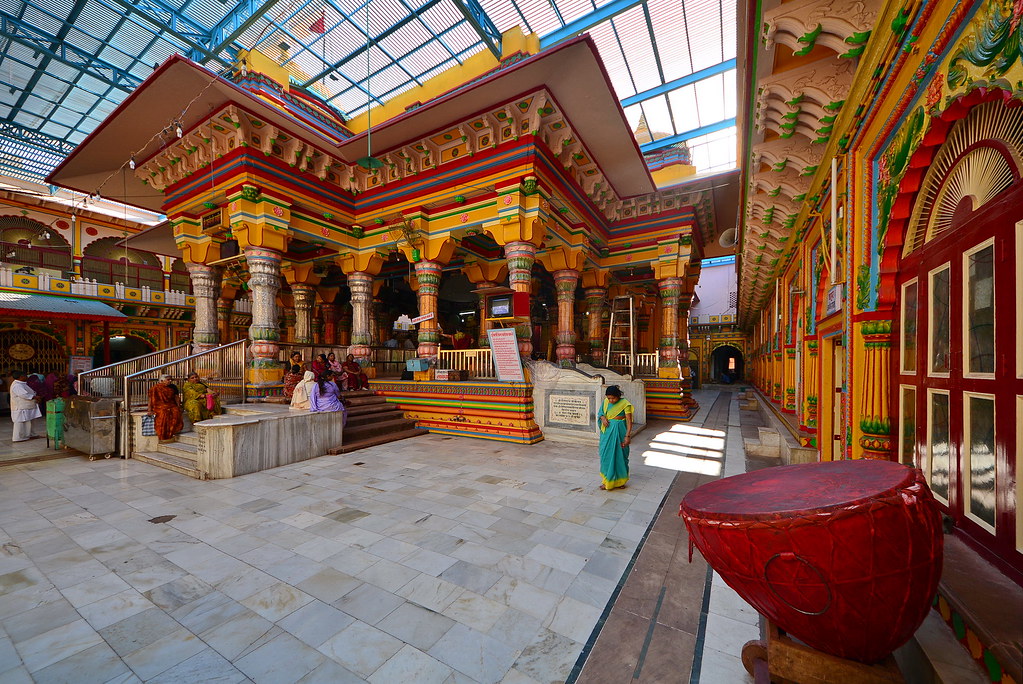
The Dwarakadhisha Mandira is one of the most revered temples in Mathura, attracting thousands of pilgrims who seek the royal darśana of Lord Kṛṣṇa as the king of Dvārakā. The glory of the Dwarakadhisha Mandira lies not only in its historical significance but in its profound spiritual atmosphere, where devotion (bhakti) is expressed with regal splendor.
Established in 1814, this temple embodies the essence of Vaiṣṇava worship, particularly as practiced in the Vallabhacharya Sampradaya. Here, the Lord is worshipped in His (aiśvarya, majestic opulence), revealing another dimension of His divine personality.
Historical Background of Dwarakadhisha Mandira
Foundation and Patronage
The Dwarakadhisha Mandira was constructed in 1814 by Seth Gokul Das Parikh, a devoted follower and treasurer of the royal Gwalior Estate. His dedication reflects the traditional Vedic principle of utilizing wealth in the service of (Bhagavān, the Supreme Lord).
The temple stands as a testimony to how devotion, when combined with resources, can create enduring centers of spiritual upliftment.
Management by Vallabhacharya Tradition
The temple is maintained by the followers of Vallabhacharya, whose teachings emphasize seva (loving service) and grace (puṣṭi).
This lineage presents Kṛṣṇa not only as the Supreme Lord but as the beloved divine child and king, deserving intimate and opulent service.
The Deity of Dwarakadhisha Mandira
Lord Dwarakanatha: The Kingly Form of Krishna
The presiding Deity of the Dwarakadhisha Mandira is Lord Dvārakānātha, a four-armed form of Kṛṣṇa representing His royal pastimes in Dwarka.
In this form, the Lord manifests:
- Sovereignty (rājatva)
- Protection of devotees
- Divine authority
The black marble Deity radiates grandeur, inviting devotees to approach with reverence and प्रेम (prema, divine love).
Association with Rukmini and Satyabhama
Flanking the main Deity are the divine consorts:
- Rukmini
- Satyabhama
Their presence represents devotion in the mood of queenship, where service is offered with dignity and affection.
Together, they complete the divine līlā (pastime) of Kṛṣṇa as the king of Dvārakā.
Dwarakadhisha Mandira and the Theology of Aiśvarya
Understanding Aiśvarya-Bhāva
In Vaiṣṇava philosophy, Kṛṣṇa is worshipped in different moods (भाव, bhāva). The Dwarakadhisha Mandira emphasizes aiśvarya-bhāva, the mood of reverence and awe.
This contrasts with:
- Vraja-bhāva (intimate love in Vṛndāvana)
- Sakhya (friendship)
- Vātsalya (parental affection)
Here, devotees experience the Lord as a majestic ruler, reinforcing His supreme position.
Balance of Majesty and Sweetness
Although the Lord appears as a king, His original nature as the all-attractive Kṛṣṇa remains unchanged.
Thus, the Dwarakadhisha Mandira teaches that the Supreme Truth simultaneously possesses:
Madhurya (sweetness)
- Aishwarya (opulence)
Temple Architecture and Atmosphere
Artistic Excellence
The Dwarakadhisha Mandira is known for its intricate architecture, detailed carvings, and vibrant decorations.
The use of black marble for the Deity enhances the sense of (divinity), creating a striking visual impact.
Festive Spiritual Environment
The temple is especially renowned for its festivals, where the Lord is adorned with elaborate garments and ornaments.
During occasions like:
- Janmāṣṭamī
- Jhulan Yatra
- Annakūṭa
the temple transforms into a divine royal court, allowing devotees to participate in transcendental celebration.
The Practice of Seva in Dwarakadhisha Mandira
Daily Worship
The worship at the Dwarakadhisha Mandira follows a structured schedule of seva, including:
- Maṅgala ārati (morning worship)
- Śṛṅgāra (decoration of the Deity)
- Rāja-bhoga (royal offering of food)
- Sandhyā ārati (evening worship)
Each offering is performed with deep devotion and attention to detail.
Bhakti Through Service
In the Pushtimarg tradition, seva is not ritualistic but relational. The devotee serves the Lord as one would serve a beloved king or family member.
This transforms ordinary actions into spiritual offerings.
Pilgrimage Significance of Dwarakadhisha Mandira
A Major Attraction in Mathura
Among the many sacred sites in Mathura, the Dwarakadhisha Mandira holds a special place due to its accessibility and grandeur.
Pilgrims visiting Mathura often include this temple as a central part of thei (pilgrimage).
Spiritual Benefits of Darśana
Taking darśana at the Dwarakadhisha Mandira is believed to:
- Purify the heart
- Strengthen devotion
- Grant divine blessings
Such experiences deepen one’s connection with Kṛṣṇa.
Philosophical Insights from Dwarakadhisha Mandira
Krishna as the Supreme Personality
The temple reinforces the understanding that Kṛṣṇa is not merely a historical figure but the Supreme Personality of Godhead.
His role as Dvārakādhīśa highlights His function as protector, ruler, and guide.
The Role of Devotion
Material achievements, though impressive, cannot satisfy the soul. True fulfillment comes through devotion.
The Dwarakadhisha Mandira serves as a reminder that surrender to Kṛṣṇa leads to eternal happiness.
Relevance in Contemporary Spiritual Life
Connecting Ancient Tradition with Modern Devotion
Even in today’s fast-paced world, the Dwarakadhisha Mandira remains a vibrant center of spirituality.
Devotees from all walks of life come here to reconnect with their spiritual roots.
A Living Tradition
Unlike historical monuments, this temple is alive with daily worship, music, and devotion.
It exemplifies how Sanātana-dharma continues to thrive across generations.
Conclusion: Dwarakadhisha Mandira as a Gateway to Divine Royalty
The Dwarakadhisha Mandira stands as a majestic representation of Kṛṣṇa’s royal aspect, inviting devotees to experience the Lord in His (opulent form).
From its historical foundation to its vibrant devotional practices, the temple offers both philosophical depth and spiritual experience.
By visiting the Dwarakadhisha Mandira, one not only witnesses divine beauty but also understands the true purpose of life—to serve and love the Supreme Lord.
Thus, this sacred temple in Mathura continues to guide countless souls toward spiritual realization, reminding us that beyond the temporary world lies the eternal kingdom of Kṛṣṇa, where devotion reigns supreme.
Deepen your Bhakti-yoga practice, harmonize relationships, and receive guided coaching — all at Vedavarsity.com