


A structured overview of the principal Ayurvedic classical texts and their enduring relevance
The Ayurvedic Classical Texts form the foundational body of knowledge for Ayurveda, one of the world’s oldest systems of medicine. These texts, composed in Sanskrit over many centuries, present a comprehensive understanding of health, disease, and the deeper nature of life.
Far from being merely historical documents, the Ayurvedic Classical Texts continue to guide practitioners and scholars. They preserve a disciplined tradition rooted in observation, reasoning, and a refined understanding of consciousness and the human body.
The Charaka Samhita: Core of Ayurvedic Classical Texts
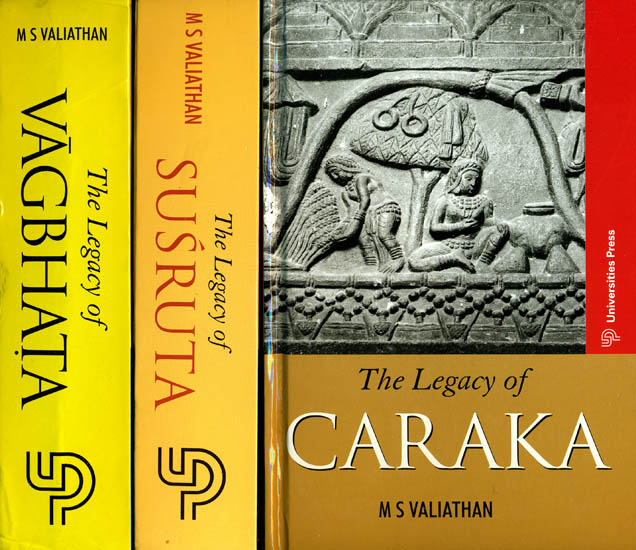
Among the Ayurvedic Classical Texts, the Charaka Samhita holds a central position. It is believed to have been composed between 400–200 BCE and represents one of the earliest systematic expositions of Ayurveda.
Origin and Composition
The authorship of the Charaka Samhita remains uncertain. It may represent:
- The work of a single sage named Charaka
- A compilation from a broader school of thought
- A redaction of the earlier Agnivesha Samhita, which is no longer extant
Later, around 400 CE, the scholar Dridhabala is believed to have restored missing sections, particularly in the Chikitsasthana.
Key Contributions
The Charaka Samhita:
- Focuses on kayachikitsa (internal medicine)
- Contains over 8,400 metrical verses
- Explains the theory of digestion and metabolism
- Describes the five subtypes of vata
More significantly, this text introduces a profound philosophical perspective. It views life as a field of intelligence and consciousness, where the physician must consider not only the body but also the conscious self (ātma).
The Sushruta Samhita: Surgical Dimension of Ayurvedic Classical Texts
Another major pillar of the Ayurvedic Classical Texts is the Sushruta Samhita. This work focuses primarily on surgery (shalya tantra), reflecting the practical needs of ancient society.
Historical Context
The Sushruta Samhita likely emerged around the same period as the Charaka Samhita. It is also considered a redaction of earlier oral traditions transmitted through generations.
Key Features
- Combines prose and poetic structure
- Provides detailed surgical techniques
- Introduces the concept of marmas (vital points)
- Enumerates subtypes of pitta
This text also presents one of the most widely cited definitions of health, emphasizing balance among bodily elements, proper digestion, and clarity of mind.
In contrast to Charaka, the Sushruta Samhita gives particular importance to blood and transformation, reflecting a dynamic view of life processes.
Ashtanga Hridayam and Ashtanga Sangraha: Systematizing Ayurvedic Knowledge
The Ashtanga Hridayam and Ashtanga Sangraha, attributed to Vagbhata, further refine the teachings of earlier Ayurvedic Classical Texts.
Structure and Content
- Ashtanga Sangraha: Larger and more detailed
- Ashtanga Hridayam: Concise and systematically organized
Both texts are dated around 400 CE and primarily address internal medicine.
Key Contributions
- Complete description of kapha subtypes
- Integration of earlier Ayurvedic principles
- Practical guidance for diagnosis and treatment
While these works emphasize the physical and therapeutic aspects of health, they also acknowledge that the body is the residence of the self, though without extensive philosophical elaboration.
The Lesser Three: Expanding Ayurvedic Classical Texts
Beyond the primary treatises, the Ayurvedic Classical Texts include three important later works that refine and expand the tradition.
Sharngadhara Samhita: Practical Formulations
The Sharngadhara Samhita, composed around the 15th century, presents a concise summary of Ayurvedic knowledge.
Key Features:
- Focus on pharmacological formulations
- Early description of pulse diagnosis
- Emphasis on practical application
This text serves as a bridge between classical theory and applied medicine.
Bhava Prakasha: Comprehensive Recompilation
The Bhava Prakasha, written in the 16th century, provides a structured synthesis of earlier teachings.
Key Contributions:
- Approximately 10,000 verses
- Detailed section on foods, herbs, and minerals (Nighantu)
- Compilation of earlier sutras
It is particularly valuable for understanding diet and natural substances in Ayurveda.
Madhava Nidanam: Classification of Disease
The Madhava Nidana focuses on diagnosis and classification of diseases.
Distinctive Aspects:
- Systematic disease taxonomy
- Detailed description of symptoms and causes
- Coverage of multiple medical fields
However, unlike other texts, it does not elaborate on treatment methods, emphasizing diagnosis as a separate discipline.
Language and Transmission of Ayurvedic Classical Texts
All Ayurvedic Classical Texts were originally composed in Sanskrit. Their poetic structure served as a powerful mnemonic device, allowing students to memorize extensive knowledge.
Even today, traditional students often commit large portions of these texts to memory, preserving an unbroken chain of knowledge transmission.
Modern translations by scholars such as P.V. Sharma and Srikantha Murthy have made these works accessible to a global audience, while maintaining fidelity to the original teachings.
Philosophical Insight in Ayurvedic Classical Texts
A distinctive feature of the Ayurvedic Classical Texts is their integration of medicine with philosophy.
They recognize that:
- The body is governed by natural laws
- Actions (karma) influence health outcomes
- The self (ātma) is distinct from the physical body
From this perspective, disease is not merely a physical disturbance but a reflection of imbalance at multiple levels of existence.
Thus, the physician’s role extends beyond treatment to guiding the individual toward harmony with nature and higher principles.
Conclusion: Enduring Relevance of Ayurvedic Classical Texts
The Ayurvedic Classical Texts remain the cornerstone of Ayurvedic knowledge. Through works such as the Charaka Samhita, Sushruta Samhita, and later treatises, a comprehensive system of health has been preserved for millennia.
These texts demonstrate that true healing requires understanding the body, mind, and consciousness as interconnected aspects of life. Their continued study offers both practical knowledge and deeper insight into the nature of existence.
In a world seeking sustainable and holistic approaches to health, the Ayurvedic Classical Texts provide guidance that is both ancient and enduring—reminding us that harmony within leads to balance without.
https://library.vedavarsity.com/ | https://www.vedavarsity.com/
Deepen your Bhakti-yoga practice, harmonize relationships, and receive guided coaching — all at Vedavarsity.com