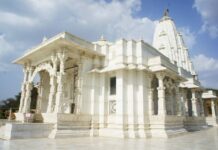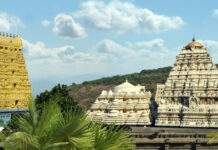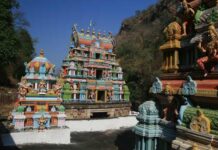



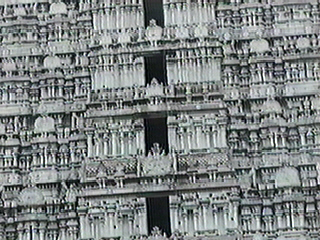
The Mayiladuturai Temple, dedicated to Lord Shiva as Mayuranathar, stands as a prominent center of devotion in the fertile Chola region of Tamil Nadu. Located along the sacred banks of the river Kaveri, this temple holds a revered place among the Tevara Stalams, being counted as the 39th shrine in the series south of the river.
In the first experience of the Mayiladuturai Temple, one encounters not merely an architectural structure, but a sacred field of spiritual activity where devotion, tradition, and divine remembrance converge. It serves as a reminder that sacred geography in Vedic culture is not accidental, but a manifestation of divine arrangement meant to guide the soul toward higher realization.
Historical and Religious Significance
A Hub of Shaivite Tradition
The Mayiladuturai Temple has been glorified in the hymns of the Shaivite saints Tirugnana Sambandar and Appar, whose devotional compositions form the core of Tamil Shaivite literature. Their hymns affirm the temple’s status as a spiritually potent site where sincere devotion yields purification of consciousness.
Situated in a region dense with sacred shrines, the temple acts as a central hub connecting numerous nearby Shiva temples. This clustering of sacred sites reflects a civilization deeply rooted in dharma, where spiritual life was integrated into daily living.
Association with Sacred Geography
The temple lies amidst several important shrines connected with Puranic legends. Notably, the nearby Tiruppariyalur Veerattam, associated with the Daksha Yajna episode, reinforces the mythological and theological continuity of the region.
Such sacred networks illustrate the principle of karma and divine order, where places become sanctified through divine pastimes and the austerities of great souls.
Legend of Mayuranathar: The Peacock Form of Devotion
One of the central legends associated with the Mayiladuturai Temple speaks of Goddess Parvati, also known as Dakshayani, who assumed the form of a peacock (mayura) to perform penance and worship Lord Shiva.
Pleased by her devotion, Lord Shiva is said to have taken the form of a peacock himself and performed the Gowri Tandavam, a divine dance symbolizing unity and grace. Their reunion at this sacred site gives the deity the name “Mayuranathar”—the Lord of the Peacock.
This narrative carries a deeper spiritual message: when the individual soul (jīva) approaches the Supreme with humility and devotion, divine reciprocation naturally follows. The transformation of form here symbolizes the transcendence of ego in the pursuit of divine union.
Temple Architecture and Layout
Vast Sacred Complex
The Mayiladuturai Temple extends over an area of approximately 350,000 square feet, making it one of the largest temple complexes in the region. It features:
- Five concentric prakarams (enclosures)
- A towering nine-tiered Raja Gopuram rising to about 165 feet
- Multiple mandapams (pillared halls)
- Fourteen vimanams adorned with stucco figures
The layout is both expansive and intricate, guiding the devotee inward through successive layers—symbolic of the inward journey from the external world to the inner self.
Sacred Tank and River Connection
A beautiful temple tank complements the architectural grandeur. Additionally, the proximity to the river Kaveri enhances the temple’s sanctity. Ritual bathing and processions to the river are integral to the temple’s traditions, especially during festival periods.
Water, in Vedic symbolism, represents purification—not only of the body but also of the mind and consciousness.
Artistic and Sculptural Heritage
Chola Period Contributions
The temple’s structural foundation was rebuilt in stone during the 10th century under the patronage of Sembiyan Mahadevi, a notable Chola queen known for her contributions to temple architecture.
Though later renovations have altered parts of the original structure, several exquisite stone sculptures from the Chola period have been preserved. These include depictions of:
- Vinayaka (Ganesha)
- Nataraja (the Cosmic Dancer)
- Shiva with Parvati (Alinganamurthy)
- Dakshinamurthy (the divine teacher)
- Lingodbhava (emergence of Shiva as a column of light)
- Durga and Bhikshatana
These sculptures are not merely artistic expressions but theological representations conveying profound spiritual truths.
Unique Aspects of Worship and Tradition
Role of the Ambal Shrine
Historical evidence suggests that the Ambal shrine (Abhayambika) was established during the reign of Rajaraja Chola III in the 13th century. Prior to this, worship may have centered primarily on the Shiva Lingam with symbolic representations of divine energy (Shakti).
This evolution reflects the dynamic nature of temple worship, adapting while preserving core spiritual principles.
Daily Rituals and Processions
A distinctive feature of the Mayiladuturai Temple is the daily procession of the deity to the banks of the Kaveri during the Tamil month of Thula (Libra). This ritual emphasizes the living relationship between the temple and the natural elements.
Such practices reinforce the understanding that nature itself operates under divine supervision, and human life finds harmony when aligned with it.
Festivals and Cultural Life
Thula Festival
The Thula festival is one of the most significant events at the Mayiladuturai Temple. Thousands of pilgrims gather during this period to participate in rituals and bathe in the sacred waters of the Kaveri.
On the seventh day of this festival, Lord Shiva’s dance is ceremonially enacted at the Aadi Sabhai, symbolizing cosmic rhythm and divine order.
Annual Brahmotsavam
The Brahmotsavam, celebrated in the Tamil month of Vaikasi, is another major festival. It features elaborate rituals, processions, and cultural performances that bring the temple to life with devotion and celebration.
Festivals in Vedic culture are not mere celebrations but structured opportunities for collective spiritual elevation.
Preservation and Institutional Management
The temple is currently managed by the Tiruvavaduturai Adhinam, a traditional Shaivite monastic institution. Nearby associated temples are under the administration of the Dharumapura Adhinam.
These institutions play a vital role in preserving ritual continuity, temple traditions, and scriptural learning.
A Subtle Reflection on Divine Order
The enduring presence of the Mayiladuturai Temple across centuries quietly illustrates that when human effort is aligned with divine purpose, the results transcend time and circumstance.
Conclusion: Mayiladuturai Temple as a Living Spiritual Heritage
The Mayiladuturai Temple is more than a historical monument; it is a living center of devotion, tradition, and spiritual learning. Its legends, architecture, and rituals together create an environment that guides the mind toward higher understanding.
In a world often driven by temporary pursuits, such sacred spaces remind us of a deeper reality—that true fulfillment lies in reconnecting with the eternal nature of the self and its relationship with the Supreme.
library.vedavarsity.com | www.vedavarsity.com
Deepen your Bhakti-yoga practice, harmonize relationships, and receive guided coaching — all at Vedavarsity.com