The Tiruvindaloor Temple, located in Mayiladuturai in the Chola region of Tamil Nadu, is a revered Divya Desam dedicated to Lord Vishnu in the form of Parimala Ranganathar. Set along the sacred course of the river Kaveri, this temple holds a unique place in the Pancharangam tradition—five sacred shrines where Lord Ranganatha is worshipped in reclining form.
In the presence of the Tiruvindaloor Temple, one encounters a refined expression of devotion where sacred tradition, scriptural authority, and architectural beauty come together in harmony. Such places quietly remind the sincere seeker that the Supreme is accessible through devotion offered with sincerity and steadiness.
Tiruvindaloor Temple and the Pancharangam Tradition
One Among the Five Sacred Ranganatha Shrines
The Tiruvindaloor Temple is counted among the Pancharangams, a group of five temples situated along the Kaveri river, each dedicated to Lord Ranganatha. These include:
- Srirangapatna
- Srirangam
- Koyiladi (Anbil)
- Kumbakonam
- Tiruvindaloor
This sacred alignment along the river signifies a continuous flow of divine grace, much like the river itself nourishes the land it traverses.
Revered by the Alwars
The temple has been praised in the hymns of Tirumangai Alvar, one of the foremost Vaishnavite saints. His verses affirm the spiritual potency of this shrine and its role in guiding devotees toward higher realization.
In Vedic understanding, such glorification by realized souls is considered a reliable testimony to the sanctity of a place.
Deities of Tiruvindaloor Temple
Parimala Ranganathar: The Fragrant Lord
The presiding deity of the Tiruvindaloor Temple is Lord Vishnu as Parimala Ranganathar, also known as Sugandhavana Nathan. The term “Parimala” signifies fragrance, symbolizing purity and divine presence that subtly pervades all existence.
The main deity is an imposing 12-foot-long image made of green stone, depicted in a reclining posture facing east. This posture represents the Lord in a state of cosmic rest, maintaining the universe while remaining detached from its temporary transformations.
The Divine Consort
The consort of the Lord is Parimala Ranganayaki, also known as Chandrasaapa Vimochanavalli and Pundareekavalli. She represents the compassionate aspect of the divine, offering grace and protection to devotees.
Associated Deities
Within the sanctum and temple premises, one finds:
- Images of the rivers Kaveri and Ganga
- Santana Gopala Krishna
- Yoga Narasimha
- Rama and Anjaneya
- Surya and Chandra
These representations reinforce the understanding that all divine manifestations are interconnected expressions of the same Supreme Reality.
Temple Architecture and Layout
Structure and Design
The Tiruvindaloor Temple is structured with:
- Three concentric prakarams (enclosures)
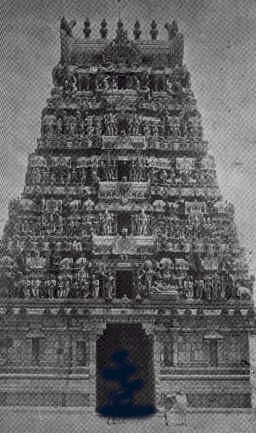
- A five-tiered Rajagopuram
- East-facing entrance
- Dwajastambha Mandapam (flagstaff hall)
- Garuda Mandapam with sculptural panels
The Garuda Mandapam is especially noteworthy for its depictions of the ten avataras (Dashavatara) of Lord Vishnu, serving as a visual summary of divine interventions across cosmic time.
Sculptural Excellence
The pillars in the mandapams are intricately carved, reflecting the craftsmanship of the Chola period. These artistic elements are not merely ornamental but serve as aids for contemplation and scriptural remembrance.
Sacred Legends of Tiruvindaloor Temple
Restoration of the Vedas
One of the principal legends associated with the Tiruvindaloor Temple narrates that the demons Madhu and Kaitabha stole the Vedas and hid them in the ocean. Lord Vishnu assumed the form of Matsya (the fish incarnation) and retrieved the Vedas, restoring their original purity and “fragrance.”
This act gives rise to the name Sugandharanyam and the deity’s title Parimala Ranganathar—the Lord who restores purity and divine knowledge.
From a philosophical perspective, this legend illustrates that divine knowledge may sometimes be obscured but is never lost; it is restored by divine intervention when required.
Chandra’s Liberation
Another legend states that Chandra (the moon god) was relieved of a curse after bathing in the Kaveri and worshipping at this temple. This association lends the temple a reputation as a place of relief from afflictions and karmic burdens.
Worship Practices and Rituals
Pancharatra Agama Tradition
Six daily worship services are conducted at the Tiruvindaloor Temple according to the Pancharatra Agama, a classical Vaishnavite system of temple worship. These rituals are performed with discipline and scriptural precision.
Such regulated worship reflects the principle that devotion, when guided by proper knowledge and discipline, becomes steady and transformative.
Santana Gopala Worship
The presence of Santana Gopala Krishna in the sanctum makes the temple significant for couples seeking progeny. It is believed that sincere prayer here yields blessings in accordance with divine will.
Festivals and Cultural Significance
Thula Festival and Kaveri Processions
As with nearby temples, the Tamil month of Thula (Libra) is marked by grand celebrations. During this period, the festival deity is taken daily in procession to the banks of the Kaveri.
This recurring ritual emphasizes the sacred relationship between temple worship and natural elements, particularly water as a purifier.
Other Observances
Regular festivals and special occasions bring together devotees from various regions, reinforcing the temple’s role as a center of communal spiritual life.
Contribution to Music and Devotional Literature
The Tiruvindaloor Temple has also inspired classical Carnatic music. The great composer Muthuswami Dikshitar composed a kriti in praise of Parimala Ranganathar, highlighting:
- The Lord as protector of devotees
- His manifestation through various avatars
- His reclining form as Narayana
Such compositions serve as a bridge between devotion and art, transforming music into a medium of spiritual expression.
A Reflection on Spiritual Understanding
The serene presence of the Tiruvindaloor Temple subtly conveys that true fragrance in life arises not from external achievements but from inner purity and alignment with divine consciousness.
Conclusion: Tiruvindaloor Temple as a Beacon of Devotion
The Tiruvindaloor Temple stands as a refined expression of Vaishnavite devotion, rooted in scriptural tradition and enriched by centuries of worship. Its legends, architecture, and rituals together create a sacred environment that uplifts the mind and guides the soul toward higher realization.
In contemplating this temple, one is reminded that the ultimate purpose of life is not merely to engage with the world, but to understand one’s eternal nature and relationship with the Supreme.
library.vedavarsity.com | www.vedavarsity.com
Deepen your Bhakti-yoga practice, harmonize relationships, and receive guided coaching — all at Vedavarsity.com