



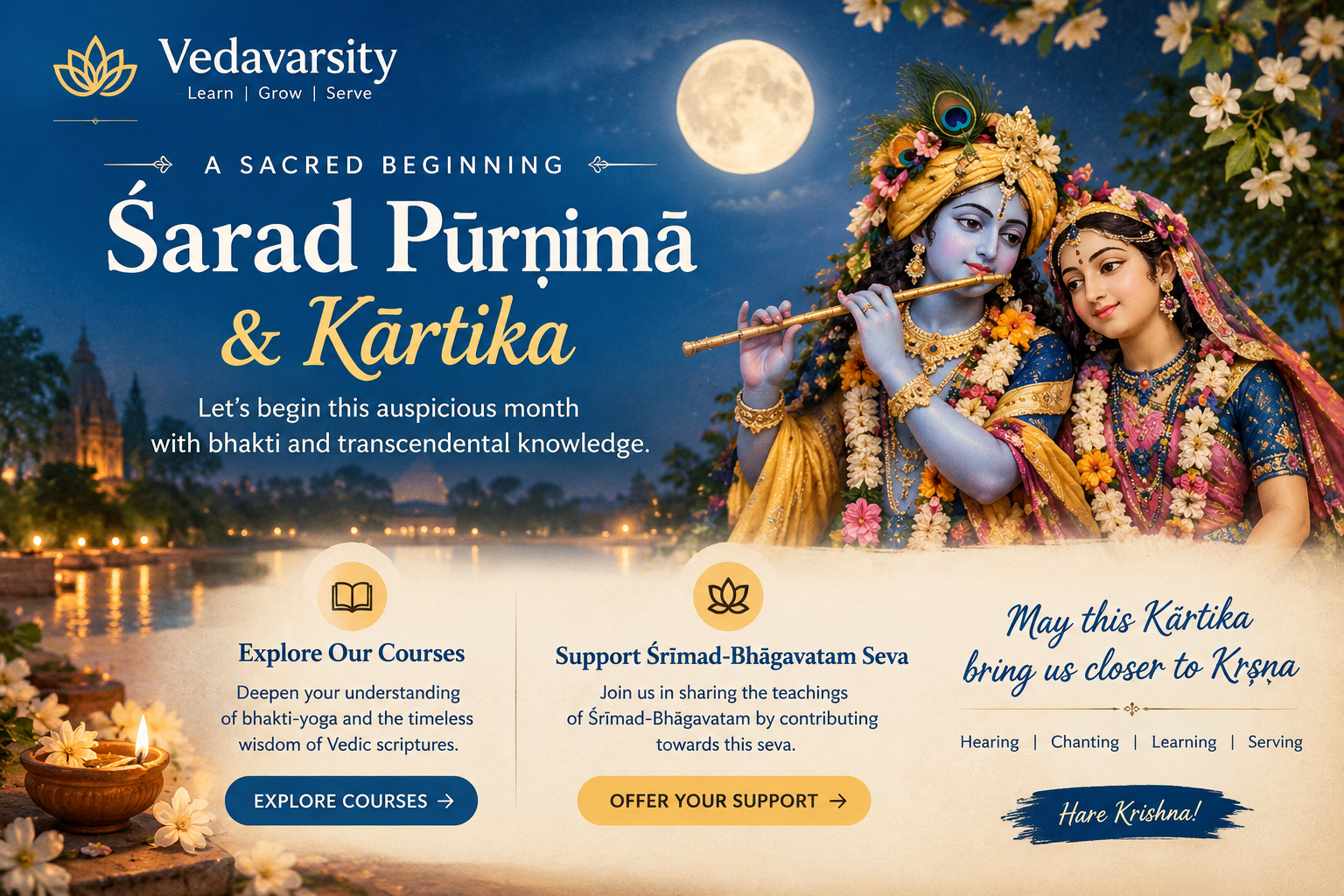
Śarad Pūrṇimā and Kārtika hold a special place in the devotional tradition of Vaiṣṇavas. These sacred occasions invite us to remember Śrī Śrī Rādhā-Kṛṣṇa, deepen our understanding of bhakti-yoga, and engage more sincerely in devotional service. Through the teachings of the Vedic scriptures and the guidance of the ācāryas, we can understand the spiritual significance of these occasions beyond their external observances.
For a sincere seeker, Śarad Pūrṇimā and Kārtika offer an opportunity to renew spiritual commitments, cultivate remembrance of the Supreme Personality of Godhead, and make devotional practices an integral part of daily life.
What Is the Spiritual Significance of Śarad Pūrṇimā and Kārtika?
Śarad Pūrṇimā is associated with the full-moon night of the autumn season. In the Vaiṣṇava tradition, it is particularly remembered in connection with Lord Śrī Kṛṣṇa’s transcendental rāsa-līlā in Vṛndāvana.
The Śrīmad-Bhāgavatam, especially the chapters describing Kṛṣṇa’s Vṛndāvana pastimes, reveals the transcendental nature of the Lord’s activities and the pure love of His devotees. These pastimes are not ordinary material activities; they reveal the spiritual relationship between the Supreme Lord and His eternal associates.
The month of Kārtika, also known as the Dāmodara month, is especially cherished by Vaiṣṇavas. During this period, devotees traditionally increase their hearing, chanting, worship, and other devotional activities.
Both occasions remind us that spiritual life is not simply a matter of ritual observance. Its real purpose is to awaken our dormant love for Kṛṣṇa through the process of bhakti.
Śarad Pūrṇimā: Remembering the Transcendental Pastimes of Kṛṣṇa
The rāsa-līlā described in the Śrīmad-Bhāgavatam reveals the extraordinary nature of pure devotional love. The gopīs of Vṛndāvana are celebrated for their complete dedication to Kṛṣṇa, without any desire for personal material enjoyment.
Śrīla Prabhupāda explains Kṛṣṇa’s pastimes through the authorized teachings of the disciplic succession. Therefore, these subjects should be approached through authentic Vaiṣṇava literature and the guidance of qualified devotees rather than interpreted according to ordinary material conceptions.
Hearing about the Lord’s transcendental activities with faith and proper understanding can nourish our appreciation for pure bhakti. It can also inspire us to examine our own spiritual practices and cultivate greater sincerity in our relationship with Kṛṣṇa.
The celebration of Śarad Pūrṇimā thus becomes an opportunity to remember the spiritual atmosphere of Vṛndāvana and reflect on the ultimate goal of devotional life.
Kārtika: The Auspicious Month of Lord Dāmodara
Kārtika is widely observed by Vaiṣṇavas as a month of intensified devotional service. It is associated with the pastime in which Mother Yaśodā binds child Kṛṣṇa with ropes, earning Him the name Dāmodara.
This pastime reveals an extraordinary aspect of the Supreme Personality of Godhead. Although Kṛṣṇa is unlimited and completely independent, He willingly accepts the loving service of His devotees.
The Śrīmad-Bhāgavatam describes Mother Yaśodā’s affection and Kṛṣṇa’s loving response, showing how devotion transcends calculations of power and position.
During Kārtika, devotees traditionally offer lamps to Lord Dāmodara, sing devotional prayers, chant the holy names, and increase their engagement in spiritual activities according to their Vaiṣṇava traditions.
The importance of these observances lies not merely in external performance but in cultivating remembrance, humility, and loving service.
How to Deepen Your Bhakti During Kārtika
The observance of Kārtika can become a meaningful opportunity to establish spiritual habits that continue throughout the year. The following practices can help devotees remain focused on their devotional goals.
1. Hear and Chant the Holy Names
Śravaṇam and kīrtanam—hearing and chanting the glories and holy names of the Lord—are foundational practices of bhakti-yoga.
Make time for attentive chanting of the Hare Kṛṣṇa mahā-mantra and regular hearing of authorized spiritual teachings. Consistency and sincerity are more important than treating devotional activities as a checklist.
2. Study Śrīmad-Bhāgavatam
The Śrīmad-Bhāgavatam presents the science of God, the nature of the soul, and the process of devotional service.
Regular study helps us understand the philosophy of Kṛṣṇa consciousness and apply spiritual principles in our daily lives. Reading under proper guidance also helps prevent misunderstandings of transcendental subjects.
3. Offer a Lamp to Lord Dāmodara
Offering a lamp to Lord Dāmodara is a cherished Kārtika observance. Devotees accompany this offering with prayers, remembrance, and a desire to serve the Lord with devotion.
Follow the practices of your Vaiṣṇava tradition and the guidance of your spiritual authorities, remembering that the heart of worship is sincere devotion.
4. Associate with Devotees
Sādhu-saṅga means association with saintly devotees. Such association supports spiritual understanding, encourages consistent practice, and provides opportunities to hear and discuss the teachings of the scriptures.
Participating in devotional classes, kīrtana, and scriptural discussions can help us remain connected with our spiritual aspirations.
5. Engage in Seva
Sevā means service offered in a devotional spirit. Supporting spiritual education, assisting devotees, sharing authentic scriptural knowledge, and contributing towards devotional initiatives are ways to serve according to one’s abilities and circumstances.
When service is offered with humility and without a desire for personal recognition, it becomes an opportunity to cultivate a service-oriented consciousness.
Why Is Śrīmad-Bhāgavatam Essential for Spiritual Growth?
The Śrīmad-Bhāgavatam is a foundational scripture in the Gauḍīya Vaiṣṇava tradition. It explains the nature of the Supreme Lord, the position of the living entity, and the supreme importance of pure devotional service.
Its teachings guide readers beyond temporary material concerns and towards the eternal relationship between the soul and Kṛṣṇa. Through its philosophical discussions and accounts of the Lord’s devotees, the scripture inspires faith, detachment, compassion, and dedication to spiritual life.
Śrīla Prabhupāda emphasized the importance of hearing and understanding the Śrīmad-Bhāgavatam through the disciplic succession. Genuine scriptural study is not merely intellectual; it should transform our understanding and inspire practical devotional service.
Supporting the study and distribution of this sacred literature is therefore a meaningful way to participate in the propagation of transcendental knowledge.
Learn and Grow with Vedavarsity
Spiritual progress becomes more meaningful when we study authentic scriptures, learn from qualified teachers, and apply philosophical understanding in our daily lives.
Vedavarsity offers opportunities for spiritual learning through courses focused on bhakti-yoga and Vedic knowledge. Whether you are beginning your spiritual journey or seeking to deepen your understanding of Vaiṣṇava philosophy, structured learning can help you approach the scriptures with greater clarity.
This Kārtika, consider making regular scriptural study part of your devotional commitments.
Explore courses at Vedavarsity: https://vedavarsity.com
Support Śrīmad-Bhāgavatam Seva
Sharing the teachings of the Śrīmad-Bhāgavatam helps make transcendental knowledge accessible to more sincere seekers.
You can participate in this service by supporting Vedavarsity’s Śrīmad-Bhāgavatam seva through a voluntary contribution according to your capacity. Such support helps sustain the work of spiritual education and the sharing of scriptural wisdom.
Support Śrīmad-Bhāgavatam Seva: https://donations.vedavarsity.com
Conclusion: Make Śarad Pūrṇimā and Kārtika a Time for Bhakti
Śarad Pūrṇimā and Kārtika invite us to deepen our remembrance of Śrī Śrī Rādhā-Kṛṣṇa and renew our commitment to the path of devotional service.
By hearing and chanting the holy names, studying the Śrīmad-Bhāgavatam, associating with devotees, and engaging in seva, we can make these sacred occasions meaningful beyond their traditional observances.
Let us approach this period with faith, humility, and sincerity, following the teachings of Śrīla Prabhupāda and the Vaiṣṇava ācāryas.
May our efforts in hearing, chanting, learning, and serving help us progress in Kṛṣṇa consciousness.
Hare Kṛṣṇa!
Deepen your Bhakti-yoga practice, harmonize relationships, and receive guided coaching — all at Vedavarsity.com