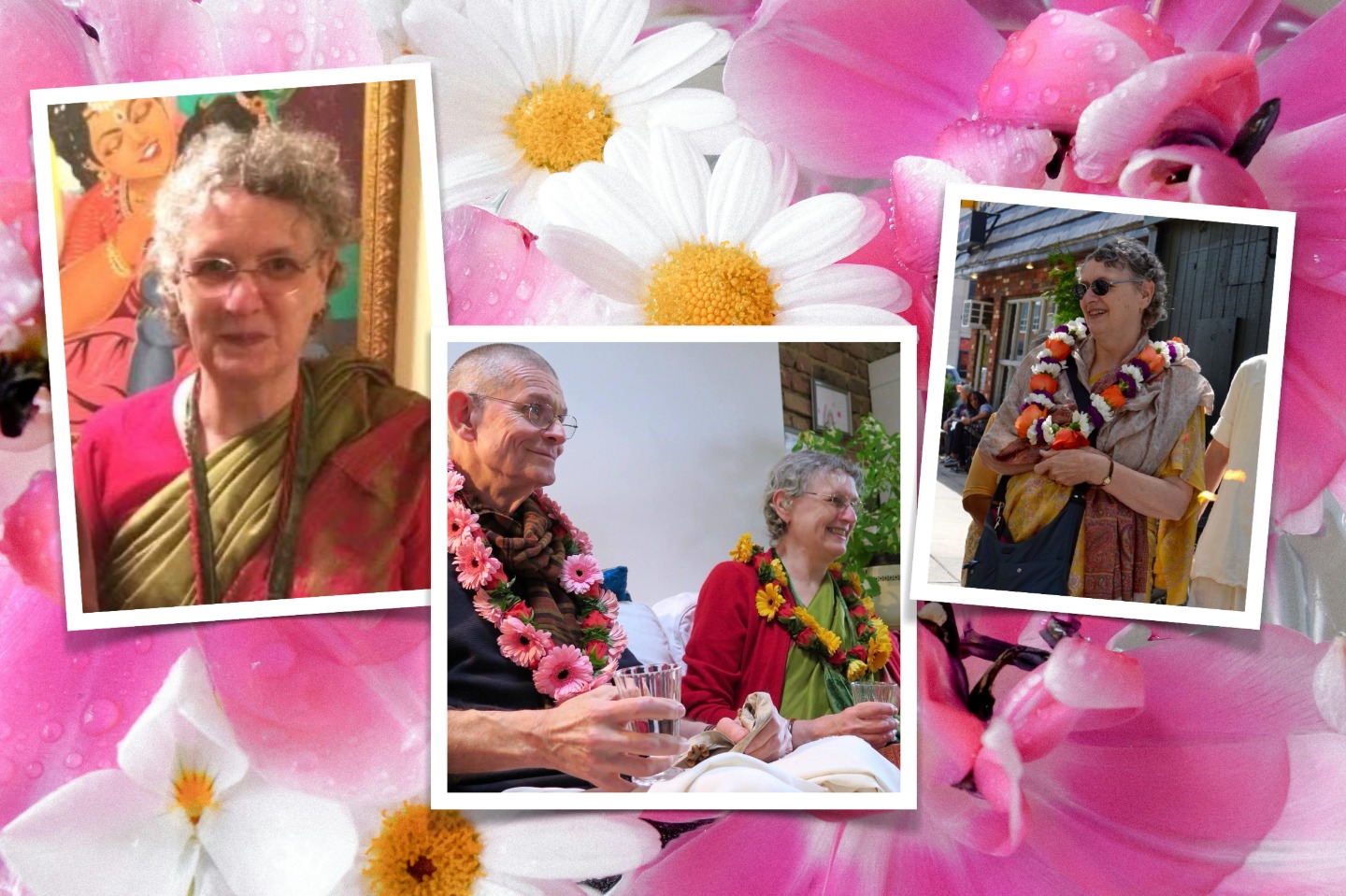
The Saudamini Devi Dasi passing marks a significant moment for the global Vaishnava community. Her Grace Saudamini Devi Dasi, a long-standing disciple of His Divine Grace A. C. Bhaktivedanta Swami Prabhupada, departed this world at approximately 1:00 AM IST on April 26, 2026, in Sridham Mayapur. Her departure coincided with an eight-hour kirtan gathering in Philadelphia, linking her final moments with the devotional current she helped sustain for decades.
After more than fifty years of dedicated service in the Western world, she and her husband, Ravindra Svarupa Prabhu, had relocated to Mayapur in 2024. Their intention was to spend their final years in the sacred birthplace of Lord Caitanya, immersed in spiritual remembrance and service.
A Foundational Pillar of ISKCON Philadelphia
For over four decades, Saudamini Devi Dasi served as a central figure in the ISKCON Philadelphia temple community. From the early 1970s until 2014, she carried multiple responsibilities, including Head Pujari and Vice President.
Her service was not administrative alone—it was deeply devotional. She was entrusted with the worship and care of the temple’s presiding deities: Sri Sri Radha Saradbihari, Lord Jagannatha, Baladeva, Subhadra, and Sri Sri Gaura Nitai. In the Vaishnava tradition, deity worship (arcana) is considered a direct form of service to the Supreme Lord, requiring purity, discipline, and unwavering attention.
While her husband traveled globally for leadership and scholarly responsibilities, she remained the steady force maintaining the temple’s spiritual standards. Together, they ensured that the temple remained firmly centered on the teachings of Srila Prabhupada, despite changing times and external pressures.
Early Dedication and Lifelong Commitment
Initiated by Srila Prabhupada in 1971, Saudamini Devi Dasi embraced a life of renunciation and service at a young age. Both she and Ravindra Svarupa Prabhu were graduates of the University of Pennsylvania, yet they chose to set aside conventional career paths.
This decision reflects a core Vedic principle: dharma, or one’s higher duty, sometimes calls for sacrifice of material ambitions in pursuit of spiritual realization. Their lives demonstrated that true fulfillment lies not in accumulation, but in service (seva).
Even while raising three children—Radhikika, Yudhistira, and Rupa—they remained fully engaged in devotional service. Balancing family life with spiritual responsibility requires discipline and faith, illustrating the principle that spiritual life is not separate from daily duties but can sanctify them.
Saudamini Devi Dasi Passing and Her Influence on Community Reform
One of the notable aspects of Saudamini Devi Dasi’s legacy was her role in encouraging the participation of women in devotional practices.
In the late 1980s, she worked with other devotees to reintroduce the practice of women giving Bhagavatam classes in North America. Her approach was thoughtful and strategic. Rather than confrontation, she emphasized practical reform grounded in philosophy.
She identified that allowing women to speak on sacred texts would naturally demonstrate their spiritual understanding and qualification. This effort contributed to a broader recognition of women’s roles within the devotional community.
Her actions reflected clarity of intelligence (buddhi) and courage, qualities praised in Vedic literature when used in the service of dharma.
Strength, Integrity, and Fearlessness
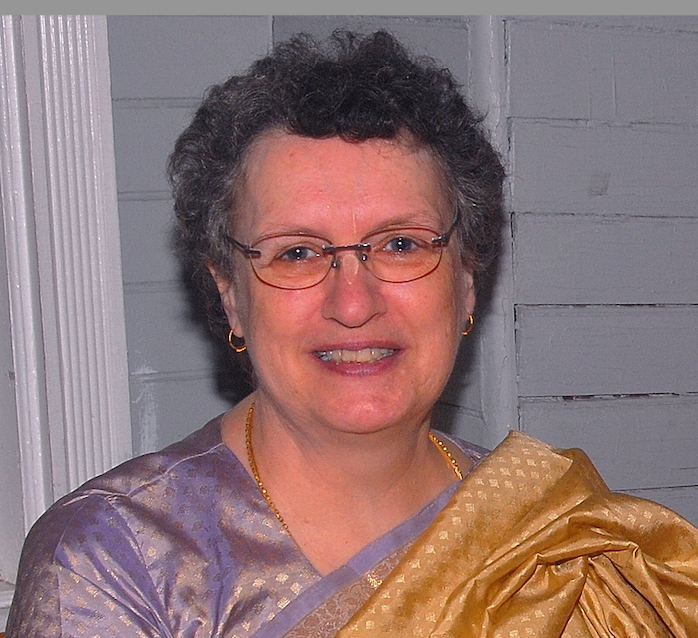
Accounts from those who knew her personally consistently describe Saudamini Devi Dasi as strong, intelligent, and uncompromising in matters of principle.
She did not tolerate deviations from the core teachings or practices of the Hare Krishna movement. On one occasion, during a temple kirtan, she firmly redirected the chanting back to the Hare Krishna maha-mantra, emphasizing the importance of preserving the authorized process.
Such actions were not driven by personal preference but by adherence to parampara—the disciplic succession. In Vedic understanding, spiritual knowledge must be preserved without distortion to retain its potency.
Her role as a protector of standards highlights the principle of karma-yoga: acting decisively in alignment with duty, without concern for personal comfort or approval.
Compassion and Encouragement
Despite her firmness, Saudamini Devi Dasi was also known for her compassion. She encouraged both men and women in their devotional service, often guiding others with patience and dignity.
Even when faced with criticism or misunderstanding, she maintained composure. This reflects an understanding of the self (ātma) as distinct from temporary social dynamics. One who is fixed in spiritual identity remains steady amidst praise and criticism alike.
Her efforts to empower others, especially women, were rooted not in social ideology but in recognition of spiritual equality—that every living being is part and parcel of the Supreme.
Final Years in Mayapur
In 2024, Saudamini Devi Dasi and her husband moved to Sridham Mayapur. In the Gaudiya Vaishnava tradition, residing in a holy dhama (sacred place) is considered highly auspicious, especially in one’s later years.
Mayapur, the birthplace of Lord Caitanya Mahaprabhu, is revered as a place where devotional service is especially potent. To depart from such a place is seen as spiritually significant.
The Saudamini Devi Dasi passing in Mayapur reflects a life that both began and concluded in dedication to divine service. It aligns with the Vedic understanding that one’s consciousness at the time of death carries profound importance.
Community Reflections and Memorial
The news of her departure reached the Philadelphia community during a major kirtan gathering, creating a poignant connection between her life’s service and her passing.
A memorial service is scheduled at ISKCON Philadelphia on Sunday, May 3, at 3 PM. Devotees, friends, and well-wishers are invited to gather, share memories, and honor her contributions.
Such gatherings serve not only as remembrance but also as spiritual reflection. In Vedic culture, the departure of a devotee is not seen as an end, but as a transition of the soul to its next destination, guided by its accumulated consciousness and devotion.
Conclusion: A Life Anchored in Higher Purpose
The Saudamini Devi Dasi passing reminds us of a life lived with clarity of purpose and unwavering dedication. Her service, strength, and commitment to preserving spiritual standards leave a lasting impression on all who encountered her.
From a Vedic perspective, the body is temporary, but the soul (ātma) continues its journey. Actions performed in devotion (bhakti) carry enduring value beyond this lifetime.
Her life stands as an example of how disciplined service, guided by authentic teachings, can shape both individual character and community legacy. In the broader order of existence, such lives quietly affirm that sincere devotion aligns one with a higher, divine arrangement.
library.vedavarsity.com | www.vedavarsity.com
Deepen your Bhakti-yoga practice, harmonize relationships, and receive guided coaching — all at Vedavarsity.com