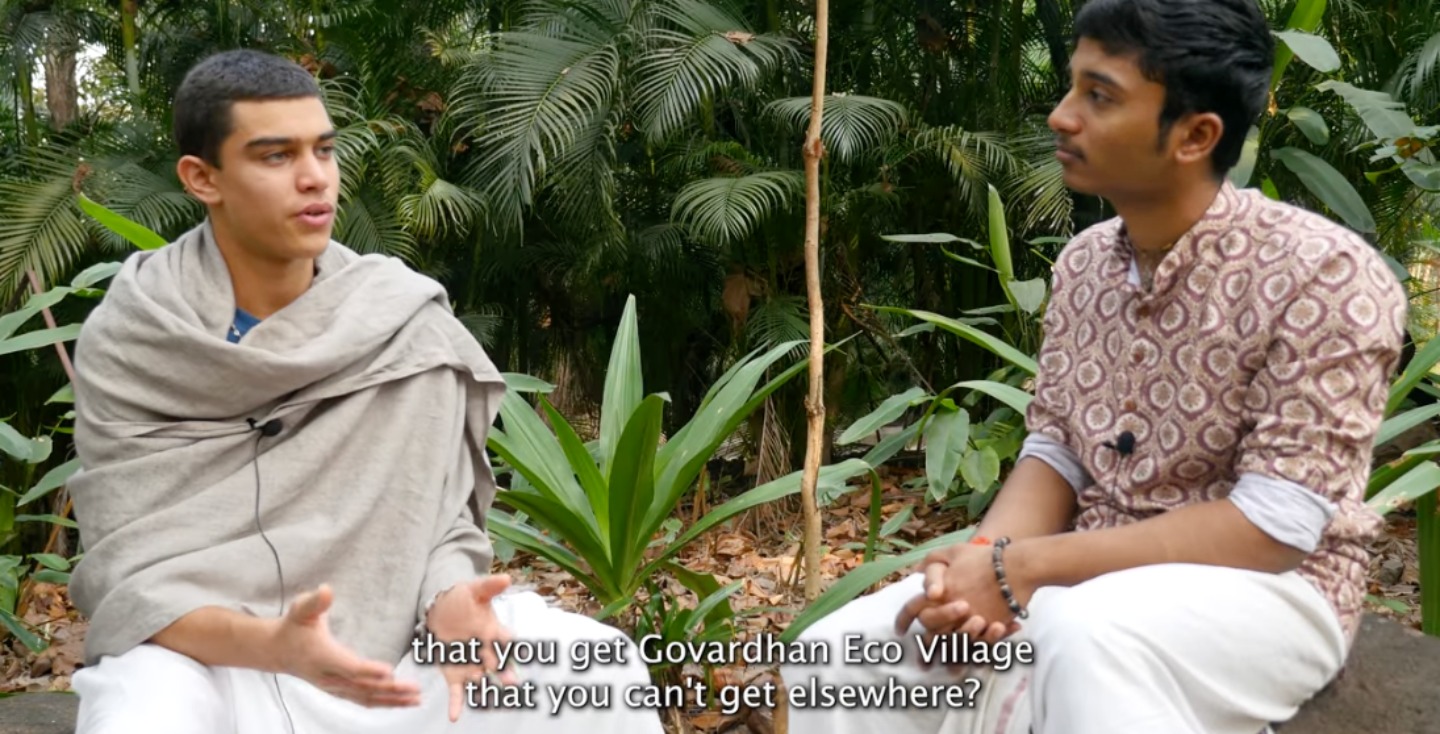
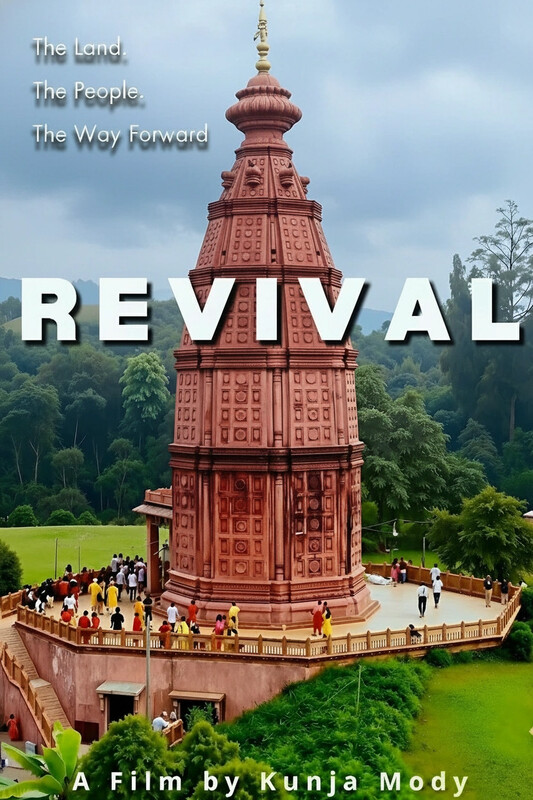
The short film “Revival” presents a thoughtful and inspiring portrayal of life at Govardhan Eco Village (GEV). Created by seventeen-year-old filmmaker Kunja Bihari Das during his winter break, the film captures the atmosphere, values, and activities of the village with remarkable sincerity and artistic sensitivity.
Through carefully observed scenes of community life, animals, natural landscapes, and social welfare initiatives, Revival at Govardhan Eco Village highlights a model of living that seeks harmony between people, nature, and spiritual culture. The film offers viewers an authentic window into a community dedicated to environmental stewardship, rural development, and the preservation of timeless values.
Revival at Govardhan Eco Village: A Glimpse into Sustainable Living
Govardhan Eco Village has become widely recognized for its integrated approach to sustainability and community welfare. Located in a peaceful natural setting, the village combines ecological responsibility with spiritual principles, demonstrating how modern challenges can be addressed through conscious living.
In Revival at Govardhan Eco Village, viewers are introduced to the daily rhythms of village life. Rather than relying on dramatic storytelling, the film allows the environment and its residents to speak for themselves. The warmth of the community, the care extended to animals, and the beauty of the surrounding landscape emerge naturally through the filmmaker’s lens.
This understated approach gives the film a sense of authenticity. It invites reflection on how human beings can live in greater balance with the natural world while maintaining strong social and cultural foundations.
The Mission of Govardhan Eco Village
At the heart of Govardhan Eco Village is a commitment to fostering a way of life that respects the environment, supports surrounding communities, and preserves spiritual and cultural heritage.
Its various initiatives focus on sustainable development, education, environmental conservation, rural welfare, and community empowerment. These efforts seek not only to address immediate social needs but also to cultivate long-term well-being.
From a Vedic perspective, humanity flourishes when it recognizes its interconnectedness with nature and its responsibility toward all living beings. Such principles resonate with the concept of dharma, or responsible action performed for the benefit of society and the natural world.
The village’s work reflects these values in practical ways, demonstrating that sustainability is not merely a technical challenge but also a matter of consciousness and character.
A Young Filmmaker’s Unique Perspective
One of the most striking aspects of Revival at Govardhan Eco Village is the perspective from which it was created.
At just seventeen years of age, Kunja Bihari Das brings a fresh and observant eye to the subject. His film avoids excessive narration and instead relies on visual storytelling to convey the spirit of the village.
The result is a documentary that feels both personal and universal. Viewers are not simply informed about Govardhan Eco Village; they are invited to experience its atmosphere. The film succeeds in communicating the village’s values without overt persuasion, allowing the audience to draw their own conclusions from what they see.
This balanced approach reflects a maturity beyond the filmmaker’s years and demonstrates the power of thoughtful storytelling.
Continuing a Legacy of Devotional Filmmaking
Kunja Bihari Das comes from a family with a distinguished history of devotional filmmaking.
He is the grandson of Yadubara Das and Visakha Dasi, two of ISKCON’s most respected and dedicated filmmakers. For more than five decades, they have documented the life, teachings, and global mission of His Divine Grace A. C. Bhaktivedanta Swami Prabhupada, the Founder-Acharya of ISKCON.
Their work has preserved invaluable moments of spiritual history and has helped countless people gain insight into the teachings of bhakti-yoga and the worldwide growth of the Krishna consciousness movement.
Through Revival at Govardhan Eco Village, Kunja Bihari Das appears to be carrying forward this legacy in his own way. While developing his own artistic voice, he continues a tradition of using film as a medium for education, inspiration, and cultural preservation.
The Importance of Storytelling in Preserving Culture
Visual storytelling plays an important role in documenting and preserving communities that embody meaningful social and spiritual values.
As societies become increasingly urbanized and technologically driven, projects such as Govardhan Eco Village offer alternative models for sustainable and community-centered living. Films like Revival at Govardhan Eco Village help make these efforts accessible to a wider audience.
By recording real experiences and human relationships, documentary filmmaking can preserve cultural memory for future generations. It can also encourage thoughtful discussion about how communities can respond to environmental and social challenges.
In this sense, storytelling becomes more than artistic expression. It becomes a means of education, preservation, and service.
A Message of Harmony and Responsibility
A recurring theme throughout Revival at Govardhan Eco Village is harmony—between individuals, communities, animals, and the natural environment.
The film gently illustrates that meaningful progress need not come at the expense of cultural heritage or ecological balance. Instead, lasting well-being emerges when development is guided by responsibility, compassion, and respect for life.
Vedic wisdom teaches that actions produce corresponding results, a principle known as karma. Communities that cultivate care, stewardship, and service naturally create conditions for greater prosperity and harmony. Although the film remains focused on observable realities, these deeper principles can be sensed in the village’s approach to daily life.
Conclusion
Revival at Govardhan Eco Village is a thoughtful and beautifully crafted short film that captures the essence of a community dedicated to sustainability, social welfare, and spiritual culture.
Through the eyes of young filmmaker Kunja Bihari Das, viewers gain an authentic appreciation for the people, landscapes, animals, and initiatives that make Govardhan Eco Village a unique example of integrated living. At the same time, the film stands as a testament to the enduring value of documentary storytelling and the importance of preserving cultural and spiritual heritage.
In a world searching for sustainable and meaningful ways of living, Revival at Govardhan Eco Village offers a quiet yet powerful reminder that genuine progress is most enduring when it is aligned with responsibility, compassion, and a higher sense of purpose.
library.vedavarsity.com || www.vedavarsity.com
Deepen your Bhakti-yoga practice, harmonize relationships, and receive guided coaching — all at Vedavarsity.com