The Museum of Sacred Art (MOSA) at Radhadesh recently hosted a distinguished gathering to inaugurate two remarkable exhibitions that highlight the richness and diversity of India’s artistic heritage. These Indian Art Exhibitions at MOSA brought together diplomats, cultural leaders, artists, historians, and invited guests for an evening dedicated to artistic excellence, cultural exchange, and preservation of traditional knowledge.
The exhibitions, Bajjika Art: A Dialogue between Kanchan Prakash and Sanju Devi and Threaded Memories: Embroidery Traditions of India, were curated by Sujata Prasad. Together, they offered visitors a deeper appreciation of India’s enduring artistic traditions and the cultural values that continue to inspire generations.
Indian Art Exhibitions at MOSA Draw Distinguished International Guests
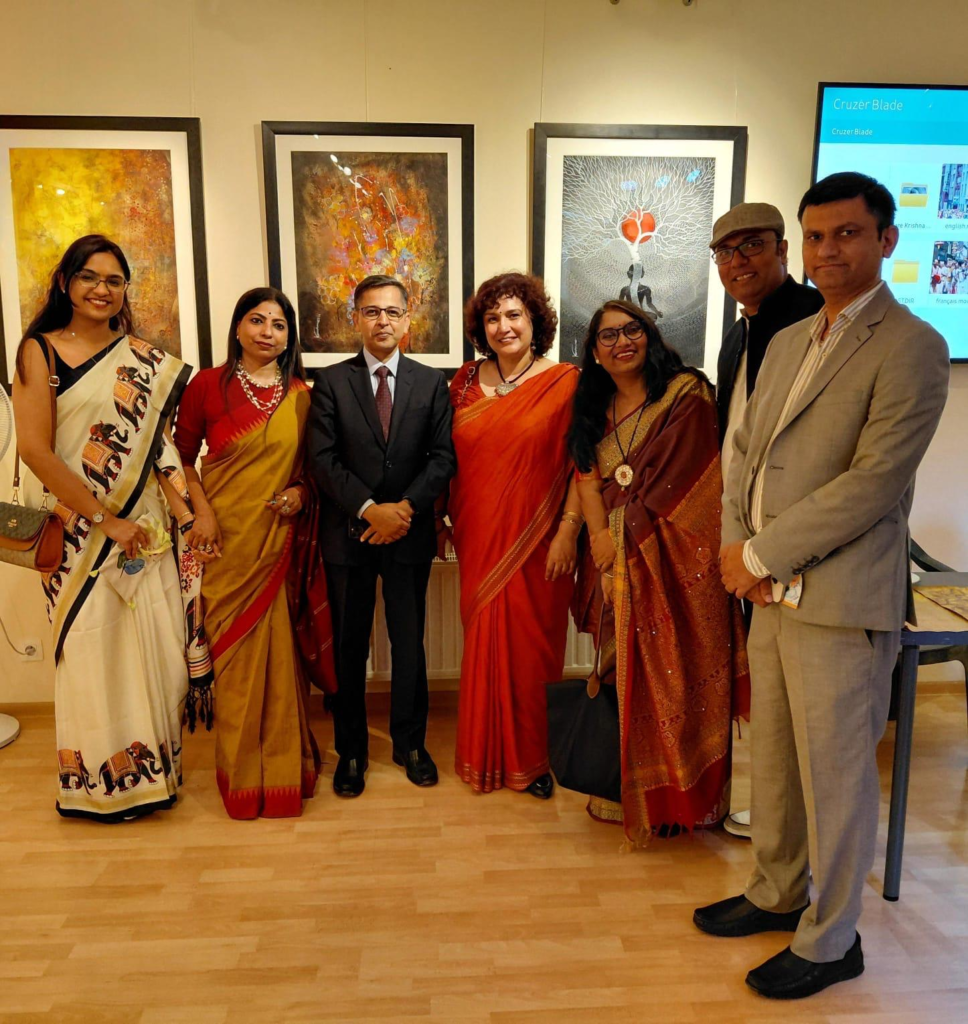
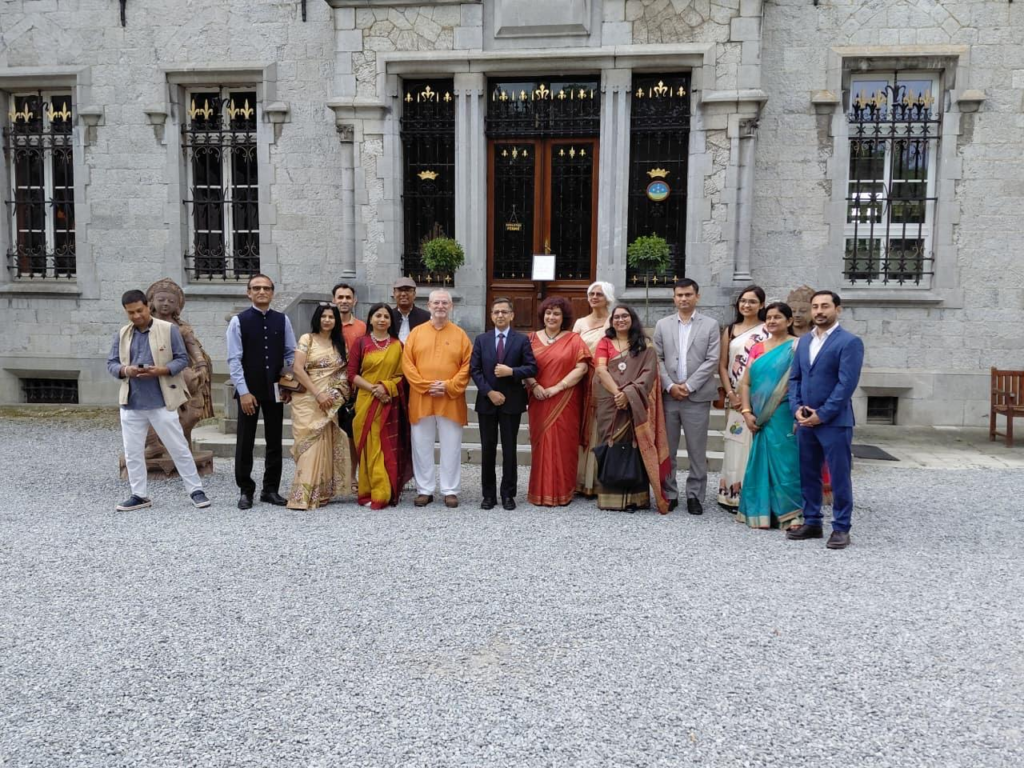
The event was attended by His Excellency Pranai Verma, Ambassador of India (designate) to the European Union, Belgium, and Luxembourg. His presence reflected the growing importance of cultural diplomacy and the role of traditional arts in strengthening international understanding.
Other distinguished guests included Manisha Swami, Deputy Director General of the Indian Council for Cultural Relations (ICCR), Vivek Saini of ICCR, Ambassador of Suriname Marciano Armaketo, former Belgian Ambassador to India Jan Luyckx, Mina Mangre (Malati Dasi), General Secretary of the Hindu Forum of Belgium, Asian art historian Jan Van Alphen, representatives of The Church of Jesus Christ of Latter-day Saints Rusty and Donetta, State Bank of India CEO Daya Niddhi, and approximately seventy invited guests.
The broad participation demonstrated the universal appeal of authentic cultural expression and the ability of art to transcend geographical and social boundaries.
A Sacred Beginning at Radhadesh Temple
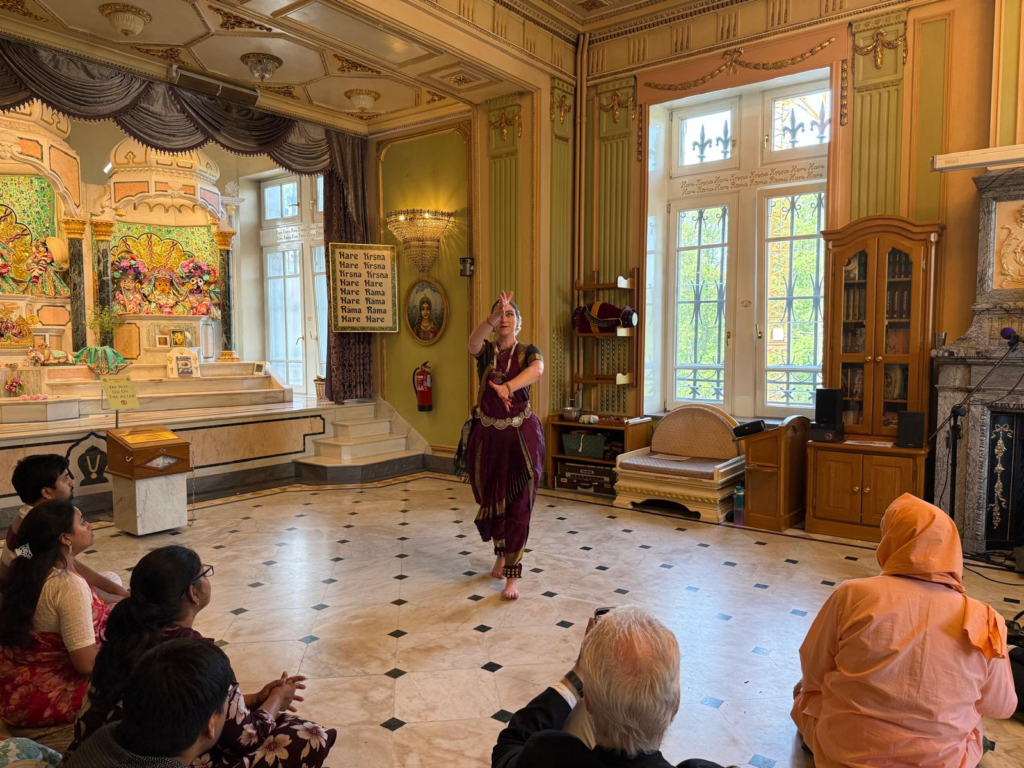
The evening commenced at the Radhadesh Temple, where guests received a warm welcome. The program included arati and bhajans, creating an atmosphere of reverence and reflection before the formal exhibition openings.
Such cultural gatherings often remind participants that artistic traditions do more than preserve history. They carry values, memories, and wisdom across generations. In the Vedic understanding, culture serves not merely as entertainment but as a means of cultivating higher awareness and appreciation for the deeper purpose of human life.
Guests were then treated to a Bharatanatyam performance by Antonina Volodina. The classical dance presentation highlighted one of India’s most respected artistic traditions, combining discipline, expression, and storytelling in a refined cultural form.
Threaded Memories: Embroidery Traditions of India
Preserving a Living Heritage
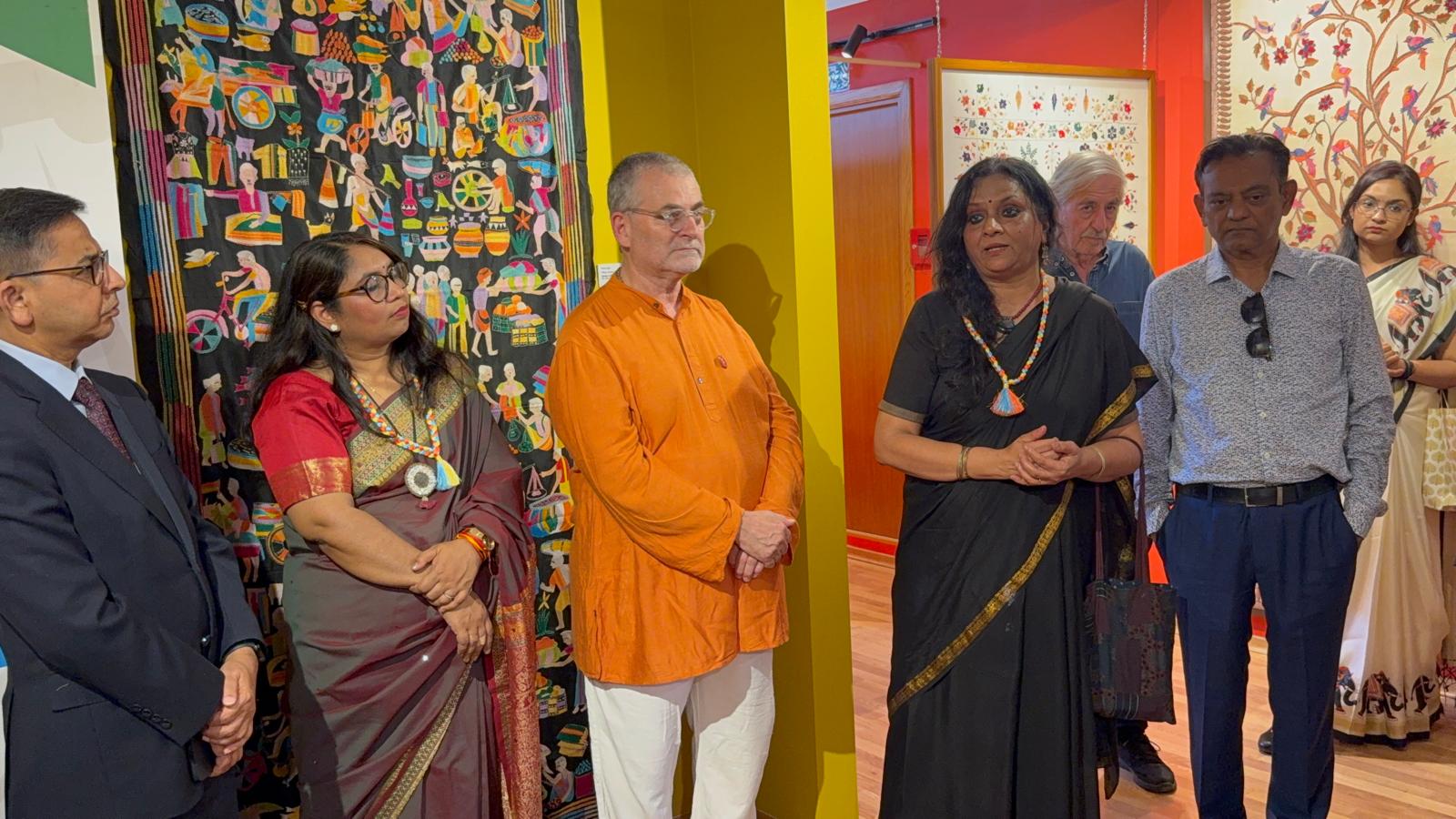
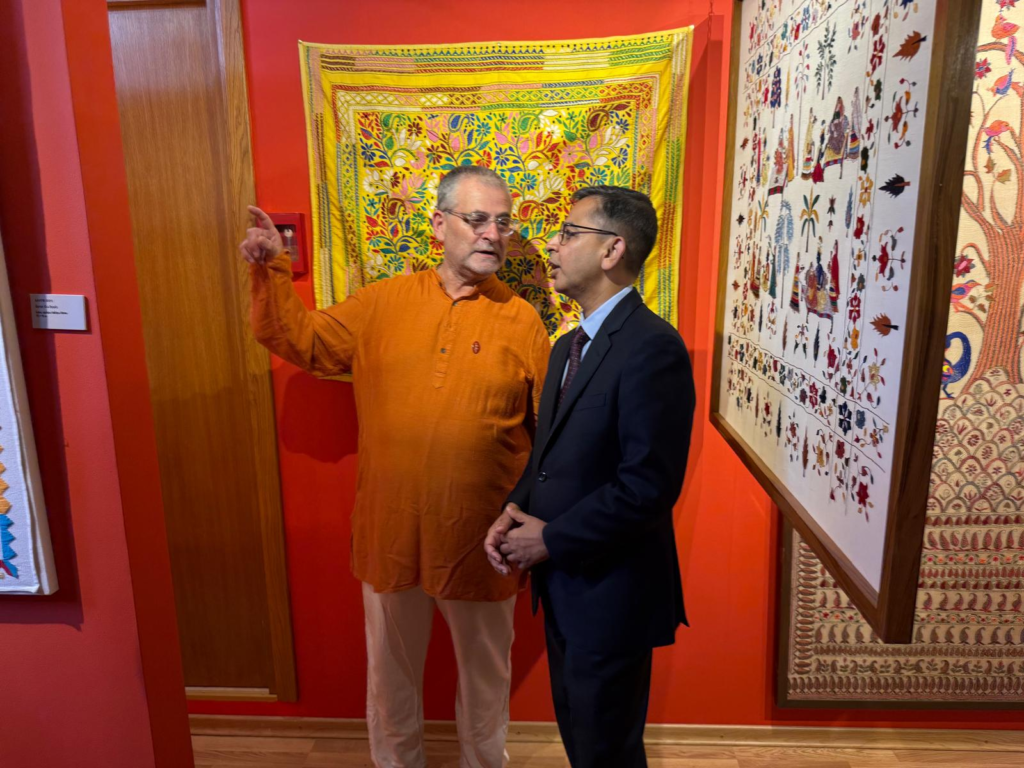
The official opening of Threaded Memories: Embroidery Traditions of India featured remarks from MOSA Director Mahaprabhu Dasa (Martin Gurvich), ICCR Deputy Director General Manisha Swami, Ambassador Pranai Verma, and curator Sujata Prasad.
The exhibition presents a rich exploration of India’s embroidery traditions, showcasing the creativity, skill, and cultural significance embedded within textile arts. Across centuries, embroidery has served as a visual language through which communities have expressed identity, regional heritage, family histories, and artistic excellence.
Each embroidered work reflects countless hours of dedication and craftsmanship. Beyond their aesthetic beauty, such creations represent living traditions passed from one generation to the next, preserving cultural memory through thread and design.
Art as a Carrier of Cultural Memory
Traditional embroidery occupies a unique place within India’s cultural landscape. Through intricate patterns and symbolic motifs, artisans preserve stories and customs that might otherwise be forgotten.
The exhibition highlights how artistic traditions continue to remain relevant in a rapidly changing world. Just as threads are woven together to create a unified design, cultural traditions connect the past, present, and future in a meaningful continuum.
Bajjika Art: A Dialogue Between Kanchan Prakash and Sanju Devi
Celebrating a Distinct Folk Tradition
The celebration continued with the opening of Bajjika Art: A Dialogue between Kanchan Prakash and Sanju Devi. The exhibition offered visitors an opportunity to experience a unique regional art form rooted in the cultural traditions of Bihar.
Both artists participated in the opening and provided live demonstrations of their artistic techniques. These demonstrations allowed guests to observe firsthand the skill, patience, and creative process involved in producing traditional folk artworks.
Live artistic engagement often deepens appreciation for the discipline behind creative expression. Visitors could witness not only finished works but also the methods through which tradition is preserved and transmitted.
Dialogue Through Artistic Expression
The title of the exhibition emphasizes dialogue—a meaningful exchange between two accomplished artists working within a shared cultural framework while expressing their individual perspectives.
Such artistic dialogue reflects an important principle found throughout enduring traditions: unity does not require uniformity. Distinct voices can contribute to a common heritage while enriching its depth and vitality.
The exhibition therefore served both as a celebration of Bajjika art and as a testament to the continuing evolution of traditional artistic practices.
Cultural Diplomacy Through Art
The Indian Art Exhibitions at MOSA also highlighted the growing importance of cultural institutions in fostering international understanding.
Museums and cultural centers play a significant role in preserving heritage while creating opportunities for meaningful exchange among people from diverse backgrounds. Through exhibitions such as these, visitors gain access to traditions that might otherwise remain distant or unfamiliar.
Art possesses a unique capacity to communicate across languages and cultures. It invites observation, reflection, and appreciation while revealing shared human experiences expressed through different cultural forms.
The presence of ambassadors, scholars, community leaders, and cultural representatives underscored the value of such initiatives in strengthening global cultural relationships.
Historic Castle Tour and Fellowship
Following the exhibition openings, Ambassador Pranai Verma and other distinguished guests toured the historic castle tower at Radhadesh.
The evening concluded with dinner at Govinda’s Restaurant, providing an opportunity for further discussion and fellowship among attendees.
Such gatherings demonstrate how cultural engagement can bring people together in an atmosphere of respect, learning, and mutual appreciation.
Conclusion
The Indian Art Exhibitions at MOSA successfully showcased the richness of India’s artistic heritage through the complementary themes of folk painting and traditional embroidery. Curated by Sujata Prasad and supported by distinguished guests from diplomatic, cultural, and academic circles, the exhibitions offered visitors an insightful journey into living traditions that continue to inspire contemporary audiences.
Beyond their artistic value, these exhibitions serve as reminders that culture flourishes when knowledge, craftsmanship, and heritage are carefully preserved and shared. In a world marked by rapid change, such efforts help maintain meaningful connections with enduring traditions and higher values. Through art, communities preserve not only beauty but also the wisdom and continuity that sustain civilization across generations.
library.vedavarsity.com || www.vedavarsity.com
Deepen your Bhakti-yoga practice, harmonize relationships, and receive guided coaching — all at Vedavarsity.com