Modern society enjoys remarkable technological advancement, yet humanity continues to experience increasing anxiety, conflict, and insecurity. Daily headlines remind us of war, terrorism, economic instability, and natural disasters. These realities naturally raise a profound question: where can lasting peace and genuine happiness be found?
According to Vedic wisdom, this condition is neither accidental nor unique to our age. The Bhagavad-gita explains that material existence is inherently temporary and cannot provide permanent shelter. Understanding this truth is the beginning of genuine spiritual knowledge. The teachings of the Pure Devotee reveal not merely the problem of material life but also its eternal solution.
The Temporary Nature of Material Existence
Five thousand years ago, Lord Krishna spoke the following verse in the Bhagavad-gita (8.16):
abrahma-bhuvanal lokah
punar avartino ‘rjuna
mam upetya tu kaunteya
punar janma na vidyate
“From the highest planet in the material world down to the lowest, all are places of misery wherein repeated birth and death take place. But one who attains My abode, O son of Kunti, never takes birth again.”
This concise verse presents both the reality of material existence and its ultimate solution. Krishna explains that every planet within the material universe is subject to birth, death, old age, and disease. No position, achievement, or material arrangement can eliminate these unavoidable conditions.
Time continually transforms everything. Human efforts may temporarily improve external circumstances, but they cannot overcome the fundamental laws governing material nature.
Samsara: The Cycle of Birth and Death
The Bhagavad-gita describes material existence as samsara—the continuous cycle of birth and death.
The living being (ātma, or eternal soul) is distinct from the temporary physical body. According to the law of karma, the soul repeatedly accepts new bodies while searching for lasting happiness within the material world.
Krishna refers to this repeated journey as punah avartinah—”returning again and again.”
Despite countless endeavors, permanent satisfaction remains elusive because the soul naturally seeks eternal happiness, whereas the material world is temporary by design. This understanding does not promote pessimism; rather, it redirects human aspiration toward its proper goal.
Krishna’s Eternal Solution
The Bhagavad-gita does not merely diagnose humanity’s difficulties. It also offers a clear and hopeful solution.
Krishna assures us:
“One who attains My abode never takes birth again.”
This is the ultimate destination of spiritual life—returning to the eternal spiritual world, often described as “back home, back to Godhead.”
Unlike material existence, the spiritual realm is free from birth, death, fear, and anxiety. There the soul exists in its natural constitutional position of loving devotional service to the Supreme Personality of Godhead.
Such a destination fulfills the deepest longing of every living being.
Why the Pure Devotee Is Essential
A natural question arises: How does one attain this spiritual destination?
Lord Krishna answers in Bhagavad-gita (4.34):
tad viddhi pranipatena
pariprasnena sevaya
upadeksyanti te jnanam
jnaninas tattva-darsinah
“Just try to learn the truth by approaching a spiritual master. Inquire from him submissively and render service unto him. The self-realized soul can impart knowledge unto you because he has seen the truth.”
Here Krishna establishes the indispensable role of the Pure Devotee.
Authentic spiritual knowledge is not manufactured through speculation or personal opinion. It is received through paramparā, the disciplic succession, where realized teachers faithfully transmit the Lord’s message without alteration.
The Spiritual Master as Krishna’s Representative
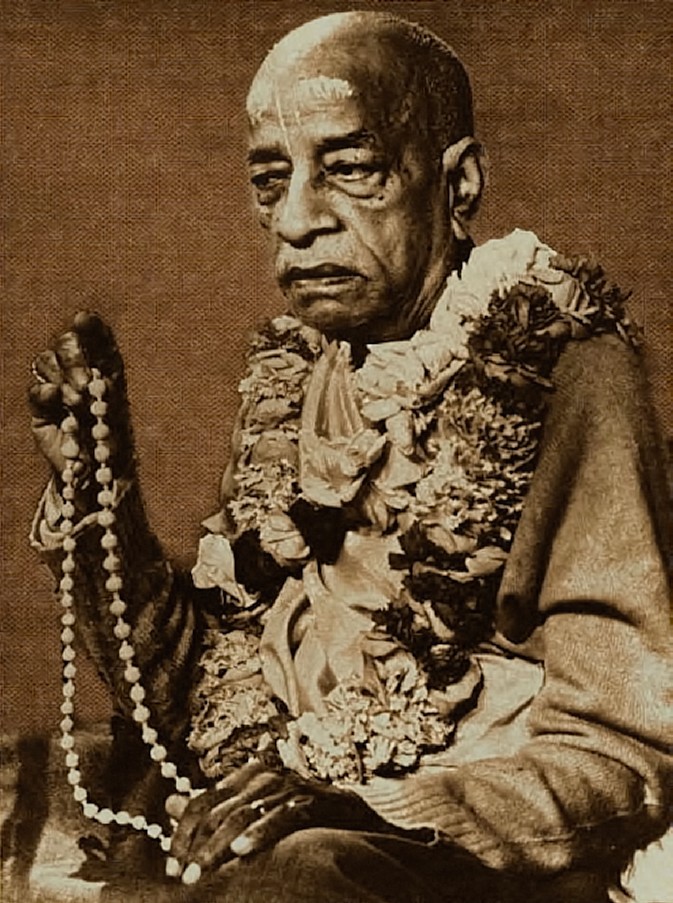
His Divine Grace A. C. Bhaktivedanta Swami Prabhupada, Founder-Acarya of the International Society for Krishna Consciousness (ISKCON), explains that genuine spiritual advancement depends upon pleasing the bona fide spiritual master through sincere inquiry, humble service, and submissive hearing.
This process rejects both blind acceptance and argumentative skepticism.
The spiritual master serves as the transparent medium through whom Krishna’s instructions are understood properly. Therefore, honoring the spiritual master is not the worship of an ordinary human being. Rather, it is respect offered to Krishna’s authorized representative.
As the Vedic scriptures consistently affirm, knowledge received through disciplic succession preserves both philosophical integrity and spiritual realization.
Srila Prabhupada: An Exemplary Pure Devotee
Srila Prabhupada perfectly demonstrated the qualities of the Pure Devotee.
His teachings, books, lectures, letters, and personal conduct consistently reflected unwavering devotion to Krishna and complete faithfulness to his own spiritual predecessors.
He repeatedly emphasized humility rather than personal recognition.
In a letter dated June 1, 1968, Srila Prabhupada wrote:
“A Krishna Consciousness person thinks always about himself as the lowest creature in the world, and the more one thinks like that he becomes elevated more and more.”
This statement illustrates a defining characteristic of genuine devotional service. True spiritual greatness is accompanied by profound humility.
Teaching by Personal Example
The Sanskrit word ācārya refers to one who teaches by personal conduct.
Srila Prabhupada exemplified this principle throughout his life.
His daily schedule reflected extraordinary discipline, tireless service, and unwavering dedication to spreading Krishna consciousness worldwide. Yet despite accomplishing an unprecedented spiritual mission, he consistently refused personal credit.
In the same letter he explained:
“Personally I have no credit for myself, but I am trying to act as faithful servant of my predecessors and just presenting without any adulteration the message which I have received from my Spiritual Master.”
This spirit of faithful service defines the Pure Devotee.
Rather than seeking prestige or influence, the pure devotee considers himself the servant of the servant of the servant of Krishna.
Honoring the Pure Devotee Honors the Entire Parampara
The Vedic tradition teaches that honoring the spiritual master ultimately honors the entire disciplic succession and, through that succession, the Supreme Lord Himself.
This principle rests upon gratitude and spiritual understanding rather than personality worship.
The spiritual master never claims independent authority. Instead, he faithfully represents Krishna exactly as received from previous ācāryas.
For this reason, studying Srila Prabhupada’s books, lectures, essays, and correspondence enables sincere seekers to understand the timeless teachings of Bhagavad-gita and Srimad-Bhagavatam through an authentic source.
Such study gradually awakens genuine devotion, strengthens one’s understanding of dharma, and clarifies the eternal distinction between the temporary body and the everlasting soul.
Conclusion
The challenges confronting modern society remind us that material security can never be absolute. The Bhagavad-gita teaches that lasting peace arises not from external arrangements but from spiritual realization.
The Pure Devotee plays an essential role in this journey by faithfully transmitting Krishna’s eternal message through disciplic succession. Srila Prabhupada dedicated his life to making this wisdom accessible to people throughout the world without compromise or personal ambition.
By respectfully studying his teachings and applying them with sincerity, one gains practical guidance for navigating material life while progressing toward eternal spiritual fulfillment. In doing so, we gradually understand our true identity as eternal servants of Krishna and recognize that genuine security rests in our relationship with the Supreme Lord.
All glories to His Divine Grace A. C. Bhaktivedanta Swami Prabhupada.
Deepen your Bhakti-yoga practice, harmonize relationships, and receive guided coaching — all at Vedavarsity.com