


The Kamakshi Amman Temple Kanchipuram stands as one of the most revered Shakti shrines in India, embodying the spiritual and cultural richness of the ancient city of Kanchipuram. Once the capital of the Pallava dynasty, Kanchi has long been a center of learning, devotion, and temple architecture.
Among its many sacred sites, the Kamakshi shrine holds a unique position. The traditional Tamil saying—“Kanchi Kamakshi, Madurai Meenakshi, Kashi Visalakshi”—reflects its importance among the foremost manifestations of the Divine Mother. The Kamakshi Amman Temple Kanchipuram continues to attract devotees seeking both spiritual insight and inner peace.
Kamakshi Amman Temple Kanchipuram: Spiritual Centrality in Kanchi
The sacred geography of Kanchipuram is structured around several major temples, including Ekambareswarar Temple, Kumara Kottam Temple, and Ulagalantha Perumal Temple.
These temples are arranged in a manner that symbolically represents the Somaskanda form—Shiva, Uma, and Skanda. However, a unique feature of Kanchi is that there are no separate shrines to Ambal (the Divine Mother) within Shiva temples. Instead, Kamakshi is considered to be fully present in one central shrine—the Kamakshi Amman Temple Kanchipuram.
This reflects a philosophical idea: the Divine Mother, as Shakti, is complete and all-pervading, not fragmented into multiple forms within the same sacred space.
Legend of Kamakshi and Divine Union
According to traditional accounts, Goddess Kamakshi performed intense penance under a mango tree, worshipping a Shiva Lingam made of sand. Through her devotion, she attained union with Lord Shiva.
This legend is closely associated with the nearby Ekambareswarar Temple and emphasizes the principle that sincere effort (sadhana) guided by devotion leads to fulfillment. In Vedic thought, such narratives illustrate the interplay of karma and divine grace.
The story also symbolizes the union of consciousness (Shiva) and energy (Shakti), a foundational concept in spiritual philosophy.
Sanctum and Deity: The Form of Kamakshi
The central deity of the Kamakshi Amman Temple Kanchipuram is Goddess Kamakshi, enshrined in a seated posture within the sanctum. She is revered as Parabrahma Swarupini, representing the Supreme reality itself.
Symbolism of the Deity
Kamakshi is depicted as encompassing the powers of creation, preservation, and dissolution—associated with Brahma, Vishnu, and Shiva. This representation emphasizes unity within diversity.
In front of the deity is the Sri Chakra, a sacred geometric diagram used in advanced forms of worship. It represents the cosmos and the individual self, guiding the practitioner toward realization of the ultimate truth.
Role of Adi Shankaracharya and Transformation of Worship
The Kamakshi Amman Temple Kanchipuram is closely associated with Adi Shankaracharya, the great philosopher of Advaita Vedanta.
From Ugra to Shanta Swaroopini
Tradition holds that the deity was originally worshipped in an intense (Ugra) form. Adi Shankaracharya, by installing the Sri Chakra, transformed the worship into a calmer (Shanta) form.
This transformation reflects a deeper principle: spiritual practices aim to harmonize and elevate consciousness, moving from intensity toward balance and clarity.
A symbolic ritual continues to this day, where the festival image of Kamakshi seeks permission from Shankaracharya’s shrine before leaving the temple during processions.
Temple Architecture and Layout
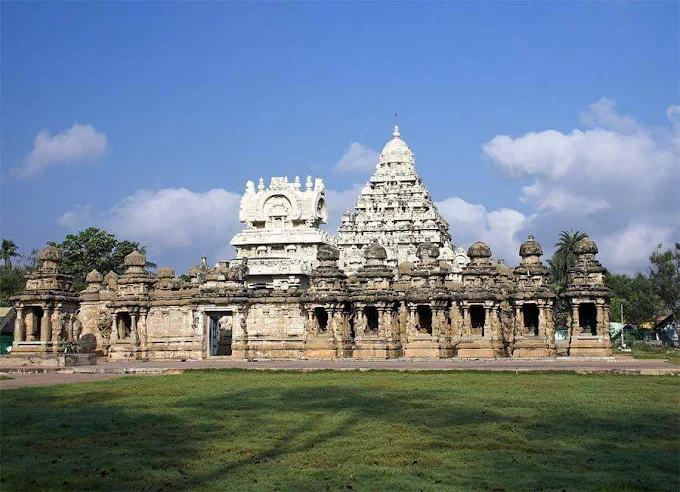
The Kamakshi Amman Temple Kanchipuram covers an area of approximately five acres and features a gold-plated vimanam above the sanctum.
Outer and Inner Prakarams
The temple layout includes:
- An outer prakaram housing the temple tank and large mandapams
- A hundred-pillared hall and ceremonial spaces
- Four entrances aligned with cardinal directions
Within the inner prakaram, devotees ascend steps leading to the sanctum, symbolizing spiritual progression.
Subsidiary Shrines
Surrounding the sanctum are smaller shrines dedicated to:
- Ardhanareeswarar
- Soundaryalakshmi
- Varaahi
- Bangaru Kamakshi
- Maha Saraswathi
- Adi Shankaracharya
These shrines collectively represent different aspects of divine energy and knowledge.
Kanchi Kamakoti Peetham and Spiritual Lineage
Kanchipuram is also the seat of the Kanchi Kamakoti Peetham, traditionally associated with Adi Shankaracharya. It is believed by many that he attained samadhi here, though other traditions place it in the Himalayas.
The presence of this lineage reinforces the temple’s role as a center of philosophical teaching and disciplined practice.
Such institutions ensure that knowledge is transmitted systematically, preserving the integrity of spiritual teachings.
Worship Practices and Festivals
The Kamakshi Amman Temple Kanchipuram maintains a regular schedule of worship, with four daily services offered to the deity.
Major Festivals
- Maasi Festival: The principal annual celebration, featuring elaborate rituals
- Silver Chariot Festival: Conducted on the seventh day of the Maasi festival
- Navaratri: Celebrating the Divine Mother in her various forms
- Aadi and Aippasi Pooram: Marking important phases of worship
- Sankara Jayanthi: Honoring Adi Shankaracharya
- Vasanta Utsavam: Celebrated in the month of Vaikasi
The deity is adorned with exquisite jewels during these occasions, reflecting both devotion and artistic tradition.
Festivals serve as reminders that spiritual life is not separate from daily life but integrated through time-bound observances.
Philosophical Insight: Shakti as the Source of Creation
The Kamakshi Amman Temple Kanchipuram represents the worship of Shakti—the divine energy that sustains the universe. In Vedic understanding, Shakti is not separate from the Supreme but is the dynamic aspect through which creation manifests.
The presence of the Sri Chakra reinforces this concept, guiding practitioners toward realization of unity between the individual self (ātma) and the universal reality.
Such teachings encourage a balanced life, where action (karma) is performed with awareness of its deeper purpose.
Conclusion: A Center of Spiritual Power and Inner Harmony
The Kamakshi Amman Temple Kanchipuram stands as a timeless center of devotion, knowledge, and disciplined practice. Its legends, architecture, and living traditions reflect a continuity that has been preserved across centuries.
Beyond its physical grandeur, the temple offers a deeper message: true fulfillment arises when one aligns with the underlying harmony of existence. In recognizing this, the seeker moves beyond external forms toward an understanding of the eternal self and its connection with the Supreme.
library.vedavarsity.com | www.vedavarsity.com
Deepen your Bhakti-yoga practice, harmonize relationships, and receive guided coaching — all at Vedavarsity.com