



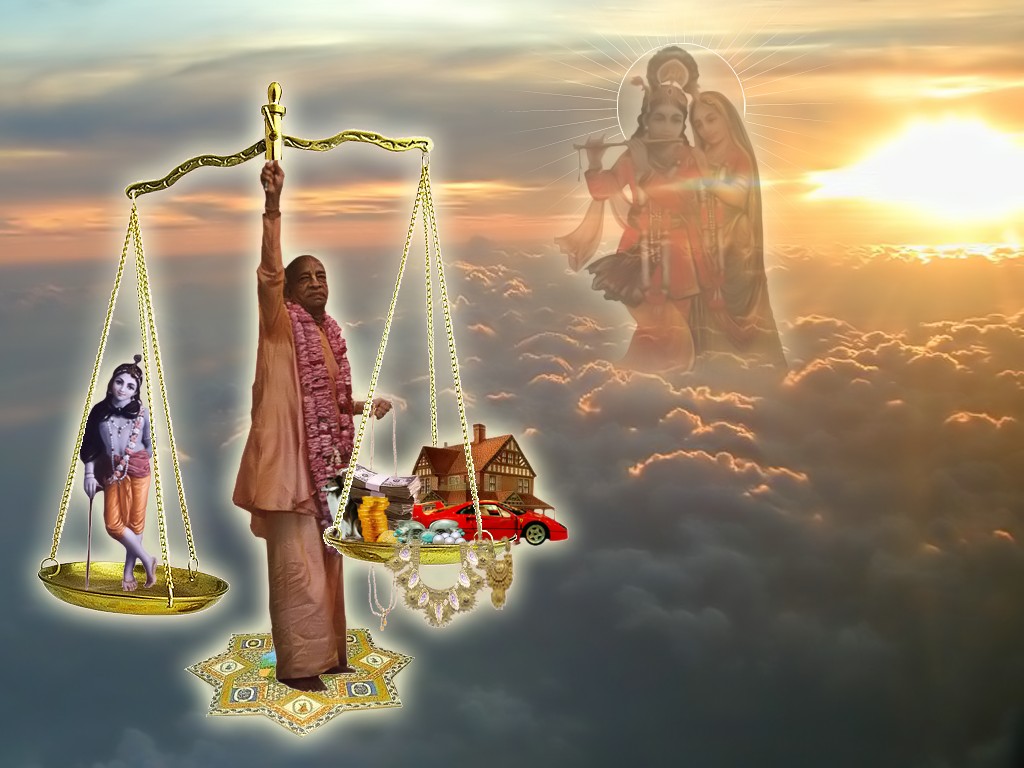
Human society celebrates intelligence, wealth, beauty, fame, strength, and influence. These qualities often become the standards by which success is measured and people are admired. Yet a thoughtful question arises: Are these qualities valuable in themselves, or do they merely become valuable depending on how they are used?
The Vedic scriptures invite us to examine this distinction carefully. They teach that many of the qualities people pursue throughout life are not inherently good or bad. Rather, they are instruments—powerful tools whose true worth depends entirely upon the purpose they serve. When guided by noble character and devotion to the Supreme Lord, these gifts uplift both the individual and society. When driven by selfishness or ignorance, the very same gifts become causes of suffering.
Understanding this difference between tools and essential values is one of the most important lessons for anyone seeking lasting happiness and genuine spiritual advancement.
Essential Values and the Neutral Nature of Material Gifts
A simple example illustrates this principle. A knife possesses no moral quality of its own. In the hands of a surgeon, it saves a life. In the hands of a criminal, it destroys one. The knife itself remains neutral; only its use determines whether it serves a noble or destructive purpose.
The same principle applies to many qualities that people admire.
Intelligence can illuminate truth or devise deception. Knowledge may liberate or manipulate. Wealth may relieve suffering or encourage exploitation. Fame can inspire millions or mislead them. Physical beauty may awaken appreciation for God’s creation or become an instrument of vanity and selfish enjoyment. Even physical and psychological strength may protect the innocent or oppress the weak.
These qualities are therefore not ends in themselves. They are capacities entrusted to human beings, and their value depends entirely upon the consciousness that directs them.
Why Society Often Worships the Tools Instead of the Values
Modern civilization frequently confuses external abilities with genuine greatness. Celebrities, successful entrepreneurs, political leaders, athletes, and intellectuals are often admired primarily because they possess extraordinary wealth, influence, beauty, intelligence, or fame.
Interestingly, Vedic literature describes the Supreme Personality of Godhead, Bhagavān, as possessing unlimited opulences: complete wealth, strength, fame, beauty, knowledge, and renunciation. These divine qualities naturally attract every living being because they originate in the Supreme Source.
Yet there is an important distinction.
The Lord’s qualities are perfectly pure because they are inseparable from His unlimited compassion, justice, wisdom, and love. Human beings, however, often become fascinated with these external manifestations while neglecting the divine character that gives them their true perfection.
In effect, society frequently admires the reflections of God’s opulences without seeking the spiritual qualities that make those opulences beneficial.
When Tools Become Truly Valuable
A nutcracker has little value if there are no nuts to crack. Likewise, possessing remarkable intelligence or great wealth serves little lasting purpose unless these gifts support something genuinely worthwhile.
The Vedic scriptures identify qualities such as compassion, forgiveness, humility, truthfulness, tolerance, respect for all living beings, and selfless love as enduring values that elevate consciousness. These virtues transform otherwise neutral abilities into instruments of genuine welfare.
When knowledge serves compassion, it enlightens.
When wealth serves generosity, it nourishes society.
When strength protects the innocent, it becomes heroic.
When fame inspires devotion and virtue, it becomes spiritually beneficial.
Without such higher principles, even the greatest talents eventually become empty achievements.
The Three Modes of Nature and the Direction of Human Qualities
The Bhagavad-gītā explains that every action and every disposition is influenced by the three modes (guṇas) of material nature: sattva (goodness), rajas (passion), and tamas (ignorance).
Sattva: The Mode of Goodness
When talents are guided by compassion, self-discipline, wisdom, and concern for the welfare of others, they operate in the mode of goodness. Such actions gradually purify the heart and lead toward lasting happiness.
A learned scholar who shares knowledge for the benefit of society, a prosperous individual who uses wealth in service to others, or a leader who governs with integrity all exemplify the uplifting influence of sattva.
Rajas: The Mode of Passion
When abilities are directed primarily toward personal prestige, power, recognition, or selfish ambition, they function under the mode of passion.
Although success achieved through passion may temporarily satisfy the mind, it rarely produces lasting peace. Desire continually expands, competition intensifies, and fulfillment remains elusive.
The Bhagavad-gītā repeatedly explains that activities performed solely for selfish enjoyment inevitably bind the living being to repeated anxiety and dissatisfaction.
Tamas: The Mode of Ignorance
The most dangerous misuse of human gifts occurs under the influence of ignorance.
Intelligence may become a means of deception.
Wealth may finance exploitation.
Fame may manipulate public opinion.
Strength may oppress rather than protect.
History repeatedly demonstrates how extraordinary abilities, when divorced from virtue, can produce immense suffering.
The gifts themselves are not at fault. Their misuse arises from consciousness disconnected from higher values.
Education Without Essential Values
One of the greatest challenges of modern civilization is that education often emphasizes acquiring skills while giving comparatively little attention to cultivating character.
Students learn how to become successful professionals, yet comparatively little instruction is devoted to becoming truthful, compassionate, self-controlled, or spiritually responsible human beings.
From the Vedic perspective, genuine education harmonizes knowledge with character. Intellectual development reaches its highest purpose only when accompanied by dharma—righteous conduct that benefits both oneself and others.
Without this foundation, society risks producing increasingly sophisticated tools without the wisdom necessary to use them properly.
Religion’s True Essence: More Than an External System
The discussion naturally raises an important question. If qualities such as compassion, truthfulness, forgiveness, humility, and love are the true essentials, then what role does religion play? Can religion itself become merely another tool?
The Bhagavad-gītā teaches that everything within the material world can be influenced by the three modes of material nature. Religion, when separated from its true purpose, is no exception. External rituals, traditions, and institutions possess tremendous value only when they awaken genuine God consciousness and transform the heart.
Just as nourishing food loses its purpose when misused, religious practices lose their spiritual potency when detached from their essential function. The problem is not religion itself but the consciousness with which it is practiced.
Throughout history, religion has sometimes inspired extraordinary compassion and selfless service. At other times, it has been manipulated to justify violence, pride, sectarianism, or exploitation. The difference lies not in the teachings themselves but in whether they remain connected to their divine purpose.
The Three Modes Applied to Religion
In the Seventeenth Chapter of the Bhagavad-gītā, Śrī Kṛṣṇa explains that faith, austerity, charity, sacrifice, and worship all manifest according to the three modes of nature.
Religion in Ignorance (Tamo-guṇa)
Religion in ignorance becomes destructive. Instead of elevating consciousness, it is used to condemn, intimidate, divide, or even harm others. Such practice is driven by hatred, fanaticism, or blind attachment rather than genuine devotion.
Instead of awakening love of God, it obscures His universal compassion.Religion in Passion (Rajo-guṇa)
Religion influenced by passion becomes a means of self-promotion.
One may seek recognition as a saintly person, perform religious acts for prestige, or cultivate spirituality primarily for admiration, influence, or material gain. Although externally religious, the motivation remains centered upon the ego.
The heart remains restless because the ultimate goal is personal distinction rather than pleasing the Supreme Lord.
Religion in Goodness (Sattva-guṇa)
Religion in goodness sincerely cultivates truthfulness, humility, compassion, self-control, forgiveness, and concern for all living beings.
Such practice purifies the heart and gradually frees one from selfish motivations. The practitioner values spiritual principles for their own sake rather than for social recognition or personal advantage.
Yet even goodness is not the final destination.
Beyond Goodness: Pure Devotion
The Bhagavad-gītā points toward an even higher platform known in the Gauḍīya Vaiṣṇava tradition as śuddha-sattva, pure goodness.
At this stage, virtuous qualities are no longer cultivated merely as ethical ideals. They naturally arise from loving devotion to the Supreme Personality of Godhead.
A devotee does not think, “I am compassionate,” or “I am humble.” Such thoughts subtly strengthen the false ego. Rather, the devotee understands that all genuine goodness originates from the Lord.
Recognizing oneself as an instrument rather than the source of virtue transforms one’s entire spiritual life.
This humble vision protects one from pride while allowing divine qualities to manifest naturally through sincere devotional service.
Why Human Idealism Often Fades
Many people begin life with noble aspirations. They sincerely desire to become kind, generous, forgiving, and truthful. Yet as years pass, disappointments, failures, and personal limitations often weaken those ideals.
Why does this happen?
The Vedic answer is subtle yet profound.
When a person believes that he alone is the source of goodness, he eventually becomes discouraged by his own imperfections. The burden of maintaining perfection through personal effort alone becomes overwhelming.
As a result, many gradually lower their ideals and redirect their energy toward external achievements such as wealth, status, or security.
The problem is not that virtue is unattainable. Rather, the individual mistakenly assumes ownership of qualities that actually originate from the Supreme.
Becoming an Instrument of Divine Grace
Bhakti-yoga offers a different perspective.
Instead of attempting to manufacture virtue independently, the devotee strives to become a willing instrument through which the Lord’s compassion, wisdom, and kindness may flow.
This understanding naturally produces humility.
Whatever good one accomplishes is recognized as the Lord’s mercy rather than one’s personal greatness. Failures become opportunities for dependence upon Him instead of causes for despair.
In this consciousness, devotion remains joyful because success is measured not by perfection of performance but by sincerity of intention.
As Lord Kṛṣṇa explains in Bhagavad-gītā (12.13–20), those who cultivate humility, compassion, forgiveness, freedom from envy, and devotion are especially dear to Him. These qualities are not artificial disciplines but natural expressions of a heart connected to the Supreme.
Living for the Pleasure of the Lord
When religion remains connected to its essential purpose—to awaken loving service to the Supreme Lord—it regains its full spiritual potency.
Knowledge becomes wisdom.
Wealth becomes charity.
Influence becomes service.
Strength becomes protection.
Beauty becomes an offering.
Intelligence becomes illumination.
None of these gifts are rejected. Rather, each finds its highest fulfillment when dedicated to the pleasure of the Lord and the welfare of His creation.
This is the true harmony between dharma and devotion.
Conclusion: Discovering What Is Truly Essential
Modern society encourages the pursuit of intelligence, wealth, fame, beauty, and power. While these qualities possess undeniable utility, they remain neutral instruments whose lasting value depends entirely upon the consciousness that directs them.
The essential values taught in the Vedic scriptures—truthfulness, compassion, humility, forgiveness, self-control, respect for all living beings, and loving devotion to the Supreme Lord—give meaning and direction to every human ability.
The Bhagavad-gītā therefore teaches not merely how to acquire greater capacities but how to purify the heart that employs them. When talents are guided by dharma and offered in devotional service, they become instruments of lasting welfare rather than temporary achievement.
Ultimately, the perfection of religion is not found in external display, social recognition, or intellectual accomplishment. It is found in becoming a transparent instrument of the Lord’s will, allowing His compassion and wisdom to flow through one’s thoughts, words, and actions.
In this way, what was once merely a tool becomes sanctified by divine purpose, and human life attains its true fulfillment.
Deepen your Bhakti-yoga practice, harmonize relationships, and receive guided coaching — all at Vedavarsity.com