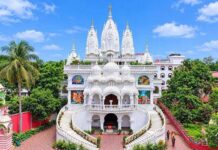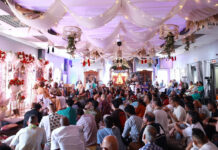



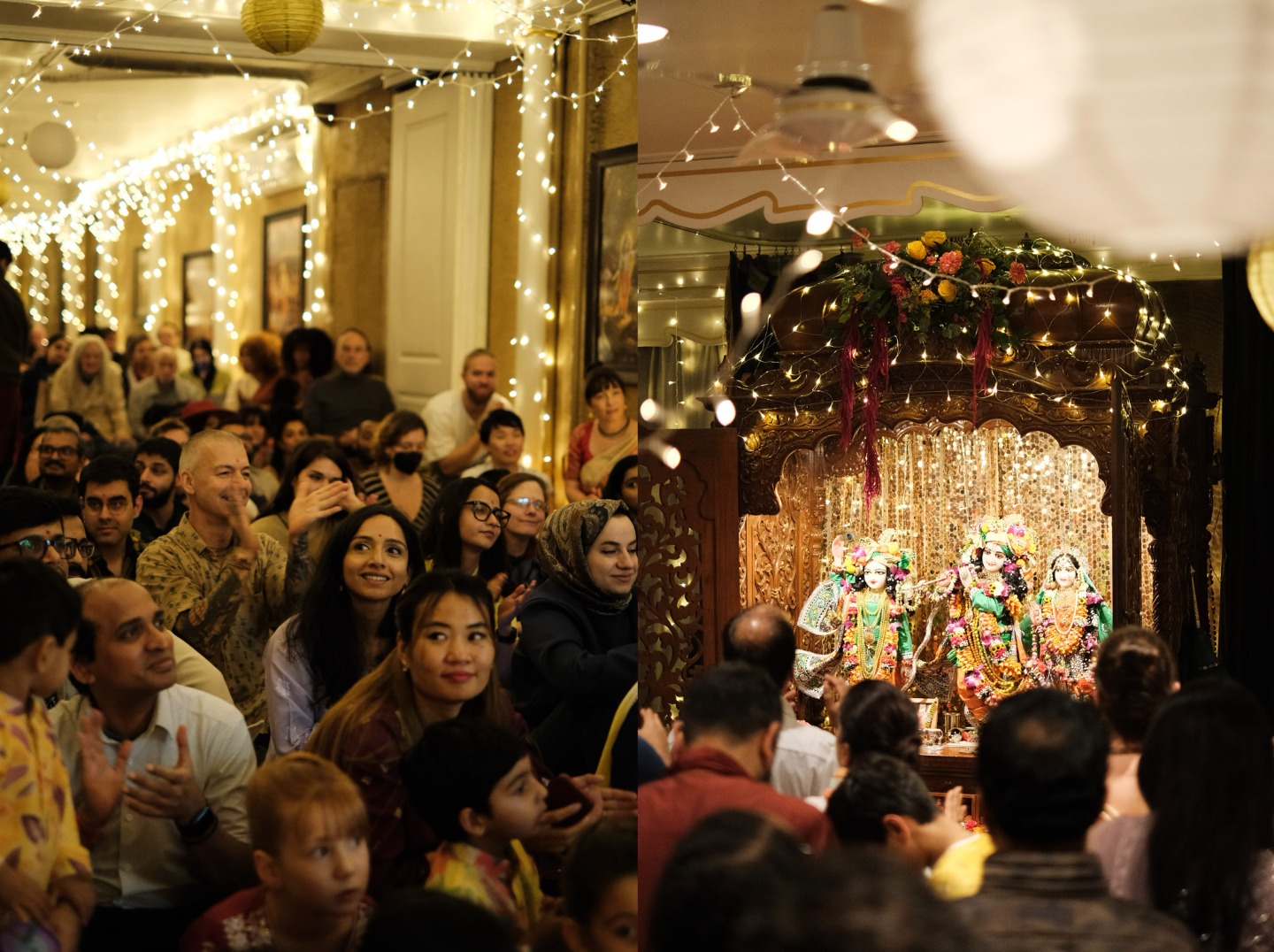
The Diwali celebration in New York became a beautiful occasion of devotion, cultural exchange, and community service as more than 1,000 people gathered at the Bhakti Center in Manhattan’s East Village on November 8, 2026. The ninth annual festival brought together people from different faiths and backgrounds to experience the timeless spiritual traditions of India through kirtan, Ramayana performances, traditional festivities, and prasadam.
Organized through the dedicated service of numerous devotees and volunteers, the celebration transformed the Bhakti Center into a vibrant space of spiritual joy. The festival demonstrated how the eternal teachings of Vedic culture can transcend geographical and cultural boundaries and inspire people throughout the world.
Diwali Celebration in New York: A Festival of Light and Devotion
The Bhakti Center’s six-story building was illuminated with beautiful festive decorations, welcoming visitors into an atmosphere of celebration and devotion. Each floor offered a different experience, allowing guests to explore various aspects of Indian spiritual and cultural heritage.
The festivities included traditional Indian dance performances, dramatic presentations of the Ramayana, colorful food stalls, henna art, puppet shows, and interactive activities for children. Devotional sing-along kirtans further enriched the atmosphere, giving visitors an opportunity to participate in the congregational chanting of the holy names.
More than 1,000 guests attended the event, making it a significant celebration for the Indian spiritual community in New York City.
The festival was organized by a dedicated team of devotees who contributed their time, talents, and resources to make the occasion accessible to everyone. The event was offered free of charge, reflecting the spirit of selfless service that lies at the heart of Vedic culture.
The Spiritual Significance of Diwali in Vedic Tradition
Diwali, also known as Deepavali, means a row of lamps. It is widely celebrated as the Festival of Lights and carries profound spiritual significance within the Vedic tradition.
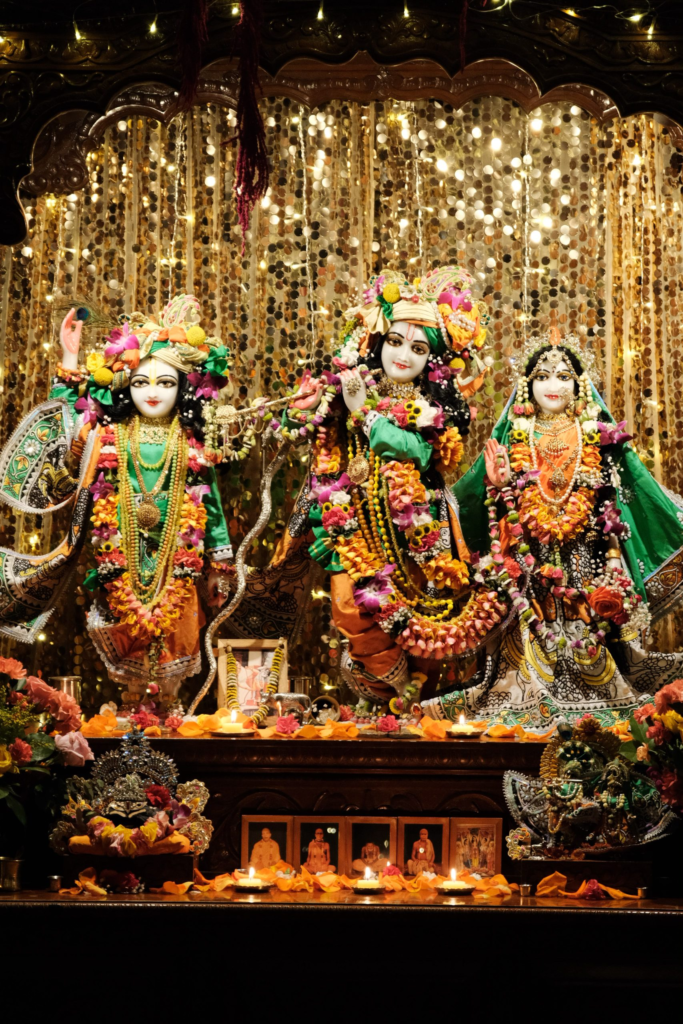
For devotees of the International Society for Krishna Consciousness (ISKCON), Diwali commemorates the auspicious return of Lord Sri Rama to Ayodhya after His victory over Ravana and the completion of His fourteen years of exile.
According to the Ramayana, the residents of Ayodhya welcomed Lord Rama, accompanied by Mother Sita and Lakshmana, by illuminating their homes with countless lamps.
This joyful occasion represents the victory of righteousness over unrighteousness and the triumph of spiritual illumination over ignorance.
The significance of Diwali, however, extends beyond external illumination. The Vedic scriptures repeatedly emphasize that the real purpose of human life is to awaken our dormant spiritual consciousness and return to our eternal relationship with the Supreme Personality of Godhead.
As explained in the Bhagavad-gita, the living entity is not the temporary material body but an eternal spiritual soul.
Therefore, the lighting of lamps can also remind us of the need to illuminate our consciousness with spiritual knowledge.
When the heart becomes illuminated by bhakti, or devotional service, the darkness of material ignorance gradually disappears.
Lord Rama’s Pastimes Bring the Ramayana to Life
One of the highlights of the Diwali celebration in New York was the dramatic presentation of important episodes from the Ramayana.
Devotee actors portrayed significant characters from the sacred narrative, helping guests understand the transcendental pastimes of Lord Sri Rama.
The Ramayana is not merely a historical or cultural narrative. It presents profound lessons on dharma (religious duty), devotion, sacrifice, obedience, courage, and surrender to the Supreme Lord.
The character of Lord Rama demonstrates the ideal conduct of the Supreme Personality of Godhead in His incarnation as Maryada Purushottama, the supreme example of righteous conduct.
The devotion of Hanuman, the dedication of Lakshmana, and the chastity and determination of Mother Sita provide eternal lessons for spiritual practitioners.
Through such presentations, the younger generation can become familiar with India’s spiritual heritage while appreciating the practical relevance of its teachings.
The dramatic performances at the Bhakti Center provided an opportunity for visitors, including those unfamiliar with the Ramayana, to experience these timeless teachings in an engaging manner.
Kirtan, Prasadam and the Spirit of Seva
A defining feature of the Diwali celebration was the spirit of seva, or selfless devotional service.
In the Vedic tradition, service offered to the Supreme Lord and His devotees is considered an essential expression of love. Genuine devotion is not limited to rituals or theoretical understanding; it is demonstrated through practical service.
Dozens of devotees came together to plan the event, decorate the building, prepare food, organize performances, welcome visitors, and manage the different activities.
Their collective contribution reflected the principle of cooperation in devotional life.
Another important feature of the evening was congregational chanting, or sankirtana. Guests participated in uplifting kirtans, experiencing the joy of chanting the holy names of the Supreme Lord.
The practice of sankirtana holds a particularly important place in the teachings of Sri Chaitanya Mahaprabhu, who emphasized the congregational chanting of the Hare Krishna maha-mantra as the most effective means of spiritual realization in the present age of Kali.
The festival concluded with a complimentary vegetarian feast served to all attendees.
In the Vaishnava tradition, food prepared and offered to the Supreme Lord becomes prasadam, or the Lord’s mercy. Accepting prasadam is considered a spiritual activity that purifies the consciousness and helps one develop devotion.
Thus, the evening brought together three important expressions of devotional culture: kirtan, seva, and prasadam.
Vikas Khanna Joins the Diwali Celebration
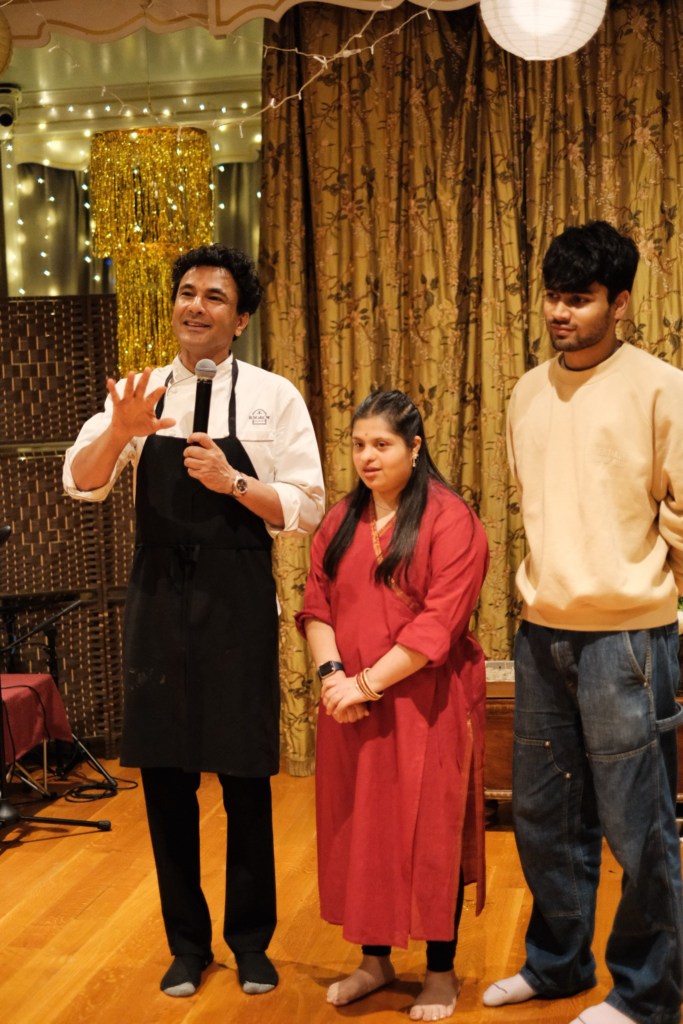
The festival also welcomed internationally acclaimed chef and restaurateur Vikas Khanna as a special guest.
Addressing the gathering, he expressed his deep affection for the Bhakti Center and spoke about its significance in his life.
His presence added a special dimension to the celebration, highlighting the influence of spiritual communities beyond traditional religious boundaries.
The Bhakti Center has gradually become a cherished spiritual and cultural destination in New York City, welcoming people from diverse professional, cultural, and religious backgrounds.
Previous celebrations have also attracted distinguished guests, including the city’s mayor.
This year’s festival received media attention from several prominent news organizations, including Spectrum News NY1, CBS New York, and NBC 4 New York.
Such coverage helped bring the message and atmosphere of Diwali to a wider audience.
Bhakti Center: Sharing the Teachings of Bhakti with the World
The successful Diwali celebration in New York reflects the Bhakti Center’s ongoing commitment to making the teachings and practices of bhakti accessible to the wider community.
The essential principle of bhakti-yoga is the revival of the soul’s eternal loving relationship with Krishna, the Supreme Personality of Godhead.
The teachings of Srila Prabhupada emphasize that Krishna consciousness is not restricted by nationality, culture, language, or social background. Every living entity is constitutionally a servant of the Supreme Lord and has the potential to awaken pure love for Him.
Festivals such as Diwali provide valuable opportunities to introduce these spiritual principles through accessible cultural and devotional experiences.
When people come together to hear spiritual topics, chant the holy names, participate in devotional activities, and honor prasadam, they receive an opportunity to experience the practical application of Vedic wisdom.
The participation of more than 1,000 people in this year’s celebration demonstrates the continuing interest in India’s spiritual traditions across international communities.
Conclusion: Illuminating Hearts Through Krishna Consciousness
The Diwali celebration in New York at the Bhakti Center was much more than a cultural festival. It was an expression of devotion, selfless service, spiritual knowledge, and community harmony.
The participation of more than 1,000 guests, the dedication of numerous volunteers, the presentation of the Ramayana, congregational kirtan, and the distribution of prasadam together created an atmosphere of spiritual celebration.
The deeper message of Diwali is that the light of spiritual knowledge must illuminate the heart. External lamps may brighten our surroundings, but genuine happiness comes from awakening our eternal relationship with the Supreme Lord.
As devotees continue sharing the teachings of Lord Krishna and the timeless wisdom of Vedic scriptures throughout the world, festivals such as Diwali become powerful instruments for spreading spiritual consciousness.
May the light of devotion illuminate every heart, and may everyone become inspired to follow the path of bhakti and develop pure love for the Supreme Personality of Godhead.
Deepen your Bhakti-yoga practice, harmonize relationships, and receive guided coaching — all at Vedavarsity.com