


Mail ID: contact@vedavarsity.com

Contact: +91 9634998911

Google search engineGoogle search engine
Home Blog Page 81

Chaitanya Charitamrta | Adi Lila | Chapter 15 | Section 40

0

I offer my respectful obeisances unto the lotus feet of Lord Caitanya because simply by offering a flower at His lotus feet even the most ardent materialist becomes a devotee. (1) All glories to Lord Caitanya Mahāprabhu! All glories to Lord Nityānanda Prabhu! All glories to Advaita Ācārya! And all glories to all the devotees of Lord Caitanya! (2) Let me now enumerate the activities of the Lord between the ages of five and ten. His chief occupation during this period was to engage Himself in study. (3)

The pastimes of the Lord during His paugaṇḍa age were very extensive. His education was His chief occupation, and after that His very beautiful marriage took place. (4) When the Lord was studying grammar at the place of Gaṅgādāsa Paṇḍita, He would immediately learn grammatical rules and definitions by heart simply by hearing them once. (5) He soon became so expert in commenting on the Pañjī- ṭīkā that He could win victory over all the other students, although He was a neophyte. (6) In his book Caitanya- maṅgala [which later became Caitanya- bhāgavata], Śrīla Vṛndāvana dāsa Ṭhākura has very elaborately described the Lord’s pastimes of study. (7) One day Śrī Caitanya Mahāprabhu fell down at the feet of His mother and requested her to give Him one thing in charity. (8)

His mother replied, “My dear son, I will give You whatever You ask.” Then the Lord said, “My dear mother, please do not eat grains on the Ekādaśī day.” (9) Mother Śacī said, “You have spoken very nicely. I shall not eat grains on Ekādaśī.” From that day, she began to observe fasting on Ekādaśī. (10) Thereafter, seeing that Viśvarūpa was a grown- up youth, Jagannātha Miśra wanted to find a girl and arrange a marriage ceremony for Him. (11) Hearing of this, Viśvarūpa immediately left home and went away to accept sannyāsa and travel from one place of pilgrimage to another. (12) When Śacīmātā and Jagannātha Miśra heard of the departure of their elder son, Viśvarūpa, they were very unhappy, but Lord Caitanya tried to console them. (13)

“My dear mother and father,” the Lord said, “it is very good that Viśvarūpa has accepted the sannyāsa order, for thus He has delivered both His father’s family and His mother’s family.” (14) Śrī Caitanya Mahāprabhu assured His parents that He would serve them, and thus the minds of His father and mother were satisfied. (15) One day Śrī Caitanya Mahāprabhu ate betel nuts offered to the Deity, but they acted as an intoxicant, and He fell down on the ground unconscious. (16) After His father and mother sprinkled water on His mouth with great haste, the Lord revived and said something wonderful they had never heard before. (17) The Lord said, “Viśvarūpa took Me away from here, and He requested Me to accept the sannyāsa order. (18)

“I replied to Viśvarūpa, ‘I have My helpless father and mother, and also I am but a child. What do I know about the sannyāsa order of life? (19)”‘Later I shall become a householder and thus serve My parents, for this action will very much satisfy Lord Nārāyaṇa and His wife, the goddess of fortune.’ (20) “Then Viśvarūpa returned Me home and requested, ‘Offer thousands and thousands of obeisances unto My mother, Śacīdevī.'” (21) In this way Lord Caitanya Mahāprabhu performed various pastimes, but why He did so I cannot understand. (22) After some days, Jagannātha Miśra passed away from this world to the transcendental world, and both mother and son were very much aggrieved in their hearts. (23)

Friends and relatives came there to pacify Lord Caitanya and His mother. Then Lord Caitanya, even though He was the Supreme Personality of Godhead, executed the rituals for His dead father according to the Vedic system. (24) After some days the Lord thought, “I did not take sannyāsa, and since I am remaining at home it is My duty to act as a gṛhastha. (25) “Without a wife,” Lord Caitanya considered, “there is no meaning to householder life.” Thus the Lord decided to marry. (26) “Merely a house is not a home, for it is a wife who gives a home its meaning. If one lives at home with his wife, together they can fulfill all the interests of human life.” (27)

One day when the Lord was coming back from school He accidentally saw the daughter of Vallabhācārya on the way to the Ganges. (28) When the Lord and Lakṣmīdevī met, their relationship awakened, having already been settled, and coincidentally the marriage- maker Vanamālī came to see Śacīmātā. (29) Following the indications of Śacīdevī, Vanamālī Ghaṭaka arranged the marriage, and thus in due course the Lord married Lakṣmīdevī. (30) Vṛndāvana dāsa Ṭhākura has elaborately described all these pastimes of the Lord’s early age. What I have given is but a condensed presentation of the same pastimes. (31)

The Lord performed many varieties of pastimes in His early age, and Śrīla Vṛndāvana dāsa Ṭhākura has described them elaborately. (32) I have given but a single hint of these pastimes, for Vṛndāvana dāsa Ṭhākura, in his book Caitanya- maṅgala [now Caitanya- bhāgavata], has described them all vividly. (33) Praying at the lotus feet of Śrī Rūpa and Śrī Raghunātha, always desiring their mercy, I, Kṛṣṇadāsa, narrate Śrī Caitanya- caritāmṛta, following in their footsteps. (34)
Chaitanya Charitamrta | Adi Lila | Chapter 14 | Section 38

0

Things that are very difficult to do become easy to execute if one somehow or other simply remembers Lord Caitanya Mahāprabhu. But if one does not remember Him, even easy things become very difficult. To this Lord Caitanya Mahāprabhu I offer my respectful obeisances. (1) All glories to Lord Caitanya Mahāprabhu, Nityānanda Prabhu, Advaita Prabhu and all the devotees of Lord Caitanya! (2) I have thus described in brief the advent of Śrī Caitanya Mahāprabhu, who appeared as the son of mother Śacī exactly as Kṛṣṇa appeared as the son of mother Yaśodā. (3) I have already briefly spoken about the pastimes of His birth in chronological order. Now I shall give a synopsis of His childhood pastimes. (4)

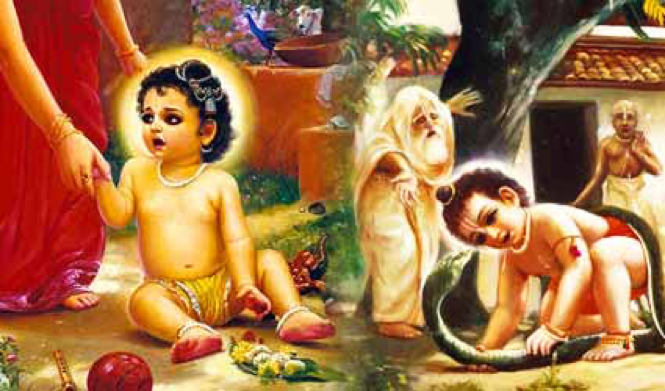
Let me offer my respectful obeisances unto the childhood pastimes of Lord Śrī Caitanya Mahāprabhu, who is Lord Kṛṣṇa Himself. Although such pastimes appear exactly like those of an ordinary child, they should be understood as various pastimes of the Supreme Personality of Godhead. (5) In His first childhood pastimes the Lord turned upside down while lying on His bed, and thus He showed His parents the marks of His lotus feet. (6) When the Lord tried to walk, in His small footprints the specific marks of Lord Viṣṇu were visible, namely the flag, thunderbolt, conchshell, disc and fish. (7) Seeing all these marks, neither His father nor His mother could understand whose footprints they were. Thus struck with wonder, they could not understand how those marks could be possible in their home. (8) Jagannātha Miśra said, “Certainly child Kṛṣṇa is with the śālagrāma- śilā. Taking His childhood form, He is playing within the room.” (9)

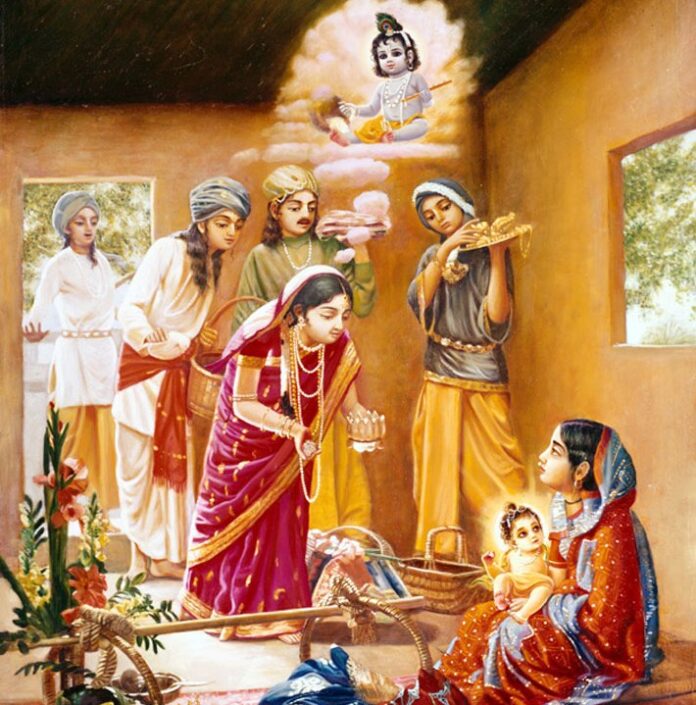
While mother Śacī and Jagannātha Miśra were talking, child Nimāi woke up and began to cry, and mother Śacī took Him on her lap and allowed Him to suck her breast. (10) While mother Śacī was feeding the child from her breast, she saw on His lotus feet all the marks that were visible on the floor of the room, and she called for Jagannātha Miśra. (11) When Jagannātha Miśra saw the wonderful marks on the sole of his son, he became very joyful and privately called for Nīlāmbara Cakravartī. (12) When Nīlāmbara Cakravartī saw those marks, he smilingly said, “Formerly I ascertained all this by astrological calculation and noted it in writing. (13) “There are thirty-two bodily marks that symptomize a great personality, and I see all those marks on the body of this child. (14)

“‘There are thirty- two bodily symptoms of a great personality: five of his bodily parts are large, five fine, seven reddish, six raised, three small, three broad and three grave.’ (15) “This baby has all the symptoms of Lord Nārāyaṇa on His palms and soles. He will be able to deliver all the three worlds. (16) “This child will preach the Vaiṣṇava cult and deliver both His maternal and paternal families. (17) “I propose to perform a name- giving ceremony. We should observe a festival and call for the brāhmaṇas because today is very auspicious. (18) “In the future this child will protect and maintain all the world. For this reason He is to be called Viśvambhara.” (19) After hearing Nīlāmbara Cakravartī’s prediction, Śacīmātā and Jagannātha Miśra observed the name- giving festival in great joy, inviting all the brāhmaṇas and their wives. (20)

After some days the Lord began to crawl on His knees, and He caused various wonderful things to be seen. (21) The Lord caused all the ladies to chant the holy names of the Hare Kṛṣṇa mahā- mantra on the plea of His crying, and while they chanted the Lord would smile. (22) After some days the Lord began to move His legs and walk. He mixed with other children and exhibited various sports. (23) One day while the Lord was enjoying His playful sports with the other little children, mother Śacī brought a dish filled with fused rice and sweetmeats and asked the child to sit down and eat them. (24) But when she returned to her household duties, the child hid from His mother and began to eat dirt. (25) Seeing this, mother Śacī hastily returned and exclaimed, “What is this! What is this!” She snatched the dirt from the hands of the Lord and inquired why He was eating it. (26)

Crying, the child inquired from His mother, “Why are you angry? You have already given Me dirt to eat. What is My fault? (27) “Fused rice, sweetmeats and all other eatables are but transformations of dirt. This is dirt, that is dirt. Please consider. What is the difference between them? (28) “This body is a transformation of dirt, and the eatables are also a transformation of dirt. Please reflect upon this. You are blaming Me without consideration. What can I say?” (29) Astonished that the child was speaking Māyāvāda philosophy, mother Śacī replied, “Who has taught You this philosophical speculation that justifies eating dirt?” (30) Replying to the Māyāvāda idea of the child philosopher, mother Śacī said, “My dear boy, if we eat earth transformed into grain, our body is nourished, and it becomes strong. But if we eat dirt in its crude state, the body becomes diseased instead of nourished, and thus it is destroyed. (31) “In a waterpot, which is a transformation of dirt, I can bring water very easily. But if I poured water on a lump of dirt, the lump would soak up the water, and my labor would be useless.” (32)

The Lord replied to His mother, “Why did you conceal self- realization by not teaching Me this practical philosophy in the beginning? (33) “Now that I can understand this philosophy, no more shall I eat dirt. Whenever I am hungry I shall suck your breast and drink your breast milk.” (34) After saying this, the Lord, smiling slightly, climbed on the lap of His mother and sucked her breast. (35) Thus under various excuses the Lord exhibited His opulences as much as possible in His childhood, and later, after exhibiting such opulences, He hid Himself. (36) On one occasion the Lord ate the food of a brāhmaṇa guest three times, and later, in confidence, the Lord delivered that brāhmaṇa from material engagement. (37) In His childhood the Lord was taken away by two thieves outside His home. The Lord, however, got up on the shoulders of the thieves, and while they were thinking they were safely carrying the child to rob His ornaments, the Lord misled them, and thus instead of going to their own home the thieves came back to the home of Jagannātha Miśra. (38)

Pretending to be sick, the Lord asked some food from the house of Hiraṇya and Jagadīśa on the Ekādaśī day. (39) As usual for small children, He learned to play, and with His playmates He went to the houses of neighboring friends, stealing their eatables and eating them. Sometimes the children fought among themselves. (40) All the children lodged complaints with Śacīmātā about the Lord’s fighting with them and stealing from the neighbors’ houses. Therefore sometimes she used to chastise or rebuke her son. (41) Śacīmātā said, “Why do You steal others’ things? Why do You beat the other children? And why do You go inside others’ houses? What do You not have in Your own house?” (42) Thus rebuked by His mother, he Lord would go in anger to a room and break all the pots within it. (43) Then Śacīmātā would take her son on her lap and pacify Him, and the Lord would be very much ashamed, admitting His faults. (44)

Chaitanya Charitamrta | Adi Lila | Chapter 13 | Section 35

0

I wish the grace of Lord Caitanya Mahāprabhu, by whose mercy even one who is fallen can describe the pastimes of the Lord. (1) All glories to Śrī Kṛṣṇa Caitanya Mahāprabhu! All glories to Advaitacandra! All glories to Lord Nityānanda Prabhu! (2) All glories to Gadādhara Prabhu! All glories to Śrīvāsa Ṭhākura! All glories to Mukunda Prabhu and Vāsudeva Prabhu! All glories to Haridāsa Ṭhākura! (3)

All glories to Svarūpa Dāmodara and Murāri Gupta! All these brilliant moons have together dissipated the darkness of this material world. (4) All glories to the moons who are devotees of the principal moon, Lord Caitanyacandra! Their bright moonshine illuminates the entire universe. (5)Thus I have spoken the preface of the Caitanya- caritāmṛta. Now I shall describe Caitanya Mahāprabhu’s pastimes in chronological order. (6) First let me give a synopsis of the Lord’s pastimes. Then I shall describe them in detail. (7) Lord Śrī Caitanya Mahāprabhu, adventing Himself in Navadvīpa, was visible for forty- eight years, enjoying His pastimes. (8)

In the year 1407 of the Śaka Era (A.D. 1486), Lord Śrī Caitanya Mahāprabhu appeared, and in the year 1455 (A.D. 1534) He disappeared from this world. (9) For twenty- four years Lord Caitanya lived in the gṛhastha- āśrama [household life], always engaging in the pastimes of the Hare Kṛṣṇa movement. (10) After twenty- four years He accepted the renounced order of life, sannyāsa, and He resided for twenty- four years more at Jagannātha Purī. (11) Of these last twenty- four years, He spent the first six continuoually touring India, sometimes in South India, sometimes in Bengal and sometimes in Vṛndāvana. (12)

For the remaining eighteen years He continuously stayed in Jagannātha Purī. Chanting the nectarean Hare Kṛṣṇa mahā- mantra, He inundated everyone there in a flood of love of Kṛṣṇa.(13) The pastimes of His household life are known as the ādi-līlā, or the original pastimes. His later pastimes are known as the Madhya-līlā and Antya-līlā, or the middle and final pastimes. (14) All the pastimes enacted by Lord Śrī Caitanya Mahāprabhu in His ādi-līlā were recorded in summary form by Murāri Gupta. (15) His later pastimes [the Madhya-līlā and Antya-līlā] were recorded in the form of notes by His secretary, Svarūpa Dāmodara Gosvāmī, and thus kept within a book. (16)

By seeing and hearing the notes recorded by these two great personalities, a Vaiṣṇava, a devotee of the Lord, can know these pastimes one after another. (17) In His original pastimes there are four divisions: bālya, paugaṇḍa, kaiśora and yauvana [childhood, early boyhood, later boyhood and youth ]. (18) I offer my respectful obeisances unto the full- moon evening in the month of Phālguna, an auspicious time full of auspicious symptoms, when Lord Śrī Caitanya Mahāprabhu advented Himself with the chanting of the holy name, Hare Kṛṣṇa. (19) On the full- moon evening of the month of Phālguna when the Lord took birth, coincidentally there was also a lunar eclipse. (20)

In jubilation everyone was chanting the holy name of the Lord-“Hari! Hari!”-and Lord Śrī Caitanya Mahāprabhu then appeared, after first causing the appearance of the holy name. (21) At His birth, in His childhood and in His early and later boyhood, as well as in His youth, Lord Caitanya Mahāprabhu, under different pleas, induced people to chant the holy name of Hari [the Hare Kṛṣṇa mahā- mantra]. (22) In His childhood, when the Lord was crying He would stop immediately upon hearing the holy names Kṛṣṇa and Hari. (23) All the friendly ladies who came to see the child would chant the holy names, “Hari, Hari!” as soon as the child would cry.(24)

His childhood lasted until the date of hāte khaḍi, the beginning of His education, and His age from the end of His childhood until He married is called paugaṇḍa.(26) After His marriage His youth began, and in His youth He induced everyone to chant the Hare Kṛṣṇa mahā- mantra anywhere and everywhere. (27) During His paugaṇḍa age He became a serious student and also taught disciples. In this way He used to explain the holy name of Kṛṣṇa everywhere.(28) When teaching a course in grammar [vyākaraṇa] and explaining it with notes, Śrī Caitanya Mahāprabhu taught His disciples about the glories of Lord Kṛṣṇa. All explanations culminated in Kṛṣṇa, and His disciples would understand them very easily. Thus His influence was wonderful.(29)

When Lord Caitanya Mahāprabhu was a student, He asked whomever He met to chant the Hare Kṛṣṇa mahā- mantra. In this way He inundated the whole town of Navadvīpa with the chanting of Hare Kṛṣṇa. (30) Just prior to His youthful life, He began the saṅkīrtana movement. Day and night He used to dance in ecstasy with His devotees. (31) The saṅkīrtana movement went on from one part of the town to another, as the Lord wandered everywhere performing kīrtana. In this way He inundated the whole world by distributing love of Godhead. (32) Lord Caitanya Mahāprabhu lived in the Navadvīpa area for twenty- four years, and He induced every person to chant the Hare Kṛṣṇa mahā- mantra and thus merge in love of Kṛṣṇa. (33)

For His remaining twenty- four years, Śrī Caitanya Mahāprabhu, after accepting the renounced order of life, stayed at Jagannātha Purī with His devotees.(34) For six of these twenty- four years in Nīlācala [Jagannātha Purī], He distributed love of Godhead by always chanting and dancing. (35) Beginning from Cape Comorin and extending through Bengal to Vṛndāvana, during these six years He toured all of India, chanting, dancing and distributing love of Kṛṣṇa. (36) The activities of Lord Caitanya Mahāprabhu in His travels after He accepted sannyāsa are His principal pastimes. His activities during His remaining eighteen years are called the Antya-līlā- līlā, or the final portion of His pastimes. (37)

For six of the eighteen years He continuously stayed in Jagannātha Purī, He regularly performed kīrtana, inducing all the devotees to love Kṛṣṇa simply by chanting and dancing. (38) For the remaining twelve years He stayed in Jagannātha Purī, He taught everyone how to taste the transcendental mellow ecstasy of love of Kṛṣṇa by tasting it Himself. (39) Day and night Lord Caitanya Mahāprabhu felt separation from Kṛṣṇa. Manifesting symptoms of this separation, He cried and talked very inconsistently, like a madman. (40) As Śrīmatī Rādhārāṇī talked inconsistently when She met Uddhava, so also Śrī Caitanya Mahāprabhu relished, both day and night, such ecstatic talk in the mood of Śrīmatī Rādhārāṇī. (41)

The Lord used to read the books of Vidyāpati, Jayadeva and Caṇḍīdāsa, relishing their songs with His confidential associates like Śrī Rāmānanda Rāya and Svarūpa Dāmodara Gosvāmī. (42) In separation from Kṛṣṇa, Śrī Caitanya Mahāprabhu relished all these ecstatic activities, and thus He fulfilled His own desires. (43) The pastimes of Lord Caitanya Mahāprabhu are unlimited. How much can a small living entity elaborate about those transcendental pastimes? (44) If Śeṣa Nāga Ananta personally were to make the pastimes of Lord Caitanya into sūtras, even with His thousands of mouths there is no possibility that He could find their limit. (45)

Devotees like Śrī Svarūpa Dāmodara and Murāri Gupta have recorded all the principal pastimes of Lord Caitanya in the form of notes, after deliberate consideration. (46) The notes kept by Śrī Svarūpa Dāmodara and Murāri Gupta are the basis of this book. Following those notes, I write of all the pastimes of the Lord. The notes have been described elaborately by Vṛndāvana dāsa Ṭhākura. (47)

Srīla Vṛndāvana dāsa Ṭhākura, the authorized writer of the pastimes of Śrī Caitanya Mahāprabhu, is as good as Śrīla Vyāsadeva. He has described the pastimes in such a way as to make them sweeter and sweeter. (48) Being afraid of his book’s becoming too voluminous, he left some places without vivid descriptions. I shall try to fill those places as far as possible. (49) The transcendental pastimes of Lord Caitanya have actually been relished by Śrīla Vṛndāvana dāsa Ṭhākura. I am simply trying to chew the remnants of food left by him. (50)

Badrinarayan Swami: How Did He Protect ISKCON?

0

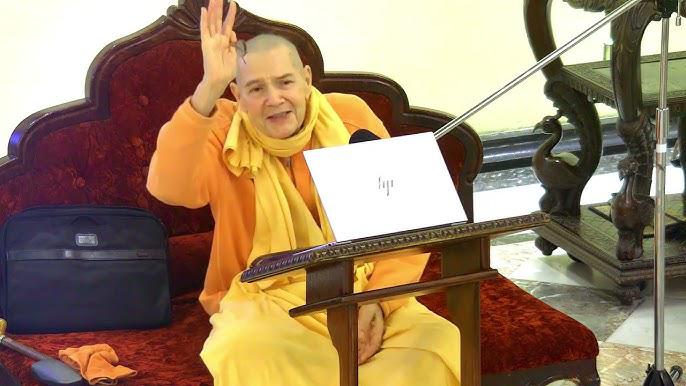
On behalf of Vedavarsity, we offer our most humble obeisances at the lotus feet of Badrinarayan Swami and pray for his continued service in the eternal association of the Lord and His devotees. The departure of Badrinarayan Swami on 26 February 2026 in Śrī Vṛndāvana-dhāma marks a solemn and spiritually significant moment for the worldwide Vaiṣṇava community.

As Director of Vedavarsity, I, Brajsundar Das, humbly submit this offering in remembrance of a stalwart guardian of siddhānta and institutional integrity.

Early Dedication to Śrīla Prabhupāda’s Mission

Badrinarayan Swami dedicated his entire life to the mission of A. C. Bhaktivedanta Swami Prabhupada, Founder-Ācārya of International Society for Krishna Consciousness.

Born in 1952, he met Śrīla Prabhupāda in 1969 and soon thereafter joined the Laguna Beach temple as a full-time devotee in 1970. In 1971, he accepted formal initiation, firmly entering the Brahma-Madhva-Gauḍīya paramparā (disciplic succession).

From the beginning, his life reflected niṣṭhā (firm determination) and sevā-bhāva (spirit of service).

He served in St. Louis and Detroit temples, engaged in travelling saṅkīrtana (public chanting mission), and later became temple president in Ann Arbor and San Diego. These foundational years shaped his deep understanding of both preaching and management.

Badrinarayan Swami and the GBC System of ISKCON

Guardian of Institutional Authority

Since 1987, Badrinarayan Swami served as a GBC member with zonal responsibilities in North America. His most enduring contribution lies in his steadfast defence of the GBC system as the ultimate managing authority of ISKCON, as established by Śrīla Prabhupāda.

Badrinarayan Swami consistently upheld the principle that management must function under śāstra (scriptural authority) and guru-vākya (the instructions of the spiritual master).

He authored and co-authored significant position papers, including:

  • A Concise Statement of Gauḍīya Vaiṣṇava Siddhānta for ISKCON
  • Carrying Out Śrīla Prabhupāda’s Order: The GBC as ISKCON’s Ultimate Managing Authority
  • Understanding ISKCON’s Lines of Authority

These works reflect philosophical precision combined with administrative clarity.

Management as Devotional Service

For Badrinarayan Swami, management was not secular governance. It was bhakti-sevā (devotional service). He understood that preserving institutional structure safeguards the purity of siddhānta.

His involvement in establishing ISKCON’s first Child Protection Office demonstrated foresight and moral courage. During the Turley case, he endured immense challenges for the protection of ISKCON’s integrity.

Such actions were not merely managerial decisions—they were acts of sacrifice.

Acceptance of Sannyāsa and Guru Responsibility

In 2014, Badrinarayan Swami accepted the sannyāsa order, formally embracing the renounced order of life. In 2020, he became an ISKCON dīkṣā-guru (initiating spiritual master).

His approach to discipleship was marked by gravity and accountability. He emphasized:

  • Careful study of Śrīla Prabhupāda’s books
  • Strict sādhana (regulated spiritual practice)
  • Loyalty to paramparā
  • Cooperation within institutional authority

His classes were rich with personal memories of Śrīla Prabhupāda, strengthening devotees’ conviction in the Founder-Ācārya’s instructions.

Austerity and Steadfastness Despite Ill Health

Even in declining health, including the amputation of his toe, Badrinarayan Swami did not withdraw from service.

He continued attending GBC meetings and contributing meaningfully. His life demonstrated the Bhagavad-gītā’s teaching of avyabhicāriṇī bhakti—undeviating devotional service.

Devotional life, as he showed, is not dependent on physical convenience but on spiritual commitment.

Departure in Śrī Vṛndāvana-dhāma

Badrinarayan Swami departed this world peacefully in his room in Śrī Vṛndāvana-dhāma.

Vṛndāvana is not an ordinary place; it is the eternal abode of Lord Kṛṣṇa. To leave one’s body there is supremely auspicious in Vaiṣṇava tradition.

For devotees, this moment brings both separation (viraha) and glorification (kīrtana). Separation deepens remembrance, and remembrance strengthens devotion.

Enduring Contributions of Badrinarayan Swami

1. Protection of Gauḍīya Siddhānta

He upheld doctrinal clarity with intellectual rigour.

2. Defence of the GBC Structure

He ensured Śrīla Prabhupāda’s governance system remained intact.

3. Institutional Reform

He strengthened ISKCON’s administrative and ethical frameworks.

4. Personal Example

His disciplined sādhana and fearless honesty inspired many.

Badrinarayan Swami was widely respected for his frankness, humour, and deep scriptural insight. He was a dutiful servant, a dedicated disciple, and a bold guardian of Śrīla Prabhupāda’s legacy.

Lessons from the Life of Badrinarayan Swami

The life of Badrinarayan Swami teaches essential principles for all devotees:

  • Siddhānta must never be compromised.
  • Institutional stability protects spiritual culture.
  • Service continues despite adversity.
  • Loyalty to guru ensures spiritual strength.
  • Cooperation sustains the mission of Lord Caitanya.

His life embodied dhairya (steadiness), satya (truthfulness), and sevā (service).

Conclusion: Honouring the Legacy of Badrinarayan Swami

The legacy of Badrinarayan Swami will remain deeply woven into the philosophical and managerial foundation of ISKCON. His life was a harmonious blend of scholarship, renunciation, governance, and devotion.

As Director of Vedavarsity, I humbly pray that we may honour Badrinarayan Swami by:

  • Studying Śrīla Prabhupāda’s books carefully
  • Remaining faithful to the GBC system
  • Serving cooperatively
  • Protecting Gauḍīya Vaiṣṇava siddhānta
  • Continuing the preaching mission of Lord Caitanya

May we imbibe even a fraction of the seriousness and loyalty exemplified by Badrinarayan Swami. His example stands as a guiding light for future generations.

His Holiness Badrinarayan Swami Maharaja ki jai.
Śrīla Prabhupāda ki jai.
Ananta-koti Vaiṣṇava-vṛnda ki jai.

Your servant,
Brajsundar Das
Director, Vedavarsity

Vaiśiṣṭyāṣṭaka: Eight Stanzas Of Significance Explained

0

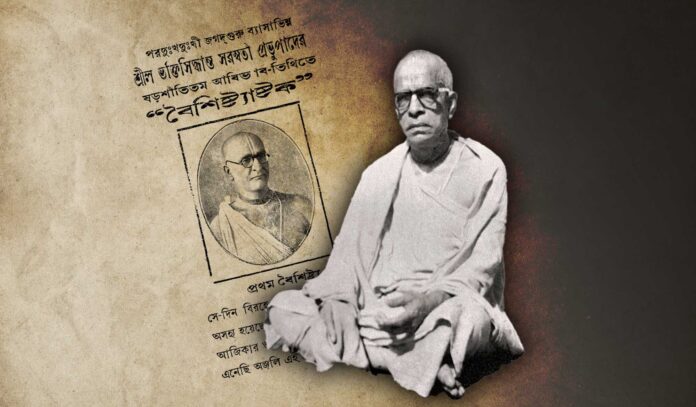
Vaiśiṣṭyāṣṭaka is a profound Vyāsa Pūjā offering composed by His Divine Grace A.C. Bhaktivedānta Swami Prabhupāda in glorification of his spiritual master, Bhaktisiddhanta Sarasvati Thakura. Written on the 86th appearance day of the Jagad-guru at the Vaṁśī-Gopāla Temple and later published in Śrī Gauḍīya Patrikā (1961), Vaiśiṣṭyāṣṭaka presents eight essential “points of significance” concerning renunciation, preaching, unity, and the establishment of a Vaiṣṇava society.

In this sacred composition, Vaiśiṣṭyāṣṭaka is not mere poetry; it is a theological manifesto rooted in śāstra and paramparā.

Prathama Vaiśiṣṭya: Renunciation in Vaiśiṣṭyāṣṭaka

The first section of Vaiśiṣṭyāṣṭaka addresses vairāgya (renunciation). However, this is not dry renunciation (śuṣka-vairāgya). Rather, it is yukta-vairāgya—engaging everything in the service of Kṛṣṇa.

Śrīla Prabhupāda warns against phalgu-vairāgya, external renunciation devoid of realization. Without aprākṛta-anubhava (transcendental experience), renunciation becomes a “show-bottle.”

True renunciation is defined by service to the message of Chaitanya Mahaprabhu, whose bhāgavata-dharma transcends varṇāśrama and eliminates cheating religion (kaitava-dharma).

Dvitīya Vaiśiṣṭya: Innovatory Preaching Spirit

Breaking Conventional Barriers

In Vaiśiṣṭyāṣṭaka, Śrīla Prabhupāda glorifies the bold preaching spirit of Bhaktisiddhānta Sarasvatī Ṭhākura. Contrary to the stereotype of sannyāsīs dwelling in mountain caves, he established preaching centers in cities and engaged with global audiences.

He sent disciples overseas, challenged social prohibitions, and envisioned hostels in London for hari-kathā. This revolutionary mood later manifested fully through the global mission of International Society for Krishna Consciousness.

Preaching Beyond Comfort Zones

Vaiśiṣṭyāṣṭaka condemns limited vision—“a mullah runs only to the mosque.” Preaching must cross oceans (āsamudra medinī-pāra) and penetrate the universe.

The message is clear: seclusion without service is not the ideal for this age.

Tṛtīya Vaiśiṣṭya: The Message of Śrī Guru

The third section of Vaiśiṣṭyāṣṭaka emphasizes unity in executing the order of the spiritual master.

Vāṇī-Sevā Over Festival Formalities

Prabhupāda declares that real worship is not grand festivals of flowers but service to the vāṇī (instructions). To serve the words of the guru is to serve śabda-brahma—transcendental sound.

Imitation leads to deviation. Unity based on principle leads to perfection.

The warning is strong: increasing disciples like businessmen while neglecting preaching is shameful.

Caturtha Vaiśiṣṭya: Politics and Sense-Gratification

Vaiśiṣṭyāṣṭaka exposes internal politics and duplicity (kuṭi-nāṭī) as obstacles to pure preaching.

Guru-Bhogī vs Guru-Tyāgī

Śrīla Prabhupāda categorizes two extremes:

  • Guru-bhogī – One who exploits the guru’s position.
  • Guru-tyāgī – One who rejects the guru’s instructions.

Neither is acceptable. Only the guru-sevī, the unconditional servant, understands the proper conclusion.

Temples must not be locked in complacency. Bhāgavata-dharma must be actively propagated.

Pañcama Vaiśiṣṭya: Proper Use of Wealth

In Vaiśiṣṭyāṣṭaka, wealth is neither to be hoarded nor rejected sentimentally.

Gold produces enjoyment if misused. But when offered to Mādhava, it becomes spiritualized.

The final instruction of Bhaktisiddhānta Sarasvatī Ṭhākura—“Work conjointly to serve the Absolute Truth”—is highlighted as supreme.

Without cooperation, all labor becomes futile.

Ṣaṣṭa Vaiśiṣṭya: The Condition of Kali-Yuga

Vaiśiṣṭyāṣṭaka vividly portrays the degradation of Kali-yuga:

  • Cow slaughter increases.
  • Leadership becomes corrupt.
  • Marriages weaken.
  • Spiritual titles become superficial.

People become like piśācas, dissatisfied and restless.

This diagnosis aligns with the description in Śrīmad-Bhāgavatam, which foretells moral decline in Kali-yuga.

Yet the solution remains preaching.

Saptama Vaiśiṣṭya: Qualities of a True Vaiṣṇava

Para-Duḥkha-Duḥkhī

A genuine Vaiṣṇava feels pain at others’ suffering. This is not sentimental philanthropy but spiritually scientific compassion (vijñāna-sammata dayā).

The example of Vāsudeva Datta—who prayed to accept all sins of others—demonstrates the height of Vaiṣṇava mercy.

Vaiśiṣṭyāṣṭaka condemns the concept of “daridra-nārāyaṇa,” which equates the poor with Bhagavān. Compassion must be rooted in tattva, not speculation.

When kṛṣṇa-bhakti awakens in the heart, Kali flees.

Aṣṭama Vaiśiṣṭya: Vision of a Vaiṣṇava Kingdom

The final section of Vaiśiṣṭyāṣṭaka envisions a perfect society.

Viṣṇu-Rājya and Rāma-Rājya

People long for rāma-rājya, but true peace emerges only when Viṣṇu is recognized as Supreme.

Under Yudhiṣṭhira Mahārāja’s rule—established by Kṛṣṇa—nature flourished:

  • Rivers were full.
  • Cows produced abundant milk.
  • Violence ceased.

Such harmony is possible only in a Viṣṇu-centered civilization.

Today, devoid of even a scent of kṛṣṇa-bhakti, society searches for peace through politics and economics.

Vaiśiṣṭyāṣṭaka insists: peace comes through preaching.

The Theological Core of Vaiśiṣṭyāṣṭaka

At its heart, Vaiśiṣṭyāṣṭaka is a plea for:

  • Unity over factionalism
  • Preaching over seclusion
  • Service over prestige
  • Surrender over independence

The closing prayer of Śrīla Prabhupāda is striking. He offers jalañjali to personal independence—symbolically bidding farewell to ego.

True discipleship means surrender to the mission.

Conclusion: Why Vaiśiṣṭyāṣṭaka Matters Today

Vaiśiṣṭyāṣṭaka remains urgently relevant. It calls devotees beyond comfort zones into organized, cooperative preaching. It warns against pride, politics, and superficial renunciation. It establishes yukta-vairāgya as the essence of dynamic spirituality.

Through Vaiśiṣṭyāṣṭaka, Śrīla Prabhupāda reveals that real Vyāsa Pūjā is not ceremonial—it is practical service to the guru’s command.

When devotees unite to broadcast the message of Bhaktisiddhanta Sarasvati Thakura and fulfill the mission of Chaitanya Mahaprabhu, then the world can gradually transform into a Vaiṣṇava kingdom.

May the profound teachings of Vaiśiṣṭyāṣṭaka awaken determination in the hearts of sincere seekers, so that through preaching, cooperation, and surrender, the suffering jīvas of Kali-yuga may be delivered.

Can Twenty-One Days of Bhāgavatam Hearing Transform The Heart?

0

Vedavarsity Launches 21-Day Śrīmad Bhāgavatam Reading Challenge with 21 Global Speakers

Vedavarsity has announced a spiritually enriching 21-Day Śrīmad Bhāgavatam Reading Challenge, beginning on 18 March 2026. The initiative is designed to encourage daily engagement with Śrīmad Bhāgavatam through systematic reading and hearing in the association of devotees, following the instructions of the Gauḍīya Vaiṣṇava ācāryas.

Śrīmad Bhāgavatam, described by His Divine Grace A.C. Bhaktivedanta Swami Prabhupāda as “the ripened fruit of the tree of Vedic knowledge,” occupies a central place in devotional life. Śrīla Prabhupāda emphasized nityaṁ bhāgavata-sevayā—regular service to the Bhāgavatam—as the essential means for purification of the heart and awakening dormant love for Kṛṣṇa.

Keeping this principle at the forefront, the challenge will feature daily online sessions from 7:00 PM to 8:00 PM (IST) over a period of 21 consecutive days. Participants will have the opportunity to read, hear, and reflect on Śrīmad Bhāgavatam under the guidance of 21 devoted speakers from around the world.

The program brings together senior Vaiṣṇava teachers and experienced preachers, including Bhakti Charudesna Swami Maharaja, Yadhunandan Swami Maharaja, Bhakti Dhīra Dāmodara Swami Maharaja, Bhakti Sarvajña Gauranga Swami Maharaja, and Bhakti Padma Saurabh Pracharak Swami Maharaja, along with Mukund Dutta Das, Krishna Premarupa Das, Chaitanya Charan Das, Preethi Vilasani Devi Dasi, Gopal Hari Das, Umapati Das, Isvara Das, Kartu Das Adhikari, Sri Narayani Devi Dasi, Prashant Mukund Das, Kirtida Sundari Devi Dasi, Rishikumar Das, Amogh Lila Das, and Brajsundar Das.

Rather than approaching Śrīmad Bhāgavatam as an academic subject, the speakers will emphasize attentive hearing, sincere reading, and practical application in daily devotional life. Participants will be encouraged to cultivate steadiness in sādhana, deepen their relationship with the holy name, and strengthen their understanding of the Supreme Personality of Godhead, Śrī Kṛṣṇa, and His pure devotees.

In keeping with Śrīla Prabhupāda’s mission to freely distribute transcendental knowledge, the 21-Day Reading Challenge is being offered entirely free of cost, on a sevā basis, making it accessible to sincere seekers worldwide.

Vedavarsity invites devotees, students, and well-wishers to take part in this sacred observance and experience the lasting spiritual benefit of daily association with Śrīmad Bhāgavatam.

Through regular hearing and reading of Śrīmad Bhāgavatam, participants are encouraged to take shelter of this spotless Purāṇa and advance steadily on the path of pure devotional service.

Registration for the program is open through Vedavarsity’s website.

Contact Details:
Website: www.vedavarsity.com
Email: contact@vedavarsity.com
Phone/WhatsApp: +91 96349 98911

📝 Free Registration:
https://www.vedavarsity.com/course-details/21DaysReadingChallenge-99166

VEDAVARSITY NEWS AND UPDATES Visit:

WhatsApp:https://whatsapp.com/channel/0029VawpZeG5Ui2e9qwWJl1B
Facebook: https://www.facebook.com/vedavarsity/
linkedin: https://www.linkedin.com/in/vedavarsity-008460347/

BRC Digitizes Srila Prabhupada Library: Historic?

0

The historic milestone BRC Digitizes Srila Prabhupada Library marks a profound moment in the preservation of Gauḍīya Vaiṣṇava heritage. The Bhaktivedanta Research Center (BRC) has successfully completed the first phase of restoring and digitizing the personal library of A. C. Bhaktivedanta Swami Prabhupada, the Founder-Ācārya of International Society for Krishna Consciousness.

These sacred volumes are not ordinary books. They are the very texts Śrīla Prabhupāda consulted while composing his Bhaktivedanta Purports to Bhagavad-gītā, Śrīmad-Bhāgavatam, Caitanya-caritāmṛta, and other transcendental works that have transformed millions of lives across the globe.

The initiative that BRC Digitizes Srila Prabhupada Library ensures that future generations of devotees and scholars can directly access the foundational sources that nourished his spiritual scholarship.

A Sacred Trust: How BRC Digitizes Srila Prabhupada Library Began

On December 11, 2025, Jananivāsa Dāsa, the lifelong guardian of Śrīla Prabhupāda’s quarters in Śrīdhāma Māyāpur, entrusted the BRC with the sacred responsibility of preserving this treasured collection.

The library is housed in the Lotus Building at Mayapur, the holy birthplace of Sri Chaitanya Mahaprabhu.

This effort was initiated when Milan Mādhava Dāsa, assistant to Jananivāsa Dāsa, reached out to BRC with the support of Ārādhya Bhagavān Dāsa to begin the preservation process.

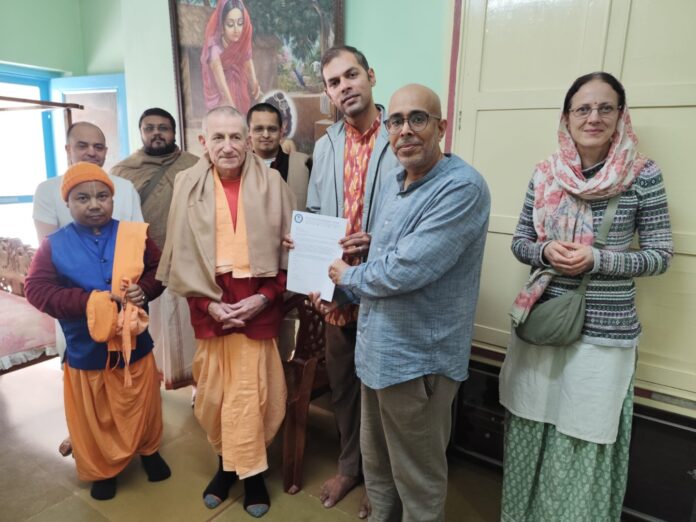
The first phase—twelve restored volumes out of approximately thirty—was formally offered on Prabhupāda Connect Day, February 9, 2026.

The Books Behind the Books

When we say BRC Digitizes Srila Prabhupada Library, we speak of preserving the “books behind the books.” These volumes include rare Sanskrit, Bengali, English, and Hindi editions, along with commentaries by previous ācāryas in the paramparā (disciplic succession).

Śrīla Prabhupāda would consult these authoritative sources nightly to ensure that his translations and purports strictly aligned with Vedic revelation. His scholarship was never speculative; it was rooted in śāstra-pramāṇa—evidence from scripture.

Scriptural Fidelity: A Vedic Standard

In his purport to Bhagavad-gītā 17.15, Śrīla Prabhupāda emphasized:

Thus, the effort that BRC Digitizes Srila Prabhupada Library safeguards not only physical books but the very methodology of Vaiṣṇava theology—presentation grounded in authorized texts.

He often cited Arjuna’s declaration in Bhagavad-gītā 10.12—paraṁ brahma paraṁ dhāma—as acceptance based on Vedic authority, not sentiment.

Professionally Preserved with Archival Care

As part of the initiative where BRC Digitizes Srila Prabhupada Library, each of the twelve volumes in the first phase has been professionally rebound using archival-grade materials designed for long-term conservation.

The spines are embossed with dignified identification, maintaining both accessibility and sanctity. These restored volumes remain housed in Śrīla Prabhupāda’s preserved room in Māyāpur, protected for generations to come.

The restoration work reflects the Vaiṣṇava principle of saucam (cleanliness) and maryādā (proper conduct). Śrīla Prabhupāda appreciated that everything offered to Kṛṣṇa be kept “very clean and nicely done.”

A Digital Window to the Sacred

The milestone BRC Digitizes Srila Prabhupada Library extends beyond physical preservation into digital accessibility.

Through high-resolution scanning, BRC has created a comprehensive online archive, allowing scholars and devotees worldwide to:

  • View the exact editions consulted by Śrīla Prabhupāda
  • Study commentarial traditions he referenced
  • Examine handwritten notes or markings
  • Access page-by-page digital reproductions

For researchers of Gauḍīya Vaiṣṇava theology, this archive opens unprecedented academic avenues while remaining faithful to paramparā.

The initiative demonstrates how modern technology can serve yukta-vairāgya—engaged renunciation—by using contemporary tools in Kṛṣṇa’s service.

Jananivāsa Das entrusting the service of the preservation of the books to BRC.

Hari Sauri Das, one of the co-founders of BRC, examining one of the restored books.

Jananivāsa Das viewing the restored volumes as BRC staff carefully record each title.

A Ceremony Worthy of Sacred Texts

The formal offering ceremony on February 9 was conducted with deep devotion.

The day began with a Śrīmad-Bhāgavatam class, followed by reflections on the significance of the preservation effort. The restored books were carried on a palanquin to the Lotus Building, where puja and pushpāñjali (floral offerings) were offered.

Metallic plaques replaced earlier acrylic ones to ensure permanent and dignified identification of preserved items. Such attention to detail reflects the understanding that these books are extensions of the guru’s mercy.

Śrīla Prabhupāda’s Room: A Living Heritage

Śrīla Prabhupāda’s room in Māyāpur remains preserved exactly as it was during his manifest presence.

Visitors can see:

  • His japa-mālā (chanting beads)
  • Dictaphone used for translations
  • Personal utensils and footwear
  • The kerosene lamp under which he worked

The initiative in which BRC Digitizes Srila Prabhupada Library complements decades of careful guardianship by Jananivāsa Dāsa and the ISKCON Māyāpur team.

Vasanta Rañjani Devī Dāsī, who has served in the room for seventeen years, described the restored volumes as “ancient knowledge in a new cover.” Her humility reflects the Vaiṣṇava mood—service offered as mercy received.

Academic and Theological Significance

From a scholarly perspective, the fact that BRC Digitizes Srila Prabhupada Library carries immense importance.

Dr. Sumanta Rudra, Academic Dean of BRC, noted that access to these exact editions allows researchers to examine:

  • The commentarial traditions informing Śrīla Prabhupāda’s purports
  • Textual variations across editions
  • The interpretative continuity within Gauḍīya theology

This archive strengthens serious theological study grounded in fidelity to śāstra rather than conjecture.

It provides empirical data for academic analysis while preserving devotional reverence.

Looking Ahead: Completing the Sacred Task

Approximately thirty volumes comprise the entire collection. The current phase covers twelve. The BRC plans to continue restoration and digitization until the entire library is preserved.

As this sacred responsibility unfolds, the initiative that BRC Digitizes Srila Prabhupada Library will stand as a model for how spiritual heritage can be safeguarded with professional excellence and devotional sensitivity.

The books being taken on palanquin to Srila Prabhupada’s room.

Jananivāsa Das, Gauranga Das, Subhekshana Das and Dr. Sumanta Rudra of BRC at Srila Prabhupada’s room.

Jananivas Das offering pushpanjali to the books.

The books being offered pushpanjali.

Conclusion: BRC Digitizes Srila Prabhupada Library for Generations

The milestone BRC Digitizes Srila Prabhupada Library represents more than archival achievement; it is an act of gratitude toward the Founder-Ācārya whose books changed the course of modern spirituality.

By preserving the very texts he consulted, BRC has created a bridge between past and future—between the intimate study of a pure devotee and the global community of seekers.

In safeguarding these sacred volumes, the project ensures that Śrīla Prabhupāda’s scholarship, fidelity to paramparā, and devotional rigor remain accessible to devotees and scholars alike.

Thus, the achievement that BRC Digitizes Srila Prabhupada Library is both a historical milestone and a transcendental service—an offering at the lotus feet of the ācārya, for the enlightenment of humanity.

Hare Kṛṣṇa.

Amit Shah ISKCON Mayapur Visit: Historic Moment?

0

The Amit Shah ISKCON Mayapur Visit stands as a spiritually significant and culturally historic event in contemporary India. On February 18, 2026, India’s Union Home and Cooperation Minister, Amit Shah, visited the sacred headquarters of International Society for Krishna Consciousness at Mayapur, the birthplace of Sri Chaitanya Mahaprabhu.

This Amit Shah ISKCON Mayapur Visit was part of the yearlong celebrations commemorating the 152nd Jayanti of Bhaktisiddhanta Saraswati Thakur, organized by the Saraswata Gaudiya Vaishnava Association. The occasion brought together sādhakas (spiritual practitioners), ācāryas (teachers), and dignitaries from across India.

Sacred Darshan and Offerings at ISKCON Mayapur

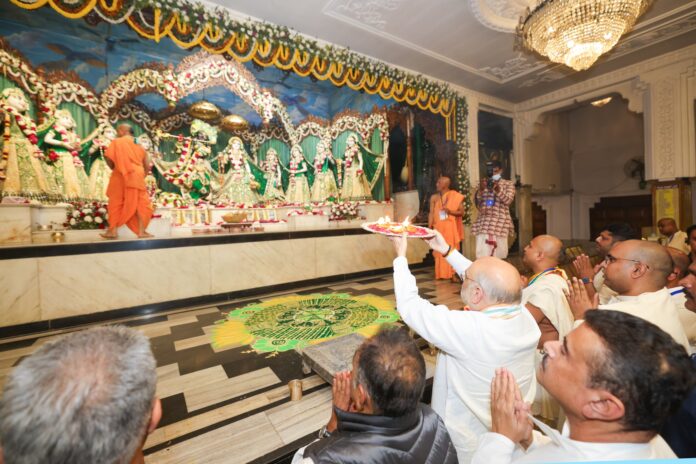
During the Amit Shah ISKCON Mayapur Visit, the Honorable Minister first entered the temple hall to receive darśana (sacred audience) of the Deities — Lord Narasiṁhadeva, Śrī Śrī Pañca-Tattva, and Śrī Śrī Rādhā Mādhava with the Aṣṭa-sakhīs.

He offered puṣpāñjali (floral tributes) at the lotus feet of A. C. Bhaktivedanta Swami Prabhupada, the Founder-Ācārya of ISKCON, whose tireless preaching carried the message of Kṛṣṇa-bhakti to every continent.

He also received a Darshan Book and the latest tribal language edition of Bhagavad-gita As It Is from Jayapataka Swami. This gesture symbolizes the living tradition of guru-paramparā (disciplic succession), wherein transcendental knowledge descends through realized souls.

Honoring Two Great Acharyas

A central theme of the Amit Shah ISKCON Mayapur Visit was heartfelt homage to two towering spiritual luminaries:

  • Bhaktisiddhanta Saraswati Thakur
  • A. C. Bhaktivedanta Swami Prabhupada

The Minister acknowledged that these two ācāryas not only preserved the bhakti movement inaugurated by Sri Chaitanya Mahaprabhu but harmonized it with modernity without compromising siddhānta (philosophical conclusions).

The Brihat Mridanga Vision

Śrīla Bhaktisiddhānta Sarasvatī Ṭhākura boldly embraced the printing press, calling it the bṛhat-mṛdaṅga — the “great drum.” While a clay mṛdaṅga drum may be heard within a village, the printing press resounds across the world.

This innovative spirit later blossomed through ISKCON’s global book distribution movement, making the Bhagavad-gītā accessible in numerous languages.

As emphasized during the Amit Shah ISKCON Mayapur Visit, true renunciation (vairāgya) does not mean abandonment of the world but purification of intent. This is known as yukta-vairāgya — engaging everything in Kṛṣṇa’s service.

Shri Amit Shah offering worship to Lord Narasimhadev at ISKCON Mayapur.

Taking blessings from Lord Narasimhadev.

Offering his respects to Srila Prabhupada at ISKCON Mayapur.

ISKCON’s Global Mission and Service

The Amit Shah ISKCON Mayapur Visit also highlighted ISKCON’s extraordinary humanitarian and spiritual outreach.

Having traveled extensively across India, the Minister observed that despite linguistic diversity, the Bhagavad-gītā is found everywhere — translated and distributed by ISKCON. The universality of the Gītā’s message affirms the principle of sarva-loka-hita — welfare for all beings.

Spiritual Literature in Every Language

Through the efforts of the Bhaktivedanta Book Trust, the teachings of Bhagavad-gītā and Śrīmad-Bhāgavatam have reached homes, universities, and institutions worldwide. The Gītā is not sectarian; it is a manual for spiritual civilization.

Prime Minister Narendra Modi has often presented the Bhagavad-gītā to foreign dignitaries, recognizing it as a text of global relevance and harmony.

ISKCON’s Humanitarian Contributions

Beyond preaching, ISKCON exemplifies seva (selfless service).

During natural calamities, ISKCON relief camps are often among the first to distribute prasāda (sanctified food). The movement runs:

  • Free food distribution programs
  • Hospitals and educational institutions
  • Environmental awareness initiatives
  • Youth engagement programs

This synthesis of bhakti and practical compassion reflects the teaching of lokānāṁ hita-kāriṇau — acting for the welfare of humanity.

Temple of Vedic Planetarium: A Vision for the Future

A significant moment in the Amit Shah ISKCON Mayapur Visit was his briefing about the Temple of the Vedic Planetarium (TOVP).

The TOVP is envisioned as a monumental spiritual and educational center that presents Vedic cosmology through modern architecture and scientific display. It symbolizes the harmony of śāstra (scripture) and technology.

The Minister enthusiastically expressed his desire to participate in its inauguration, recognizing it as a beacon of spiritual education for future generations.

Mayapur: Birthplace of Divine Compassion

Mayapur is not an ordinary geographical location. It is the sacred dhāma where Sri Chaitanya Mahaprabhu appeared to inaugurate the saṅkīrtana movement — the congregational chanting of the Holy Names.

The presence of Lord Narasiṁhadeva in Mayapur further assures divine protection and guidance. The spiritual vibration of this dhāma attracts pilgrims from every continent.

The Amit Shah ISKCON Mayapur Visit reaffirmed Mayapur’s role as a global spiritual capital, radiating transcendental knowledge and devotion.

Spiritual Vitality and National Development

In his concluding remarks, the Minister envisioned a future where India’s spiritual heritage and national development progress simultaneously.

He expressed hope that by 2047, India would spread the message of Sanātana Dharma and holistic development worldwide. Such a vision aligns with the Vedic understanding that material prosperity without spiritual grounding leads to imbalance.

The integration of dharma (righteousness), artha (prosperity), kāma (regulated desire), and mokṣa (liberation) ensures sustainable civilization.

Conclusion: The Lasting Impact of Amit Shah ISKCON Mayapur Visit

The Amit Shah ISKCON Mayapur Visit was more than a ceremonial appearance; it symbolized recognition of a spiritual renaissance shaping modern India and the world.

By honoring Śrīla Bhaktisiddhānta Sarasvatī Ṭhākura and Śrīla Prabhupāda, acknowledging ISKCON’s humanitarian outreach, and appreciating the grand vision of the Temple of Vedic Planetarium, this visit reinforced the timeless relevance of Kṛṣṇa-bhakti.

Ultimately, the Amit Shah ISKCON Mayapur Visit reminds us that when leadership and spirituality converge, society advances not only materially but morally and spiritually. In the spirit of yukta-vairāgya, may all resources — political, intellectual, and social — be engaged in the service of Śrī Kṛṣṇa for the upliftment of humanity.

Hare Kṛṣṇa.

Radhashtami Recipes

0
OLYMPUS DIGITAL CAMERA

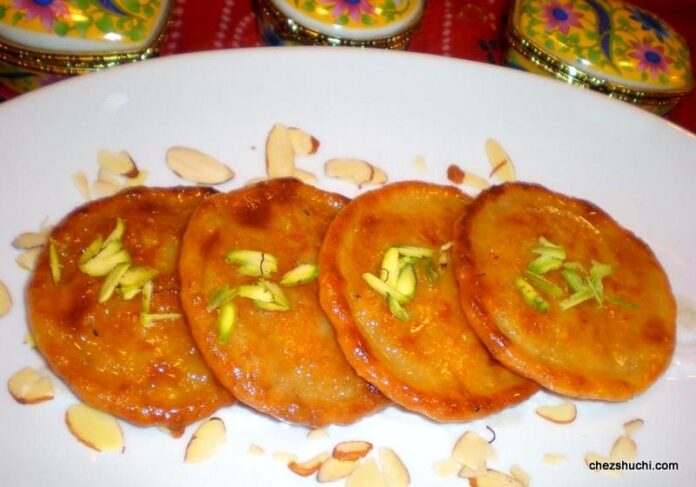
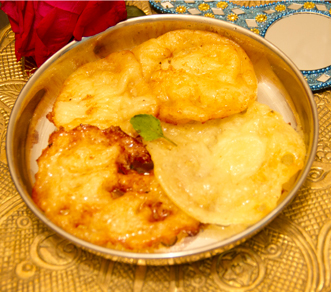
Celebrate Radhastami by worshipping Radha and Krishna and offering Them delicious dishes. Try out this recipe for Malpua.

Malpua

malpura radhashtami recipe

Cooking time: 60 mins

Serves: 6 to 8

Ingredients

Milk – 500ml
Plain flour – 3 to 4 tbsp
Sugar – ½ cup
Water – ½ cup
Oil for deep frying – approx. 300ml
Cardamom powder – ½ tsp
Saffron strands – a few

Method

  • Boil 500 ml of milk in a heavy bottomed vessel on a low flame. Keep stirring for about 20 to 30 minutes till the milk gets thicker and reduces to ¾th of its quantity.
  • In the meantime make sugar syrup by boiling sugar, cardamom and water. You can dissolve a few saffron strands in a small quantity of warm milk and add it in the sugar syrup anytime.
  • Allow the thickened milk to cool. Add 4 tbsp of plain flour and whisk generously to make a lump-free batter.
  • Take oil in a flat bottomed frying pan and heat it.
  • Carefully spread a ladle full of batter in oil to make a small pancake. Fry on medium or low flame. Turn it gently and fry on the other side till it is crisp brown from all sides. [If you find the batter separating out, add very little flour to thicken it and try again. Or if the batter is too thick add some milk. Keep trying with little batter till you are sure that the batter doesn’t separate out when you pour.]
  • Remove the pancake from oil and dip it in sugar syrup (warm) for a minute and then drain it in a colander.
  • Repeat the procedure for the rest of the batter.

Ugadi / Gudi Padva Dishes

0

Puran Poli / Obbattu (Maharashtra, Karnataka)

Puran Poli

Ingredients:

  • 300 gms chana dal
  • 300 gms jaggery
  • 1 tsp. cardamom powder
  • 150 gms plain flour
  • 1 tbsp. ghee
  • Warm water to knead the dough
  • Ghee to serve


Method:

Boil dal in plenty of water till soft but not broken. Drain in a colander and pass through an almond grater till all the dal is grated. Mash jaggery till there are no lumps left. Mix this well into the dal. Put mixture in a heavy saucepan and cook till a soft lump is formed. Take care to stir continuously, so as not to char. Keep aside. (This is for the filling)

Mix ghee, flour; add enough water to make soft pliable dough. Make a small ball of the dough, roll into a four inch circle. Place a similar sized ball of filling in the centre, close all around and seal. Reroll carefully to a six inch diameter circle. Roast on warm griddle till golden brown. Repeat other side. Take on serving plate. Apply a tsp. of ghee all over top. Serve hot with milk and ghee.

Note: The water drained from boiling dal is used to make the amti (obbattu saaru – a thin curry made using garam masala and some mashed dal.)

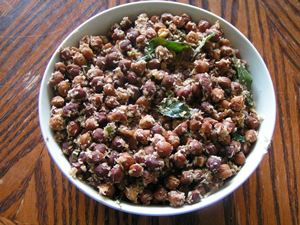
Chana Usal

Chana Usal

Ingredients:

  • 1 cup sprouted chana cooked
  • Juice of one lemon
  • 2 tbsp. oil
  • 1/2 tsp. garam masala
  • 4-5 curry leaves
  • 1/4 tsp. crushed cumin seeds
  • Salt to taste


Grind to a paste:

  • 1 small bunch fresh coriander
  • 8-10 green chilies
  • 1/2 cup fresh coconut grated


Method:
Heat oil in a large heavy vessel. Add paste and stir-fry for 2 minutes. Add 3 cups water and bring to a boil. Add all other ingredients, stir and boil. Simmer for 15-20 minutes, stirring occasionally. Cook till oil separates, floats on top and chanas are soft.

Sonth (Ginger) Panak (Maharashtra)

Sonth Panak

Ingredients:

  • 4 tsp. wheat flour
  • 125 gms. jaggery grated
  • 1 tbsp. ginger powder
  • 1 tbsp. grated dried coconut
  • 1 tbsp. almonds pounded coarsely
  • 1/2 tsp. cardamom powder
  • 4 tbsp. ghee


Method:
Heat 2 tbsp. ghee in a pan, add flour. Let it cook till light brown. Empty and keep aside. In the same pan, add remaining ghee, add jaggery, mix. Cook till all jaggery has melted to a smooth paste. Do not overcook or else sonth will get hardened. Remove from fire, add all ingredients.

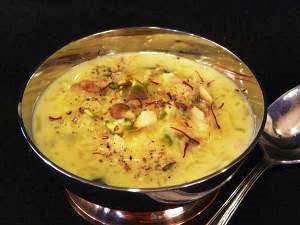
Coconut Milk Kheer

Coconut Milk Kheer

Ingredients:

  • 5 cups coconut milk
  • 1 cup boiled milk
  • 1/2 cup sugar
  • 2 tbsp rice
  • 1/2 tsp. cardamom powder
  • 5 pistachios crushed coarsely
  • 10 almonds crushed coarsely.


Method:
Bring to boil the coconut milk. Add rice, and let it cook fully. Add boiled milk. Allow the mixture to become semi-solid. Add sugar and stir till it dissolves. Add remaining ingredients. Serve hot.

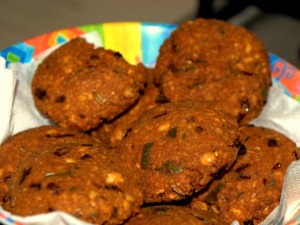
Masala Vada

Masala Vada

Ingredients:

  • Chana dal 500 gms
  • Peanuts 50 gms
  • Urad dal 50 gms
  • Ginger grated 1 tsp
  • Small cut green chillies 5-6
  • Red chillies 5-6
  • Coriander leaves 1 bunch
  • Small bunch curry leaves
  • Fresh grated coconut – 1 cup
  • Salt
  • Oil for deep frying


Method:
Soak separately chana dal, peanuts and urad dal in water for about 2 hrs. Grind coarsely chana dal, peanuts and urad dal together. Mix all the above ingredients and shape it like a vada and deep fry.

Koshambir (Kosambri Salad)

Koshambir

Ingredients:

  • Moong dal 100 gms
  • 2 cucumbers
  • Carrot 1 grated
  • Salt
  • 1 lemon
  • Green chilly 5-6
  • Coriander leaves small bunch


Method:
Soak moong dal in water for 1 hr., drain the dal, and mix to it finely cut cucumber, grated carrots, lemon juice, salt, coriander leaves. For seasoning heat oil in a small kadai, add mustard, cut green chillies, curry leaves. Mix it to the salad.

Kabuli Chana Usal

Kabuli Chana Usal

Ingredients:

  • 100 gms Kabuli chana soaked overnight
  • Lemon juice
  • 2 tbsp. oil
  • 4-5 curry leaves
  • ½ inch ginger grated
  • Mustard seeds
  • Jeera
  • Salt to taste
  • 1 small bunch fresh coriander
  • 8-10 green chillies
  • 1 cup fresh coconut, grated


Method:
First cook Kabuli chana in a cooker. Heat oil, add mustard, jeera, curry leaves, green chilli, ginger, boiled and cooked Kabuli chana. Garnish with lemon juice, salt, coconut, and coriander leaves.

Stay Connected

16,985FansLike
12,500FollowersFollow
61,453SubscribersSubscribe
Have a question?Send us an enquiry. We usually reply within a day.