Mail ID: contact@vedavarsity.com

Contact: +91 9634998911

Google search engineGoogle search engine
Home Blog Page 79

Iskcon Bhakti-Kuti

0

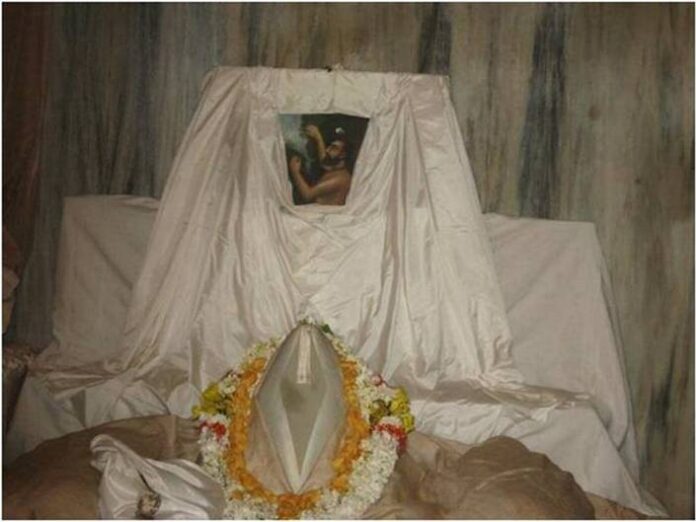
Bhakti-Kuti is the name that Srila Bhaktivinoda Thakura gave to his bhajana kutrir, which was located beside the sea just opposite Haridasa Thakura’s Samadhi. This the place where illustrious Srila Bhaktivinoda Thakura spent his last 4 years on earth (1910-14) before entering Samadhi. In 1908, Thakura left household life and entered renounced order by accepting babaji-vesa from Srila Gaura-kisora Dasa Babaji Maharaj. In 1910, Thakura stayed inside the Bhakti-kuti performing solitary bhajana. He absorbed himself in uninterrupted meditation upon asta-kaliya lila and rendering mental service to the Divine Couple Sri Sri Radha-Madhava. Millions of years ago, the Sapta-rsis performed Hari-bhajana in this area.

When the Government declared that any Vaishnava Society can undertake it’s responsibility, ISKCON took its responsibility and built a temple for the presiding deities Sri Sri Radha Giridhari & Caitanya Mahaprabhu. On the outside wall is a marble plaque with the following verse written in Bengali by Bhaktivinoda Thakur himself:

gaura-prabhoh prema-vilasa-bhumau

niskincano bhakti-vinoda-nama

ko’pi sthito bhakti-kutira-kosthe

smrtvanizam nama-gunam murareh

“In this land, Lord Gaura enjoyed His prema-filled pastimes. One desire less sadhu named Bhaktivinoda stays in a small room in his Bhakti-kuti, constantly remembering the name and qualities of His Lord Murari throughout the night.”

 Srila Haridasa Thakura’s Samadhi

0

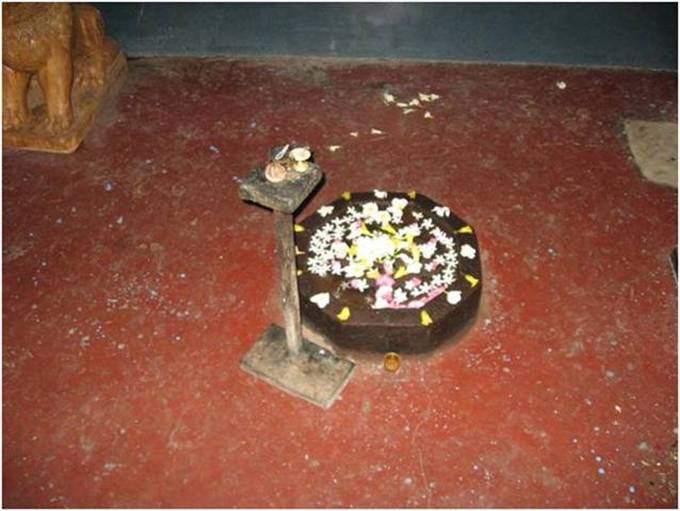
Srila Haridasa Thakura’s Samadhi is situated in Sri Jagannatha Puri Dhama on the oceanfront in the area of Svarga dvara. At the time of Sri Caitanya Mahaprabhu this place was just a sandy beach and part of it was used as a crematorium. Here Sri Caitanya Mahaprabhu put the body of Srila Haridasa Thakura into samadhi with His own hands. The actual samadhi is seen in the courtyard as a small tomb.

Towards the west of the samadhi there are three altars where deities of Lord Gauranga, Lord Nityananda, and Sri Advaita Acarya are worshipped. After the disappearance of Srila Haridasa Thakura, Lord Caitanya would come here every day after taking bath in the ocean, offer prasada to Haridasa’s samadhi and do nilma-bhajana for some time. Thus all the deities are in a sitting posture and doing nilma-bhajana.

Srila Haridasa Thakura was residing in his bhajana-kutira behind Gambhira, at the place at presently known as Siddha-Bakula. In the assembly of devotees, by Lord Caitanya’s grace, Haridasa Thakur’s life air left his body at this place. As he lay there lifeless, Sri Caitanya Mahaprabhu’s spiritual rapture and ecstasy went seemingly beyond control. The entire Kirtan became tumultuous. The mrdanga, kartals, the enthusiasm and the love in the devotees voices cried out Krishna’s Holy Names. Mahaprabhu maddened by His love, lifted up Haridasa and embracing him to His heart began to dance! Lord Caitanya carried Srila Haridasa Thakura’s transcendental body in His hands to the oceanfront in a harinama procession. There his body was placed in the samadhi.

Narandera Sarovara

0
OLYMPUS DIGITAL CAMERA

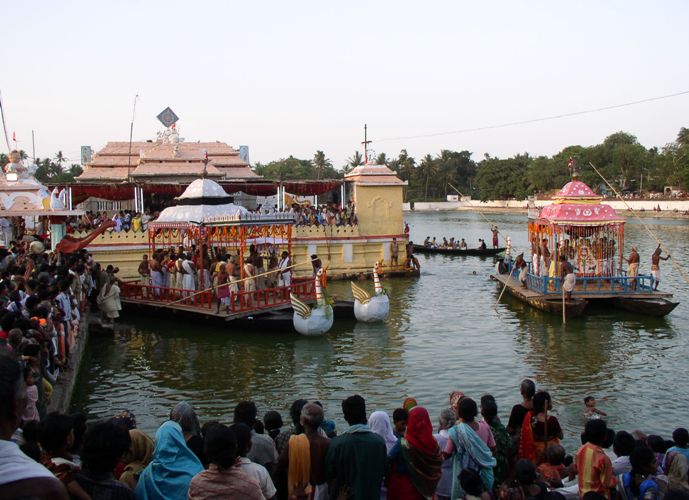
This large tank is located north-east of Jagannatha’s temple. This pond is also known as Sri Chandan Pukur, because Lord Jagannatha comes here every evening for 21 consecutive days during Chandan-yatra, from Aksaya-trtiya (in month of Vaisakha or April/May) up to Suklastami-tithi in the month of Jyestha (May/June) to enjoy His Nauka-Lila (boating pastime).

Jagannatha Swami’s Chandan Yatra and Nauka-Lila: Before coming here, Lord Jagannatha’s festive Deity (utsava murti) of Madan Mohana along with His consorts Sridevi and Bhudevi bathe in sandalwood water and are decorated with fragrant flowers. All the Deities travel here on 7 different palanquins. Madan-Mohana, Sri and Bhu-devis arrive in one palanquin; Sri Rama Govinda on a second palanquin; and 5 more palanquins transport the Panca Mahadevas (five Siva linga Deities): Lokanatha, Janesvara, Kapal-mocana, Markandesvara and Nilakanthesvara. Entire length of the procession route from Jagannatha Mandira to Narendra Sarovara is lined with white canopies strewn with forest leaves, flower and fruits. In Narendra-sarovara two nicely decorated boats are used for Chandana-yatra: one boat Sri Madan-Mohana and other boat for Sri Rama Govinda and Panca-Sivas. While the Lords ride in Their boats around the pond, throngs of devotees line the banks chanting Harinam-Sankirtan and relishing most spectacular pastimes of the Lord. After a certain point all the Deities are brought to the temple in the middle of the pond and receive worship from the pujaris. After the festivities the Deities go back to their respective temples in their palanquins.

Birth Place Of Srila BhaktiSiddhanta Saraswati Thakura

0

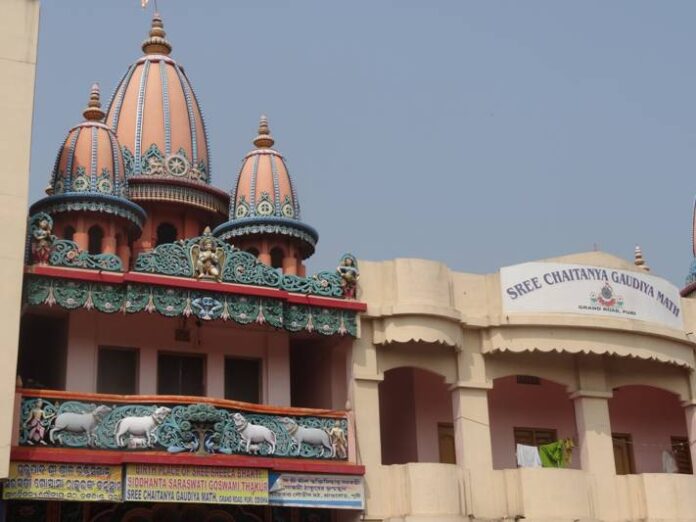
Birthplace of Srila Bhaktisiddhanta Sarasvati Thakura is located near to Jagannatha Vallabha Garden. Proceed towards the Jagannatha Mandira. Until on the right side the big pink Sri Caitanya Gaudiya Math temple with a sign above the entrance gate saying, “Birth Place of Prabhupada 108 Srila Bhaktisiddhanta Sarasvati Goswami Thakura”. Present day temple is located on the former site of Srila Bhaktivinoda Thakura’s house, where he lived while acting as the Puri District Magistrate and Jagannatha Temple Administrator.

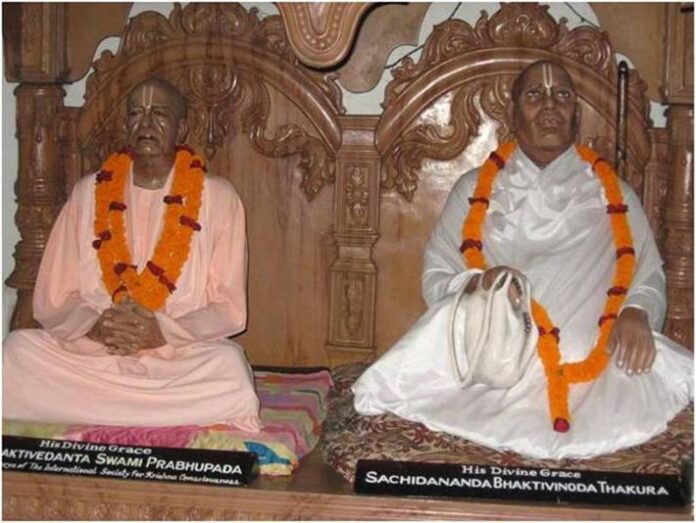
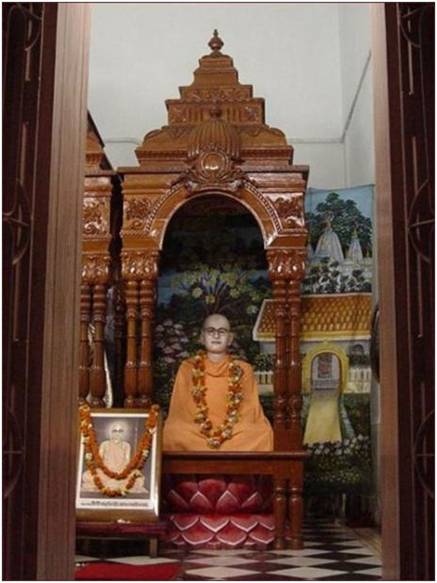
Main Deities: A gorgeous black Krishna and most attractive, charming golden Srimati Radharani named Sri Sri Radha-Nayana Mani Jiu grace the centre altar. The words nayana mani mean, “Krishna-the jewel of Radha’s lotus eyes”. Sri Sri Jagannatha, Baladeva and Subhadra are also here. A murti of Srila Bhaktisiddhanta Sarasvati Thakura is being worshiped in the far right altar. This is the exact spot where he appeared. It is said that while digging the earth during the temple construction, a sweet sandalwood smell emanated from the ground where Sarasvati Thakura took birth. While doing the Mandira parikrama, one will see the four sampradaya acaryas: Visnuswami, Madhvacarya, Nimbarka and Ramanuja, and beautiful diorama of various pastimes of Lord Gauranga Mahaprabhu.

Srila Bhaktisiddhanta Sarasvati Thakura took birth in Jagannatha Puri Dhama on 6 Feb 1874. His father, Srila Bhaktivinoda Thakura had a house in Puri on Grand Road, close to Jagannatha Mandir. Srila Bhaktisiddhanta Sarasvati Thakura was a foremost scholar and Lord Krishna’s devotee of his day. He is the child that Srila Bhaktivinoda Thakura prayed to Lord Jagannatha for, wanting an able assistant to preach Krishna Consciousness.

Bhagavad-Gītā Oath: Kenyan Youth Leader’s Historic Step

0

Introduction: Bhagavad-gītā in Modern Leadership

The moment when a Kenyan youth leader took oath on Bhagavad-gītā marks a profound intersection of spirituality and governance. In a world increasingly driven by secular pragmatism, such gestures stand as powerful reminders of dharma (righteous duty) guiding leadership.

On February 14, 2026, at the Mombasa Youth Assembly, Bhakta Kelly Caleb raised the Bhagavad-gītā As It Is while taking his oath. This act was not symbolic alone—it represented conviction, identity, and philosophical grounding rooted in timeless Vedic wisdom.

A Historic Oath: Bhagavad-gītā in Public Office

The decision of a Kenyan youth leader to take oath on Bhagavad-gītā reflects a deeper cultural and spiritual evolution. Traditionally, public office ceremonies align with dominant religious frameworks. However, Caleb’s action introduced a dimension of pluralism consistent with Kenya’s constitutional ethos.

This moment was neither dramatic nor politically motivated. Rather, it was an authentic expression of inner faith (śraddhā), demonstrating alignment between personal conviction and public duty.

The Symbolism of the Bhagavad-gītā

The Bhagavad-gītā is not merely a religious text; it is a universal guide to ethical leadership. Spoken by Lord Kṛṣṇa to Arjuna on the battlefield of Kurukṣetra, it addresses:

  • Duty (dharma)
  • Action without attachment (niṣkāma karma)
  • Leadership through self-mastery

Thus, taking an oath on the Bhagavad-gītā signifies commitment to these eternal principles.

Youth Leadership and Spiritual Identity

The rise of leaders like Caleb shows that modern youth are not abandoning spirituality; rather, they are redefining its place in public life.

Faith and Activism Combined

As a representative of Changamwe Constituency, Caleb embodies a synthesis of:

  • Youth mobilization
  • Social responsibility
  • Spiritual discipline

His involvement with the Hare Krishna community and leadership in The Better You Club demonstrates how devotional practice (bhakti) can inspire social engagement.

Universities as Spiritual Ecosystems

Universities often present challenges to spiritual expression. Yet, Caleb’s initiative successfully cultivated a thriving Vaishnava community through:

  • Regular study of scriptures
  • Community gatherings
  • Cultural engagement

This reflects the principle of satsaṅga—association with spiritually minded individuals—which is essential for sustained growth.

Bhagavad-gītā and Governance: A Philosophical Perspective

The Kenyan youth leader taking oath on Bhagavad-gītā invites a broader reflection: Can spiritual wisdom guide political systems?

Dharma in Leadership

According to the Bhagavad-gītā (4.7–8), the restoration of dharma is essential for societal harmony. Leaders grounded in dharma:

  • Act without selfish motives
  • Protect societal welfare
  • Uphold justice

Such leadership contrasts with modern tendencies toward power-centric governance.

Niṣkāma Karma in Public Service

The Gītā teaches action without attachment to results. Applied to governance, this means:

  • Serving without personal gain
  • Making decisions based on righteousness, not popularity
  • Remaining steady in success and failure (samatvam)

Caleb’s oath reflects this philosophical alignment.

Pluralism and Religious Freedom in Kenya

Kenya’s constitutional framework supports religious diversity. The act of a Kenyan youth leader taking oath on Bhagavad-gītā reinforces this principle in practice.

A Living Example of Inclusivity

Rather than creating division, such gestures:

  • Normalize minority faith representation
  • Encourage interfaith respect
  • Strengthen democratic inclusivity

This aligns with the Vedic vision of vasudhaiva kuṭumbakam—the world as one family.

ISKCON’s Role in Cultural Integration

The International Society for Krishna Consciousness (ISKCON) has played a significant role in bringing Vedic culture to global platforms.

From Festivals to Leadership

While public events like Ratha-yātrā showcase devotional culture externally, Caleb’s oath represents:

  • Internalization of spiritual values
  • Application in professional domains
  • Integration into leadership roles

This shift marks a deeper cultural embedding.

The Power of Personal Conviction

In contemporary politics, leaders often dilute personal beliefs to appeal to broader audiences. However, Caleb’s action demonstrates:

  • Integrity (ārjava)
  • Authenticity
  • Courage to represent one’s identity

Such qualities are emphasized in the Bhagavad-gītā as essential for a leader.

Spiritual Confidence in Modern Youth

Today’s youth are increasingly:

  • Spiritually curious
  • Philosophically aware
  • Socially active

This combination creates leaders who are both thoughtful and impactful.

A Generational Shift in Leadership

The Kenyan youth leader taking oath on Bhagavad-gītā symbolizes a transition from:

  • Identity politics → Value-based leadership
  • External conformity → Internal alignment
  • Ritual formality → Conscious intention

This reflects a maturing global consciousness.

Lessons from the Bhagavad-gītā for Leaders

1. Self-Mastery (Ātma-vinigraha)

A leader must first control the mind and senses.

2. Duty Above Desire (Svadharma)

One must perform prescribed duties sincerely.

3. Equality in Vision (Sama-darśinaḥ)

Seeing all beings equally fosters justice.

4. Detachment (Vairāgya)

Freedom from greed ensures ethical decisions.

Conclusion: Bhagavad-gītā and the Future of Leadership

The act of a Kenyan youth leader taking oath on Bhagavad-gītā is more than a ceremonial choice—it is a declaration of philosophical grounding in governance.

It demonstrates that spirituality and leadership are not opposing forces but complementary dimensions. When leaders act with dharma, guided by timeless wisdom, governance transforms into service (seva).

As this moment in Mombasa illustrates, meaningful change often begins with simple yet profound gestures—a hand raised, a sacred text held, and a vow aligned with eternal truth.

Vasuttama Dasa: Remembering A Life Of Devotion

0

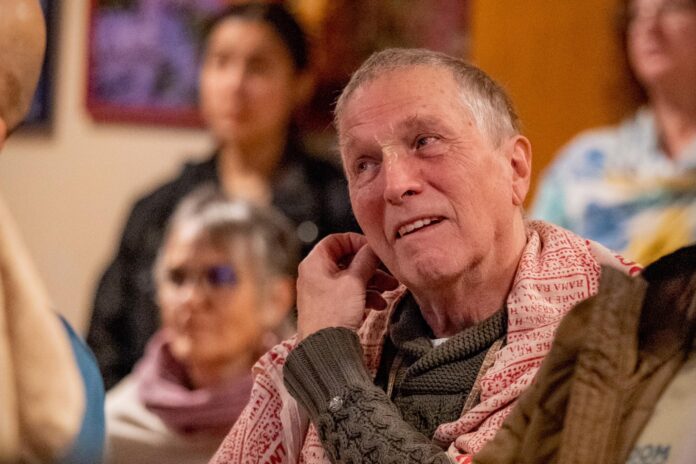
On March 8, 2026, the devotees of ISKCON Radhadesh and the wider Vaishnava community bid farewell to a gentle and devoted servant of the Lord, Vasuttama Dasa. A disciple of His Divine Grace A. C. Bhaktivedanta Swami Srila Prabhupada, Vasuttama Dasa peacefully departed from this world after spending the day within the devotional atmosphere of the Radhadesh temple community.

Earlier that day, he had attended the joyful Holi festival feast at the temple. Later, after returning to his room to rest, he quietly left his body. Devotees remember that his life was marked by humility, kindness, and unwavering gratitude toward Srila Prabhupada. His constant remembrance of his spiritual master and his sincere dedication to devotional service made a lasting impression on all who knew him.

A Devoted Disciple of Srila Prabhupada

The life of Vasuttama Dasa was deeply connected with the mission of Srila Prabhupada. Like many early disciples who helped establish Krishna consciousness in the West, he dedicated decades of his life to spreading spiritual culture and devotional practices.

He was among the first Belgian disciples of Srila Prabhupada and played an important role in developing the devotional community in Europe. His life reflected the Vaishnava principle of seva, or loving service to the Supreme Lord and His devotees.

Those who interacted with him often noticed his deep appreciation for Srila Prabhupada’s teachings. He frequently spoke about his spiritual master with heartfelt reverence, gratitude, and affection.

Service to ISKCON Radhadesh

One of the most significant chapters of Vasuttama Dasa’s devotional life unfolded at ISKCON Radhadesh in Belgium. The historic castle that now serves as a temple and spiritual community became the center of many of his services.

He was one of the devotees who signed the contract to purchase the Radhadesh castle in 1980, an important step in establishing the temple community that continues to flourish today.

Over the years, he rendered numerous services, including:

  • Temple restoration
  • Book distribution
  • Community outreach
  • Artistic contributions

Each of these services reflected his dedication to the mission of spreading Krishna consciousness.

Establishing the Radhadesh Guided Tour Program

Among his most enduring contributions was the establishment of the Radhadesh guided tour program.

Today, this initiative welcomes approximately 30,000 visitors each year, introducing guests from around the world to the spiritual culture, philosophy, and beauty of Krishna consciousness.

Through these tours, visitors learn about:

  • The teachings of the Bhagavad-gita
  • The history of ISKCON
  • The devotional practices followed by the community
  • The artistic and cultural heritage of the temple

Through this effort, Vasuttama Dasa helped ensure that thousands of people could encounter the philosophy of bhakti-yoga in a welcoming and educational environment.

Artistic Talent in Devotional Service

Another remarkable dimension of Vasuttama Dasa’s life was his artistic skill.

He was professionally trained in trompe-l’œil painting, a highly specialized artistic technique that creates the illusion of three-dimensional objects on a flat surface. The term literally means “to deceive the eye,” because the painting appears strikingly realistic.

Using this rare talent, he contributed to the restoration and decoration of the Radhadesh temple environment.

One of his notable works can be seen in the temple’s reception hall, where visitors are first welcomed. There he painted elegant decorative elements that enhance the spiritual atmosphere of the space.

His artwork also includes beautiful depictions of birds frequently seen around the castle towers, such as swallows and pigeons. These paintings remain a permanent part of the temple’s aesthetic environment.

In this way, Vasuttama Dasa transformed artistic skill into devotional service.

A Gentle and Humble Devotee

Devotees who worked with him often describe Vasuttama Dasa as a very gentle and friendly soul.

Caitanya Caran Dasa shared a touching recollection of the final day of his life. While filming the Holi festival at Radhadesh, he saw Vasuttama Prabhu passing by in working clothes, still engaged in painting work despite the large festival crowd of around 1,200 guests.

Vasuttama mentioned that the crowd was too large for him and preferred to continue his quiet service.

Later, he noticed that a painting of Srila Prabhupada hanging on the wall was slightly crooked. Before going to rest, he carefully adjusted the picture so that it hung properly.

This small gesture reflected his deep respect and love for his spiritual master.

Shortly afterward, he requested a cup of chamomile tea and went to lie down in his room. When the tea was brought to him, it was discovered that he had peacefully departed from this world.

Family and Devotional Community

Vasuttama Dasa is survived by his children Bhumi, Yamuna, and Nimai, as well as several grandchildren. He often spoke lovingly about them and cherished his family relationships.

Beyond his immediate family, he leaves behind a large spiritual family within the ISKCON community. Devotees who served with him remember his kindness, sincerity, and steady devotional spirit.

A memorial service honoring his life was held at ISKCON Radhadesh on March 11, 2026, where devotees gathered to remember his many contributions and to offer prayers for his continued spiritual journey.

A Life Dedicated to Seva

In the teachings of bhakti-yoga, the true measure of life is not material achievement but sincere service to the Supreme Lord and His devotees.

The life of Vasuttama Dasa exemplifies this principle. Through temple restoration, outreach programs, artistic contributions, and humble daily service, he dedicated himself to the mission of spreading Krishna consciousness.

The guided tours he established continue to introduce thousands of visitors each year to spiritual culture. The artwork he created remains visible within the temple environment. The devotees he inspired continue to remember his gentle example.

In this way, his service continues even after his departure.

A Prayerful Farewell

The devotees of ISKCON Radhadesh offer heartfelt gratitude for the decades of service rendered by Vasuttama Dasa. They pray that Srila Prabhupada and the Divine Couple may bless him with eternal service in the spiritual realm.

For the Vaishnava community, the remembrance of such devotees strengthens faith and inspires continued dedication to the path of bhakti.

All glories to His Grace Vasuttama Dasa, whose life of humility, devotion, and service remains an example for generations to come.

Hare Krishna.

Krishna Toys: Can Playtime Inspire Bhakti In Children?

0

In every culture, childhood play carries deep significance. Through games, stories, and imagination, a child begins to understand the world and develop emotional connections. Within the Vedic tradition, parents have always tried to connect these formative moments with spiritual values. Today, Krishna toys are emerging as a meaningful way to introduce children to the beauty of Krishna consciousness through joyful play.

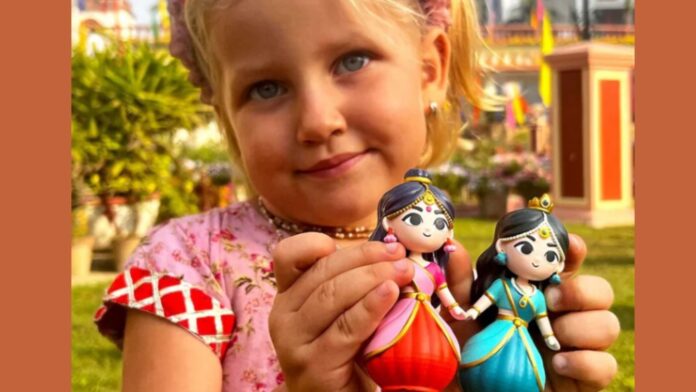
A remarkable initiative called KrishnaToys, started by Karuna Chandra Dasa and Karuna Rasa Devi Dasi in Mayapur, is helping families bring the sweet pastimes of Lord Krishna into the daily lives of children. Their effort reflects a profound principle found throughout the teachings of the Vaishnava tradition: devotion begins with affection and natural remembrance.

Just as the residents of Vrindavan loved Krishna as their friend, son, and beloved companion, children can also develop a spontaneous connection with the Supreme Lord through simple and happy play.

The Spiritual Importance of Early Samskaras

In Vedic culture, the impressions formed in childhood are called samskaras—deep spiritual impressions that shape the consciousness throughout life.

The scriptures explain that whatever a person repeatedly hears, sees, and thinks about gradually becomes part of their nature. Therefore, when children grow up surrounded by the names, forms, and pastimes of Lord Krishna, these sacred impressions naturally awaken devotion.

Playtime provides an ideal environment for such impressions. When Krishna toys are included in storytelling or imaginative play, the child’s mind associates Krishna with happiness, warmth, and friendship.

This approach reflects a simple yet powerful principle of bhakti: love grows most naturally when it is joyful rather than forced.

How Krishna Toys Were Inspired

The idea behind KrishnaToys arose from a simple family moment.

After moving to Mayapur, Karuna Chandra Dasa and his family noticed that it was surprisingly difficult to find toys reflecting Vedic and Vaishnava culture. Most children’s toys available in the market were based on modern cartoons or fairy tales.

During one evening storytime with their daughter Dayamrita, Karuna Chandra began reading Little Red Riding Hood. To make the story more engaging, he used toy figures and acted out the characters as the narrative progressed.

The child was fascinated.

Seeing her excitement, he suddenly realized that the same storytelling method could be applied to Krishna toys, allowing children to experience Krishna-lila in an interactive and joyful way.

That moment planted the seed for the KrishnaToys project.

Role-Play and Krishna-Lila

Children learn best through role-play and imagination. When a child reenacts a story, they become emotionally involved in the characters and events.

KrishnaToys uses this principle by creating toy sets that represent characters from Krishna’s childhood pastimes. Parents can narrate stories while children act out the scenes.

For example, children may reenact:

  • Krishna stealing butter from the gopis
  • Krishna playing with His cowherd friends
  • Mother Yashoda lovingly caring for Krishna
  • Krishna protecting the residents of Vrindavan

Through such activities, Krishna toys transform storytelling into an immersive spiritual experience.

Rather than hearing Krishna’s pastimes as distant mythology, children begin to feel that Krishna is their friend.

Designing Toys for Devotional Engagement

The creators of KrishnaToys carefully designed the toys to appeal to young children while maintaining recognizable spiritual symbolism.

Their design philosophy focuses on three principles:

1. Simplicity

Children connect best with clear shapes and gentle expressions. Excessive detail can overwhelm a young mind.

Therefore the toys are simple, soft, and visually approachable.

2. Emotional Warmth

The expressions of the characters reflect affection and kindness. The goal is to communicate the sweetness (madhurya) of Krishna’s pastimes.

3. Scriptural Inspiration

While simplified for children, the toys remain faithful to the characters described in Vedic literature.

This careful balance ensures that Krishna toys are both educational and emotionally engaging.

Bhakti Begins With Affection

One of the most profound ideas behind this initiative is that bhakti begins with affection.

Children naturally love the things that bring them joy. When Krishna becomes part of their playtime, they begin to associate the Lord with friendship and happiness.

In the language of the Vedic scriptures, Krishna is known as Bhakta-vatsala, meaning “one who is especially affectionate toward His devotees.”

When a child laughs while playing with Krishna toys, that joyful emotion may become the first step toward a lifelong spiritual relationship.

This method reflects the mood of Vrindavan, where the residents love Krishna spontaneously and naturally.

Educational Benefits Beyond Devotion

Although the primary goal is spiritual, role-play with Krishna toys also supports important developmental skills.

Emotional Development

Acting out stories helps children express emotions and understand relationships between characters.

Communication Skills

Storytelling and dialogue strengthen language abilities.

Creativity and Imagination

Children naturally expand the stories, inventing new adventures involving Krishna and His friends.

Empathy

When children imagine themselves as characters in Krishna-lila, they develop empathy and emotional awareness.

Thus spiritual storytelling becomes a powerful educational tool.

Safety and Quality as Seva

In devotional culture, even small details are considered part of seva, or loving service to Krishna.

For this reason, the creators of KrishnaToys emphasize strict safety and quality standards. Their products follow internationally recognized certifications including:

  • CE standards
  • EN71 toy safety regulations
  • BIS certification
  • ISO 9001 quality systems

Maintaining these standards ensures that Krishna toys are safe for children and responsibly produced.

In the devotional perspective, purity and care in craftsmanship are also expressions of devotion.

A Growing Vision for Devotional Families

The KrishnaToys project continues to expand beyond physical toys.

The team is also developing:

  • Krishna cartoons on YouTube
  • Audiobooks of Krishna stories
  • Printed books for children
  • Puzzle altars to teach simple deity worship

Their goal is to create a complete devotional environment where Krishna toys become part of a broader culture of spiritual learning.

In the future, these resources may be used in temples, gurukulas, and Vaishnava communities worldwide.

How Parents Can Use Krishna Toys at Home

Parents who wish to introduce Krishna toys into family life can do so very naturally.

Some simple ways include:

Storytime

Parents can narrate Krishna’s childhood pastimes while children act out the scenes.

Bedtime Reflection

A short Krishna story with toys can become a peaceful nightly ritual.

Katha Sessions

Children may participate in family Krishna-katha by reenacting the pastimes.

Free Play

Sometimes the most powerful moments occur during unstructured play, when children independently include Krishna in their imagination.

The key principle is simplicity. Bhakti grows most naturally when children feel free and joyful.

A Seed of Devotion for the Future

In the Bhagavad-gita, Lord Krishna explains that even a small effort in spiritual life can have lasting value.

When children grow up surrounded by sacred stories and loving remembrance of Krishna, those impressions may remain within the heart for a lifetime.

In this way, Krishna toys are more than entertainment. They become instruments for planting the seeds of devotion.

Just as the residents of Vrindavan naturally remembered Krishna in every activity, modern families can also cultivate that remembrance within their homes.

If even a small spark of love for Krishna awakens within a child through joyful play, such an effort becomes deeply meaningful.

Ultimately, the purpose of Krishna toys is simple: to help children meet Krishna not as a distant concept, but as their friend, protector, and beloved companion.


Atharnala Setu ( Bridge )

0

This is 6 km from Jagannatha Mandira at the entrance of Puri Dhama on the main road to Bhubanesvara. There is a small pink domed temple with green doors beside Atharanala road, marking the place where Mahaprabhu rested before crossing Atharanala Bridge. Inside there is a marble plaque enshrining the lotus footprints of Gauranga Mahaprabhu (mahaprabhu pada-pitha).

Bedi Hanuman Temple

0

This small temple with red-granite roof is on Cakra Tirtha road, across the street from Z hotel, 2 mins from Cakra Tirtha temple. This temple is dedicated to a tall black stone Deity of Hanuman, now covered in red sindhur, who serves Lord Jagannatha by protecting the holy dhama. Word bedi means chain.

 Puffed Rice Can’t Match Ladoos: Puri residents of yore complained to Lord Jagannatha that cyclone whipped sea often washed away the town. Lord Jagannatha posted Hanuman here to protect Puri and prevent future inundations. The faithful were daily offering some puffed rice and jaggery to Hanuman but he longed for laddoos. One day Hanuman leaped to Ayodhya to see his beloved Lord Rama and received some delicious laddoo maha-prasadam. Angry seas took advantage of Hanuman’s absence and once again flooded the town of Puri. When Hanuman returned, Lord Jagannatha promised to daily give him laddoos. But just to make sure that this mischievous monkey would not leap away again, Lord Jagannatha bound Hanuman’s leg with a heavy steel ball and chain. Henceforth, Hanumanji was called Bedi Hanuman.

Cakra Tirtha ( Cakra Narayana Temple )

0

It is located on Cakra Tirtha road at the beach on the east side of Puri, 3km from Jagannatha Mandira. Temple is a small white building with a red stripe, off Cakra Tirtha road, behind Z hotel down the beach near the ocean. There are 3 Deities: Nrsimhadeva, Cakra Narayana and Adi Narayana. A brown stone shaped like cakra is worshiped here as Cakra Narayana. Nearby is a small temple of Jagannatha’s father in-law, Varuna-deva, the father of Laksmi-devi. Inside here are Deities of Jagannatha, Baladeva, Subhadra and Garuda holding Visnu.

Stay Connected

16,985FansLike
12,500FollowersFollow
61,453SubscribersSubscribe
Have a question?Send us an enquiry. We usually reply within a day.