


Mail ID: contact@vedavarsity.com

Contact: +91 9634998911

Google search engineGoogle search engine
Home Blog Page 78

Bhagavandasa Babaji Maharaja

0

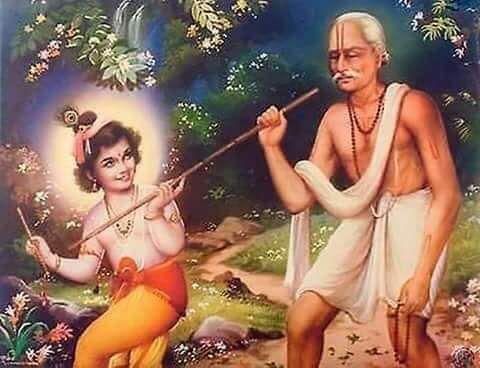
He became a disciple of Siddha Krsnadasa babaji of Govardhana.  It is said that Bhagavandasa was originally from Orissa, but he always conversed in Bengali.  He introduced the worship of the Deity of Nama-Brahmah at Kalana, which is still going on.

Bhagavandasa was a reserved person who rarely discussed Raganuga bhajana with anyone.  Even with his disciple, Jagadisadasa, he only spoke on the subject matter in brief. He did not approve of the emotional behavior of Caitanyadasa babaji of Navadvipa (during his bhava state), referring to him as a `facke’ (frivolous).

On one occasion when the pujari of Nama-Brahmah ran away with the ornaments of the deity, close associates of Bhagavandasa suggested that the theft be reported to the police.  Bhagavandasa did not agree and explained to his devotees that Nama-Brahmah had allowed the pujari to take the ornaments away because Nama-Brahmah did not wish to wear them any longer.

After a few months the pujari suddenly appeared one day with all the ornaments.  He admitted to stealing out of greed, but said that his conscience would not allow him to sell the ornaments, and begged Bhagavandasa to forgive him.  The pujari was allowed to return and Bhagavandasa remarked that the Deity of Nama-Brahmah had changed his mind like a `facke’ and wished to be re-decorated with the ornaments.

On one occasion the servants of Bhagavandasa purchased a bundle of wood for three annas from a poor woman vendor.  Bhagavandasa, who was observing the transaction, called the woman over and found out that she had two older sons, besides the little one with her, and no one else in her family. Thinking that three annas would be of very little use to her, Bhagavandas told his servant to pay her three more annas.  After that vendors were not allowed within the sight of Bhagavandasa.

One day a snake was found inside the asrama and one of the devotees picked it up and threw it away at a safe distance.  When Bhagavandasa came to know about it he was very annoyed and ordered the devotee to leave the asrama and stay away.  It is said that the snake happened to be an elder brother of Nama-Brahmah in one of its earlier births.  Bhagavandasa would not take prasada until the snake had taken a portion of it.

Bhagavandasa regularly took his evening meals after his daily bhajana recitals.  On some days he was so absorbed in bhajana that he forgot about his meal, which was usually kept close to his seat.  One pet cat of the asrama regularly shared prasada with babaji, thus when Bhagavandasa remained absorbed in prayer till late, the cat would mew repeatedly, going around and around babaji to attract his attention.  Bhagavandasa would lift the lid of the bowl of prasada, allow the pet to help itself and then replacing the lid, continue with his bhajana.

On occasions when Bhagavandasa failed to derive the inspiration desired from his bhajana, he would advise his devotees to take their meals and on pretext of his own illness, he refrained from eating.  If the devotees tried to convince him to eat, babaji would simply reply: “In that case let us all retire to bed without any meal.”  Thus the devotees would reluctantly take their meals.

On the other hand, sometimes when a bhajana session would run late into the night, babaji would suddenly declare himself to be very hungry.  If no food was available at the asrama, he sent the devotees to buy sweets from an outside shop.  He made sure that the sweets were sanctified with sprinkles of charanamrita, then offered them to Nama-Brahmah.

He was a virtuous man both in his practices and behavior.  He did not allow any prasada received as offerings, to be placed on the floor unless the devotees mopped the place clean.  If a devotee failed to do so, babaji would pull him up and call him a Mussulman.  When flowers or garlands were offered to Bhagavandasa, he touched them to his forehead with care, making sure the flowers did not come in contact with his garments.

One of his disciples, Visnudasa, came down with a fever for three continuous days.  When Bhagavandasa advised his disciple to take medicine the latter said that there was no need to do so as he would be cured by the grace of Nama-Brahmah.  Bhagavandasa angrily remarked that, “A man suffers illness as a part of his penance and should act upon a doctor’s advice, rather than pass the responsibility for the disease, and also its cure, to Nama-Brahmah.  After all, it is a doctor’s job to provide aid to a sick person.”  Visnudasa promptly took some medicine and was cured.

One day Bhagavandasa had a sudden desire to eat talsansa (the edible kernel of the stone of a palmyra fruit).  For days he continued to eat talsansa, without touching his normal food.  After some days, due to the excessive intake of fruits, he became very sick with dysentery, nevertheless he insisted on eating the talsansa.  His devotee, having failed to restrain babaji, devised a plan;  They had a mali (gardener) come before the Deity of Nama-Brahmah and proclaim, while beating a drum (dheran), that the sale of talsansa would no longer be permitted in the market.  Any vendor defying this order must pay a fine of twenty five rupees.  After some initial resistance Bhagavandasa reverted to his normal diet.

On another occasion Bhagavandasa announced that he had a strong desire to perform his bhajan seated on a high platform overlooking a pond near the Deity of Nama-Brahmah.  He ordered his disciple Pranakrsnadasa to begin excavating a tank very early the following morning.  Another disciple named Jagadisadasa was put in charge of the construction of the platform.  Pranakrsna hired fifty laborers, paying each man two annas per day, and completed the tank within 24 hours, on the day of ekadasi.  Jagadisa also executed his part of the platform work, with some assistance from Pranakrsna, carrying the necessary bamboo poles from the market on his shoulder and completed the work the following day (dvadasi).  Bhagavandasa was very happy to see the job completed on time and sat down to perform bhajan sitting on the high platform overlooking the pond.  However, after a few days, Bhagavandasa saw a calf accidentally fall into the pond.  Immediately he shouted for his men to rescue the calf from the water, but they were unsuccessful.  From that day babaji shifted his seat of prayer back to its original place and had the pond filled up with earth so as to prevent any other cow from falling in.

One day while Bhagavandasa was absorbed in bhajan, he was heard to shout “go away”.  It came to be known later that he was shouting to scare away a goat which was chewing the leaves of a Tulasi plant in the courtyard of the Govinda temple, far away in Vrndavana.  On that same day the Maharaja of Burdwan, having heard about the powers of Bhagavandas, came to Nama-Brahmah Asrama for darsana.  It so happened that Maharaja entered the asrama at the same time that Bhagavandasa shouted, “go away”.  Naturally, the Maharaja thought that Babaji, for some reason, wanted Maharaja to leave the premises.  Thus, in disappointment, he left Nama-Brahmah Asrama.

Afterwards the devotees told babaji of Maharaja’s arrival and why he had left without getting babaji’s darsana.  Bhagavandasa immediately sent a messenger requesting the Maharaja to visit Nama-Brahmah again.  When the Maharaja again visited the asrama babaji begged forgiveness and explained the circumstances which had led to the misunderstanding on Maharaja’s previous visit.  The Maharaja was understanding, but skeptical as to whether Bhagavandasa Maharaja actually possessed the power to see something which was taking place in Vrndavana.  To satisfy his own curiosity the Maharaja sent a telegram to Vrndavana to verify the truth of the incident.  The reply corroborated the statement made by Bhagavandasa.  From that time Bhagavandasa was known as Siddhababa Bhagavandasa Babaji Maharaja.

Siddhababa rarely discussed `lila’, but occasionally mentioned the topic amongst a few confidential devotees.  Once he told Jagdisadasa to note down some divine-nama which would be of great value to Jagadisa in the future.  Sometimes in the course of speaking with his disciples, Siddhababa would suddenly laugh out loud, without any relevance to the subject of discussion.  Though Bhagavandasa did not talk of his internal meditation, his communion with the Lord continued ceaselessly like the flow of a stream; and his sudden laughter, without any apparent reason, could perhaps, be attributed to the manifestation of his actual state of mind.  Siddhababa Bhagavandasa expired on the eighth day of the new moon in the month of Kartika (Oct.-Nov.).

What Role Does Leadership Training Play In Expanding Bhakti Vṛkṣa Communities?

0

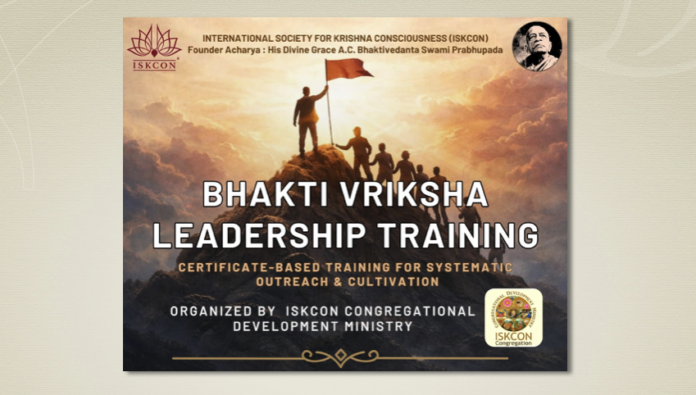
The Bhakti Vṛkṣa Leadership Training (Level One) will take place in Śrīdhāma Māyāpur, India, from February 14 to 16, 2026. This program is designed to provide participants with a systematic and practical foundation for developing into effective leaders in the preaching of Kṛṣṇa consciousness.

The training will be conducted in the English language and will be accessible both through in-person participation in Māyāpur and online via the Zoom platform. It will be guided by His Grace Nityānanda Āśraya Dāsa, Temple President of ISKCON Bahadurgarh, a seasoned Bhakti Vṛkṣa coach and trainer, recipient of international recognition, and an experienced developer of devotional communities.

The course will address essential principles of preaching, structured and effective outreach methodologies, and practical instruction for successfully conducting Bhakti Vṛkṣa classes. It will also examine common obstacles encountered in leadership roles and present thoughtful approaches to overcoming challenges in preaching, including live demonstrations of class facilitation.

Those who wish to deepen their service in devotional leadership are encouraged to enroll in the program and to extend this opportunity to members of their respective communities by registering here. For additional details or inquiries, interested devotees may seek further information accordingly.

How Can Devotional Sound Carry Kṛṣṇa Consciousness Beyond Its Origins?

0

Public voting has now commenced for the Bhakti Song Contest, a grassroots initiative dedicated to exploring how music—together with emerging technologies—may be thoughtfully engaged in Krishna-conscious outreach. Three devotional songs have been formally submitted and are presently available for listening and voting on the Bhakti Song website.

ISKCON News first reported the Bhakti Song Contest in September 2025, when the initiative was presented by Īśvara Kṛṣṇa Dāsa of Bhaktivedanta College in Budapest, in collaboration with Bhakta Szabolcs Tárkányi, a media and marketing professional and long-standing member of the Budapest congregation.

The project was conceived as an exploratory effort to encourage sincere devotional creativity, with artificial intelligence employed solely as an initial creative stimulus. During its early phase, the organizers generated a limited number of AI-assisted songs in order to examine how such tools might be engaged cautiously and responsibly in devotional service.

These preliminary compositions were never intended for independent promotion. Rather, they were meant to serve as inspiration, inviting musically inclined devotees to respond with original works firmly rooted in Krishna-conscious themes and devotional intent.

This process has now borne fruit in the form of three submitted songs, each composed by practicing devotees. All entries are original compositions, aligned with the teachings of ISKCON, and intended for devotional expression and outreach.

The organizers have emphasized sincerity of purpose, philosophical soundness, and devotional mood as the principal considerations guiding the initiative. Instead of selecting a winner through internal deliberation, they have entrusted the decision to the broader devotee community.

Accordingly, the winning song will be determined through public voting, enabling listeners from around the world to participate directly. Voting is hosted on the contest  website, where devotees may hear all three submissions and cast their votes.

The website also makes available the AI-generated songs that initially inspired the project, thereby providing context and illustrating the progression of the initiative from conceptual exploration to collective devotional participation. The voting deadline will be finalized in coordination with ISKCON News.

Upon the conclusion of voting, the winning composition will be announced publicly and shared with the wider ISKCON community. The organizers express the hope that this endeavor will inspire further devotional music-making and offer a humble contribution to ISKCON’s ongoing outreach efforts.

They regard the submitted songs not merely as contest entries, but as offerings—meant to be shared, sung, and employed in devotional settings well beyond the scope of the competition itself.

Devotees are invited to hear the submitted compositions and take part in the public voting by visiting the Bhakti Song website here.

Amar Bolite Prabhu

0

Song Name: Amar Bolite Prabhu

Official Name: Atma-Nivedana Song 5

Author: Bhaktivvinoda Thakura 

Book Name: Saranagati

Language: Bengali 

LYRICS

(1)

`āmāra’ bolite prabhu! āre kichu nāi

tumi-i āmāra mātra pitā-bandhu-bhāi

(2)

bandhu, dārā, suta, sutā—tava dāsī dās

sei to’ sambandhe sabe āmāra prayās

(3)

dhana, jana, gṛha, dāra `tomāra’ boliyā

rakhā kori āmi mātro sevaka hoiyā

(4)

tomāra kāryera tore uparjibo dhan

tomāra saḿsāre-vyaya koribo vahan

(5)

bhālo-manda nāhi jāni sevā mātro kori

tomāra saḿsāre āmi viṣaya-praharī

(6)

tomāra icchāya mora indriya-cālanā

śravana, darśana, ghrāna, bhojana-vāsanā

(7)

nija-sukha lāgi’ kichu nāhi kori ār

bhakativinoda bole, tava sukha-sār

TRANSLATION

1) Nothing remains “mine”. Father, friend, brother — You are even these to me.

2) Those whom I called friends, wife, sons, and daughters are all Your servants and maidservants. Whatever care I take for them is only as it relates to You.

3) If I continue to maintain my wealth, family members, home, and wife, it is because they are Yours. I am a mere servant.

4) For Your service I will earn money and bear the expense of Your household.

5)  I know neither good nor bad. I merely serve. I am but a watchman who guards the properties in Your household.

6) The exercising of my senses — hearing, seeing, smelling, tasting, touching — is done according to Your desire.

7) I no longer do anything for my own pleasure. Bhaktivinoda says, “Your happiness is the essence of everything”.

Traditional Sankranti Recipes

0

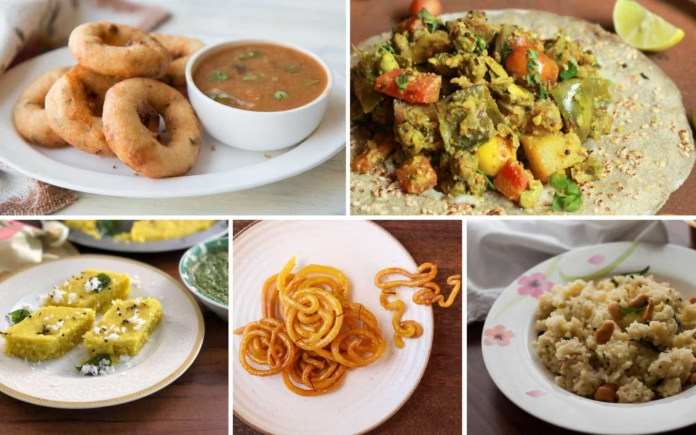
The Makar Sankranti excitement is in the air and the delectable food only adds to the festive cheer. This is the first festival celebrated in the year by a majority of people in India both in the North and South. It is considered important to make sweets with peanuts, sesame seeds, coconut and jaggery during this festival, and usually, chikki is the most popular sweet made with these ingredients.

In Tamil Nadu, this festival is called Pongal, and farmers pay their obeisance to the Sun God, thank Him for a good harvest. Freshly-harvested rice and vegetables are used to make traditional delicacies like Chakkarai Pongal (Sweet Pongal), etc. The rice is usually cooked in new earthen pots. Colourful rangolis are drawn in front of the houses and the earthen pot is placed in the centre of the rangoli on a wood-fired stove and the rice is cooked under the Sun. Many households in rural areas prefer to follow this traditional method till date. In the cities, for lack of facilities people cook these delicacies on gas stoves or hot plates.

Here are some recipes which are all-time favourites. Try these mouthwatering recipes to get the festival feel and offer them to Lord Krishna, before partaking of the same.

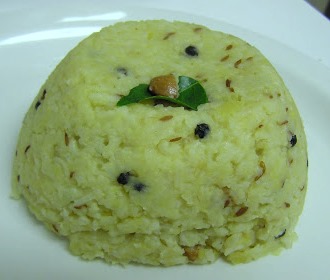
Ven Pongal

Ven Pongal

Ingredients

  • ¼ cup yellow moong dal
  • ½ cup rice
  • ¼ tsp asafetida
  • 1 ½ tsp cumin seeds
  • 1 tsp finely chopped ginger
  • Salt to taste
  • 1 ½ tbsp ghee
  • 1 tbsp broken cashew nuts
  • 1 tsp coarsely crushed black pepper
  • A few curry leaves


Method

  • Heat a small non-stick pan and add dal and dry roast on a medium flame for 2-3 minutes.
  • Wash the dry roasted dal and rice.
  • Mix the dal-rice mixture, asafetida, half tsp of cumin seeds, ginger, salt and three cups of water in a pressure cooker and cook for five whistles.
  • After steam escapes, open the cooker and add half a cup of hot water and mix well.
  • Heat ghee in a small non-stick pan and add the balance one tsp of cumin seeds and sauté on medium flame for half a minute.
  • Add cashew nuts, coarsely crushed pepper and curry leaves and sauté on a medium flame for half a minute.
  • Add the above seasoning to the dal-rice mixture and blend well.
  • Serve when still hot with ghee.

Puran Poli / Holige / Obbattu

Holige

Ingredients

For the filling:

  • 1 cup tur dal
  • 1 cup of sugar
  • A few strands of saffron
  • ½ teaspoon cardamom powder
  • ¼ teaspoon nutmeg powder (jaiphal)
  • A pinch of mace powder (javantri)
  • 2 tablespoons ghee

For the dough:

  • 2 cups wheat flour
  • 2 tbsp oil

Method

For the filling:

  • Wash and pressure cook the dal in 1 ½ cups of water.
  • Drain any excess water and keep aside.
  • Heat the ghee in a pan; add the dal and sugar and cook till the mixture thickens, stirring
  • Dissolve the saffron in a little water by rubbing it between your fingers.
  • Add the cardamom, nutmeg and mace powders, saffron liquid and mix well.
  • Cool, divide into 10 to 12 portions and keep aside.


For the dough:

  • Combine the flour and oil and knead into a soft dough with water.
  • Divide into 10 to 12 portions and keep aside.


Method

  • Roll out one portion of the dough into a three-inch diameter circle.
  • Place a portion of the filling mixture and fold the edges of the dough over the filling.
  • Press the edges together to seal the filling in.
  • Flatten the dough and roll again into a four-inch diameter circle.
  • Cook on a tava over a medium flame till golden brown on both sides.
  • Repeat for the remaining dough and filling.
  • Smear with ghee and serve hot.

Til laddus / Ellu Unde

Til Laddus

Ingredients

  • 1 cup white sesame seeds
  • 2 tbsp roasted, peeled and halved ground nuts
  • ½ cup jaggery
  • ½ tsp cardamom powder
  • Ghee for smearing the palms (a little)

Method

  • Wash sesame seeds in water and spread them on a cloth for about 15 to 20 minutes till they are at least semi-dry. Roast them on a medium flame till they start popping and give out an aroma. Take them off heat.
  • Heat jaggery with 2 tbsp water, keeping the heat on medium.
  • Take some water in a plate and add a drop of the jaggery syrup in it. The jaggery should sit like a drop without getting diluted. That shows it has reached the required consistency.
  • Add the sesame seeds and peanuts. Mix well. Take off the heat.
  • Add the cardamom powder. Mix again.
  • Apply some ghee to your palms and make small balls of the mixture from the plate.

Tip: While the mixture is still hot make the laddus as it tends to get hard once cooled.


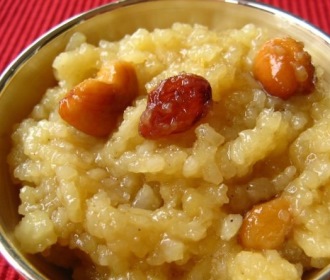
Sakkare Pongal / Sweet Pongal

Sakkare Pongal

Ingredients

  • 2 litres milk
  • 1 ½ cups rice
  • ¼ cup moong dal
  • 15 cashews
  • 10 almonds
  • 30 kishmis
  • ¼ teaspoon nutmeg powder
  • 1 ½ cup grated jaggery
  • ¼ tsp crushed saffron
  • 1 tsp cardamom powder
  • 2 tbsps ghee


Method

  • Chop almonds and cashews.
  • Pour milk in an earthen pot and place it on fire.
  • When the milk starts boiling, add rice and dal, after washing. As soon as the rice and dal are cooked to softness, add jaggery and ghee.
  • Let it cook on medium flame for some time and then add almonds and cashew bits, saffron, nutmeg, cardamom powder and raisins.
  • When it starts boiling, it is ready to serve.

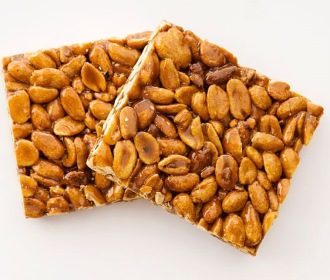
Groundnut chikkis

Groundnut Chikkis

Ingredients

  • Groundnuts 1 cup
  • Jaggery half cup
  • Dry coconut (grated) 1/4 cup
  • Rice 100 gms
  • Green gram dal 100 gms


Method

  • Roast the groundnuts until the skin comes out.
  • Fry rice and green gram dal till golden.
  • Powder both in the mixer.
  • In a Kadai put the jaggery with little water and boil till it reaches a thread-like consistency.
  • Add the roasted groundnut, rice and dal flour and dry coconut and shape into squares of half-inch thickness while still hot.

Sri Gadadhar Pandita

0

Gadadhara Pandita, also known as Pandita Prabhu and Gadai, was one of the Pañcatattva. He was born in 1486 A.D., on the new moon day of Vaisaka, to Madhava Misra and Ratnavati-devi, in the village of Beliti (or, according to some sources, Srihatta or Chittagong) (Cc. Adi 1.1.41, purport). His younger brother was Vaninatha. In previous incarnations, Gadadhara Pandita appeared as Radhika and Lalita.

A brahmana of the Varendra clan and Kasyapa-gotra, Gadadhara Pandita, at the age of thirteen, migrated with his parents to Navadvipa, staying at his maternal uncle’s house near Jagannatha Misra. Some accounts mention a wealthy devotee named Suraraja as instrumental in bringing him to Navadvipa. Gadadhara remained a lifelong bachelor and received mantra initiation from Pundarika Vidyanidhi (Cc. Adi 1.6.48, purport).

Gadadhara Pandita was a constant companion of Lord Gauranga, reading the Srimad-Bhagavatam to Him daily. After Lord Caitanya took sannyasa and departed for Nilacala, Gadadhara Pandita also accompanied Him. Gadadhara Pandita passed away in Puri on the new moon day of Jaistha in 1534 A.D., at the age of forty-seven, eleven months after the disappearance of Lord Caitanya (Cc. Antya 3.7.164, purport).

Lord Caitanya personally wrote a verse on Gadadhara Pandita’s copy of the Bhagavad-gita, and Gadadhara Pandita himself composed the Premamrtastotra (Sadhanadipika 9).

Gadadhara Pandita is referred to throughout the Caitanya-caritamrita and other biographies of Lord Caitanya, including:

  1. As Isa-sakti (Cc. Adi 1.1.41, 1.4.227, 1.6.48).
  2. Studying Krsnalilamrta with Isvarapuri (Cc. Madhya 1.11.99-100).
  3. Fainting at Lord Gauranga’s kirtana at Suklamvara’s house (Cc. Madhya 2.1.56-108).
  4. Arguments with Lord Gauranga on Nyaya (Cc. Adi 1.12.20-27).
  5. Counseling Advaita Prabhu to abstain from witnessing worship (Cc. Adi 1.12.126-142).
  6. Comforted by Lord Gauranga in viraha (Cc. Madhya 2.2.202-209).
  7. Offering betel-leaf to Lord Gauranga (Cc. Madhya 2.6.65, 2.20.27, 2.22.19).
  8. Receiving diksa from Mukunda after doubts regarding Pundarika Vidyanidhi (Cc. Madhya 2.7.44-112).
  9. Reactions upon seeing Nityananda Prabhu without garments (Cc. Madhya 2.11.23, 2.13.159).
  10. Water sports with Lord Gauranga after the conversion of Jagai and Madhai (Cc. Madhya 2.13.341).
  11. Dancing as a Gopika in a drama staged by Candrasekhar (Cc. Madhya 2.18.101-116).
  12. Standing on the left of Lord Gauranga at the Kazi conversion dance recital (Cc. Madhya 2.23.211, 491).
  13. Constant association with Lord Gauranga (Cc. Madhya 2.24.31).
  14. Receiving the command to offer Visnu puja (Cc. Madhya 2.25.91).
  15. Reference to sannyasa (Cc. Madhya 2.28.44).
  16. Residing with Lord Gauranga the night before His sannyasa (Cc. Madhya 2.26.166-171).
  17. Companion of Lord Caitanya after sannyasa (Cc. Antya 2.28.104, 3.1.52).
  18. Accompanying Lord Caitanya to Nilacala (Cc. Antya 3.2.35).
  19. Residing with Lord Caitanya at Nilacala (Cc. Antya 3.3.228-231).
  20. Ksetra-sannyasa (Cc. Madhya 2.1.252).
  21. Meeting Nityananda Prabhu at Tota Gopinatha and eating with Lord Caitanya (Cc. Antya 3.7.112-164).
  22. Water sports in Narendra-sarovara (Cc. Antya 3.8.122).
  23. Subject of siksa from Lord Caitanya (Cc. Antya 3.10.22-27).
  24. Recital of Srimad Bhagavatam on Narendra-sarovara bank (Cc. Antya 3.10.22-26).
  25. Refusal to give diksa to Vallabha Bhatta (Cc. Antya 3.7.86-148).
  26. “The life and soul of Gadadhara Pandita” (Cc. Antya 3.7.163-164).
  27. Argument with Lord Caitanya on supreme duty (Cc. Madhya 2.16.130-143).
  28. Reaction in separation of Lord Caitanya (Bhaktiratnakara 3.135-143).
  29. Meeting Srinivasa Acarya (Bhaktiratnakara 3.147-152).

For details regarding Sri Gadadhara Mantra, Dhyana, Gayatri, and Sri Gaura-Gadadhara Mantra, see Dhyanacandra Gosvami’s Sri Gauragovindarcana Paddhati (texts 37-44).

Gadadhara Pandita was glorified by many great Gosvamis, and numerous astakas and stotras were composed in his honor, including:

  • By Sanatana Gosvami, Rupa Gosvami, Svarupa Gosvami, Lokanatha Gosvami, Bhugarbha Gosvami, Paramananda Gosvami, Sivananda Cakravarti.
  • Sri Sri Gauragadadharastaka (Acyutananda, Nayanananda Misra).
  • Rati-janaka-dvadasa-namastotra, Astottarasatanama-stotra by Sarvabhauma.
  • Sakhanirnayamrta by Jadunatha.
  • Premamrtastotra by Gadadhara Pandita.

Thus, Gadadhara Pandita exemplifies perfect devotion, intimate service to Lord Caitanya, and unflinching adherence to guru and scripture.

Sri Gaurakisora Siromani (Katao, Vrndavana)

0

Śrī Gaurasiromaṇi Ṭhākura appeared between 1813 and 1818 CE in the village of Gudāpāḍā, also known as Citāhaṭi, under the Kutugrāma police station near Kāṭoā in Bengal. He took birth in an orthodox brāhmaṇa family upholding high standards of learning and ritual purity and was the grandson of the illustrious scholar Śrī Guruprasāda Mukhopādhyāya Vidyānidhi. Guruprasāda’s son Dhanakṛṣṇa had six sons—Gauracandra (Siromaṇi), Īśvara, Navadvīpa, Hariścandra (Cūḍāmaṇi), Giriśa, and Umeśa—and one daughter named Parijāta-devī.​

Early life and education

Up to about the age of twenty, Gauracandra did not receive formal education and passed his days in simple village amusements, being detached from the scholarly pursuits of his respectable lineage. Chastised by the villagers for neglecting the family’s learned tradition, he immediately reformed himself and dedicated his life to study. He first studied under a village paṇḍita in Tāipura, then entered the Sanskrit school of Pañcanana Tarkaratna of Eyopura, Kāṭoā, and later took up systematic study of bhakti-śāstra under Śrī Sakhicaraṇa dāsa Paṇḍita Bābājī of Gaurāṅgapāḍā.​

Family life and transformation to Vaiṣṇavism

Gauracandra married Śrīmatī Rāmadāsī, a chaste and devoted lady from an orthodox brāhmaṇa family of Oragrāma near the Guskara railway station in the Burdwan district. Orphaned in infancy when her father died and her mother entered the funeral pyre as a satī, Rāmadāsī grew up with a vow that she would be given in marriage to Gauracandra, as expressed by her mother before embracing death. From their marriage were born several sons, among whom Rasavallabha Bhaktibhūṣaṇa and Vaiṣṇavacaraṇa Bhagavat-bhūṣaṇa became well known for their devotional learning.​

Although born in a Śākta family, Gaurasiromaṇi came to recognize the supreme excellence of Kṛṣṇa-mantra and received kṛṣṇa-dīkṣā from Śrī Vinodilāla Ṭhākura of Faridpura in the Nadia district. From that time his home became a place of intense Vaiṣṇava-sevā; he would eagerly honor the remnants of food and even water touched by Vaiṣṇavas, regardless of caste considerations. The local brāhmaṇa community criticized him for accepting the ucciṣṭa of devotees from all backgrounds, but he remained completely indifferent to social reproach and continued fearlessly in his devotional practices.​

Rāmadāsī-devī herself was an elevated devotee, eager for Vaiṣṇava-sevā and for honoring the remnants of devotees. Following her husband’s mood, she did not accept jeweler’s ornaments, wearing only simple shell bangles, and personally washed the feet of visiting Vaiṣṇavas, often being mistaken by younger guests for a maidservant.​

Awakening of exclusive bhakti

On one occasion Gauracandra visited Kāṭoā with many students, took bath in the Gaṅgā, and stayed at the nāṭya-maṇḍira of Lord Gaurāṅga’s temple. There he observed the late-afternoon kīrtana and iṣṭa-goṣṭhī of exalted devotees such as Gopīvallabha Ṭhākura, Venīmādhava Ṭhākura, and Sundarananda Ṭhākura, whose lives centered around nāma-kīrtana, Tulasi-parikramā, and constant service to Lord Gaurāṅga. Simply by their association his conception of bhakti changed overnight, and he resolved to immerse himself exclusively in Gauḍīya Vaiṣṇava literature.​

Returning home, he ordered his students to procure various Gauḍīya Vaiṣṇava śāstras and became absorbed in their study, deeply appreciating their language, poetry, and devotional conclusions. He soon returned to Kāṭoā with his students and books to again seek the association of the foremost Vaiṣṇavas there and gave up the study and teaching of other śāstras, dedicating himself solely to Śrīmad-Bhāgavatam and related works.​

Daily life at Kāṭoā

In Kāṭoā his daily schedule was fully absorbed in sādhana and service. He would attend maṅgala-ārati, engage in smaraṇa-kīrtana, bathe in the Gaṅgā, chant japa, and meditate on the Lord’s divine līlā until midday. Thereafter he personally cleaned the toilets used by Vaiṣṇavas and swept the path leading to the Gaṅgā, again bathed, visited Lord Gaurāṅga’s temple, offered respects to Vaiṣṇavas and Gosvāmīs, and took a few grains of Vaiṣṇava ucciṣṭa kept in a special place. His own meal consisted of a small quantity of rice and simple boiled vegetables, offered to his worshipable Deity Giridhārī, and he stated that his stomach would tolerate nothing more elaborate.​

He was attached to a simple-hearted devotee named Khepa Ṭhākura, who acted as a messenger and sometimes jokingly claimed to be Gaurasiromaṇi’s own teacher. Gaurasiromaṇi was a master of the “Aṣṭādaśa-sāhasrī” (the eighteen-thousand-verse commentary) and its ṭīkā, and would teach without consulting texts, invariably concluding his lessons by glorifying Lord Gaurāṅga.​

Emphasis on Vaiṣṇava-sevā

A decisive moment in his life occurred when Venīmādhava Ṭhākura, while serving many Vrajavāsī Vaiṣṇavas at Kāṭoā, found himself without provisions and, in complete detachment, pulled down the wooden doors and windows of his house to sell them for the sake of feeding the devotees. Witnessing such renunciation and eagerness to serve Vaiṣṇavas, Gaurasiromaṇi fainted in ecstasy, and upon regaining consciousness took a firm vow to consider Vaiṣṇava-sevā as his life’s primary duty.​

He maintained an intimate circle (goṣṭhī) of Vaiṣṇavas at Kāṭoā, including Vrndāvanacandra Gosvāmī and Jagadbandhu Prabhu, descendants of Advaita Ācārya who had renounced worldly life and taken veśā-āśraya from Kisoradāsa Bābājī. At Venīmādhava’s request, Gaurasiromaṇi once delivered a three-hour daily exposition for thirty-five consecutive days on the single verse “janmādy asya yataḥ” from the first canto of Śrīmad-Bhāgavatam, causing Venīmādhava to remark that he was surely favored by the mercy of the Six Gosvāmīs.​

Strictness in worship and purity

On another occasion he visited the village of Badogrāma near Burdwan to recite Śrīmad-Bhāgavatam in the house of the Banerjee family. Discovering that the village had neither a Viṣṇu temple nor worship of Śālagrāma-śilā, he declared that he would not even drink water in such a place. In great anxiety, the villagers arranged for a Śālagrāma to be brought from a distant village, offered bhoga, and only then did Gaurasiromaṇi agree to honor the prasāda of Lord Viṣṇu.​

He also displayed firm opposition to animal slaughter and tantric practices contrary to Vaiṣṇava principles. When invited by certain tantric brāhmaṇas of Kagrāma to recite Śrīmad-Bhāgavatam, he became distressed upon learning that they intended to hold animal sacrifice for Kālī on the same site and fervently prayed to Gaura-Govinda. The sacrifice was mysteriously obstructed—each animal required two strikes instead of one—and the frightened sacrificers later received a warning in a dream from the goddess herself and came repenting to Gaurasiromaṇi, who directed them to bathe in the Gaṅgā and subsequently initiated them into genuine Vaiṣṇava-dharma.​

Humility and resolution of disputes

During his time, a prolonged controversy arose in the community over the relative status of Gosvāmīs and other Vaiṣṇavas. Both parties finally requested Gaurasiromaṇi to mediate, promising to accept his verdict, but he replied with deep humility: “Take me as your son. When parents quarrel, the grown son should not be present. Sometimes marital love deepens when a couple differs with one another.” His gentle words melted the hearts of both sides, who abandoned their quarrel and jointly chanted the holy name.​

Vision of Gaurāṅga in the Bhāgavatam

An important account preserved in Śrī Śrī Sadguru-saṅga describes how Gaurasiromaṇi, though greatly learned in scripture, once objected to a Bhāgavatam reciter’s practice of beginning the narration with Gauravandana, the glorification of Lord Gaurāṅga. When the reciter asserted that his glorification of Gaurāṅga was actually present in the Śrīmad-Bhāgavatam, specifically in the blank spaces between the printed lines, Gaurasiromaṇi angrily challenged him. The reciter then instructed that if Gaurasiromaṇi would accept dīkṣā from a qualified Vaiṣṇava and follow prescribed practices for seven days, he would perceive the truth for himself.​

Being internally sincere, Gaurasiromaṇi at once took dīkṣā from Siddha Caitanyadāsa Bābājī and carefully followed the instructions. On the eighth day, when the Bhāgavatam was opened before him, he saw the Gauravandana written in brilliant golden letters in the intervening spaces, and overwhelmed with repentance and divine emotion, he rolled on the ground, weeping. Immediately he renounced his previous way of life and set out on foot for Vṛndāvana, where he remained absorbed in bhajana.​

Residence and bhajana in Vṛndāvana

In Vṛndāvana, Gaurasiromaṇi reduced his public recitation and focused on intimate teaching of Śrīmad-Bhāgavatam to Vrajavāsī devotees, often explaining the deepest topics of the Fourth Canto, such as the pastime of Dakṣa-yajña. On one occasion, when a question arose about how Lord Śiva could dance carrying the burnt body of Satī, a Vaiṣṇava sitting beside him demonstrated the reality of yogic mysticism by entering meditation, invoking fire from his own toe, and leaving his body in flames before the astonished assembly, after which Gaurasiromaṇi gave up public teachings and chose an even more secluded life of bhajana.​

Many exalted Vaiṣṇavas were present in Vṛndāvana during his stay, including Śrī Brahmānanda Gosvāmī of Śṛṅgāra-vaṭa, Śrī Nṛsiṁhānanda Prabhu, Śrī Nīlamani Gosvāmī (a descendant of Advaita Prabhu), Śrī Haracandra Gosvāmī, and the renowned kīrtana singers such as Hajra Mahāśaya and Vaiṣṇavacaraṇa dāsa. They all held Gaurasiromaṇi in deep respect as a genuine Vaiṣṇava of great realization.​

On one occasion, when invited by Śrī Brahmānanda Prabhu to honor prasāda at Govinda-ghāṭa, Gaurasiromaṇi was offered a special elevated seat and silver plates, but he refused, requesting instead a simple leaf plate and suggesting that Brahmānanda himself, as his revered “Prabhupāda,” should take the honored seat. In this way he consistently minimized his own status and emphasized the Vaiṣṇava relationship of “prabhu” and “dāsa.”​

Veśāśraya, austerities, and guru-sevā

After a period of illness in Vṛndāvana, understanding that his remaining days were few, Gaurasiromaṇi accepted veśāśraya (babājī-veśa) from Siddha Nityānanda dāsa Bābājī of Śrī Madanamohana-ṭhākur’s temple. Even while housebound by physical weakness, he wore the kāṇṭhī of Sanātana Gosvāmī’s followers and endeavored to live like a bhajananandī Vaiṣṇava, but when he went to receive the blessings of Siddha Balarāma dāsa Bābājī at Jhadumaṇḍala, he was sharply chastised for still being attached to cooked rice and thus unfit to wear such external signs. In tears of humility, he begged for mercy and thereafter increased his austerities, subsisting on the simplest prasāda of Girirāja—broken pulses and a little rice with salt and black pepper.​

He arranged for daily recitations of scripture for the benefit of resident and visiting Vaiṣṇavas and showed equal respect to all—from infants in the laps of acārya-descendants to the poorest devotees unable to go out for madhukārī. No one could easily touch his feet or offer obeisances before him; he would immediately offer daṇḍavat to others first, even repeatedly bowing to animals, men, women, and the Deities on the roadside.​

Humility in practice

Gaurasiromaṇi’s conduct practically illustrated the verse “tṛṇād api sunīcena,” often referred to by later Vaiṣṇavas as embodied in his character. When questioned by his disciples why he addressed the female sweeper as “mother,” he replied that from childhood till that day she had been cleaning his bodily filth and thus was truly his maintainer and benefactress, worthy of his deepest respect.​

He showed extreme deference to descendants of great acāryas. When Harimohana Gosvāmī, an eighth-generation descendant of Jagannātha Vaiṣṇava Ācārya Gosvāmī, came seeking instruction on Gauratattva, Gaurasiromaṇi for fifteen days only offered him repeated daṇḍavats, refusing to speak, considering him worshipable as the son of an acārya. Only when Harimohana, then a mere boy, insisted with grave words—declaring himself ready to fall into hell if that would please the Vaiṣṇavas—did Gaurasiromaṇi embrace him and reveal to him the truths of Gauratattva, which Harimohana later realized fully.​

Association with disciples and householders

Many householder devotees, including Advaita dāsa (Annada Prasād Rāya) and his brother Banamāli Rāya, were rescued from skepticism and non-Vaiṣṇava influences by Gaurasiromaṇi’s association and guidance. When Annada contemplated converting to Christianity, his mother brought him to Gaurasiromaṇi, whose saintly behavior changed his heart and led him to accept initiation as Advaita dāsa and dedicate his life to bhakti.​

Gaurasiromaṇi also advised Banamāli Rāya, a powerful zamindar, that Kṛṣṇa-prema cannot be attained without Vaiṣṇava-sevā and that such service primarily means arranging for regular Hari-kathā and practical care for aged, blind, or infirm Vaiṣṇavas unable to collect their own bhikṣā. Banamāli took this as a life-command and attempted, within his means, to establish schools for the study of Gosvāmī-granthas and facilities for serving devotees, sowing the seeds of later institutions of bhakti education.​

Gaurasiromaṇi remained indifferent to caste criticism, keeping the association of sincere devotees regardless of social background. For example, he accepted the service of Rājanīdāsa, a Kaivarta by caste from Pabna, who carried his prasāda and faithfully served him, despite objections from conservative Vaiṣṇavas.​

Spirit of atonement and reform

When some devotees once refused to take prasāda in the same row as a Vaiṣṇava who had committed a serious misdeed, Gaurasiromaṇi pacified them by openly confessing all the faults he could find in his own life, thereby softening everyone’s hearts and inspiring the erring Vaiṣṇava to genuine repentance.​

On another occasion, after he had accepted gifts from the Queen of Hetampur—cloth, coconuts, fruits, and money—the Vṛndāvana Vaiṣṇavas excommunicated him according to their standard of renunciation. He accepted their judgment without protest and begged for punishment, upon which they ordered him to recite Śrīmad-Bhāgavatam in every temple in Vṛndāvana for one full year, a task requiring him to give several recitations each day since Vṛndāvana then had thousands of temples. Gaurasiromaṇi carried out this order as the greatest blessing, further purifying his own heart and sanctifying the dhāma with continuous Bhāgavatam-kathā.​

Departure from this world

In 1890 CE, when Śrī Rādhikānātha Gosvāmī left Vraja-maṇḍala for a tour of Gauḍa-maṇḍala, Gaurasiromaṇi went with Annada, Banamāli, and others to the Mathurā railway station to see him off. As the train departed, he wept so profusely out of separation from the Vaiṣṇavas that he lost consciousness. Shortly thereafter he fell ill with a high fever and, after four or five days, gave up his body in Vṛndāvana, deeply lamented by all who knew him.​

In earlier years he had seen Siddha Caitanyadāsa Bābājī in a dream at the very time of the latter’s departure and had arranged an āsana for him, later placing the samādhi of the “Bāḍa Prabhu” of Kāṭoā beside that of Siddha Bābā. After Gaurasiromaṇi’s own disappearance, his relatives placed his samādhi beside that of Bāḍa Prabhu, and to this day bhoga and worship are regularly offered there, the place being revered as the resting place of a genuine Gauḍīya Vaiṣṇava saint.​

What Is The Role Of Diet And Daily Conduct In Human Advancement?

0

Transforming Human Life Through the Timeless Wisdom of Ayurveda

Do you aspire to uplift the lives of others through the perennial wisdom of Ayurveda?
Do you affirm the well-known truths that “food itself is medicine” and that one’s character and condition are shaped by what one consumes?
Do you possess a sincere concern for the welfare of others and desire that all may live with vitality, inspiration, and wholeness of body and mind?

If so, you have arrived at a meaningful path of service.

In the present age, Ayurvedic Lifestyle Coaches are not only in increasing demand, but are urgently needed. Human society has grown estranged from wholesome food, from the rhythms of the natural world, and from the innate intelligence and intuition of the body. We have forgotten how to discern the signals of our own constitution and how to listen attentively to our inner condition. It is precisely here that the role of the Ayurvedic Health Counselor becomes indispensable.

The Meaning of an Ayurvedic Lifestyle

An Ayurvedic lifestyle is one lived in harmony with nature and the cyclical changes of the seasons, while simultaneously honoring one’s unique constitution and the present state of body, mind, and spirit. Such a life does not require rigid or elaborate routines performed mechanically each day. Rather, it consists of making conscious, thoughtful choices that support one’s highest well-being and respect the body’s inherent wisdom.

A common foundational practice includes rising before sunrise, gently cleansing the tongue, drinking warm water, and allowing the body to evacuate naturally. This may be accompanied by various forms of oleation, such as self-massage with oil (abhyanga), oil pulling, or the application of oil drops to the nostrils (nasya). One then engages in appropriate breathing practices, physical movement, and meditation.

An Ayurvedic lifestyle also means eating only when genuine hunger is present and choosing foods suitable to one’s constitution and current imbalance. In essence, it is the art of listening attentively to the body. For example, when one is afflicted with cold, cough, and congestion, the body naturally seeks warm, well-spiced soups and teas. If, however, one continues to consume cold, heavy, and mucus-producing foods such as ice cream, yogurt, and cheese, the imbalance is only aggravated.

The Role of an Ayurvedic Lifestyle Teacher or Health Counselor

Ayurvedic Health Coaches or Counselors are trained in preventive healthcare and the cultivation of health and well-being through the practical application of traditional Ayurvedic principles. Their primary focus is the regulation of diet and daily routine in order to restore and maintain balance.

Through consultation, an Ayurvedic Lifestyle Counselor carefully ascertains an individual’s inherent constitution (prakṛti) as well as the present state of imbalance (vikṛti). Based on this understanding, the counselor provides clear and practical guidance regarding diet and daily habits, thereby assisting the individual in returning to a state of equilibrium.

Training and Qualification of an Ayurvedic Health Counselor

According to the standards established by the National Ayurvedic Medical Association (NAMA), an Ayurvedic Health Counselor must complete no fewer than six hundred hours of formal training. This includes a minimum of seventy-five supervised clinical hours and at least fifty documented client encounters.

While most full-time programs are completed within one year, a variety of reputable online training options are also available.

The Work of an Ayurvedic Lifestyle Teacher

The daily choices made by human beings—concerning the timing, quality, and quantity of food; the regulation of hydration, movement, sleep, human connection, sense of purpose, and time spent in nature—collectively determine one’s physical, mental, and emotional condition.

Ayurvedic Lifestyle Consultants attentively examine these aspects of daily life and gradually guide individuals toward beneficial adjustments that enhance the body’s natural functioning. This may include advising that the principal meal be taken at midday, when digestion is strongest, or encouraging rest before 10:00 p.m. in order to promote deeper, more restorative sleep.

Our habits shape our lived experience, and Ayurvedic Health Coaches are specialists in cultivating health through the refinement of daily conduct.

Scope of Practice

Ayurvedic Health Counselors are trained to serve clients primarily through preventive care and the promotion of health by means of diet and lifestyle guidance. While they possess familiarity with common kitchen herbs and certain classical Ayurvedic herbal formulations, they do not otherwise engage in the formal prescription or teaching of herbal medicine.

The Benefits of Becoming an Ayurvedic Health Counselor

The field of natural and holistic health—particularly Ayurveda—is rapidly expanding and will continue to grow. To become an Ayurvedic Health Counselor is to assume a respected role within one’s community as a trusted guide in matters of diet and lifestyle.

Such training equips one to support the health and healing of family members, friends, clients, and oneself. Ayurvedic Health Counseling also integrates seamlessly with other healing and healthcare disciplines, allowing practitioners to offer a more comprehensive approach to well-being.

This vocation further affords the freedom to shape one’s work according to one’s own circumstances and to design a professional life that aligns with one’s values and aspirations.

Opportunities Following Qualification

As Ayurveda gains wider recognition, numerous professional avenues are opening to qualified Lifestyle Counselors. Indeed, Ayurveda-related positions are now commonly found through standard employment searches.

Education

Many Health Counselors supplement private consultations by offering educational programs through social media, online courses, webinars, or in-person community events. Such initiatives not only serve the public but also allow prospective clients to become acquainted with the counselor’s approach and expertise.

Ayurveda and Yoga: Sister Sciences

Ayurveda is traditionally understood as the sister science of yoga. Within the yoga community, there is a substantial demand for guidance on how to integrate one’s experience on the mat or meditation cushion into daily life.

Ayurvedic Health Counselors may therefore collaborate with local yoga studios by offering workshops, weekend seminars, or informational materials, thereby reaching individuals already inclined toward holistic living.

Integrative Healthcare

As increasing numbers of people seek comprehensive approaches rather than superficial remedies, integrative healthcare continues to flourish. Ayurvedic lifestyle principles complement a wide range of modalities, including allopathic medicine, physical therapy, acupuncture, herbalism, yoga therapy, chiropractic care, and massage therapy, to the great benefit of the client.

Product and Service Industries

The marketplace for Ayurvedic products is expanding rapidly, encompassing skincare, spice blends, herbal preparations, personal care items, and more. The creation and development of products grounded in Ayurvedic wisdom present significant opportunities.

Food and Beverage

For those inclined toward culinary arts, Ayurveda offers rich possibilities. One may write cookbooks, operate a food truck or restaurant, teach cooking classes, or share knowledge through digital media platforms, responding to the growing demand for wholesome, consciously prepared food.

Writing and Copywriting

Those gifted in writing and editing may serve Ayurvedic organizations by articulating traditional principles in a clear and compelling manner for contemporary audiences, assisting in the responsible presentation of Ayurvedic products and services.

Panchakarma Clinics

Those seeking employment within an established setting may consider working in panchakarma clinics, assisting in therapeutic treatments for individuals undergoing Ayurvedic cleansing programs. Additional training may be required, and prospective practitioners should consult directly with clinics regarding their qualifications.

Conclusion

Ultimately, training as an Ayurvedic Lifestyle Teacher or Health Counselor can be shaped in harmony with one’s individual inclinations and talents. A sound understanding of Ayurvedic principles as they apply to daily life and diet equips one with enduring skills of service. Such knowledge, when applied with sincerity and integrity, illuminates a future that is both purposeful and auspicious.

How Does Service To Śrī Jagannātha Manifest Through The Distribution Of Mahāprasāda?

0

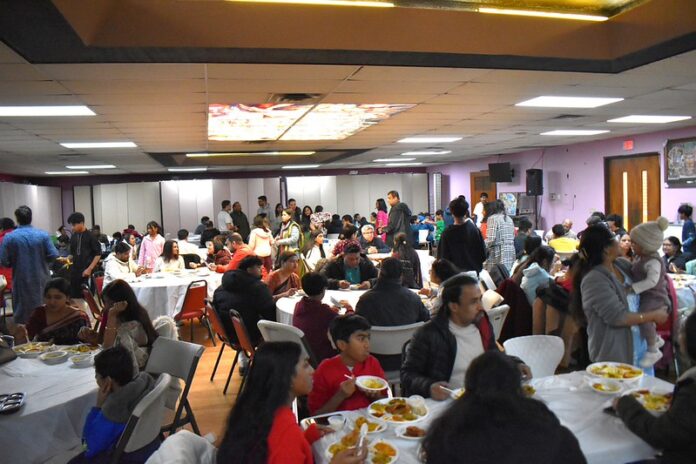
On New Year’s Day 2026, approximately four hundred devotees assembled at ISKCON Plainfield, New Jersey, to honor a traditional Śrī Jagannātha Purī–style Mahāprasāda buffet consisting of fifteen courses.

This annual New Year Śrī Jagannātha Purī–style feast, organized by ISKCON of Central New Jersey (ICNJ), has been conducted for nearly a decade. Even during the year of the COVID pandemic, the devoted volunteers of ICNJ faithfully maintained this sacred tradition. In 2021, they prepared and distributed takeaway Mahāprasāda meals of more than ten courses for hundreds of devotees who had pre-ordered, thus enabling them to begin the new year by honoring the mercy of Śrī Jagannātha Mahāprasāda.

This year’s fifteen-course offering featured a variety of traditional delicacies, including dahibara, ghanta, kāṇikā, khajā, malpua, ariśā, and khāṭā. As the time for honoring prasāda arrived, long lines formed, with devotees patiently waiting for the opportunity to partake of the sanctified food lovingly offered to Śrī Kṛṣṇa.

The continued enthusiasm for the distribution of Lord Jagannātha’s Mahāprasāda was clearly reflected in the dedicated service of the ISKCON Plainfield devotees. Many arrived as early as 5:00 a.m. to clean the facilities, prepare the offerings, arrange the space, and serve the feast attentively and with devotion, striving to offer their very best for the pleasure of the Lord of the Universe, Śrī Kṛṣṇa.

The New Year Śrī Jagannātha Purī–style lunch buffet was organized by the Govinda’s team of ISKCON of Central New Jersey. Those wishing to remain informed about their ongoing service activities may visit their website and follow them on Facebook. Additional photographs from the event  here.

How Is “Bhakti In Action” Manifested During Makara Saṅkrānti In The Lord’s Own Abode?

0

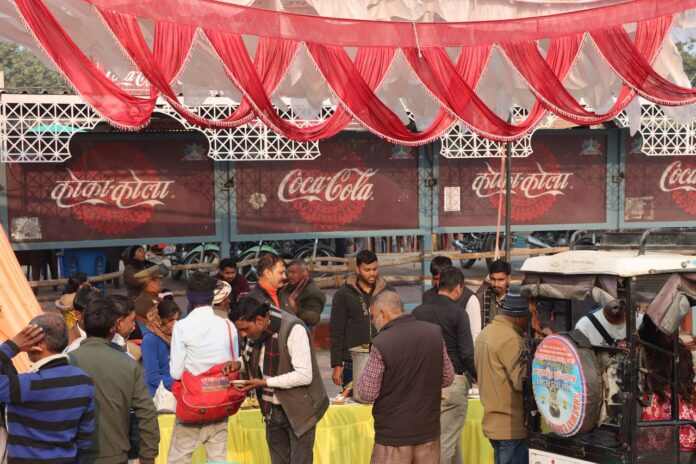
As the sun entered the sign of Capricorn on the auspicious occasion of Makara Saṅkrānti, January 14, 2026, the sacred land of Ayodhyā Dhāma was immersed in an ocean of devotion. Hundreds of thousands of pilgrims, having completed their holy bath at the Māgha Melā in Prayāgraj, arrived at the lotus feet of Lord Śrī Rāma. To honor the arrival of these devotees, ISKCON Ayodhyā substantially expanded its Food for Life initiative, distributing more than 100,000 free prasādam meals.

This vast act of service is firmly grounded in the eternal teachings of the Bhagavad-gītā, wherein Lord Kṛṣṇa declares: “The devotees of the Lord are freed from all kinds of sins because they partake of food offered first in sacrifice. Others, who prepare food for their own sense enjoyment, verily eat only sin” (Gītā 3.13).

Gītā Māniśī Devshekhar Viṣṇu Dās, Project Director of ISKCON Ayodhyā, explained that this endeavor transcends ordinary charity and serves as a means of cultivating genuine social harmony. “The Māgha Melā reminds us that all living beings are bound together on the path of spiritual progress,” he said. “Our humble ‘squirrel service’ this year in Ayodhyā Dhāma, the eternal abode of Lord Śrī Rāmacandrajī, is not merely meant to satisfy hunger. It is meant to dissolve social divisions. When thousands of souls honor prasādam together, distinctions of high and low, rich and poor, cease to exist. We wish to convey that true spiritual advancement can never be separated from social responsibility. By serving the pilgrims and safeguarding the environment through eco-friendly practices, we are demonstrating ‘Bhakti in Action’—bringing healing to both the heart and the Earth. This entire service is offered in dedication to our Founder-Ācārya, Śrīla Prabhupāda, and the disciplic succession.”

To accommodate the unprecedented influx of devotees journeying from the Triveṇī Saṅgama, ISKCON Ayodhyā extended its prasādam distribution to eleven service pavilions throughout the city.

Khichdi distribution by mobile van near Hanuman Garhi.

Crowd in front of the mandir.

Devotees distributing khichdi at one of the pavilions.

Vinay Bhūṣaṇ Chaitanya Dās, Director of Food for Life at ISKCON Ayodhyā, described the meticulous organization behind the effort. A team of more than one hundred volunteers commenced cooking at midnight, ensuring that fresh, hot meals were ready by the early hours of the morning. A coordinated fleet of mini-trucks functioned as the supply network, delivering steaming khichḍī to major locations including Tulasī Udyān, Vīṇā Chowk, and the Ayodhyā Dhāma Railway Junction. In keeping with the vision of “Green Ayodhyā,” all meals were served on biodegradable leaf plates, so that the immense flow of pilgrims would leave no harmful impact on the environment.

Under the guidance of General Manager Sadbhuj Gaur Dās, the atmosphere resounded with the transcendental vibrations of grand harināma saṅkīrtana. Alongside the distribution of prasādam, the books of Śrīla Prabhupāda were also distributed, thus nourishing both the body and the soul with spiritual knowledge.

Local authorities commended the devotees for their exemplary discipline and organization, observing that the well-planned distribution pavilions contributed significantly to maintaining peace and order amid the dense crowds. As the Māgha Melā continues, ISKCON Ayodhyā shines as a living example of the Vedic principle of annadāna, demonstrating that timeless spiritual values hold the true solutions to the social challenges of the modern age.

Stay Connected

16,985FansLike
12,500FollowersFollow
61,453SubscribersSubscribe