Mail ID: contact@vedavarsity.com

Contact: +91 9634998911

Google search engineGoogle search engine
Home Blog Page 15

How Does Remembrance Of Kṛṣṇa Sustain The Soul In Suffering?

0

Gaura Vāṇī Music has released the first offering in a new series of music videos recorded during his successful concert held last year at the historic Royal Opera House. This inaugural presentation features “Wade in the Water,” a traditional African American spiritual that arose in the nineteenth century, deeply rooted in the lived experience, suffering, and profound spirituality of enslaved Africans in the United States.

In this distinctive rendering, the song is artfully interwoven with the timeless devotion of Draupadī, thus forming a bridge between cultures, histories, and sacred traditions. Reflecting upon this composition, Gaura Vāṇī Music explained, “It is a celebration of resilience, hope, and the transformative potency of prayer. At the moment when Draupadī was reduced to the condition of a servant, she called out by singing ‘Śrī Kṛṣṇa Govinda Hare Murāri,’ a sacred invocation that has nourished the hearts of devotees for more than five thousand years. United with the roots of American gospel, this music reveals how faith and devotion possess the power to transform suffering into liberation.”

Further videos from this concert will be released in the coming days. Those who wish to remain informed about Gaura Vāṇī’s continuing musical service may connect with him on InstagramFacebook, and may also subscribe to his YouTube channel.

Click here to view the “Wade in the Water” video.

The Glories Of Vishranti-Tirtha

0
Vishrama Ghata
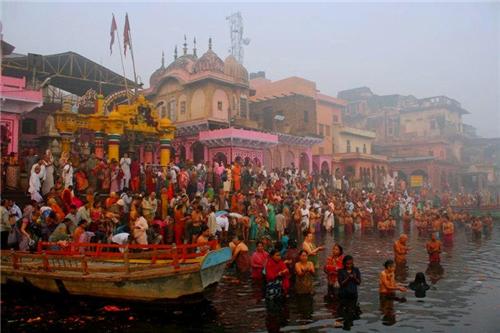
Vishrama Ghata, Mathura — the sacred starting point of Vraja Mandala Parikrama.

In glorification of Vishranti-tirtha, the Skanda Purana says, “One who bathes here will destroy all his sins and be freed from the agony and misery of the material world.”

In the Adi-Varaha Purana Lord Varaha says, “Hey Devi! Vishranti-tirtha is renowned throughout the three worlds. A person becomes worshipable in Vaikuntha Dhama if he takes bath here. Lord Gatashrama (Narayana) is situated here in this beautiful place. By His darshana one achieves the results from bathing in all other holy places.”

The Padma Purana says, “Bathing at Vishrama Ghata, is one hundred times more superior to bathing in the Ganges River at the triveni-sangamduring the Magh-mela.”

In the Mathura Mahatmya it says, “Bathing at Keshi Ghata is one hundred times more beneficial than bathing in the river Ganges, but to bathe at Vishrama Ghata, is one hundred times more beneficial than bathing at Keshi Ghata.”

In the Saura Purana it says, “Vishranti-tirtha destroys all sins and offers rest from the fatigue of wandering through the desert of material existence. Anyone who bathes here and worships Achyuta will be released from the fire of material existence and attain immortality.

Yamaraja-Yamuna Mandira (Yama-Yami Mandira)

This small temple is known locally as the Yama-Yami Mandira and it is dedicated to the brother and sister duo Lord Yamaraja and Yamuna Devi, whose father was the sun-god Lord Surya-narayana. There is a great religious festival held here during Kartika every year on the day after Govardhana Puja and known asBhaiya-duja or Yama-dwitiya. This is the occasion when brothers and sisters arrive from all over Vraja to bathe together in the River Yamuna at Vishrama Ghata and then perform puja at the Yama-Yami Temple.

This festival is held in celebration of the time when Lord Yamaraja, came to visit his sister Yamuna Devi on her birthday. Lord Yamaraja had been longing to meet his twin sister and finally got the opportunity during her birthday celebrations. Yamuna Devi received her brother in the most befitting manner and served him with a wonderfully prepared meal. Lord Yamaraja was so pleased with the reception and service of his sister; he asked her what benediction she wanted.

The ever-merciful Yamuna Devi asked for a special boon, that if any brother and sister bathed together in the River Yamuna on her birthday, they would be freed from all their sins and not be called to the court of Yamaraja at their time of death. Lord Yamaraja agreed to Yamuna Devi’s proposal saying, “So be it”. In another version of the legend Yamuna Devi asked a boon that on this day all those brothers who visit their sister’s house and take a meal cooked by her will never go to Naraka.

Lord Yamaraja agreed and also promised that any sister, who invites her brother and serves food to him on this day, will never become a widow. Consequently, many hundreds and thousands of brothers and sisters congregate at Vishram Ghata to bathe in the River Yamuna and offer prayers at the Yama-Yami shrine on this particular day.

Gatashrama Narayana Mandira

This is a popular temple with the local people of Mathura and was established in 1867 by the followers of the Ramanuja sampradaya. The Deity in the temple is a four-armed form of Lord Vishnu known as Gatashram Narayana. The temple is located near to Vishrama Ghata on a hillock known as Gatashrama-tila; one of the famous hillocks of Mathura. In the Adi Varaha Purana it says. “Hey Devi! Vishranti-tirtha is renowned throughout the three worlds. A person becomes worshipable in Vaikuntha Dhama if he takes bath here. Lord Gatashrama (Narayana) is situated here in this beautiful place. By His darshana one achieves the results from bathing in all other holy places.” From this verse it can be seen that Vishrama Ghata and Lord Gatashrama Narayana are synonymous with one-another.

Vraja Mandala Parikrama Starts At Vishrama Ghata

0
visram ghat
visram ghat

Lord Chaitanya Mahaprabhu began His parikrama of Vraja Mandala from Mathuraand it has now become the tradition that those performing the chaurasi-kosa Vraja Mandala Parikrama also start their parikrama from Mathura (accept the residents of Vrindavana who start Vraja Mandala Parikrama from the holy city itself).

The traditional day for starting Vraja Mandala Parikrama is on niyama-seva, which is the first day of the holy month of Kartika which falls on the day after Saradiya-purnima.

It is also a part of the tradition to first take bath in the Yamuna at Vishrama Ghata and then take a vow (sankalpa) to complete the full parikrama of Vraja once it has been started.

It is also part of the tradition that after bathing at Vishrama Ghata, the Vraja Mandala Parikrama party should first perform a half-parikrama of Mathura from Vishrama Ghata to Bhuteshwara Mahadeva and Shri Krishna Janmasthana.

Then after having darshana of Lord Keshavadeva, the parikrama should proceed directly to Madhuvana, the first of the sacred forests visited on the Vraja Mandala Parikrama. (With regard to taking darshana of Lord Keshavadeva, this can be accomplished by seeing the vijay-murti of Keshavaji at the Maratha Mandira next to the Prachin Janmasthana, otherwise at the newly constructed Keshava Mandira).

START OF MATHURA HALF-PARIKRAMA

Vishrama Ghata / Vishranti-tirtha

This is where Krishna rested after killing the despotic ruler of Mathura, the evil demon known as King Kamsa. The word ‘vishrama’ or ‘vishranti’ means ‘to rest’ as well as ‘resting place’. When Lord Chaitanya visited Mathura, He also took bath at Vishrama Ghata and rested here for some time. The Bhakti-rartnakara says,“See this great holy place named Shri Vishranti.

It was here that Krishna took rest after killing Kamsa. O Shrinivasa, the jewel amongst sannyasis, Shri Chaitanya, also performed many transcendental activities here. All types of people—women, men, aged, youths, and even children—gathered to see the Lord.

Hundreds of thousands came and everyone acknowledged that the best of all sannyasis had come to Mathura. Raising their arms in the air and crying, they shouted the name of Hari. Gaurachandra’s beauty charmed the entire world and people were unable to take their eyes off Him. The Lord fulfilled everyone’s’ desires, and in this way He performed amazing pastimes at Vishranti. The glories of Vishranti-tirtha are famous in the world.

One can achieve the rarest perfection by the grace of Vishranti.” Lord Varahadeva also came to Vishrama Ghata and rested after He rescued the earth from the Garbha Ocean. While He was resting at Vishrama Ghata, Lord Varahadeva spoke about the glories of Vraja Mandala to the goddess Bhumi Devi, the mother earth, and these descriptions of the holy dhama were recorded in the Adi-Varaha Purana.

Situated within the vicinity of Vishrama Ghata are a number of important temples including those dedicated to:
Yamunaji, Krishna-Balarama, Vasudeva-Devaki, Annapurna Devi, Yamaraja-Yamuna and situated just adjacent to Vishram Ghata is the temple of Gatashrama Narayana and the famous Dwarakadhisha Mandira.

“Is An Opportunity Available In Māyāpur For Devotees Who Seriously Undertake The Study Of Sāstra?”

0

The Mayapur Academy Library Opens Its Doors to the Vaiṣṇava Community

The Mayapur Academy Library has  announced that it is now open to all devotees as a comprehensive center for authentic Vaiṣṇava learning. Situated on the second floor of Chaitanya Bhawan at ISKCON Mayapur, this sacred space has been established to support serious study of śāstra, deity worship, and Vaiṣṇava culture. Devotees and sincere seekers are warmly invited to enter this atmosphere of learning and deepen their spiritual understanding.

The library functions from Monday to Friday, between 10:30 a.m. and 1:30 p.m. His Grace Nṛsiṁha Kavaca Dāsa, ISKCON’s Minister for Deity Worship, has personally extended an open invitation to the devotee community to make full use of this valuable facility for study, reflection, and inspiration.

A Multilingual Repository of Śrīla Prabhupāda’s Literature

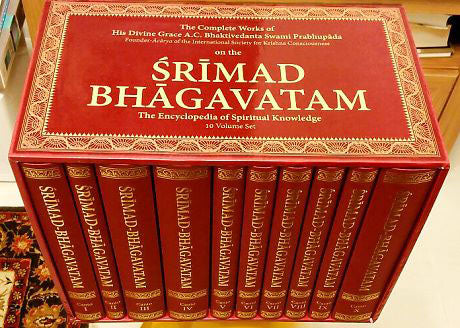
The library houses an extensive and impressive collection of books authored by His Divine Grace A.C. Bhaktivedanta Swami Prabhupāda, available in forty-two different languages. This remarkable multilingual assembly ensures that the timeless teachings of Kṛṣṇa consciousness are accessible to devotees from a wide variety of linguistic and cultural backgrounds.

The English collection is prominently displayed, accompanied by substantial holdings in Bengali, Chinese, Hindi, and Sanskrit, reflecting the global outreach of Śrīla Prabhupāda’s mission.

Among the most noteworthy treasures preserved in the library is Śrīla Prabhupāda’s Bhagavad-gītā in Braille—a complete ten-volume set. This rare and thoughtful presentation makes this foundational scripture accessible to visually impaired devotees and stands as a powerful testament to ISKCON’s commitment to ensuring that transcendental knowledge is available to all, without distinction.

Preserving ISKCON’s Sacred Literary Heritage

In addition to Śrīla Prabhupāda’s books, the library maintains a rich archive of historical ISKCON publications. Devotees may study issues of The Harmonist, Śrīla Prabhupāda’s Transcendental Diaries, and numerous editions of Back to Godhead magazine.

The library also carefully preserves the complete collection of Mayapur Vyāsa-pūjā books, containing offerings to Śrīla Prabhupāda. These volumes serve both as valuable historical records and as profound sources of inspiration for present and future generations of devotees.

A Place for Study, Service, and Contribution

The Mayapur Academy Library functions as a dedicated reading room, providing a peaceful and conducive environment where visitors may sit, read, and thoughtfully engage with transcendental literature. While the books are not available for borrowing, the space is designed to encourage extended study and deep contemplation.

His Grace Nṛsiṁha Kavaca Dāsa has also encouraged devotees who possess suitable books to contribute to the library’s collection, as well as those who wish to render service through volunteering. Both donations and personal service are welcomed in support of this important educational initiative.

As ISKCON Mayapur continues to flourish as a center of spiritual culture and learning, the Mayapur Academy Library stands as a vital institution dedicated to preserving and disseminating the teachings that Śrīla Prabhupāda compassionately gave to the world. All devotees are warmly invited to take advantage of this opportunity to deepen their understanding and appreciation of Kṛṣṇa consciousness.

ISKCON Dumdum Temple Built Through The Collective Endeavour Of Devotees

0

On January 3, 2026, amid the sacred observance of Puṣya Abhiṣeka, ISKCON Dumdum formally inaugurated its newly constructed temple, marking a significant milestone in the expansion of Kṛṣṇa consciousness throughout North Kolkata. The temple enshrines the newly installed Deities of Śrī Śrī Dayāl Nitāi Gaura Sundar and stands as a spiritual centre for the rapidly growing Dumdum–Motijheel region.

The grand inauguration was sanctified by the online presence of His Holiness Jayapatākā Swami and His Holiness Rādhānātha Swami, who presided over the Prāṇa-pratiṣṭhā ceremony and bestowed the holy names upon the Deities. The occasion was further graced by the presence and blessings of senior ISKCON leaders and sannyāsīs, including Jananivāsa Dāsa, Śaṅkarṣaṇa Dāsa, Bhakti Gaurava Nārāyaṇa Swami, Bhakti Prema Swami, Bhakti Vijaya Bhāgavata Swami, Bhakti Puruṣottama Swami, Bhakti Sāra Govindānanda Swami, Dayārāma Dāsa, Braja Vilāsa Dāsa, Rādhāpada Dāsa, Anaṅgamohana Dāsa, Rādhāramaṇa Dāsa, and Ācārya Ratna Dāsa.

The deity installation being carried out by senior devotees.

A Vision Fulfilled

The establishment of ISKCON Dumdum fulfills Śrīla Prabhupāda’s cherished desire to see at least ten ISKCON temples established in his birthplace, Kolkata. According to Jaideep Mukherjee, Chairman of the Congregation Development Committee, the selection of the Dumdum–Motijheel area was guided by both spiritual insight and practical consideration.

“The locality has experienced rapid growth over the years and required a spiritual centre to serve its residents, many of whom already possessed a natural inclination toward devotional life,” Mukherjee explained. “Its close proximity to the airport and major transportation routes further made it an ideal location.”

Situated near Netaji Subhas Chandra Bose International Airport (4.5 km), Dumdum Metro Station (2 km), and Dumdum Railway Station (2 km), the temple also serves as an important gateway for devotees traveling to Śrīdhāma Māyāpur.

From Land Donation to Temple Completion

The origins of ISKCON Dumdum trace back to February 2014, when Śrī Śaṅkar Lāl Chakraborty magnanimously donated the land for religious purposes. The site initially functioned as a youth centre, primarily serving students and young professionals. In 2020, ISKCON formally established Dumdum as a centre, erecting a basic structure to accommodate its expanding activities.

As the local congregation steadily increased, the necessity for a permanent temple became evident. Construction of the new temple commenced on September 11, 2024, coinciding with the sacred appearance day of Śrīmatī Rādhārāṇī (Rādhāṣṭamī). Despite various logistical challenges, the project was completed in less than sixteen months—an unusually swift timeline by conventional standards.

Guidance and inspiration for the project were received from senior ISKCON authorities, including Jayapatākā Swami, Rādhānātha Swami, Bhakti Puruṣottama Swami, Gaurāṅga Dāsa, and Rādheśyāma Dāsa.

“All aspects of construction and interior work were overseen by devotees,” Mukherjee noted. “From procuring materials to the final fittings, the entire process was approached as an offering to the Lord rather than a commercial undertaking.”

Devotee-Led Effort and Artistic Contributions

A dedicated Deity Ministry team rendered essential service throughout the installation process. Key contributors included Sevā Atulya Dāsa, Śītālaṅga Dāsa, Rādhāprasāda Dāsa, Rādhādyuti Dāsa, Sundara Rūpa Dāsa, Yoga Narasiṁha Dāsa, Jagannātha Kṛpā Dāsa, and Śuddha Nityānanda Dāsa.

The Deities were exquisitely painted by Ambodā Devī Dāsī, while Ānandlīlā Devī Dāsī and the Māyāpur Divine Thread Team lovingly prepared handcrafted garments and performed the ceremonial śṛṅgāra-sevā during the inauguration.

The wider congregation also played a vital role. Devotees contributed according to their means, with some offering jewelry and ornaments for the Deities, while others engaged in door-to-door fundraising efforts.

“Financial assistance arrived precisely when it was most needed,” Mukherjee observed. “This strongly affirmed the collective and devotional spirit underlying the entire project.”

The outside of ISKCON Dumdum.

One of the verses of Shikshashakam on the wall in the pathway to the temple.

The path leading to the main temple room.

Jaya and Vijaya at the entrance of the temple.

Architectural Design and Facilities

The temple harmoniously integrates traditional Vedic architectural principles with modern amenities. The main prayer hall spans approximately 1,350 square feet and can comfortably accommodate 250 to 300 devotees. Multiple French doors on the eastern and western sides facilitate ample natural light and ventilation, while the principal entrance on the northern side is adorned with sculptures of Jaya and Vijaya, the eternal gatekeepers of the Lord.

Glass paintings depicting sacred themes adorn the upper walls. The northern section features images of Śrīla Prabhupāda, Lord Jagannātha, Lord Baladeva, Subhadrā Mahārāṇī, and Śrīla Bhaktisiddhānta Sarasvatī Ṭhākura. The eastern wall illustrates Kṛṣṇa-līlā, while the western wall portrays pastimes from the divine life of Śrī Caitanya Mahāprabhu.

The hall is equipped with air-conditioning and ceiling fans to ensure the comfort of visitors. The principal Deity altar is situated on the southern wall, with a separate altar dedicated to Śrīla Prabhupāda on the eastern side. A large pond along the western boundary further enhances the temple’s serene and contemplative atmosphere.

Fulfilling Lord Caitanya’s Prophecy

Reflecting upon the deeper spiritual significance of the temple’s opening, Temple Vice President Vallabh Caitanya Dāsa recalled Lord Caitanya Mahāprabhu’s prophecy that the holy name of Kṛṣṇa would be preached in every town and village.

“Śrī Śrī Gaura-Nitāi are the most merciful Lords of Kali-yuga,” he said. “They have manifested here so that this part of South Dumdum may be blessed by Their divine presence. They are attracting innumerable conditioned souls toward devotional service.”

Comprehensive Spiritual Programs

ISKCON Dumdum conducts a wide array of daily and weekly devotional activities, including ārati, kīrtana, meditation, Harināma-saṅkīrtana, and regular classes on the Bhagavad-gītā and Śrīmad-Bhāgavatam. Weekly Sunday Feast programs combine spiritual discourse with the distribution of sanctified prasāda.

The temple also actively engages in Food for Life initiatives, youth and children’s programs, cultural presentations such as drama and dance, retreats, workshops, book distribution, and Nāgara-saṅkīrtana, thereby extending Kṛṣṇa consciousness throughout the surrounding community.

The beautiful interior of the temple at ISKCON Dumdum.

The temple altar and Srila Prabhupada’s altar after the installation.

Future Plans

Looking ahead, ISKCON Dumdum aspires to develop into a major spiritual hub for North Kolkata. Proposed initiatives include expanded educational facilities, enhanced programs for youth and children, services for travelers and airport commuters, and the expansion of Food for Life activities.

“At its heart, the objective is to provide spiritual education and social service in a structured and sustainable manner,” Mukherjee stated.

The entire endeavour has been guided by Śrīla Prabhupāda’s instruction that temples should function primarily as centres of spiritual education rather than commercial establishments.

Ways to Participate

ISKCON Dumdum welcomes all to participate through Bhakti Vṛkṣa programs, IYF, children’s initiatives, voluntary service, and financial offerings such as Nitya Sevā, sponsorships, or monthly commitments. Sponsorship opportunities are available for Deity worship items, kitchen facilities, media equipment, and prasāda distribution.

For further information, devotees may visit the temple’s official website  and blog, or connect through  FacebookInstagramYouTube, and Telegram.

Amar Nitai Mile Na

0

LYRICS:

(1)

āmār nitāi mile nā bholā mana

gaura mile nā

sārā gāye mākhile tilak

gaura mile nā

(2)

bhitor bāher ṭhik nā hole

suddha gaura prem ki kothāy mile

o tor ṭhik nā hole upāśanā

milbe nā tor se sonā

(3)

mana pariskār koro āge

gaura bhajan anurāge (anurāge, bholā mana, mana re āmār)

anurāge tilakete

gaura bhajan holo nā (hāi bholā mana)

(4)

jei jana nitya bastu ādor kore

āmār doyāl nitāi tāńhāra ghore

tāre bhakti bhāve ḍākle pore

utor sādhan saphal ha’be (viphal ha’be nā)

TRANSLATION:

1) O naïve mind, I did not meet Nitai! I did not meet Gaura! Even though my entire body is covered with tilak, I did not meet Gaura!

2) How can you come across the love of Sri Gaura if you are not proper, internally and externally? If your worship is not proper, you will not find that gold (love of Sri Gaura)!

3) With cleansing of one’s mind, one can develop love for Sri Gaura. But if you develop love for decorating your body with tilak, you are not worshipping Lord Caitanya! (O my naïve mind, you are not worshipping Gaura!)

4) To that person who always respects this item (the love of Lord Caitanya), my merciful Nitai will be present at their home. If you call out with feelings of devotion, your austerity will become successful. (It will not become a failure!)

Agre Ek Nivedana Kori

0

Song Name: Agre Ek Nivedana Kori

Official Name: Yamuna Bhavavali Song 19; “The Meaning of Doyamoy”

Author: Bhaktivinoda Thakura

Book Name: Gitamala 

LYRICS

(1)

hari he

agre eka nibedana kori madhunisūdana

śuno kṛpā koriyā āmāya

nirarthaka kathā noya nigūḍhārtha-moya hoya

hṛdoyā hoite bahirāya

(2)

ati aprakṛṣṭa āmi parama doyālu tumi

taba doyā mora adhikāra

je jata patita hoya taba doyā tata tāya

ta’te āmi su-pātra doyāra

(3)

more jodi upekhibe doyā-pātre kothā pābe

doyāmoya nāmaṭi ghucā’be

e bhaktibinoda koya doyā koro doyāmoya

jaśa-kīrti ciro-dina pā’be

TRANSLATION

1) Oh my dear Lord Hari! I have just one appeal to make before You, oh killer of the Madhu demon! Please be kind enough to hear it from me. It is certainly not a useless talk for wasting time, for it is full of very deep meaning. Indeed, it is welling up from the very depths of my heart.

2) I am most degraded, and You are most merciful; therefore I have full rights to stake a claim for Your mercy. For no matter how fallen I could possibly be, Your mercy easily extends to that degree; therefore I am quite a suitable candidate for receiving Your causeless mercy.

3) If You were to neglect my appeal, then Your famous name as “the Most Merciful” would become null and void. And then where else could this recipient go to find the same kind of mercy? Bhaktivinoda says, please be merciful, oh Most Merciful! If You would do this, then Your fame and glories will go on unblemished for all of time to come.

Panihati Recipe With Chida And Dahi

0

Soaking time: 1 hour

Serves: Each flavored portion serves 3-4

Ingredients:

  • Chida [thick rice flakes]: Washed in water. Soaked in milk for an hour – 350 gms
  • Milk: Boiled 500 ml
  • Cardamom powder: 2 tsp
  • Sugar: 275 gms
  • Condensed milk (Amul Mithai Mate): 6 tbsps (for rice flakes soaked in milk)
  • Curds: Beaten 500 ml
  • Honey: 3 tbsps (for rice flakes soaked in milk)


For flavoring:

  • Jamun: Puree 2 tbsps
  • Jackfruit: Diced 2 tbsps
  • Mango: Diced 2 tbsps
  • Banana: Mashed 2 whole
  • Rasgulla: Pista stuffed 5-6


Method

For milk soaked rice flakes:

  • Soak rice flakes in very hot milk for an hour along with sugar and cardamom powder.
  • Once the rice flakes soaked in milk have come to room temperature, add condensed milk, curds and honey to it. Mix well to combine. At this point we need to divide the chida mix into 4 equal portions for flavoring.
  • Now add each of the fruits (mango, jackfruit, banana and jamun puree) into each of the portions i.e., each fruit gets one portion of rice flake mix. Mix well to combine.
  • You can drop in some pista stuffed rasgullas in one of the portions and serve cold.

Chaitanya Charitamrta | Adi Lila | Chapter 5 | Section 19

0

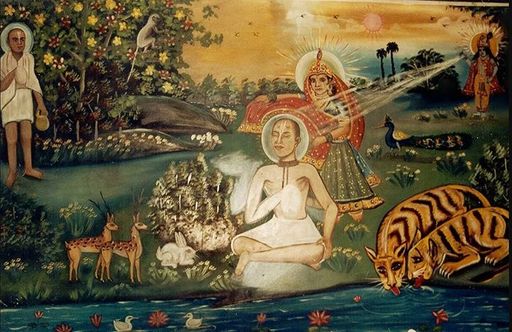
Lord Nityānanda Svarūpa formerly appeared as Lakṣmaṇa and served Lord Rāmacandra as His younger brother. (149) The activities of Lord Rāma were full of suffering, but Lakṣmaṇa, of His own accord, tolerated that suffering. (150) As a younger brother He could not stop Lord Rāma from His resolution, and so He remained silent, although unhappy in His mind. (151) When Lord Kṛṣṇa appeared, He [Balarāma] became His elder brother to serve Him to His heart’s content and make Him enjoy all sorts of happiness. (152)

Śrī Rāma and Śrī Lakṣmaṇa, who are plenary portions of Lord Kṛṣṇa and Lord Balarāma respectively, entered into Them at the time of Kṛṣṇa’s and Balarāma’s appearance. (153) Kṛṣṇa and Balarāma present Themselves as younger brother and elder brother, but in the scriptures They are described as the original Supreme Personality of Godhead and His expansion. (154) “I worship Govinda, the primeval Lord, who by His various plenary portions appears in the world in different forms and incarnations such as Lord Rāma, but who personally appears in His supreme original form as Lord Kṛṣṇa.” (155) Lord Caitanya is the same Lord Kṛṣṇa, and Lord Nityānanda is Lord Balarāma. Lord Nityānanda fulfills all of Lord Caitanya’s desires. (156)

 The ocean of Lord Nityānanda’s glories is infinite and unfathomable. Only by His mercy can I touch even a drop of it. (157) Please listen to another glory of His mercy. He made a fallen living entity climb to the highest limit. (158) To disclose it is not proper, for it should be kept as confidential as the Vedas, yet I shall speak of it to make His mercy known to all. (159) O Lord Nityānanda, I write of Your mercy out of great exultation. Please forgive me for my offenses. (160) Lord Nityānanda Prabhu had a servant named Śrī Mīnaketana Rāmadāsa, who was a reservoir of love. (161) At my house there was saṅkīrtana day and night, and therefore he visited there, having been invited. (162)

 Absorbed in emotional love, he sat in my courtyard, and all the Vaiṣṇavas bowed down at his feet. (163) In a joyful mood of love of God he sometimes climbed upon the shoulder of someone offering obeisances, and sometimes he struck others with his flute or mildly slapped them. (164) When someone saw the eyes of Mīnaketana Rāmadāsa, tears would automatically flow from his own eyes, for a constant shower of tears flowed from the eyes of Mīnaketana Rāmadāsa. (165) Sometimes there were eruptions of ecstasy like kadamba flowers on some parts of his body, and sometimes one limb would be stunned while another would be trembling. (166) Whenever he shouted aloud the name Nityānanda, the people around him were filled with great wonder and astonishment. (167)

 One respectable brāhmaṇa named Śrī Guṇārṇava Miśra was serving the Deity. (168) When Mīnaketana was seated in the yard, this brāhmaṇa did not offer him respect. Seeing this, Śrī Rāmadāsa became angry and spoke. (169) “Here I find the second Romaharṣaṇa- sūta, who did not stand to show honor when he saw Lord Balarāma.” (170) After saying this, he danced and sang to his heart’s content, but the brāhmaṇa did not become angry, for he was then serving Lord Kṛṣṇa. (171) At the end of the festival Mīnaketana Rāmadāsa went away, offering his blessings to everyone. At that time he had some controversy with my brother. (172) My brother had firm faith in Lord Caitanya but only a dim glimmer of faith in Lord Nityānanda. (173)

 Knowing this, Śrī Rāmadāsa felt unhappy in his mind. I then rebuked my brother. (174)”These two brothers,” I told him, “are like one body; They are identical manifestations. If you do not believe in Lord Nityānanda, you will fall down. (175) “If you have faith in one but disrespect the other, your logic is like the logic of accepting half a 1ardha- kukkuṭī- nyāya, literally “half- hen logic”. (176) “It would be better to be an atheist by slighting both brothers than a hypocrite by believing in one and slighting the other.” (177) Thus Śrī Rāmadāsa broke his flute in anger and went away, and at that time my brother fell down. (178) I have thus described the power of the servants of Lord Nityānanda. Now I shall describe another characteristic of His mercy. (179)

That night Lord Nityānanda appeared to me in a dream because of my good quality in chastising my brother. (180) In the village of Jhāmaṭapura, which is near Naihāṭi, Lord Nityānanda appeared to me in a dream. (181) I fell at His feet, offering my obeisances, and He then placed His own lotus feet upon my head. (182) “Arise! Get up!” He told me again and again. Upon rising, I was greatly astonished to see His beauty. (183) He had a glossy blackish complexion, and His tall, strong, heroic stature made Him seem like Cupid himself. (184) He had beautifully formed hands, arms and legs, and eyes like lotus flowers. He wore a silk cloth, with a silk turban on His head. (185)

 He wore golden earrings on His ears, and golden armlets and bangles. He wore tinkling anklets on His feet and a garland of flowers around His neck. (186) His body was anointed with sandalwood pulp, and He was nicely decorated with tilaka. His movements surpassed those of a maddened elephant. (187) His face was more beautiful than millions upon millions of moons, and His teeth were like pomegranate seeds because of His chewing betel. (188) His body moved to and fro, right and left, for He was absorbed in ecstasy. He chanted “Kṛṣṇa, Kṛṣṇa” in a deep voice. (189) His red stick moving in His hand, He seemed like a maddened lion. All around the four sides of His feet were bumblebees. (190)

 His devotees, dressed like cowherd boys, surrounded His feet like so many bees and also chanted “Kṛṣṇa, Kṛṣṇa,” absorbed in ecstatic love. (191) Some of them played horns and flutes, and others danced and sang. Some of them offered betel nuts, and others waved cāmara fans about Him. (192) Thus I saw such opulence in Lord Nityānanda Svarūpa. His wonderful form, qualities and pastimes are all transcendental. (193) I was overwhelmed with transcendental ecstasy, not knowing anything else. Then Lord Nityānanda smiled and spoke to me as follows. (194)

 “O my dear Kṛṣṇadāsa, do not be afraid. Go to Vṛndāvana, for there you will attain all things.” (195) After saying this, He directed me toward Vṛndāvana by waving His hand. Then He disappeared with His associates. (196) I fainted and fell to the ground, my dream broke, and when I regained consciousness I saw that morning had come. (197) I thought about what I had seen and heard and concluded that the Lord had ordered me to proceed to Vṛndāvana at once. (198) That very second I started for Vṛndāvana, and by His mercy I reached there in great happiness. (199)

Service Of A Senior Vaiṣṇava Of ISKCON At the United Nations Forum

0

Gauranga Dās, a member of the Governing Body Commission (GBC) of the International Society for Krishna Consciousness and the Director of Govardhan EcoVillage, has been appointed as a United Nations Representative to the Alliance of NGOs on Water and Sanitation for All (AWWG) under the United Nations Economic and Social Council (ECOSOC). The AWWG is a UN-associated working group that unites civil society organizations in offering expertise and advocacy on issues of sustainable water management, sanitation, and development, in harmony with the broader global agenda of the United Nations.

In a message shared through social media post, Gauranga Dās described this appointment as both a distinct honor and a solemn responsibility. He expressed his resolve to engage actively in global dialogue and policy-related deliberations. “In this role, I look forward to contributing meaningfully to global dialogue, policy advocacy, and multi-stakeholder collaboration aligned with the United Nations Sustainable Development Goals,” he stated, drawing particular attention to themes of sustainable development, inclusive growth, and international cooperation.

He further conveyed his eagerness to work in concert with policymakers, representatives of civil society, and fellow delegates within the United Nations framework, with the aim of supporting initiatives that yield positive, measurable, and enduring outcomes at both the local and global levels.

Offering gratitude for the confidence reposed in him, Gauranga Dās acknowledged the encouragement and support he has received throughout his years of service. He reaffirmed his commitment to cooperative endeavor and to the advancement of practical solutions that foster a more sustainable, equitable, and compassionate world—reflecting the principles of service and responsible stewardship that lie at the heart of his work at Govardhan EcoVillage and within ISKCON.

Stay Connected

16,985FansLike
12,500FollowersFollow
61,453SubscribersSubscribe