



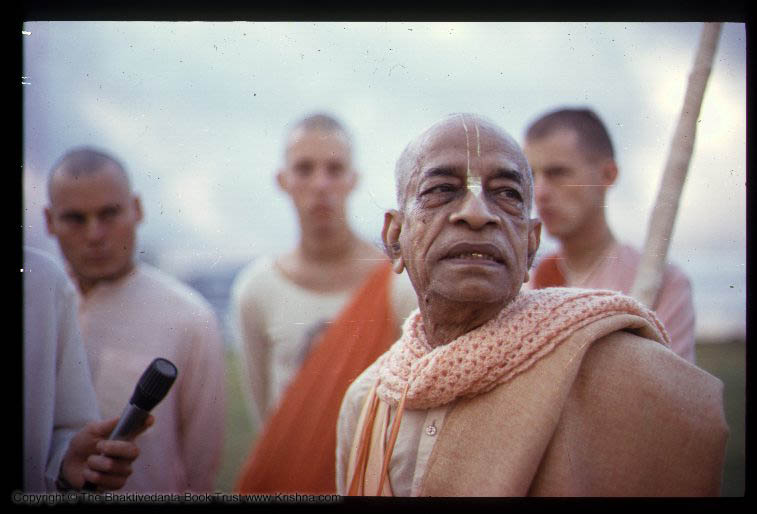
The preservation and accurate transmission of transcendental knowledge are essential responsibilities of the Vaiṣṇava tradition. The Bhaktivedanta Archives, dedicated to preserving the teachings, writings and historical legacy of His Divine Grace A. C. Bhaktivedanta Swami Śrīla Prabhupāda, is exploring new developments in artificial intelligence, digital preservation and archival conservation to serve this important purpose.
The October 2026 edition of The Archival Spirit highlights several significant initiatives, including the responsible use of artificial intelligence in researching Śrīla Prabhupāda’s teachings, the modernization of the VedaBase collection, improvements to photographic preservation facilities and an internship opportunity dedicated to ISKCON’s early photographic history.
These developments demonstrate how modern technology can assist in preserving the spiritual and historical heritage of the Kṛṣṇa consciousness movement for future generations.
Bhaktivedanta Archives and the Responsibility of Preserving Transcendental Knowledge
In the Vedic tradition, transcendental knowledge is received through an authorized disciplic succession known as paramparā. Spiritual knowledge is not an ordinary subject of intellectual speculation; it is received through the instructions of the Supreme Lord and transmitted by bona fide spiritual masters.
Śrīla Prabhupāda established an extraordinary literary contribution by translating and explaining important Vedic scriptures, including the Bhagavad-gītā As It Is, Śrīmad-Bhāgavatam and Śrī Caitanya-caritāmṛta.
His books, lectures, conversations and correspondence constitute an invaluable treasury of spiritual knowledge.
The Bhaktivedanta Archives plays an important role in protecting these original materials and making them accessible for research and study.
Preserving authentic source documents is especially important in an age when information can be reproduced, modified and circulated across digital platforms within seconds.
The ultimate objective is not simply to preserve historical records but to ensure that the original teachings remain accessible without distortion or misrepresentation.
Artificial Intelligence and Śrīla Prabhupāda’s Teachings: Why Accuracy Matters
One of the major subjects addressed in the October 2026 newsletter is the growing use of artificial intelligence in researching and reproducing Śrīla Prabhupāda’s teachings.
Artificial intelligence offers considerable possibilities for searching large collections of documents, identifying relevant passages and organizing historical information. However, the Bhaktivedanta Archives emphasizes that AI-generated information must be verified against authorized original sources.
This caution is particularly important when dealing with transcendental literature.
An artificial intelligence system may generate a convincing explanation while unintentionally combining different statements, misquoting a passage or attributing an incorrect statement to a spiritual personality.
Therefore, technological convenience should never replace scriptural authenticity.
The Importance of Authorized Sources
In the Vaiṣṇava understanding, spiritual knowledge is received through the bona fide spiritual master and disciplic succession.
Bhagavad-gītā 4.2 explains that this transcendental knowledge was received through the succession of spiritual masters, but over time the chain was broken.
This principle highlights the importance of authentic transmission.
When researching Śrīla Prabhupāda’s teachings, one should consult his original books, recorded lectures, conversations and letters rather than relying exclusively on automatically generated summaries.
Artificial intelligence can serve as an assisting instrument, but it cannot independently establish spiritual authority.
The responsibility of verifying quotations and interpretations remains essential.
VedaBase Conversion: Building a Reliable Digital Knowledge Resource
Another important development reported by the Bhaktivedanta Archives is the ongoing effort to convert its VedaBase collection into XML format.
XML, or Extensible Markup Language, is a structured format that allows digital information to be organized and processed systematically.
This conversion is intended to make the VedaBase collection accessible through web browsers across different operating systems.
It may also provide a more reliable source database for future artificial intelligence applications.
A properly structured digital collection can help researchers locate original passages, examine textual references and distinguish authentic source material from generated interpretations.
Connecting Technology with Śāstric Authenticity
The development of reliable digital archives can make the study of Vedic literature more systematic and accessible.
For students, researchers and devotees, organized digital resources can assist in locating relevant instructions from Śrīla Prabhupāda’s books, letters and recorded conversations.
However, the availability of information should always be accompanied by proper understanding.
The Vedic principle of śāstra-cakṣuḥ means seeing through the vision of revealed scriptures.
Technology may help locate information, but spiritual understanding develops through sincere study, guidance from bona fide devotees and practical application of transcendental knowledge.
Thus, digital preservation and authentic spiritual transmission should work together.
Preserving Śrīla Prabhupāda’s Original Photographs and ISKCON History
The Bhaktivedanta Archives is also undertaking important measures to preserve original photographs documenting Śrīla Prabhupāda and the early history of ISKCON.
Photographs are more than historical images. They provide valuable visual records of the activities, personalities, temples, preaching programmes and devotional culture that shaped the worldwide Kṛṣṇa consciousness movement.
Many photographs from the early years of ISKCON, particularly between 1965 and 1977, document the extraordinary efforts of Śrīla Prabhupāda in establishing Kṛṣṇa consciousness throughout the world.
Such materials require careful environmental conditions to prevent deterioration.
Protecting Historical Photographs from Environmental Damage
According to the October newsletter, the Archives has installed a commercial freezer and refrigerator to preserve original photographs of Śrīla Prabhupāda and early ISKCON.
It is also planning a backup power system to maintain suitable temperature and humidity conditions during electricity outages.
The proposed project involves:
- A 20-kilowatt propane generator.
- An automatic transfer switch.
- An estimated project cost of $15,400.
- Continued protection of temperature-sensitive archival materials during power interruptions.
These measures reflect the importance of preventive conservation.
Original photographs and historical documents are irreplaceable records. Once damaged or lost, their original condition may be impossible to recover.
Therefore, investing in proper preservation facilities is an important service to the Vaiṣṇava community and future generations.
Photo Archives Internship: Serving Through Historical Preservation
Another noteworthy initiative announced by the Bhaktivedanta Archives is a residential internship opportunity in North Carolina.
The one- to two-month placement offers practical experience working with Nitya Tripta Devi Dasi on the preservation of ISKCON’s early photographic history.
The internship focuses on photographs documenting Śrīla Prabhupāda and the development of ISKCON between 1965 and 1977.
Participants will gain hands-on experience in:
- Cataloguing historical photographs.
- Digitizing archival materials.
- Learning photographic conservation techniques.
- Organizing and documenting historical collections.
The opportunity includes free room and board, with domestic transportation potentially available.
Because accommodation is provided in Nitya Tripta Devi Dasi’s home, the current internship is limited to female applicants.
Interested candidates can submit a résumé and a brief statement of interest by emailing:
This initiative offers an opportunity for interested individuals to contribute directly to preserving the historical heritage of the Kṛṣṇa consciousness movement.
Preserving the Photographic Legacy of Early ISKCON
The October newsletter also highlights a recent visit by Muralivadana Dasa, one of the original Bhaktivedanta Book Trust photographers.
His visit and the accompanying video emphasize the importance of preserving traditional photographic skills for future generations.
Photography played an important role in documenting Śrīla Prabhupāda’s preaching activities, international travels, temple inaugurations and interactions with his disciples.
These visual records help future generations understand the historical development of ISKCON and appreciate the dedication of its early devotees.
Preserving the knowledge and techniques associated with traditional photography is therefore another valuable aspect of archival service.
Technology as an Instrument of Seva
The developments undertaken by the Bhaktivedanta Archives raise an important spiritual consideration: How should modern technology be used in the service of the Supreme Lord?
In the philosophy of Kṛṣṇa consciousness, material resources are not necessarily rejected. Rather, they can be purified by engaging them in the service of Kṛṣṇa.
This principle is understood as yukta-vairāgya, or appropriate renunciation.
Śrīla Rūpa Gosvāmī explains that everything can be connected with Kṛṣṇa through proper engagement.
From this perspective, artificial intelligence, digital databases, photographic equipment and preservation facilities can become valuable instruments of devotional service when used responsibly.
The essential consideration is the purpose for which technology is employed.
If technology helps preserve authentic spiritual teachings, supports sincere research and makes transcendental literature more accessible, it can contribute meaningfully to the service of the Vaiṣṇava community.
Nevertheless, technological advancement must remain guided by scriptural principles, authenticity and respect for the original teachings.
Conclusion: Bhaktivedanta Archives Preserves a Legacy for Future Generations
The initiatives highlighted in the October 2026 newsletter demonstrate the continuing importance of the Bhaktivedanta Archives in protecting Śrīla Prabhupāda’s literary and historical legacy.
From exploring responsible artificial intelligence applications and modernizing VedaBase to preserving original photographs and training future archival volunteers, these projects serve a common purpose: safeguarding authentic records of the Kṛṣṇa consciousness movement.
Ultimately, preserving transcendental knowledge is a form of service to Śrīla Prabhupāda and the generations of devotees who will study his teachings in the future.
Artificial intelligence and modern technology may provide new opportunities, but authenticity, proper guidance and fidelity to the disciplic succession must always remain central.
The true value of preservation lies not merely in protecting historical materials, but in ensuring that the transcendental message of Śrīla Prabhupāda continues to enlighten sincere seekers for generations to come.
Deepen your Bhakti-yoga practice, harmonize relationships, and receive guided coaching — all at Vedavarsity.com