


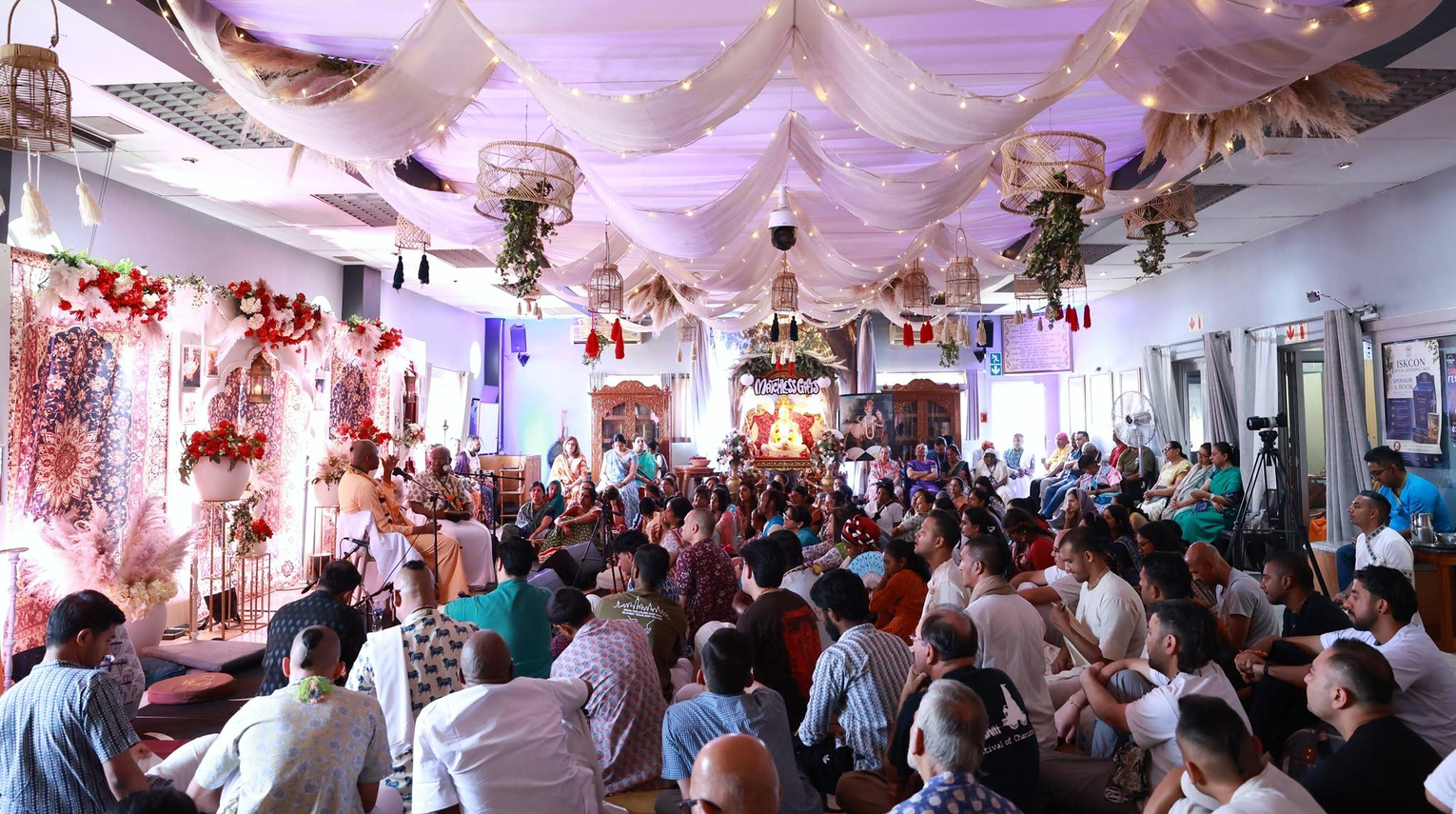
A Kirtan Festival in Africa is becoming an inspiring example of how congregational chanting can unite devotees, strengthen spiritual relationships and introduce Krishna consciousness to new communities. In Gauteng, South Africa, Harinaam Rasa recently organized a 10-hour kirtan festival that brought together devotees, musicians and spiritual practitioners from different parts of the world.
What began as a family initiative to honour a departed devotee has gradually developed into a wider movement of devotional service, community participation and outreach.
Organized by a five-member family team, the festival expanded upon the previous year’s eight-hour programme. Its vision extends beyond a single gathering: to establish a platform where devotees from different African countries can come together through the chanting of the holy names.
This initiative reminds us of the universal nature of bhakti-yoga, wherein the chanting of the Lord’s holy names transcends geographical, cultural and social boundaries.
The Spiritual Significance of a Kirtan Festival in Africa
Kirtan, or congregational chanting of the holy names of the Supreme Lord, is one of the most important practices of devotional service in the Gaudiya Vaishnava tradition.
Śrī Chaitanya Mahāprabhu, the golden incarnation of the Supreme Personality of Godhead, propagated the chanting of the Hare Krishna maha-mantra as the principal spiritual process for the present age of Kali.
The Śrīmad-Bhāgavatam (12.3.51) describes the special spiritual opportunity of this age:
“Although Kali-yuga is an ocean of faults, there is still one good quality about this age: Simply by chanting the Hare Krishna maha-mantra, one can become free from material bondage and be promoted to the transcendental kingdom.”
This principle forms the foundation of ISKCON’s worldwide efforts to spread Krishna consciousness.
A kirtan festival is therefore not merely a musical gathering. It is an opportunity for people to associate with devotees, hear the transcendental sound vibration and participate in devotional service.
The Harinaam Rasa initiative reflects this understanding by combining extended chanting with community building and public outreach.
Harinaam Rasa: A Family’s Tribute Becomes a Spiritual Mission
The inspiration behind Harinaam Rasa originated from a desire to honour Hari Murari Das, the father-in-law of logistics coordinator Bhakta Manoj Dulabh, who passed away approximately three years before the interview.
Manoj remembered him as a devotee whose heart was open to everyone. He would freely associate with devotees from different temples and communities without restricting himself to one particular group.
This spirit of inclusiveness became the guiding inspiration for the festival.
Rather than organizing an event exclusively for a familiar circle of devotees, the family wanted to create an environment where different ISKCON congregations could come together in the service of Sri Krishna.
Five Family Members, One Common Purpose
The organizing team consists of five family members, each contributing according to their abilities and responsibilities.
- Bhakta Manoj Dulabh: Coordinates musicians, schedules and overall logistics.
- Meera: Develops the festival’s theme, decorations and visual presentation.
- Mehul: Oversees devotee care, participant connections and merchandise.
- Diyani: Manages social media and video content.
- Nikunja Rasa Devi Dasi: Coordinates prasadam, food arrangements and fundraising.
The team also works with additional volunteers to ensure that the festival is conducted smoothly.
Regular meetings include discussions about responsibilities, progress and the festival’s mission. The organizers began preparations approximately one year in advance.
Their approach demonstrates an important principle of devotional service: everyone can contribute to Krishna’s mission according to their individual abilities.
Bringing ISKCON Communities Together Through Kirtan
One of the primary objectives of the Kirtan Festival in Africa was to strengthen relationships between different ISKCON communities.
According to Manoj, large congregational kirtan gatherings had become less frequent partly because earlier youth organizers had taken up professional and family responsibilities.
However, a new generation of devotees is gradually assuming greater responsibility for organizing spiritual programmes.
The Harinaam Rasa team personally approached temple presidents, outreach coordinators and community leaders to explain the initiative and invite their congregations.
This personal approach helped establish relationships across different communities.
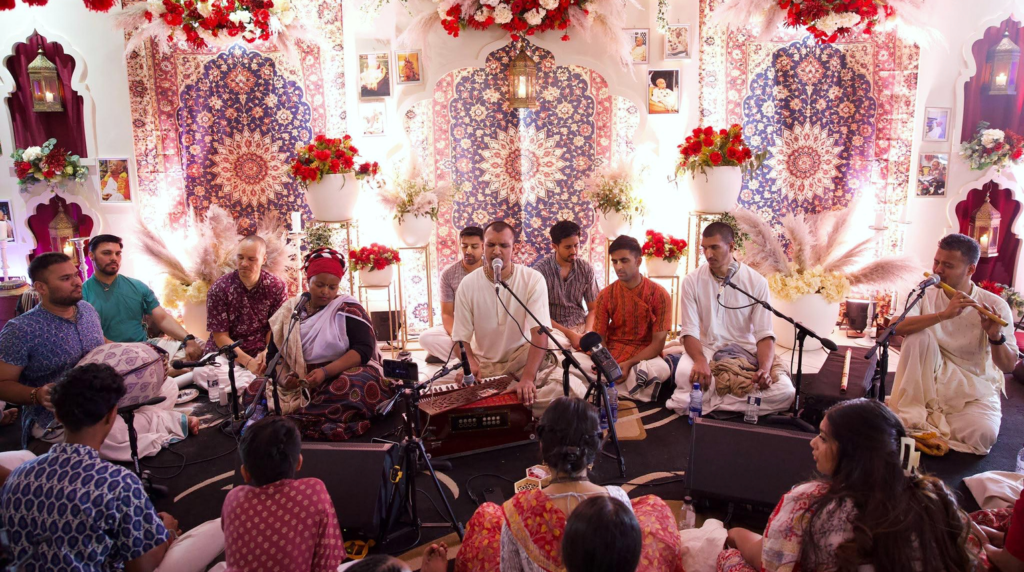
The festival also welcomed international kirtaniyas and musicians, creating an opportunity for local devotees to associate with experienced practitioners.
International Musicians Inspire Local Devotees
The festival featured visiting musicians from different parts of India and Vrindavan, including:
- Sharad Bihari and Smita Krishna, brothers originally from Mauritius and residing in Vrindavan.
- Giriraj, a mridanga player based in Vrindavan.
- Gaur Kirtan, a flutist based in Mumbai.
- Kirtan singers from Cape Town and Durban.
Their participation added an international dimension to the gathering.
The visiting musicians also encouraged local singers to participate more actively and offered practical suggestions for improving congregational chanting.
They emphasized attentive participation, reducing unnecessary conversations during kirtan and avoiding closed circles that might discourage newcomers from joining.
Such guidance highlights that kirtan is not simply a performance to be observed. It is a collective offering in which everyone should have an opportunity to participate.
Taking Harinama Sankirtana Beyond Temple Walls
An especially inspiring aspect of Harinaam Rasa is its commitment to introducing Krishna consciousness in public spaces.
The organizers conducted approximately five outreach programmes before the main festival.
These included community gatherings, university programmes, yoga spaces and public harinama.
Reaching Students Through University Outreach
One programme was organized at the University of Johannesburg.
The event combined yoga, breathwork, philosophy and mantra chanting, providing students with an opportunity to experience different aspects of Vedic spiritual practice.
Initially, participation was limited. However, volunteers personally distributed invitations across the campus, helping increase attendance.
Another programme at WuSA House provided an opportunity for students to participate in chanting in a welcoming environment.
These initiatives demonstrate the importance of presenting spiritual knowledge in accessible ways without compromising its philosophical authenticity.
Harinama in the Streets of Johannesburg
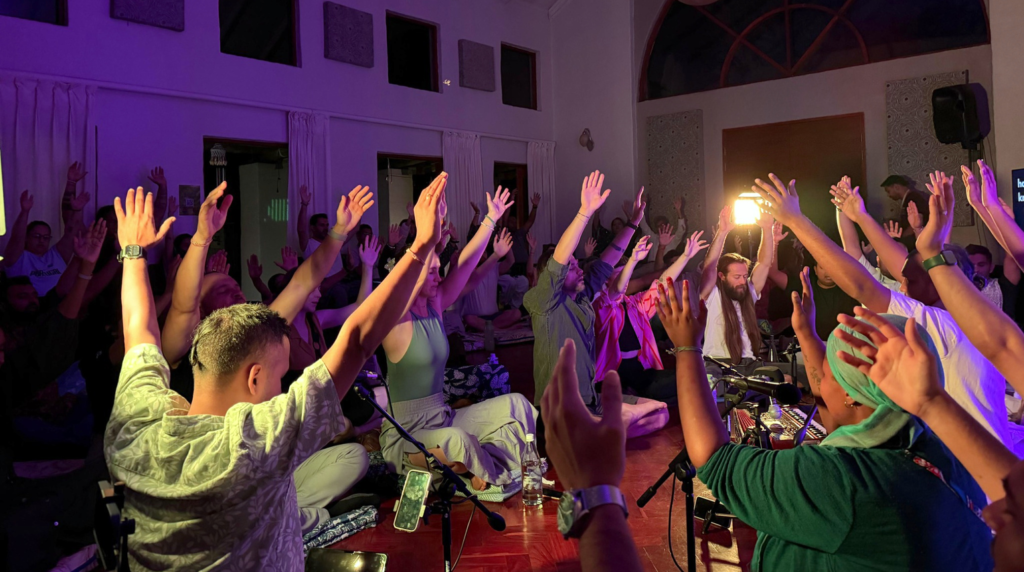
The public outreach continued with harinama at Nelson Mandela Square in Sandton.
Devotees walked towards the Gautrain station while chanting the holy names of Krishna.
During the procession, they encountered people gathered outside a betting shop. Rather than ignoring them or making assumptions about their interests, the devotees invited them to participate in chanting the maha-mantra.
The microphone was shared, allowing members of the public to join.
This approach reflects the compassionate spirit of Sri Chaitanya Mahaprabhu, who desired that the holy names reach every town and village.
The holy name is not restricted by nationality, social background or previous spiritual experience.
Anyone can participate in the chanting of Hare Krishna.
Hospitality and Prasadam: Making Devotional Gatherings Welcoming
The main festival lasted 10 hours, two hours longer than the previous year’s programme.
Participants arrived at different times, and some remained throughout the gathering.
Prasadam, sanctified food offered to Lord Krishna, played an important role in welcoming and serving the participants.
The Krishna Balaram Youth Group also contributed by serving mocktails and popcorn.
The organizers carefully considered practical requirements such as parking, food arrangements, available space and accessibility.
These arrangements reflect the importance of hospitality in Vaishnava culture.
Devotional gatherings should provide an atmosphere where visitors feel welcomed, respected and encouraged to associate with devotees.
Such hospitality is itself an expression of seva (selfless service).
Expanding the Kirtan Festival in Africa: A Vision for the Future
Following the successful gathering, the Harinaam Rasa team began collecting feedback through volunteer discussions, participant conversations and anonymous surveys.
The visiting musicians will also be consulted before the organizers finalize improvements for future editions.
Several possibilities are being considered.
Greater Participation from African Kirtaniyas
The organizers hope to involve more indigenous African kirtan musicians, building upon relationships developed in Botswana and Kenya.
Encouraging local musicians will help strengthen devotional culture within the continent and provide opportunities for emerging kirtan leaders.
Connecting More African Communities
The team also envisions cooperation between neighbouring countries.
Future festivals could bring together devotees from different African regions, allowing international visitors to participate in programmes across multiple locations.
A more centrally located venue may also improve accessibility for congregations travelling from different areas.
Building a Kirtan Mela for Africa
The long-term vision of the organizers is particularly inspiring.
Manoj expressed the aspiration to establish a large gathering that brings devotees from across the African continent together through congregational chanting.
He described this aspiration as creating the Kirtan Mela of Africa.
Such a gathering could become a significant platform for devotional association, spiritual education, cultural exchange and the propagation of Krishna consciousness.
Conclusion: The Kirtan Festival in Africa and the Universal Message of Sri Chaitanya Mahaprabhu
The growing Kirtan Festival in Africa initiative demonstrates how sincere devotional service can develop from a small family effort into a broader community movement.
Harinaam Rasa is not simply organizing musical events. It is creating opportunities for devotees to associate, newcomers to experience the holy names and different communities to cooperate in serving Sri Krishna.
The initiative also reminds us that the propagation of Krishna consciousness does not depend solely upon large institutions or extensive resources. It begins with sincere intentions, cooperative service and faith in the potency of the holy name.
Śrī Chaitanya Mahāprabhu desired that the chanting of Krishna’s holy names reach every town and village.
When devotees unite with this purpose, geographical boundaries become secondary, and devotional service becomes the common bond.
May such initiatives inspire more devotees across Africa and the world to embrace the congregational chanting of the Hare Krishna maha-mantra and share its spiritual benefits with everyone.
Hare Krishna!
Deepen your Bhakti-yoga practice, harmonize relationships, and receive guided coaching — all at Vedavarsity.com