




The ISKCON Initiation Moratorium 2026 has brought important questions concerning spiritual leadership, guru-tattva and institutional responsibilities to the forefront of the Krishna consciousness movement. Following its 2026 Midterm General Meeting, the Governing Body Commission (GBC) adopted a pause on initiations to review existing policies and address concerns related to the generational transition among spiritual masters.
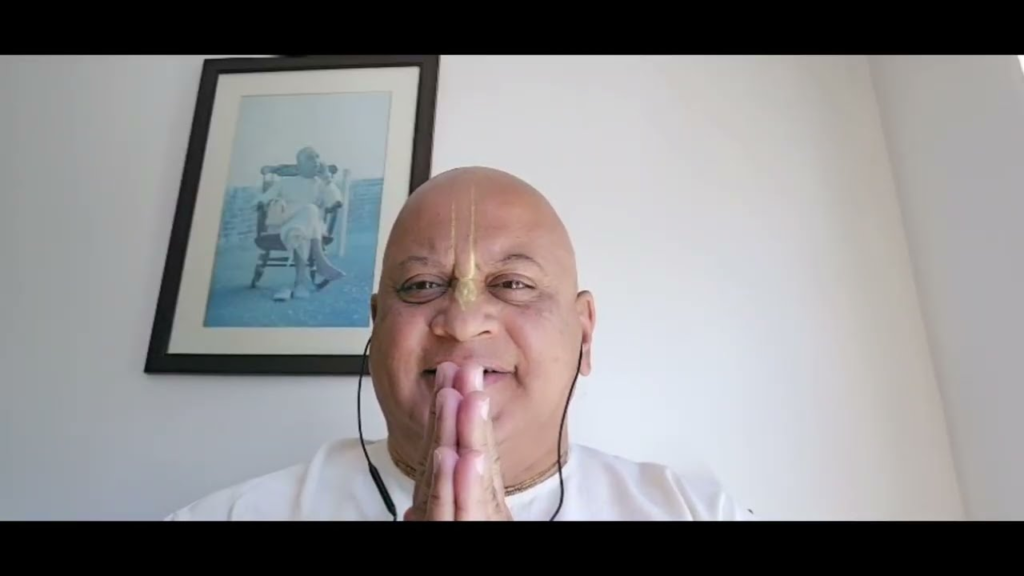
In a video statement released by GBC Communications on October 30, 2026, Govardhana Dasa, First Vice Chair of the GBC, explained the reasoning behind this decision.
He emphasized that the proposed institutional changes should not be understood as a change in spiritual philosophy. Rather, the purpose is to examine how ISKCON can maintain its spiritual foundations while addressing contemporary organizational challenges.
For devotees, this development provides an opportunity to understand the relationship between the spiritual master, the disciplic succession and the institutional structure of the Krishna consciousness movement.
What Is the ISKCON Initiation Moratorium 2026?
The ISKCON Initiation Moratorium 2026 refers to the temporary pause on initiations adopted during the GBC’s 2026 Midterm General Meeting.
According to Govardhana Dasa, the decision was influenced by several considerations:
- The generational transition among spiritual masters within ISKCON.
- The relationship between guru services and institutional leadership.
- The need to strengthen recognition of instructing spiritual masters.
- The importance of reaffirming Śrīla Prabhupāda’s central position within ISKCON.
- The need to review existing institutional policies.
The moratorium is therefore presented as an institutional review rather than a change in the fundamental teachings of guru-tattva.
Govardhana Dasa emphasized this distinction by stating, “An institutional realignment is not a philosophical realignment.”
This distinction is important because spiritual principles are eternal, whereas institutional policies may require periodic examination to serve their purpose effectively.
Understanding Guru-Tattva in the Vedic Tradition
The Sanskrit term guru-tattva refers to the essential philosophical understanding of the spiritual master.
According to Vedic teachings, the spiritual master is not an ordinary instructor. He is a representative of the Supreme Lord who guides the conditioned soul towards spiritual realization.
Śrīmad-Bhāgavatam (11.3.21) states:
tasmād guruṁ prapadyeta jijñāsuḥ śreya uttamam
“Therefore, any person who seriously desires real happiness must seek a bona fide spiritual master and take shelter of him by initiation.”
The spiritual master guides the disciple through the process of bhakti-yoga, devotional service.
His responsibility is not simply to provide religious instructions but to help the disciple understand his eternal relationship with Krishna.
In the disciplic succession, the spiritual master transmits transcendental knowledge received from his own spiritual master. This principle is known as paramparā, the disciplic succession.
The authenticity of spiritual guidance depends upon fidelity to this transcendental chain of knowledge.
Dīkṣā-Guru and Śikṣā-Guru: Understanding Their Relationship
One of the important subjects highlighted in the GBC discussion is the recognition of instructing spiritual masters.
In Vaiṣṇava philosophy, spiritual guidance is commonly understood through two important categories.
1. Dīkṣā-Guru: The Initiating Spiritual Master
The word dīkṣā refers to spiritual initiation.
The dīkṣā-guru formally accepts a disciple and guides him or her in the process of devotional service according to authorized Vaiṣṇava principles.
Initiation is a sacred responsibility. It is not merely an institutional ceremony or a formal declaration of religious affiliation.
It establishes a spiritual relationship between the disciple and the initiating spiritual master.
2. Śikṣā-Guru: The Instructing Spiritual Master
The word śikṣā means instruction.
A śikṣā-guru provides spiritual guidance through transcendental knowledge, practical direction and personal example.
A devotee may receive valuable spiritual instructions from several bona fide Vaiṣṇavas.
Śrīla Rūpa Gosvāmī and other Vaiṣṇava ācāryas have explained the importance of accepting guidance from advanced devotees.
Śrīla Prabhupāda also emphasized that spiritual advancement requires hearing submissively from authorized spiritual authorities.
Both dīkṣā and śikṣā relationships are important in the development of Krishna consciousness.
Recognizing the importance of instructing spiritual masters helps devotees appreciate the wider spiritual guidance available within the Vaiṣṇava community.
Śrīla Prabhupāda’s Central Position in ISKCON
A particularly significant aspect of the GBC’s explanation is its emphasis on reaffirming Śrīla Prabhupāda’s central position within ISKCON.
Śrīla A. C. Bhaktivedanta Swami Prabhupāda founded the International Society for Krishna Consciousness in 1966 with the mission of spreading Krishna consciousness throughout the world.
He established the philosophical, devotional and institutional foundations of the movement.
His books, teachings and instructions continue to guide generations of devotees.
The importance of Śrīla Prabhupāda cannot be understood merely in terms of institutional history. His contribution is deeply connected with the worldwide propagation of the teachings of Lord Caitanya Mahāprabhu.
In Bhagavad-gītā (4.2), Lord Krishna explains:
evaṁ paramparā-prāptam imaṁ rājarṣayo viduḥ
“This supreme science was thus received through the chain of disciplic succession.”
This principle establishes that transcendental knowledge must be received through an authorized disciplic succession.
For ISKCON, maintaining fidelity to Śrīla Prabhupāda’s teachings is therefore essential to preserving the spiritual identity of the movement.
Vaishnavi Dīkṣā-Gurus and the Need for Dialogue
Another important subject addressed in the GBC video concerns Vaishnavi dīkṣā-gurus (VDG), referring to women serving as initiating spiritual masters.
According to the report, opposition from some Indian leaders brought concerns about the unity of ISKCON into the discussion.
The GBC reportedly deliberated on this subject for nearly three days during its Midterm General Meeting.
Following these discussions, the GBC accepted a proposal for a global public dialogue.
The terms of reference and discussion rules were scheduled to be prepared by November 15, 2026.
Govardhana Dasa described this initiative as the final effort to bring the matter towards a conclusion.
This development highlights the importance of thoughtful discussion, scriptural understanding and mutual respect when addressing sensitive questions within a worldwide spiritual organization.
The Importance of Scriptural Understanding
Questions concerning spiritual eligibility and responsibilities should be approached through śāstra, the authorized teachings of the Vedic scriptures, together with the established principles of the Vaiṣṇava disciplic succession.
The objective should not be to promote personal prestige or institutional rivalry.
Rather, devotees should seek to understand the instructions of the previous ācāryas and apply them faithfully.
Unity does not mean avoiding philosophical discussion. Genuine unity is strengthened when devotees approach difficult questions with sincerity, humility and a shared commitment to serving Krishna.
Ratha-Yatra Dates and the Relationship with Puri Tradition
The GBC video also addressed the request of the King of Puri that Ratha-yatra festivals worldwide follow the traditional dates observed in Puri, Odisha.
Govardhana Dasa explained that practical considerations, including logistics, outreach requirements and local regulations, make it difficult for Western festivals to universally adopt the Puri schedule.
A GBC-appointed Puri Committee continues discussions with representatives in Puri.
He also stated that Western Ratha-yatras should continue according to the practice established by Śrīla Prabhupāda.
This issue illustrates the relationship between preserving traditional devotional practices and managing the practical requirements of an international organization.
Ratha-yatra is not simply a public festival. It is an expression of devotion to Lord Jagannātha, the Lord of the Universe.
Its central purpose is to glorify the Supreme Lord and give people an opportunity to participate in devotional service.
Institutional Unity and the Spirit of Vaiṣṇava Cooperation
One of the most important messages of Govardhana Dasa’s statement was his appeal for devotees to engage in good faith and work towards a common solution.
The Vaiṣṇava tradition places great importance on humility, cooperation and respect.
Śrī Caitanya Mahāprabhu taught in Śikṣāṣṭaka (3):
tṛṇād api sunīcena taror iva sahiṣṇunā
“One should be humbler than the grass, more tolerant than a tree.”
This instruction provides an essential foundation for resolving disagreements within a spiritual community.
Humility does not mean abandoning philosophical principles. Rather, it means approaching discussions without false ego, personal hostility or the desire to defeat others.
When devotees place Krishna’s pleasure above personal interests, they can work together even when differences of opinion arise.
Institutional unity becomes meaningful when it is founded upon spiritual principles and genuine service.
Conclusion: The Spiritual Significance of ISKCON Initiation Moratorium 2026
The ISKCON Initiation Moratorium 2026 represents an important institutional development concerning spiritual leadership, guru-tattva and the future administration of the Krishna consciousness movement.
The discussions surrounding initiations, śikṣā-gurus, Vaishnavi dīkṣā-gurus and Ratha-yatra traditions demonstrate the responsibilities involved in maintaining a worldwide spiritual organization.
However, the essential foundation of ISKCON remains the teachings of Lord Śrī Krishna, the disciplic succession and the instructions of its Founder-Ācārya, Śrīla Prabhupāda.
Institutional arrangements may be reviewed and adjusted, but transcendental knowledge must always remain faithful to the authorized teachings of the previous ācāryas.
For devotees, the most constructive approach is to remain firmly situated in devotional service, study Śrīla Prabhupāda’s books, cultivate humility and cooperate for the pleasure of Krishna.
Ultimately, the purpose of spiritual leadership is not to acquire position or prestige but to guide conditioned souls towards the lotus feet of the Supreme Personality of Godhead.
When institutional decisions are guided by this understanding, they can serve the higher purpose of preserving and spreading pure Krishna consciousness throughout the world.
Deepen your Bhakti-yoga practice, harmonize relationships, and receive guided coaching — all at Vedavarsity.com