


The journey from Mathura to Madhuvana is not merely a movement from one geographical place to another. It is a pilgrimage through the sacred land of Vraja, where Lord Śrī Kṛṣṇa, the Supreme Personality of Godhead, appeared and performed His transcendental pastimes.
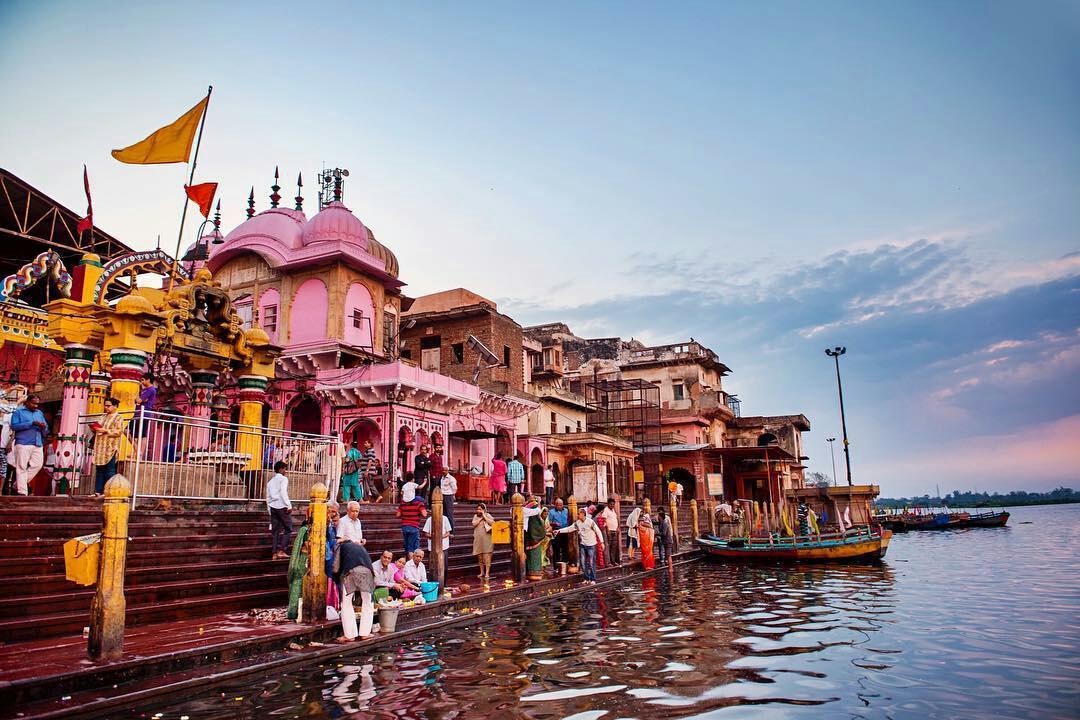
Mathura, known in the scriptures as Mathurā Purī, is celebrated as the birthplace of Lord Kṛṣṇa. Situated on the western bank of the Yamunā, the city is one of the most important holy places in the Vaiṣṇava tradition.
Madhuvana, one of the ancient forests of Vraja, is intimately connected with the Lord’s pastimes and with the history of great devotees. For a pilgrim, travelling from Mathura toward Madhuvana means entering more deeply into the sacred atmosphere of Vraja-bhūmi, the land of Kṛṣṇa’s eternal activities.
The Glory of Mathura Purī
The Vedic scriptures glorify Mathura as one of the most sacred places on earth.
Lord Kṛṣṇa appeared here approximately five thousand years ago in the prison house of King Kaṁsa. His appearance transformed Mathura into one of the most important centres of Vaiṣṇava pilgrimage.
The Saura Purāṇa glorifies Mathura as a city renowned throughout the three worlds, sanctified by the dust touched by the lotus feet of Lord Kṛṣṇa.
This is the special characteristic of a dhāma. A holy place is not considered sacred merely because of its physical beauty. Its spiritual significance comes from its direct connection with the Supreme Lord and His devotees.
Mathura and the Mercy of the Holy Dhāma
The Skanda Purāṇa describes the spiritual benefit of remembering Mathura and its Lord.
The devotee therefore approaches Mathura not merely as an ancient city but as a manifestation of divine mercy.
The Vedic understanding is that the Lord’s transcendental abode is beyond ordinary material geography. Yet out of His causeless mercy, He makes Himself and His pastimes accessible within this world.
This is why devotees carefully preserve remembrance of Mathura, Vṛndāvana and the other sacred places of Vraja.
Mathura as One of the Sapta-Puris
Mathura is traditionally counted among India’s Sapta-Purīs, the seven sacred cities associated with spiritual liberation.
The seven are:
- Mathura
- Haridvāra
- Kāśī
- Ujjain
- Dvārakā
- Kāñcī
- Ayodhyā
The Garuḍa Purāṇa identifies these cities as especially sacred places.
Mathura, however, possesses a unique position for devotees of Kṛṣṇa because it is directly connected with His appearance and childhood pastimes.
Mathura and Gopāla Purī
The Gopāla-tāpanī Upaniṣad describes Mathura as Gopāla Purī, connecting the earthly city with the transcendental abode of the Supreme Lord.
This illustrates an important Vaiṣṇava principle: the Lord’s dhāma may appear within the material world, but it is spiritually different from an ordinary geographical location.
Therefore, Vraja is approached with reverence and humility.
The Half-Moon Shape of Mathura
The Vedic literature describes Mathura as having the shape of a half-moon, associated with the curved course of the Yamunā along the city.
The Ādi-Varāha Purāṇa glorifies this sacred region and describes extraordinary spiritual benefits associated with residing, bathing and leaving the body within the holy land of Mathura.
Such statements should be understood within the theological framework of the Purāṇas, which emphasize the exceptional spiritual potency of the Lord’s holy places.
For the devotee, the important lesson is that association with the dhāma should encourage purification of consciousness and remembrance of Kṛṣṇa.
The Sacred Hills and Kundas of Mathura
Mathura’s sacred geography includes numerous tilas, or elevated hills, and kuṇḍas, sacred ponds connected with different events and personalities.
Among the traditionally remembered hills are:
- Ambarīṣa-tila
- Bali-tila
- Ṛṣi-tila
- Dhruva-tila
- Gatāśrama-tila
- Kaṁsa-tila
- Hanumān-tila
- Kali-yuga-tila
- Rājaka-vāda-tila
The city is also associated with sacred water bodies such as Balabhadra-kuṇḍa, Potra-kuṇḍa, Sarasvatī-kuṇḍa and Mahāvidyā-kuṇḍa.
Each name carries a connection with the sacred history of Mathura.
The Meaning of a Kuṇḍa
A kuṇḍa is a sacred pond or reservoir.
In Vraja, many kuṇḍas are revered because they are associated with the Lord, His devotees or His transcendental pastimes.
Devotees approach these places with prayer and remembrance rather than merely as archaeological or geographical attractions.
From Mathura Toward Madhuvana
After contemplating the glory of Mathura Purī, the pilgrim’s journey toward Madhuvana enters another dimension of Vraja’s sacred landscape.
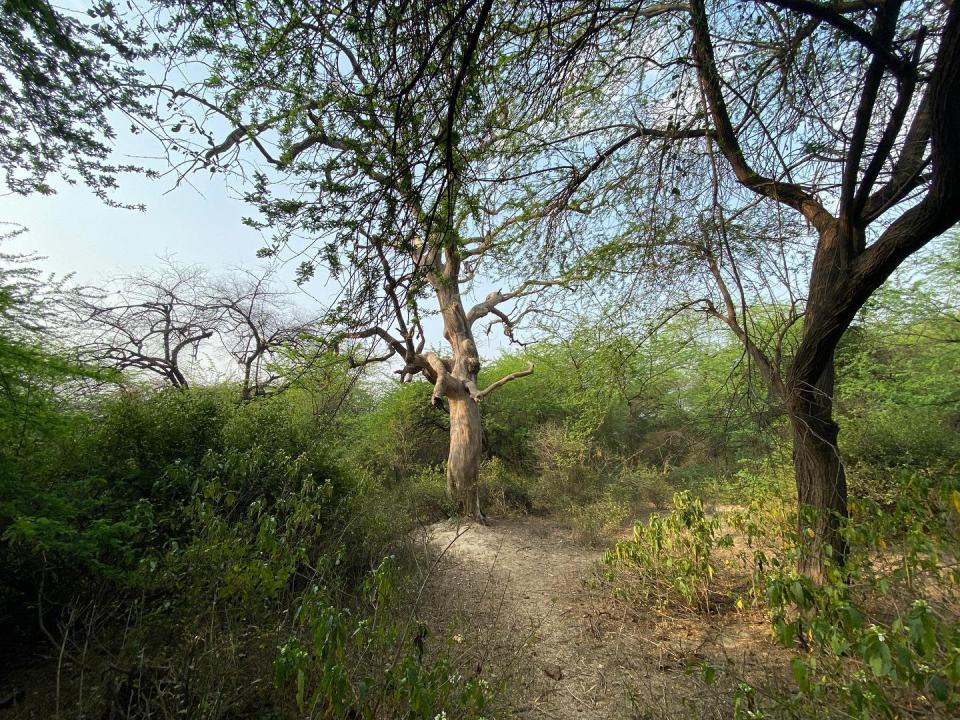
The ancient forests of Vraja are known as vana, meaning forest. These forests are not ordinary forests in the devotional understanding.
They are sacred places connected with the transcendental activities of Kṛṣṇa and His devotees.
Madhuvana is traditionally counted among the important forests of Vraja.
The journey from Mathura toward Madhuvana can therefore be contemplated as a movement from the city of Kṛṣṇa’s appearance toward the forests connected with His childhood pastimes.
Madhuvana: An Ancient Forest of Vraja
The name Madhuvana may be understood as the forest of Madhu.
Vraja’s forests are repeatedly glorified in Vaiṣṇava literature because Kṛṣṇa and Balarāma wandered through these regions with the cowherd boys and calves.
The forests provided the natural setting for many of Kṛṣṇa’s enchanting pastimes.
The word vana means forest, but in the spiritual understanding of Vraja, the forests are also places of intimate devotional remembrance.
The Forests of Vraja
The traditional descriptions of Vraja mention twelve principal forests, known as the Dvādasa-vana.
They include:
- Madhuvana
- Tālavana
- Kumudavana
- Bahulāvana
- Kāmyavana
- Khaḍiravana
- Vṛndāvana
- Bhadravana
- Bhāṇḍīravana
- Bilvavana
- Lohavana
- Mahāvana
Each forest has its own sacred associations and is connected with the Lord’s transcendental pastimes.
Madhuvana and the Pastimes of Lord Kṛṣṇa
The forests of Vraja are especially important because they provide the setting for Kṛṣṇa’s loving relationships with His devotees.
Kṛṣṇa would enter the forests with Balarāma and His cowherd friends. They would tend the cows, play together, sing, eat their lunch and enjoy the beauty of Vraja.
These activities may appear ordinary to an external observer, but the Vaiṣṇava understands them as transcendental pastimes.
The Supreme Personality of Godhead accepts the role of a cowherd boy in order to reciprocate with His devotees in intimate relationships of love.
This is one of the unique features of Vraja-bhakti.
Dhruva Maharaja and Madhuvana
Madhuvana also holds an important place in the story of Dhruva Mahārāja.
According to the Śrīmad-Bhāgavatam, Dhruva Mahārāja performed severe austerities in the forest of Madhuvana while meditating upon the Supreme Lord.
His determination was extraordinary.
Although he was a young child, Dhruva desired to attain the presence of the Lord and performed intense devotional practices under the guidance of the sage Nārada.
Ultimately, Lord Viṣṇu appeared before him.
The Lesson of Dhruva’s Determination
Dhruva Mahārāja’s story teaches the power of focused spiritual determination.
He initially approached the Lord with a material desire, but after receiving the Lord’s direct audience, his consciousness was transformed.
He realized that the material object he had originally desired was insignificant compared with the supreme treasure of devotional service.
This transformation is one of the great lessons of the Bhāgavata tradition.
The Spiritual Meaning of the Mathura to Madhuvana Journey
The journey from Mathura to Madhuvana can therefore be contemplated at several levels.
Externally, it is a journey through the geographical region of Vraja.
Historically, it connects places preserved in India’s sacred traditions.
Theologically, it moves the pilgrim deeper into the world of Kṛṣṇa’s transcendental pastimes.
Spiritually, it can represent the journey of the conditioned soul from worldly consciousness toward remembrance of the Supreme Lord.
Tīrtha-Yātrā as an Inner Journey
The Sanskrit term tīrtha-yātrā means pilgrimage to a sacred place.
But genuine pilgrimage should also produce an inner transformation.
The devotee does not visit the dhāma simply to collect information. He visits to hear, remember, chant and serve.
The holy name of Kṛṣṇa, the association of Vaiṣṇavas and the hearing of śāstra are therefore essential companions on the pilgrimage.
How to Approach Vraja
The Vaiṣṇava tradition teaches that the holy dhāma should be approached with humility.
One should avoid treating sacred places merely as tourist destinations.
The proper mood is one of seva, devotional service.
A pilgrim may chant the holy name, hear about Kṛṣṇa’s pastimes, offer prayers, respect the residents of the dhāma and carefully follow the instructions of advanced devotees.
Such conduct helps one appreciate the spiritual nature of Vraja.
Conclusion: From Mathura to Madhuvana
The journey from Mathura to Madhuvana is a journey through one of the most sacred landscapes of the Vaiṣṇava tradition.
Mathura Purī is revered as the birthplace of Lord Kṛṣṇa and is glorified throughout the Purāṇas as an exceptionally powerful holy place. Madhuvana, one of the ancient forests of Vraja, is connected with the transcendental pastimes of Kṛṣṇa and the determined devotional practice of Dhruva Mahārāja.
For the sincere pilgrim, these places are not merely points on a map.
They are opportunities for śravaṇam—hearing about the Lord, kīrtanam—glorifying His holy name, smaraṇam—remembering His transcendental activities, and seva—rendering devotional service.
Thus, the journey from Mathura to Madhuvana can become much more than a physical pilgrimage. By entering Vraja with humility and devotion, the pilgrim receives the opportunity to deepen his remembrance of Śrī Kṛṣṇa, the Supreme Personality of Godhead, whose lotus feet sanctify the entire land of Vraja.
Deepen your Bhakti-yoga practice, harmonize relationships, and receive guided coaching — all at Vedavarsity.com