


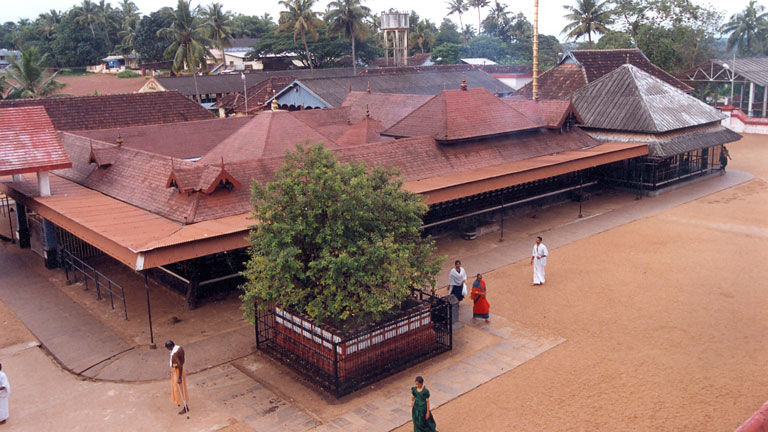
Chottanikkara Temple is one of the most revered temples of Kerala, situated near Ernakulam and celebrated as a sacred centre of worship of Bhagawati, the Divine Mother. The principal Deity is worshipped as Rajarajeswari, and the temple is especially known for its distinctive traditions of worship, ancient legends, and the presence of both Devi and Vishnu within the sanctum.
For generations, devotees have approached this sacred kṣetra with prayers for protection, spiritual strength, and relief from various difficulties. The temple’s traditions reflect the deep devotional culture of Kerala, where worship of the Supreme through different manifestations of the Divine Mother is an important part of religious life.
On the way to Chottanikkara, pilgrims may also visit the famous Poornatrayesa Temple at Tripunithura, adding another significant dimension to a pilgrimage in this sacred region.
The Presiding Deity of Chottanikkara Temple
The principal Deity of Chottanikkara Temple is Rajarajeswari, worshipped as Bhagawati. The image is traditionally described as being made of laterite and is regarded as svayambhu, or not fashioned by an ordinary human sculptor. Its unusual form is covered with a golden kavaca, or protective covering.
The Deity is depicted with four arms. According to the traditional description, the upper right hand holds the cakra, or disc, while the upper left holds the śaṅkha, or conch shell.
The worship of Bhagawati here follows a particularly distinctive daily tradition. The same Deity is worshipped in different forms according to the time of day.
In the morning, She is worshipped as Saraswati, the embodiment of spiritual knowledge, and is dressed in white.
At noon, She is worshipped as Bhadrakali, the powerful form of the Divine Mother, and is dressed in crimson.
In the evening, She is worshipped as Durga, the protective manifestation of the Goddess, and is adorned in blue.
Thus, the daily worship reminds the pilgrim that the Supreme Divine may be approached through different manifestations according to the devotee’s spiritual mood and purpose.
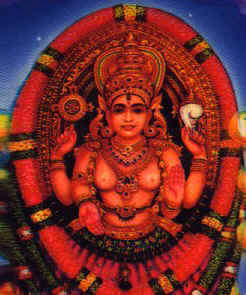
Lakshminarayana: The Divine Presence of Devi and Vishnu
An especially interesting feature of the temple is the presence of an image of Vishnu in granite beside Bhagawati in the sanctum.
The two are traditionally worshipped together as Lakshminarayana. This gives the principal worship a distinctive theological character, reminding devotees of the inseparable relationship between the Divine Mother and Lord Narayana.
The traditional prayers offered here include:
“Amme Narayana, Devi Narayana, Lakshmi Narayana.”
Such prayers express dependence upon the Supreme and invoke divine protection and shelter.
Another remarkable feature associated with the sacred image is that it is traditionally said not to be fixed firmly to the ground. Rather, it rests upon loose sand. Water offered during ceremonial bathing is said to percolate through the ground.
Such traditional features contribute to the unique spiritual atmosphere of this ancient place of worship.
Other Sacred Shrines within the Temple
The temple complex contains several other important shrines.
One shrine is dedicated to Sastha, who is worshipped with His consorts Purna and Pushkala. In front of this shrine are the dhvaja-stambha, or flagstaff, and the bali-pīṭha, the altar associated with ritual offerings.
To the south is Pavazhamallithara, a sacred platform associated with the traditional belief that the Deity first manifested at this place.
A shrine dedicated to Lord Shiva is situated toward the south-western side of the temple complex.
To the north-east are steps leading to the Keezhkaavu, another important shrine associated with Bhadrakali.
Keezhkaavu and the Worship of Bhadrakali
The Keezhkaavu shrine occupies an important place in the religious traditions of Chottanikkara.
The shrine is dedicated to Bhadrakali, a powerful manifestation of the Divine Mother. According to local tradition, the great saint Vilvamangalam Swamigal discovered Bhadrakali in this sacred area.
A pāla tree at Keezhkaavu is traditionally associated with rituals performed by devotees seeking relief from various forms of spiritual and personal distress. Numerous nails have historically been driven into the tree as part of local ritual practice, traditionally understood as representing the removal of harmful influences.
Devotees traditionally visit Keezhkaavu seeking protection from what they understand as evil influences, disturbances, and other forms of suffering.
From a broader spiritual perspective, such pilgrimage traditions remind us of the human desire to seek divine shelter during difficult circumstances. In Vedic culture, the temple is not merely regarded as a monument but as a place where the conditioned soul turns toward the Divine with faith and prayer.
The Legend of Kannappan and the Divine Cow
One of the most cherished legends connected with Chottanikkara Temple concerns a man named Kannappan, who is described in the traditional account as a fierce dacoit living in the region.
According to the legend, Kannappan once brought home a cow with the intention of slaughtering it. However, the cow escaped and ran away. After an unsuccessful pursuit, Kannappan returned home.
There he was surprised to find his beloved daughter playing with the very same cow.
Moved by his daughter’s affection for the animal, Kannappan abandoned his intention of killing it. This event is remembered as an important turning point in the story.
Later, his daughter passed away, causing him profound grief.
According to the traditional narrative, Bhagawati appeared to Kannappan in a dream and revealed that She Herself had come to him in the form of the cow.
The following day, Kannappan is said to have discovered two sacred images in his cowshed—one of Devi and another of Vishnu.
He constructed a humble shrine and began worshipping these sacred forms with devotion.
Over time, the original shrine fell into disrepair. It was subsequently rediscovered and sanctified, eventually developing into the great temple that exists today.
The story conveys an important spiritual principle: genuine transformation can begin through an act of compassion and the cultivation of devotion.
The Annual Festival of Chottanikkara Temple
The principal annual festival of Chottanikkara Temple is traditionally celebrated during the month of Kumbha, corresponding approximately to February–March.
One of the major occasions during the festival is Maasi Makam, which coincides with the full moon and attracts large numbers of pilgrims.
Festivals in Vedic culture are not simply occasions for public celebration. They provide an opportunity for devotees to increase their remembrance of the Supreme, participate in sacred rituals, hear from spiritually advanced persons, and associate with other devotees.
The gathering of pilgrims therefore becomes a form of sādhu-saṅga, or association with spiritually minded persons.
Vilvamangalam Swamigal and the Sacred Tradition
The traditions of Chottanikkara are also associated with Vilvamangalam Swamigal, a revered saint connected with the temple as well as with the sacred traditions of Guruvayur.
According to temple tradition, Bhagawati appeared before Vilvamangalam Swamigal, and he is also said to have discovered the Bhadrakali Deity at Keezhkaavu.
The stories surrounding such saints illustrate the important place of darśana, or spiritually significant vision of the Deity, within Indian devotional culture.
For the devotee, visiting a sacred place is therefore not merely sightseeing. It can become an opportunity to remember the Supreme, hear sacred histories, cultivate humility, and deepen one’s consciousness of the Divine.
Architectural and Historical Development
Much of the present temple structure is associated with renovations undertaken under the government of Cochin during the late nineteenth century.
As with many ancient temples of India, the present physical structure represents different periods of preservation, renovation, and continued worship.
The living tradition of the temple, however, extends beyond its architecture. Its significance is sustained by generations of worshippers who continue to approach the Deity with faith and devotion.
Spiritual Significance of Chottanikkara
The sacred importance of Chottanikkara Temple lies not merely in its antiquity or architectural features. The temple represents a living tradition of approaching the Divine with humility, faith, prayer, and dependence.
The various forms of Bhagawati worshipped throughout the day—Saraswati, Bhadrakali, and Durga—remind us of the multifaceted nature of divine energy.
In Vedic thought, the material energy of the Supreme Lord is understood as śakti, the divine potency through which the cosmic manifestation operates. The sincere spiritual aspirant therefore seeks to understand the Supreme Reality through authorized śāstra and devotional practice.
A pilgrimage becomes spiritually meaningful when it inspires śravaṇam, hearing about the Lord; kīrtanam, glorifying Him; smaraṇam, remembering Him; and other forms of devotional service.
Thus, sacred places are meant to elevate consciousness and encourage the human being to inquire into the eternal purpose of life.
Conclusion
Chottanikkara Temple stands as an important centre of Bhagawati worship in Kerala, with its traditions of Rajarajeswari, Lakshminarayana, Bhadrakali, and the sacred shrine of Keezhkaavu.
Its legends—from Kannappan and the divine cow to the traditions associated with Vilvamangalam Swamigal—form an important part of the temple’s devotional heritage.
For a pilgrim, however, the deepest value of a sacred place is found not merely in seeing an ancient shrine but in cultivating remembrance of the Divine. When pilgrimage is accompanied by humility, devotion, sādhusanga, and genuine spiritual inquiry, the journey can become an opportunity for inner purification and progress in spiritual life.
Deepen your Bhakti-yoga practice, harmonize relationships, and receive guided coaching — all at Vedavarsity.com