



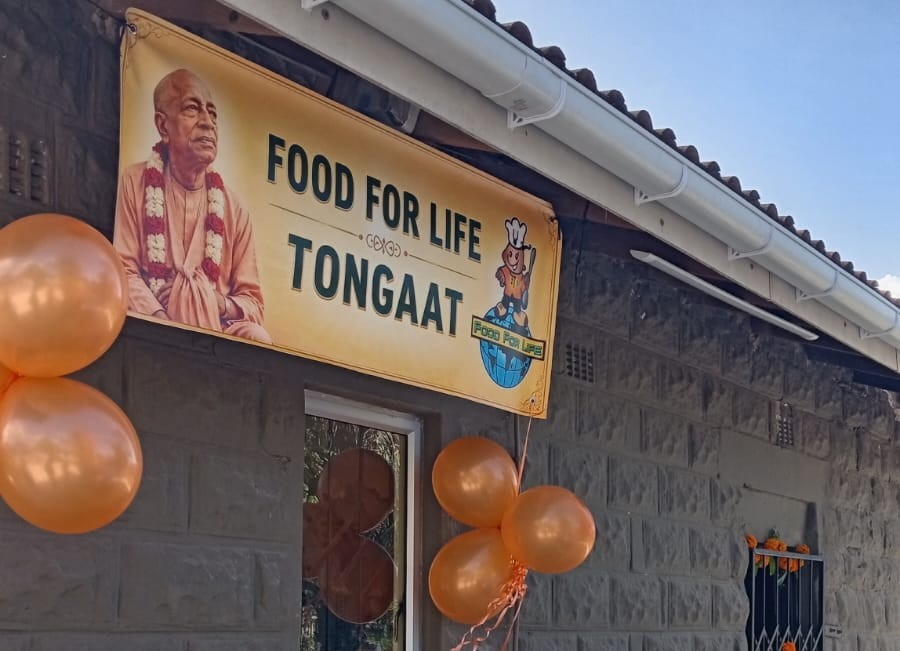
The opening of a dedicated Food for Life Tongaat kitchen marks a significant milestone in the ongoing mission of serving communities through nutritious meals and spiritual compassion. Located within the Vishwarup Temple community complex in Tongaat, South Africa, the new facility provides a permanent home for an initiative that has been serving local communities for more than two decades.
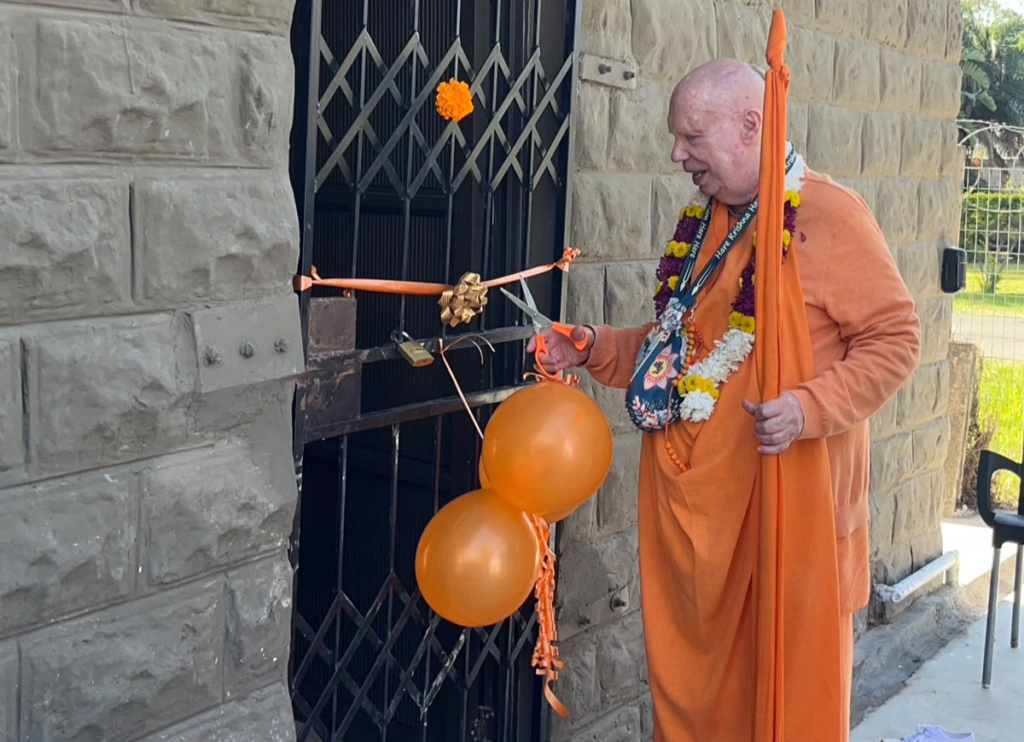
The inauguration ceremony was attended by Bhakti Chaitanya Swami, devotees, community leaders, and well-wishers who gathered to celebrate a project rooted in the timeless Vedic principle of selfless service. More than a kitchen, the facility represents a commitment to caring for others through the distribution of sanctified food, known as prasadam, while fostering meaningful community relationships.
The Vision Behind Food for Life Tongaat
The story of Food for Life Tongaat began in 2002 through the inspiration of His Holiness Bhakti Charu Swami, a respected spiritual leader and disciple of His Divine Grace A.C. Bhaktivedanta Swami Prabhupada.
During a visit to a local Namahatta gathering in Tongaat, Bhakti Charu Swami encouraged devotees to expand their service beyond traditional temple activities and actively assist underprivileged communities.
According to Aravinda Dalayataksha Das, Chairman of the Tongaat Food for Life program and Vice President of ISKCON Phoenix’s New Jagannath Puri Temple, the vision was clear from the beginning.
Bhakti Charu Swami emphasized that meaningful service should reach the broader society, especially children and families facing hardship. His guidance inspired local devotees to establish a feeding initiative that would provide both nourishment and spiritual upliftment.
What began as a simple proposal quickly became a practical reality.
Humble Beginnings: From a Family Home to Community Outreach
The first meals were prepared in Aravinda’s home and distributed to nearby communities.
Initially, volunteers served approximately 500 meals daily. Within a short period, demand increased significantly, and distributions expanded to around 1,000 meals per day across neighboring townships.
These early efforts revealed both the need for such a program and the challenges involved.
On one occasion, volunteers exhausted their supply of food while many people still waited in line. Rather than seeing this as a setback, Bhakti Charu Swami encouraged the team to continue with determination and faith.
The experience reinforced an important principle found throughout Vedic culture: sincere service often grows beyond initial expectations when performed with compassion and dedication.
Growth Through Service and Sacrifice
As the outreach expanded, larger facilities became necessary.
When Bhakti Charu Swami encouraged the team to increase production to 2,000 meals daily, cooking operations were moved to the New Jagannath Puri Temple in Phoenix. This enabled the installation of industrial equipment and greater production capacity.
Although the relocation supported growth, it also created logistical challenges due to the distance from Tongaat.
In 2016, the local team resumed direct management of the outreach program and continued regular distributions within the region.
Today, volunteers serve meals every Tuesday and Saturday while remaining available to respond to emergencies and community needs whenever required.
The spirit behind these efforts reflects the Bhagavad-gita’s teaching that work performed for the welfare of others, without selfish motivation, becomes a form of higher service.
Building Community Through Prasadam
One of the most remarkable aspects of Food for Life Tongaat has been its ability to build genuine relationships within local communities.
Aravinda recalls visiting African townships with his daughter during the early stages of the project. Initially uncertain about how they would be received, they soon discovered an atmosphere of warmth and appreciation.
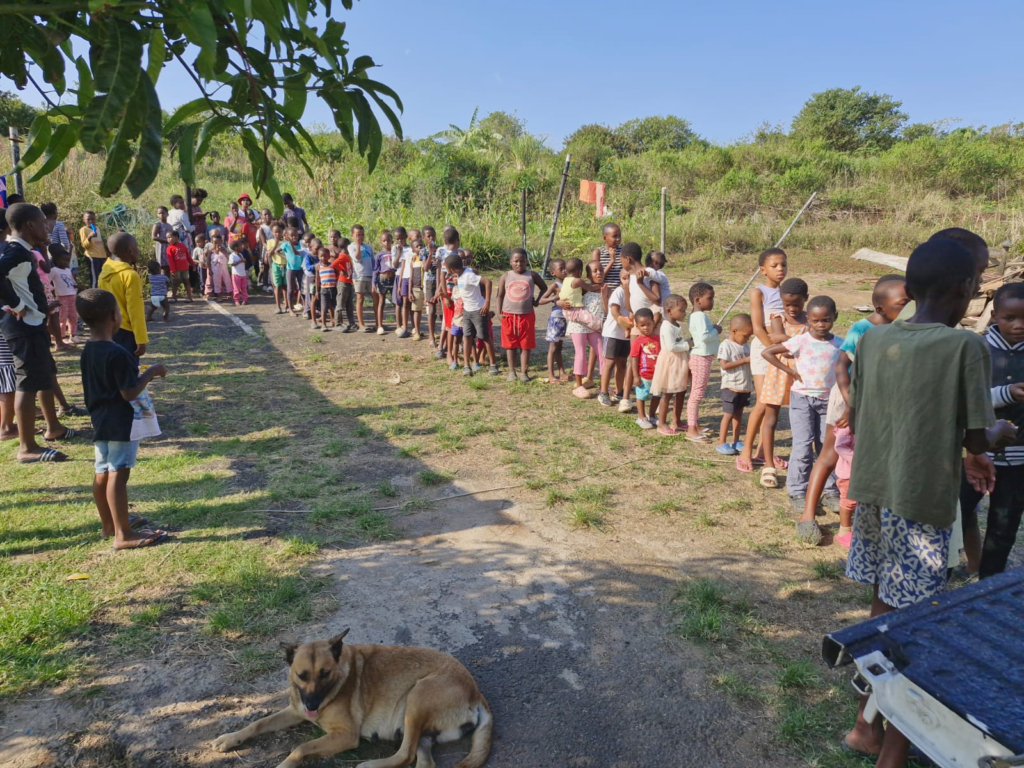
Residents not only welcomed the volunteers but often assisted in distributing food to others.
Following Bhakti Charu Swami’s instructions, volunteers incorporated kirtana—the congregational chanting of the holy names—before serving meals.
Children enthusiastically participated, creating makeshift musical instruments from buckets and tins and joining in the devotional singing.
These interactions transformed meal distributions into opportunities for cultural and spiritual connection.
Years later, many beneficiaries still remember those experiences.
Former recipients frequently express gratitude, recalling both the quality of the meals and the kindness shown by volunteers. Such memories demonstrate how acts of service can leave lasting impressions that extend far beyond physical nourishment.
A Permanent Home for Food for Life Tongaat
For many years, supporters hoped to establish a dedicated facility within Tongaat itself.
That aspiration became possible through the Vishwarup Temple community complex, a center that hosts Namahatta programs, Janmashtami celebrations, Ratha Yatra festivals, and various educational activities.
However, transforming the chosen building into a functional kitchen required considerable effort.
The structure had deteriorated significantly and required extensive renovations. Electrical systems, ceilings, windows, flooring, and structural repairs all had to be completed before operations could begin.
Through the combined efforts of volunteers, tradespeople, donors, and community supporters, the neglected building was transformed into a modern facility capable of serving large numbers of people efficiently.
The successful completion of the project stands as a testament to cooperative service and collective determination.
Expanded Capacity and Future Opportunities
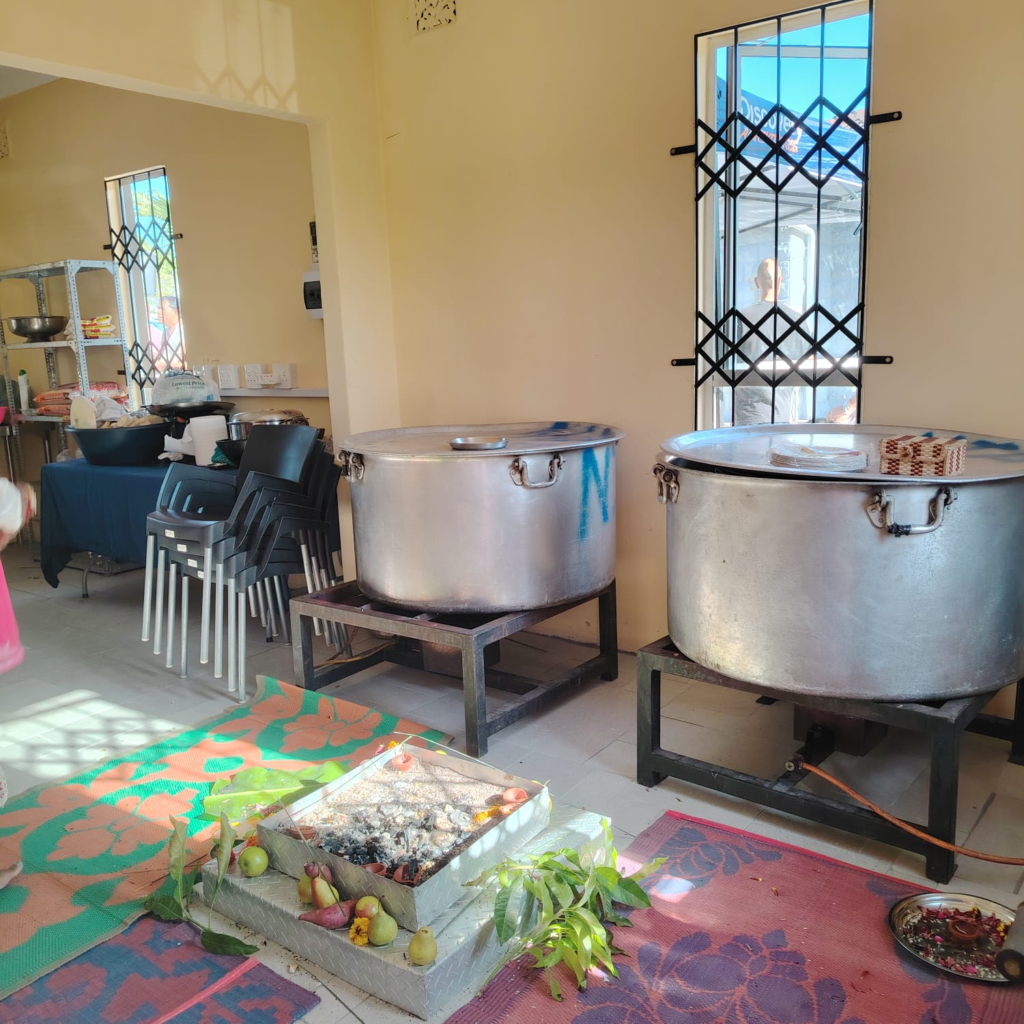
The new Food for Life Tongaat kitchen dramatically increases production capabilities.
Two industrial cooking vessels can each prepare approximately 1,500 meals per cycle, enabling the facility to produce up to 3,000 meals during a single cooking session.
This enhanced capacity opens the door to future expansion and the possibility of returning to daily meal distributions.
The facility also provides greater flexibility during emergencies, allowing volunteers to respond more effectively when communities face unexpected hardships.
Beyond food distribution, organizers envision the kitchen becoming a center for broader educational and spiritual outreach.
Programs may include:
Bhagavad-gita Recitation
Introducing timeless spiritual wisdom in an accessible and practical manner.
Prasadam Appreciation and Prayer
Helping participants understand the sacred significance of food offered to the Supreme Lord.
Volunteer Development
Creating opportunities for youth and community members to participate in meaningful service activities.
Leadership Training
Encouraging future leaders to emerge from the very communities currently being served.
Aravinda expressed hope that, in the coming years, young people from local townships will become active participants and leaders within the outreach effort.
Service as an Expression of Dharma
The success of Food for Life Tongaat illustrates a fundamental principle of Vedic culture: true prosperity is measured not only by what one possesses but by what one shares.
Ayurveda, Yoga, and the broader Vedic tradition all emphasize harmony between individual well-being and social responsibility. Feeding others, especially those in need, is considered an important expression of dharma—righteous duty.
From a spiritual perspective, every living being is an eternal soul (atma) deserving of respect, care, and compassion. When food is distributed with genuine concern and devotion, it nourishes both body and heart.
Such service reminds us that lasting transformation often begins with simple acts of kindness performed in a spirit of gratitude and humility.
Conclusion
The opening of the new Food for Life Tongaat kitchen represents far more than the completion of a building project. It marks the continuation of a vision first inspired over twenty years ago by Bhakti Charu Swami and sustained through the dedication of countless volunteers and supporters.
With a permanent facility, expanded cooking capacity, and renewed community involvement, Food for Life Tongaat is positioned to deepen its impact across the region for many years to come.
As the program enters this new phase, its mission remains unchanged: to serve others through nourishing prasadam, compassionate outreach, and the timeless principle that genuine care for humanity is an essential part of spiritual life.
library.vedavarsity.com || www.vedavarsity.com
Deepen your Bhakti-yoga practice, harmonize relationships, and receive guided coaching — all at Vedavarsity.com