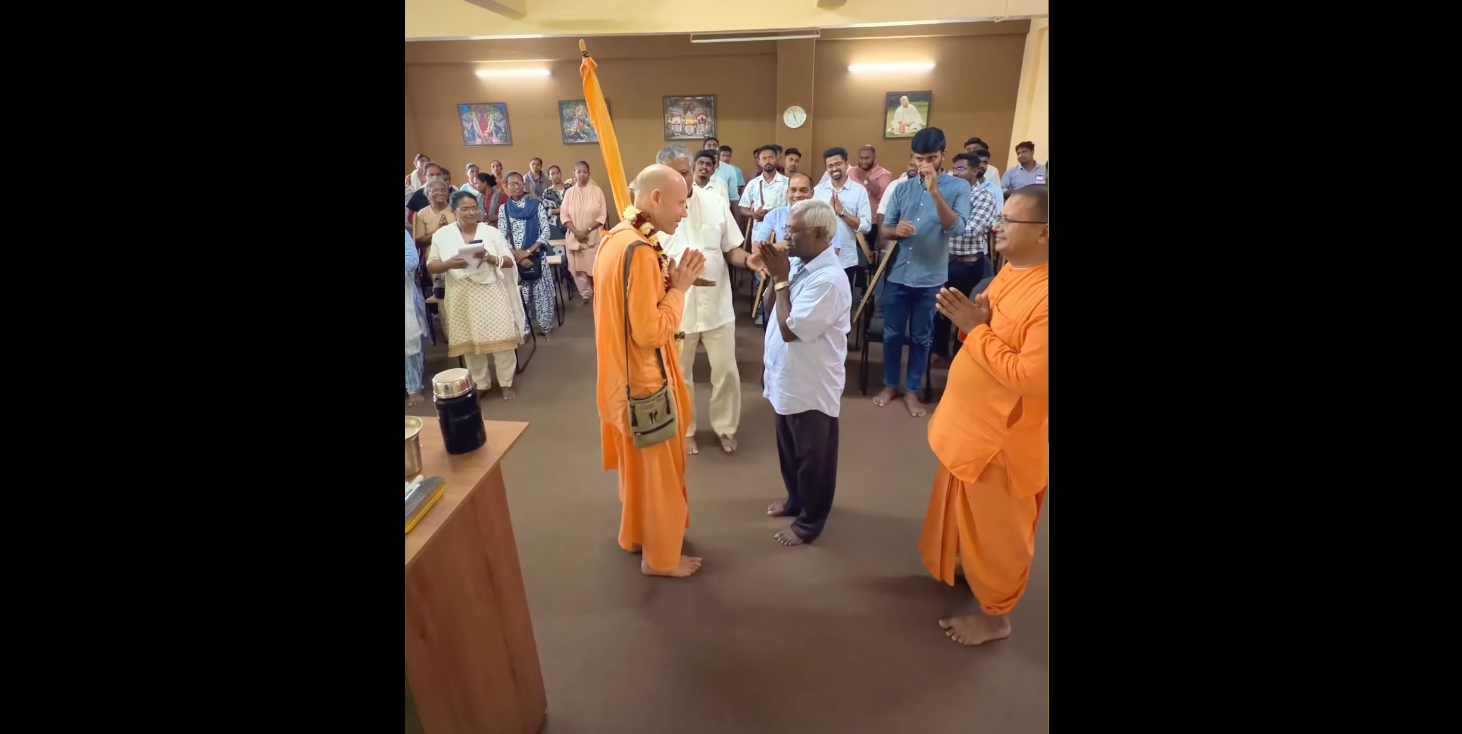
In a significant example of interfaith cooperation, ISKCON Leader Meets Catholic Leaders became a noteworthy event in Pune, India, as His Holiness Sri Krishna Chaitanya Swami engaged with approximately fifty Roman Catholic priests, nuns, and ministry leaders at Ishvani Kendra. The gathering served as an opportunity to deepen mutual understanding, explore shared spiritual values, and strengthen relationships between faith communities committed to serving humanity.
The dialogue reflected a growing recognition that genuine spirituality transcends external differences and encourages cooperation based on universal principles such as compassion, prayer, selfless service, and remembrance of God.
ISKCON Leader Meets Catholic Leaders at Ishvani Kendra
The event took place at Ishvani Kendra, a respected Catholic institution located in Pune, India. Established by the Divine Word Missionaries (DVM), the center is dedicated to mission studies, leadership development, communications, research, publications, and media training.
As part of its commitment to fostering understanding among diverse faith traditions, Ishvani Kendra regularly hosts educational and spiritual programs that encourage constructive dialogue and cooperation.
During the gathering, Sri Krishna Chaitanya Swami, who oversees ISKCON’s Kirtan and Padayatra Ministries, addressed the participants and shared insights into the timeless teachings of Sanatana Dharma, often translated as the eternal spiritual principles that guide humanity toward a harmonious relationship with the Supreme.
The session was marked by sincerity, openness, and mutual respect, creating an atmosphere conducive to meaningful exchange and learning.
Presenting the Universal Teachings of Sanatana Dharma
A central focus of the discussion was the presentation of the universal values found within Sanatana Dharma.
Sri Krishna Chaitanya Swami explained how principles such as devotion, compassion, humility, prayer, and selfless service remain relevant regardless of religious affiliation or cultural background.
These teachings emphasize that every living being is spiritual in nature. According to Vedic wisdom, the body undergoes constant change, but the eternal self, or ātma, remains unchanged. Recognizing this spiritual identity forms the basis for cultivating respect, kindness, and genuine concern for others.
Rather than emphasizing differences, the discussion highlighted common aspirations shared by sincere practitioners of all faith traditions: developing love for God and serving others with compassion.
Such conversations demonstrate that spiritual traditions can enrich one another through thoughtful engagement while remaining faithful to their own teachings and practices.
Sharing the Worldwide Mission of ISKCON
Another important aspect of the presentation involved introducing the worldwide activities of the International Society for Krishna Consciousness (ISKCON).
Sri Krishna Chaitanya Swami provided an overview of the society’s global efforts in spiritual education, congregational chanting (kirtana), distribution of sacred literature, food relief programs, cultural outreach, and community development.
Participants also learned about the movement’s emphasis on bhakti-yoga, the path of devotional service, which teaches that all activities can be spiritualized when performed with devotion to the Supreme Lord.
ISKCON’s outreach programs operate in numerous countries and seek to promote spiritual knowledge through practical application. Initiatives such as prasadam distribution, educational programs, and public chanting aim to uplift both individuals and communities.
The presentation offered attendees a broader understanding of how Vedic wisdom is being shared internationally while remaining rooted in its authentic spiritual tradition.
Remembering the Legacy of Srila Prabhupada
A significant portion of the dialogue focused on the life and contributions of His Divine Grace A.C. Bhaktivedanta Swami Prabhupada, the Founder-Acharya of ISKCON.
Participants were introduced to Srila Prabhupada’s remarkable efforts to bring the teachings of the Bhagavad-gita and the science of bhakti-yoga to a global audience.
Beginning his mission in the West at an advanced age, Srila Prabhupada established temples, translated and commented upon sacred Vedic texts, and inspired thousands to adopt a life centered on spiritual practice and service.
His vision extended beyond institutional growth. He consistently emphasized the importance of understanding humanity’s spiritual identity and developing God-consciousness as the foundation for lasting peace and happiness.
The discussion underscored how Srila Prabhupada’s work continues to influence spiritual seekers, scholars, and faith leaders around the world.
Shared Values Across Spiritual Traditions
One of the most meaningful outcomes of the gathering was the recognition of common values shared across different religious traditions.
Although theological perspectives may vary, many faith communities emphasize similar virtues:
Compassion
Serving those in need and showing kindness toward all living beings.
Prayer and Remembrance of God
Developing a conscious relationship with the Divine through regular spiritual practice.
Selfless Service
Acting for the welfare of others without selfish motivation.
Humility
Recognizing one’s dependence upon divine grace and guidance.
Ethical Living
Aligning actions with higher moral and spiritual principles.
These values resonate deeply with both Vedic and Christian traditions and provide a strong foundation for cooperation in addressing social, moral, and humanitarian challenges.
When spiritual communities focus on these shared principles, they create opportunities for constructive collaboration while preserving their unique identities.
The Importance of Interfaith Dialogue
In an increasingly interconnected world, meaningful interfaith dialogue plays an important role in promoting understanding and reducing misconceptions.
Such discussions do not seek to erase differences or create uniformity. Rather, they encourage respectful engagement and the exchange of perspectives that enrich all participants.
The Vedic tradition recognizes that genuine wisdom includes the ability to see the spiritual dignity present in every individual. Similarly, many religious traditions teach the importance of treating others with respect and compassion.
Through open dialogue, communities can move beyond stereotypes and develop authentic relationships based on trust and shared commitment to higher values.
The Pune gathering exemplified this approach by creating a space where participants could learn from one another in a spirit of friendship and goodwill.
Devotional Music and Spiritual Fellowship
The event concluded with uplifting discussions and devotional music, adding a joyful and experiential dimension to the gathering.
Music has long been recognized as a powerful means of spiritual expression. In the bhakti tradition, devotional singing serves not merely as entertainment but as a method of cultivating remembrance of God and purifying the heart.
The inclusion of devotional music reinforced the atmosphere of unity and appreciation that characterized the event.
Participants left with a deeper understanding of one another’s traditions and a renewed appreciation for the role that spirituality can play in fostering harmony within society.
A Step Toward Greater Harmony
The meeting between Sri Krishna Chaitanya Swami and the Catholic leaders of Ishvani Kendra stands as a positive example of how sincere spiritual dialogue can build bridges between communities.
In an age often marked by division and misunderstanding, such gatherings demonstrate that mutual respect and shared values can serve as powerful foundations for cooperation and peace.
From a Vedic perspective, every sincere effort to understand others and serve humanity contributes to the cultivation of dharma—the principles that sustain harmony within individuals and society.
When spiritual leaders come together with humility and openness, they help create conditions where wisdom, compassion, and cooperation can flourish.
Conclusion
The event in Pune, where an ISKCON Leader Meets Catholic Leaders, highlights the enduring importance of interfaith engagement grounded in respect, sincerity, and shared spiritual values.
Through discussions on Sanatana Dharma, devotion, service, and God-conscious living, participants discovered meaningful common ground while deepening their appreciation for each other’s traditions.
As demonstrated by this gathering, authentic spiritual dialogue is not merely an exchange of ideas—it is an opportunity to strengthen human relationships, promote understanding, and work together for the welfare of society. In a world seeking greater harmony, such encounters remind us that genuine spirituality naturally inspires unity, compassion, and service to all.
library.vedavarsity.com || www.vedavarsity.com
Deepen your Bhakti-yoga practice, harmonize relationships, and receive guided coaching — all at Vedavarsity.com