The Srirangam Temple stands as the foremost among the 108 Divya Desams glorified by the Alwars, holding a central place in the Sri Vaishnava tradition. Revered by all Alwars except Madhurakavi Alwar, this sacred shrine is widely regarded as one of the greatest pilgrimage centers in India. Situated near Tiruchirappalli, the temple is not only vast in physical scale but also profound in spiritual heritage.
Often described as “heaven on earth,” the Srirangam Temple reflects a living tradition where devotion, architecture, and disciplined worship converge in harmony.
Srirangam Temple: A Center of Sri Vaishnava Philosophy
The Srirangam Temple is closely associated with Ramanujacharya, the great exponent of Sri Vaishnavism. His teachings established a systematic approach to devotion (bhakti) grounded in surrender (prapatti) to the Supreme Lord.
The temple also forms part of the Pancharanga Kshetrams along the river Kaveri River, a sacred network of Ranganatha temples. These include Srirangapatnam, Srirangam, Koyiladi, Kumbakonam, and Indalur.
Nearby lies Jambukeswarar Temple, one of the Pancha Bhoota Stalams representing the element of water, highlighting the region’s spiritual richness.
Deities and Sacred Presence
At the heart of the Srirangam Temple is Lord Ranganathar, a reclining form of Lord Vishnu, facing south. This posture symbolizes divine rest and cosmic order, indicating that the Supreme remains in control even while appearing at rest.
Alongside the main deity is Namperumaal, the festival deity in standing posture, who actively participates in temple processions and rituals. The shrine of Ranganayaki Taayaar, the divine consort, is located in the fourth prakaram, completing the sacred triad.
From a philosophical perspective, these forms remind devotees of the personal and accessible nature of the Supreme, who reciprocates with devotion offered in sincerity.
Architectural Grandeur of Srirangam Temple
The Srirangam Temple is the largest functioning temple complex in India, showcasing layers of architectural evolution across centuries.
Seven Concentric Enclosures
The temple is structured with seven concentric prakarams (enclosures), symbolizing progressive stages of spiritual approach. Within these enclosures lie numerous mandapams, shrines, and sacred tanks.
The area enclosed by the outermost wall spans over a hundred acres, making it a vast sacred city in itself.
Gopurams and Towers
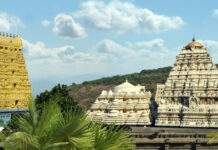
A total of 21 towers adorn the temple, with the southern and eastern gopurams of the fourth prakaram being particularly impressive. The temple also boasts the tallest temple tower in India, reflecting both artistic excellence and devotional intent.
Sacred Structures
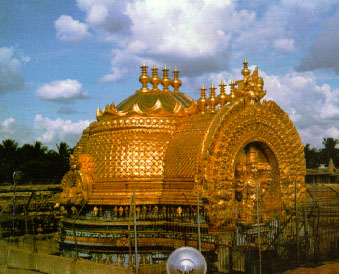
- The gold-plated Pranava Vimanam crowns the central sanctum
- The thousand-pillared hall, built during the late Chola period, serves as a venue for major festivals
- The Garuda Mandapam, attributed to the Nayak rulers, stands as a fine example of later architectural additions
These structures demonstrate how devotion inspires craftsmanship across generations.
Traditions and Cultural Contributions
The Srirangam Temple has been a cradle of spiritual and artistic traditions.
Araiyar Sevai
One of the most notable traditions is Araiyar Sevai, an expressive form of devotional recitation combining music, gesture, and scripture. Originating under the guidance of Nathamuni, this practice involves the rendering of Divya Prabandham hymns.
Literary Heritage
The temple is also associated with the premiere of the Tamil epic Kamba Ramayanam, underscoring its role as a center of literary and cultural expression.
Such traditions reflect the Vedic principle that knowledge and devotion are interconnected, each enriching the other.
Legends of Srirangam Temple
The origins of the Srirangam Temple are deeply rooted in sacred legend.
The Journey of the Ranganatha Idol
It is believed that the image of Ranganatha was originally worshipped by the Ikshvaku dynasty and later by Lord Rama. After his return from Lanka, Rama gifted the deity to Vibhishana.
While carrying the idol to Lanka, Vibhishana placed it on the banks of the Kaveri, where it became fixed. Thus, Srirangam became its permanent abode, with the deity facing south toward Lanka.
This legend illustrates the principle that divine will ultimately determines the course of events, even when human intentions differ.
Historical Evolution of Srirangam Temple
The Srirangam Temple has evolved through several historical phases.
Early References and Chola Contributions
The temple is mentioned in the ancient Tamil epic Silappadikaram. The earliest surviving stone inscription dates to the reign of Parantaka Chola (924 CE).
The Cholas contributed significantly to the temple’s structural development, including the construction of pillars and mandapams.
Pandya and Hoysala Patronage
From the 13th century onward, the Pandya rulers supported the temple extensively, including the gold plating of the vimanam. The Hoysala kings also contributed during their presence in the region.
Invasion and Restoration
In 1313, the temple faced desecration during invasions from the Delhi Sultanate and remained closed for several decades. It was later revived during the Vijayanagara period, when much of the present structure was rebuilt.
This cycle of decline and restoration reflects the enduring resilience of spiritual institutions guided by collective effort.
Festivals and Ritual Life
The Srirangam Temple maintains an elaborate schedule of rituals and festivals throughout the year.
Daily Worship and Processions
Multiple worship services are conducted daily. On approximately 120 days each year, the festival deity is taken in procession, allowing devotees to engage more directly in worship.
Adhyayanotsavam
Celebrated in the month of Margazhi, this festival involves the recitation of Divya Prabandham hymns in the thousand-pillared hall. It is a major event in the temple calendar.
Brahmotsavam
The Aadi Brahmotsavam, celebrated in Panguni, is another grand festival marked by elaborate rituals and community participation.
Additional Sacred Sites Within Srirangam
Within the vicinity of the Srirangam Temple is the Dasavataram temple, dedicated to the ten incarnations of Lord Vishnu. This unique shrine also houses Lakshmi Narasimha and Vishwaksena.
Built by Tirumangai Alvar and administered by the Ahobila Mutt, this temple adds further depth to the spiritual landscape of Srirangam.
Conclusion: A Living Expression of Divine Order
The Srirangam Temple is not merely a historical monument but a living embodiment of devotion, discipline, and divine connection. Its vast architecture, rich traditions, and continuous worship reflect a civilization rooted in higher understanding.
For the sincere seeker, such a place offers more than visual grandeur—it provides a path toward recognizing the eternal nature of the self (ātma) and its relationship with the Supreme. In this way, the temple stands as a reminder that true fulfillment lies not in external expansion alone, but in alignment with the divine order that governs all existence.
library.vedavarsity.com | www.vedavarsity.com
Deepen your Bhakti-yoga practice, harmonize relationships, and receive guided coaching — all at Vedavarsity.com