


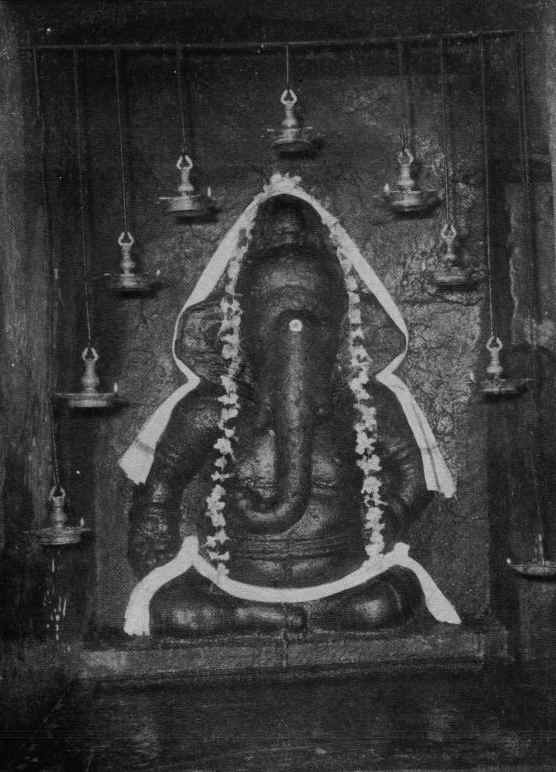
The Karpaka Vinayakar Temple at Pillayarpatti stands as one of the oldest rock-cut cave temples in Tamil Nadu, preserving centuries of devotion, craftsmanship, and cultural continuity. Familiar to many, especially those of Tamil origin, the iconic image of Ganesha from this shrine represents not only artistic excellence but also a deep-rooted spiritual tradition.
Situated between Pudukkottai and Karaikkudi, this ancient temple remains an important center of worship and pilgrimage. Its historical depth and continued relevance reflect the enduring nature of dharma, which guides human life across generations.
Location and Cultural Identity of Pillayarpatti
The village of Pillayarpatti derives its name from “Pillayar,” the Tamil name for Lord Ganesha. This itself indicates the centrality of Ganesha worship in the region. The temple is located in a relatively quiet area, accessible from nearby towns and the airport at Tiruchirappalli.
Despite its modest geographic setting, the temple holds a prominent place in the spiritual landscape of Tamil Nadu. It represents a continuity of tradition where devotion (bhakti) and disciplined worship are preserved with care.
Karpaka Vinayakar Temple: Deities and Sacred Forms
At the heart of the Karpaka Vinayakar Temple is the presiding deity, Karpaka Vinayakar, also known as Desi Vinayaka Pillaiyar. This six-foot-tall image of Ganesha is carved as a bas relief within a rock-cut cave.
Unique Iconography of Ganesha
The form of Karpaka Vinayakar is distinct. He is depicted with two arms and a trunk turned to the right (valampuri), which is considered highly auspicious. Unlike more common representations, this simpler yet powerful form reflects early sculptural traditions.
Such images remind the observer that divinity is not dependent on complexity but on presence and realization.
Other Deities in the Temple
Alongside Ganesha, the temple houses several other deities:
- Tiruveesar (a Shiva Lingam carved within the cave)
- Marudankudi Eesar
- Vaadaamalar Mangai (consort deity)
These deities collectively establish the temple as a complete spiritual center, reflecting the unity of various aspects of divine manifestation.
Antiquity and Historical Development
The Karpaka Vinayakar Temple is notable for its great antiquity, supported by inscriptions and architectural features.
Early Origins (Circa 4th Century AD)
The earliest phase of the temple dates back approximately 1600 years. The rock-cut shrines housing Karpaka Vinayakar and Tiruveesar belong to this period. The style of inscriptions and the structural elements indicate a pre-Pallava origin.
This makes the temple older than many well-known rock-cut monuments in South India.
Pallava and Pandya Context
While the Pallavas are widely recognized for rock-cut architecture—seen in places such as Mahabalipuram and Mandagapattu—the inscriptions at Pillayarpatti suggest an even earlier origin. Given its location within the Pandya kingdom, it is reasonable to associate the temple with Pandya patronage.
This historical layering reflects how different dynasties contributed to the preservation of sacred spaces.
Second Phase (11th–13th Century AD)
Inscriptions from 1091 AD to 1238 AD indicate significant development during this period. The construction of vimanams (temple towers) and rajagopurams (gateway towers) took place.
The Pillayarpatti Nagarathar community emerged as custodians of the temple during this time, taking responsibility for its maintenance and worship.
Recent Renovations
The third phase involves more recent restoration efforts, including the renovation of the temple tank and structural repairs. These efforts ensure that the temple continues to serve future generations.
Such continuity reflects the principle of karma, where responsible action sustains cultural and spiritual heritage.
Architectural Significance of Rock-Cut Temples
Rock-cut temples represent a remarkable tradition in Indian architecture. Instead of building structures, artisans carved entire shrines out of solid rock.
In the Karpaka Vinayakar Temple, this technique is evident in the sanctum and pillars. These structures have endured for centuries, demonstrating both technical skill and spiritual dedication.
From a philosophical perspective, carving a temple from rock may be seen as uncovering what already exists—just as spiritual practice reveals the true nature of the self (ātma) beneath external layers.
Worship Practices and Daily Rituals
The temple follows a structured system of worship rooted in Agamic traditions. These texts prescribe detailed methods for deity worship, ensuring consistency and sanctity.
Daily Worship Schedule
Five daily worship services are conducted, beginning at 6 AM and concluding at 9 PM. These rituals include offerings, chanting, and ceremonial practices.
Such discipline reflects the principle that spiritual progress requires regularity and sincerity.
Processions and Observances
During specific lunar phases, the deity is taken in procession around the temple. These events attract large numbers of devotees and reinforce community participation in spiritual life.
Festivals at Karpaka Vinayakar Temple
Festivals play an important role in the life of the Karpaka Vinayakar Temple, bringing together devotion, tradition, and community celebration.
Ganesh Chaturthi
The most significant festival is Ganesh Chaturthi, celebrated over ten days during August–September. Each day features processions where the deity is taken through the town on various mounts.
The ninth day includes a grand chariot procession, symbolizing the movement of divine grace among the people.
Vaikasi Festival
A ten-day festival in May–June honors Kongu Nachiyamman, a local deity associated with the temple. This reflects the integration of regional traditions within a broader spiritual framework.
Margazhi Tiruvadirai
Celebrated in December–January, this festival is dedicated to Nataraja and Sivakami, highlighting the worship of Lord Shiva in his cosmic form.
Community Stewardship and Living Tradition
The Pillayarpatti Nagarathar community continues to play a vital role in maintaining the temple. Their commitment ensures that rituals are performed properly and that the temple infrastructure remains intact.
This ongoing stewardship illustrates how collective responsibility supports the preservation of dharma.
Temples such as this are not merely historical monuments; they are living institutions where spiritual knowledge is practiced daily.
Nearby Sacred Sites
The region surrounding Pillayarpatti includes several other important temples:
- Gokarneswarar Temple at Pudukkottai
- Shanmukhanathar Temple at Kundrakudi
These sites contribute to the broader spiritual landscape, offering pilgrims multiple opportunities for reflection and worship.
Conclusion: A Testament to Enduring Dharma
The Karpaka Vinayakar Temple at Pillayarpatti stands as a profound example of continuity in spiritual practice, architectural excellence, and community dedication. Its origins in ancient rock-cut tradition and its ongoing role in contemporary worship reflect the enduring nature of Vedic culture.
While time transforms societies, the principles of dharma remain constant. This temple quietly affirms that when human effort aligns with higher purpose, both heritage and spiritual understanding are preserved for generations to come.
library.vedavarsity.com | www.vedavarsity.com
Deepen your Bhakti-yoga practice, harmonize relationships, and receive guided coaching — all at Vedavarsity.com