


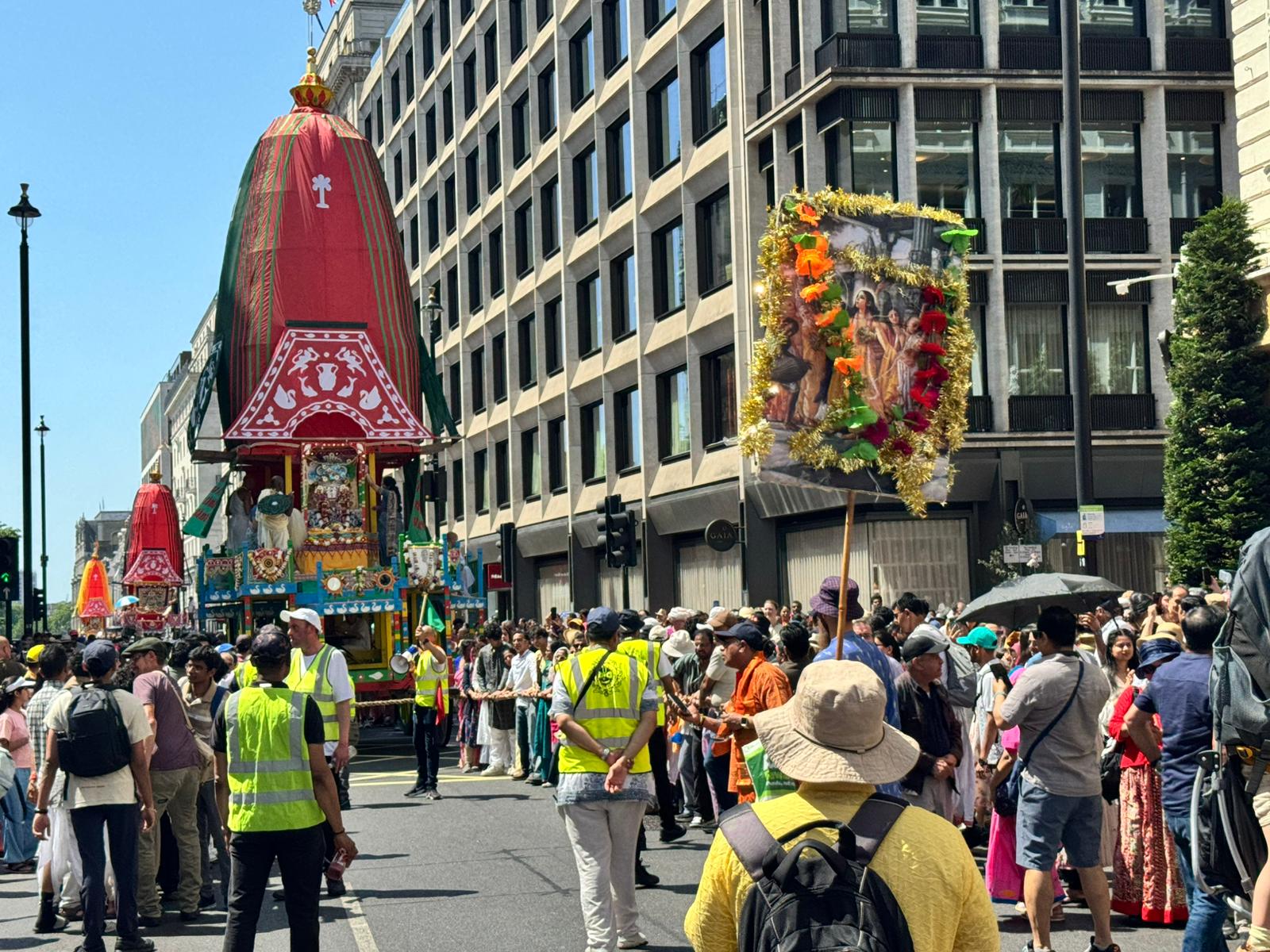
The London Rathayatra 2026 festival transformed the streets of the British capital into a vibrant celebration of devotion and culture on Sunday, May 24, 2026. More than 10,000 devotees and visitors gathered to participate in the annual Festival of Chariots, one of the most anticipated spiritual events in Europe.
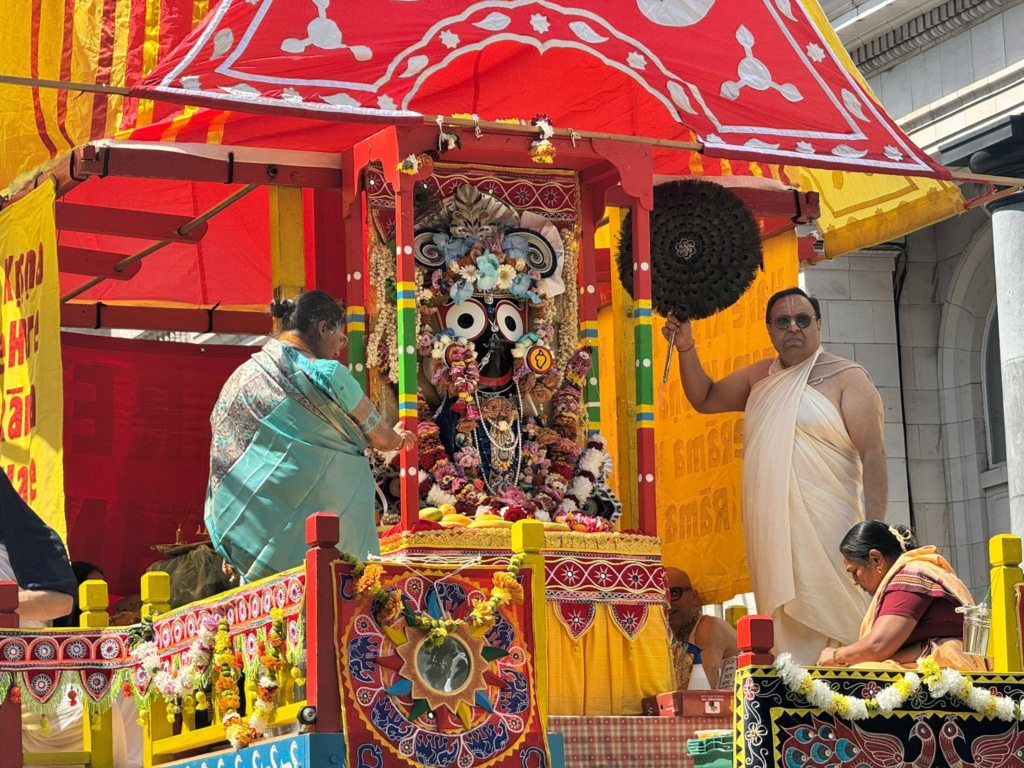
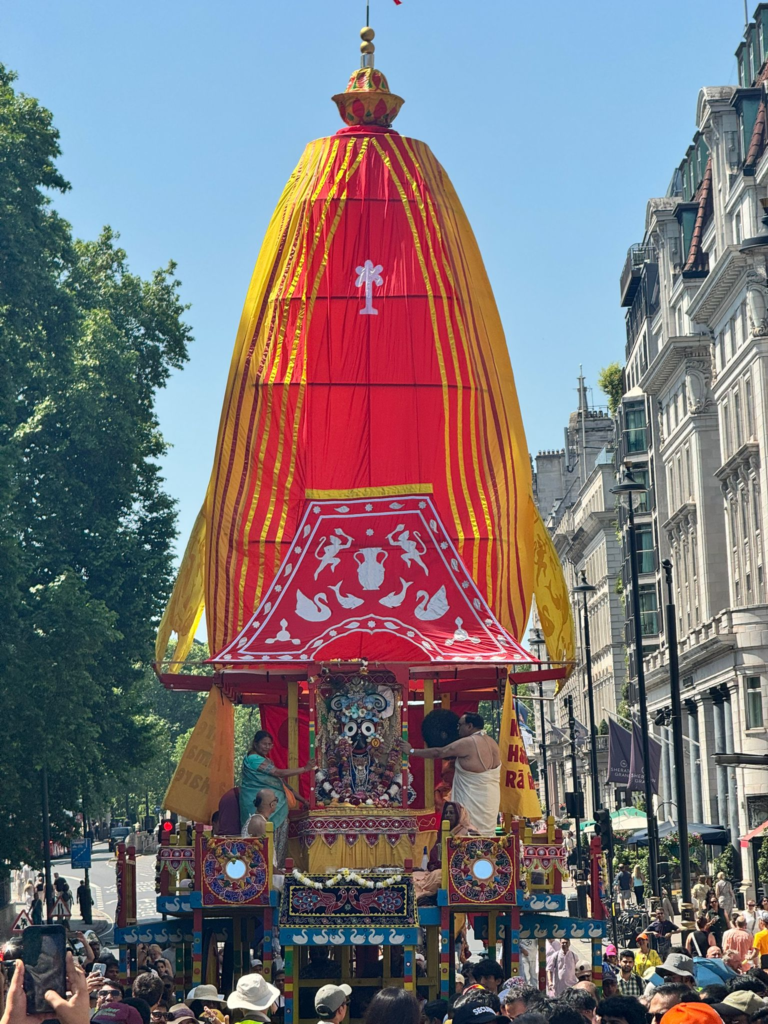
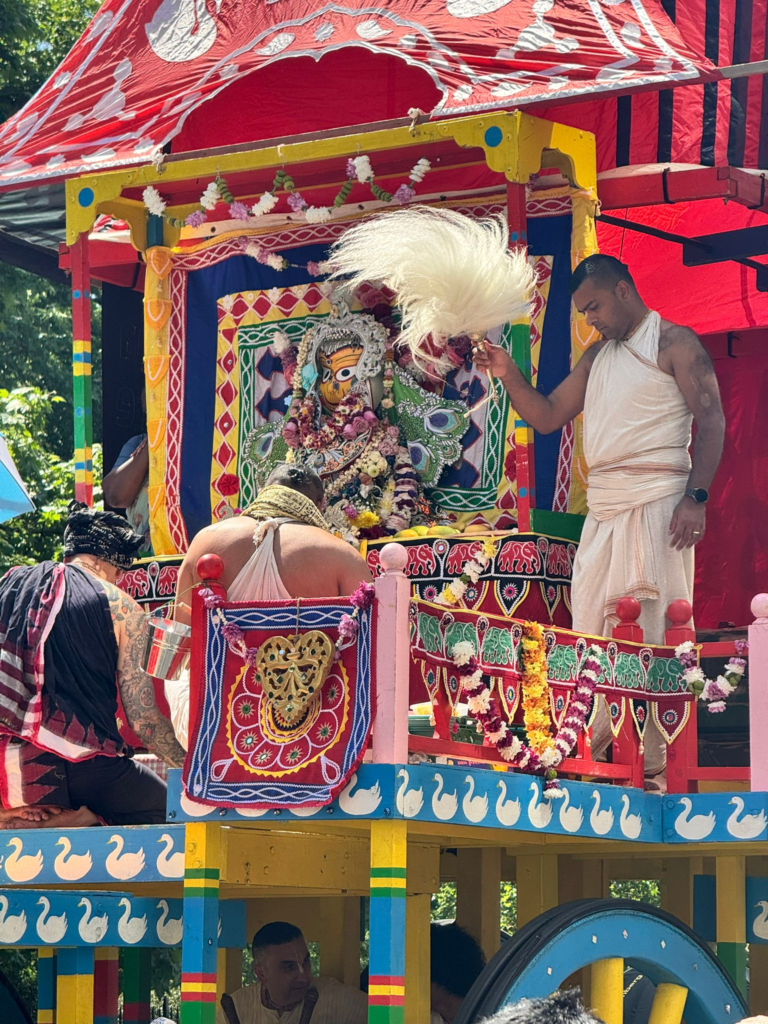
Beginning at Park Lane and culminating in Trafalgar Square, participants joined together to pull three magnificent 40-foot-high chariots carrying the sacred Deities of Lord Jagannath, Lord Balarama, and Subhadra Devi. Accompanied by kirtan, dancing, and devotional festivities, the procession offered a unique spiritual experience to residents and visitors alike.
The event demonstrated how an ancient Vedic tradition continues to inspire people across cultures and backgrounds, bringing timeless spiritual wisdom into the public sphere.
London Rathayatra 2026 Brings Ancient Tradition to Modern London
Despite unusually high temperatures during the ongoing heatwave, thousands of participants filled the streets with enthusiasm and devotion.
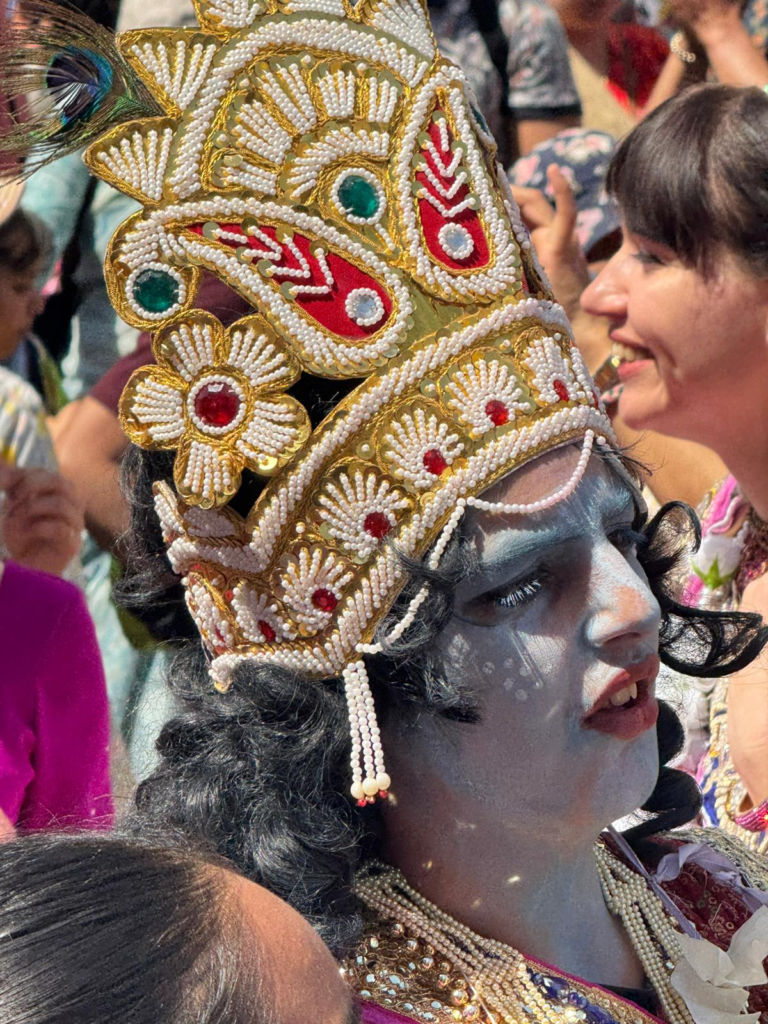
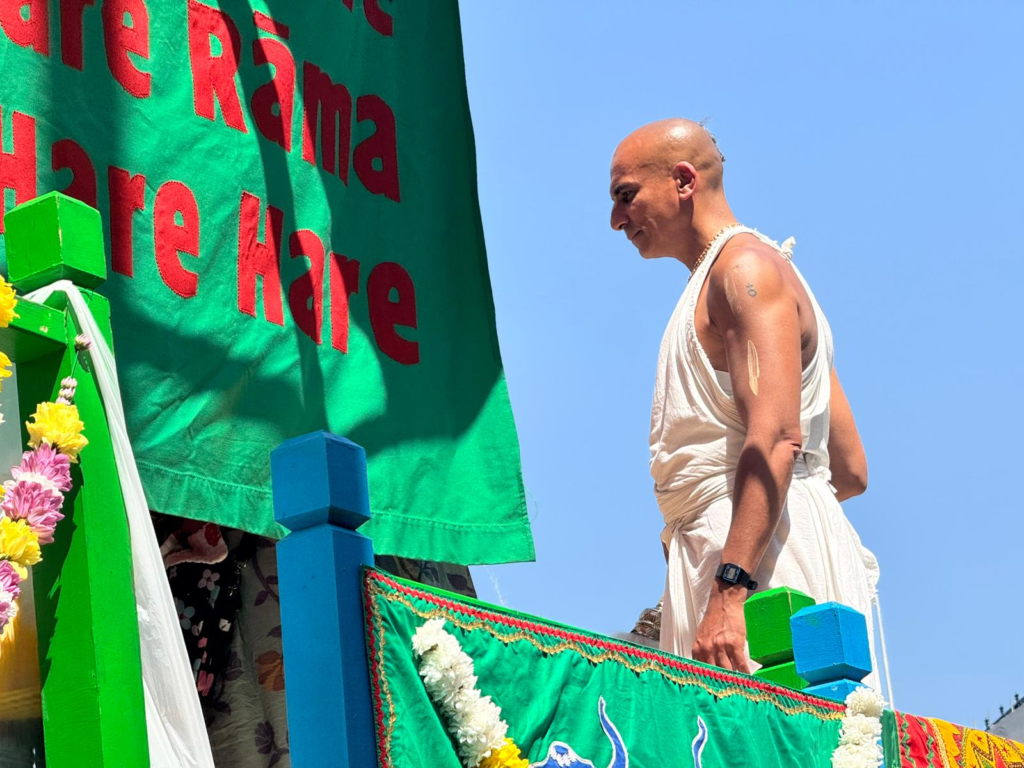
The colorful procession moved through central London as devotees chanted the Hare Krishna maha-mantra and joyfully participated in congregational singing and dancing. The festival atmosphere attracted people from across the United Kingdom and many parts of Europe.
For many attendees, Rathayatra is more than a cultural event. It is an opportunity to engage in spiritual practices, associate with devotees, and experience a tradition that has been preserved for thousands of years.
The procession’s route from Park Lane to Trafalgar Square once again highlighted the festival’s enduring place within London’s multicultural landscape.
A Festival Open to Everyone
Cultural Programs and Spiritual Education
Upon reaching Trafalgar Square, participants and visitors were welcomed into a large cultural festival designed to engage people of all ages and backgrounds.
The program featured:
- Traditional kirtan performances
- Classical Odissi dance presentations
- Educational exhibitions
- Displays of Vedic literature
- Opportunities to learn about bhakti-yoga and devotional culture
These activities helped introduce visitors to the philosophical and cultural foundations of the festival while creating a welcoming environment for spiritual exploration.
Distribution of Free Prasadam
One of the highlights of the event was the distribution of more than 16,000 plates of free prasadam.
In the Vedic tradition, prasadam refers to food that has first been offered to the Supreme Lord with devotion. Such sanctified food is considered spiritually beneficial and is shared freely as an expression of compassion and hospitality.
The large-scale prasadam distribution reflected the festival’s spirit of service and inclusiveness, allowing thousands of attendees to participate in a cherished aspect of devotional culture.
Distinguished Guests Attend the Festival
The London Rathayatra 2026 celebration also welcomed distinguished guests from public life.
Among those attending was the Indian High Commissioner to the United Kingdom, Mr. Kumaran Periasamy. During his visit, he offered flowers to the murti of His Divine Grace A.C. Bhaktivedanta Swami Prabhupada, had darshan of Lord Jagannath, Lord Balarama, and Subhadra Devi, and addressed the assembled crowd.
His presence reflected the growing recognition of Rathayatra as an important cultural and spiritual event that promotes harmony, devotion, and community engagement.
Organizers Reflect on a Successful Festival
“A Gift for the People of London”
Titikshu Das, Coordinator of the London Rathayatra Festival of Chariots, expressed gratitude for the enthusiastic participation despite challenging weather conditions.
He described Rathayatra as a gift from the Hare Krishna movement to the people of London and noted that attendees had traveled from throughout the United Kingdom and Europe to participate in the celebration.
He also highlighted that similar Rathayatra festivals would continue throughout the summer in various locations across the United Kingdom.
A Day of Spiritual Joy
Praghosa Das, Governing Body Commissioner of ISKCON UK, reflected on the atmosphere of the festival.
He noted that participants experienced the unique spiritual joy associated with Rathayatra through collective singing, dancing, and feasting beneath clear blue skies.
As the chariots completed their journey and preparations began for future festivals in other cities, many participants expressed anticipation for next year’s celebration in London.
The Ancient Origins of Rathayatra
A Tradition Spanning More Than 5,000 Years
Rathayatra, commonly known as the Festival of Chariots, originates in the sacred city of Jagannath Puri in Odisha, India.
According to traditional accounts, the festival has been observed for more than 5,000 years and is widely recognized as one of the oldest public religious processions in the world.
Each year, Lord Jagannath, along with His brother Lord Balarama and sister Subhadra Devi, is carried in grand chariots through the streets, allowing everyone to receive their darshan regardless of social background or status.
This inclusive spirit remains one of Rathayatra’s defining characteristics.
The Spiritual Meaning of Pulling the Chariot
Devotees regard pulling the ropes of Lord Jagannath’s chariot as an act of devotion and service.
Within the bhakti tradition, such service is understood as an expression of one’s eternal relationship with the Supreme Lord. The external act of pulling the chariot symbolizes the deeper spiritual aspiration to draw one’s consciousness closer to divine remembrance.
While participants may come from diverse backgrounds, the festival creates a shared experience centered on devotion, gratitude, and spiritual unity.
From India to the World
The global expansion of Rathayatra is closely connected to the efforts of His Divine Grace A.C. Bhaktivedanta Swami Prabhupada, Founder-Acharya of the International Society for Krishna Consciousness (ISKCON).
After bringing the teachings of Krishna consciousness to the West, Srila Prabhupada introduced the first Rathayatra festival outside India in San Francisco in 1967.
The festival quickly gained popularity and spread to cities across North America, Europe, Africa, Asia, and Australia.
London hosted its first Rathayatra procession in 1969, establishing what would become one of the most prominent Rathayatra celebrations outside India.
Today, the festival continues to attract thousands of participants annually and serves as a living example of how spiritual traditions can transcend cultural and geographical boundaries.
The Continuing Relevance of Rathayatra
In an increasingly fast-paced and fragmented world, events such as Rathayatra offer an opportunity for reflection, community, and spiritual connection.
The Vedic tradition teaches that every individual is fundamentally an ātma, or eternal spiritual being, beyond temporary bodily designations. Festivals centered on remembrance of the Divine help cultivate this deeper understanding while fostering qualities such as gratitude, humility, and service.
The remarkable turnout at London Rathayatra 2026 demonstrates that ancient spiritual traditions continue to resonate with contemporary audiences seeking meaning, joy, and connection.
Conclusion
The success of London Rathayatra 2026 once again confirmed the enduring appeal of one of the world’s oldest spiritual festivals. With more than 10,000 participants, vibrant cultural presentations, extensive prasadam distribution, and the public chanting of the holy names, the event brought a powerful message of unity and devotion to the streets of London.
From its origins in Jagannath Puri to its celebration in major cities around the world, Rathayatra continues to remind humanity of the timeless relationship between the individual soul and the Supreme. As thousands joined together in service, celebration, and remembrance, the festival offered not merely a cultural spectacle but a meaningful glimpse into the spiritual heritage of the Vedic tradition.
library.vedavarsity.com || www.vedavarsity.com
Deepen your Bhakti-yoga practice, harmonize relationships, and receive guided coaching — all at Vedavarsity.com