


At the height of his musical success in the 1970s, John Richardson appeared to have achieved everything that many aspire for—fame, financial security, professional recognition, and a comfortable lifestyle. As a founding member of The Rubettes and a respected drummer who contributed to internationally successful recordings, he enjoyed the rewards of a flourishing career.
Yet beneath the external success, he experienced a profound sense of dissatisfaction. The story of Richardson, now known as Jayadev Dasa, offers a compelling example of a timeless truth discussed in Vedic wisdom: material achievements alone cannot fully satisfy the deeper needs of the self.
Recently featured by The Indian Sun, an Australian publication covering news, culture, business, and community affairs, Jayadev Dasa reflected on his remarkable journey from pop stardom to a life dedicated to Krishna Consciousness.
Early Success in the Music Industry
Born in Essex, England, John Richardson developed his musical abilities through determination and self-study. His talent eventually led him into the professional music industry, where he became known both as a session musician and as a founding member of The Rubettes.
The band’s hit song Sugar Baby Love became an international success, selling millions of copies worldwide. Richardson also performed on other well-known recordings, including Carl Douglas’s global hit Kung Fu Fighting.
With growing success came financial prosperity. He acquired a comfortable home and developed interests in collecting Art Nouveau paintings and Art Deco furniture. By conventional standards, he had achieved the goals that many people spend their lives pursuing.
However, the satisfaction he expected never fully arrived.
Reflecting on that period, Jayadev Dasa recalls that although he had worked hard to escape poverty and was grateful for his success, he soon realized that external achievements could not provide enduring fulfillment.
A Search for Something Deeper
The realization that material success was insufficient prompted Richardson to begin searching for deeper meaning.
Even while continuing his musical career, he explored alternative approaches to health and well-being. He studied reflexology and massage therapy, adopted a vegetarian lifestyle, and gave up alcohol. More importantly, he began seeking answers to spiritual questions that had increasingly occupied his mind.
His aspiration to help others had existed from an early age. He once considered becoming a doctor or healer, but academic challenges prevented him from pursuing medicine professionally.
Instead, his search gradually moved beyond physical healing toward spiritual understanding.
In Vedic teachings, this transition reflects an important stage of human development. While caring for the body is necessary, lasting fulfillment arises when one begins to inquire about the nature of the self (ātma) and life’s ultimate purpose.
A Life-Changing Encounter
The turning point came through an unexpected meeting.
After praying for guidance and hoping to meet someone who could help explain spiritual truths, Richardson received a visit from an Indian neighbor whom he had never previously met, despite living nearby.
The visitor had heard that Richardson was searching for God.
Inviting him into a healing room he had created in his home, Richardson began a conversation that would permanently alter the course of his life.
The neighbor asked a simple question:
“What do you know about Krishna and Rama?”
At that time, Richardson’s knowledge was limited. Like many people in the West, he was only vaguely familiar with the public chanting and devotional practices of the Hare Krishna movement.
The conversation soon turned toward the Ramayana, one of India’s most revered spiritual epics.
As the neighbor read from the sacred text, Richardson experienced an immediate and profound response.
Nearly five decades later, Jayadev Dasa still finds it difficult to fully explain what occurred. He describes it as a deep recognition arising from within his heart—a certainty that he had finally encountered the truth he had been seeking.
Discovering the Bhagavad Gita
Following this transformative encounter, Richardson’s interest in Vedic wisdom continued to deepen.
Through family connections and his awareness of George Harrison’s association with the Hare Krishna movement, he became increasingly interested in the teachings of the Bhagavad Gita.
The Bhagavad Gita presents a comprehensive understanding of duty (dharma), the eternal nature of the soul, and the relationship between the individual and the Supreme Lord.
As a musician and songwriter, Richardson naturally expressed his spiritual discoveries through music. Inspired by the teachings of the Gita, he composed a rock musical based on its ninth and tenth chapters.
This creative endeavor eventually brought him into closer contact with devotees at a Hare Krishna temple in London.
What began as intellectual curiosity gradually matured into committed spiritual practice.
Embracing Krishna Consciousness
Over time, Richardson and his family embraced the path of Krishna Consciousness.
Their home became a gathering place for spiritual discussions and devotional activities. Regular chanting, scriptural study, and association with practitioners became central aspects of family life.
Richardson eventually accepted the spiritual name Jayadev Dasa, reflecting his commitment to devotional service.
Looking back on his earlier career, he acknowledges that public recognition and admiration had provided temporary excitement but not lasting happiness.
He had experienced the praise of large audiences and the privileges associated with celebrity status. Yet these experiences ultimately left him searching for something more enduring.
By contrast, spiritual practice provided a sense of purpose and satisfaction that fame had failed to deliver.
From a Vedic perspective, this difference is significant. Temporary pleasures connected to the body and mind naturally come and go, whereas spiritual fulfillment arises from reconnecting the soul with its eternal relationship with the Supreme.
The Power of Chanting the Holy Names
When asked what has brought him the deepest happiness, Jayadev Dasa offers a clear answer: chanting the names of God.
While he values family life, service to others, and personal responsibility, he identifies devotional chanting as the most transformative aspect of his spiritual journey.
According to the bhakti-yoga tradition, chanting sacred names purifies consciousness and awakens dormant spiritual awareness.
For Jayadev Dasa, this practice is not merely a ritual but a living experience of divine connection.
He describes it as a source of profound peace, gratitude, and love—qualities that remained elusive during the peak of his material success.
Continuing to Share Spiritual Music
Although his priorities changed dramatically, music never disappeared from his life.
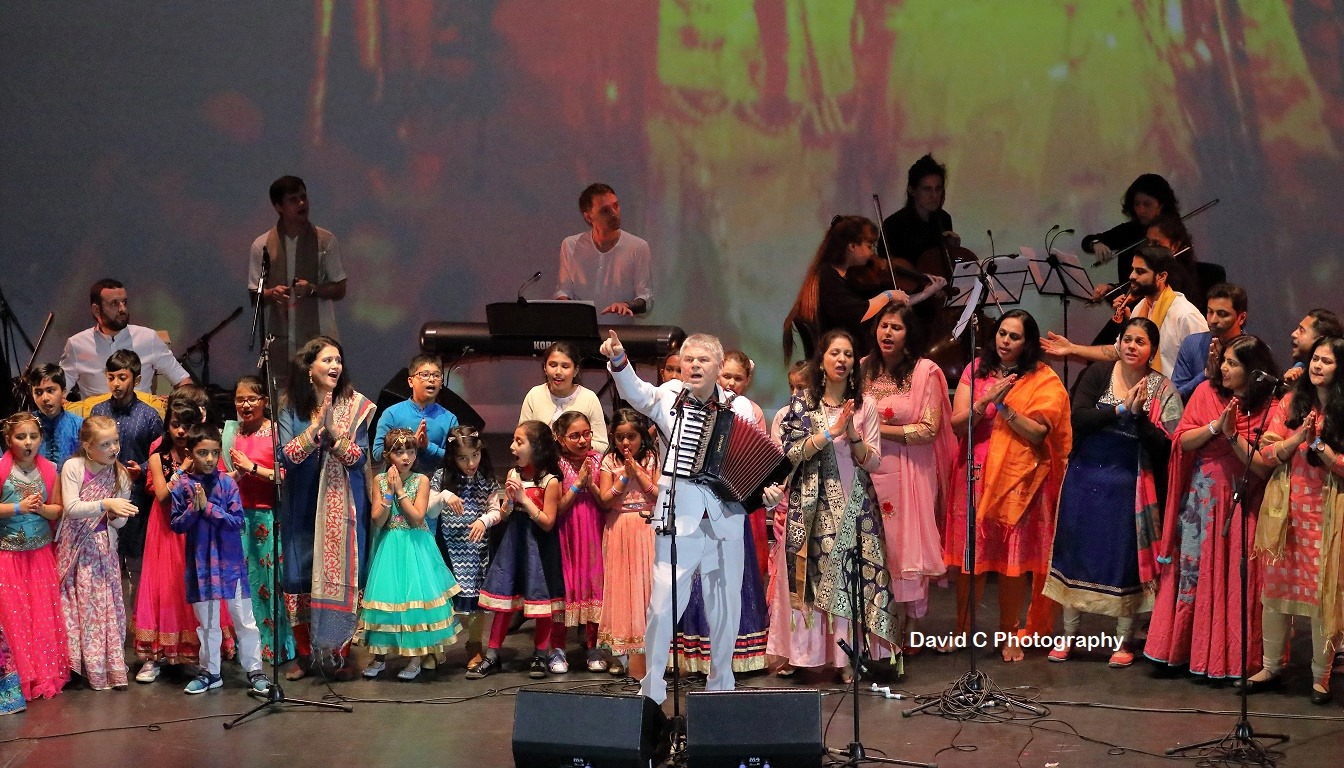
In 2010, Jayadev Dasa founded the Mantra Choir, combining sacred mantras with contemporary musical arrangements. Through performances across Europe, Russia, and the United States, he has introduced audiences to devotional music in an accessible and inspiring format.
His work demonstrates that artistic talent and spiritual life need not be separate pursuits. When guided by higher purpose, creative expression can become a means of service and spiritual upliftment.
Today, he continues to perform, teach, and share the principles of Krishna Consciousness through music and personal example.
A New Understanding of Success
Life presents challenges for everyone, regardless of fame or status.
Jayadev Dasa now serves as the primary caregiver for his wife following her stroke while supporting his family through ongoing responsibilities.
These experiences have further refined his understanding of success.
Rather than measuring achievement through wealth, recognition, or possessions, he views success as the ability to recognize divine guidance in all circumstances and remain grateful for life’s blessings.
This perspective aligns closely with the teachings of the Bhagavad Gita, which encourage individuals to perform their duties with sincerity while understanding that a higher intelligence ultimately guides the unfolding of events.
Conclusion
The journey of Jayadev Dasa illustrates a universal human search—the search for lasting happiness and genuine purpose.
From international music success and material prosperity to a life centered on Krishna Consciousness, his experience demonstrates that external achievements alone cannot satisfy the deeper needs of the soul.
A seemingly ordinary encounter with an Indian neighbor in East London became the catalyst for a profound transformation. Through the teachings of the Ramayana, the Bhagavad Gita, and the practice of bhakti-yoga, he discovered a fulfillment that fame could not provide.
His story serves as a thoughtful reminder that while material accomplishments have their place, enduring peace arises when one reconnects with one’s spiritual identity and higher purpose. In ways often unseen, divine arrangement can guide sincere seekers toward the answers they have long been searching for.
library.vedavarsity.com || www.vedavarsity.com
Deepen your Bhakti-yoga practice, harmonize relationships, and receive guided coaching — all at Vedavarsity.com