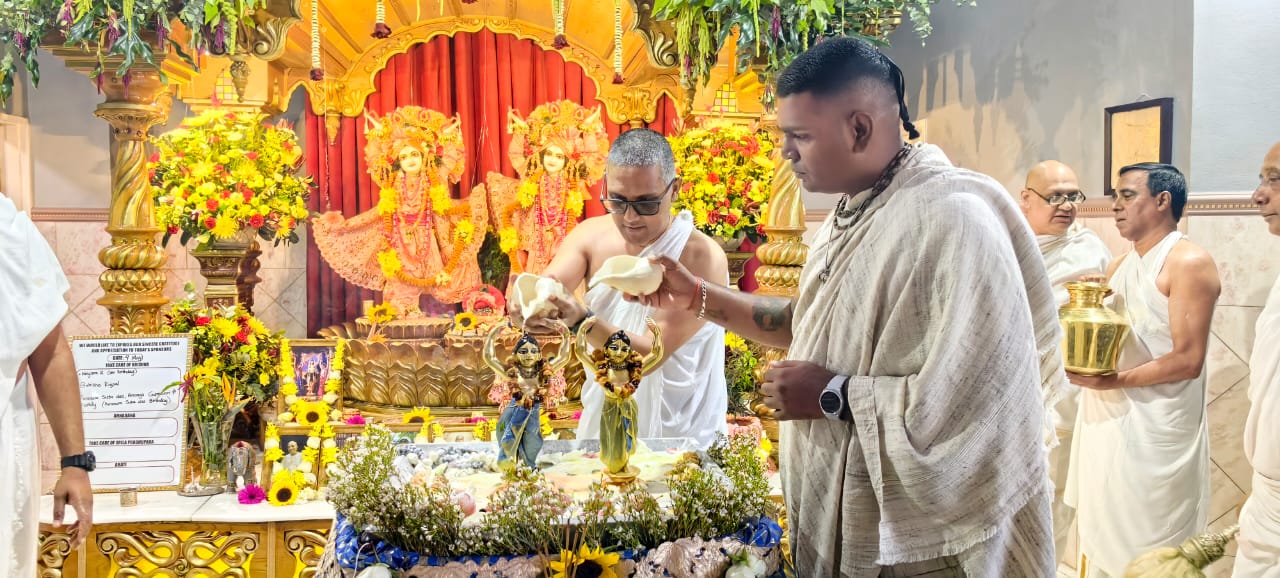
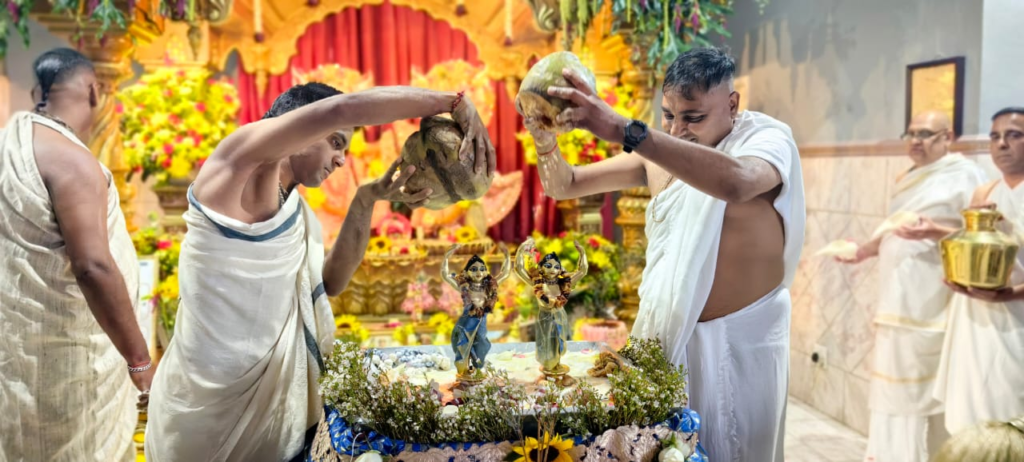
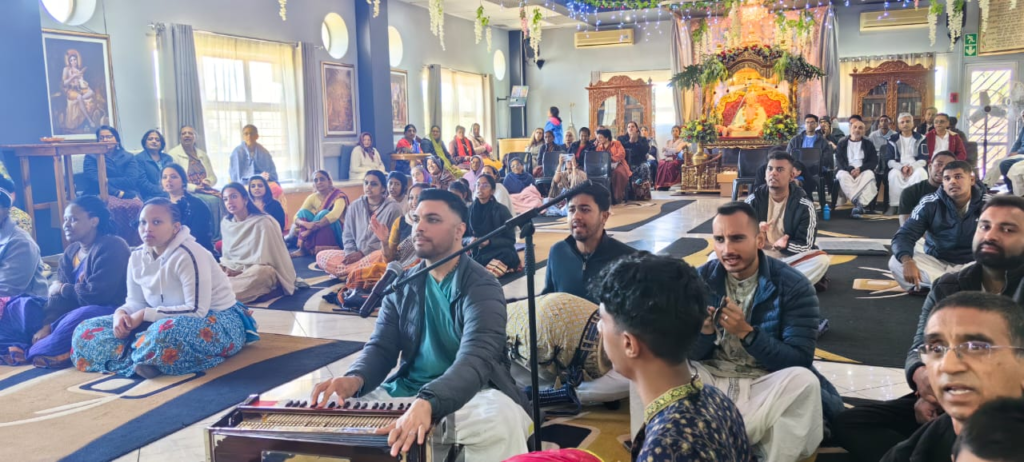
On May 9, 2026, devotees and senior leaders from across South Africa assembled at ISKCON Lenasia to commemorate the 47th installation anniversary of Sri Sri Nitai Gaurahari, recognized as the first life-size deities installed in the country by the Hare Krishna movement.
The observance brought together disciples of A. C. Bhaktivedanta Swami Prabhupada, temple leaders, congregational members, and long-time practitioners of bhakti-yoga. The event included abhishek ceremonies, kirtan, historical presentations, and reflections on the growth of ISKCON South Africa over nearly five decades.
For many participants, the anniversary was not merely a historical remembrance. It served as a reflection on how devotional service, spiritual discipline, and collective sacrifice helped establish Krishna consciousness in Southern Africa during periods of social and institutional change.
The Early Foundations of ISKCON South Africa
The history of ISKCON South Africa is closely connected with the worship of Sri Sri Nitai Gaurahari. According to speakers during the anniversary program, the deities were originally installed in 1979 at ISKCON’s Cato Ridge farm community near Durban.
During that period, the Hare Krishna movement in South Africa was still in its formative stage. Devotees had previously worshipped smaller brass Gaura-Nitai deities associated with early preaching efforts in East and Southern Africa.
In a recorded message, Partha Sarathi Das Goswami described Sri Sri Nitai Gaurahari as “the first properly installed deities” in South Africa while acknowledging the earlier presence of brass Gaura-Nitai forms connected with Srila Prabhupada’s preaching mission.
The installation represented more than a ceremonial event. Within the Gaudiya Vaishnava tradition, deity worship establishes a sacred center around which devotional life, education, and spiritual culture can develop. Such worship is understood not as idol worship, but as authorized service to the Supreme Lord through consecrated forms described in Vedic scriptures.
The Journey From Cato Ridge to Lenasia
The anniversary observance also traced the movement of Sri Sri Nitai Gaurahari through several phases of ISKCON South Africa’s institutional growth.
After their initial installation at Cato Ridge, the deities were relocated to Muldersdrift and later to Hillbrow in Johannesburg during the early 1990s. Eventually, they were moved to their present residence in Lenasia, south of Johannesburg.
Senior devotees explained that these transitions reflected both the expansion of the movement and the changing social conditions within South Africa during those decades.
Hillbrow and the Spirit of Expansion
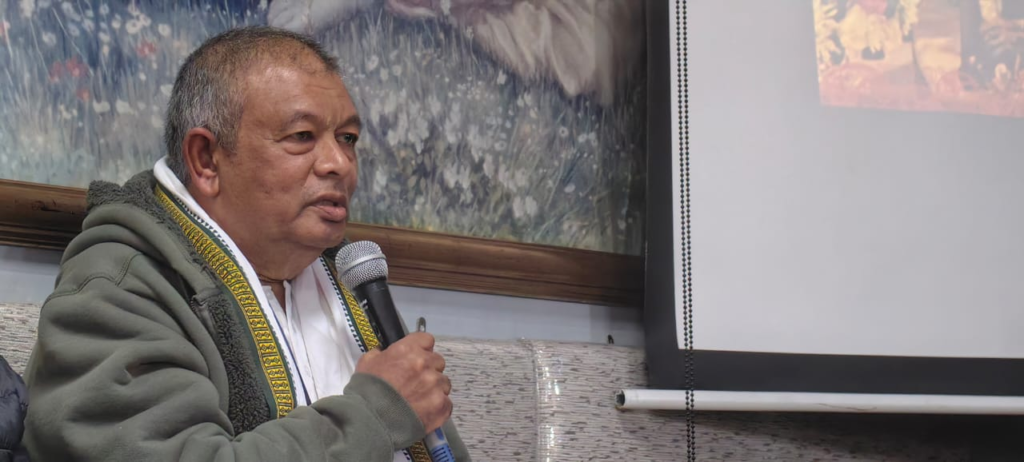
Anuradha Devi Dasi recalled the atmosphere surrounding the Hillbrow temple during South Africa’s democratic transition.
“There was so much enthusiasm and so much hope in the air,” she said. “It was an ISKCON temple that was meant to become a catalyst for a spiritual revolution in Johannesburg.”
She described Hillbrow at the time as internationally connected and spiritually vibrant, with devotees from South Africa, Mauritius, France, and other countries serving together.
The expansion of ISKCON South Africa during this period reflected the broader mission established by Srila Prabhupada—to spread the congregational chanting of the holy names, or sankirtan, across cities, villages, and nations.

Personal Histories Connected to Sri Sri Nitai Gaurahari
Much of the anniversary program focused on the personal experiences of devotees whose spiritual lives unfolded alongside the worship of Sri Sri Nitai Gaurahari.
In a recorded message, Bhakti Chaitanya Swami reflected on his service after arriving in South Africa in 1980.
“I cooked for Sri Sri Nitai Gaurahari on many occasions,” he said, describing Johannesburg as a place where “so much mercy is needed in such a cosmopolitan area.”
His remarks emphasized an important Vaishnava understanding: devotional service purifies both the individual and society. In Vedic thought, genuine transformation begins internally through consciousness and gradually manifests externally through conduct, culture, and compassion.
Service During the Early Years
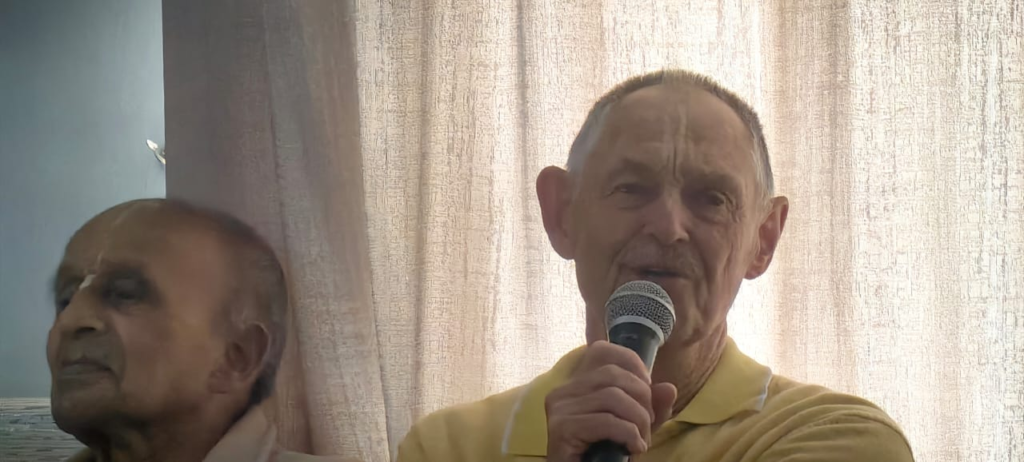
Medhavi Das connected the South African deities to earlier experiences of Gaura-Nitai worship during ISKCON’s expansion in the United States and the United Kingdom.
“When we were collecting to build Sri Sri Radha-Radhanath’s temple in Johannesburg, our only shelter, practically speaking, was the lotus feet of Sri Sri Nitai Gaurahari,” he said. “They were our ishtadevas.”
Several speakers described the demanding nature of devotional service during the late 1970s and early 1980s.
Druvananda Das recalled extensive travel, sankirtan programs, and long preaching hours.
“We were out from early morning to late at night, and we didn’t feel tired,” he said. “Everyone was just focused on spreading Krishna consciousness.”
Their reflections illustrated the principle of seva, or selfless devotional service. According to Vedic teachings, actions performed in dedication to the Supreme gradually free one from selfish motivation and material anxiety.
Cato Ridge as a Spiritual and Community Hub
One of the most detailed historical presentations came from Sri Hari Das, who described the importance of the Cato Ridge community during ISKCON South Africa’s formative years.
Alongside deity worship, devotees managed agricultural projects, incense production, educational programs, food distribution initiatives, and book publication and distribution.
“The devotees returning from their sankirtan activities relished the association and the prasadam,” he recalled. “We ate with gusto, talked and joked, and laughed a lot.”
The description reflected the integrated nature of traditional Vedic community life, where spiritual practice is not separated from work, agriculture, education, or social responsibility. Such communities aim to organize daily life around dharma, or spiritually aligned duty.
Honoring Lifelong Service
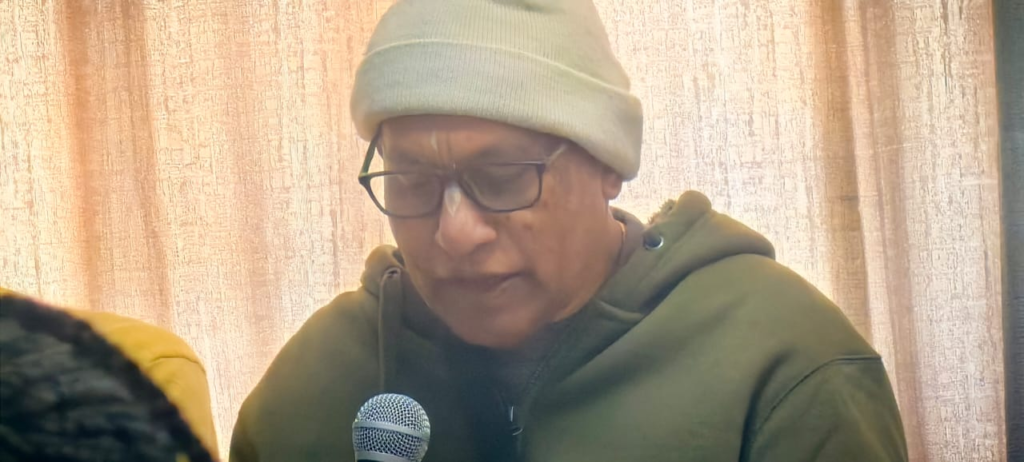
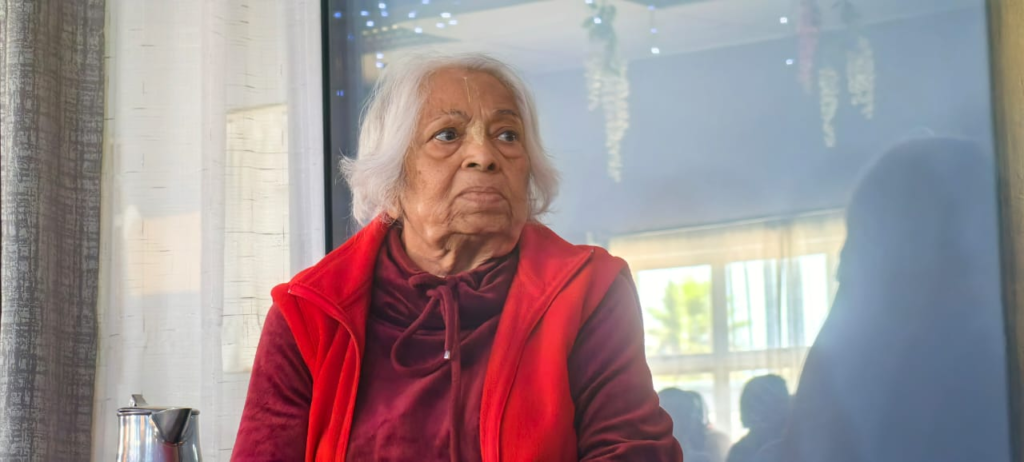
A significant portion of the event honored JayaRadhika Devi Dasi, who has continuously served Sri Sri Nitai Gaurahari since their arrival in South Africa in 1979.
Speakers noted that she accompanied the deities through every relocation and maintained standards of worship over multiple decades.
The gathering also remembered several pioneering South African devotees who had passed away, including Bimal Prasad Das, Ranjit Das, Gaurapremananda Das, and Kishore Gopal Das.
Their contributions were acknowledged as foundational to the development of ISKCON South Africa’s institutions and devotional culture.
Looking Toward the 50th Anniversary
As the program progressed, attention shifted toward the future and the approaching 50th anniversary celebration in 2029.
In his recorded remarks, Bhakti Chaitanya Swami expressed his desire to personally attend the upcoming milestone gathering.
“For the 50th anniversary, yes, in three years’ time, I’m going to really make a point of being there,” he said.
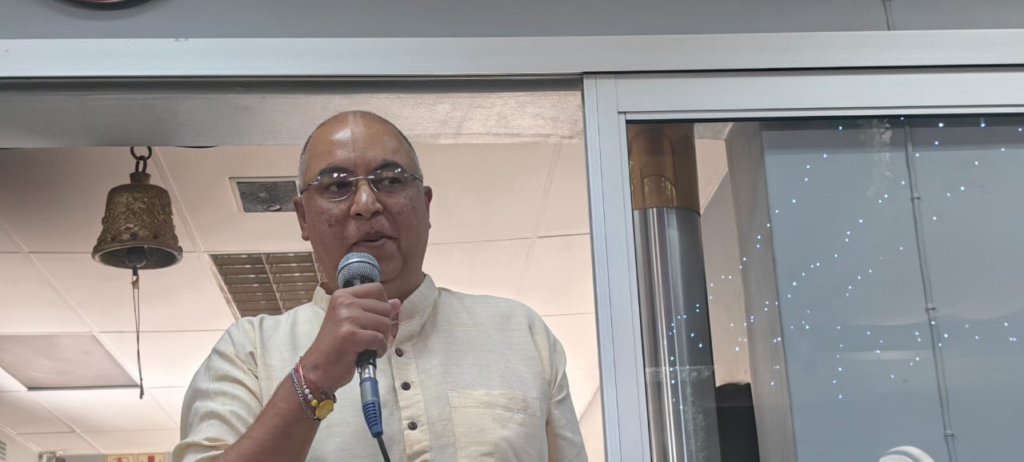
Closing the program, Co-Regional Secretary Radhe Shyama Das encouraged devotees to think carefully about the long-term sustainability of deity worship in the region.
“How do we ensure that they are looked after and cared for as they have been cared for for so many years in the past?” he asked.
He also mentioned plans for a future corpus fund intended to support the worship and maintenance of Sri Sri Nitai Gaurahari for generations to come.
Conclusion
The 47th anniversary celebration of Sri Sri Nitai Gaurahari highlighted the spiritual and historical journey of ISKCON South Africa from its early pioneering years to its present institutional maturity.
More than a ceremonial observance, the gathering demonstrated how faith, discipline, and devotional service can sustain spiritual communities across changing social conditions and generations. The continuity of deity worship over nearly five decades stands as a reminder that enduring spiritual culture is built through steady service, collective sacrifice, and adherence to higher principles.
As devotees concluded the event with kirtan and offerings, the anniversary served both as a remembrance of the past and as a reaffirmation of ISKCON South Africa’s ongoing mission to cultivate Krishna consciousness through devotion, education, and compassionate outreach.
library.vedavarsity.com || www.vedavarsity.com
Deepen your Bhakti-yoga practice, harmonize relationships, and receive guided coaching — all at Vedavarsity.com