Overview
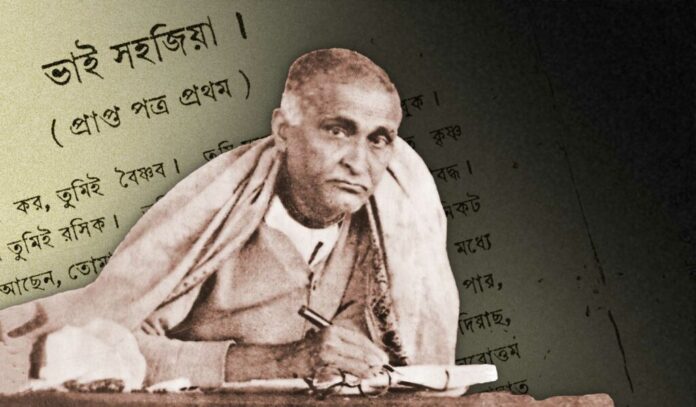
The second part of Bhāi Sahajiyā was first published in Sajjana Toṣaṇī Vol. 20, issue 1. In this section, Śrīla Sarasvatī Ṭhākura continues to point out the defects of various sahajiyā groups. While some of his points are generic criticisms, Sarasvatī Ṭhākura is primarily aiming his criticism at one of Bhaktivinoda Ṭhākura’s wayward disciples, Śrī Sītānātha Bhakti-Tīrtha of the Prapannāśrama in Sāuḍī, Bengal. For clarity, we have added the same sub-headings that were used when Bhāi Sahajiyā was printed in the Gauḍīya Patrikā magazine of Śrīla Keśava Mahārāja’s maṭha in 1954. In some cases, we have also included footnotes for the readers clarification.
Artificial Siddha-Praṇālī When One Has Anarthas Only Produces Inauspiciousness
You say, “I don’t do the work of a guru – I only give siddha–praṇālī to the jīvas to free them from the stage of sādhana. In our society all the devotees are most fortunate – they are rāgānuga-bhaktas. They don’t care for paṣcarātrika–mantras. The guru is himself the disciple of his own disciple, thus he doesn’t in any way come close to the practices of a vaidhi-bhakta.”
You say, “There is no bhakti in the connection with one’s disciples” (1) – then why do you endeavour to do that (make disciples)? You say that, “I do not make any disciples” – is that true? Nowadays, if one simply pays eight Annas,(2) he can get siddha-praṇālī. Before giving the mantra itself, the price for siddha–praṇālī is negotiated! You say that if the sādhaka does not receive siddha–praṇālī there will be no auspiciousness for him. You say that it is essential that a rāgānuga–bhakta must receive siddha–praṇālī even before anartha–nivṛtti. But is it proper for you to mix anarthas with siddha–praṇālī while you still have them? “Even before a flower appears, the leaves must bear fruit” – don’t you think that such an explanation as this is simply a deception?
Going Here and There Speaking on Rasa-Kīrtana and Bhajana-Kathā is Prohibited
Brother sahajiyā! You roam here and there teaching songs about rasa, you go to listen to these songs, and by singing them you consider yourself to be a rasika. You are scattering ‘the flowers of rasa’ in the marketplaces, at the ghāṭas and in the bazaars. Don’t you like rasa? How did you learn to dishonour this aprākṛta-rasa to such a degree? Should the secrets of bhajana be revealed in public?
According to Their Respective Svarūpa, the Vibhinnāṁśa-Jīvas Can Become Maṣjarīs, but not Sakhīs.
Brother sahajiyā! Often those ‘maṣjarīs’ who have received siddha–praṇālī from you, have forgotten their service and have sat idle, taking on the mood of a sakhī. Brother! Have you forgotten the śloka, pādābjayos tava? *(3) Brother, maṣjarīs never consider themselves as sakhīs. The maidservants of the maṣjarīs consider their guru to be a sakhī. Why have you forgotten the heartfelt mood of the maṣjarīs and their service? Why is it that one who has been transformed by you into a maṣjarī, has forgotten his service and become a proud sakhī? Why has he given up the nature of a maṣjarī and accepted the arrogance of a scholar? Why has he rejected the nature of a young maiden to accept the form of a scholarly old lady?
Dressing Oneself According to One’s Imagination and Possessing an Artificial Bhāva is Detrimental to a Sādhaka
Brother sahajiyā! Why didn’t he like the dress and upper cloth revealed by your words? *(4) Why did he leave the kuṣja on the banks of the Kālindī to enter his mundane household? Why, due to the intense goading of the senses, did he secretly accept the temperament of a man?
Due to Their Lust, the Sahajiyās Deny the Existence of Vātsalya Rasa etc.
Brother sahajiyā! In your consideration, vātsalya, sakhya and dāsya–rasa are fit to be rejected. Simply by seeing someone, you consider them to be proficient in madhura–rasa, therefore you are dressing those devotees who have taken shelter of Nanda, as well as those that have taken shelter of Citraka, Raktaka and Patraka as maṣjarīs, and you force them to hear those songs describing the niśānta–līlā (Rādhā-Govinda’s night pastimes), and instruct them to take shelter of Kakkhaṭī (Rādhārāṇī’s pet monkey). You understand all this very well, because due to your pride you think that you have the qualification to do these things.
Material Objects Do Not Become Transcendental Due to Their Mundane qualities
Brother sahajiyā! Why do you perceive the divine Deity form of the Lord and the transcendental Holy Name to be material? Bhagavān’s vaikuṇṭha–nāma and śrī-mūrti are never material, so why do you consider them to be mundane? Brother, you have said that due to the influence of qualities inherent in material elements, the mundane consideration that we have in mundane objects, will one day become aprākṛta. You think that even if one considers the Deity as stone and wood, and even if one considers the Holy Name of Hari to be comprised of mundane syllables (in spite of its eternally pure, completely liberated, transcendental nature which is non-different from Śrī Kṛṣṇa Himself) then by means of this ‘stone’ and by the effect of chanting these syllables offensively, everybody will attain Goloka. Then why have the śāstras and the mahājanas given prohibitions about that? You know that only with a proper service attitude, Kṛṣṇa’s Name, form, qualities and pastimes, manifest within a pure transcendental body, and can even produce a transformation of the mundane senses.
Considering the Material Body to be the Self, or to be One’s Siddha-Deha is Asinine
You know from the śloka, yasyātma–buddhi *(5) that to consider your material body to be identical with the siddha-deha (spiritually perfected body) means that you have become a donkey, and to think that your wife, sons, and friends all belong to you is also asinine. If you think that the form of the Deity is mundane, then it is simply due to your foolishness. You are a jackass if you do not know that kṛṣṇa–caraṇāmṛta is transcendental. Again, from the śloka, yesāṁ sa eṣa bhagavān *(6) you should know that if one thinks that this body, which is fit to be devoured by dogs and jackals, is a spiritually perfected form fit for rendering one’s divine service, then one cannot be freed from the clutches of māyā, cannot receive the mercy of Bhagavān and falls into the mire of duplicity. You know from the śloka, arcye viṣṇau śilādhīḥ *(7) that those jīvas who think that hari-nāma is merely mundane syllables, that the śrī-mūrti is just stone or wood, that a Vaiṣṇava should be judged by his birth, that the aprākṛta Bhagavān is a mundane entity, that Gurudeva is a mortal jīva or that caraṇāmṛta is simply water, fall down to the hell of this material world.
Hearing the Name From a Phonograph Will not Make One a Gopī or a Rasika
Furthermore, you have forgotten the verse, premāṣjana-cchurita bhakti-vilocanena *(8), rejected the lotus feet of the aprākṛta guru and instead, accepted sahajiyās in the position of the spiritual master! Brother, you begin to get excited when you see any māyāvādīs, and fawning to the sahajiyās, you claim that by the power of the Name, which is full of offences, even a phonograph machine can become a gopī! *(9) You claim that being under the influence of mundane conceptions, accumulating prestige and engaging in fornication, the jīva goes to Goloka instead going to hell. All the śāstras have unlawfully criticised you and due to this, the devotees and the bhakti-śāstras have made an offence, and along with them we ourselves must also have made some offence to you! Thus, from now on, we will stop chanting hari–nāma and we will turn the phonographs and other such machines into rasika–bhaktas, and send them to Goloka! We will each be engaged in our own mundane duties, and then, Brother sahajiyā, you and your associates will be satisfied with us.
The Sahajiyā’s Transgression Using the Example of Bilvamaṅgala is Against the Śastra
Brother sahajiyā, you say that śraddhā is an ordinary thing – why go through the progressive stages of bhakti for those who already have lobha (intense greed for bhakti)? As soon as one has lobha then, like Bilvamaṅgala, he will renounce all the progressive stages of sādhana such as śraddhā, sādhu-saṅga, bhajana-kriyā, anartha-nivṛtti, niṣṭhā, ruci, āsakti, bhāva etc. There is no necessity for the symptoms of the sprout of bhāva to manifest. Immediately after receiving the mercy of their respective ‘Cintāmaṇi-like gurus’ and being liberated from sneha, māna, praṇaya and rāga which are all different aspects of prema, each and every prākṛta-sahajiyā immediately becomes a Bilvamaṅgala Ṭhākura! *(10) They become eligible for the wealth of anurāga! In order to indulge these sinful debauchees, with every word, you regard them to be masters of anurāga, the fifth level of prema. O brother! Is this the path of the rūpānugas? Why don’t you obey Bhakti-rasāmṛta-sindhu and Ujjvala-nīlamaṇi? By jumping over the stages of śraddhā, sādhu-saṅga, bhajana-kriyā, niṣṭhā etc. which are the very foundations of lobha, everybody cannot suddenly become like Bilvamaṅgala.
By Gradually Following Vaidhi, Rāga and Lobha will Manifest. Examples like Bilvamaṅgala Are Extremely Rare
A foundation in vaidhi, in other words, a foundation of reverence to the disciplines of śāstra, leads to progress from vaidhi–bhakti to the stage of development of śraddhā (faith). And śraddhā develops to the stage of lobha, then gradually it becomes rāgānuga. Why can’t you understand this? In the Caritāmṛta, Madhya-līlā, Twenty-third Chapter, while describing the symptoms of the awakening of prema in a rāgānuga–bhakta, Mahāprabhu tells Sanātana Gosvāmī:
kona bhāgye kona jīvera śraddhā yadi haya
tabe sei jīva sādhu-saṅga ye karaya
sādhu-saṅga haite haya sravaṇa-kīrtana
sādhana-bhaktye haya sarvānartha-nivartana
anartha-nivṛtti haile bhaktye niṣṭhā haya
niṣṭhā haite śravaṇādye ruci upajaya
ruci haite bhaktye haya āsakti pracura
āsakti haite citte janme kṛṣṇe prīty-aṅkura
sei bhāva gāḍha haile dhare prema-nāma
sei premā prayojana sarvānanda-dhāma
By some good fortune, if a jīva develops śraddhā, then that jīva begins to associate with sādhus. By associating with sādhus, he takes up the practice of hearing and chanting, and by the process of sādhana-bhakti, all anarthas are eliminated. When anartha-nivṛtti is achieved, one develops niṣṭhā in bhakti. Once niṣṭhā is achieved, ruci, the taste for hearing and chanting, awakens. When ruci appears, then āsakti, deep attachment for bhakti, manifests. After āsakti, the seed of divine love for Kṛṣṇa is born within the heart. When that bhāva intensifies it is known by the name prema. This prema is the ultimate goal of life and the abode of all divine bliss. (Caitanya-caritāmṛta, Madhya-līlā 23.9-13)
Kṣānti etc. are the nine symptoms of bhāva: *(11)
ei nava prīty-aṅkura yāṅra citte haya
prākṛta-kṣobhe tāṅra kṣobha nāhi haya
If these nine symptoms produce the seed of divine love in one’s heart, one will not become disturbed by material things. (Caitanya-caritāmṛta, Madhya-līlā 23.20)
premā krame bāḍi haya sneha māna praṇaya
rāga anurāga bhāva mahābhāva haya
Divine love gradually increases and appears as sneha, māna, praṇaya, rāga, anurāga, bhāva and mahā–bhāva. (Caitanya-caritāmṛta, Madhya-līlā 23.42)
It is not a common thing for everybody to have the good fortune of attaining a Cintāmaṇi guru on the path of rāgānuga.
sādhanābhiniveśena kṛṣṇa-tad-bhaktayos tathā
prasādenāti-dhanyānāṁ bhāvo dvedhābhijāyate
ādyas tu prāyikas tatra dvitīyo viralodayaḥ
Bhāva appears in the hearts of fortunate ones in two ways – by intense absorption in sādhana or by Kṛṣṇa’s mercy and that of His devotees. It’s manifestation due to sādhana is common, but its manifestation by mercy is very rare. (Bhakti-rasāmṛta-sindhu 1.3.6)
Without Following Sādhana or the Gradual Path, One Will Not Achieve Perfection
Therefore, O brother sahajiyā, you know that a vaidhi–sādhaka contaminated by anarthas cannot achieve the nature of the rāgānuga–bhakta Bilvamaṅgala, which is only born from supremely rare mercy bestowed by the devotee of Kṛṣṇa.
Brother sahajiyā! To say that such rāgānugas do not have to go through sādhana-bhakti is completely wrong. By citing the one example of Bilvamaṅgala, you will elevate all these sādhakas on the path of rāgānuga to the level of anurāga – such a claim is not accepted by Śrī Rūpa Gosvāmī. By hearing such confusing beliefs of yours, one story comes to mind. Once, a servant arrived extremely quickly on foot from a very distant place. His master was surprised and could not believe the servant’s words. In response, the servant replied, “In that case, I think that while walking, I must have forgotten to cover a certain length of the road.” Brother sahajiyā! Is your traversing the path of bhakti similar to that? Everybody cannot ride in some hot-air balloon and skip over the prescribed path. The good fortune of reaching Laṅkā without the aid of a bridge does not happen to everyone.
The Sahajiyā Philosophy of Sītānātha Bābu of Sāuḍī and it’s Inferiority.
Brother sahajiyā! I understand from your words that you do not discriminate between offensive chanting and the pure chanting of the Holy Name. I understand that in your opinion, any enjoyable pleasure-garden is Vṛndāvana, the saṁsāra–kṣetra (the realm of mundane family life) is your Śrī-kṣetra (Purī), you consider the land of Śrī Navadvīpa to be like any other karma–bhūmi (land of mundane activities) and the stage where the drama of ordinary mundane rasa is enacted. You believe your body, which is full of pus and blood, to be divine. Due to your duplicitous mood, you aspire to display a pretence of being unconscious. You think that you will be delivered from saṁsāra by hearing hari-nāma from the mouths of prostitutes who work in theatres. Professional female dancers and singers will sing songs on rasa to educate you in parakiyā–bhāva and you will hear ‘hari-nāma’ from them. After charging money, professional reciters will narrate stories from the Bhāgavata and liberate you from material entanglement. Simply by approaching the merchant-like gurus of the ācārya-vaṁśas *(12) and donating a few silver coins, you will receive a mantra which will be able to digest all your bad association and sanctify your Vaiṣṇavism, then your foot-water will be worshipped and your remnants will be accepted. Along with their faithful followers they will take up your case and will scream at the top of their voices that prākṛta-sahajiyāism is bhāgavat–dharma. Simply by learning sura, māna, tāla and rāga, kīrtanas which are full of offences will make you a hari–kīrtanīyā. *(13) The Theosophist society is your patron. *(14) Māyāvādīs are incapable of understanding your trickery, therefore, you will be able to run your business very nicely under the guise of acting like a sādhu. But why don’t you understand that if you indulge in all these things then your real benefit will be minimized?
The Wicked Company of the Sahajiyās Who Make a Trade With the Holy Name, the Mantra, the Deity and Holy Books
Look! Just for you, Śrī Jīva Gosvāmī has written this in the 92nd section of Bhakti Sandarbha:
nāma-grahaṇādīny api yadi karmādau tat-sādguṇyādy-arthaṁ prayujyante. tadā tasya paratvaṁ nāsti. tuccha-phalārtha-prayojyatvena tad-aparādhād ity arthaḥ. tathaiva kṣayiṣṇu-phala-dātṛtvaṁ ca bhavatīti bhāvaḥ
If the activities of bhakti, beginning with the chanting of the Holy Name gave the same results attained by karma and other paths, then bhakti would not be superior. An offender will use bhakti to gain temporary results. This is the meaning. Thus bhakti is not meant to give results that are temporary.
In the guise of singers of hari-nāma, they peddle the Holy Name; they make a trade in selling mantras for subsistence; becoming a professional priest, they make a business in arcana; donning a kaupīna they beg simply for the satisfaction of their tongue and genitals etc; becoming ācāryas, paṇḍitas and gosvāmīs they sell holy books, and with the accumulated money they serve the hunger pangs of their stomachs, support their families and increase their fame, followers, and material prosperity. What will be the benefit from this? The pure devotees and the public will consider such sahajiyās to be bad association and reject them.
The Prematurity and Guru-Betrayal of the Sahajiyās of Sāuḍī
Brother sahajiyā! Failing to control your senses and under the influence of intoxicants, you sing the secrets of the līlā of Rādhā-Govinda amongst the hedonistic undisciplined society, and in the name of imaginary sevā you write poems and have opened shops selling immature rasa. If somebody comes and gives opposition to you, you say that your guru was a prākṛta–sahajiyā and that this sahajiyā guru, who was staying in Vṛndāvana making a living with the title ‘Cakravartī’, has taught you all these things. You are unqualified for bhakti. Thus, giving up the proper gradual process of sādhana, you are teaching unqualified people that undisciplined, unruly behaviour is the essential meaning of hari-bhakti! Brother, don’t you think you are committing an offence by doing this?
The Wicked Attempt of the Sahajiyās to Distort the Meanings of the ‘Vikrīḍitam’ and ‘Anugrahāya’ Verses
By giving a perverted meaning to the ślokas, vikrīḍitaṁ vraja-vadhubhir *(15) and anugrahāya bhaktānāṁ *(16) and making them the fundamental mantras of the sahajiyā class, you have destroyed pure bhakti – do you think that is good, brother? With the aid of these ślokas from the Bhāgavata, you try to establish that vaikuṇṭha–vastu is māyika–vastu. What is this, brother? Is this your preaching of sādhu–dharma? Brother sahajiyā! Hundreds of ordinary people like you and I, who were averse to Hari and greedy for material enjoyment such as Rāvaṇa, Abhimanyu etc, in spite of obtaining Hari (albeit lacking substance) have suffered material misery due to mundane intelligence. So brother, having witnessed that and heard about it, why are you still giving a bad name to the transcendental Vaiṣṇava paramahaṁsa–dharma? Śrīla Bhaktivinoda Ṭhākura used to say that there was once an old lady who had a son who was dying. She put some ghee in his mouth and asked, “How are you, bābā? Are you getting your strength back? Everyone says that if you take ghee, one will get strength.” The explanation of the vikrīḍitaṁ and anugrahāya ślokas by the prākṛta–sahajiyās leads to self-deception which is similar to the logic of this old lady.
Singing Songs About Rāsa-Līlā to Remove Anarthas Actually Increases Them
Brother sahajiyā! You consider and try to show that a person infested with anarthas and material desires during the stage of sādhana will get rid of anarthas if he sings about the rāsa–līlā, and that the necessity to hear rāsa–līlā is greater for the prākṛta–sahajiyā than for those who have no anarthas. You further rationalise that the flow of anarthas will never stop; therefore even while there are anarthas present, one must begin hearing about the rāsa–līlā. This you say is the verdict of the śāstras. You do not want to unload the burden of anarthas from your shoulders, you want to carry them in your lap like a baby monkey, and at the same time engage in service to Kṛṣṇa. But if you do this, the anarthas will never ever leave you.
This Causes Anarthas to Increase in the Sahajiyās, Who Are Like Unripe Jackfruit
In due course, by constant self-censure and by following the step-by-step process of sādhana, when one achieves an increasingly stable propensity of service to Hari, then automatically anarthas will leave him. However, if śraddhā is not well developed, then even during the first stages of sādhana when the consciousness is not yet purified of mundane rasa, then one will become like an unripe jackfruit (which cannot be cooked nor eaten uncooked) and if one begins hearing the rāsa–līlā then this is not proper sādhu–saṅga. One will think that a true sādhu is not a sādhu and will think that a sahajiyā, who is full of anarthas, is a real sādhu.
Therefore, if one considers a dishonest person to be a sadhu, and in the name of saintliness, actually learns ungodly things from him, then the divine rāsa–līlā will transform into mundane sense-gratification. The thirst for sense gratification increases leading to an increase in anarthas. Moreover, no devotee or śāstra has ever said that one can get rid of anarthas by hearing rāsa–līlā before the stage of sādhana starts.
Deliberating Upon the Gradual Manifestation of Kṛṣṇa-Līlā
When one chants free from nāma–aparādha, then the consciousness becomes relieved from mundane topics or anarthas, and only then the form of Kṛṣṇa is directly revealed. When the form of Kṛṣṇa directly manifests, then His qualities also arise. When the qualities of Kṛṣṇa directly reveal themselves, then one becomes ecstatic in the service of His eternal associates, and through that, one’s heart is given entrance into kṛṣṇa-līlā.
Those Who Are Qualified and Disqualifed For Rāsa-Līlā
It is said that only bhāvukas and rasikas are qualified to read the rāsa–līlā of the Bhāgavata. Prākṛta–sahajiyās and the lustful class of people are never advised to read rāsa–līlā. The rasa of the Bhāgavata is not meant for those who are engrossed in anarthas and completely insane with lust.
yadi hari smaraṇe sa rasaṁ mano
yadi vilāsa kalāsu kutūhalaṁ
If your heart yearns to delight in remembrance of Śrī Hari, you must hanker to meditate upon Him with intense affection. (Gīta Govinda 1.3)
(If you have achieved this stage) then you can read Gīta Govinda, otherwise by meditating on māyā you will become a servant of material sense enjoyment and being incapable of relishing the aprākṛta-rasa described by Jayadeva, one will become a prākṛta–sahajiyā. I tell you, instead of beginning to hear rāsa–līlā during the stage of anarthas, if one gives up offences and serves śrī–hari–nāma, his consciousness will become purified. Unless the consciousness is purified, the form, qualities, the associates of the Lord and His pastimes will not be revealed. You cannot start with rāsa–līlā during the stage of anarthas.
Brother sahajiyā! You think that only those who are prākṛta–sahajiyās like you are Vaiṣṇavas. If a pure devotee refers to a sahajiyā as hari–vimukha (one who is averse to Hari), then you consider that to be an aparādha. Arcā-viṣṇor śilādhir, yasyātma-buddhiḥ kuṇape and naiṣāṁ mamāham iti dhīḥ śva-śṛgāla-bhakṣye etc. – if the devotees do not explain these ślokas then you will cheat the public by dressing as a devotee to gain some respect. You say that there is no difference between a small tulasī leaf and a big tulasī leaf – in other words, a pure Vaiṣṇava, a non-Vaiṣṇava, a hater of Vaiṣṇavas, a hidden enemy of Vaiṣṇavas, one who disgraces the good name of Vaiṣṇavas by his behaviour, a māyāvādī, a duplicitous Vaiṣṇava who is merely an actor are all one and the same.
In the Eyes of Society, the Sahajiyās are Despised. It is a Sin to Even See Their Faces.
However, we know that due to enmity, you consider that sahajiyās are Vaiṣṇavas and you wish to make Hari, Guru and Vaiṣṇava abhorrent in the eyes of the public, which is most improper. It is true that initially you can throw dust in the eyes of the ordinary jīvas, but how long do you think you can cheat Bhagavān and the pure devotees? The true mood within your heart and your base wickedness is not unknown to them. Immediately and without duplicity, give up the conception of prākṛta–sahajiyāism! Put your faith in Bhagavān. You endeavour to make a display of unruly duplicitous signs of prema simply by rejecting the injunctions of the Śruti, Smṛti, Purāṇas and Paṣcarātra – the devotees will not be able to tolerate such a disturbing situation created by you. Due to the sinful acts performed by the sahajiyās, even when religious non-devotees see their faces they accrue sin, and they will make offences to real devotees. After death, the sahajiyās receive the appropriate punishment for their sins. In this world they are hated by people in the society. These sahajiyās consider their real well-wishers who attempt to bring them back to the true path to be their enemies. They lack any belief in living a pious family life and they understand their contempt for vaidha–dharma (religious injunctions) to be bhakti. The sahajiyās consider foolishness and indiscipline to be the path of anurāga. Because the sahajiyās are enemies of the devotees, Bhagavān is displeased with them.
The Reason Sītānātha Considers That Which is Transcendental to be Mundane, and His Acceptance of the Sahajiyā Doctrine to Increase His Group is Lamentable
Brother sahajiyā! You consider that even if one thinks that the form of Viṣṇu, the Holy Name and the Deity of Śrī Kṛṣṇa are all material, still there will be some good result. One cannot gain any auspiciousness from this. If there is any gain at all within this, that gain is aparādha! So brother, why do you accept the sahajiyā conception merely to increase the numbers in your group? What is the fear if there is a decrease of people in your sect because they fail to understand śuddha-bhakti and leave you? Brother, should you forget the eternal beauty and sweetness of Śrī Kṛṣṇa and enter into the sahajiyā conception? The sahajiyās have repaid you for the sense enjoyment they have indulged in by giving illegal bribes, accepting you as a Vaiṣṇava, and throwing thorns on your progressive path of sādhana – and with all these you have felt yourself blessed and have abandoned the pure service of Vṛṣabhānu-nandinī. You have become fully engrossed in songs about mundane rasa. Why have you become so obligated to them?
Sītānātha Bābu’s Acceptance of the Sahajiyā Doctrine, and His rejection of Pure Bhakti is Due to Defective Association
Sahajiyās are enjoyers of the material body, enjoyers of wealth, enjoyers of their followers, enjoyers of greed, and enjoyers of blasphemy; O my lost brother, how did the sahajiyās place you in this labyrinth? You are like a ball which has been thrown into the middle of a maze. Why do you identify as a prākṛta–sahajiyā, considering this to be your own transcendental nature (svarūpa)? Why do you consider yourself as an adversary of pure devotees? As a result of serving the prākṛta–sahajiyās why have you come under the influence of opulence, manpower and the deluding energy befitting an abject fool? How did your hankering for fame and position lead to your bringing garbage into the pure prema of Mādhavendra Purī? How did you consider material enjoyment to be something transcendental? Forgetting the prema-bhakti of Svarūpa Dāmodara, how did you consider māyāvāda to be prema? Enchanted by the desire for prestige, why did you declare that a cheater was a premika? Why did you take up mundane concepts concerning ghosts and spectres (bhūta–preta–vāda) and give up Śrī Rūpa’s nectarean instructions (upadeśāmṛta)? In this material world the strength of the prākṛta-sahajiyās is great, especially in the age of Kali when, even in the guise of hari-kathā, Kali enters unrecognised.
Brother sahajiyā, I offer my daṇḍavats to you from a great distance! The fact that you have kindly become greedy for material gains and left the association of pure devotees forever is certainly a sign of Kṛṣṇa’s mercy towards the innocent. I am reminded of the śloka from the song of the mendicant in the Eleventh Canto:
nūnaṁ me bhagavān prīto viṣṇuḥ kenāpi karmaṇā
nirvedo’yaṁ durāśāyā yan me jātaḥ sukhāvahaḥ
Indeed, due to some activity, Bhagavān Viṣṇu must be pleased with me. I was hoping to selfishly enjoy the material world, but detachment arose within me, and it is bringing me happiness. (Śrīmad Bhāgavatam 11.8.37)
FOOTNOTES
(1) In other words, the guru disciple relationship is considered an inferior division of bhakti by the prākṛta-sahajiyās.
(2) An Anna was a unit of currency formerly used in British India, equal to 1⁄16 of a rupee.
(3)
pādābjayos tava vinā vara-dāsyam eva
nānyat kadāpi samaye kila devi yāce
sakhyāya te mama namo ‘stu namo’stu nityaṁ
dāsyāya te mama raso’stu raso ‘stu satyam
O Goddess, indeed, I shall never beg You at any time for anything other than the most excellent service of Your lotus feet. I offer my respectful obeisances unto Your friendship. I eternally offer my respects unto Your friendship again and again. Again and again I desire to relish the rasa of servitude to You. (Vilāpa Kusumaṣjali 18)
(4) In other words, the sahajiyā guru explains the maṣjarī–svarūpa of his disciple and revealed his dress (which is one of the divisions of ekādaśa-bhāva, the eleven items in identifying oneself as a maṣjarī).
(5)
yasyātma-buddhiḥ kuṇape tri-dhātuke
sva-dhīḥ kalatrādiṣu bhauma ijya-dhīḥ
yat-tīrtha-buddhiḥ salile na karhicij
janeṣv abhijṣeṣu sa eva gokharaḥ
He who considers the true self to be this corpse-like body that is full of mucus, bile and air, who believes that his family belongs to him, who thinks his country of birth is worthy of worship, who thinks that a holy place is merely an ordinary body of water and who never seeks the association of the wise, is no different from an ass. (Śrīmad Bhāgavatam 10.84.13)
(6)
yeṣāṁ sa eṣa bhagavān dayayed anantaḥ
sarvātmanāśrita-pado yadi nirvyalīkam
te dustarām atitaranti ca deva-māyāṁ
naiṣāṁ mamāham iti dhīḥ śva-śṛgāla-bhakṣye
If one wholeheartedly takes shelter of the Infinite Supreme Lord’s feet, the Lord bestows His true mercy upon him and he thereby transcends the Lord’s insurmountable maya. The Lord does not bestow His mercy upon those who ascribe the conceptions of ‘I’ and ‘mine’ to the material body, which is nothing more than food for jackals and dogs. (Śrīmad Bhāgavatam 2.7.42)
(7)
arcā-viṣṇor śilādhir guruṣu naramatir vaiṣṇave jāti-buddhi
viṣṇor vā vaiṣṇavānāṁ kali-mala-mathane pāda-tīrthe’mbu-buddhiḥ
siddhe tan nāma-mantre kali-kaluṣa hare śabda-sāmānya-buddhiḥ
śrīśe sarveśvareśa tad itara sama dhīr yasya vā nārakī saḥ
One who considers the Deity of Viṣṇu to be merely stone, who thinks the guru to be an ordinary man, who gauges a Vaiṣṇava according to the community he was born in, who regards the caraṇāmṛta of Viṣṇu or the Vaiṣnavas (which removes the contamination of the age of Kali) to be ordinary water, who considers the perfect mantra of Bhagavān (which destroys the pollution of Kali-yuga) to be an ordinary sound, who thinks that the form of Śrīpati (the Lord of Lakṣmī), the Supreme Controller, and the Devas are equal—such a person is a resident of the hellish regions! (Padma Purāṇa)
(8)
premāṣjana-cchurita-bhakti-vilocanena
santaḥ sadaiva hṛdayeṣu vilokayanti
yaṁ śyāmasundaram acintya-guṇa-svarūpaṁ
govindam ādi-puruṣaṁ tam ahaṁ bhajāmi
I worship Govinda, the original Person, whom the sādhus, whose eyes are tinged by the salve of prema, behold in their hearts as Śyāmasundara Kṛṣṇa, possessing inconceivable qualities. (Brahma Saṁhitā 5.38)
(9) A phonograph was an instrument for reproducing sounds by means of the vibration of a stylus, following a groove on a rotating disc. It was an early version of a recorder. Sarasvatī Ṭhākura is sarcastically saying that because a phonograph can replicate the sound of the Holy Name, the sahajiyās can make such a machine into a gopī!
(10) Before taking to the path of bhakti, Bilvamaṅgala Ṭhākura would visit a prostitute named Cintāmaṇi. Once, when Cintāmaṇi saw how Bilvamaṅgala was making great endeavours to see her, she told him that if he made similar endeavours to attain Kṛṣṇa, he would achieve supreme bliss. This statement had a profound effect on Bilvamaṅgala. Thus he considered Cintāmaṇi as one of his gurus. However, it seems in this context that Śrīla Sarasvatī Ṭhākura is not only sarcastically comparing the sahajiyās to Bilvamaṅgala Ṭhākura, but is also comparing their gurus to prostitutes.
(11) The nine symptoms of bhāva are as follows:
Kṣānti – tolerance.
Avyartha kālatva – a desire not to waste time in things unrelated to Kṛṣṇa.
Virakti – detachment.
Māna-śūnyatā – being devoid of pride.
Āśā-bandha – constant hope.
Amutkaṇṭhā – enthusiasm.
Sarvadā nāma-gāne ruci – constantly tasting the nectar of the Holy Name.
Kṛṣṇa-guṇākhyāne āsaktis – enthusiasm to hear about the qualities of Kṛṣṇa.
Kṛṣṇa-vasati-sthale prīti – love for those places connected to Kṛṣṇa.
(12) The ācārya-vamśās are the family descendants of Śrī Advaita Ācārya and Śrī Nityānanda Prabhu.
(13) Sura, māna, tāla and rāga refer to pitch, tone, tempo and melody according to classical Indian musicology.
(14) The Theosophist Society was an organisation founded by Madam Helena Blavatsky and Colonel H.S. Olcott in 1875 which drew from various eastern religions as well as Neoplatonism and occultism. It had its headquarters in Chennai and became popular amongst many westernised Indians at the time.
(15)
vikrīḍitaṁ vraja-vadhūbhir idaṁ ca viṣṇoḥ
śraddhānvito ‘nuśṛṇuyād atha varṇayed yaḥ
bhaktiṁ parāṁ bhagavati pratilabhya kāmaṁ
hṛd-rogam āśv apahinoty acireṇa dhīraḥ
If a self-controlled person listens with faith to the confidential pastimes of Śrī Kṛṣṇa with the damsels of Vraja, from the mouth of Śrī Guru and glorifies it at every second, then he immediately obtains transcendental devotion towards the Supreme Lord and becomes capable of distancing himself from the heart disease of lust without delay. (Śrīmad Bhāgavatam 10.33.40)
(16)
anugrahāya bhaktānāṁ mānuṣaṁ deham āsthitaḥ
bhajate tādṛśīḥ krīḍaḥ yāḥ śrutvā tat-paro bhavet
In order to show mercy to His devotees, the Lord assumes a human-like form and performs pastimes that attract those who hear about them to become dedicated unto Him. (Śrīmad Bhāgavatam 10.33.36)