Official Name: Premadhama Deva Stotram
Author: Sridhara Goswami
Book Name: None
Language: Sanskrit
LYRICS
(1)
deva-siddha-mukta-yukta-bhakta-vṛnda-vanditaḿ
pāpa-tāpa-dāva-dāha-dagdha-duḥkha-khaṇḍitam
kṛṣṇa-nāma-sīdhu-dhāma-dhanya-dāna-sāgaraḿ
prema-dhāma-devam eva naumi gaura-sundaram
(2)
svarṇa-koṭi-darpaṇābha-deha-varṇa-gauravaḿ
padma-pārijāta-gandha-vanditāńga-saurabham
koṭi-kāma-mūrcchitāńghri-rūpa-rāsa-rańgaraḿ
prema-dhāma-devam eva naumi gaura-sundaram
(3)
prema-nāma-dāna-janya-pañca-tattvakātmakaḿ
sāńga-divya-pārṣadāstra-vaibhavāvatārakam
śyāma-gaura-nāma-gāna-nṛtya-matta-nāgaraḿ
prema-dhāma-devam eva naumi gaura-sundaram
(4)
śānti-puryadhīśa-kalyadharma-duḥkha-duḥsahaḿ
jīva-duḥkha-hāna-bhakta-saukhyadāna-vigraham
kalyaghaugha-nāśa-kṛṣṇa-nāma-sīdhu-sañcaraḿ
prema-dhāma-devam eva naumi gaura-sundaram
(5)
dvīpa-navya-gāńga-bańga-janma-karma-darśitaḿ
śrīnivāsa-vāsa-dhanya-nāma-rāsa-harṣitam
śrī haripriyeśa-pūjyadhī-śacī-purandaraḿ
prema-dhāma-devam eva naumi gaura-sundaram
(6)
śrī śacī-dulāla-bālya-bāla-sańga-cancalaḿ
ākumāra-sarva-śāstra-dakṣa-tarka-mańgalam
chātra-sańga-rańga-digjigīṣu-darpa-saḿharaḿ
prema-dhāma-devam eva naumi gaura-sundaram
(7)
varjya-pātra-sārameya-sarpa-sańga-khelanaḿ
skandha-vāhi-caura-tīrtha-vipra-citra-līlanam
kṛṣṇa-nāma-mātra-bālya-kopa-śānti saukaraḿ
prema-dhāma-devam eva naumi gaura-sundaram
(8)
snāna-gāńga-vāri-bāla-sańga-rańga-khelanaḿ
bālikādi-pārihāsya-bhańgi-bālya-līlanam
kūta-tarka-chātra-śikṣakādi-vāda-tatparaḿ
prema-dhāma-devam eva naumi gaura-sundaram
(9)
śrī nimai-paṇḍiteti-nāma-deśa-vanditaḿ
navya-tarka-dakṣa-lakṣa-dambhi-dambha-khaṇḍitam
sthāpitārtha-khaṇḍa-khaṇḍa-khaṇḍitārtha-sambharaḿ
prema-dhāma-devam eva naumi gaura-sundaram
(10)
śloka-gāńga-vandanārtha-digjigīṣu-bhāṣitaḿ
vyatyalańkṛtādi-doṣa-tarkitārtha-dūṣitam
dhvasta-yukti-ruddha-buddhi-datta-dhīmadādaraḿ
prema-dhāma-devam eva naumi gaura-sundaram
(11)
sūtra-vṛtti-ṭippanīṣṭa-sūkṣma-vācanādbhutaḿ
dhātu-mātra-kṛṣṇa-śakti-sarva-viśva-sambhṛtam
ruddha-buddhi-paṇḍitaugha-nānya-yukti-nirdharaḿ
prema-dhāma-devam eva naumi gaura-sundaram
(12)
kṛṣṇa-dṛṣṭi-pāta-hetu-śavdakārtha-yojanaḿ
sphoṭa-vāda-śṛńkhalaika-bhitti-kṛṣṇa-bīkṣaṇam
sthūla-sūkṣma-mūla-lakṣya-kṛṣṇa-saukhya-sambharaḿ
prema-dhāma-devam eva naumi gaura-sundaram
(13)
prema-rańga-pāṭha-bhańga-chātra-kāku-kātaraḿ
chātra-sańga-hasta-tāla-kīrtanādya-sañcaram
kṛṣṇa-nāma-sīdhu-sindhu-magna-dik-carācaraḿ
prema-dhāma-devam eva naumi gaura-sundaram
(14)
ārya-dharma-pāla-labdha-dīkṣa-kṛṣṇa-kīrtanaḿ
lakṣa-lakṣa-bhakta-gīta-vādya-divya-nartanam
dharma-karma-nāśa-dasyu-duṣṭa-duṣkrṭoddharaḿ
prema-dhāma-devam eva naumi gaura-sundaram
(15)
mleccha-rāja-nāma-bādha-bhakta-bhīti-bhañjanaḿ
lakṣa-lakṣa-dīpa-naiśa-koṭi-kaṇṭha-kīrtanam
śrī-mṛdańga-tāla-vādya-nṛtya-kāji-nistaraḿ
prema-dhāma-devam eva naumi gaura-sundaram
(16)
lakṣa-locanāśru-varṣa-harṣa-keśa-kartanaḿ
koṭi-kaṇṭha-kṛṣṇa-kīrtanādhya-daṇḍa-dhāranam
nyāsi-veśa-sarva-deśa-hā-hutāśa-kātaraḿ
prema-dhāma-devam eva naumi gaura-sundaram
(17)
śrī-yatīśa-bhakta-veśa-rāḍha-deśa-cāranaḿ
kṛṣṇa-caitanyākhya-kṛṣṇa-nāma-jīva-tāranam
bhāva-vibhramātma-matta-dhāvamāna-bhūdharaḿ
prema-dhāma-devam eva naumi gaura-sundaram
(18)
śrī-gadādharādi-nityānanda-sańga-vardhanaḿ
advayākhya-bhakta-mukhya-vāñchitārtha-sādhanam
kṣetravāsa-sābhilāṣa-mātṛtoṣa-tatparaḿ
prema-dhāma-devam eva naumi gaura-sundaram
(19)
nyāsirāja-nīla-śaila-vāsa-sārvabhaumapaḿ
dākṣinātya-tīrtha-jāta-bhakta-kalpa-pādapam
rāma-megha-rāga-bhakti-vṛṣti-śakti-sañcaraḿ
prema-dhāma-devam eva naumi gaura-sundaram
(20)
dhvasta-sārvabhauma-vāda-navya-tarka-śāńkaraḿ
dhvasta-tadvivarta-vāda-dānavīya-ḍamvaram
darśitārtha-sarva-śāstra-kṛṣṇa-bhakti-mandiraḿ
prema-dhāma-devam eva naumi gaura-sundaram
(21)
prema-dhāma-divya-dīrgha-deha-deva-nanditaḿ
hema-kañja-puñja-nindi-kānti-candra-vanditam
nāma-gāna-nṛtya-navya-divya-bhāva-mandiraḿ
prema-dhāma-devam eva naumi gaura-sundaram
(22)
kṛṣṇa-kṛṣṇa-kṛṣṇa-kṛṣṇa-kṛṣṇa-nāma-kīrtanaḿ
rāma-rāma-gāna-ramya-divya-chanda-nartanam
yatra-tatra-kṛṣṇa-nāma-dāna-loka-nistaraḿ
prema-dhāma-devam eva naumi gaura-sundaram
(23)
godavarya-vāma-tīra-rāmānanda-saḿvadaḿ
jñāna-karma-mukta-marma-rāga-bhakti-sampadam
pārakīya-kānta-kṛṣṇa-bhāva-sevanākaraḿ
prema-dhāma-devam eva naumi gaura-sundaram
(24)
dāsya-sakhya-vātsya-kānta-sevanottarottaraḿ
śreṣṭha-pārakīya-rādhikāńghri-bhakti-sundaram
śrīvraja-svasiddha-divya-kāma-kṛṣṇa-tatparaḿ
prema-dhāma-devam eva naumi gaura-sundaram
(25)
śānta-mukta-bhṛtya-tṛpta-mitra-matta-darśitaḿ
snigdha-mugdha-śiṣṭa-miṣṭa-suṣṭha-kuṇṭha-harṣitam
tantra-mukta-vāmya-rāga-sarva-sevanottaraḿ
prema-dhāma-devam eva naumi gaura-sundaram
(26)
ātma-navya-tattva-divya-rāya-bhāgya-darśitaḿ
śyāma-gopa-rādhikāpta-kokta-gupta-ceṣṭitam
murcchitāńghri-rāmarāya-bodhitātma-kińkaraḿ
prema-dhāma-devam eva naumi gaura-sundaram
(27)
naṣṭa-kuṣṭha-kūrma-vipra-rūpa-bhakti-toṣaṇam
āmadāsa-vipra-moha-mukta-bhakta-poṣaṇam
kāla-kṛṣṇa-dāsa-mukta-bhaṭṭathāri-piñjaraḿ
prema-dhāma devam eva naumi gaura-sundaram
(28)
rańganātha-bhaṭṭa-bhakti-tuṣṭa-bhańgi-bhāśaṇaḿ
lakṣmyagamya-kṛṣṇa-rāsa-gopikaika-poṣaṇam
lakṣmyabhīṣṭa-kṛṣṇa-śīrṣa-sādhya-sādhanākaraḿ
prema-dhāma-devam eva naumi gaura-sundaram
(29)
brahma-saḿhitākhya-kṛṣṇa-bhakti-śāstra-dāyakaḿ
kṛṣṇa-karṇa-sīdhu-nāma-kṛṣṇa-kāvya-gāyakam
śrīpratāparudra-rāja-śīrṣa-sevya-mandiraḿ
prema-dhāma-devam eva naumi gaura-sundaram
(30)
śrīrathāgra-bhakta-gīta-divya-narttanādbhutaḿ
yātri-pātra-mitra-rudrarāja-hṛc-camatkṛtam
guṇḍicāgamādi-tattva-rūpa-kāvya-sañcaraḿ
prema-dhāma-devam eva naumi gaura-sundaram
(31)
prema-mugdha-rudra-rāja-śauryya-viryya-vikramaḿ
prārthitāńghri-varjitānya-sarva-dharma-sańgamam
luṇṭhita-pratāpa-śīrṣa-pāda-dhūli-dhūsaraḿ
prema-dhāma-devam eva naumi gaura-sundaram
(32)
dākṣinātya-suprasiddha-paṇḍitaugha-pūjitaḿ
śreṣṭha-rāja-rājapātra-śīrṣa-bhakti-bhūṣitam
deśa-mātṛ-śeṣa-darśanārthi-gaura-gocaraḿ
prema-dhāma-devam eva naumi gaura-sundaram
(33)
gaura-garvi-sarva-gauḍa-gaurabārtha-sajjitaḿ
śāṣtra-śāṣtra-dakṣa-duṣṭa-nāstikādi-lajjitam
muhyamāna-mātṛkādi-deha-jīva-sañcaraḿ
prema-dhāma-devam eva naumi gaura-sundaram
(34)
nyāsa-pañca-varṣa-pūrṇa-janma-bhūmi-darśanaḿ
koṭi-koṭi-loka-lubdha-mugdha-dṛṣṭi-karṣaṇam
koṭi-kaṇṭha-kṛṣṇa-nāma-ghoṣa-bheditāmbaraḿ
prema-dhāma-devam eva naumi gaura-sundaram
(35)
ārta-bhakta-śoka-śānti-tāpi-pāpi-pāvanaḿ
lakṣa-koṭi-loka-sańga-kṛṣṇa-dhāma-dhāvanam
rāma-keli-sāgrajāta-rūpa-karṣaṇādaraḿ
prema-dhāma-devam eva naumi gaura-sundaram
(36)
vyāghra-vāraṇaina-vanya-jantu-kṛṣṇa-gāyakaḿ
prema-nṛtya-bhāva-matta-jhāḍakhaṇḍa-nāyakam
durga-vanya-mārga-bhaṭṭa-mātra-sańga-saukaraḿ
prema-dhāma-devam eva naumi gaura-sundaram
(37)
gāńga-yāmunādi-bindu-mādhavādi-mānanaḿ
māthurārtta-citta-yāmunāgra-bhāga-dhāvanam
smārita-vrajāti-tīvra-vipralambha-kātaraḿ
prema-dhāma-devam eva naumi gaura-sundaram
(38)
mādhavendra-vipralambha-māthureṣṭa-mānanaḿ
prema-dhāma-dṛṣṭakāma-pūrvva-kuñja-kānanam
gokulādi-goṣṭha-gopa-gopikā-priyańkaraḿ
prema-dhāma-devam eva naumi gaura-sundaram
(39)
prema-guñjanāli-puñja-puṣpa-puñja-rañjitaḿ
gīta-nṛtya-dakṣa-pakṣi-vṛkṣa-lakṣa-vanditam
go-vṛṣādi-nāda-dīpta-pūrvva-moda-meduraḿ
prema-dhāma-devam eva naumi gaura-sundaram
(40)
prema-buddha-ruddha-buddhi-matta-nṛtya-kīrttanaḿ
plāvitāśru-kāñcanāńga-vāsa-cāturańganam
kṛṣṇa-kṛṣṇa-rāva-bhāva-hāsya-lāsya-bhāsvaraḿ
prema-dhāma-devam eva naumi gaura-sundaram
(41)
prema-mugdha-nṛtya-kīrttanākulāriṭāntikaḿ
snāna-dhanya-vāri-dhānya-bhūmi-kuṇḍa-deśakam
prema-kuṇḍa-rādhikākhya-śāstra-vandanādaraḿ
prema-dhāma-devam eva naumi gaura-sundaram
(42)
tintiḍī-talastha-yāmunormmi-bhāvanāplutaḿ
nirjanaika-rādhikātma-bhāva-vaibhavāvṛtam
śyāma-rādhikāpta-gaura-tattva-bhittikākaraḿ
prema-dhāma-devam eva naumi gaura-sundaram
(43)
śārikā-śukokti-kautukāḍhya-lāsya-lāpitaḿ
rādhikā-vyatīta-kāmadeva-kāma-mohitam
prema-vaśya-kṛṣṇa-bhāva-bhakta-hṛc-camatkaraḿ
prema-dhāma-devam eva naumi gaura-sundaram
(44)
śrī-prayāga-dhāma-rūpa-rāga-bhakti-sañcaraḿ
śrī-sanātanādi-kāśi-bhakti-śikṣaṇādaram
vaiṣṇavānurodha-bheda-nirvviśeṣa-pañjaraḿ
prema-dhāma-devam eva naumi gaura-sundaram
(45)
nyāsi-lakṣa-nāyaka-prakāśānanda-tārakaḿ
nyāsi-rāśi-kāśi-vāsi-kṛṣṇa-nāma-pārakam
vyāsa-nāradādi-datta-vedadhī-dhurandharaḿ
prema-dhāma-devam eva naumi gaura-sundaram
(46)
brahma-sūtra-bhāṣya-kṛṣṇa-nāradopadeśakaḿ
śloka-turyya-bhāṣaṇānta-kṛṣṇa-samprakāśakam
śabda-varttanānta-hetu-nāma-jīva-nistaraḿ
prema-dhāma-devam eva naumi gaura-sundaram
(47)
ātma-rāma-vācanādi-nirvviśeṣa-khaṇḍanaḿ
śrauta-vākya-sārthakaika-cidvilāsa-maṇḍanam
divya-kṛṣṇa-vigrahādi-gauṇa-buddhi-dhikkaraḿ
prema-dhāma-devam eva naumi gaura-sundaram
(48)
brahma-pāramātmya-lakṣaṇādvayaika-vācanaḿ
śrī-vraja-svasiddha-nanda-līla-nanda-nandanam
śrī-rasa-svarūpa-rāsa-līla-gopa-sundaraḿ
prema-dhāma-devam eva naumi gaura-sundaram
(49)
rādhikā-vinoda-mātra-tattva-lakṣaṇānvayaḿ
sādhu-sańga-kṛṣṇa-nāma-sādhanaika-niścayam
prema-sevanaika-mātra-sādhya-kṛṣṇa-tatparaḿ
prema-dhāma-devam eva naumi gaura-sundaram
(50)
ātma-rāma-vācanaika-ṣaṣṭikārtha-darśitaḿ
rudra-saḿkhya-śabda-jāta-yad-yad-artha-sambhṛtam
sarvva-sarvva-yukta-tat-tad-artha-bhuridākaraḿ
prema-dhāma-devam eva naumi gaura-sundaram
(51)
śrī sanātanānu-rūpa-jīva-sampradāyakaḿ
lupta-tīrtha-śuddha-bhakti-śāstra-supracārakam
nīla-śaila-nātha-pīṭha-naija-kāryya-saukaraḿ
prema-dhāma-devam eva naumi gaura-sundaram
(52)
tyāga-bāhya-bhoga-buddhi-tīvra-daṇḍa-nindanaḿ
rāya-śuddha-kṛṣṇa-kāma-sevanābhi-nandanam
rāya-rāga-sevanokta-bhāgya-koṭi-duṣkaraḿ
prema-dhāma-devam eva naumi gaura-sundaram
(53)
śrī-prayāga-bhaṭṭa-vallabhaika-niṣṭha-sevanaḿ
nīla-śaila-bhaṭṭa-datta-rāga-mārga-rādhanam
śrī gadādharārpitādhikāra-mantra-mādhuraḿ
prema-dhāma-devam eva naumi gaura-sundaram
(54)
śrī-svarūpa-rāya-sańga-gāmbhirāntya-līlanaḿ
dvādaśābda-vahni-garbha-vipralambha-śīlanam
rādhikādhirūḍha-bhāva-kānti-kṛṣṇa-kuñjaraḿ
prema-dhāma-devam eva naumi gaura-sundaram
(55)
śrī-svarūpa-kaṇṭha-lagna-māthura-pralāpakaḿ
rādhikānu-vedanārtta-tīvra-vipralambhakam
svapnavat-samādhi-dṛṣṭa-divya-varṇanāturaḿ
prema-dhāma-devam eva naumi gaura-sundaram
(56)
sātvikādi-bhāva-cihna-deha-divya-sauṣṭhavaḿ
kūrmma-dharmma-bhinna-sandhi-gātra-puṣpa-pelavam
hrasva-dīrgha-padma-gandha-rakta-pīta-pāṇḍuraḿ
prema-dhāma-devam eva naumi gaura-sundaram
(57)
tīvra-vipralambha-mugdha-mandirāgra-dhāvitaḿ
kūrmma-rūpa-divya-gandha-lubdha-dhenu-veṣṭitam
varṇitāli-kūla-kṛṣṇa-keli-śaila-kandaraḿ
prema-dhāma-devam eva naumi gaura-sundaram
(58)
indu-sindhu-nṛtya-dīpta-kṛṣṇa-keli-mohitaḿ
ūrmmi-śīrṣa-supta-deha-vāta-rańga-vāhitam
yāmunāli-kṛṣṇa-keli-magna-saukhya-sāgaraḿ
prema-dhāma-devam eva naumi gaura-sundaram
(59)
rātri-śeṣa-saumya-veśa-śāyitārdra-saikataḿ
bhinna-sandhi-dīrgha-deha-pelavāti-daivatam
śrānta-bhakta-cakratīrtha-hṛṣṭa-dṛṣṭi-gocaraḿ
prema-dhāma-devam eva naumi gaura-sundaram
(60)
ārtta-bhakta-kaṇṭha-kṛṣṇa-nāma-karṇa-hṛdgataḿ
lagna-sandhi-suṣṭhu-deha-sarvva-pūrvva-sammatam
ardha-bāhya-bhāva-kṛṣṇa-keli-varṇanāturaḿ
prema-dhāma-devam eva naumi gaura-sundaram
(61)
yāmunāmbu-kṛṣṇa-rādhikāli-keli-maṇḍalaḿ
vyakta-gupta-dṛpta-tṛpta-bhańgi-mādanākulam
gūḍha-divya-marmma-moda-mūrcchanā-camatkaraḿ
prema-dhāma-devam eva naumi gaura-sundaram
(62)
āsya-gharṣaṇādi-cāṭakādri-sindhu-līlanaḿ
bhakta-marmma-bhedi-tīvra-duḥkha-saukya-khelanam
atyacintya-divya-vaibhavāśritaika-śańkaraḿ
prema-dhāma-devam eva naumi gaura-sundaram
(63)
śrotra-netra-gatyatīta-bodha-rodhitādbhutaḿ
prema-labhya-bhāva-siddha-cetanā-camatkṛtam
brahma-śambhu-veda-tantra-mṛgya-satya-sundaraḿ
prema-dhāma-devam eva naumi gaura-sundaram
(64)
vipra-śūdra-vijṣa-mūrkha-yāvanādi-nāmadaḿ
vitta-vikramocca-nīca-sajjanaika-sampadam
strī-pumādi-nirvvivāda-sārvvavādikoddharaḿ
prema-dhāma-devam eva naumi gaura-sundaram
(65)
sindhu-sūnya-veda-candra-śāka-kumbha-pūrṇimā
sāndhya-cāndrakoparāga-jāta-gaura-candramā
snāna-dāna-kṛṣṇa-nāma-sańga-tat-parātparaḿ
prema-dhāma-devam eva naumi gaura-sundaram
(66)
ātma-siddha-sāvalīla-pūrṇa-saukhya-lakṣaṇaḿ
svānubhāva-matta-nṛtya-kīrttanātma-vaṇṭanam
advayaika-lakṣya-pūrṇa-tattva-tat-parātparaḿ
prema-dhāma-devam eva naumi gaura-sundaram
(67)
śrī-purīśvarānukampi-labdha-dīkṣa-daivataḿ
keśavākhya-bhāratī-sakāśa-keśa-rakṣitam
mādhavānudhī-kiśora-kṛṣṇa-sevanādaraḿ
prema-dhāma-devam eva naumi gaura-sundaram
(68)
sindhu-bindu-veda-candra-śāka-phālgunoditaḿ
nyāsa-soma-netra-veda-candra-śāka-bodhitam
vāṇa-vāṇa-veda-candra-śāka-locanāntaraḿ
prema-dhāma-devam eva naumi gaura-sundaram
(69)
śrī-svarūpa-rāya-sańga-harṣa-śeṣa-ghoṣaṇaḿ
śikṣaṇāṣṭakākhya-kṛṣṇa-kīrttanaika-poṣaṇam
prema-nāma-mātra-viśva-jīvanaika-sambharaḿ
prema-dhāma-devam eva naumigaura-sundaram
(70)
prema hema-deva dehi-dāsareṣa manyatāḿ
kṣamyatāḿ mahāparādha-rāśireṣa-gaṇyatām
rūpa-kińkareṣu rāmānanda-dāsa-sambharaḿ
prema-dhāma-devam eva naumi gaura-sundaram
(71)
saśraddhaḥ sapta-daśakaḿ prema-dhāmeti-nāmakam
stavaḿ ko ’pi paṭhan gauraḿ rādhā-śyāma-mayaḿ vrajet
(72)
pañcame śata-gaurābde śrī-siddhānta-sarasvatī
śrīdharaḥ ko ’pi tac chiṣyas tridaṇḍī-nauti-sundaram
TRANSLATION
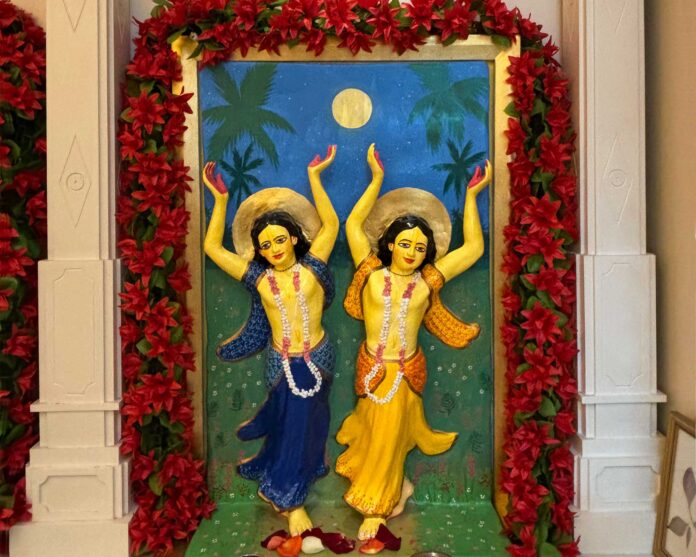
1) All glories, all glories unto my golden Lord Gaurasundara the beautiful, the divine abode of pure love. Demigods, mystics, aspirers of salvation, yogis, and pure devotees of Lord Krsna all sing constantly in His praise. He removes at once the miseries of all tortured souls who are scorched by the heat of their own sins and consequently burn incessantly within the great forest fire of the material world. Blessed is the Lord who is a vast ocean of divine generosity, the abode of the sweet nectars that are the holy names of Krsna.
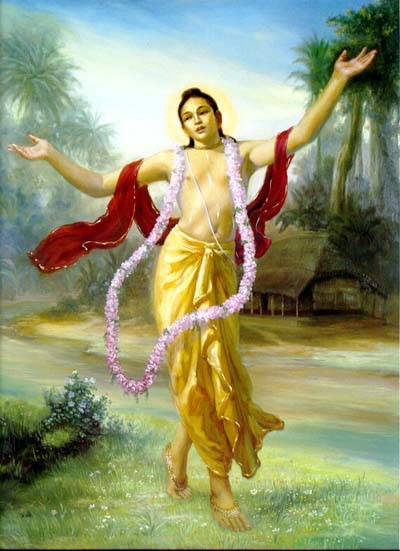
2) The luster of the Lord’s fair body is brighter than a million brilliant mirrors of gold. Of such sweetness is the fragrance of His body that the aromatic lotus and parijata flowers humbly offer their prayers of worship. Millions of Cupids, shocked out of their pride, have swooned at His lotus feet, unable to bear the sight of His unparalleled beauty. His limbs are alive with the rasa moods of love that emerge and flow continually from His beautiful form. I sing with joy the unending glories of my sweet Lord, my golden Gaurasundara, the one and only divine abode of pure love.
3) The Lord expanded Himself as the five-fold potencies of Panca-tattva to expedite the free distribution of the holy names of Krsna. The holy names lead to Krsna-prema, the fifth goal of life. Fully equipped with transcendental limbs and divine weapons, and accompanied by His associates, the Lord descended on earth in all His opulence. Being the Supreme Lord Syamasundara Himself, He appeared as Gaurasundara, dancing and singing the holy names in ecstasy through the streets of Nadiya like an ordinary citizen. I sing with joy the unending glories of my golden Gaurasundara, my sweet Lord, the one and only divine abode of pure love.
4) The Lord could not bear to see His devotee Advaita Prabhu, Lord of Santipura, in misery over the pitiable condition of the Kali-yuga, which has been overtaken by irreligious philosophies. He therefore appeared in such a form to relieve the jiva from misery, award happiness to His devotee, and destroy the venom of Kali by profusely distributing the nectar of Krsna’s names. I sing with joy the unending glories of my golden Gaurasundara the beautiful, the one and only divine abode of pure love.
5) The Lord’s divine birth and pastimes took place at Sri Navadvipa, on the banks of the holy Ganga. He blessed the house of Srinivasa (Srivasa-angana), filling the hearts of all with the blissful transcendental mellows of the holy name. He dutifully respected and adored His mother, Sacidevi, and learned father, Sri Misra. To His wives, Sri Laksmipriya and Sri Visnupriya, He was the Lord of their lives. I sing with joy the unending glories of Gaurasundara the beautiful, my golden Lord, the one and only divine abode of pure love.
6) As the son of Sacidevi, the Lord enjoyed mischievous childhood pastimes with other boys. As a mere youth He acquired mastery over all scriptures. By His expertise in the current method of logic, He established the auspicious path of devotion for the welfare of all. On the banks of the Ganga in the company of His students, He vanquished the pride of the famous digvijayi pandita (conquering scholar). I sing with joy the unending glories of my golden Gaurasundara, the Lord of beauty, the one and only abode of divine love.
7) The Lord’s childhood pastimes were most wonderful. He used to play merrily with rejected utensils and inauspicious animals like pups and poisonous snakes. He was once carried away by a thief who wanted to steal His clothes. He appeared before a tirtha vipra (a brahmana who constantly visits holy places) and blessed him with the remnants of His food. When He would cry in frustration, only the utterance of the names of Krsna would at once pacify Him. I sing with joy the unending glories of my Gaurasundara, my sweet Lord, the one and only divine abode of love.
8) The Lord would play wonderfully in a variety of ways with His boyhood friends while bathing in the waters of the Ganga. Sometimes in a jovial mood He would speak sweetly with the young girls as if teasing them. He would present complicated arguments and counter-arguments before His puzzled students and teachers. I sing with joy the unending glories of my golden Gaurasundara, my sweet Lord, the one and only divine abode of love.
9) The Lord was respected all over the land as the learned scholar Nimai Pandita. He would crush the ego of the proud Nyaya scholars of His time by His numerous ingenious and original arguments. After shattering their traditional theories, He would again establish them. I sing with joy the unending glories of my golden Gaurasundara, Lord of my heart, the one and only abode of divine love.
10) The Lord pointed out the defects of ornamental grammar in the verses spontaneously composed and recited in praise of the goddess Ganga by the most celebrated scholar Kesava Kasmiri. When the scholar tried to defend himself with many complicated arguments, even those arguments were defeated by the Lord. Although the Lord had humbled the pandita by checking his hasty intellect, the Lord nonetheless gave him all due respects and honor as a learned Sanskrit scholar. I sing with joy the unending glories of my golden Gaurasundara, my loving Lord, the one and only abode of divine love.
11) His wonderful elaborate explanations of the sutras, short but potent Sanskrit aphorisms, were extremely intricate. He thereby brought out the sutras’ natural meanings and diverse aspects. He proved that essentially the dhatus (the seven thousand root sounds of Sanskrit) in their fullest meaning express the energies of Krsna, the sole supporter of all the universes. Scholars were thereby totally perplexed and unable to assert their conclusions before the Lord. They could simply sit before Him in dumbfounded astonishment. I sing with joy the unending glories of my beloved Lord, my golden Gaurasundara, the one and only abode of divine love.
12) The Lord explained that the meanings and relationships of all sounds of speech (sphota-vada) have been revealed by the single action of Lord Krsna’s glance. The sphota-vada scholars weave their grammatical rules around sphota, but factually Krsna’s sweet will is the only basis for grammatical rules. The ultimate purpose of all subtle and gross energies and their interactions is to provide pleasure to the Supreme Personality of Godhead, Sri Krsna, as an aspect of His transcendental pastimes. I sing with joy the unending glories of my golden Lord, Gaurasundara the beautiful, the divine abode of pure love.
13) After the Lord’s return from Gaya, He could not resume His academic pursuits because of the continuous upsurge of divine love within His heart. His students, forever deprived of the opportunity to study under Nimai Pandita, condemned themselves as fallen and unfortunate.With intense imploring humility, they praised the Lord for His extraordinary genius as a teacher. Seeing the students thus, the Lord felt great compassion and blessed them. Overwhelmed with ecstatic love, He announced the first good tidings of Sri Krsna sankirtana: He led them in singing the glories of Lord Krsna, and they accompanied the chanting by clapping their hands. All directions became immersed in the sea of nectar that flowed from this ecstatic kirtana. I sing with joy the unending glories of my golden Lord, Gaurasundara the beautiful, the divine abode of pure love.
14) The Lord honors the Vedic religious principles and has taken shelter of His guru’s instruction to introduce Krsna kirtana. He is ever absorbed in His ecstatic dance of divine love, accompanied by musical instruments amid the singing and dancing of millions upon millions of devotees. He is the only savior of sinful and evil-minded demons who are responsible for the decline of religion and pious activities in the world. I sing with joy the unending glories of my loving master, Gaurasundara the beautiful, my golden Lord, the divine abode of pure love.
15) When the king of mlecchas (Chand Kazi) obstructed the performance of hari-nama, the Lord removed the fears of His devotees by directing a nocturnal sankirtana procession, decorated with hundreds of thousands of lamps and millions of voices singing the holy name. Dancing to the accompaniment of the sweet sound of the sri mrdanga, karatalas, and other musical instruments, the Lord humbled the ruling Kazi and ultimately won his heart. I sing with joy the unending glories of my loving Gaurasundara, my golden Lord, the divine abode of pure love.
(16) Amid the showering of sorrowful tears from millions of eyes, the Lord gladly cut off His beautiful long hair. As He accepted His danda, millions of voices were singing the glories of Krsna. Thereafter the people of all lands cried out desperately in grief when they saw Him in the dress of a sannyasi. I sing with joy the unending glories of my golden Lord, Gaurasundara the beautiful, the divine abode of pure love.
17) Being the Lord of all yogis, He wandered all over the Radha province (Bengal) as a devotee, thus sanctifying the land with His lotus feet. He was known as Krsna Caitanya and rescued all fallen conditioned souls with the names of Krsna. He ran all over the earth just like a madman, intoxicated with transcendental ecstatic loving emotions. His appearance resembled a mountain of gold. I sing with joy the unending glories of my loving Gaurasundara, my golden Lord, the divine abode of pure love.
18) The Lord’s association of devotees became even more prestigious by the presence of exalted personalities like Sri Gadadhara and Sri Nityananda. The Lord descended on earth to fulfill the desires of Advaita Acarya, the foremost of devotees. To please His mother, the Lord promised that He would not go far away from her but remain close by at Purusottama Ksetra (Jagannatha Puri). I sing with joy the unending glories of my loving Gaurasundara the beautiful, my golden Lord, the divine abode of pure love.
19) When the Lord of sannyasis reached Nilacala, He first delivered Vasudeva Sarvabhauma, the famous pandita of Vedanta, and then proceeded to southern India, home of many followers of different philosophies. There, like a desire tree, He fulfilled the wishes of the devotees living at various holy places. He met Ramananda Raya, who was like a raincloud of devotion, and empowered him to shower everywhere Vrndavana’s mellows of spontaneous loving service (raga-bhakti). I sing with joy the unending glories of my loving Gaurasundara, my golden Lord, the divine abode of pure love.
20) The Lord’s original and ever-fresh arguments (delineating the real conclusions of the Vedas) devastated the repeated attempts of Sarvabhauma (by means of chala, vitanda, nigraha, and other techniques) to establish vivarta-vada, the impersonal and atheistic philosophy of Sankara. Vivarta-vada is supported by proud men with a demoniac and evil mentality. The Lord preached instead that the entire complex of the Vedic scriptures must be viewed as a temple enshrining Krsna-bhakti. I sing with joy the unending glories of my loving Gaurasundara, my golden Lord, the divine abode of pure love.
21) The Lord’s divine figure, the dwelling place of sweet love, is embellished by beautifully sharp features and well formed limbs. It greatly increases the pleasure of the demigods. Lovelier than the moon, His tall effulgent figure mocks the beauty of hundreds of golden lotus flowers. He embodies the ever-fresh moods of transcendental goodness and loving ecstasy that arise from dancing and singing the holy names. I sing with joy the unending glories of my golden Lord, Gaurasundara the beautiful, the divine abode of pure love.
22) The Lord’s pilgrimage to South India was for rescuing the residents there. At roadsides, temples, and holy sanctuaries, He would chant in sweet tunes, “krsna krsna krsna krsna krsna krsna krsna he!” Sometimes, carried away by some indescribable divine exultation, He would sing “rama rama” and dance sweetly in ecstatic rhythm. He would deliver one and all, irrespective of time, place or circumstance, by magnanimously inducing them to chant the holy names of Krsna. I sing with joy the unending glories of my golden Lord Gaurasundara, the divine abode of pure love.
23) In the Lord’s famous conversation with Ramananda Raya, known as Ramananda Samvada in Sri Caitanya-caritamrta, He concluded that the most cherished possession is raga-bhakti, or spontaneous loving service to the Lord. This service is rendered with a heart thoroughly cleansed of jnana (knowledge) and karma (fruitive activities). The Lord also concluded that Krsna, the master of parakiya conjugal love, is the only basis, the singular objective, and the sole recipient of bhava-seva, or ecstatic loving service. I sing with joy the unending glories of my golden Lord, Gaurasundara the beautiful, the divine abode of pure love.
24) The Lord showed that one may serve Krsna in variegated devotional relationships, progressing in excellence from servitude to friendship to parenthood and to conjugal love. And He showed that ultimately pure devotional service to the lotus feet of Srimati Radharani in mood of sweet parakiya conjugal love for Vrajendra Nandana is the most beautiful service. Divine and spontaneous loving desires in the most pure and pristine form can have their full meaning only in Sri Vrajendra Nandana, Sri Krsna in Vraja Dhama. Such inspiration was given by Sriman Mahaprabhu. I sing with joy the unending glories of my golden Lord, Gaurasundara the beautiful, the divine abode of pure love.
25) The Lord explained that a devotee in the mood of passive adoration enjoys the pleasure of liberation from suffering. A devotee in the service mood enjoys the pleasure of contentment in service. A devotee in friendship enjoys the pleasure of serving the Lord directly under His shelter. And a devotee in a parental relationship enjoys intense affection for the Lord as a son. The Lord further revealed that the devotee in svakiya (marital) conjugal love is restricted in enjoying the sweet nectars and full nourishment of madhurya (conjugal love) because of the impositions of scriptural injunctions. However, when service in madhurya becomes free of the bindings of scriptural regulations and is full of the parakiya (adulterous) conjugal loving moods of Vraja, especially when the element vamya (contrariness) is added, such service gives Krsna the greatest pleasure. I sing with joy the unending glories of my golden Lord, Gaurasundara the beautiful, the divine abode of pure love.
26) The Lord revealed to the fortunate Sri Raya how He had personally descended to perform His ever-fresh divine pastimes at Navadvipa. When Ramananda beheld the Lord’s own form as the cowherd boy Syamasundara, appearing with the nature of mysterious love in the mood and luster of Sri Radhika, he fell down unconscious before the lotus feet of the Lord. The kind Lord then restored the consciousness of His eternally surrendered servant. I sing with joy the unending glories of my golden Lord, Gaurasundara the beautiful, the divine abode of pure love.
27) At Kurmaksetra in Jagannatha Puri, the Lord pleased a brahmana devotee by warmly embracing him. The Lord’s embrace cured the brahmana’s leprosy and awarded him a beautiful body. By quoting the Kurma Purana, the Lord dispelled the fear and illusion of a South Indian brahmana, who was under the misled impression that his worshipable Goddess Sita Devi had been touched by a demon. The Lord showed that the transcendental is beyond all material contamination, and He endowed the brahmana with pure devotion. He saved the ignorant brahmana Kalakrsna, who had been lured by maya into the hands of the infamous Bhattathari sect of Malavara. All glories, all glories to my golden Lord, Gaurasundara the beautiful, the divine abode of pure love.
28) The Lord was pleased with the service of Venkata Bhatta at Rangaksetra (situated on the banks of the Kaveri), where the Vaisnavas firmly believe that worship of Laksmi-Narayana is the ultimate objective. The Lord, in a seemingly playful mood, taught Venkata Bhatta that the rasa pastimes of Krsna are fully maintained, supported, and protected by the gopis. Since Krsna is ultimately the superexcellent goal of all desirable objects, even Laksmi Devi is attracted by Him. I sing with joy the unending glories of my golden Lord, Gaurasundara the beautiful, the divine abode of pure love.
29) The Lord gave one of His devotees the Brahma-samhita, a famous scripture full of the conclusions about devotion to Lord Krsna. The Lord lovingly sang the lyrical verses of Krsna-karnamrtam, which depict Vraja-lila. This book was composed by the South Indian poet BilvamangalaThakura. King Prataparudra worshipped the Lord’s lotus feet by bowing down and placing them on his head. I sing with joy the unending glories of my golden Lord, Gaurasundara the beautiful, the divine abode of pure love.
30) Surrounded by devotees absorbed in sankirtana in front of the chariot, the Lord looked like the divine and wonderful Nataraja, the king of dancers. Astounding pilgrims and the friends and relatives of King Prataparudra, the Lord filled their hearts with wonder. By His potency, the natural purport of the pastimes of Lord Jagannatha’s chariot ride to Gundica was manifested in the poem composed by Srila Rupa Gosvami. All glories, all glories to my golden Lord, Gaurasundara the beautiful, the divine abode of pure love.
31) Wonderstruck and overwhelmed by the Lord’s genius, effulgence, and loving symptoms, King Prataparudra of Utkala (Orissa) gave up all previous religious conceptions and traditions, along with his sense of royal glory, heroism, and power. Then, with a single-minded craving for the Lord, the King threw himself before the Lord’s lotus feet to be crowned with their dust. I sing with joy the unending glories of my golden Lord, Gaurasundara the beautiful, the divine abode of pure love.
32) When the Lord was in South India, famous scholars worshiped Him, and powerful kings, their ministers, and family members honored and revered Him. He was their crown jewel of devotion. Then, according to the custom of sannyasis, the Lord turned homeward toward Bengal to see for the last time His mother, motherland, and the Ganga. I sing with joy the unending glories of my golden Lord, Gaurasundara the beautiful, the divine abode of pure love.
33) As the fame of the Lord spread far and wide and news came of His arrival, all of Bengal, proud of their Lord, prepared to receive and glorify Him. Even the handful of puffed-up atheists and skeptics were ashamed of their lowliness when they saw how the multitudes honored and loved the Lord. Upon His arrival, He revitalized and rejuvenated His mother and other devotees who were dying due to separation from Him. I sing with joy the unending glories of my golden Lord, Gaurasundara the beautiful, the divine abode of pure love.
34) When at last the Lord returned to His motherland, Bengal, after five long years of sannyasa, millions of people rushed to see Him. Deeply moved, with eyes full of eagerness, they beheld their Lord, who attracts the hearts of everyone. A tumultuous and continuous uproar spread in all directions and pierced the skies, as millions upon millions of voices repeatedly resounded the holy names of Hari. I sing with joy the unending glories of my golden Lord, Gaurasundara the beautiful, the divine abode of pure love.
35) The Lord pacified His devotees, who were heartbroken for not being able to see their master for such a long time. And He delivered and pardoning many sinners and miserable persons (such as Capala Gopala). The Lord then began to run towards Vrndavana, the abode of Krsna, carrying thousands of millions of people in His wake. On the way, at Ramakeli, He was attracted by Sri Rupa and his elder brother, Sri Sanatana, to whom He expressed feelings of love. I sing with joy the unending glories of my golden Lord, Gaurasundara the beautiful, the divine abode of pure love.
36) Leaving Ramakeli, the Lord continued through Bengal towards Jagannatha Puri. After leaving Puri Dhama, Lord Caitanya passed through the Jharakhanda forest on His way to Vrndavana. There He inspired the jungle animals such as tigers, deer, and elephants to join in the congregational chanting of Lord Krsna’s Holy Names. Intoxicated by the sweet Names of the Lord, the animals joyfully danced along with the Lord, who was madly absorbed in the deepest devotional ecstasies. The Supreme Lord experienced profound realizations in solitary worship as He walked down the deep and impenetrable jungle paths of Jhadakhanda with Balabhadra Bhattacharya. I offer my obeisances to that beautiful Golden Lord, Gauranga Sundara, the divine form of Krsna prema.
37) Lord Gaurasundara showed great honor towards the Deities along the Ganges-bank in Kasi, and unto Bindu Madhava at the confluence of the Ganges and the Yamuna in Prayaga. Following the current of the Yamuna, the Lord began to quickly run along her banks in anxious pursuit of a glimpse of the sacred place known as Mathura. As divine thoughts of Vrndavana’s pastimes overwhelmed His memory and caused intolerable feelings of separation, Lord Gaurasundara fell unconscious. I offer my obeisances to that beautiful Golden Lord, Gauranga Sundara, the divine form ofKrsna prema.
38) Lord Caitanya stated that the mood of deep separation that Madhavendra Puri was able to taste, as depicted in the following beautiful verse first spoken by Srimati Radharani, is the zenith point and desirable object of pure adoration:
ayi dina-dayardra natha he
mathura-natha kadavalokyase
hrdayam tvad-aloka-kataram
dayita bhramyati kim karomy aham
“O my Lord! O most gracious master! O master of Mathura! When will I see You again? Because of my not seeing You, my agitated heart has become unsteady. O most beloved one, what shall I do now?” After the Lord entered into Vraja, the background stage where pastimes of pure love are enacted, He became overwhelmed to His heart’s full satisfaction. The Lord was charmed to see the beautiful gardens and forest groves that served as His playground for spiritual pastimes in a previous era. While visiting the twelve forests of Vrndavana, the Lord exhibited various different dealings with the cowherd boys and maidens. I offer my obeisances to that beautiful Golden Lord, Gauranga Sundara, the divine form of Krsna prema.
39) While strolling through the forest groves of Vrndavana, the Lord was joyfully welcomed by swarms of humming bumblebees busily engaged in discussion about pure love as they hovered over the blooming flowers. Millions of trees lining the forest grove harmoniously offered their respects unto Lord Gaurasundara in unison with a variety of birds that were expertly singing and dancing in sheer delight. The Lord’s mind became overflowed by loving feelings due to remembering how the cows, calves, and oxen of the holy abode of Vrndavana would affectionately call for Him in previous pastimes, thereby elating His emotions in pure love. I offer my obeisances to that beautiful Golden Lord, Gauranga Sundara, the divine form of Krsna prema.
40) Hopelessly overwhelmed by a surge of pure love, Lord Gaurasundara madly danced and chanted the Holy Names of Krsna. A profuse current of flowing tears streamed from His eyes, passing over the radiant luster of His giant golden form, over His brilliant garments that resembled the sun, and over the ground in all four directions. The Lord’s joyful pastimes were ecstatically enhanced by such gestures as His loudly mispronouncing the Holy Name of Krsna in a delirious state, or His roaring with laughter due to being ecstatically absorbed in deep emotion. I offer my obeisances to that beautiful Golden Lord, Gauranga Sundara, the divine form of Krsna prema.
41) Surcharged with the confusing dictations of pure love of God, Lord Gaurasundara, dancing in ecstasy, anxiously approached the sacred place of Radha Kunda, which was unmanifested at that time. The Lord hastily took bath in that flooded paddy field, sanctified the water, and revealed it to be Sri Radha Kunda. In deep humility, the Lord began to carefully recite verses from the Scriptures depicting Sri Radha Kunda as the divine embodiment of pure love.
yatha radha priya visnos
tasyah kundam priyam tatha
sarva gopisu saivaika
visnor-atyanta vallabha
“Just as Sri Radha is very dear to Lord Krsna, similarly Her divine pond, Sri Radha Kunda, is dear to the Lord. Of all the gopis, She is the dearmost consort to Lord Krsna.” I offer my obeisances to that beautiful Golden Lord, Gauranga Sundara, the divine form of Krsna prema.
42) As the Lord was visiting various places in Vrndavana where Lord Krsna performed His pastimes, He visited that famous tamarind tree that existed during the Dvapara era. Sitting beneath the tamarind tree, the Lord’s memory of His confidential water-sporting pastimes with the cowherd maidens was aroused when He saw the dancing gestures of the Yamuna’s waves. The Lord’s entire being was captured by tasting the sweetness of Sri Radha within the depths of His heart. Identifying with that selfsame sweetness and emotion that possessed His entire self, the Lord’s entire existence was stolen away. This place is indicated to be the place of origin of Gauratattva, for it was here that Lord Syamasundara became greatly absorbed in the divine mood of Srimati Radharani. Sri Caitanya Mahaprabhu, who is Himself the origin of all, eternally resides in this place. I offer my obeisances to that beautiful Golden Lord, Gauranga Sundara, the divine form of Krsna prema.
43) Lord Gauranga mentioned a witty conversation that was carried on between a parrot and his mate. In their talk, Lord Krsna, the transcendental Cupid, is described to be illusioned due to His deep feelings of separation from Sri Radha.
radha-sange yada bhati
tada ‘madana-mohanah’
ayatha visva-moho ’pi
svayam ‘madana-mohitah’
The female parrot said, “When Lord Krsna is with Radharani, He is the enchanter of Cupid; otherwise, when He is alone, He Himself is enchanted by amorous feelings, even though He enchants the whole universe.” By this pastime, Lord Gauranga charmed the devotees’ hearts by showing that Lord Krsna’s sweetness and charm ultimately lies in the fact that He can be subdued by pure love. I offer my obeisances to that beautiful Golden Lord, Gauranga Sundara, the divine form of Krsna prema.
44) It was in the sacred place of Prayaga, in the bathing area known as Dasasvamedha Ghata, that Lord Gauranga taught Srila Rupa Gosvami that the ultimate objective of one’s devotional practices is to relish the sweet mellows found in Sri Vrndavana, and the Lord instructed him to widely distribute that sweetness. Later in Kasi, the Lord elaborately described to Srila Sanatana Gosvami many topics of pure dedication, such as knowledge of proper acquaintance with the environment, the means of applying that
knowledge, and the ultimate goal of obtaining pure love of Godhead. Also, at the special request of a Maharastrian brahman and Tapana Misra and other devotees, the Lord destroyed the ignorant conception of the mayavadi renunciates in Varanasi. Lord Gaurangadeva personally met the impersonalists there in a public assembly, and pointed out that their mode of self-adoration was ultimately based on enviousness and narrow-mindedness. In this way the Lord established that factual independence was exhibited by those worshipping the Supreme Personality of Godhead. I offer my obeisances to that beautiful Golden Lord, Gauranga Sundara, the divine form of Krsna prema.
45) While en route to Jagannatha Puri from Vrndavana, the Lord met and instructed Srila Rupa Gosvami in Prayaga. Following this, Lord Gauranga arrived in Varanasi where He found Prakasananda Sarasvati to be the leader of millions of impersonalist renunciates who were followers of Sri Sankaracarya. By His pure and affectionate personality, Lord Gauranga rescued Prakasananda Saraswati from the deep well of the transformation theory of Sankaracarya and intoxicated the sannyasis and residents of Kasi by engaging them in the glorification of Lord Krsna’s Holy Names. Sri Gaurangadeva was the transcendental expert who granted their passage over the material ocean, like a vessel carrying the nectar of all the scriptural conclusions handed down in the disciplic line from the sage Narada to Srila Vyasadeva. I offer my obeisances to that beautiful Golden Lord, Gauranga Sundara, the divine form of Krsna prema.
46) When Lord Caitanyadeva was in Kasi, He taught a grand assembly of the impersonalist renunciates that the Srimad-Bhagavatam, as taught in the bonafide disciplic succession from Lord Krsna to Narada and handed down by Srila Vyasadeva, is the factual commentary on the conclusions of the Vedanta-sutras. Sri Gauranga also explained the four fundamental verses of the Srimad-Bhagavatam and revealed Lord Krsna as the ultimate reality beyond all duality and the original principle of the entire universal arrangement. By the Vedic aphorism “anavrttih sabdat anavrttih sabdat,” Lord Caitanya established that conscious sound in its highest expression is Lord Krsna’s Holy Name, and that it bestows the utmost benefit by releasing the soul from its conditioned state of existence. I offer my obeisances to that beautiful Golden Lord, Gauranga Sundara, the divine form of Krsna prema.
47) By explaining the famous atmarama verse of the Srimad-Bhagavatam sixty-one times, Lord Gauranga sliced to pieces the impersonalist doctrine propagated by Sankaracarya. The Lord also recited many references from the Upanisads, such as apani-pado javano grahita pasyaty acaksuh sa srnoty akarnah, whereby He revealed the charming sweet nature of the Absolute Truth’s spiritual pastimes. Lord Caitanya fully censured the hateful conception of the impersonalists that Lord Krsna’s transcendental form, name, qualities, pastimes, and Deity manifestation are simply an imaginary transforrnation of the illusory energy maya. I offer my obeisances to that beautiful Golden Lord, Gauranga Sundara, the divine form of Krsna prema.
48) When Lord Gauranga referred to the verse brahmeti paramatmeti bhagavan iti sabdyate in the Srimad-Bhagavatam, He harmoniously accommodated the conception of the non differentiated aspect of reality, brahman, the ultimate goal of the impersonalists, with the conception of the localized aspect of reality, paramatma, the goal of the mystic perfectionists. The Lord adjusted these two truths by showing that they are included within and surpassed by the ultimate conception of the nondualistic Absolute Truth, bhagavan, who is the primeval principle of reality. When revealing this axiomatic truth in connection with the joyful and confidential nature of the Supreme Lord’s spiritual pastimes, Lord Gauranga pointed out the divine nature of Vraja, which is existing above the Vaikuntha planets.
vaikunthaj janito vara madhu-puri tatrapi rasotsavad
vrndaranyam udara-pani-ramanat tatrapi govardhanah
radha-kundam ihapi gokula-pateh premamrtaplavanat
kuryad asya virajato giri-tate sevam viveki na kah
“Superior to the spiritual realm of Vaikuntha is Mathura, where Sri Krsna first appears. Superior to Mathura is the Vrndavana forest where Krsna enjoyed the rasa dance. Better still is Govardhana Hill, which was the site of even more confidential pastimes of love. But best of all is Radha Kunda, which is situated at the foot of Govardhana Hill, and holds the supreme position because it is overflooded with the nectar of the highest kind of divine love. Who, acquainted with the science of devotion, will not aspire for the divine service of Srimati Radharani at Radha Kunda?” Initially, Lord Gauranga revealed the nature of pure loving service rendered unto the son of Nanda Maharaja in the parental relationship. But when considering the flow of dedication’s sweet mellows, Lord Gauranga described the ultimate aspect of the Supreme Lord’s personality to be Sri Gopijanavallabha, whose divine figure is the unlimited reservoir of all the primary and secondary mellows tasted in pure devotion. Sri Gauranga also hinted that the joyful and charming rasa-lila pastimes are an all-conscious reality, none other than the personal potency of Srimati Radharani. Such transcendental pastimes are found within the superexcellent and inconceivable spiritual world, and are the highest conception of spiritual existence, auspiciousness, and beauty. Lord Gauranga suggested this to be the supreme achievable object of the living entities. I offer my obeisances to that beautiful Golden Lord, Gauranga Sundara, the divine form of Krsna prema.
49) In this manner Lord Gaurangadeva taught that all scriptural conclusions, as perfectly passed down by the various spiritual preceptors through the medium of sound, culminate in the embodiment of Sri Radhavinoda, the all-encompassing basis of proper acquaintance with the environment. The means by which one may reach Lord Krsna is by chanting His Holy Names in the association of pure devotees, while the ultimate goal in pure love is service to Lord Krsna, who is so dear to the cowherd maidens of Vrindavana. Lord Gaurangadeva taught these essential scriptural conclusions in the assembly of scholarly persons. I offer my
obeisances to that beautiful Golden Lord, Gauranga Sundara, the divine form of Krsna prema.
50) Lord Gaurasundara explained this famous verse of the Srimad-Bhagavatam sixty-one times to Srila Sanatana Gosvami, and later to Prakasananda Saraswati:
atmaramas ca munayo
nirgrantha apy urukrame
kurvanty ahaitukim bhaktim
ittham-bhuta guno harih
“Even the liberated souls fully satisfied in the self are irresistibly attracted by the superexcellent qualities of Krsna and surrender to
Him with unalloyed devotion.” The Lord separately combined each of the eleven words found in that verse and established that each one is an enormous storehouse of unlimited wealth supporting the conclusion of pure devotion. I offer my obeisances to that beautiful Golden Lord, Gauranga Sundara, the divine form of Krsna prema.
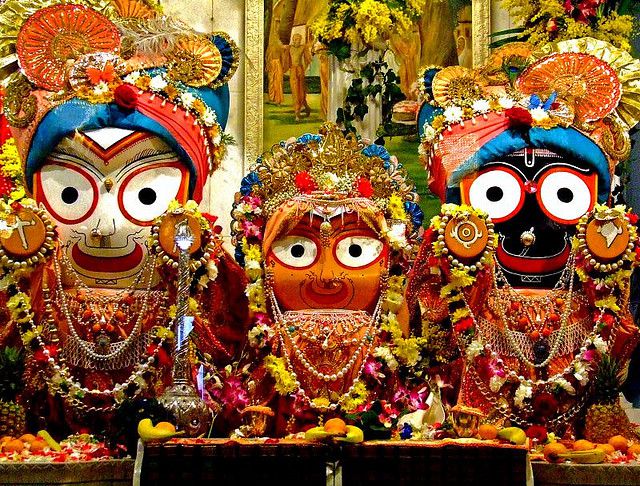
51) Lord Gaurasundara revealed His disciplic line by inspiring Srila Sanatana Gosvami, his younger brother Srila Rupa Gosvami, and Srila Jiva Gosvami. The Lord requested them to excavate the lost places of pilgrimage and compose pure devotional literature which describes the application of spiritual practices and spontaneous devotion. Lord Gauranga also lovingly revealed His worshipable personality to the servitors of Sri Jagannatha Deva at Nilachala (Sri Puri-dhama). I offer my obeisances to that beautiful Golden Lord, Gauranga Sundara, the divine form of Krsna prema.
52) Lord Gaurasundara strongly condemned those who externally accepted the dress of a renunciant yet, like monkeys, actually harbored desires for sense pleasures. On the other hand, He honored that great devotee Ramananda Raya’s devotional effort to intimately teach some young girls a form of dance drama for the pleasure of Lord Jagannatha. Considering Ramananda’s service to be on the platform of spontaneous devotion, the Lord proclaimed that such a level of service was a great fortune attainable only after millions of births. I offer my obeisances to that beautiful Golden
Lord, Gauranga Sundara, the divine form of Krsna prema.
53) The famous spiritual preceptor of the Visnusvami disciplic succession suddhadvaita, Sri Vallabha Bhatta, lived in the village of Adhaila in sacred Prayaga, and personally served Lord Gaurangadeva with resolute devotion in his residence. Later in Jagannatha Puri, Lord Gauranga allowed Vallabha Bhatta to enter into and relish the sweet taste experienced in parental attachment to baby Krsna. The Lord also arranged for him to learn the appropriate mantras for his worship from Sri Gadadhara Pandita. I offer my obeisances to that beautiful Golden Lord, Gauranga Sundara, the divine form of Krsna prema.
54) Diving deep into the reality of His own beauty and sweetness, Lord Govinda stole the mood of Radharani and, garbing Himself in Her brilliant luster, appeared as Sri Caitanya Mahaprabhu. For the last twelve years of His manifest pastimes He was deeply absorbed in union and separation, and He shared His heart’s inner feelings with His most confidential devotees such as Swarupa Damodara and Ramananda Raya: bahire visajvala haya, antare anandamaya. “The wonderful characteristic of divine love of Krsna is that although externally it works like fiery lava, internally it is like sweet nectar that fills the heart with the greatest joy.” Volcanic eruptions of ecstasy flowed from the heart of Sri Gauranga in the agony of separation from Krsna. This Golden Lord, who appeared like an intoxicated elephant, is none other than Lord Govinda. I offer my obeisances to that beautiful Golden Lord, Gauranga Sundara, the divine form of Krsna prema.
55) Sri Gaurangadeva, embracing the neck of Sri Swarupa Damodara, began to sorrowfully recite the prayers Srimati Radharani had previously spoken in the agony of separation when Lord Krsna left Vrindavana for Mathura. The Lord would continuously taste the mood of Srimati Radharani, who was experiencing untold agony from the burning fire of Her tragic separation from Lord Krsna. With a heavy heart, the Lord would describe what He was directly realizing in divine trance. Those realizations are just like dreams to ordinary men. I offer my obeisances to that beautiful Golden Lord, Gauranga Sundara, the divine form of Krsna prema.
56) The eightfold symptoms depicting the moods of pure dedication would decorate and radiantly enhance the beauty of the Lord’s bodily parts. Sometimes He appeared like a tortoise who had withdrawn his limbs into his shell, and at other times His body appeared elongated due to His joints becoming dislocated. Sometimes Lord Gaurasundara’s figure was as tender and aromatic as a lotus flower. At other times the Lord’s body would appear red, yellow, or brilliant with the white hue of the jasmine flower. I offer my obeisances to that beautiful Golden Lord, Gauranga Sundara, the divine form of Krsna prema.
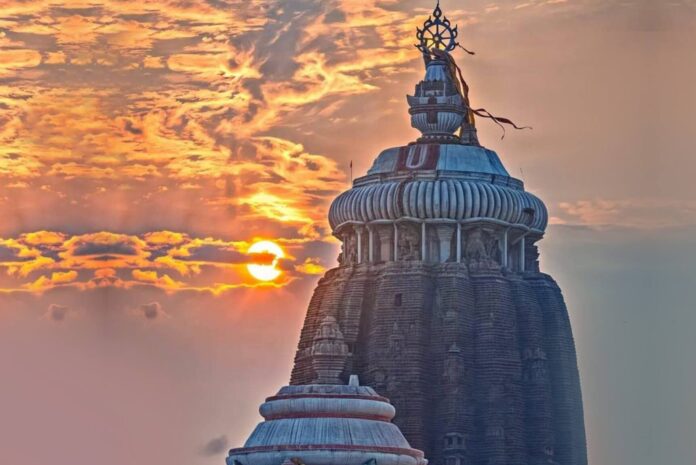
57) Grief-stricken and overwhelmed with tragic feelings of separation, Lord Caitanya quickly ran to the lion-gate of Lord Jagannatha’s grand temple. Moments later, the Lord fell to the ground. In deep separation He manifested the form of the tortoise incarnation Kurmadeva, and an extraordinarily sweet fragrance began to emanate from the Lord’s unconscious figure. This attracted the telangi cows who resided at Lord Jagannatha’s Temple, and they surrounded the Lord. I offer my obeisances to that beautiful Golden Lord, Gauranga Sundara, the divine form of Krsna prema.
58) Once on a moonlit night, Lord Gaurangadeva, relishing the sweet mellows of Lord Krsna’s pastimes, was wandering along the ocean’s shore with His associates. Suddenly the Lord saw the reflection of the moon dancing upon the rolling waves. Unexpectedly, the Lord became overwhelmed by recollections of Lord Krsna’s pastimes in the Yamuna River and fell unconscious. Next, Lord Gauranga’s body, unseen by the devotees, became as light as a piece of dried wood and was gracefully carried away by the wind-god while lying upon the crest of the ocean’s rolling waves in a divine trance. Realizing Lord Krsna’s water-sport pastimes in the Kalindi River with His dearmost cowherd-maiden friends, the Lord dove deep into an ocean of divine ecstasy. I offer my obeisances to that beautiful Golden Lord, Gauranga Sundara, the divine form of Krsna prema.
59) After searching for the Lord throughout the night, the exhausted devotees finally found Him at night’s end near Cakratirtha, His elongated form lying upon the moist sand. The devotees’ eyes were filled with joy as they glanced upon the delicate and serene figure of their Lord. I offer my obeisances to that beautiful Golden Lord, Gauranga Sundara, the divine form of Krsna prema.
60) As the anxious devotees began to loudly chant the Holy Names of Krsna, this divine vibration entered the Lord’s ears and touched the depths of His heart. Immediately the Lord’s dislocated joints reunited, and He displayed the beautiful figure which their eyes were accustomed to relishing. In a semiconscious state, the Lord began to describe with deep feelings of separation what He had seen while absorbed in divine trance. I offer my obeisances to that beautiful Golden Lord, Gauranga Sundara, the divine form of Krsna prema.
61) In the sacred waters of the Yamuna in Vrindavana, Sri Radha-Govinda, along with Their dearmost cowherd-maiden friends, perform various charming water-sport pastimes. These divine pastimes are sometimes revealed, sometimes hidden, sometimes in opposition to each other, and sometimes harmonious. In this way the Lord’s pastimes are couched in different gestures which bring about different types of divine hankering. The melodious tune of this confidential spiritual treasure which astounds the entire universe was distributed by Sri Caitanya Mahaprabhu. I offer my obeisances to that beautiful Golden Lord, Gauranga Sundara, the divine form of Krsna prema.
62) Upon glancing at the Cataka hill, intolerable feelings of separation overwhelmed the Lord, and different pastimes in the mood of profound adoration were incited, whereby the Lord began to rub His beautiful face on the ground. When Sri Gauranga would remember the water-sport pastimes of Lord Krsna, He would jump into the ocean and exhibit the divine symptoms of one intoxicated by pure love. By performing these pastimes, the Lord would inundate the devotees’ hearts with waves from the grand ocean of love of Krsna. Those desperate waves carried both transcendental anxiety and joy up onto the shore of the devotees’ hearts. Such inconceivable auspiciousness was bestowed only upon the Lord’s most surrendered associates. I offer my obeisances to that beautiful Golden Lord, Gauranga Sundara, the divine form of Krsna prema.
63) Sri Caitanya Mahaprabhu is not only beyond the mundane experiences of sight and sound, but He also arrests all intellectual endeavors to know Him. Being situated in pure love of Godhead, He remains a mystery and astonishes even those living entities who are fixed in self-realization. The revealed Vedas of Lord Brahma and the Tantric literatures of Lord Shiva are simply searching after Sri Gaurasundara, reality the beautiful. I offer my obeisances to that beautiful Golden Lord, Gauranga Sundara, the divine form of Krsna prema.
64) By freely distributing the Holy Name of Krsna, Sri Gaurangadeva purified the scholarly intellectual class, the laborer class, the illiterate, and even the lowest sections of society. The Lord alone was the embodiment of the greatest wealth for all sincere and gentle souls, both the rich and the poor, the aristocratic and the lowborn. Therefore, Lord Caitanya is respected and honored by men and women alike as the savior of all, in both the mundane and spiritual worlds. I offer my obeisances to that beautiful Golden Lord, Gauranga Sundara, the divine form of Krsna prema.
65) Like a golden moon, Sri Gauracandra appeared in the year 1407 Sakabda (1486 A.D.), at the onset of a lunar eclipse on a full-moon evening in the month of March. When the Absolute Truth Sri Gaurangadeva incarnated in the beautiful courtyard of Sacidevi, the residents of Mayapura were bathing in the sacred Ganges, congregationally chanting the Holy Names of Hari, and making offerings of various types of jewels to the Lord. I offer my obeisances to that beautiful Golden Lord, Gauranga Sundara, the divine form of Krsna prema.
66) This is the all-conquering conclusion: the highest conception of the Ultimate Reality must also be the highest form of ananda, ecstasy. Sri Caitanya Mahaprabhu is Krsna, ecstasy Himself, tasting His own sweetness and dancing in ecstatic joy. His own Holy Name is the cause of His ecstasy, expressed as dancing, and the Holy Name is the effect of His ecstasy, expressed as chanting. The cause is the effect. The dynamo is creating ecstatic energy which makes Him dance, and His chanting distributes that ecstasy to others. I offer my obeisances to that beautiful Golden Lord, Gauranga Sundara, the divine form of Krsna prema.
67) Sri Isvara Puri became very fortunate when Lord Gauranga exhibited His causeless mercy by accepting initiation from him. Sri Kesava Bharati was similarly favored in that in his presence, Lord Gauranga shaved His beautiful curly hair and accepted from him the garments of a renunciate. And Lord Caitanya gave undivided attention to Sri Madhavendra Puri, stating that his attachment for serving Lord Krsna’s Kisora form in conjugal love was the highest expression of dedication. I offer my obeisances to that beautiful Golden Lord, Gauranga Sundara, the divine form of Krsna prema.
68) I offer my respects unto Sri Gaurangadeva, who rose like a golden moon in Sri Mayapura in 1407 Sakabda, revealed the pastime of accepting the garments of the renounced order, sannyasa, in 1431 Sakabda in order to bless the entire material universe, and disappeared beyond the ordinary vision of the people of this world in 1455 Sakabda. I offer my obeisances to that beautiful Golden Lord, Gauranga Sundara, the divine form of Krsna prema.
69) With great joy Sri Gaurasundara told His dearmost associates Sri Swarupa Damodara and Ramananda Raya that the process of congregationally chanting the Holy Names of Krsna bestows the highest benediction upon the living entities in this age of Kali:
harse prabhu kahena, “suna svarupa-rama-raya
nama sankirrtana kalau, parama upaya”
In His famous composition Sri-Siksastakam also, Lord Gauranga has placed the chanting of Lord Krsna’s Names on the topmost level of importance. The Supreme Lord further taught that chanting Lord Krsna’s Names in pure love of Godhead perfectly nourishes and fully satisfies all the living entities in the universe. I offer my obeisances to that beautiful Golden Lord, Gauranga Sundara, the divine form of Krsna prema.
70) O my Golden Lord! (Suvarna-varna hemanga) O ocean of prema! Kindly grant me the wealth of Your divine love! Please give some slight attention to this fallen soul and pardon his unlimited offenses. There are so many servants of Sri Rupa who are so dear to You. My only aspiration is that You count me as one of those servitors. O Gaurasundara, You are the sole protector and embodiment of good fortune for me, Ramananda Dasa. I offer my obeisances to you, O Gauranga Sundara, my most beautiful Golden Lord, the divine form of Krsna prema.
71) Whoever faithfully recites this composition of seventy prayers known as the Premadhama-deva-stotram will be granted the opportunity to serve that beautiful Golden Lord, Gauranga Sundara, who is none other than Syamasundara Himself covered by the heart and halo (bhava and kanti) of Srimati Radharani.
72) These prayers have been composed in the fifth century after the appearance of Sri Caitanya Mahaprabhu by a certain sannyasa disciple of Srila Sarasvati Thakura named Sridhara.
library.vedavarsity.com | www.vedavarsity.com