The ISKCON Venezuela Earthquake Relief effort has received valuable international support with the arrival of two volunteers from Food For All UK, who have joined local devotees in expanding the ongoing Food for Life prasadam distribution for communities affected by the recent earthquakes. Their presence not only strengthens relief operations but also reflects the spirit of compassionate service that lies at the heart of Krishna consciousness.
As families continue to recover from widespread destruction, devotees are serving freshly prepared sanctified meals (prasadam) to displaced residents and frontline emergency personnel. Inspired by the teachings of His Divine Grace A. C. Bhaktivedanta Swami Prabhupada, the relief mission demonstrates how practical humanitarian assistance and spiritual compassion can work together to uplift individuals during times of crisis.
Food For All UK Volunteers Join the ISKCON Venezuela Earthquake Relief Mission
According to a recent social media update, Nitilaksa Dasa and Loka Saranga Dasa traveled from the United Kingdom to Venezuela on July 4. Their journey was organized by Parasuram Dasa and the Food For All UK Headquarters, with the objective of strengthening the ongoing relief efforts.
Along with financial assistance contributed by supporters, the volunteers transported 30 kilograms of spices to sustain the large-scale cooking operations serving communities affected by the disaster. While spices may appear to be a simple contribution, they play an important role in preparing nourishing and wholesome prasadam for hundreds of people every day.
Their arrival represents the growing international cooperation among devotees who are united in serving humanity through Krishna conscious principles of compassion and selfless service.
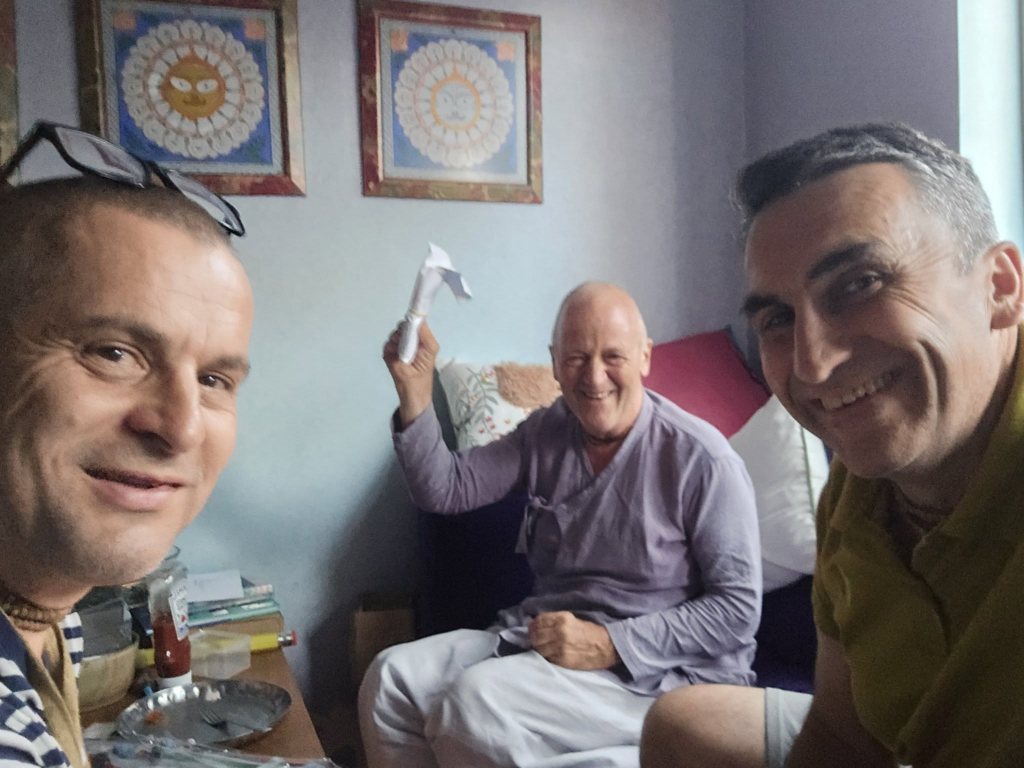
Nitilaksa Dasa and Loka Saranga Dasa with Food for All UK founder Parasuram Dasa before their departure.
Food for Life Continues Serving Families Affected by the Earthquakes
Since the earthquakes struck northern Venezuela, ISKCON devotees have worked tirelessly to respond to the immediate needs of affected communities.
The Food for Life program in Caracas quickly mobilized volunteers and kitchens to prepare fresh vegetarian meals offered to Lord Krishna before distribution. These sanctified meals are then served to displaced families whose homes have been damaged or destroyed.
Many residents remain in temporary shelters established along streets and public parks while recovery efforts continue. Despite these challenging circumstances, devotees continue preparing and distributing prasadam every day, ensuring that families receive both nourishment and care.
In Vedic culture, offering food to the Supreme Lord before distribution transforms ordinary food into prasadam, meaning “the Lord’s mercy.” Along with providing physical nourishment, prasadam reminds recipients of the spiritual principle that every living being is worthy of dignity, compassion, and care.
Loading prasadam meals for distribution.
Serving the Hardest-Hit Communities in La Guaira
The volunteers are currently serving in La Guaira, one of the regions most severely affected by the earthquakes.
Working alongside local authorities and emergency response teams, devotees prepare and distribute freshly cooked meals to earthquake survivors as well as to firefighters, rescue workers, police officers, and military personnel engaged in ongoing recovery operations.
This cooperative effort illustrates an important principle of dharma, or righteous duty. When individuals work together for the welfare of others without expectation of personal recognition, their actions contribute to both social harmony and spiritual advancement.
The relief mission continues to expand as additional resources become available through the generosity of supporters around the world.
Local Devotees Welcome International Support
The arrival of the Food For All UK volunteers has brought not only practical assistance but also renewed encouragement to the local devotees engaged in relief work.
Lilānandi-Subhadrā Devi Dasi, Communications Coordinator for ISKCON Venezuela, expressed heartfelt appreciation for the visiting volunteers.
“We are deeply grateful to Food For All UK, especially Loka Saranga Prabhu and Nitilaksa Prabhu, for traveling to Venezuela to support the Food For Life relief efforts following the recent earthquakes. Their personal presence, guidance, and willingness to serve alongside the local devotees have been a great source of encouragement and strength for our entire team.”
She later added:
“We sincerely thank them for their compassion, dedication, and selfless service to Lord Krishna and to all those in need.”
Her words reflect the cooperative spirit that has enabled the relief mission to continue despite the significant challenges created by the disaster.
A Relief Mission Supported by the Global Devotee Community
The current ISKCON Venezuela Earthquake Relief initiative builds upon an emergency response that began immediately after the earthquakes.
As soon as the disaster occurred, local devotees organized cooking facilities and mobilized volunteers to provide warm prasadam for displaced families. Over time, the initiative has expanded through generous support from devotees and well-wishers across the world.
Working together with Food for Life Global and under the encouragement of ISKCON GBC regional leaders Guru Prasad Swami and Mathuresh Dasa, the team has established an ambitious objective of distributing 2,000 plates of prasadam every day.
This growing collaboration demonstrates how devotional communities across different nations can unite in practical service while remaining centered on spiritual values.
A Firefighter’s Gesture of Gratitude
For Nitilaksa Dasa, the experience of serving in Venezuela has been deeply moving.
Reflecting on the past several days, he shared:
“It’s hard to put into words what we’ve seen over the last few days. Entire communities have lost so much, yet the resilience and kindness of the people here is truly inspiring.”
He described distributing freshly prepared meals not only to families living in temporary shelters but also to firefighters, rescue workers, police officers, and military personnel working continuously throughout the disaster zone.
One particular encounter left a lasting impression.
A firefighter from the Mérida Rescue Team removed the official patch from his own uniform and presented it to Nitilaksa Dasa as a gesture of appreciation for the humanitarian work being carried out by the devotees.
Recalling the moment, he said:
“One moment I’ll never forget was when a firefighter from the Mérida Rescue Team removed the patch from his own uniform and gave it to me as a gesture of respect for our humanitarian work. I’ll treasure it as a reminder that compassion brings people together, no matter where we come from.”
The exchange reflects how genuine service has the power to build mutual respect across cultural, professional, and national boundaries.
Compassion in Action Through Prasadam Distribution
One of the distinctive features of ISKCON’s humanitarian efforts is the distribution of prasadam rather than ordinary food.
Srila Prabhupada repeatedly emphasized that feeding the body should be accompanied by nourishing the soul. By offering food first to Lord Krishna with devotion, the meal becomes spiritually sanctified and is then distributed freely to all without discrimination.
This principle has inspired Food for Life, ISKCON’s global food relief initiative, which has served millions of meals worldwide during natural disasters, humanitarian crises, and community outreach programs.
Although emergency relief addresses immediate physical needs, the deeper purpose is to express compassion rooted in the understanding that every living being is an eternal ātma, or spiritual soul, deserving of kindness and respect.
Nitilaksa Dasa with the firefighter who gave him his patch in gratitude.
Continuing the ISKCON Venezuela Earthquake Relief Effort
As Venezuela continues its long recovery, the ISKCON Venezuela Earthquake Relief mission remains committed to serving both affected families and emergency response personnel through daily prasadam distribution.
The collaboration between local devotees, Food For All UK, Food for Life Global, and supporters around the world demonstrates how selfless service can transcend geographical boundaries. While earthquakes bring unavoidable suffering, acts of compassion performed in the mood of devotional service offer hope, encouragement, and practical assistance to those in need.
Devotees and well-wishers everywhere are encouraged to keep the people of Venezuela in their prayers and to support this ongoing humanitarian initiative. Such service reflects the timeless Vedic teaching that genuine compassion is expressed not merely through sympathy, but through dedicated action performed for the pleasure of the Supreme Lord and the welfare of all living beings.
The ISKCON LA Ratha-yatra 2026 marks a historic milestone as ISKCON New Dvaraka in Los Angeles prepares to celebrate the 50th Annual Festival of Chariots. Scheduled to culminate on Sunday, August 2, this golden anniversary commemorates five decades of bringing Lord Jagannatha’s mercy to Southern California through one of North America’s largest and most beloved spiritual festivals.
Coinciding with ISKCON’s worldwide 60th anniversary, this year’s celebration highlights the enduring mission established by His Divine Grace A. C. Bhaktivedanta Swami Prabhupada—to spread Krishna consciousness through congregational chanting, devotional service, transcendental literature, and the public glorification of the Supreme Lord. The festival continues to attract thousands of devotees, pilgrims, and visitors from diverse backgrounds, offering an opportunity to experience the timeless culture of bhakti-yoga.
ISKCON LA Ratha-yatra 2026 Begins with Several Days of Devotional Programs
The week-long celebration gradually builds spiritual enthusiasm through daily devotional activities before reaching its grand conclusion with the famous chariot procession.
Beginning on Thursday, July 30, devotees and guests will participate in special pre-festival programs designed to prepare the atmosphere for the historic anniversary. One of the highlights includes a special presentation by Vaisesika Dasa, followed by an evening filled with melodious kirtan led by visiting devotional musicians.
Throughout the week, the temple’s regular morning programs—including Srimad-Bhagavatam classes, congregational chanting, deity worship, and devotional association—will continue alongside festival preparations. Numerous opportunities for volunteer service will also be available as devotees work together to welcome the thousands expected to attend.
In the Vedic tradition, such cooperative devotional service (seva) purifies the heart and reminds participants that lasting happiness is found not merely in receiving, but in offering one’s talents in service to the Supreme Lord and His devotees.
Adhivasa Ceremony Marks the Official Opening
The official festivities begin on Friday, July 31, with the sacred Adhivasa ceremony and festival inauguration.
Adhivasa is a traditional Vedic ceremony performed before major festivals, invoking auspiciousness and preparing the atmosphere for worship. It signifies that devotional activities are not ordinary social gatherings but sacred occasions dedicated to pleasing the Supreme Personality of Godhead.
This ceremonial beginning sets the devotional mood for the landmark celebration and honors the spiritual tradition that has been carefully preserved within ISKCON for generations.
Kirtan Mela Unites Devotees Through the Holy Names
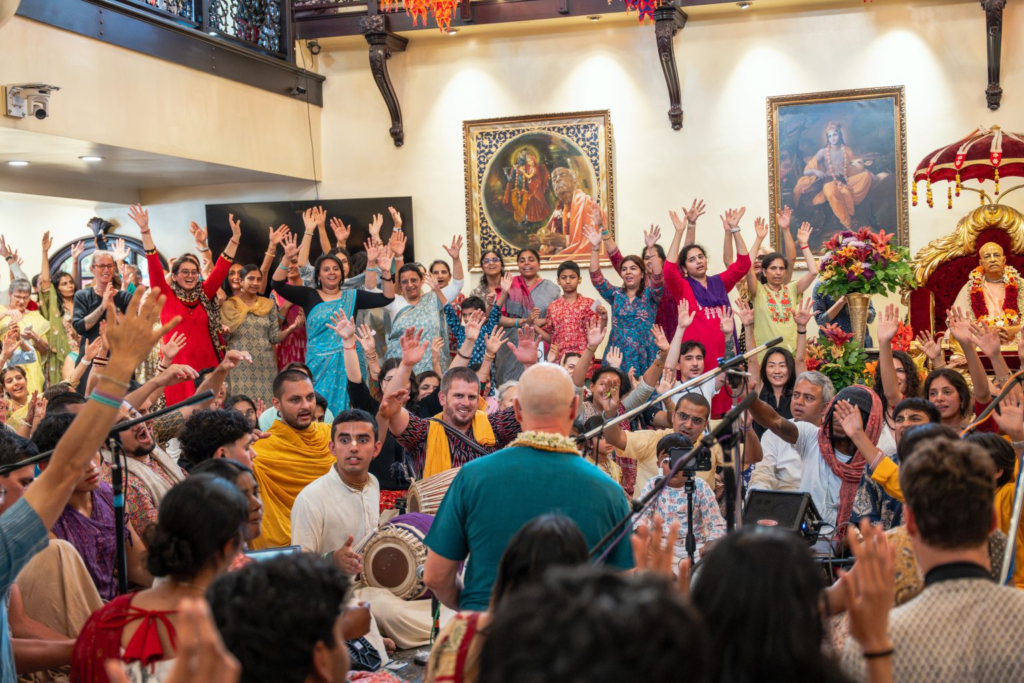
On Saturday, August 1, the temple will host a vibrant Kirtan Mela, bringing together respected kirtan leaders from around the world.
Congregational chanting (sankirtana) occupies a central place in Gaudiya Vaishnava practice. Lord Sri Chaitanya Mahaprabhu taught that chanting the holy names of Krishna is the most effective spiritual process for the present age, awakening the soul’s dormant love for God.
This year’s distinguished lineup includes:
Vaisesika Dasa
Kirtan Premi Das
Smita Krishna Das
Arjuna Krishna Das
Amala Kirtan Das
Vrndavana Das
The internationally acclaimed Mayapuris
Their devotional music and heartfelt chanting are expected to create an uplifting spiritual atmosphere, preparing participants for the following day’s grand procession.
The Grand Festival of Chariots on August 2
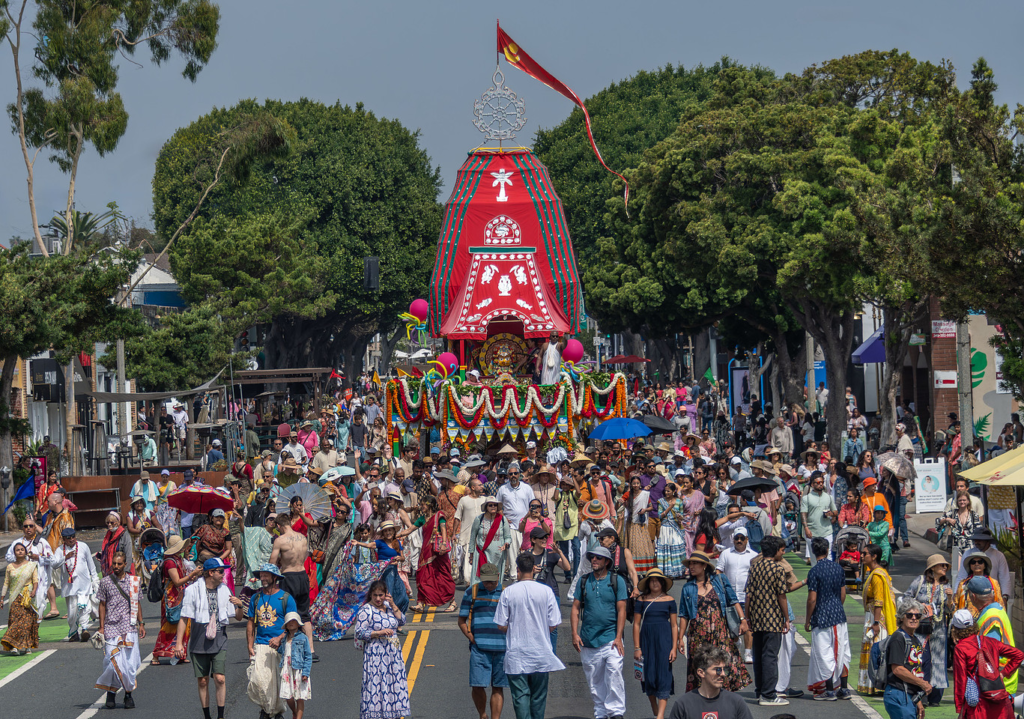
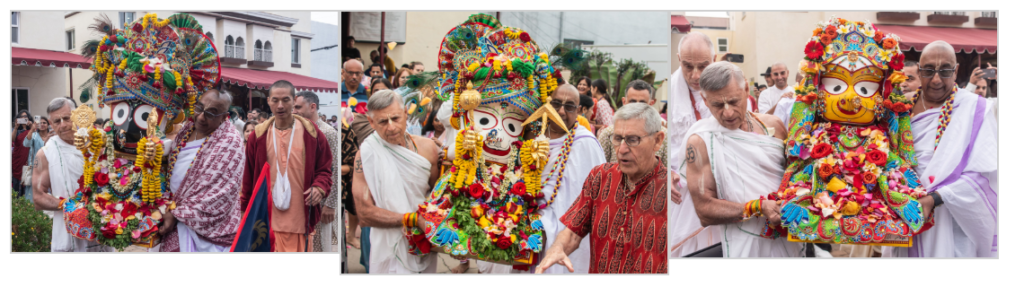
The highlight of ISKCON LA Ratha-yatra 2026 will take place on Sunday, August 2, when the beautifully decorated chariots carrying Lord Jagannatha, Lord Baladeva, and Srimati Subhadra Devi travel through the streets of Los Angeles before arriving at the festival grounds.
Thousands of devotees will joyfully pull the massive wooden chariots while chanting the Hare Krishna maha-mantra, dancing in devotional ecstasy, and distributing spiritual literature and sanctified vegetarian food (prasadam) to visitors.
The procession symbolizes the Lord’s compassionate desire to come out of the temple and bestow His mercy upon everyone, regardless of background, nationality, or religious affiliation. In this way, Ratha-yatra beautifully expresses the universal nature of devotional service.
For many first-time visitors, witnessing Lord Jagannatha’s public procession becomes a memorable introduction to the culture and philosophy of bhakti-yoga.
A Legacy Dating Back to Srila Prabhupada
The Los Angeles Festival of the Chariots occupies a special place in ISKCON history.
The festival was first celebrated in 1976 under the personal guidance of His Divine Grace A. C. Bhaktivedanta Swami Prabhupada, the Founder-Acharya of ISKCON. Inspired by the ancient Ratha-yatra festival of Jagannatha Puri, Srila Prabhupada encouraged similar celebrations worldwide so that people everywhere could receive Lord Jagannatha’s blessings.
Over the past five decades, the Los Angeles festival has grown into one of ISKCON’s largest and longest-running Ratha-yatra celebrations in North America. Every year, tens of thousands gather to witness the colorful procession, participate in joyful kirtan, honor prasadam, and experience authentic Vedic culture.
Its continued success reflects the dedication of generations of devotees who have faithfully preserved Srila Prabhupada’s vision while welcoming newcomers with warmth and hospitality.
Serving Thousands Through Devotional Cooperation
Behind every successful Ratha-yatra stands the dedicated service of hundreds of volunteers.
Throughout the festival, devotees contribute in numerous ways, including preparing prasadam, decorating the festival grounds, organizing logistics, welcoming guests, arranging cultural exhibitions, and assisting with the smooth conduct of the procession.
Such collective service illustrates an important Vedic principle: when actions are performed as an offering to the Supreme Lord rather than for personal recognition, they become spiritually uplifting. The Bhagavad-gita explains that work offered in devotion frees one from selfish motivation and brings lasting satisfaction.
This spirit of cooperation has enabled the Los Angeles Festival of Chariots to flourish for fifty consecutive years.
Celebrating ISKCON’s 60th Anniversary
The 50th Los Angeles Festival of Chariots also coincides with ISKCON’s 60th anniversary, making this year’s gathering particularly meaningful.
Over six decades, ISKCON has introduced millions worldwide to the teachings of the Bhagavad-gita, Srimad-Bhagavatam, congregational chanting, deity worship, and the practical application of bhakti-yoga in daily life.
The Los Angeles Ratha-yatra stands as one of many living examples of Srila Prabhupada’s global mission. What began with a small group of dedicated disciples has grown into a worldwide spiritual movement that continues to inspire people from every culture.
The festival serves not only as a joyful public celebration but also as a reminder that spiritual culture transcends geographical and cultural boundaries because the soul (atma) is eternal and naturally inclined toward loving service to the Supreme.
A Festival That Continues to Inspire Future Generations
As ISKCON LA Ratha-yatra 2026 commemorates its golden anniversary, it also looks toward the future.
For five decades, the Festival of Chariots has welcomed countless families, pilgrims, seekers, and curious visitors into an atmosphere of sacred music, spiritual learning, devotional service, and joyful celebration. Each generation discovers anew the timeless message embodied in Lord Jagannatha’s public procession—that divine compassion is available to everyone.
While the colorful chariots, melodious kirtans, and festive atmosphere capture the senses, the deeper purpose of the festival is to awaken remembrance of our eternal relationship with the Supreme Lord. In a world often characterized by distraction and division, such gatherings gently remind us that genuine unity arises when humanity reconnects with its spiritual foundation.
As ISKCON celebrates sixty years of sharing Krishna consciousness around the globe, the ISKCON LA Ratha-yatra 2026 stands as a joyful testimony to Srila Prabhupada’s enduring vision and to the continuing mission of bringing Lord Jagannatha’s mercy to all.
As the International Society for Krishna Consciousness (ISKCON) celebrates its 60th anniversary in 2026, renewed attention is being given to preserving the movement’s rich spiritual and historical heritage. Among the most valuable initiatives dedicated to this mission is
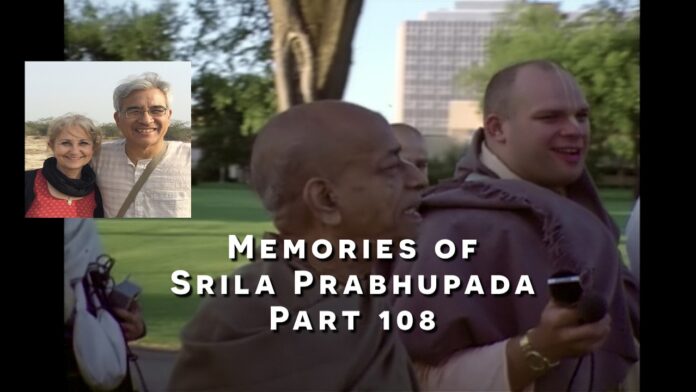
the Prabhupada Memories Project, an extensive oral history archive that documents the personal experiences of those who directly associated with His Divine Grace A. C. Bhaktivedanta Swami Prabhupada, Founder-Acharya of ISKCON.
The Prabhupada Memories Project has recently released several new interviews on its popular YouTube channel, adding more than three hours of fresh content to its growing collection. These newly published conversations feature heartfelt recollections from Srila Prabhupada’s disciples, offering rare insights into the personality, teachings, compassion, leadership, and daily life of the spiritual master who established the worldwide Hare Krishna movement.
As ISKCON commemorates six decades since its founding in New York City in 1966, these firsthand testimonies provide an invaluable opportunity for devotees, scholars, and the general public to connect with the living history of the movement through those who personally served Srila Prabhupada.
The Prabhupada Memories Project: Preserving Living Spiritual History
The Prabhupada Memories Project was founded in 1991 by Siddhanta Dasa, whose vision emerged from a seemingly ordinary yet historically significant event.
After recording an informal interview with Srutakirti Dasa, one of Srila Prabhupada’s personal servants, Siddhanta Dasa realized that these personal recollections possessed immense historical and spiritual value. While books preserve philosophical teachings, personal memories preserve the mood, character, compassion, and practical example of a great spiritual teacher.
Recognizing that many direct disciples were advancing in age, he began a dedicated effort to document their experiences before these invaluable accounts were lost to history.
What started as a single interview gradually developed into one of ISKCON’s most important archival projects.
More Than Three Decades of Dedicated Preservation
Over the past thirty years, Siddhanta Dasa has traveled extensively to interview Srila Prabhupada’s disciples across the world.
Through these conversations, he has preserved thousands of unique memories that reveal many dimensions of Srila Prabhupada’s extraordinary personality. These accounts describe his unwavering dedication to spreading Krishna consciousness, his profound scholarship, practical leadership, gentle humor, personal compassion, and tireless service to humanity.
The interviews have been shared through books, DVDs, online platforms, and an ever-growing collection of video recordings, making them accessible to audiences worldwide.
Today, the archive stands as one of the most comprehensive oral history collections within ISKCON, ensuring that future generations can hear directly from those who walked beside Srila Prabhupada during the formative years of the Hare Krishna movement.
Why Firsthand Memories Matter
Historical documents preserve facts.
Personal memories preserve experience.
While philosophical literature communicates eternal spiritual principles, firsthand testimonies help readers and listeners understand how those teachings were practically embodied by a pure devotee.
Many of the interviews reveal simple daily interactions that demonstrate Srila Prabhupada’s extraordinary qualities—his humility, unwavering faith in Lord Krishna, concern for every individual, careful attention to devotional standards, and deep affection for his disciples.
Such memories transform history from a collection of dates and events into a living tradition that continues to inspire sincere spiritual practitioners.
Within the Vedic tradition, hearing from realized souls (śravaṇam) is considered one of the primary processes of devotional advancement. These authentic recollections therefore serve not merely as historical records but also as opportunities for spiritual reflection and inspiration.
ISKCON at 60: A Time for Reflection
The year 2026 marks sixty years since Srila Prabhupada officially established ISKCON in New York City.
From modest beginnings, the movement has expanded into a global spiritual society with temples, educational institutions, farm communities, restaurants, cultural centers, publishing efforts, and humanitarian projects serving millions of people across the world.
Throughout these decades, Srila Prabhupada’s books have remained the philosophical foundation of the movement. At the same time, the personal experiences of his disciples provide valuable context that helps newer generations appreciate how these teachings were lived and practiced during ISKCON’s earliest years.
As time passes, preserving these firsthand accounts becomes increasingly important. Every recorded memory safeguards a unique perspective that cannot be recreated once eyewitnesses are no longer present.
Passing Spiritual Heritage to Future Generations
Vedic culture places great emphasis on preserving knowledge through guru-paramparā, the disciplic succession by which transcendental wisdom is faithfully transmitted from teacher to disciple.
Although spiritual realization ultimately rests upon hearing revealed scripture and practicing devotional service, the personal examples of saintly teachers offer practical guidance that strengthens faith and understanding.
The Prabhupada Memories Project fulfills this important service by ensuring that future generations can hear authentic accounts directly from those who personally traveled, served, and learned from Srila Prabhupada.
For younger devotees who never had the opportunity to meet ISKCON’s Founder-Acharya, these interviews provide a meaningful connection to the movement’s early history and devotional culture.
Researchers and historians likewise benefit from these carefully preserved oral testimonies, which complement written records by capturing personal observations, conversations, and experiences that might otherwise remain undocumented.
A Valuable Resource for Devotees and Scholars
The growing archive continues to serve multiple audiences.
Devotees gain inspiration by hearing how Srila Prabhupada guided individuals through practical challenges while always directing them toward Krishna consciousness.
Students of religious history gain valuable primary-source material documenting the development of one of the world’s fastest-growing spiritual movements of the twentieth century.
Educators and researchers find a rich collection of firsthand narratives that illuminate the social, cultural, and spiritual dimensions of ISKCON’s formative decades.
Most importantly, these preserved memories remind listeners that authentic spiritual leadership is expressed not only through profound philosophy but also through compassion, humility, personal example, and unwavering dedication to serving the Supreme Lord.
Digital Preservation in the Service of Dharma
Modern technology has made it possible to preserve and share these invaluable memories with audiences across the globe.
Video platforms now allow thousands of viewers to hear directly from Srila Prabhupada’s disciples, regardless of geographical distance. In this way, contemporary digital tools become instruments for preserving dharma—timeless spiritual knowledge—and ensuring that future generations continue to benefit from authentic devotional experiences.
The recent addition of several hours of new interviews demonstrates that the Prabhupada Memories Project remains an active and evolving effort. As more recollections are recorded and shared, the archive grows not only in size but also in historical and spiritual significance.
Conclusion
As ISKCON celebrates its 60th anniversary, the Prabhupada Memories Project stands as one of the movement’s most valuable initiatives for preserving its living heritage. Through decades of dedicated interviews, Siddhanta Dasa has safeguarded the voices of those who personally served His Divine Grace A. C. Bhaktivedanta Swami Prabhupada, allowing future generations to encounter not only his teachings but also the personal qualities that inspired thousands to embrace Krishna consciousness.
These firsthand accounts complement Srila Prabhupada’s timeless books by providing vivid glimpses into the practical application of his teachings, his compassionate dealings with disciples, and his unwavering commitment to spreading devotional service throughout the world.
In the Vedic tradition, preserving the words and examples of great spiritual teachers is itself an act of devotional service. The Prabhupada Memories Project therefore represents far more than a historical archive—it is a living bridge connecting present and future generations with the enduring legacy of ISKCON’s Founder-Acharya and the timeless message of Krishna consciousness.
For many people, gambling appears to be harmless entertainment—a lottery ticket, a casino visit, or a friendly wager. Modern society often promotes these activities as exciting opportunities to gain wealth with little effort. Yet Vedic wisdom presents a profoundly different understanding. It explains that gambling is not merely a financial risk but a subtle habit that gradually weakens truthfulness, self-control, and spiritual consciousness. The relationship between gambling and spiritual life is therefore much deeper than avoiding monetary loss.
According to the Vedic scriptures, gambling disturbs the mind, nourishes greed, and diverts one’s intelligence from higher spiritual goals. Rather than cultivating qualities such as honesty, discipline, and satisfaction, it encourages dependence upon chance and speculation. A simple incident illustrates this reality.
When Hope Turns into Despair
During the busy holiday season, a convenience store was filled with customers purchasing last-minute groceries. Amid the long lines stood an elderly woman whose attention was fixed entirely upon lottery tickets.
One after another, she purchased instant lottery cards, scratching each one with anxious anticipation. Every disappointment only increased her determination to buy another ticket. Five dollars became ten, then fifteen, until eventually every dollar she carried had disappeared.
Finally, with empty pockets and visible disappointment, she quietly walked away.
To an outside observer, it appeared to be only a few lottery tickets. Yet beneath the surface was something far more troubling. Perhaps those few dollars represented money intended for groceries, rent, or essential living expenses. The promise of immediate fortune had replaced sound judgment.
Such scenes have become increasingly common throughout the world. Gambling often offers hope but leaves many people with financial hardship, emotional distress, and broken trust.
Why Gambling Is Discouraged in Vedic Culture
When one accepts the path of bhakti-yoga, or devotional service to Lord Krishna, one voluntarily avoids four activities that obstruct spiritual advancement:
Meat-eating
Intoxication
Illicit sexual activity
Gambling
These four practices are described by Śrīla Prabhupāda as the principal pillars of sinful life because each one disturbs the consciousness and strengthens material attachment.
Among them, gambling occupies a unique position. While intoxication clouds intelligence and illicit relationships disturb purity, gambling primarily attacks one of the most valuable qualities of human character—truthfulness.
A spiritually progressive life depends upon honesty with oneself, with others, and ultimately with the Supreme Lord. When truthfulness weakens, genuine spiritual advancement becomes increasingly difficult.
Gambling and Spiritual Life in the Śrīmad-Bhāgavatam
The Śrīmad-Bhāgavatam presents a powerful allegory to explain the decline of religion in the present age.
Religion is compared to a bull standing upon four strong legs:
Mercy
Truthfulness
Cleanliness
Austerity
These four principles sustain both individual character and civilized society.
The scriptures explain that four sinful activities gradually destroy these pillars:
Sinful Activity
Spiritual Quality Weakened
Meat-eating
Mercy
Illicit sex
Cleanliness
Intoxication
Austerity
Gambling
Truthfulness
In the present age of Kali-yuga, three of these pillars have been severely weakened, leaving truthfulness struggling to survive.
This decline is visible throughout modern society. Public distrust has become widespread. Political scandals, corporate dishonesty, fraudulent business practices, and broken personal relationships all reflect a gradual erosion of honesty.
Vedic wisdom explains that these are not isolated social problems but symptoms of a deeper spiritual decline.
Why Gambling Destroys Truthfulness
The destructive nature of gambling extends well beyond financial loss.
Those who become attached to gambling frequently begin concealing their activities from family members, employers, and friends. Losses are hidden behind excuses, borrowed money is explained through fabricated stories, and promises are repeatedly broken.
Such dishonesty becomes habitual.
An example illustrates this progression.
A middle-aged man, newly married and sincerely hoping for a happy family life, secretly spent much of his salary at casinos. Each visit required another deception. He invented stories to explain his absence and fabricated emergencies whenever money disappeared.
Eventually, the truth emerged. He admitted that he was not merely an occasional gambler but a compulsive addict.
His greatest loss was not financial.
It was trust.
Years of deception had nearly destroyed his marriage.
This illustrates a timeless Vedic principle: once truthfulness is sacrificed for temporary pleasure, all meaningful relationships begin to deteriorate.
Gambling Is an Ancient Human Weakness
Although modern casinos and lotteries appear contemporary, gambling itself is thousands of years old.
The Vedic literature records numerous historical examples demonstrating how gambling influences human behavior.
One such incident involves Lord Balarāma and Prince Rukmī, the brother of Rukmiṇī Devī.
During a game involving increasingly valuable wagers, Balarāma eventually won decisively. Unable to tolerate defeat, Rukmī falsely claimed victory.
Even when a divine voice from the heavens declared Balarāma the rightful winner, Rukmī stubbornly refused to acknowledge the truth.
His attachment to wealth overpowered his commitment to honesty.
The lesson remains highly relevant today.
Greed often blinds intelligence, making even respectable individuals willing to abandon integrity for temporary gain.
The Great Gambling Match of the Mahābhārata
Perhaps the most famous example of gambling appears in the Mahābhārata.
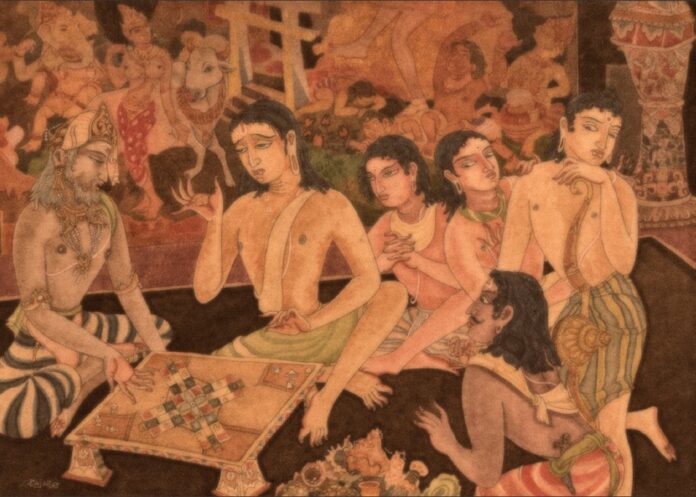
The righteous King Yudhiṣṭhira Mahārāja, renowned for his commitment to dharma (righteous duty), was challenged to a gambling match orchestrated by his envious cousin Duryodhana and manipulated by the cunning Śakuni.
As a member of the royal order, Yudhiṣṭhira was obliged to accept such a challenge.
However, the contest was not conducted honestly.
Through deception and manipulation, Yudhiṣṭhira temporarily lost his kingdom, wealth, brothers, and even the freedom of his queen, Draupadī.
This tragic event eventually culminated in the historic Battle of Kurukṣetra, where millions of warriors lost their lives.
The Vedic conclusion is unmistakable.
A single act rooted in greed and dishonesty can create consequences extending far beyond the individual, affecting entire families, kingdoms, and generations.
The Subtle Forms of Gambling
Most people associate gambling with casinos, lotteries, betting, or games of chance. However, Vedic wisdom explains that gambling also exists in subtle forms that may not involve money at all.
Śrīla Prabhupāda often broadened the definition of gambling to include any activity driven by speculative hope rather than sound knowledge and disciplined effort. Such tendencies gradually divert the mind from reality and weaken one’s determination to pursue genuine spiritual progress.
Understanding these subtle forms helps us recognize that gambling is fundamentally a mentality—a desire to gain something valuable without following the proper process.
Mental Speculation: Gambling with the Truth
One of the most subtle forms of gambling is mental speculation regarding spiritual knowledge.
The Vedic scriptures repeatedly explain that the Absolute Truth cannot be understood merely through imperfect human reasoning or personal imagination. Conditioned souls possess limited senses and imperfect intelligence. Therefore, attempting to discover transcendental reality solely through speculation is compared to gambling with the truth.
Many sincere seekers initially try to understand the soul, God, and liberation through their own theories. Although they may occasionally arrive at partial truths, speculation often leads to dangerous misconceptions.
For example, one may correctly understand that the self (ātmā) is distinct from the temporary material body. Yet without proper guidance from scripture and authentic spiritual teachers, one might wrongly conclude that ending the body is the path to liberation. Such mistaken conclusions demonstrate the limitations of unaided speculation.
The Vedic process is therefore based not upon guesswork but upon śruti—hearing transcendental knowledge through authorized disciplic succession (paramparā). This method replaces uncertainty with genuine realization.
Gambling and Spiritual Life in Business Decisions
Another subtle aspect of gambling and spiritual life concerns reckless financial ventures.
Business itself is not condemned in Vedic culture. Honest enterprise performed responsibly can become devotional service when its fruits are offered in the service of the Supreme Lord. Śrīla Prabhupāda himself maintained a business before accepting the renounced order, and he encouraged qualified devotees to conduct ethical businesses to support spiritual projects.
However, there is an important distinction between responsible entrepreneurship and speculative greed.
High-risk schemes promising extraordinary profits with minimal effort often appeal to the same mentality that drives gambling. Pyramid schemes, fraudulent investments, and unrealistic financial promises encourage people to risk substantial resources in hopes of effortless wealth.
Such ventures are motivated not by honest work but by the expectation of disproportionate gain.
The Vedic principle is straightforward: wealth earned through integrity, diligence, and lawful occupation supports peace of mind, whereas wealth sought through speculation often produces anxiety, disappointment, and conflict.
Wasting Time Is Also a Form of Gambling
Śrīla Prabhupāda occasionally described another surprising form of gambling—wasting valuable time.
At first glance, this comparison may seem unusual. Yet the principle is profound.
Every human being possesses a limited span of life. Each passing moment represents an irreplaceable opportunity for spiritual growth, self-realization, and service.
When time is invested in frivolous entertainment, endless distraction, idle gossip, or purposeless habits, one is effectively gambling with life’s greatest asset.
Money lost through gambling may eventually be earned again.
Time can never be recovered.
Therefore, thoughtful individuals carefully examine how they invest their days. Activities that nourish wisdom, character, devotion, and meaningful relationships yield lasting benefits, whereas temporary distractions rarely produce enduring satisfaction.
The Vedic tradition encourages using one’s valuable human life for pursuits that awaken eternal consciousness rather than merely stimulating temporary excitement.
A Lesson from Hiraṇyakaśipu and Prahlāda Mahārāja
The Śrīmad-Bhāgavatam provides two contrasting examples illustrating how one’s investment of time determines one’s ultimate destination.
Hiraṇyakaśipu, the powerful demon king, performed extraordinary austerities for one hundred celestial years. His goal was not self-realization but material immortality and universal domination.
Although he acquired immense power, his ambition ultimately failed. No material arrangement can overcome the supreme laws established by the Lord. Despite all his efforts, Hiraṇyakaśipu eventually met his end at the hands of Lord Nṛsiṁhadeva.
His entire life’s endeavor proved to be a failed gamble.
In striking contrast stood his saintly son, Prahlāda Mahārāja.
Rather than seeking wealth, prestige, or power, Prahlāda invested every moment in remembering and glorifying Lord Viṣṇu. Even as a young child, he encouraged his classmates to utilize the rare human form of life for devotional service instead of temporary pleasures.
Prahlāda expected no material reward.
His happiness arose naturally from loving service to the Supreme Lord.
Unlike speculative pursuits, devotional service yields permanent spiritual benefit because it awakens the soul’s eternal relationship with Kṛṣṇa.
Progress Comes Gradually
For many practitioners, overcoming deeply rooted habits does not happen overnight.
One may easily avoid obvious forms of gambling while still struggling with subtler tendencies such as idle conversation, unnecessary curiosity, excessive entertainment, or mental speculation.
Vedic wisdom acknowledges this gradual process of purification.
Just as a beginner cannot immediately perform the intricate compositions of an accomplished musician, spiritual advancement also develops steadily through sincere practice.
The essential principle is perseverance.
Every sincere effort to chant the holy names, study sacred literature, associate with devotees, and engage in devotional service gradually purifies the heart.
As unwanted desires diminish, activities that once seemed attractive naturally lose their influence.
Rather than becoming discouraged by temporary shortcomings, one should remain grateful for every step forward while continuing to seek shelter in devotional service.
The Real Investment That Never Fails
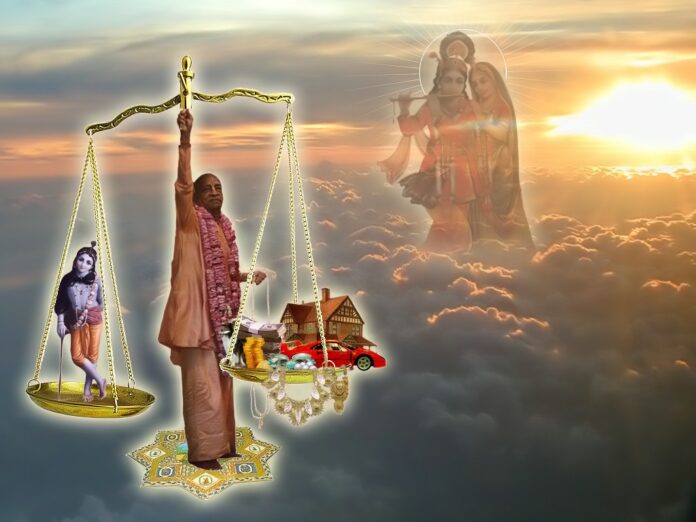
Human life constantly requires choices about where to invest our attention, energy, wealth, and time.
Material investments may produce profit or loss. Speculative ventures promise uncertain rewards. Gambling offers excitement but often ends in disappointment.
Devotional service, however, is never a losing investment.
The Bhagavad-gītā explains that even a small amount of sincere spiritual practice protects one from the greatest fear and brings permanent benefit. Every act of hearing about Kṛṣṇa, chanting His holy names, serving others, and cultivating genuine spiritual knowledge enriches the soul beyond the temporary fluctuations of material success and failure.
From this perspective, the greatest victory is not winning a lottery or accumulating wealth but awakening pure love for the Supreme Personality of Godhead.
Conclusion
The Vedic understanding of gambling and spiritual life extends far beyond games of chance or financial risk. Gambling represents a mentality of speculation, greed, and dependence upon uncertain material gain. Whether expressed through lotteries, dishonest business schemes, speculative philosophy, or the careless misuse of valuable time, it gradually weakens truthfulness—the final remaining pillar of religion in this age of Kali-yuga.
In contrast, bhakti-yoga teaches disciplined living, honest work, responsible action, and unwavering faith in the Supreme Lord’s guidance. Every sincere effort in devotional service produces lasting spiritual benefit and gradually frees the heart from both gross and subtle forms of gambling.
Śrīla Prabhupāda therefore encouraged his followers not merely to avoid gambling but to invest their lives wisely. By chanting the Hare Kṛṣṇa mahā-mantra, studying revealed scriptures, and engaging in loving devotional service, one exchanges uncertain material wagers for the eternal treasure of God consciousness.
Ultimately, the safest and most rewarding investment is not made with money but with one’s life, offered in the service of Śrī Kṛṣṇa. Such an investment never ends in loss, for it leads the soul toward lasting peace, spiritual fulfillment, and pure love of God.
Human society celebrates intelligence, wealth, beauty, fame, strength, and influence. These qualities often become the standards by which success is measured and people are admired. Yet a thoughtful question arises: Are these qualities valuable in themselves, or do they merely become valuable depending on how they are used?
The Vedic scriptures invite us to examine this distinction carefully. They teach that many of the qualities people pursue throughout life are not inherently good or bad. Rather, they are instruments—powerful tools whose true worth depends entirely upon the purpose they serve. When guided by noble character and devotion to the Supreme Lord, these gifts uplift both the individual and society. When driven by selfishness or ignorance, the very same gifts become causes of suffering.
Understanding this difference between tools and essential values is one of the most important lessons for anyone seeking lasting happiness and genuine spiritual advancement.
Essential Values and the Neutral Nature of Material Gifts
A simple example illustrates this principle. A knife possesses no moral quality of its own. In the hands of a surgeon, it saves a life. In the hands of a criminal, it destroys one. The knife itself remains neutral; only its use determines whether it serves a noble or destructive purpose.
The same principle applies to many qualities that people admire.
Intelligence can illuminate truth or devise deception. Knowledge may liberate or manipulate. Wealth may relieve suffering or encourage exploitation. Fame can inspire millions or mislead them. Physical beauty may awaken appreciation for God’s creation or become an instrument of vanity and selfish enjoyment. Even physical and psychological strength may protect the innocent or oppress the weak.
These qualities are therefore not ends in themselves. They are capacities entrusted to human beings, and their value depends entirely upon the consciousness that directs them.
Why Society Often Worships the Tools Instead of the Values
Modern civilization frequently confuses external abilities with genuine greatness. Celebrities, successful entrepreneurs, political leaders, athletes, and intellectuals are often admired primarily because they possess extraordinary wealth, influence, beauty, intelligence, or fame.
Interestingly, Vedic literature describes the Supreme Personality of Godhead, Bhagavān, as possessing unlimited opulences: complete wealth, strength, fame, beauty, knowledge, and renunciation. These divine qualities naturally attract every living being because they originate in the Supreme Source.
Yet there is an important distinction.
The Lord’s qualities are perfectly pure because they are inseparable from His unlimited compassion, justice, wisdom, and love. Human beings, however, often become fascinated with these external manifestations while neglecting the divine character that gives them their true perfection.
In effect, society frequently admires the reflections of God’s opulences without seeking the spiritual qualities that make those opulences beneficial.
When Tools Become Truly Valuable
A nutcracker has little value if there are no nuts to crack. Likewise, possessing remarkable intelligence or great wealth serves little lasting purpose unless these gifts support something genuinely worthwhile.
The Vedic scriptures identify qualities such as compassion, forgiveness, humility, truthfulness, tolerance, respect for all living beings, and selfless love as enduring values that elevate consciousness. These virtues transform otherwise neutral abilities into instruments of genuine welfare.
When knowledge serves compassion, it enlightens.
When wealth serves generosity, it nourishes society.
When strength protects the innocent, it becomes heroic.
When fame inspires devotion and virtue, it becomes spiritually beneficial.
Without such higher principles, even the greatest talents eventually become empty achievements.
The Three Modes of Nature and the Direction of Human Qualities
The Bhagavad-gītā explains that every action and every disposition is influenced by the three modes (guṇas) of material nature: sattva (goodness), rajas (passion), and tamas (ignorance).
Sattva: The Mode of Goodness
When talents are guided by compassion, self-discipline, wisdom, and concern for the welfare of others, they operate in the mode of goodness. Such actions gradually purify the heart and lead toward lasting happiness.
A learned scholar who shares knowledge for the benefit of society, a prosperous individual who uses wealth in service to others, or a leader who governs with integrity all exemplify the uplifting influence of sattva.
Rajas: The Mode of Passion
When abilities are directed primarily toward personal prestige, power, recognition, or selfish ambition, they function under the mode of passion.
Although success achieved through passion may temporarily satisfy the mind, it rarely produces lasting peace. Desire continually expands, competition intensifies, and fulfillment remains elusive.
The Bhagavad-gītā repeatedly explains that activities performed solely for selfish enjoyment inevitably bind the living being to repeated anxiety and dissatisfaction.
Tamas: The Mode of Ignorance
The most dangerous misuse of human gifts occurs under the influence of ignorance.
Intelligence may become a means of deception.
Wealth may finance exploitation.
Fame may manipulate public opinion.
Strength may oppress rather than protect.
History repeatedly demonstrates how extraordinary abilities, when divorced from virtue, can produce immense suffering.
The gifts themselves are not at fault. Their misuse arises from consciousness disconnected from higher values.
Education Without Essential Values
One of the greatest challenges of modern civilization is that education often emphasizes acquiring skills while giving comparatively little attention to cultivating character.
Students learn how to become successful professionals, yet comparatively little instruction is devoted to becoming truthful, compassionate, self-controlled, or spiritually responsible human beings.
From the Vedic perspective, genuine education harmonizes knowledge with character. Intellectual development reaches its highest purpose only when accompanied by dharma—righteous conduct that benefits both oneself and others.
Without this foundation, society risks producing increasingly sophisticated tools without the wisdom necessary to use them properly.
Religion’s True Essence: More Than an External System
The discussion naturally raises an important question. If qualities such as compassion, truthfulness, forgiveness, humility, and love are the true essentials, then what role does religion play? Can religion itself become merely another tool?
The Bhagavad-gītā teaches that everything within the material world can be influenced by the three modes of material nature. Religion, when separated from its true purpose, is no exception. External rituals, traditions, and institutions possess tremendous value only when they awaken genuine God consciousness and transform the heart.
Just as nourishing food loses its purpose when misused, religious practices lose their spiritual potency when detached from their essential function. The problem is not religion itself but the consciousness with which it is practiced.
Throughout history, religion has sometimes inspired extraordinary compassion and selfless service. At other times, it has been manipulated to justify violence, pride, sectarianism, or exploitation. The difference lies not in the teachings themselves but in whether they remain connected to their divine purpose.
The Three Modes Applied to Religion
In the Seventeenth Chapter of the Bhagavad-gītā, Śrī Kṛṣṇa explains that faith, austerity, charity, sacrifice, and worship all manifest according to the three modes of nature.
Religion in Ignorance (Tamo-guṇa)
Religion in ignorance becomes destructive. Instead of elevating consciousness, it is used to condemn, intimidate, divide, or even harm others. Such practice is driven by hatred, fanaticism, or blind attachment rather than genuine devotion.
Instead of awakening love of God, it obscures His universal compassion.Religion in Passion (Rajo-guṇa)
Religion influenced by passion becomes a means of self-promotion.
One may seek recognition as a saintly person, perform religious acts for prestige, or cultivate spirituality primarily for admiration, influence, or material gain. Although externally religious, the motivation remains centered upon the ego.
The heart remains restless because the ultimate goal is personal distinction rather than pleasing the Supreme Lord.
Religion in Goodness (Sattva-guṇa)
Religion in goodness sincerely cultivates truthfulness, humility, compassion, self-control, forgiveness, and concern for all living beings.
Such practice purifies the heart and gradually frees one from selfish motivations. The practitioner values spiritual principles for their own sake rather than for social recognition or personal advantage.
Yet even goodness is not the final destination.
Beyond Goodness: Pure Devotion
The Bhagavad-gītā points toward an even higher platform known in the Gauḍīya Vaiṣṇava tradition as śuddha-sattva, pure goodness.
At this stage, virtuous qualities are no longer cultivated merely as ethical ideals. They naturally arise from loving devotion to the Supreme Personality of Godhead.
A devotee does not think, “I am compassionate,” or “I am humble.” Such thoughts subtly strengthen the false ego. Rather, the devotee understands that all genuine goodness originates from the Lord.
Recognizing oneself as an instrument rather than the source of virtue transforms one’s entire spiritual life.
This humble vision protects one from pride while allowing divine qualities to manifest naturally through sincere devotional service.
Why Human Idealism Often Fades
Many people begin life with noble aspirations. They sincerely desire to become kind, generous, forgiving, and truthful. Yet as years pass, disappointments, failures, and personal limitations often weaken those ideals.
Why does this happen?
The Vedic answer is subtle yet profound.
When a person believes that he alone is the source of goodness, he eventually becomes discouraged by his own imperfections. The burden of maintaining perfection through personal effort alone becomes overwhelming.
As a result, many gradually lower their ideals and redirect their energy toward external achievements such as wealth, status, or security.
The problem is not that virtue is unattainable. Rather, the individual mistakenly assumes ownership of qualities that actually originate from the Supreme.
Becoming an Instrument of Divine Grace
Bhakti-yoga offers a different perspective.
Instead of attempting to manufacture virtue independently, the devotee strives to become a willing instrument through which the Lord’s compassion, wisdom, and kindness may flow.
This understanding naturally produces humility.
Whatever good one accomplishes is recognized as the Lord’s mercy rather than one’s personal greatness. Failures become opportunities for dependence upon Him instead of causes for despair.
In this consciousness, devotion remains joyful because success is measured not by perfection of performance but by sincerity of intention.
As Lord Kṛṣṇa explains in Bhagavad-gītā (12.13–20), those who cultivate humility, compassion, forgiveness, freedom from envy, and devotion are especially dear to Him. These qualities are not artificial disciplines but natural expressions of a heart connected to the Supreme.
Living for the Pleasure of the Lord
When religion remains connected to its essential purpose—to awaken loving service to the Supreme Lord—it regains its full spiritual potency.
Knowledge becomes wisdom.
Wealth becomes charity.
Influence becomes service.
Strength becomes protection.
Beauty becomes an offering.
Intelligence becomes illumination.
None of these gifts are rejected. Rather, each finds its highest fulfillment when dedicated to the pleasure of the Lord and the welfare of His creation.
This is the true harmony between dharma and devotion.
Conclusion: Discovering What Is Truly Essential
Modern society encourages the pursuit of intelligence, wealth, fame, beauty, and power. While these qualities possess undeniable utility, they remain neutral instruments whose lasting value depends entirely upon the consciousness that directs them.
The essential values taught in the Vedic scriptures—truthfulness, compassion, humility, forgiveness, self-control, respect for all living beings, and loving devotion to the Supreme Lord—give meaning and direction to every human ability.
The Bhagavad-gītā therefore teaches not merely how to acquire greater capacities but how to purify the heart that employs them. When talents are guided by dharma and offered in devotional service, they become instruments of lasting welfare rather than temporary achievement.
Ultimately, the perfection of religion is not found in external display, social recognition, or intellectual accomplishment. It is found in becoming a transparent instrument of the Lord’s will, allowing His compassion and wisdom to flow through one’s thoughts, words, and actions.
In this way, what was once merely a tool becomes sanctified by divine purpose, and human life attains its true fulfillment.
Among the renowned Six Goswamis of Vrindavan, Raghunatha Bhatta Goswami is especially remembered for his extraordinary devotion to the Srimad Bhagavatam, his melodious recitation of sacred scripture, and his unwavering dedication to the holy names of Lord Krishna. Unlike several of the other Goswamis, he did not leave behind extensive written works. Instead, he taught through personal example, demonstrating that attentive hearing, pure chanting, and humble service are powerful expressions of devotional life.
His life reveals that the essence of bhakti is not measured by literary achievement or public recognition, but by wholehearted absorption in the service of the Supreme Lord.
Early Service to Sri Chaitanya Mahaprabhu
By the direct order of Sri Chaitanya Mahaprabhu, Raghunatha Bhatta Goswami remained a lifelong brahmachari, dedicating his entire life to devotional service without entering household life.
During his stay in Jagannatha Puri, he rendered personal service to Mahaprabhu through expert cooking and heartfelt kirtana. His devotional singing deeply pleased the Lord, and he became renowned as a kirtana-acharya, an exemplary leader in the congregational chanting of the holy names.
This service reflected an important principle of bhakti-yoga: every talent finds its highest perfection when offered in loving service to Krishna.
The Mission of Raghunatha Bhatta Goswami in Vrindavan
Following the instructions of Sri Chaitanya Mahaprabhu, Raghunatha Bhatta Goswami later settled in Vrindavan, where he dedicated himself to glorifying the Srimad Bhagavatam, often described in the Gaudiya tradition as the grantha-raja, the king of all sacred scriptures.
His recitation of the Bhagavatam became famous throughout Vrindavan. He would chant each verse in four distinct melodic tunes with a sweetness compared to the song of a cuckoo. The assembled Vaishnavas, including Sri Rupa Goswami and Sri Sanatana Goswami, regularly gathered to hear his recitations.
Traditional accounts describe his recitation as so spiritually elevated that even Srila Vyasadeva, the compiler of the Bhagavatam, would have delighted in hearing it.
Through this service, Raghunatha Bhatta Goswami fulfilled Mahaprabhu’s desire that the glories of the Srimad Bhagavatam be widely preached and appreciated.
Complete Absorption in Krishna-katha
One of the defining characteristics of Raghunatha Bhatta Goswami was his complete absorption in Krishna-katha, discussions centered on Lord Krishna and His devotees.
While reciting the Srimad Bhagavatam, tears of ecstatic love for Sri Sri Radha-Govinda would flow continuously, moistening the pages of the sacred text.
His mind remained entirely fixed on transcendental subjects. He neither spoke nor listened to ordinary worldly conversations. More significantly, he carefully avoided criticizing other devotees.
He maintained the conviction that every sincere Vaishnava serves the Lord according to his or her level of realization. Therefore, rather than seeking faults, one should appreciate the devotional sincerity of others.
This humble outlook continues to serve as an important lesson for practitioners seeking to cultivate harmonious devotional relationships.
Service to Sri Radha-Govindaji
Among the lasting contributions of Raghunatha Bhatta Goswami was his connection with the worship of Sri Sri Radha-Govindaji.
Inspired by his devotional character, one of his wealthy disciples constructed a magnificent temple for Radha-Govindaji in Vrindavan. Built from intricately carved red sandstone, this historic temple remains one of the finest examples of devotional architecture in northern India.
For approximately forty years, Raghunatha Bhatta Goswami personally rendered devoted service to Govindaji, demonstrating that Deity worship is not merely ritual but a loving exchange between the devotee and the Supreme Lord.
His service also illustrates the Vedic understanding that all resources—including wealth, craftsmanship, and artistic excellence—can be engaged in glorifying Krishna when offered with devotion.
A Master of Learning Through Hearing
Although Raghunatha Bhatta Goswami did not compose major theological works like several of the other Goswamis, he was recognized as a scholar thoroughly conversant with the Vedic scriptures.
His remarkable knowledge came primarily through attentive hearing from realized spiritual teachers.
This reflects the traditional Vedic method of acquiring spiritual wisdom through śravaṇam, or submissive hearing, one of the nine principal processes of devotional service described in the Srimad Bhagavatam.
His life demonstrates that scriptural realization is achieved not merely by intellectual study but through faithful hearing, reflection, and practical application.
The Character of a Pure Vaishnava
The conduct of Raghunatha Bhatta Goswami embodies several qualities repeatedly praised throughout the scriptures.
These include:
Constant Chanting
He remained continuously engaged in chanting the holy names of Krishna, making the maha-mantra the center of his daily life.
Respect for All Devotees
He refused to criticize others, choosing instead to recognize each devotee’s sincere effort in serving the Lord.
Attachment to Srimad Bhagavatam
His life revolved around hearing, reciting, and glorifying the Bhagavatam, which Gaudiya Vaishnavas regard as the mature fruit of Vedic literature.
Humble Service
Rather than seeking personal recognition, he dedicated himself to serving both the scriptures and the devotees with humility.
These qualities reveal that genuine spiritual advancement naturally manifests through simplicity, compassion, and constant remembrance of Krishna.
Final Pastimes and Samadhi
Toward the end of his earthly pastimes, Raghunatha Bhatta Goswami remained deeply absorbed in devotional service to Sri Radha-Govindaji.
Traditional accounts explain that after his departure, Sri Jiva Goswami arranged for his body to be cremated out of concern that invading forces might desecrate his sacred remains.
His ashes were respectfully placed in two samadhis—one at Radha-kunda and another within the historic area known as the Sixty-four Samadhis in Vrindavan.
Gaudiya Vaishnava tradition further describes his eternal spiritual identity as Rasa Manjari (also known in some traditions as Raga Manjari), one of the confidential maidservants assisting Srimati Radharani in Her eternal service to Sri Sri Radha-Govinda.
The Enduring Legacy of Raghunatha Bhatta Goswami
The influence of Raghunatha Bhatta Goswami continues through his example of scriptural devotion and devotional purity.
He demonstrated that the Srimad Bhagavatam is not simply a book to be studied academically but a living revelation to be heard with faith, spoken with devotion, and realized through sincere practice.
His life also reminds devotees that avoiding criticism, appreciating the service of others, and constantly hearing about Krishna are essential foundations for spiritual progress.
Conclusion
The life of Raghunatha Bhatta Goswami beautifully illustrates the transformative power of hearing and chanting the glories of the Supreme Lord. Through lifelong celibacy, unwavering dedication to the Srimad Bhagavatam, heartfelt kirtana, and humble service to Sri Radha-Govindaji, he embodied the essence of pure devotional service.
His example teaches that the eternal soul (atma) is nourished by hearing about Krishna and engaging in loving devotional service. By following his qualities of humility, scriptural absorption, and respect for all devotees, sincere seekers can steadily progress on the timeless path of bhakti and deepen their relationship with the Supreme Personality of Godhead.